We all watched with horror as the roof of Notre-Dame de Paris burned.
Here is a video update about the building.
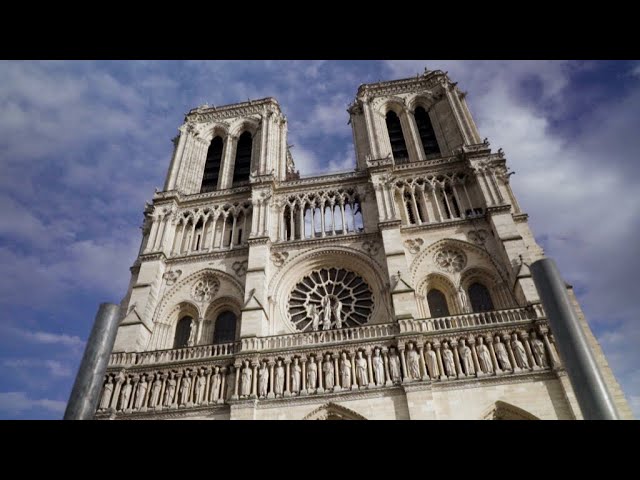


We all watched with horror as the roof of Notre-Dame de Paris burned.
Here is a video update about the building.

Photo by The Great Roman™

This, from Chess.com, is almost too easy, but perhaps some readers here are not quite as practiced. Consult your “checks, captures, threats”.
White to move and completely win.

Please remember me when shopping online. Thanks in advance.
And… just for amazing kicks… live as I post this…
From a reader…
QUAERITUR:
I am currently in the process of discerning a vocation to the priesthood and I am investigating different groups/orders. I am relatively familiar with the strictly “traditional” groups (ICKSP and FSSP especially) but it can be more difficult to test the waters of other groups, institutes, or religious orders in the U.S. which are not strictly traditional but might still be very solid and orthodox. Are there any in particular that you might recommend for consideration?
You would do well to discuss this with your confessor/priest spiritual director. Remember, too, that a vocation to the priesthood and a vocation to religious life are not the same. They can overlap, but they are not the same.
Different groups have different apostolates and charisms. That should help you to identify which groups you may be more suited to. They are usually founded upon a particular spiritual “school”, the spirituality of a saint and/or their founder. That is also a tool for discernment.
It seems to me also good to consider what is close at hand and what you might already know. Perhaps the answer is in your back yard.
That said, I understand that the Norbertines in California are pretty healthy, as are the Dominicans of the US Eastern province. The Benedictines in Oklahoma are great. The Transapline Redemptorists, very serious dudes, have now a place in Montana. Oratories are springing up, too.
You will have to be willing to go to visit places.
No doubt some of the readers here will be eager to pitch in their 2¢.

Too many people today are without good, strong preaching, to the detriment of all. Share the good stuff.
Was there a GOOD point made in the sermon you heard at your Mass of obligation for the Octave of Easter?
Tell about attendance especially for the Traditional Latin Mass. I hear that it is growing. Of COURSE.
Any local changes or (hopefully good) news?
Those of you who regularly viewed my live-streamed daily Masses – with their fervorini – for over a year, you might drop me a line.
I have some written remarks about the TLM Mass for this Sunday – HERE
 The nice folks at One Peter Five invited me to post a weekly column for Sundays. I’ve happily obliged. This week, I think it best to share here something of what I wrote, there.. just a few bits.
By me at One Peter Five:
[…]
Christ showed [the Apostles in the locked room] His hands and feet and side, to demonstrate that He had a real body and that it was also is His Body. He didn’t pick up some unwounded, perfect Body that He was now inhabiting. We are our bodies, as we are our rites. The fact that the wounds remained in His Body’s hands, feet and side provided continuity with His Body before and during His Passion. He isn’t a mere shade of the Lord. Nor has he exchanged Himself for an unwounded version. In this way Christ began to show them the traits of the risen Body, traits which we, too, will share in the Resurrection: clarity (reflecting God’s glory), impassibility (incapable of suffering), agility (ease and speed of movement), subtlety (unhindered by barriers).
[…]
We don’t know why Thomas wasn’t with the other ten Apostles in the room for that first appearance of the Lord. I like to imagine that it was his turn to get the “take out” for the rest of them.
Thomas, who had doubted, put his trust in the Lord at this point. In fact, he literally handed his trust to Him where the point of the lance had left its mark on the Lord’s glorious Risen Body, a wound from a Roman lance large enough to insert his hand. The Lord told Thomas to “thrust” (Greek bále) his hand “eis ten pleurán… into (His) side”. If we want to be picky, we might note that the Greek word “cheír”, insofar as our anatomy is concerned, can mean “hand”, but it can also mean “finger” or “hand and arm”, the later so much so that in some contexts additional words are added to denote “hand” as distinct from the arm (cf. Liddell-Scott-Jones, A Greek-English Lexicon aka LSJ – “χείρ , ἡ”).
This is significant for depictions in art, as in the famous painting by Caravaggio, wherein Thomas puts his finger into Christ’s side and peers into it, which smacks of the spirituality of St. Bonaventure who wrote about how Thomas the Apostle looked through the Lord’s visible wounds and saw His invisible wound of love. It also affects depictions of the crucifixion of the Lord and of His risen Body, with the holes of the nails in the hands. Some maintain that Christ would have been crucified with nails through the wrists so that the ulna and radius bones would sustain His Body’s weight rather than tearing through the flesh of His hands.
Christ tells Thomas to explore with his finger (dáktylos) the spike holes of His “hands/wrists”, which would be more or less the size of a large finger. However, he tells Thomas to use his hand for the wound in His side. The Greek suggests to me that the Lord instructed Thomas to push, thrust His hand into the wound channel left by the Roman lance, which had gone so far as to lacerate the Lord’s Sacred Heart.
We don’t have in the Gospel account of this stunning moment, to which John was eyewitness, a precise statement by John that Thomas physically did it. All it says is that Thomas responded, “My Lord and my God!” Christ responded with a “beatitude” (v. 29): “Jesus said to him, “Have you believed because you have seen me? Blessed are those who have not seen and yet believe.”
Was Thomas so overwhelmed that He could not touch the Lord in that way? All He could utter was that amazing witness to belief in the divinity of Christ? The clearest and most exultant of any in the Gospels?
Christ refers to Thomas seeing Him, but He did not say, “because you have touched me”. Nevertheless, it seems to me that if the Risen Christ tells you to do something, you do it. Furthermore, John immediately concludes this chapter with something so definitive that it feels like the end of the whole work (vv. 30-31):
Now Jesus did many other signs in the presence of the disciples, which are not written in this book; but these are written that you may believe that Jesus is the Christ, the Son of God, and that believing you may have life in his name.
There follows chapter 21 and the account of the reconciliation of Peter at the Sea of Galilee. We moderns count that as chapter 21. Remember, the Gospels were not written with chapters and verses and not even word breaks. Those were imposed centuries later. Yet, one has the sense that what happened between Christ and Thomas was so amazing that John penned something like a conclusion to his Gospel after Thomas’s cry of faith, arguably the climax of John’s account.
Given the various meanings of “hand” in Greek, and that word “thrust”, and the fact that the wound from the lance remained, therefore remained all the way to His Heart, perhaps Our Lord required Thomas not merely to touch His side but even to feel the breath, the ruach, in His torn lung. Did Thomas, while feeling the ruach on his wrist, touch with his hand the physical, risen, subtle, impassible, agile, blazing bright Heart of Jesus?
By the way, in art, statues and painting, the Apostles are usually depicted with the instruments of their martyrdom. St. Thomas is often depicted with a lance.
On this Sunday we emphasize the mercy of God and the institution of the Sacrament of Penance, perhaps the greatest encounter we have with incarnate Mercy, Holy Communion notwithstanding.
Christ told Thomas to do what He did before witnesses so that they too would understand about the traits of His risen Body and that it was truly His own. Knowing full well that we would one day read this, He inspired the disciple He most loved to write his Gospel account, an account that connects Thomas to the inspiration of the Spirit and the mercy of Christ’s Heart in a way that other Apostles didn’t experience on that first Easter evening appearance.
When we go to confession, we enter into Mercy in order to be breathed upon by the Spirit and to feel the beating, living, healing, Heart of Love.
 From a reader…
QUAERITUR:
“While” is an unusual word in English. It can be used as a verb, a noun, an adverb, a conjunction, and even a preposition.
Most English translations of the final prayer of the Holy Rosary say “… grant that while meditating upon these mysteries of the most Holy Rosary of the Blessed Virgin Mary, we may imitate what they contain and obtain what they promise….”
I know you’re a stickler for good translations, so I thought I’d ask you about the translation of the word “while” in that prayer. I don’t want that grace only WHILE I’m meditating on the mysteries. I want it all the time!
Is that a correct translation from the Latin? Is there a better one? When praying the Rosary by myself I usually say “by” instead of “while,” indicating that I hope that the act of saying the Rosary will effect within me the grace I’m requesting. Other times I just leave it out, as in “… grant that, meditating upon these mysteries…,” the preposition “by” being implied.
Words do have meanings, after all. What is your take on this very important question?
Thank you for all the good work you do!
Interesting question. And thanks for pointing out that “while” is also a verb! For those who live in Columbia Heights, I trust I don’t have to explain what a verb is. More on “while” as a verb later.
What does the Latin really say?
Deus, cuius Unigenitus per vitam, mortem et resurrectionem suam nobis salutis aeternae praemia comparavit: concede, quaesumus; ut, haec mysteria sacratissimo beatae Mariae Virginis Rosario recolentes. et imitemur quod continent, et quod promittunt, assequamur. Per eundem Christum Dominum nostrum. Amen.
I welcome this question, because it has pushed me to think of things I’ve never thunk before.
Let us confer with the flowers of Latinity in the mighty Lewis and Short Dictionary, and consult with the rain its pages let fall upon our dry topic.
Praemia can be “reward, recompense” or “advantage” or “booty”, as in the spoils of war, not the other thing. I rather like that booty image, as in spoils of war, given the imagery of the Easter Sequence Victimae paschali laudes, “Mors et vitae duello conflixere mirando: dux vitae mortuus, regnat vivus… Death and life contended in that conflict stupendous: the Prince of Life, who died, deathless reigneth.” Christ’s divinely-bonded human soul, in the “duel” on Holy Saturday while His lifeless Body was in the tomb, descended to Sheol and “harrowed Hell”, that is, won the souls of the righteous who had died but who were awaiting liberation in the Savior. Soul-spoils of the drama-duel. I’d better move on before I start writing like Hopkins, and you start ‘a’sratchin’ your … head.
Comparo is a remarkably flexible in its mean. We get our “compare” from this. It can be “unite, couple, connect in pairs”, “match” in both the sense of check the equality of things or bring together in a contest. It can be “reflect on something by comparing it with another things” or “come to an agreement about differences”. And then it flows into a different vein, like, “to prepare something with zeal, to make ready”… which is closer to what we are looking for in comparavit. It is also, “arrange, establish” in the sense of customs and manners. And… here we are… “to procure what one does not yet possess or what is not yet in existence”. “To purchase, obtain”.
There are two verbs in Latin which look the same at first glance: recolo and recolo. You might be perplexed because those are the same. But no. They are really rĕcōlo, āre and rĕcŏlo, cŏlŭi, cuitum, 3. The first means, “strain again”, as in “I didn’t like the consistency of the yogurt, so I strained it again.” The second means, “to exercise or practice again”, “to resume”, as in “I won’t go back to my old way of life because I don’t want to spend eternity with all those Jesuits”. Another meaning, “to think over, reflect upon”. That’s the ticket here. This is, of course, a compound of re– and colo, means a range of things but, ut brevior, is also “care for, cherish, protect” and “honor, revere”. Re– gives the sense of repeated action.
Assequor is “to reach by pursing”, “gain, attain”, and in a transferred sense, “to attain to by an effort of the understanding, to comprehend”.
While you are an individual who asks, let us now unravel the every riddle of this prayer also for others who are here:
LITERALLY:
O God, whose Only-Begotten (Son) obtained for us the rewards pertaining to eternal salvation by means of His own life, death and resurrection, grant, we beseech (Thee), that we, right now reverently mulling over these mysteries by means of the most holy Rosary of the Blessed Virgin Mary, may both imitate that which they contain and also attain to what they promise.
I use “mull” here to get that iterative sense.
That usually is rendered as…
O God, Whose Only-Begotten Son, by His life, death and resurrection, has purchased for us the rewards of eternal life: grant, we beseech Thee, that by meditating upon these mysteries of the most holy Rosary of the Blessed Virgin Mary, we may imitate what they contain, and obtain what they promise, through the same Christ our Lord. Amen.
I suppose we could use “as” but you can see that “while” works, because the time of the participle recolentes is “present”, which means that it is contemporaneous with the time of the verb quaesumus. Quaeso, I grant, can be simply a parenthetical insertion, as in “Tell me, prithee (I pray thee), what’s o’clock?” It is more than that here. It is plural, for one thing, and it is at the core of the prayer. “We beseech”, “we are beseeching”. It is really the main verb: “We are – right now – begging you, O God, that you grant… XXY”. “We beg that you grant that…”
It is true that, in a sense, the “life, death and resurrection” are mysteries “of the Rosary”. What really are “of the Rosary” are the elemental prayers: the Our Father, the Hail Mary, the Glory Be” etc. These prayers, in the order designated, the Rosary-order, are the means by which, while reciting them, our thoughts are busy hatchin’, we reverently ponder again and again the designated set of mysteries, which change, now this set, now that set. So the Rosary is the means by which we meditate upon the designated mysteries. We come to the end and then we walk, sit, kneel and, with the Rosary, think some more about what the mysteries “contain”. Their content is not just the dogmatic formulae which we profess, but also the deeper content, the very Person of Jesus Christ to whom the Rosary draws us.
You are perplexed by “while”. You yourself note how polyvalent it is. There is its essense the idea of duration of time, like the archaic use meaning “until”. There are present-ness, and continuousness and future-ness in what we are begging. If we only had a brain that could hold all the content of the Latin together in one pure concept, formulae and mystical Person: We want the life of Christ, Christ’s life, NOW, in our lives, even while we are praying and that it perdure into the future. We want the DEATH of Christ WHENEVER it is our time, docile in the face of whatever death God has designed, in trouble or in pain and we want the ongoing fruit of His Sacrifice. We want the Alpha and Omega FOREVER of the glory of the unending resurrection.
So, that traditional translation of the Latin prayer is not bad. It hits the important points without being ridiculous in its precision. If, in your private orisons, you decide to make little adjustment, that’s okay… but with one critical provision!
Say a Rosary for me, lest I be a failure in my vocation.
Lastly, again for those in Columbia Heights, while you have impatiently whiled away some time here while I have vivisected this prayer for a while, persevere while the end attained with an erstwhile example of “while” used as a verb.


Speaking of markets, your use of my Amazon affiliate link is a major part of my income. It helps to pay for insurance, groceries, everything. Please remember me when shopping online. Thanks in advance. Just click one and Amazon will remember how you entered and I will get the credit.
And one of my Cafepress shops…
3:16 isn’t just in John.
Because yesterday was the 2775th Birthday of Rome, I decided to be Roman in my evening repast.
Spaghetti all’amatriciana. I didn’t have any bucatini, but this bronze-cut high-quality pasta is a principled choice. Actually, it is chitarra.
All’amatriciana is a variant of a much older Roman, Lazio, preparation called “alla gricia”, having just the guanciale and pecorino. Tomatoes are a “New World” thing and didn’t become popularized until a few centuries after Columbus, bless him. There is a fascinating little book about the history of the tomato. A great read. Get it with my affiliate link.
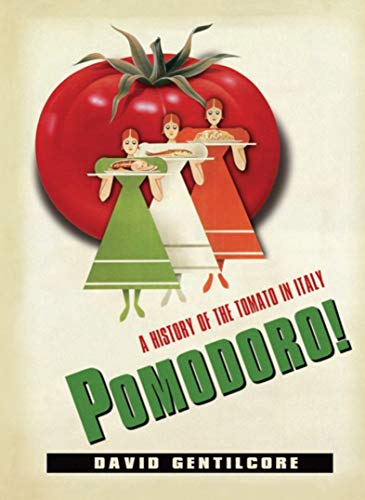 Pomodoro!: A History of the Tomato in Italy (Arts and Traditions of the Table Perspectives on Culinary History)
The set up. The pasta, some San Marzano tomatoes (thanks to a reader), guanciale (thanks to a reader, grated pecorino (thanks to a reader), white wine and olive oil. That’s about it.
You don’t have to have San Marzano. Fresh tomatoes, peeled and seeded are the true foundation. In a pinch use canned.

Start the guanciale in some oil. I had a little too much and extracted a bit.

Pull them out and keep them warm.

Work the tomatoes.

A touch of wine and reduce.

Oh yes, I added a little pepperoncino.
Join together the guanciale and your al dente pasta, to finish cooking the pasta in the sauce. I added just a little of the starchy pasta cooking water.

Supper. Very easy. Super fast. You can do it too.

A grind of pepper and pecorino.
Remember that your pasta is a significant percentage of the food in that bowl. Therefore, you should get good pasta for a good meal. Remember, too, that the pasta will pick up what your water tastes like. If you have awful water, you will have sub-optimal pasta. Use bottled water if your water is dreadful and see if there isn’t a difference.
Guanciale… from the cheek or jowl of the pig. Essential? Yes and no. Can you use pancetta? Okay, but it won’t be quite the same. Guanciale has a different texture, mouth feel, flavor. BUT… we mustn’t let the perfect be the enemy of the good. You can make a great bowl of pasta with what you have on hand. Improvise, adapt, overcome.

Coat of Arms by D Burkart









A Daily Prayer for Priests


They find you a pro-life agent in your area who commits to giving a portion of the fee to a pro-life group!

PLEASE subscribe via PayPal if it is useful. Zelle and Wise are better, but PayPal is convenient.
A monthly subscription donation means I have steady income I can plan on. I put you my list of benefactors for whom I pray and for whom I often say Holy Mass.
In view of the rapidly changing challenges I now face, I would like to add more $10/month subscribers. Will you please help?
For a one time donation...



Help Monks in Wyoming (coffee – UPDATED LINK) and Norcia (beer) and the wonderful "Soap Sisters" of Summit, NJ!


Please follow me on Twitter!










Visits tracked by Statcounter
since Sat., 25 Nov. 2006:


