
Photo by The Great Roman™
Today’s Daily Mass Fervorino.
Intention: Benefactors
Prayers added:
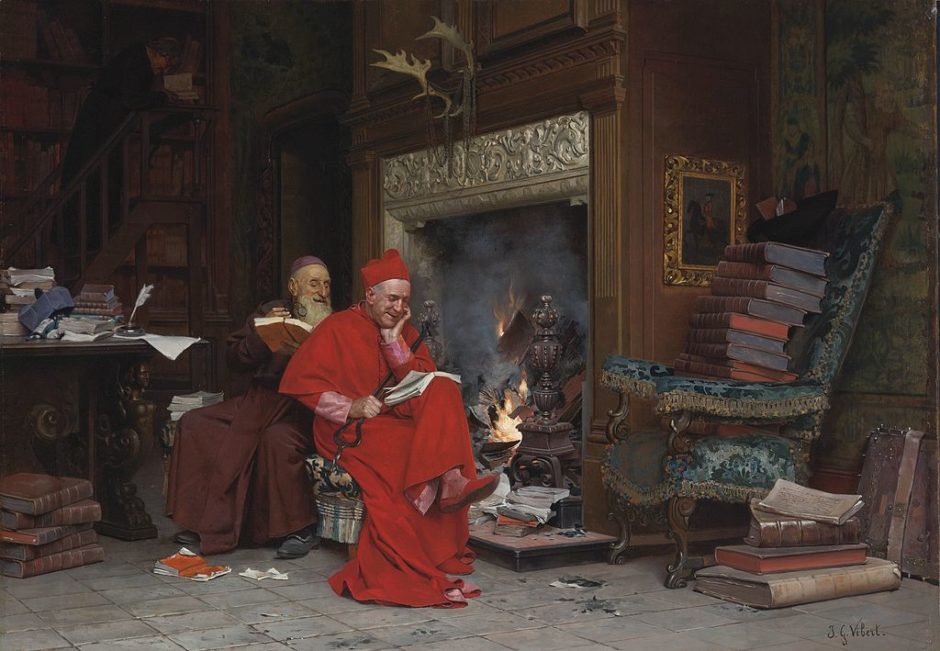
One thing that COVID-1984 Theatre has done is accelerated the refinement of distance viewing and learning, for example of Masses/Hours (e.g., Saint-N-du-Chard., et al. including a rather cleric) and courses (e.g. Robert Royal’s Augustine’s Confessions – JUST STARTING – HURRY!).
In addition to the good course by Dr. Royal, I note with interest that Dr. Joseph Shaw of the Latin Mass Society is going to have some Latin language instruction online. HERE
He is offering discounts for clergy.
FATHERS! Have at!
Do you folks follow the incomparable Eccles? His latest is sheer brilliance.
He sends up a hyper-papalatrous site today, which he has restyled Where Pacha Is, and concludes….
No. You can read it yourself and laugh and laugh. HERE
To Eccles, a message from The Great Roman™, to which I cordially and yet solemnly add my own invitation.
I want to buy dinner and lots of adult beverages for this guy. Just sit there with my pint and listen to him going on and on.
And today on the Jesubots is excellent. HERE
 At Catholic Culture, the perspicacious Phil Lawler makes a good point about the premises of the severely cruel Plessy v. Ferguson legacy document of the Era of Francis.
The backward logic of Traditionis Custodes
Insofar as Traditionis Custodes provides any explanation for its open hostility toward Catholic traditionalists, that explanation lies in the claim that traditionalist communities have caused divisions within the Church. Therefore, Pope Francis suggests (and the Congregation for Divine Worship even more sternly insists) traditionalism must be suppressed.
That logic is backward. It was not the traditionalist movement—much less the traditional liturgy—that exacerbated divisions within Catholicism. It was the current Vatican leadership—the very leadership that is now looking for a scapegoat to blame.
Exactly. If the anti-Tradition “leadership” in Rome and elsewhere want to get to the sources of divisions they need look no farther than their own mirrors.
I continue here with Lawler’s defense, and I associate myself with it, especially in his reference to The Wanderer (SUBSCRIBE!) and “we”, for I wrote for The Wanderer for many years. This blog grew out of my columns.
For several decades after Vatican II, Catholics who might, for want of a better term, be classified as “conservative”—and I include myself among them—looked askance at traditionalists. Even The Wanderer, a newspaper never associated with liberalism, viewed the Trads as too negative. We defended the Novus Ordo liturgy, trusting that all would be well once the excesses of the 1970s, which were certainly not authorized by the Vatican Council—were eliminated. We balked at the notion that the Council itself had introduced problems; it was, we firmly believed, the deliberate misinterpretation of the Council that had plunged the Church into chaos.
Above all, we “conservative” Catholics longed and worked and prayed for the “reform of the reform” in the liturgy. We firmly believed that, once the fads and novelties and outright abuses were corrected, we could restore reverence and dignity to the Mass. We imagined—and if we were fortunate, occasionally encountered—a Mass actually celebrated according to the guidelines laid out by Sacrosanctum Concllium, and we found it beautiful.
This was the position of the late, great Msgr. Richard Schuler in St. Paul, MN. His mantra was, “Do what the Council asked.” He took over the helm of St. Agnes parish in St. Paul on the cusp of the Novus Ordo, in 1969. The previous pastor had been a peritus at all the sessions of Vatican II and he had begun to implement the liturgical changes actually mandated, as they were described in the documents, and NOT according to the feverish vagueries of the acolytes of the nebulous “spirit of Vatican II”. The result was a liturgical ars celebrandi that was decidedly Roman and traditional. Schuler had been an internationally known Church musician, and so he brought another level to the sound liturgical praxis in place. With his stable pastorate of over 30 years, there was at St. Agnes as close to what the Council actually mandated as one could effect. Leaving aside the ongoing debate about the soundness of the Novus Ordo and whether it truly reflects what the Council Fathers wanted, one might weigh the success of Schuler’s approach of fidelity in the 30+ 1st Masses celebrated at the parish during his pastorate, as well as the good preservation of a K-12 school, no mean feat in the post-Conciliar chaos.
Lawler then swiftly enumerates the collapse of Catholic parishes, doctrine, liturgy that resulted after the Council saying that, and some will demure for different reasons, the declines “were not, we repeated, caused by the Council. The misinterpretation of the Council was to blame.” Some think that the devolution in the Church across the board stems from the documents themselves, purposely sewn through with ambiguities which made what some would call “misinterpretation” inevitable, given that survival of so many modernists in key positions. At the same time, one could choose to interpret them under the safeguarding and even correcting lens of fidelity and in continuity with our Tradition.
Lawler lauds the efforts of John Paul II and Benedict XVI to hold back the tide (St. King Canute’s feast was yesterday, by the way).
And then came Pope Francis.
Sapienti pauca.
You can go to Catholic Culture for the rest, but I will leave you with this.
Within the past week I have spoken with a half-dozen other Catholics who, like me, have begun regularly attending the Traditional Latin Mass. In every case, their movement toward the TLM began during the current pontificate. We did not move toward traditionalism because the Trads attacked the Pope; it would be far more accurate to say that we moved in that direction because the Pope attacked us.
That sounds right.
I am getting anecdotal reports from all sorts of people and places that attendance at Traditional Latin Masses is up.
It is going to stay up and go up.
As Tertullian noted with his characteristic flare, the blood of martyrs is the seed of the Church. Persecution stimulates the work of the Holy Spirit in the hearts and minds of the faithful, such that all that is good, true and beautiful flourishes even in the harshest clime.
In attacking, marginalizing, tyrannizing the faithful who desire reverent traditional sacred liturgical worship and doctrine (liturgy is doctrine), the powers-that-be are sowing and accelerating their own downfall.

Photo by The Great Roman™
Today’s Daily Mass Fervorino.
Intention: Benefactors
Prayers added: For enemies

Before the end of 2021 – GOOD RIDDANCE – I posted – HERE – about some options for your end-of-year charitable giving. Now that official churchy entities are doubtful or even hostile to what ought to be normal and mainstream Catholic life, it is harder to know where to apply our donations and be sure they will be used well.
I had a note from Our Lady of Hope Clinic in Madison, WI, which I suggested in that post. They were trying to raise $10000 to obtain a matching grant. You dear, dear readers should know what it said:
Thank you so much for plugging the clinic! I noticed that you had promoted us before I saw your blog as I began receiving donations from all over the US. We most certainly met our goal of $10k! I am still doing the final tally but know that we greatly exceeded that $10k goal and were able to surpass our budgeted need for 2021!
Your supporters alone contributed over $5,000 of our end-of-year giving! Thank you so much for all that you have done for the clinic and for being willing to spread the word of our work to your network.
I am so proud of you, I could burst. Thank you for helping that great cause, which provides excellent, principled health care for the poor and uninsured.
I’m a fan of Scripture scholar Brant Pitre. I wish that he had been our prof in seminary way back in the day instead of the profoundly deficient instruction we had both in these USA and in Rome. I digress.
During one of the audio recordings of a course that Dr. Pitre gave – I don’t recall which – the verse John 3:16 (“For God so loved the world…”) and the fact that it is often seen on people’s cars. Pitre joked that one day he would like to see license plates or bumper stickers with 3:16 on them… but NOT John 3:16, rather Leviticus 3:16.
So… I did it. I created some Leviticus 3:16 swag, and it is available in my Fr. Z Swag Store.
Here are some samples:


This has English, Latin Vulgate, LXX, and Hebrew.


There are more sizes and shapes of mugs, various stickers and magnets, multiple clothing options… including, appropriately, “plus size”.
What’s up with this?
Leviticus is mainly concerned with God’s instruction about how to carry out rituals. The first part of Leviticus, chapters 1-5 “Vayikra”, is about sacrifices. 3:14-16 reads in the RSV:
Then he shall offer from it, as his offering for an offering by fire to the Lord, the fat covering the entrails, and all the fat that is on the entrails, and the two kidneys with the fat that is on them at the loins, and the appendage of the liver which he shall take away with the kidneys. 16 And the priest shall burn them on the altar as food offered by fire for a pleasing odor. All [the] fat is the Lord’s.
I presently have the license plate frame on my car and I have had some fun reactions in parking lots from people who get it.
A little fun, with a tip of the biretta to Dr. Pitre. o{]:¬)
One of his books, if you are not familiar with him, via my affiliate link (please use my links when you need to shop online):
Jesus and the Jewish Roots of the Eucharist: Unlocking the Secrets of the Last Supper

And this one…. this one… is super. Again, how I wish we had had this when I was in seminary! I use this all the time now.
A Catholic Introduction to the Bible: The Old Testament

This would be a great gift for a priest (make sure he doesn’t already have it). A lot of priests are way out of their depth when it comes to the Old Testament Novus Ordo readings on Sundays. This could really help them out. And you would be helping yourselves, too, since you have to sit there and listen to them as they go to the zoo up there in the pulpit.

Photo by The Great Roman™
Today’s Mass Fervorino
Intention: Benefactors
Prayers Added: For enemies

10% off with code: FATHERZ10
Prof. Robert Royal, editor of The Catholic Thing, recently concluded an online course on Dante’s essential Divine Comedy. I followed it and it was excellent.
Now he will have an online course on St. Augustine’s Confessions. The online weekly classes begin on Wednesday 5 January.
As a student of Augustine, I look forward to Royal’s insights.
You can enroll…
At FNC my good friend Fr. Robert Sirico has some thoughts about Francis and the cruel attack on people who desire traditional sacred liturgical worship.
My emphases and comments:
Pope Francis should let Catholics pray like Catholics
Too many spiritual shepherds want to contain traditional worship as if it were some kind of virus
A growing share of Americans—three in ten—identify as “none.” Or, none of the above when asked about their religious affiliation. Houses of worship are emptying, and those still left in the pews probably expect their spiritual shepherds to welcome more prayer, not less. [Even as the demographic sinkhole opens up under the Church many “spiritual shepherds” would rather see a smoking crater than a sheepfold full of happy Tradition oriented Catholics.]
It’s what makes Pope Francis‘s recent ruling to restrict prayer in the Catholic Church so odd. [Maybe this is the same as what Minnesotans mean by “interesting”.] The current pope is known to some as the “Who am I to judge?” pope, but now seems to have no problem judging faithful Catholics who pray in ways he simply does not like. [That’s it, isn’t it. It’s not just the traditional rites that he doesn’t like, he doesn’t like the people who like them.]
Pope Francis told bishops from the Czech Republic in 2014 that he “cannot understand the younger generation” who flock to the old Mass. [What would a person versed in Jesuit spirituality say about moving dramatically and suddenly in way that affects a large group of people that you, self-admittedly, doesn’t understand?] A couple of years later, the pope wondered to an interviewer why so many young Catholics prefer to praise God in Latin on Sundays. “Why so much rigidity,” Francis asked. “This rigidity always hides something, insecurity or even something else.” And in 2019, Pope Francis ridiculed young priests who wear traditional cassocks along with the white collar—even suggesting they have “moral problems and imbalances.” [As Yoda might say: “Working out our own problems, we are! Hmmmm.]
Stereotypes may often be shortcuts to the truth, but not always. And certainly not in this case. In my experience, it is not just the elderly who like the smells and bells of the Church’s old rituals—a great many young people love traditional worship. I joke that my old parish’s Latin Mass is the “teen Mass.”
Yet last summer the pope released a letter that restricted the use of that Mass. It marked a disappointing departure from his predecessors, and a peculiar use of the papacy—as if the pontiff were leading a new presidential administration that reverses executive orders of prior presidents from different political parties. [Or one caudillo those of another.]
But popes aren’t presidents. [Neither are they caudillos.] The papacy is supposed to eschew politics and instead focus on the spiritual needs of the faithful. That was the late Pope John Paul II’s approach. As was Pope emeritus Benedict XVI’s. Both noticed an increasing number of faithful were spiritually enriched by the Church’s old rites and rituals.
Francis’s recent predecessors both generously expanded opportunities to believers who worshipped the old way—not simply because it is old, but because it is beautiful and true. “What earlier generations held as sacred, remains sacred and great for us too,” the pope emeritus wrote in 2007, “and it cannot be all of a sudden entirely forbidden or even considered harmful.” At that time only a little more than 200 Latin Masses were celebrated in the United States. Today, more than 650 venues reportedly offer the old form of worship in all 50 states and in the District of Columbia. [I would say a lot more than that, because many have been quietly started and just continued under the radar.]
Perhaps the most draconian implementation of the pope’s restrictions on communities dedicated to the old Mass came just last week—yes, at the onset of Christmas festivities—from the cardinal archbishop of Chicago, Blase Cupich. A progressive on many things, Cupich is wont to align himself with many of campaigns of the left such as conflating intrinsic moral evil with prudential policy matters. [The typical lib/dem M.O.] No matter how you view it, no Catholic should give keeping the minimum wage just the same moral weight as protecting life in the womb. Of course, Cupich’s conflation gives cover to prominent pro-choice Catholics, like House Speaker Nancy Pelosi and President Joe Biden. [Merely for a fuller view of the picture, there’s a PETITION to get him to resign: HERE]
But that “consistent ethic of life” idea wasn’t Cupich’s. It originated with his late predecessor, Cardinal Joseph Bernardin, who was also a hero for political liberals—but who also happened to be the first to expand opportunities for Chicagoans to worship the old way. Priests at St. John Cantius Church on the city’s west side seized that opportunity to restore the sacred in all things, and then watched the faithful flock from all over to what had been an all but abandoned parish. It grew from merely 30 in 1988 to more than 2,000 families today. The church itself was even voted the most beautiful in the country, and perhaps that had a lot to do with its beautiful liturgies.
When I was pastor of Sacred Heart of Jesus Church in Grand Rapids, Michigan, we had a very similar experience. It, too, was on the verge of closing in 2012, but as we sought to restore the sacred in the liturgy (we, like Cantius, celebrate both the old and new Masses) our school grew from 68 students to about 400 today—and it’s still growing.
In this moment of the “nones,” some of the most remarkable growth in the Catholic Church seems to come from churches where the liturgies are “ever ancient, ever new.”
Too many spiritual shepherds now want to contain that contagious growth as if it were some kind of virus. But perhaps what the Church—and our world—need most right now is a pandemic of prayer.
Fr. Z kudos.
Yes, a pandemic of prayer. But also an epidemic of enterprise.
We need a syndemic, both prayer and strong action.
St. Bernard of Clairvaux, whom I quoted elsewhere today told the men he was recruiting:
“All you who hear me, make haste to calm the wrath of Heaven! Leave off imploring His goodness with futile lamentations or mortifying yourself with disciplines, but rather take up your invincible shields. The clamor of arms, the dangers, difficulties and fatigues of war, these are the penances that God imposes on you.”
There is no way that St. Bernard would have wanted me to STOP with mortifications and INSTEAD take up arms. He would have wanted BOTH.
Prayer and action.
Grace and elbow grease.

Coat of Arms by D Burkart









A Daily Prayer for Priests


They find you a pro-life agent in your area who commits to giving a portion of the fee to a pro-life group!

PLEASE subscribe via PayPal if it is useful. Zelle and Wise are better, but PayPal is convenient.
A monthly subscription donation means I have steady income I can plan on. I put you my list of benefactors for whom I pray and for whom I often say Holy Mass.
In view of the rapidly changing challenges I now face, I would like to add more $10/month subscribers. Will you please help?
For a one time donation...



Help Monks in Wyoming (coffee – UPDATED LINK) and Norcia (beer) and the wonderful "Soap Sisters" of Summit, NJ!


Please follow me on Twitter!










Visits tracked by Statcounter
since Sat., 25 Nov. 2006:
