
Photo by The Great Roman™

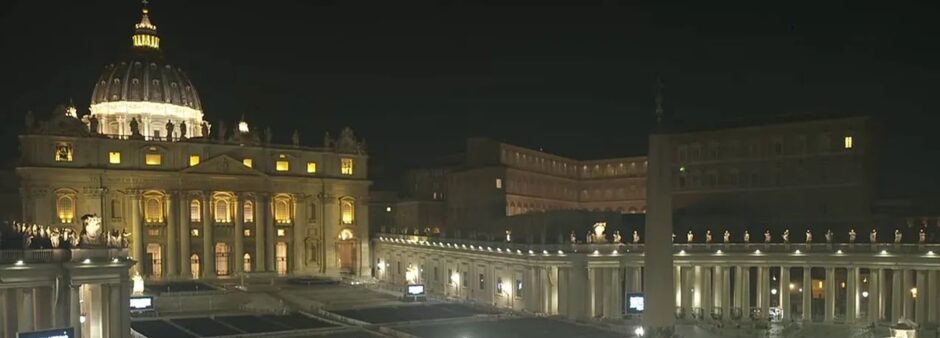
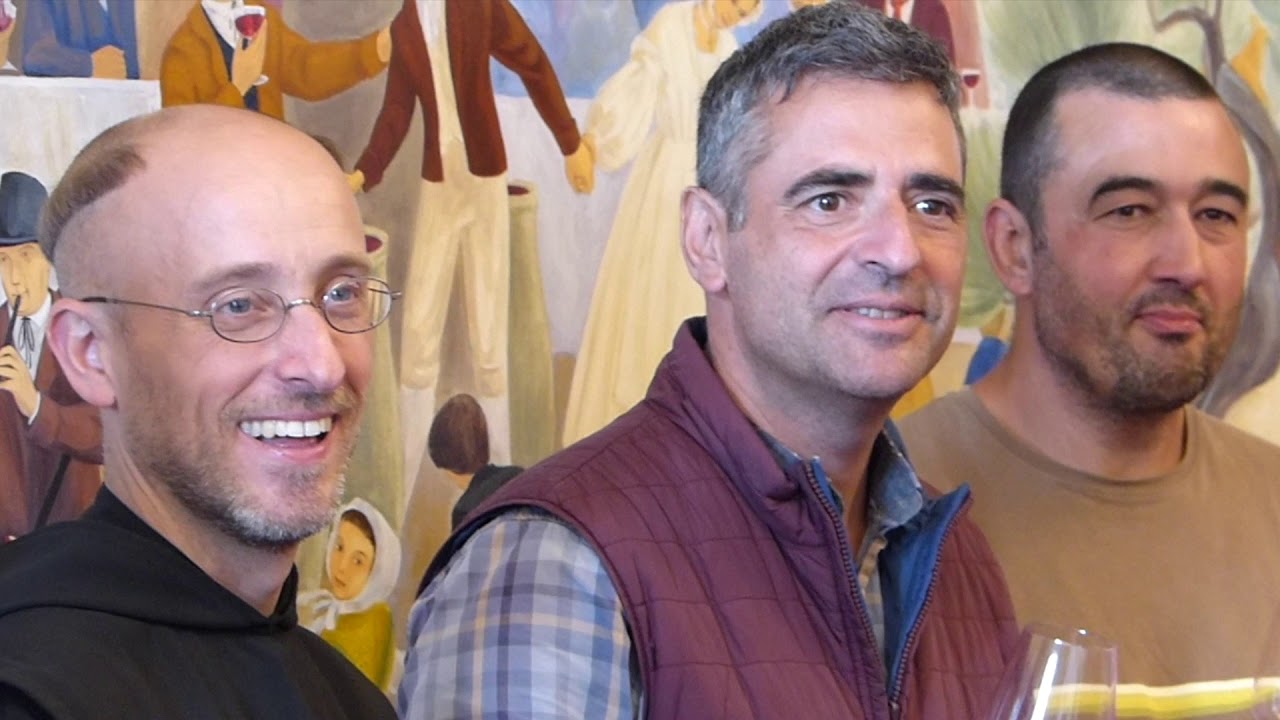
 I have received great news from the people handling the excellent Via Caritatis wine from the traditional Benedictines of Le Barroux in France.
The monks are working the first papal vineyards in France near Avignon. Some terraces go back to the 5th century.
You might remember that a stage of the Tour de France went through their area. HERE
If you order wine from them through me you can receive 10% off using this coupon:
FATHERZ10
I have ordered their wine twice now. I wouldn’t have ordered the second time if it wasn’t a) a good cause and b) good wine (not a minor point).
We have to support this monastery, my friends. After Traditionis custodes, I know that a lot of people are wondering about how to fulfill their obligation to give material support to the sustain the Church and works of religion. This is one good way.
Buy wine. Help them. Help everyone who desires Tradition.
We have to keep everything alive and well until bad times change to better.
A new way to ¡Hagan lío!
Here is my last bottle. This is Vox Angelorum… which is appropriate because the monks sing the hours very well. You can hear them live or on demand HERE.

Click!
More about their project.

This is a really interesting question from a reader…
QUAERITUR:
Is it sinful to make or use fake papers, vaccine passports, or false documents?
It depends.
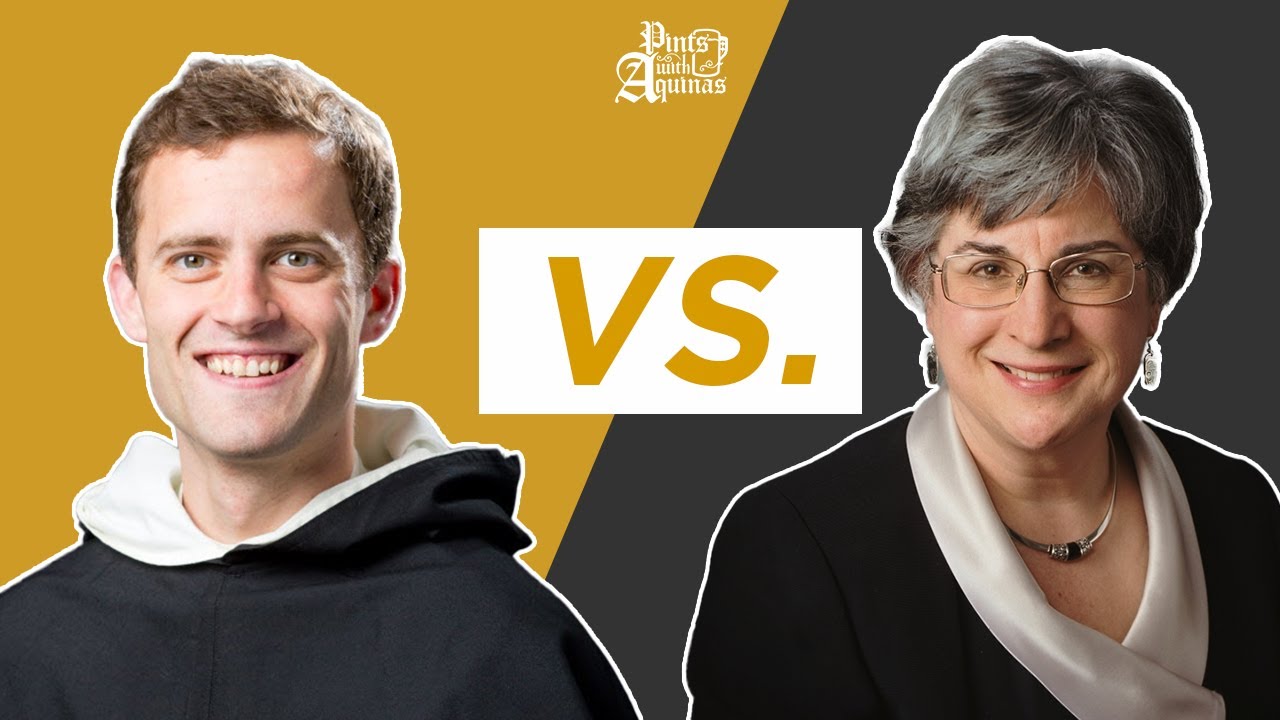
I direct you and others to a video of a debate about this issue (and related issues) between Dr. Janet Smith and Fr. Gregory Pine.
My option is that Dr. Smith made the better argument for the question: Is lying always wrong?
There are situations in which it is right to lie.
BAM BAM BAM BAM
[You open the door.]
DEIN AUSWEIS! SCHNELL!
[You hand over your identity papers.]
Versteckst du JUDEN in deinem Haus?
[Knowing you have Jews hidden in the basement, you answer.]
Nein.
So… watch this and think about it.
 What news did my mail and chat bring me today?
Corriere della Sera has, in Italian, Francis’ remarks on the airplane ride back to Rome after his trip in E. Europe.
UPDATE: The Vatican Press Office official transcript HERE – in some respects even worse than the CdS.
Some points.
Mind you, some will read his remarks and will – rightly – say that Francis didn’t quite say that. And, true enough, if you read very closely you can find a way out of the plain meaning of his words. The plain meaning. It is the plain meaning, not the nuanced escape, that will be picked up by the Fishwrap (I haven’t looked today but they probably still have the conga line going.), the papalatrous, the New catholic Red Guards and flung into the teeth of anyone who cites Catholic teaching. The Church could teach something clearly for a thousand years, but one comment on an airplane overturns everything. Their explanation? “Shut up!”, they explain.
So… some points:
Meanwhile, he has cruelly trampled on the hearts of the faithful who merely desire traditional liturgical worship.
I note with fairness that Francis clearly states that a civil union is not sacramental matrimony and that abortion is homicide. But it shouldn’t ever be in question that popes would hold to those truths.
I will close the combox on this one.
Take some time time to read Andrea Gagliarducci’s Monday column. HERE Whew… “Pope King”.
Today, the day after the Feast of the Exaltation of the Cross, is the Feast of Seven Sorrows of the Blessed Virgin Mary. There is an analogous commemoration on Friday after 1st Passion Sunday.
Some time ago, I wrote a series of reflections on the Seven Sorrows of the Blessed Virgin. I invite you to have a look.
Here are links to the individual posts
1st Sorrow – The Prophecy of Simeon
2nd Sorrow – The Flight into Egypt
3rd Sorrow – The loss of the Child Jesus in Jerusalem
4th Sorrow – Mary meets Jesus on the way to Calvary
5th Sorrow – The Crucifixion of Jesus
6th Sorrow – The Piercing of the Side of Jesus, and His Deposition
7th Sorrow – The Burial of Jesus
At the famous Basilica in Rome, Santo Stefano Rotondo we find this well-known image:

Take in this photo from APOD. These are hurricane paths mapped from 1985 to 2005.
A few really bad ones are in there.

Disasters always happen to other people… until it’s your turn.
You should have plans and backups, especially if you have loved ones to care for.
Food. Water. Power. Defense. Meds. Comms.
Know what you have. Know what to do with them.
Network with neighbors you can trust.
Obtain a ham radio license. I am delighted that quite a few readers here have let me about passing their exams! It really isn’t that difficult.
Preparing for the worst is the responsible thing to do.
On that note, disasters never happen… until they do.
GO TO CONFESSION!
We do not know the time or place of our death.
It could be far off in terms of swiftly flying earthly years. It could be in your very next breath and before you read another word of this post.
One of the most poignant and important petitions in the Litany of Saints is our plea to God:
A subitanea et improvisa morte, libera nos, Domine.
From a sudden and unprovided death, save us, O Lord.
Sudden death is one thing. It can be a grace, as opposed to a long, drawn out agony. On the other hand, for some people the long agony is a grace, for it gives them the chance to repent and offer their suffering in reparation for their sins.
So, sudden or foreseen or long or quick… that’s one thing.
Unprovided is another.
An “unprovided” death is a death without access to the last sacraments, especially absolution from a priest.
That’s a scary thought…. especially if you haven’t been to confession for a long time.
When did you last go to confession?
Dear readers, one of the main reason I put myself into this blog, my force multiplier, is because every single one of you is going to die.
I want every one of you to enjoy the happiness of Heaven. I want my enemies to get to heaven, even if God has to allow them a suffering which will spur conversion.
Some of you haven’t darkened the door of a confessional for a long time.
I tremble for you.
I beg you.
GO TO CONFESSION.
Fathers… if you are responsible for a parish and you are not promoting and making confession available, you are probably on the path to Hell.
Let’s look at the Collects for the Feast of the Exaltation of the Cross in both the Ordinary and the Extraordinary Form, Novus Ordo (1970MR etc.) and the Vetus Ordo (1962MR of St John XXIII). These are now, apparently acknowledge as being two different Rites rather than two different uses or forms of the same rite. This is something we all knew, of course. BUT… with Summorum Pontificum we had a juridical solution that easily allowed for priests to use either book.
That reminds me, however, of something entirely inane that I saw from the Archbp. of Liverpool the other day.

He says that this is “more than simple semantics”.
Well, no. In this case, it is precisely that.
To suggest that somehow the Novus Ordo is “the ‘traditional Mass” (note the singular), that its traditional pedigree, content, lasting impact on the Church is on par with that of the Vetus Ordo is, on the face of it, absurd.
And within that crazy assertion there is an admission: by naming only Paul VI and John Paul II we see that he admits a break in the continuity of what has been handed down. The Novus Ordo, a different Rite, artificially constructed according to principles that were outside of those few things mandated by the Council Fathers in Sacrosanctum Concilium, was implemented in 1969/70. It constitutes a break with longer tradition, understood as having begun before 1969.
If you are going to claim that that the 1970/2002 Missale was handed down to that Archbishop by Paul VI and John Paul II, and that is therefore “tradition” (simply because they legislated its use – and legislation is juridical not theological) then you have to admit the same thing about the 1962 Missale. Paul VI permitted the 1962 Missale. He handed it down. John Paul permitted its use. He handed it down. Benedict XVI permitted its use. He handed it down. Heck, even within the dreadfully cruel Traditionis Francis permits its use. He handed it down, nolens volens.
Paul VI and John Paul II gave that Archbishop the 1970 Missale, but the 1962 Missale was handed down to all of us by
Benedict XVI
John Paul II
John Paul I
Paul VI
John XXIII
Pius XII
Pius XI
Benedict XV
Pius X
Leo XIII
Pius IX
Gregory XVI
Pius VIII
Leo XII
Pius VII
Pius VI
Clement XIV
Clement XIII
Benedict XIV
Clement XII
Benedict XIII
Innocent XIII
Clement XI
Innocent XII
Alexander VIII
Innocent XI
Clement X
Clement IX
Alexander VII
Innocent X
Urban VIII
Gregory XV
Paul V
Leo XI
Clement VIII
Innocent IX
Gregory XIV
Urban VII
Sixtus V
Gregory XIII
Pius V
And we could go back to Gregory I (+604).
Enough of that. Let’s move on to today’s lovely feast.
 Today’s feast commemorates the discovery in AD 325 in Jerusalem by the Emperor Constantine’s mother St Helena of the Holy Cross, as tradition has it, under sweet basil herb bushes. It is also the anniversary of the Dedication of the Basilica of the Holy Sepulcher built on that site in 335. A portion of the Cross was placed there. The Basilica was consecrated on 13 September and, on 14 September the fragment of the Cross was shown to the people so that the clergy and faithful could pray before it. In 614 invading Persians and King Chosroes absconded with it. They held it until it was recaptured by the Byzantine Emperor Heraclius in 628 and returned to the Basilica.
St. Helena brought a portion of the Cross and other instruments of the Passion back to Rome. They were deposited, along with soil from the holy ground, at what is now called the Basilica Sessoriana, Santa Croce in Gerusalemme.
COLLECT (1962):
Deus, qui nos hodierna die Exaltationis sanctae Crucis annua solemnitate laetificas: praesta quaesumus; ut cuius mysterium in terra cognovimus, eius redemptionis praemia in caelo mereamur.
LITERAL VERSION:
O God, who on this day gladden us by the yearly solemnity of the Exaltation of the Holy Cross: grant, we beseech You; that in heaven we may merit to attain the rewards of redemption of Him, whose mystery we have known on earth.
The colons and semicolons in the older way of printed liturgical orations are intended to help the priest sing the prayer, rather than to give it greater sense.
The force of the last phrase is “whom we have known on earth in mystery”. Remember that mysterium is nearly interchangeable with sacramentum. Notice the parallel set up between in terra… in caelo. In this life, we can know Christ and what is promised us in heaven only as through a glass, darkly, as St Paul put it. Our supreme contact with Christ in this life is in the sacramental mysteries, in our sacred liturgical worship and in Holy Communion. In heaven our knowledge will be more direct, though God will forever remain Mystery, tremendum et fascinans, awesome and alluring.
Here is another version from the beautiful hand missal from Baronius Press:
O God, who this day dost gladden us by the yearly feast of the Exaltation of the Cross: grant, we beseech Thee, that we who on earth acknowledge the Mystery of Redemption wrought upon it, may be worthy to enjoy the rewards of that same Redemption in heaven.
The Baronius Press hand missal, printed in the UK, was released in 2007, the same year that Benedict XVI issued Summorum Pontificum – the “Emancipation Proclamation” which greatly freed up the use of the 1962 Missale Romanum. Summorum, with its juridical solutions, is one of the most important accomplishments of Benedict’s too short pontificate. Now, however, the emancipation of faithful Catholics with Summorum has been cruelly undermined with Traditionis custodes, Francis’ Plessy v. Ferguson to Benedict’s Proclamation.
Let is now move to the Novus Ordo edition of the Missale Romanum.
COLLECT (2002):
Deus, qui Unigenitum tuum crucem subire voluisti, ut salvum faceret genus humanum, praesta, quaesumus, ut, cuius mysterium in terra cognovimus, eius redemptionis praemia in caelo consequi mereamur.
This was pieced together from phrases from Collects of Palm Sunday and of Wednesday in Holy Week as well as today’s feast in the pre-Conciliar Missal, as we just saw above.
LITERAL ATTEMPT:
O God, who desired that Your Only-begotten undergo the Cross so that He would make the human race free, grant, we beseech You, that we merit to attain in heaven the rewards of redemption of Him, whose mystery we have known on earth.
OBSOLETE ICEL (1973):
God our Father, in obedience to you your only Son accepted death on the cross for the salvation of mankind. We acknowledge the mystery of the cross on earth. May we receive the gift of redemption in heaven.
Not content to chop the Latin into two sentences, the translators opted for three.
CURRENT ICEL (2011):
O God, who willed that your Only Begotten Son should under the Cross to save the human race, grant, we pray, that we, who have known his mystery on earth, may merit the grace of his redemption in heaven.
 Today, the aromatic herb basil (Ocimum basilicum which, comes from Greek basileos, “king”) is blessed by our Eastern brothers and sisters and placed in abundance around their Crosses.
I suggest having pasta and basil pesto tonight with a crisp, cold white live a Sauvignon Blanc or a Sancerre. With friends and loved ones it would be a fine way to observe the feast day.
NB: By “basil” pesto, I don’t mean made from Basil Emeritus, though he could be invited.
Since there are now two “Popes” in the Vatican, why not have two hamsters, Basil and… meet… Ming.
 From a reader reacted to THIS post…
I see from your recent post that you are a denier of the Fifth Lateran Council. You resist its Canons on the playing of chess and association with actors.
After 800 years, we are still working to implement the decrees of the Fifth Lateran Council. Do you deny that is a legitimate ecumenical council??? No? Well, then its decrees most be obeyed!!!
I hope the Holy See takes further action to root out other resisters of the spirit of the Fifth Lateran Council. Basta!!!
Oh, to be so lambasted. Oh, to be so misunderstood!
“Basta!!!”, you cry, in defense of the Spirit of the Fifth Lateran Council.
“Basta!!!”, I respond, for I did not write anything about the Fifth Lateran Council of 1517, but rather the Fourth Lateran Council of 1215.
You were only off by 300 years!
I see in your response a spirit of discontinuity and rupture, perhaps inspired by … Protestant leanings? After all… 5th Lateran… 1517…. Luther and his Theses. There are those who think that if Lateran V had done its work better, there might have been a new springtime in the Church and the Protestant Revolt would not have taken place.
Back to Lateran FOUR.
I do not resist the Canons of Council, nor its authentic spirit, that is the spirit of its canons as they are written, not necessarily as reported and wrongly interpreted. For example, I think that Can. 16 of L4 errs in that Chess is not a game of chance. Perpend…
16. Clerics should not practice callings or business of a secular nature, especially those that are dishonorable. They should not watch mimes, entertainers and actors. Let them avoid taverns altogether, unless by chance they are obliged by necessity on a journey. They should not play at games of chance or of dice, nor be present at such games. [Ad aleas vel taxillos non ludant nec huiusmodi ludis intersint.] They should have a suitable crown and tonsure, and let them diligently apply themselves to the divine services and other good pursuits. Their outer garments should be closed and neither too short nor too long. Let them not indulge in red or green cloths, long sleeves or shoes with embroidery or pointed toes,…
I do NOT wear shoes with pointed toes. I detest mimes, as one does. Nature and age have provided my tonsure. I don’t loiter in taverns and I don’t indulge in red or green cloths or long sleeves.
Well, I do do that, I guess. But I do NOT wear pointed shoes.
A taxillus is a small die. An alea is also a die, as in Caesar’s phrase, “Alea iacta esto!” (Suetonius, Caes. 32). The ancients had tesserae – sixed sided – and tali – rounded on two sides but only marked on four. There is a fascinating description how they played at dice in Lewis & Short under the voice alea. I digress.
Chess is not a game of chance. That canon was clearly penned by someone who had not made the effort to get to know clerical chess players. I’m not going to make that mistake. Chess playing priests could wind up being the most marginalized group in the Church if this canon is poorly implemented. All so unfair.
Since you have decided to challenge me on the Spirit of Lateran V… let’s suppose you meant Lateran IV… let’s see another Canon of that venerable Ecumenical Council. So you think that the canons of these past Councils must be obeyed?
9. De diversis ritibus in eadem fide
Quoniam in plerisque partibus intra eandem civitatem atque dioecesim permixti sunt populi diversarum linguarum habentes sub una fide varios ritus et mores districte præcipimus ut pontifices huiusmodi civitatum sive dioecesum provideant viros idoneos qui secundum diversitates rituum et linguarum divina officia illis celebrent et ecclesiastica sacramenta ministrent instruendo eos verbo pariter et exemplo.
Concerning diverse rites in the same faith
Since in many places peoples of different languages live mixed together, having one faith but different rites and customs, we strictly order bishops of such cities and dioceses to provide suitable men who will do the following in the various rites and languages : celebrate the divine services for them, administer the church’s sacraments, and instruct them by word and example.
Hmmmm…. provide priests for those who want different rites.
No. This can’t be authentic. It doesn’t have an vituperative phrases and how they “cause division”… blah blah blah.
And I remind the readership that Vatican II – a real, authentic Ecumenical Council – did not issue any canons. It was “pastoral” Council, whatever that is.
If there are any clerics out there who play chess, drop me a line – HERE – with the noticeable subject line: I’M A CLERIC AND I PLAY CHESS!

Coat of Arms by D Burkart









A Daily Prayer for Priests


They find you a pro-life agent in your area who commits to giving a portion of the fee to a pro-life group!

PLEASE subscribe via PayPal if it is useful. Zelle and Wise are better, but PayPal is convenient.
A monthly subscription donation means I have steady income I can plan on. I put you my list of benefactors for whom I pray and for whom I often say Holy Mass.
In view of the rapidly changing challenges I now face, I would like to add more $10/month subscribers. Will you please help?
For a one time donation...



Help Monks in Wyoming (coffee – UPDATED LINK) and Norcia (beer) and the wonderful "Soap Sisters" of Summit, NJ!


Please follow me on Twitter!










Visits tracked by Statcounter
since Sat., 25 Nov. 2006:


