Rome Shot 275

Posted in SESSIUNCULA | Tagged
1 Comment

Your Sunday Sermon Notes: 16th Sunday after Pentecost (24th Ordinary – N.O.)

Was there a GOOD point made in the sermon you heard at the Mass for your Sunday (obligation or none), either live or on the internet? Let us know what it was.

Too many people today are without good, strong preaching, to the detriment of all. Share the good stuff.

What was attendance like?

Tell about attendance especially for the Traditional Latin Mass.  I was getting reports that it was way up.  But now COVID… again….  Tell me it doesn’t have a demonic component.

Was the Motu Proprio mentioned?  Any local changes or news?

For those of you who regularly viewed my live-streamed daily Masses – with their fervorini – for over a year, you might drop me a line.

I have some remarks about the TLM – HERE

Posted in SESSIUNCULA | Tagged
6 Comments

Francis leaves Hungary – strange hand gestures on departure

Does anyone know what this is about? Is it something he picked up from the crowd? Any comment from the newsies?

This is Francis leaving Hungary today.

Moderation queue is on.

Posted in SESSIUNCULA |
29 Comments

Rome Shot 274

Posted in SESSIUNCULA | Tagged
11 Comments

WDTPRS – 24th Ordinary Sunday: Does it really make a difference to offer prayers to God?

concierge bellGiven The Present Crisis™ – exacerbated by the antics of Francis with Traditionis custodes and the manifest incompetence and faithlessness of Biden – and the call, often taken up now, for prayer and more prayer, we might consider:

Does it really make a difference to offer prayers to God?

The Collect for the 24th Ordinary Sunday was not in pre-Conciliar editions of the Roman Missal but it has an antecedent in the ancient Veronese Sacramentary among the prayers used during September.

Respice nos, rerum omnium Deus creator et rector, et, ut tuae propitiationis sentiamus effectum, toto nos tribue tibi corde servire.

Propitiatio means “an appeasing; atonement”.  It can also mean the propitiatory sacrifice itself.

LITERAL RENDERING:

Be mindful of us, O God, creator and ruler of all things, and, in order that we may sense the effect of Your act of atonement, allow us to serve You with our whole heart.

CURRENT ICEL (2011):

Look upon us, O God, Creator and ruler of all things, and, that we may feel the working of your mercy, grant that we may serve you with all our heart.

St. Augustine (+430), in his autobiographical prayer the Confessions (3, 7), uses the phrase “unus et verus creator et rector universitatis”, very like the first line.  Augustine certainly knew the hymns of Milan’s bishop St. Ambrose (+397), which he heard sung in cathedral.  To my ear, this first line rings like Ambrose’s hymn Deus Creator Omnium, which is, in part, included in the Liturgy of Hours for 1st Vespers of Sundays during Ordinary Time.

TRIGGER ALERT!

For those of you who are easily triggered by concepts that were talked about before that halcyon moment of awokening, that shining path to renewal, that doorway to a new springtime for the Church – Vatican II – now the only permissible lens through which all of time and space must be reassessed, reinterpreted, and, if need be, snuffed out or rewritten, what follows might make you switch off a light and suck your thumb… while you plan on how to hurt those who dare to have a different view.

PROCEDE AT YOUR OWN RISK

Propitiation [a concept systematically edited out of the ‘surviving’ orations in the Novus Ordo] is a prayerful act of appeasement begging for God’s mercy.

Because we are sinners, we seek mitigation of the punishments we justly deserve for our sins both in this world and temporal punishment in the next.

Propitiation is distinguished from impetration (from Latin impetro, “to obtain, by exertion, entreaty”).

[Soooo many triggers….]

Impetration is an appeal to God’s goodness asking for spiritual or temporal well-being for ourselves or others.

By impetratory prayer we beg God for benefits.

By propitiatory prayer we beg Him for mercy and forgiveness.

[Soooo many microaggressions.]

Throughout the ages people have wondered whether it makes any sense to pray to God at all.

After all, God is omniscient and eternal. He [oh my!] is not limited by past, present or future.  His being and will and knowledge are one and the same.  God, being perfect, is unchangeable. He orders all things to their proper end, which is what we call divine providence. What God knows will come to pass must necessarily come to pass.

God is utterly transcendent.

We cannot bend God to our will.  [Tell that to the critical race and gender ideologists.  Okay… I’ll stop now.]

QUAERITUR: Does it make any sense or any difference to offer prayers to such a God?

Various solutions to this problem have been proposed.

Some ancient thinkers held that human affairs are not ruled by any divine providence and it is therefore useless to pray to or worship any god.  This renders prayer pointless.

Others held that all things, including human affairs, happen from necessity, whether by reason of the immutability of divine providence, or through the compelling influence of the stars, cosmic or physical forces, etc.  This view similarly renders prayer pointless.

Others held that divine providence indeed rules human affairs and things do not happen of necessity, but they thought that God and His providence is mutable, and can be changed by rites and prayers. This view similarly renders prayer pointless, because, if the one we are praying to is mutable, it isn’t God.  God isn’t fickle or changeable.

In figuring out what to pray and how, and even why to pray at all, we Catholics must account for the usefulness and effectiveness of prayer in such a way as to avoid imposing fatalistic necessity on human affairs and also to avoid any suggestion that God is changeable, fickle, malleable.

In His earthly life Jesus, God with us, demonstrated that prayers are effective.  He was moved by His Mother at Cana to change water to wine, by the Syro-Phoenician woman to exorcise her daughter, by the Good Thief to remember him in His Kingdom, and by many others.  We know that saints can intercede for us and obtain favors from God.

Our Lord Himself prayed.  He Himself taught us to pray and to ask for things and to beg mercy.

St. Thomas Aquinas (+1274) drills into the problem of whether it is useful to pray to God (STh II, IIae, q. 83, a. 2) saying,

“We pray not that we may change the divine disposition, but that we may impetrate that which God has disposed to be fulfilled by our prayers, in other words, ‘that by asking, men may deserve to receive what Almighty God from eternity has disposed to give’ (St. Gregory, Dialogues)…”.

The same applies to begging for God’s mercy (propitiatory prayer), which we can do with confidence.

Our prayer should be raised to God with humility and gratitude for what we know He has certainly disposed in His divine providence.

He grants favors according to what from all eternity He has known about us, our needs and disposition.

Bottom line: Our prayers are good for us.

Confidently but humbly, boldly but without presumption, raise your cares and petitions to God without treating Him as if He were a Cosmic Concierge.

Posted in WDTPRS | Tagged
7 Comments

Rome Shot 273

Photo by The Great Roman™

Posted in SESSIUNCULA | Tagged
2 Comments

Saturday Interlude: Of Leo XIII, Caruso, and Chess

UPDATED: See end.

Did you know that Canon 16 of the Fourth Council of the Lateran in 1215 forbade priests from playing chess? It was considered a game of chance (clearly by non-chessplayers).   That canon also forbade participation of clerics at “the performances of mimics and buffoons” (“walking together”?).

On the other hand, in 1550 St. Teresa of Avila used chess imagery in her spiritual writings.  The Church in Spain proclaimed her patron saint of chess players.

I could see having a chess society named after St. Teresa.

A good friend just sent a note with an article in the Los Angeles Herald of 25 June 1899:

PLAYS CHESS WITH THE POPE For Twenty One Years They Have Been Antagonists

In his days of Illness Leo XIII finds his chief amusement in chess. His regular partner is Fr Giulio, a Dominican monk of great wisdom and of sunny temperament, who holds the position of master of games in the Vatican. Fr Giulio was a friend of Leo’s predecessor, Pope Pio Nono, who gave him room and board in the papal palace for life on condition that he learn to play billiards. Pio adopted billiard playing as a means to get rid of much superfluous flesh. At the same time he gave up chess, in which Fr Giulio was an expert, for chess helped to make him fat. Pope Leo has never been bothered with too much flesh, and banished his predecessor’s billiard table to the servants’ quarters when he took up the reins. However, he gladly accepted Giulio’s services as a partner in chess. Pope and monk have now been playing against each other for over 21 years, yet it Is undecided which of the two is the other’s superior. In one respect Leo certainly is, for he never loses his temper together with the game. Fr Giulio, on the other hand, is so passionate a player that he is apt to become morose and get out of patience if the holy father checkmates him. Then Leo has sometimes to speak as Pope — not as a mere friend — to bring the usually even-tempered priest to his senses. When Leo, shortly after his enthronization, introduced the royal game as a regular pastime in the Vatican, some ascetic Cardinals raised an outcry. Invoking the decision of the Council of Treves, which forbade priests to play chess. The Pope listened to these fanatics with a superior smile on his lips. “I know all you want to say,” he remarked. “and I tell you that Bishop Petrus, who first thundered against chess, and the Treves Council, were both mistaken. The latter’s decision soon fell into disuse, and my namesake, Leo X, openly averred that there was no harm in chess playing. Even the fact that Martin Luther, his adversary, was a passionate chess player, made no difference.

In fact, both the Pope and Luther thundered against games of chance, while practicing chess.” Pope Leo has in his private library a valuable collection of books on chess written by renowned ecclesiastics. Among them is a prayer book by Jacobus de Cessolis, published in the year 1300, containing a number of smart sermons on chess playing. “Rules for Chess” were published by the Spanish Bishop, Ruy Lopez, in 1561, and by the Italian priests Pietro Carrera and Antonio Das Reves, 1617 and 1647, respectively. — New York Journal.

This is also in American Chess Magazine of July 1899 (Vol. 3, No. 1).

Here’s a fascinating synchronicity, amusing and really sad at the same time.

Note the library it came from and note the address where it was published.

I looked at that address and thought… how do I know that?   Then it hit me.

132 W. 23rd in Manhattan is by the address of the now closed Church of St. Vincent at 123 W. 23rd, where my good friend Fr. Gerald Murray was pastor and where I used to spend a good deal of time.  Here’s the street view from Google for that address:

The American Chess Magazine was published at

Jacobus de Cessolis (+c.1322) was the author of Libellus de moribus hominum et officiis nobilium ac popularium super ludo scachorum.

Around 1200, the Bishop of Paris (119-1208), Eudes de Sully (died in 1208), banned chess in Paris to his clergy. He forbade chess sets and chess boards from even being in homes.

Maybe this is the model for the treatment of the Traditional Latin Mass in Paris?

While looking for more on Leo XIII and chess, and also the rumor that John Paul II composed chess problems I stumbled upon this delightful account.

Here’s an account of a meeting of the Brooklyn Chess Club from the 2 Jan 1912, American Chess Bulletin (Vol. 9, No. 1):

Even with operatic selections on the phonograph!  Very high tech.

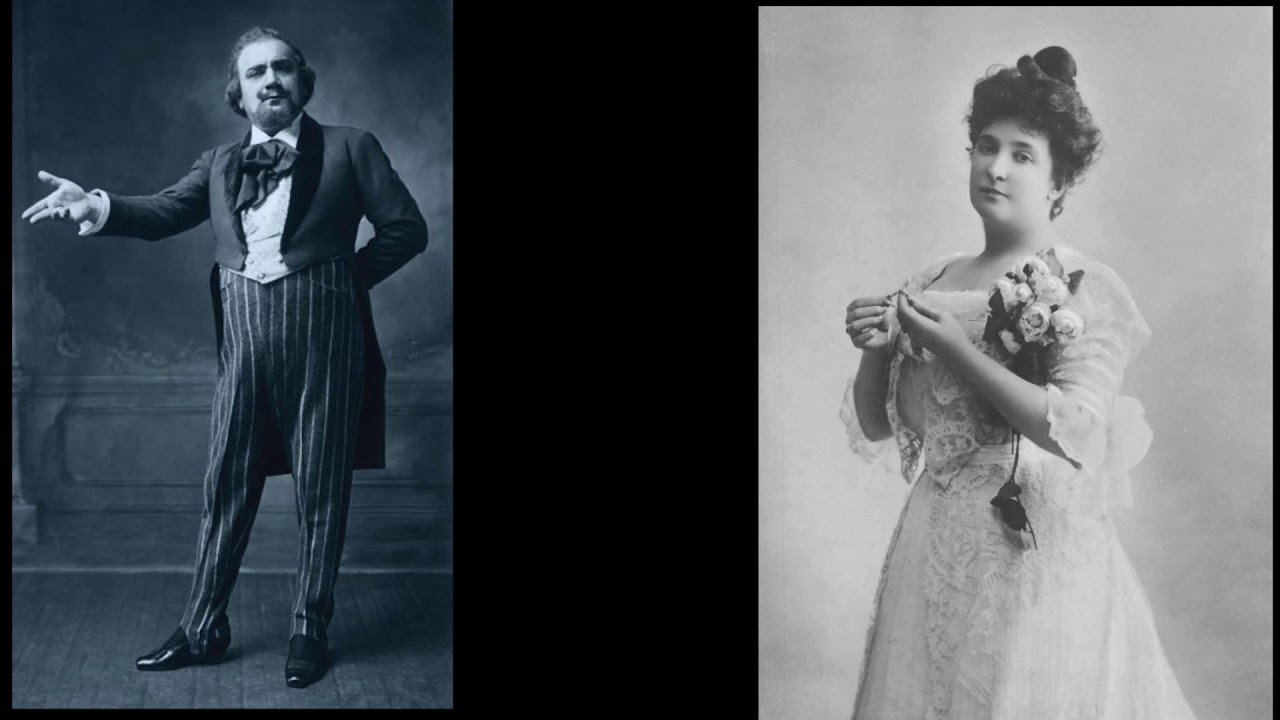
And for you Star Trek fans, with it’s weird chess board, here is “O soave fanciulla” from La Bohème with Caruso and Melba in 1896.

Is it possible that they also heard this recording in Brooklyn?

YouTube thumbnailYouTube icon

From 1996-2001 the Taliban made playing chess illegal.  If you were caught, the board was burned and you were jailed.

Again, a possible model for Traditionis custodes (to which some are lending the moniker Taurina cacata).


From a reader…

Saw your post on chess and thought you’d like to see the following.

My ancestors were printers in Brooklyn by trade for a few generations; some also played a bit of chess though I’m told, not so well.

Anyway, I remember being told that the Brooklyn Eagle which turned Into the Brooklyn Daily Eagle published from 1841 till 1955 and was once the largest daily in the US and had a large chess following and is now online has an historical record which is online.

Thought you’d like to know and be able to peruse.

http://www.chessarch.com/excavations/excavations.php?a=1&source=Brooklyn_Daily_Eagle

As Mr. Spock, seemingly the dominator of the weird chess board would say… “Fascinating.”

What a huge archive.

This is enough to remind everyone… everyone… that scripta manent. HERE

Look at THIS!

Posted in Lighter fare | Tagged ,
7 Comments

2021-23 Synod… “Walking Together”… with?

I sent this out to a few of my incredulous brethren the other day, with the note… “No.  Really.”

The Logo for the Synod (“walking together”) which is coming up.

I think it’s missing something… beyond heterosexuality.


Posted in Lighter fare, Synod | Tagged
38 Comments

Rome Shot 272 (bonus)

Photo by The Great Roman™

What you see here are small format bottles of the delicious beer brewed by the traditional Benedictine monks of Norcia, Italy.  There are two kinds, dark and blond, both extravagantly good, especially with cheeses and savories.

You can join their Beer Club and get their beer in these USA!   They send out the larger format bottles here, wine bottle size.

Yesterday was Buy A Priest A Beer Day.  How about today making it, Join The Monk’s Beer Club Day?


Coming soon… wine from French Benedictines!

Bonus points: Can anyone name at least two of the cheeses?   Two.  You will never get the third, but I’ll tell… eventually.


Posted in SESSIUNCULA | Tagged
9 Comments

Of chess and clerics

Out of curiosity, en passant as it were, are there any Catholic clerical chess players among the readership?


I don’t mean just clerics who know how to play, but rather clerics who do play.  More often than a couple times a decade, if you get my drift.

By “clerical” chess I do not mean a variant with lots of bishops on the board… what a nightmare to even consider.

Catholic clerics who play chess, consider dropping me a line with

I’M A CLERIC AND I PLAY CHESS

in the subject line.  To write:

>>HERE<<

Posted in SESSIUNCULA | Tagged
2 Comments