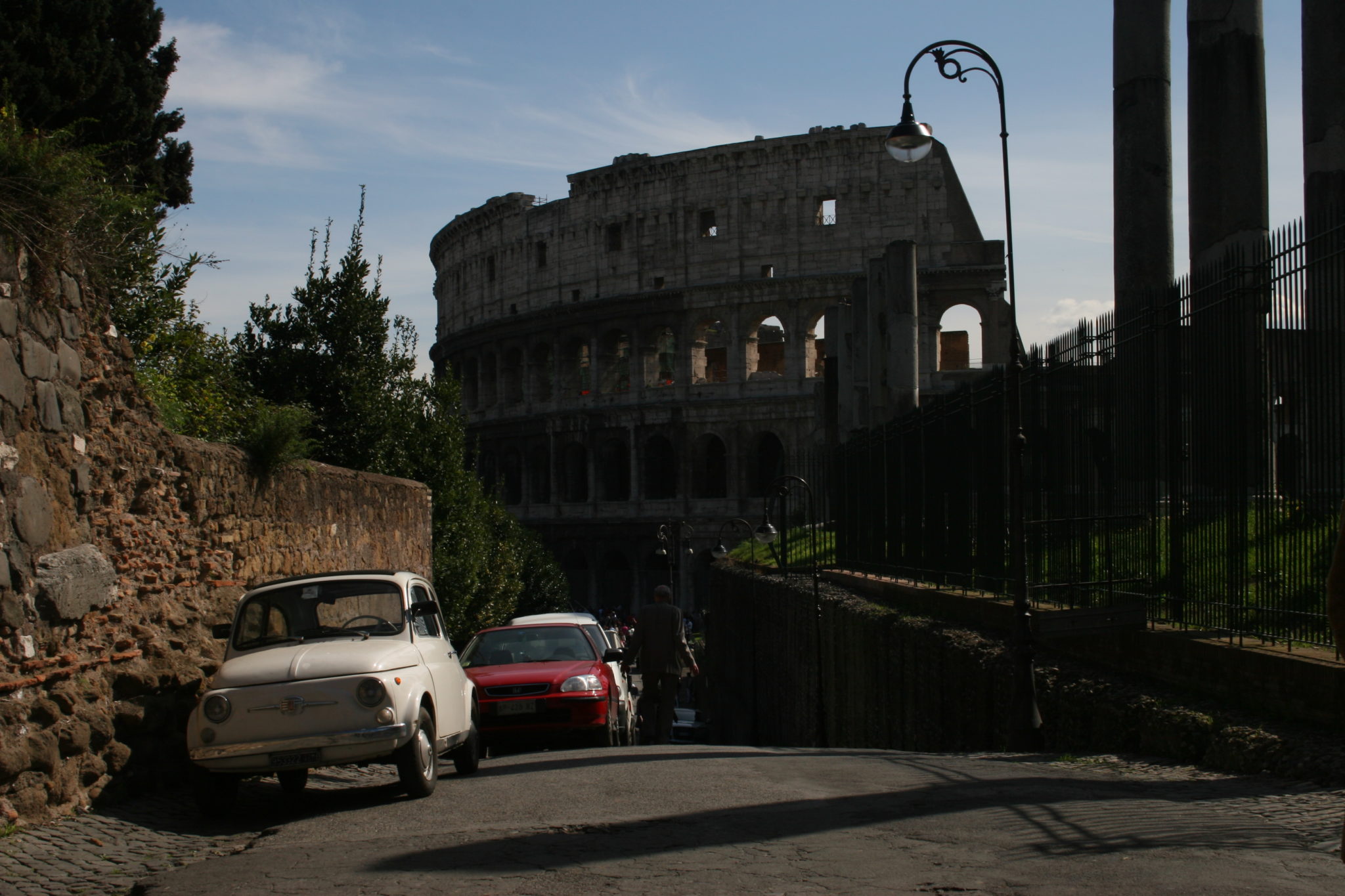
Today’s Fervorino from the daily Mass stream.
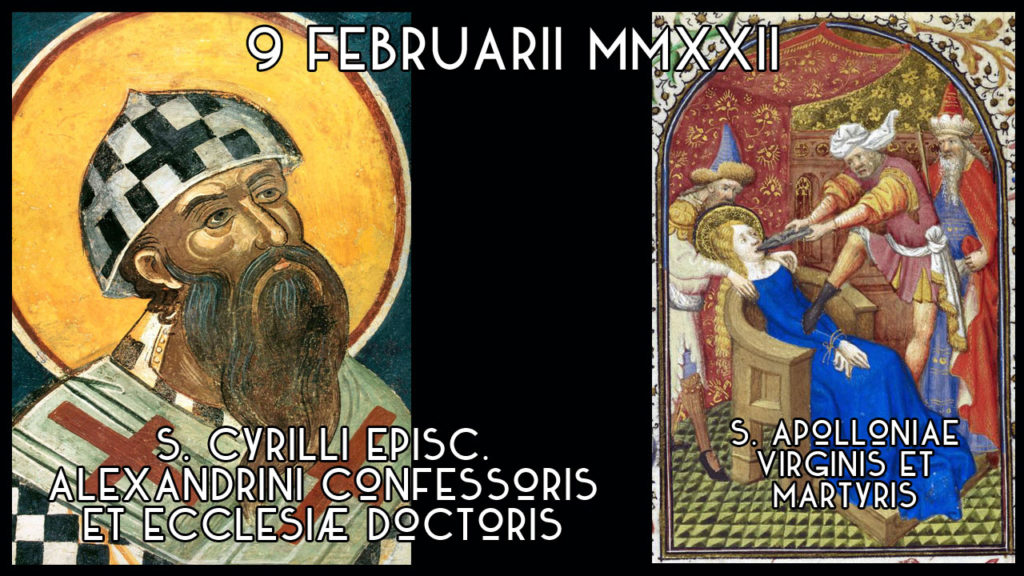


Words fail at the moment.
Remember that Rites themselves can’t be attacked. The people who desire those Rites are the true target.
From Latin Mass Montana:
Bishop Vetter Cancels All 1962 Latin Masses in Diocese of Helena
On February 1, 2022, Bishop Vetter made the decision to rescind his original position regarding the continuation of the Traditional Latin Mass (1962 Missal) in the Diocese of Helena. The position of the Diocese of Helena is that all Masses according to the Missal of 1962 are to cease as of Ash Wednesday. This was announced at St. Richard in Columbia Falls, on February 6th, via a sermon by Fr. Sean Raftis.
Bishop Vetter did not issue an official statement, [so… in a way… it isn’t really a law at all?] and instead stated via Fr. Bart Tolleson that he delegated authority to Fr. Sean Raftis and Fr. Lebsock to announce the new policy. We will have a written transcript of Fr. Sean Raftis’ sermon available on our website soon.
In October 2021, Bishop Vetter met with numerous parishioners at St. Richard in Columbia Falls who attend the 8AM TLM, in the wake of Pope Francis’ Motu Proprio Traditionis Custodes (TC). Bishop Vetter stated at the meeting that: “St. Richard is the TLM parish of the Diocese and nothing will change regarding the TLM at St. Richard.”
Now, just a few months later, Bishop Vetter is changing his position, citing the “bination rule” in the dubia responses issued by Archbishop Roche in December.
Bishop Vetter claims now that “Rome is forcing his hand” and that the clarifications from the dubia responses made him act, but the analysis of canonists and the decisions of other bishops in the US and abroad contradict Bishop Vetter’s position.
Furthermore, Bishop Vetter’s written response to our request to exercise his authority to override the “bination rule” using canon 87 was “I won’t grant it.” This response seems to further prove the point that it is in fact his decision and not Rome’s that has led to the suppression of the TLM in the Diocese of Helena.
[…]
In the upcoming Illustrated Dictionary of the Church, his photo will appear next to more than one entry.
This bishop is only 54.
Think of the many years of loving pastoral care they will have from him now.
Of course he might get moved… which might be the point of this whole exercise.
“Rome is forcing his hand”
No. He has options. The option he chose is total relinquishing of subsidiarity.
However, note that….
Bishop Vetter did not issue an official statement,…
No official statement? So… this is… what?…. “Pretty please, Father, don’t say the TLM anymore!” or else, “I am nervous about writing something so… keep saying the TLM and I’ll find ways to hurt you, Father.”
And he gave a sermon about how inclusive the whole “synodal process” is supposed to be. No one should feel excluded! Don’t want to write anyone off! HERE Fishwrap loved it.
I need to start applying the category of “The Last Acceptable Prejudice” also to these posts.
It is for men like that that I started…
THIS.
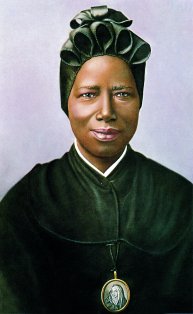 J.R.R. Tolkien’s concept of eucatastrophe runs strong with the Catholic “thing”. We Catholics know that there are some catastrophic events which produce unexpected blessings. Usually with a lot of pain along the way. O Felix Culpa!
I am trusting God to guide us through the catastrophe we are now experiencing in the Church, so that when we finally emerge on the other side we will have unforeseen blessings that outstrip our wildest dreams.
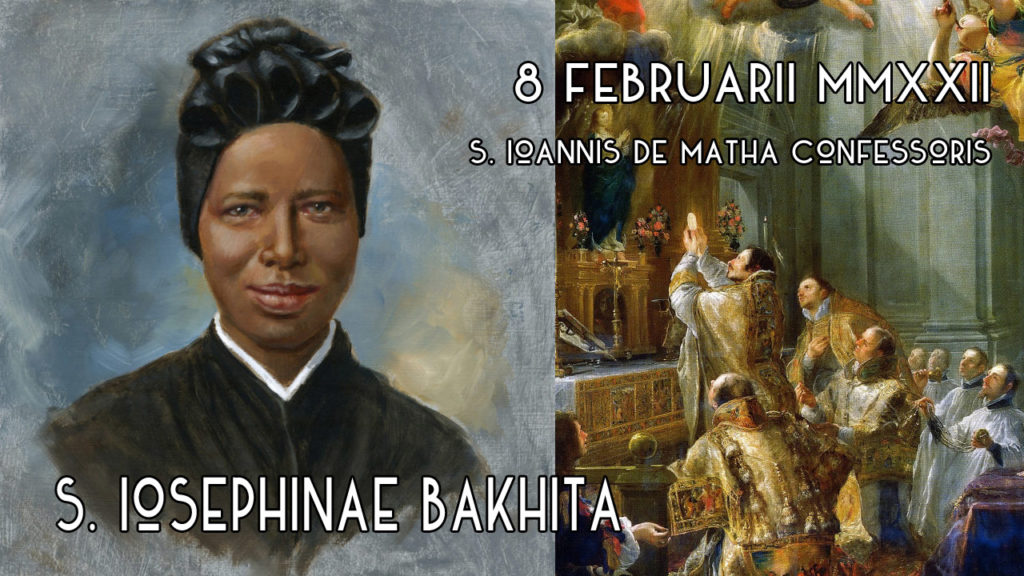
In a sense this describes St. Josephine Bakhita, a truly amazing saint. Check out a biography of her HERE.
Pope Benedict XVI wrote about her at length in his encyclical Spe salvi. Pope Benedict connects aspects of her life’s story to the times of the early Church.
She was sold into slavery as a girl and was eventually ransom, brought to Italy, baptized and entered religious life.
She would often kiss the baptismal font and say, “Here I became a daughter of God.”
Here is a quote from St. Josephine about her life as a slave:
“One day I unwittingly made a mistake that incensed the master’s son. He became furious, snatched me violently from my hiding place, and began to strike me ferociously with the lash and his feet Finally he left me half dead, completely unconscious. Some slaves carried me away and lay me on a straw mat, where I remained for over a month.
A woman skilled in this cruel art [tattooing] came to the general’s house…our mistress stood behind us, whip in hand. The woman had a dish of white flour, a dish of salt and a razor… When she had made her patterns; the woman took the razor and made incisions along the lines. Salt was poured into each of the wounds… My face was spared, but 6 patterns were designed on my breasts, and 60 more on my belly and arms. I thought I would die, especially when salt was poured in the wounds…it was by a miracle of God I didn’t die. He had destined me for better things.”
About her tormentors she would say:
“If I were to meet the slave-traders who kidnapped me and even those who tortured me, I would kneel and kiss their hands, for if that did not happen, I would not be a Christian and Religious today…”
Eucatastrophe.
For years I longed to be able to celebrate St. Josephine’s feast with the Traditional Latin Mass. Now, because of the 2020 CDF decree Cum sanctissima I can! Not only can I, I did, today.
I found her Collect in Latin (below) and used Mass “Dilexisti”.
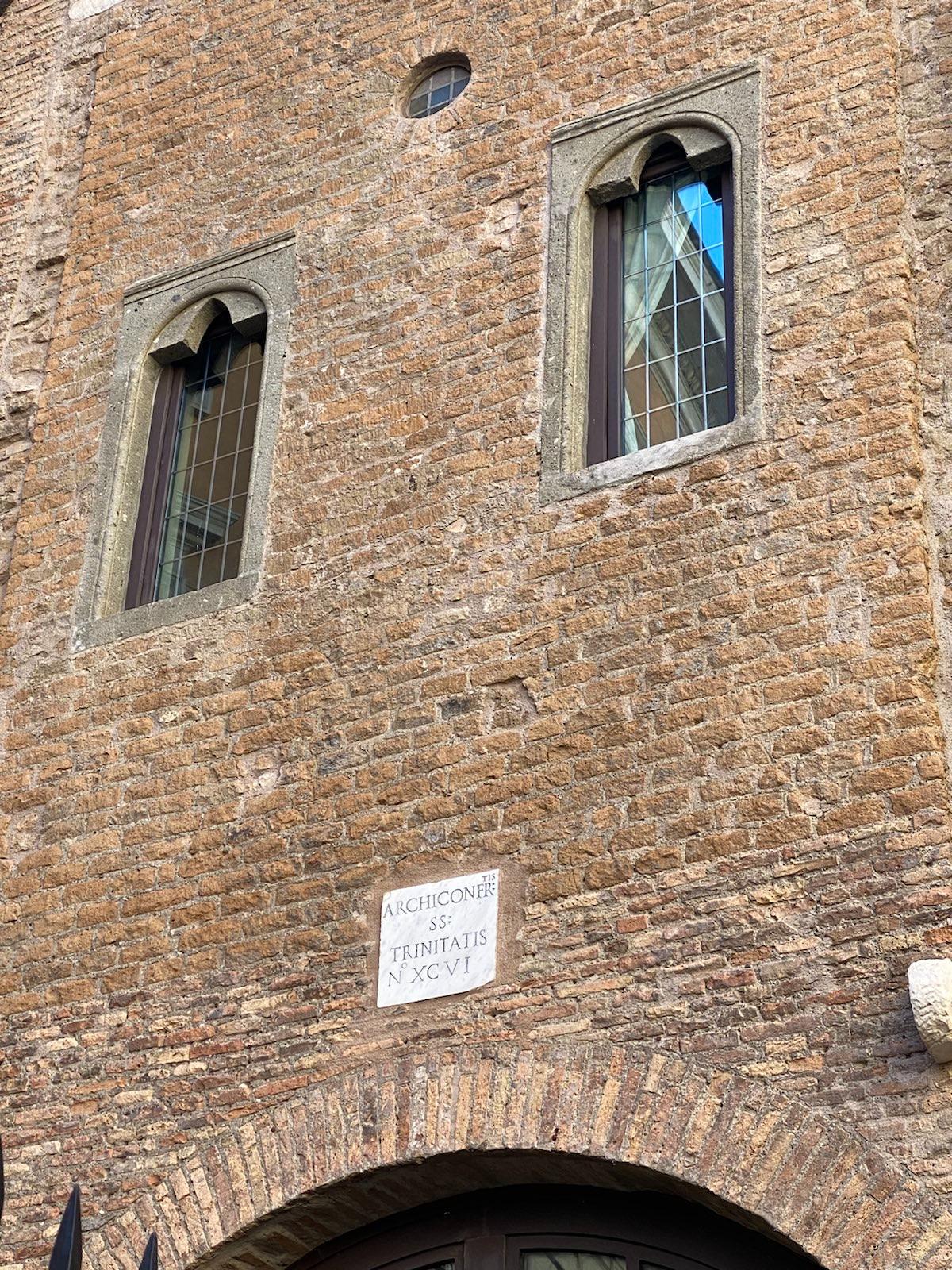
Also, fittingly, on the traditional calendar, today we celebrate the 12th c. founder of the Trinitarians St. John of Matha, who worked to ransom Christians who had been enslaved by members of the Religion of Peace. It’s appropriate that they share a day. I added his orations.
Here is her….
COLLECT:
Deus, qui beatam Iosephinam a servitute abiecta, ad dignitatem filiae tuae et Christi sponsae adduxisti, da nobis, quaesumus, eius exemplo, Dominum Iesum crucifixum constanti dilectione prosequi et in caritate ad misericordiam propensos perseverare.
The tricky word here is propensos from propendeo. If we can’t get this word right, nothing happens correctly in the last part of the prayer. Propendeo basically means “to hang forth or forward, hang down”. However, it comes also to mean, “to be well disposed, favorable”, “to be inclined”. This gives us the adjective pro-pensus , a, um. This means that we are asking God to make us to be people who are propensi. This is the tricky part. We must have here something like “grant to us… (to be) well-disposed (nos esse propensos) to persevere…”.
LITERAL TRANSLATION:
O God, who brought blessed Josephine out of abject servitude
unto the dignity of Your daughter and a spouse of Christ,
grant us, we beseech You, by her example,
to follow the crucified Lord Jesus with constant love
and to be well disposed to persevere in charity unto mercy.
CURRENT ICEL:
O God, who led Saint Josephine Bakhita from abject slavery
to the dignity of being your daughter and a bride of Christ,
grant, we pray, that by her example
we may show constant love for the Lord Jesus crucified,
remaining steadfast in charity
and prompt to show compassion.
 I received a note from a reader.
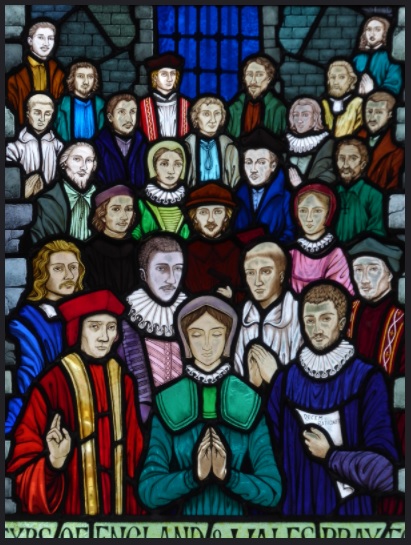
I was praying this litany of the English Martyrs today. Please note we implore them to always preserve the Latin Mass, something they died for in many cases.
Perhaps in these remarkable times this litany would afford comfort.
I love the English martyrs! Let devotion to them prosper!
Amen.
The Litany of the English Martyrs is perfectly sound and usable, but note that it is not one of the Litanies approved for public recitation.
A site with the Litany, which can be used privately. HERE
The Litany to the Forty English Martyrs
To Obtain a Wide and Generous Availability of the Immemorial Roman Mass
For Private Use Only
Lord have mercy on us.
Christ have mercy on us.
Lord have mercy on us.
Christ hear us.
Christ graciously hear us.
God the Father of Heaven, have mercy on us.
God the Son, Redeemer of the World, have mercy on us.
God the Holy Ghost, have mercy on us.
Our Lady of the Precious Blood, pray for us.
Our Lady, Queen of Martyrs, pray for us.
Saint John Haughton, intercede for us.
Saint Robert Lawrence, intercede for us.
Saint Augustine Webster, intercede for us.
Saint Richard Reynolds, intercede for us.
Saint John Stone, intercede for us.
Saint Cuthbert Mayne, intercede for us.
Saint Edmund Campion, intercede for us.
Saint Ralph Sherwin, intercede for us.
Saint Alexander Briant, intercede for us.
Saint John Payne, intercede for us.
Saint Luke Kirby, intercede for us.
Saint Richard Gwyn, intercede for us.
Saint Margaret Clitherow, intercede for us.
Saint Margaret Ward, intercede for us.
Saint Edmund Gennings, intercede for us.
Saint Swithun Wells, intercede for us.
Saint Eustace White, intercede for us.
Saint Polydore Plasden, intercede for us.
Saint John Boste, intercede for us.
Saint Robert Southwell, intercede for us.
Saint Henry Walpole, intercede for us.
Saint Philip Howard, intercede for us.
Saint John Jones, intercede for us.
Saint John Rigby, intercede for us.
Saint Anne Line, intercede for us.
Saint Nicholas Owen, intercede for us.
Saint Thomas Garnet, intercede for us.
Saint John Roberts, intercede for us.
Saint John Almond, intercede for us.
Saint Edmund Arrowsmith, intercede for us.
Saint Ambrose Bartlow, intercede for us.
Saint Alban Roe, intercede for us.
Saint Henry Morse, intercede for us.
Saint John Southworth, intercede for us.
Saint John Plessington, intercede for us.
Saint Philip Evans, intercede for us.
Saint John Lloyd, intercede for us.
Saint John Wall, intercede for us.
Saint John Kemble, intercede for us.
Saint David Lewis, intercede for us.
V. I shall go unto the altar of God.
R. Unto God. Who giveth joy to my youth.
Let us Pray.
O God, in Whom there is no change or shadow of alteration, Thou didst guve courage to Thy holy Martyrs through the unfathomable graces of the immemorial Mass. Grant unto us. we beg Thee, through their intercession, the wider estoration of this sacred rite of Mass, that we may rejoice in the consolation of its graces and be strengthened to serve Thee in imitation of the courage and fidelity of these holy Martyrs. Through our Lod Jesus Christ, Thy Son, Who being God, liveth and reigneth with Thee in the unity of the Holy Ghost, for ever and ever. Amen.
Too many people today are without good, strong preaching, to the detriment of all. Share the good stuff.
Was there a GOOD point made in the sermon you heard at the Masses for the 4th Sunday after Epiphany (Novus Ordo: 4th Ordinary Sunday).
Tell about attendance especially for the Traditional Latin Mass. I hear that it is growing. Of COURSE.
Any local changes or (hopefully good) news?
Those of you who regularly viewed my live-streamed daily Masses – with their fervorini – for over a year, you might drop me a line.
I have some written remarks about the TLM Mass for this Sunday – HERE
There was a BIG rally in Chicago today to ask Mary to soften the heart of Card. Cupich, who is actively attacking Catholics who desire traditional sacred worship.
Remember: an attack on the RITE is really an attack on the PEOPLE who frequent that rite. We are our rites.
I hear over 200 people showed up in the freezing cold.
Some things from the web.
Before the Rosary Rally, our family attended the ICKSP’s Shrine in Chicago. There was an overflowing, standing room crowd for the TLM on this first Sunday of the month.@EricRSammons @OnePeterFive @rtf_media @TaylorRMarshall @pontificatormax @liturgyfilm @chesterbelloc3 pic.twitter.com/rnD31KKukp
— Tridentine Brewing (@TridentineBrew) February 6, 2022
Huge turnout today to pray for the Latin Mass Chicago…
May Our Lady soften the heart of Cardinal Cupich that he will immediately remove all the restrictions he placed on the Traditional Latin Mass in the Archdiocese.
More photos: https://t.co/Z4OVjO0slN@TaylorRMarshall pic.twitter.com/VG09mQniC6
— Mater Dolorosa (@MaterDolorosa92) February 6, 2022
This is so edifying, and great to see. No letting up! https://t.co/E13XhRERta
— Cream City Catholic (@CCityCatholic) February 6, 2022
Today, concerned Catholics descended on Holy Name Cathedral in vast numbers to plead the intercession of Our Lady. United, we are confronting the many crises facing our Catholic Church. “For when two or more are gathered in my name, there am I in the midst of them.” Matthew 18:20 pic.twitter.com/XguGYJibKR
— Coalition for Canceled Priests (@canceledpriests) February 7, 2022
Before the Rosary Rally, our family attended the ICKSP’s Shrine in Chicago. There was an overflowing, standing room crowd for the TLM on this first Sunday of the month.@EricRSammons @OnePeterFive @rtf_media @TaylorRMarshall @pontificatormax @liturgyfilm @chesterbelloc3 pic.twitter.com/rnD31KKukp
— Tridentine Brewing (@TridentineBrew) February 6, 2022
I have always admired those in the Church who can think big, create projects, and bring them to completion.
Hence, I found this project fascinating. I’ve been following the videos.
The SSPX is building a huge church in Kansas dedicated to the Immaculate Conception. Apart from the fact that this is a new church, on a huge scale, that looks like a church (and then some!), the video is interesting from the point of view of the details of the construction. It’s worth viewing just to see how they use scaffolding to get into the cupola and prepare it with sprinklers so that the heads coincide with the stars that will be painted in the dome.
It is not necessary to build churches that look like municipal airports.
Each age of the Church and each cultural ethnic region has its own self-descriptive art forms. Church architecture expresses the Catholic identity of those who build it. If you look around at a lot of our churches, built in the past few decades, that’s pretty frightening. It’s as if they either didn’t know the Faith, or they hated it.
The space we choose to create for our sacred liturgical worship both shapes and reveals our identity. Worship interiorized leads to outward expression, both in our concrete acts in life and in the “ornamentation” of our liturgical action. All of these components express and form.
Liturgy is doctrine. Doctrine informs our minds and hearts. Hearts and minds hunger for more. Grace builds on nature. Love compels us back to worship and further study of the Faith.
Everything we are and all to which we aspire must begin in our worship and be brought back to it.
This is why the attack on Tradition is suicidal. But, there are some want to commit suicide and bring others with them. They don’t realize it, but those who actively attack traditional liturgical worship are ecclesial suicide bombers. It’s all so very sad. It urges us to try to understand what made them want that. They weren’t born that way, they were made into that. We, for our part, have to examine ourselves carefully to discern what part in their mortal devolution we may have played.
I digress.
These days we see grand churches such as the Shrine of Our Lady of Guadalupe in Wisconsin and the new Cathedral in Knoxville.
It is not obligatory to build ugly churches.



Coat of Arms by D Burkart
 Francisco12 on ROME 26/10– Day 14: Great scissors: “What a beautiful church! One doesn’t usually hear about the Barnabites much. I only found out about them a few…”
 on This is what I get when I procrastinate… UPDATED: “Apropos of nothing, when I hear “Gaylord” I always think of Gaylord Perry, Hall of Fame pitcher who pretty much…”
 on ROME 26/10– Day 12: “A church that cannot worship must be entertained, and …”: “This is the solution for the Oct 13 problem as comments seem to be turned off for that post. Black…”
 on From “The Private Diary of Bishop F. Atticus McButterpants” – 26-10-06 – Chester And Bp. Dozer: “Thanks, Father. I needed that.”
 on ROME 26/10– Day 12: “A church that cannot worship must be entertained, and …”: “Back in the day, corrupt Roman senators kept their power through “bread and circuses”; it seems that some in Church…” on ROME 26/10– Day 12: “A church that cannot worship must be entertained, and …”: “1. Re8+ Kh7 2. Ng3+ If 2. …. Kg7 3. Nh5# So 2. …. f6-f5 3. Bxf5+ Kg7 4. Nh5#”
 on ROME 26/10– Day 12: “A church that cannot worship must be entertained, and …”: “The chandelier and the wall of the Newburgh NY church look like they were stolen from Evil’s lair at the…” on ROME 26/10– Day 12: “A church that cannot worship must be entertained, and …”: “waalaw: Unless I’m missing something, after 4 R-g8+ black has Kf6.”
A Daily Prayer for Priests








They find you a pro-life agent in your area who commits to giving a portion of the fee to a pro-life group!

PLEASE subscribe via PayPal if it is useful. Zelle and Wise are better, but PayPal is convenient.
A monthly subscription donation means I have steady income I can plan on. I put you my list of benefactors for whom I pray and for whom I often say Holy Mass.
In view of the rapidly changing challenges I now face, I would like to add more $10/month subscribers. Will you please help?
For a one time donation...



Help Monks in Wyoming (coffee – UPDATED LINK) and Norcia (beer) and the wonderful "Soap Sisters" of Summit, NJ!


Please follow me on Twitter!










Visits tracked by Statcounter
since Sat., 25 Nov. 2006: