
Photo by The Great Roman™
 10% off with code
FATHERZ10

Today, 17 September, is the anniversary of the death of St. Robert Bellarmine, “hammer of heretics”. In the traditional calendar he is celebrated on 13 May.
Today is the 400th anniversary of his death.
This mighty Doctor was a true Jesuit. He was a scholar, a good teacher, and a humble servant. As Cardinal and head of the Roman Inquisition he would wash pots with the novices in the kitchen. He was deeply involved in the Galileo Affair. He wrote a Catechism worthy of use even today. He had a catechesis for children that would make our modern suburban RCIA instructors screw up their faces, curl and suck their thumbs. He was a mentor and then devotee of St. Aloysius Gonzaga. His hymn for St. Mary Magdalene is in the Roman Breviary.
I honor this great Robert today, in honor especially of his namesake, quondam Jesuit, the late Extraordinary Ordinary, Robert C. Morlino, Bishop of Madison who was.

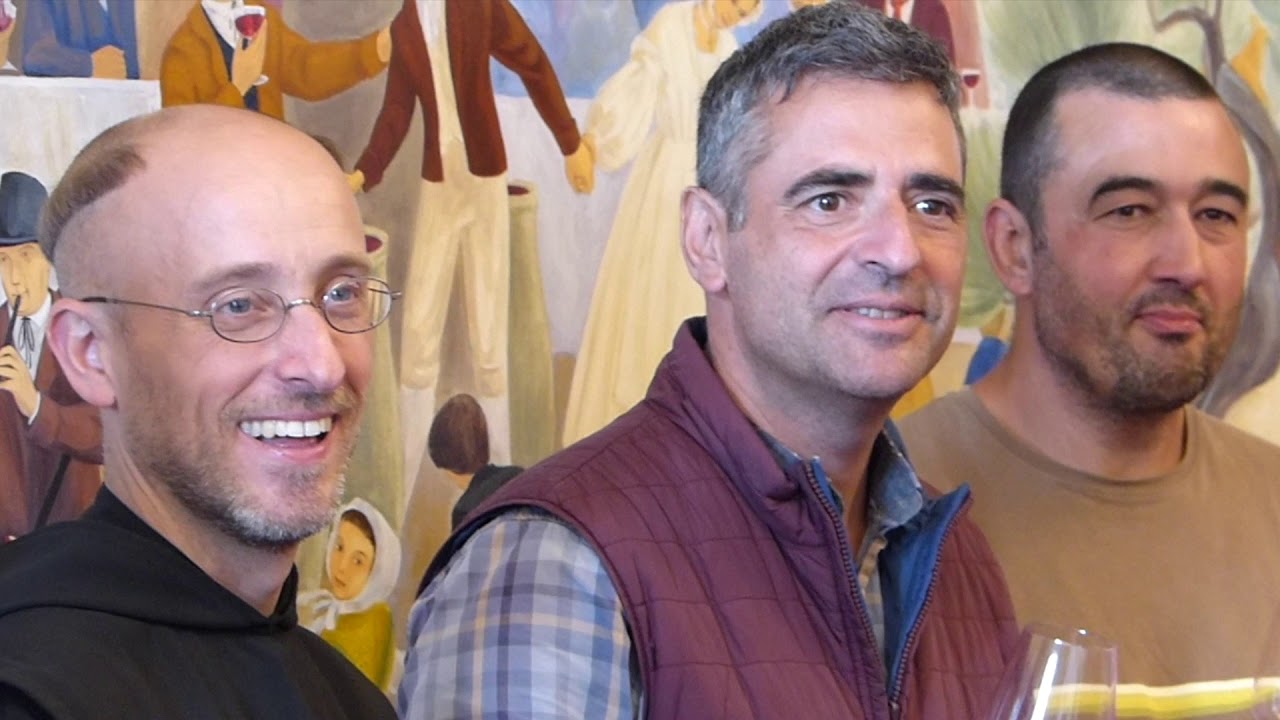
Here is an interesting photo.
During the Pachamama Synod, I dragged a few newsies who have a certain militant website away from the Vatican swamp and into Rome – real Roma – to visit a few necessary churches: San Luigi, Sant’Agostino, etc.
One of them was Sant’Ignazio, where we find the tomb of Doctor St. Robert.
On the far left… irony… there is a Catholic commentator famous among other things for his distinctive hair. These guys were terrific. They were so prayerful at each of the altars of the saints whom we visited.

I mentioned the Saint’s great works. His writings are being translated into English from Latin, at long last. This is an opus arduum.
Behold Controversies of the Christian Faith translated by the erst-while of Homiletic and Pastoral Review Fr. Kenneth Baker, SJ. US HERE

It’s hardcover only, I believe. But… look at the size of this thing!

The pages, from fairly subtle paper, are jammed with text.

“But Father! But Father!”, you terrified liberals are quaking, “Ho… ho… how long is this book?!? How many pages of so-called ‘sound teaching’ are there? If you are happy about this book, it must be rigid and ossified and … and… AGAINST VATICAN II! JUST LIKE YOU!”
To which I respond: Tremble, heretics, women’s ordination fans, and Fishwrap schismatics.
Next, available also on Kindle (don’t have a Kindle yet? US HERE – UK HERE), Doctrina Christiana: The Timeless Catechism of St. Robert Bellarmine translated by Ryan Grant with an introduction by the great Bp. Athanasius Schneider. US HERE – UK HERE
 I recall a time when I was genuinely eager for the rumored release of papal documents. They would come out and I would read them carefully looking for the good stuff.
These days I don’t have that zeal and I admit that, when I look at them, I brace myself against what I hope I won’t find, but know that I will.
Today I saw a headline that an anthology – third in a series – of some of Benedict XVI’s writings was published on something that deeply concerned him over many years – the identity of Europe. This volume includes thoughts about a burning issue: same-sex marriage.
Mind you, we had just heard Francis during the latest airplane chat effectively approve of same-sex marriages.
Hmmm… did he know this book was coming out, so to speak? The article, below, says Francis penned the Forward, available in Italian HERE. For a rather grim view of Francis’ plane presser, in Italian, HERE.
If you have Italian, check out Benedict’s Introduction in the 16 Sept Il Foglio. The book is
La vera Europa. Identità e missione published by Cantagalli.
A news summary from CNA:
Benedict XVI: Legalization of same-sex marriage is ‘a distortion of conscience’
Pope emeritus Benedict XVI has said that the legalization of same-sex marriage in many countries is “a distortion of conscience” which has also entered some Catholic circles.
In an introduction to a new anthology of his writings on Europe, Benedict XVI said that “with the legalization of ‘same-sex marriage’ in 16 European countries, the issue of marriage and family has taken on a new dimension that cannot be ignored.”
“We are witnessing a distortion of conscience which has evidently penetrated deeply into sectors of the Catholic people,” the pope emeritus wrote. “This cannot be answered with some small moralism or even with some exegetical reference. The problem goes deeper and therefore must be addressed in fundamental terms.”
The introduction, published in the Italian newspaper Il Foglio on Sept. 16, was written for the Italian book “The Real Europe: Identity and Mission.”
[..]The pope emeritus wrote that the fundamental upheaval of this idea was introduced with the invention of the contraceptive pill and the possibility it gave of separating fertility from sexuality.
“This separation means, in fact, that in this way all of the forms of sexuality are equivalent,” he said. “A fundamental criterion no longer exists.”
[…]
That last bit it important. This is the goal of the homosexualist agenda and all who promote it: separate sex from procreation. Once you do that, anything goes… including lowering the age of consent.
Read the whole thing there.

Not sure that this is how it works.
There is an instructive post at NLM by Gregory DiPippo about Ecumencial Councils that failed but were, nonetheless, legitimate Ecumentical Councils.
Councils are called because there is a problem, not just for the heck of it. Or so it ought to be. Gregory uses the example of how the problem of clerics abusively holding multiple benefices had to be addressed. He explains what benefices are, btw. Lateran V addressed the problem of a plurality of benefices it but got the solution wrong (it still allowed four simultaneous benefices). That doesn’t make Lateran V a non-Council or illegitimate. The failure makes it a failed Council. Trent had to get the job done correctly down the line.
With that in mind, here are a couple of interesting paragraphs.
Here, then, is the second lesson to be drawn from this matter: it is perfectly possible for an ecumenical council (such as Lateran V) to correctly identify a problem within the Church (plurality of benefice), without correctly identifying the solution to that problem. Indeed, it is perfectly possible for said council to correctly identify a problem, and offer as a solution the exact opposite of what was needed to solve it, by de facto allowing it to continue. And it is perfectly possible to say this without denying the legitimacy of Lateran V as an ecumenical council.
Likewise, it is perfectly possible that Vatican II correctly identified a problem within the Church, the then-current state of its liturgical life, without correctly identifying the solution to that problem. Indeed, it is perfectly possible for said council to have correctly identified the problem, and offered as a solution the exact opposite of what was needed to solve it. (Of course, no two councils or the events that follow them are exactly alike, and so we must here once again note that the post-Conciliar reform is what it is in large measure because it rejected what Vatican II had said about the liturgy.) And it is perfectly possible to say this without denying the legitimacy of Vatican II as an ecumenical council.
Not all legitimate Councils were good. Not all succeeded in solving the problems of the day. Some solved some problems but not all. Some Councils failed. They are still legitimate Councils.
Not all priests, bishops or popes were or are good. Some fail. Some are even wicked.
Not all juridical and disciplinary decisions made by ecclesial authorities are good, simply by the fact that they were issued by an authority. Some are really bad. That doesn’t mean that the authority didn’t really have authority. Well… maybe he didn’t. My point is that just because an authority does something authoritative, that makes what he did good.
Our Church has a human dimension. That’s going to mean, over time, lots of screw ups and downright evil. The grace of orders does not overwhelm our fallen human nature and force men to become virtuous or intelligent. Vices can be overcome, of course, but stupid is forever.
It has ever been so. Happily, Our Lord knew this and, so, built in some fail safes to prevent total disaster.
Remember. Our Lord promised that Church would not fail, but He didn’t promise it would last in North Africa, Asia Minor, these USA or Vatican City.
 I have received great news from the people handling the excellent Via Caritatis wine from the traditional Benedictines of Le Barroux in France.
The monks are working the first papal vineyards in France near Avignon. Some terraces go back to the 5th century.
You might remember that a stage of the Tour de France went through their area. HERE
If you order wine from them through me you can receive 10% off using this coupon:
FATHERZ10
I have ordered their wine twice now. I wouldn’t have ordered the second time if it wasn’t a) a good cause and b) good wine (not a minor point).
We have to support this monastery, my friends. After Traditionis custodes, I know that a lot of people are wondering about how to fulfill their obligation to give material support to the sustain the Church and works of religion. This is one good way.
Buy wine. Help them. Help everyone who desires Tradition.
We have to keep everything alive and well until bad times change to better.
A new way to ¡Hagan lío!
Here is my last bottle. This is Vox Angelorum… which is appropriate because the monks sing the hours very well. You can hear them live or on demand HERE.

Click!
More about their project.

This is a really interesting question from a reader…
QUAERITUR:
Is it sinful to make or use fake papers, vaccine passports, or false documents?
It depends.
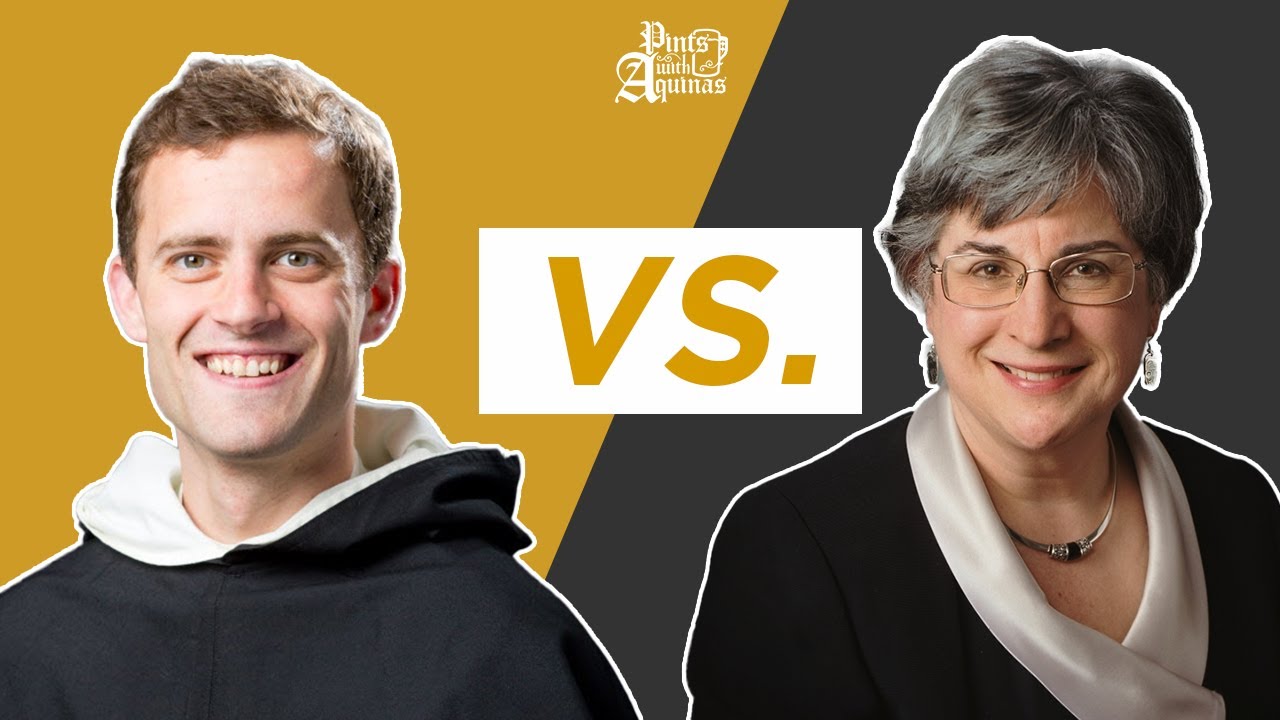
I direct you and others to a video of a debate about this issue (and related issues) between Dr. Janet Smith and Fr. Gregory Pine.
My option is that Dr. Smith made the better argument for the question: Is lying always wrong?
There are situations in which it is right to lie.
BAM BAM BAM BAM
[You open the door.]
DEIN AUSWEIS! SCHNELL!
[You hand over your identity papers.]
Versteckst du JUDEN in deinem Haus?
[Knowing you have Jews hidden in the basement, you answer.]
Nein.
So… watch this and think about it.
 What news did my mail and chat bring me today?
Corriere della Sera has, in Italian, Francis’ remarks on the airplane ride back to Rome after his trip in E. Europe.
UPDATE: The Vatican Press Office official transcript HERE – in some respects even worse than the CdS.
Some points.
Mind you, some will read his remarks and will – rightly – say that Francis didn’t quite say that. And, true enough, if you read very closely you can find a way out of the plain meaning of his words. The plain meaning. It is the plain meaning, not the nuanced escape, that will be picked up by the Fishwrap (I haven’t looked today but they probably still have the conga line going.), the papalatrous, the New catholic Red Guards and flung into the teeth of anyone who cites Catholic teaching. The Church could teach something clearly for a thousand years, but one comment on an airplane overturns everything. Their explanation? “Shut up!”, they explain.
So… some points:
Meanwhile, he has cruelly trampled on the hearts of the faithful who merely desire traditional liturgical worship.
I note with fairness that Francis clearly states that a civil union is not sacramental matrimony and that abortion is homicide. But it shouldn’t ever be in question that popes would hold to those truths.
I will close the combox on this one.
Take some time time to read Andrea Gagliarducci’s Monday column. HERE Whew… “Pope King”.
Today, the day after the Feast of the Exaltation of the Cross, is the Feast of Seven Sorrows of the Blessed Virgin Mary. There is an analogous commemoration on Friday after 1st Passion Sunday.
Some time ago, I wrote a series of reflections on the Seven Sorrows of the Blessed Virgin. I invite you to have a look.
Here are links to the individual posts
1st Sorrow – The Prophecy of Simeon
2nd Sorrow – The Flight into Egypt
3rd Sorrow – The loss of the Child Jesus in Jerusalem
4th Sorrow – Mary meets Jesus on the way to Calvary
5th Sorrow – The Crucifixion of Jesus
6th Sorrow – The Piercing of the Side of Jesus, and His Deposition
7th Sorrow – The Burial of Jesus
At the famous Basilica in Rome, Santo Stefano Rotondo we find this well-known image:


Coat of Arms by D Burkart









A Daily Prayer for Priests


They find you a pro-life agent in your area who commits to giving a portion of the fee to a pro-life group!

PLEASE subscribe via PayPal if it is useful. Zelle and Wise are better, but PayPal is convenient.
A monthly subscription donation means I have steady income I can plan on. I put you my list of benefactors for whom I pray and for whom I often say Holy Mass.
In view of the rapidly changing challenges I now face, I would like to add more $10/month subscribers. Will you please help?
For a one time donation...



Help Monks in Wyoming (coffee – UPDATED LINK) and Norcia (beer) and the wonderful "Soap Sisters" of Summit, NJ!


Please follow me on Twitter!










Visits tracked by Statcounter
since Sat., 25 Nov. 2006:


