
Photo by The Great Roman™


 UPDATED: See end.
Did you know that Canon 16 of the Fourth Council of the Lateran in 1215 forbade priests from playing chess? It was considered a game of chance (clearly by non-chessplayers). That canon also forbade participation of clerics at “the performances of mimics and buffoons” (“walking together”?).
On the other hand, in 1550 St. Teresa of Avila used chess imagery in her spiritual writings. The Church in Spain proclaimed her patron saint of chess players.
I could see having a chess society named after St. Teresa.
A good friend just sent a note with an article in the Los Angeles Herald of 25 June 1899:
PLAYS CHESS WITH THE POPE For Twenty One Years They Have Been Antagonists
In his days of Illness Leo XIII finds his chief amusement in chess. His regular partner is Fr Giulio, a Dominican monk of great wisdom and of sunny temperament, who holds the position of master of games in the Vatican. Fr Giulio was a friend of Leo’s predecessor, Pope Pio Nono, who gave him room and board in the papal palace for life on condition that he learn to play billiards. Pio adopted billiard playing as a means to get rid of much superfluous flesh. At the same time he gave up chess, in which Fr Giulio was an expert, for chess helped to make him fat. Pope Leo has never been bothered with too much flesh, and banished his predecessor’s billiard table to the servants’ quarters when he took up the reins. However, he gladly accepted Giulio’s services as a partner in chess. Pope and monk have now been playing against each other for over 21 years, yet it Is undecided which of the two is the other’s superior. In one respect Leo certainly is, for he never loses his temper together with the game. Fr Giulio, on the other hand, is so passionate a player that he is apt to become morose and get out of patience if the holy father checkmates him. Then Leo has sometimes to speak as Pope — not as a mere friend — to bring the usually even-tempered priest to his senses. When Leo, shortly after his enthronization, introduced the royal game as a regular pastime in the Vatican, some ascetic Cardinals raised an outcry. Invoking the decision of the Council of Treves, which forbade priests to play chess. The Pope listened to these fanatics with a superior smile on his lips. “I know all you want to say,” he remarked. “and I tell you that Bishop Petrus, who first thundered against chess, and the Treves Council, were both mistaken. The latter’s decision soon fell into disuse, and my namesake, Leo X, openly averred that there was no harm in chess playing. Even the fact that Martin Luther, his adversary, was a passionate chess player, made no difference.

In fact, both the Pope and Luther thundered against games of chance, while practicing chess.” Pope Leo has in his private library a valuable collection of books on chess written by renowned ecclesiastics. Among them is a prayer book by Jacobus de Cessolis, published in the year 1300, containing a number of smart sermons on chess playing. “Rules for Chess” were published by the Spanish Bishop, Ruy Lopez, in 1561, and by the Italian priests Pietro Carrera and Antonio Das Reves, 1617 and 1647, respectively. — New York Journal.
This is also in American Chess Magazine of July 1899 (Vol. 3, No. 1).
Here’s a fascinating synchronicity, amusing and really sad at the same time.

Note the library it came from and note the address where it was published.
I looked at that address and thought… how do I know that? Then it hit me.
132 W. 23rd in Manhattan is by the address of the now closed Church of St. Vincent at 123 W. 23rd, where my good friend Fr. Gerald Murray was pastor and where I used to spend a good deal of time. Here’s the street view from Google for that address:

The American Chess Magazine was published at
Jacobus de Cessolis (+c.1322) was the author of Libellus de moribus hominum et officiis nobilium ac popularium super ludo scachorum.
Around 1200, the Bishop of Paris (119-1208), Eudes de Sully (died in 1208), banned chess in Paris to his clergy. He forbade chess sets and chess boards from even being in homes.
Maybe this is the model for the treatment of the Traditional Latin Mass in Paris?
While looking for more on Leo XIII and chess, and also the rumor that John Paul II composed chess problems I stumbled upon this delightful account.
Here’s an account of a meeting of the Brooklyn Chess Club from the 2 Jan 1912, American Chess Bulletin (Vol. 9, No. 1):

Even with operatic selections on the phonograph! Very high tech.
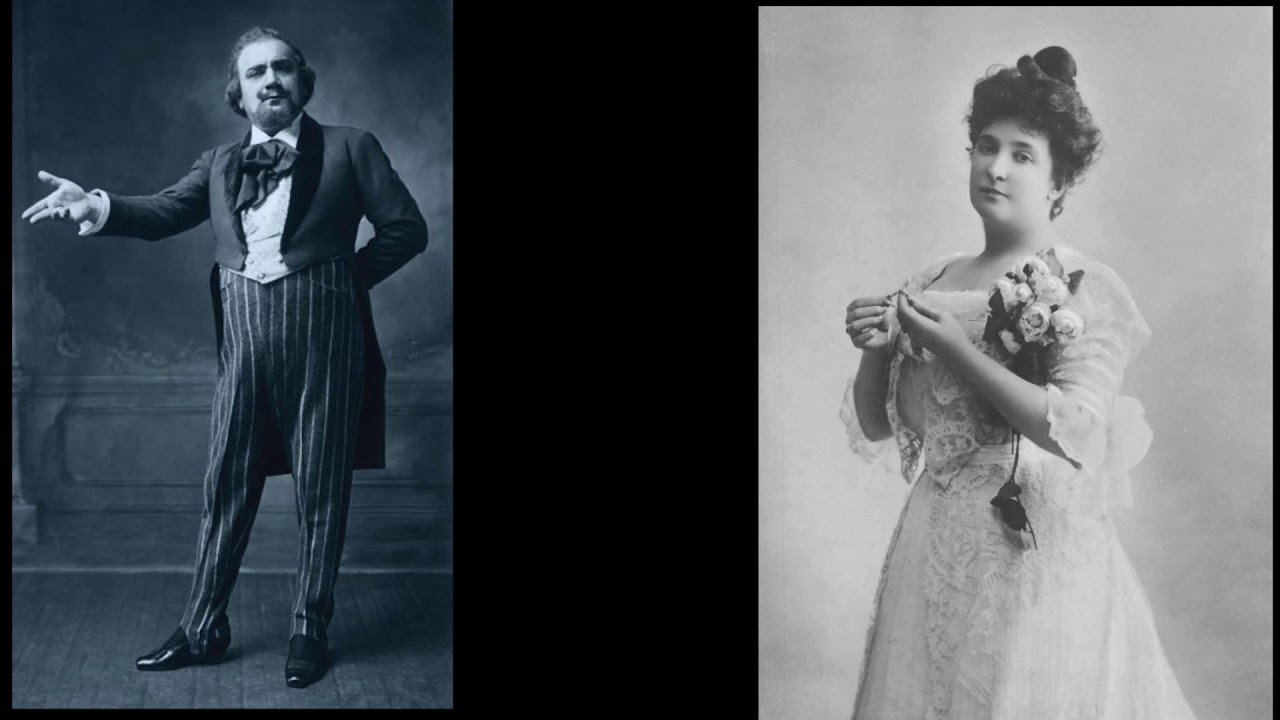
And for you Star Trek fans, with it’s weird chess board, here is “O soave fanciulla” from La Bohème with Caruso and Melba in 1896.
Is it possible that they also heard this recording in Brooklyn?

From 1996-2001 the Taliban made playing chess illegal. If you were caught, the board was burned and you were jailed.
Again, a possible model for Traditionis custodes (to which some are lending the moniker Taurina cacata).
From a reader…
Saw your post on chess and thought you’d like to see the following.
My ancestors were printers in Brooklyn by trade for a few generations; some also played a bit of chess though I’m told, not so well.
Anyway, I remember being told that the Brooklyn Eagle which turned Into the Brooklyn Daily Eagle published from 1841 till 1955 and was once the largest daily in the US and had a large chess following and is now online has an historical record which is online.
Thought you’d like to know and be able to peruse.
http://www.chessarch.com/excavations/excavations.php?a=1&source=Brooklyn_Daily_Eagle
As Mr. Spock, seemingly the dominator of the weird chess board would say… “Fascinating.”
What a huge archive.
This is enough to remind everyone… everyone… that scripta manent. HERE
Look at THIS!
I sent this out to a few of my incredulous brethren the other day, with the note… “No. Really.”
The Logo for the Synod (“walking together”) which is coming up.

I think it’s missing something… beyond heterosexuality.


Photo by The Great Roman™
What you see here are small format bottles of the delicious beer brewed by the traditional Benedictine monks of Norcia, Italy. There are two kinds, dark and blond, both extravagantly good, especially with cheeses and savories.
You can join their Beer Club and get their beer in these USA! They send out the larger format bottles here, wine bottle size.
Yesterday was Buy A Priest A Beer Day. How about today making it, Join The Monk’s Beer Club Day?

Coming soon… wine from French Benedictines!
Bonus points: Can anyone name at least two of the cheeses? Two. You will never get the third, but I’ll tell… eventually.
 Out of curiosity, en passant as it were, are there any Catholic clerical chess players among the readership?
I don’t mean just clerics who know how to play, but rather clerics who do play. More often than a couple times a decade, if you get my drift.
By “clerical” chess I do not mean a variant with lots of bishops on the board… what a nightmare to even consider.
Catholic clerics who play chess, consider dropping me a line with
I’M A CLERIC AND I PLAY CHESS
in the subject line. To write:
>>HERE<<

I wonder if any of this is transferable to another sphere.
But once you get that first star on, things change. Advancement becomes about subjective politics not empirical outcomes. When your next job and your next promotion depends on a vote of the United States Senate their priorities become your own. And you start to resemble a senator, more and more, and a general less and less.

UPDATE: THANKS!
DR, TS, KA, AR, MM
 NB: Scroll down for the Latin and English texts for the Blessing of Beer.
You don’t want to miss this. It’s too important. And this has been a really tough year for priests, all things considered.
Show a little love. Give a little TLC.
Monday 9 September is
International Buy A Priest A Beer Day!
Beer is so much more than just a great breakfast drink. It’s a sign of cordial support and good cheer.
You will want to obtain and deliver beer to your priests. I share the terrific Norcia Beer with the guys here. (Do visit their site – they need lots of support since the terrible earthquakes in Central Italy.)
Should any of you want to provide the undersigned (aka Father Z) with a beer one time, try this.

Click!
If some of you want to subscribe (to buy me a beer) once a month, you can use the thingy, below. (There are more options than the “BEER!” option.

Card. Ratzinger thinks you should subscribe!
Also, there is a blessing for beer in the old Rituale Romanum which a priest can impart.
When you bring beer to the priest, bring this prayer along and ask him to bless it and all the beer you bought for yourself!
V. Adjutorium nostrum in nomine Domini.
R. Qui fecit caelum et terram.
V. Dominus vobiscum.
R. Et cum spiritu tuo.Oremus.
Benedic +, Domine, creaturam istam cerevisiae, quam ex adipe frumenti producere dignatus es: ut sit remedium salutare humano generi, et praesta per invocationem nominis tui sancti; ut, quicumque ex ea biberint, sanitatem corpus et animae tutelam percipiant. Per Christum Dominum nostrum.
R. Amen.
Or else…
V. Our help is in the name of the Lord.
R. Who made heaven and earth.V. The Lord be with you.
R. And with thy spirit.Let us pray.
Bless, + O Lord, this creature beer, which thou hast deigned to produce from the fat of grain: that it may be a salutary remedy to the human race, and grant through the invocation of thy holy name; that, whoever shall drink it, may gain health in body and peace in soul. Through Christ our Lord.
R. Amen.
And it is sprinkled with holy water…. carefully.
 The Archbishop of Paris, Most Rev. Michel Aupetit, issued a letter to priests of that venerable see about Traditionis custodes.
Good news and bad news.
The good news is that the TLM will continue at Ste Odile (17e), Ste Jeanne de Chantal (16e), St Eugène-Ste Cécile (9e), St Roch (1er), and ND du Lys (15e).
However, Aupetit suppressed TLMs at Notre-Dame-du-Travail (14e – South Paris). What a lovely birthday gift for Our Lady.
Also suppressed, Saint-Georges-de-la-Villette (19e – East Paris), both in poorer areas. I am told that the miffed reaction was, “No TLM for the poor!”
Notre-Dame-du-Travail is fittingly on the Rue Vercingétorix… taken prisoner in defeat and later strangled in Rome.
One must ask: Cui bono?
Of course Saint-Nicolas du Chardonnet is not affected in any way except, perhaps by growing numbers of people.
We’ll always have Paris.
But some Parisiennes won’t have the TLM that is the foundation of their culture.
Happy Birthday to the Queen of Heaven!
HVMANI GENERIS SATOR ET QVI PARCERE LAPSIS
INSTITVIS MACVLAS VETERIS RUBIGINIS AVFER
ARGENTO THALAMVS TIBI SIT QVO VIRGO REFVLGENS.

Don’t forget prayers to St. Anne for the overturning of Traditionis custodes by divine interventions or by whatever means Heaven’s graces and human grit can manage. Meanwhile, may God soften the hearts of those who will interpret this cruel and unnecessary document.

Coat of Arms by D Burkart









A Daily Prayer for Priests


They find you a pro-life agent in your area who commits to giving a portion of the fee to a pro-life group!

PLEASE subscribe via PayPal if it is useful. Zelle and Wise are better, but PayPal is convenient.
A monthly subscription donation means I have steady income I can plan on. I put you my list of benefactors for whom I pray and for whom I often say Holy Mass.
In view of the rapidly changing challenges I now face, I would like to add more $10/month subscribers. Will you please help?
For a one time donation...



Help Monks in Wyoming (coffee – UPDATED LINK) and Norcia (beer) and the wonderful "Soap Sisters" of Summit, NJ!


Please follow me on Twitter!










Visits tracked by Statcounter
since Sat., 25 Nov. 2006:

