Daily Rome Shot 201

Posted in SESSIUNCULA | Tagged
8 Comments

Daily Rome Shot 200

Photo by The Great Roman™

Posted in SESSIUNCULA | Tagged
2 Comments

WDTPRS: 5th Sunday after Pentecost – Snatched up into invisible love

This Sunday’s prayer is at least as old as the Gelasian Sacramentary.  It has survived the post-Conciliar revisions to live again on the 20th Sunday of Ordinary Time.  The version in the Novus Ordo, however, adds a comma after ut.

COLLECT – (1962 Missale Romanum):

Deus, qui diligentibus te bona invisibilia praeparasti, infunde cordibus nostris tui amoris affectum; ut te in omnibus et super omnia diligentes, promissiones tuas, quae omne desiderium superant, consequamur.

The insuperable Lewis & Short Dictionary divulges that affectus means “a state of body, and especially of mind produced in one by some influence, a state or disposition of mind, affection, mood: love, desire, fondness, good-will, compassion, sympathy.”  An interesting verb is consequor which means among other things, “pursue, go after, attend, to follow” and also, “to follow a model, copy, obey”.  It conveys, “to follow a preceding cause as an effect, to ensue, result, to be the consequence, to arise or proceed from.”  I am choosing to say “attain.”

There are many words of loving and longing in today’s prayer.  We have diligo, amor, affectus and we have other tangential words like cor, desiderium, promissio.  Diligo is marvelous.  Initially it means, “to value or esteem highly, to love”.  It also carries the impact of “careful, assiduous, attentive, diligent, accurate”, as in our word “diligent”.  Desiderium is “a longing, ardent desire or wish, properly for something once possessed; grief, regret for the absence or loss of any thing [or person].”

LITERAL STAB:
O God, who prepares unseen goods for those loving You, pour into our hearts the disposition of Your love, so that we, loving You in all things and above all things, may attain Your promises, which surpass every desire.

This Collect pulses with longing.  When this prayer is pronounced aloud, in Latin, my ears tune in to the connection between invisibilia at the beginning and promissiones at the end.

The concepts in the prayer are presented in a climactic order.

We have a necessary unspoken starting point, logically before the prayer begins: the ways we love on our own, previous to or apart from the new character of the baptized Christian.  This is “natural” love.  The first words of the prayer draw us beyond merely human forms of love.  Those natural loves are transformed with the help of God’s grace.  We ask God to pour into His manner of loving, charity, into our hearts.  It is not that we cannot love in a merely natural, human way.  We desire that how we love may be transformed, raised up.  As we know from our Catholic theological tradition, and it is almost an axiom, “gratia non destruit, sed supponit et perficit naturam… grace does not destroy, but rather supposes and perfects nature” (St. Thomas Aquinas, STh la. 1.8.).   Our human nature was terribly wounded in the Fall from grace, but its essential goodness was not lost.  We can love in our fallen human way, but our loves can be disordered.  Grace builds on our nature, it perfects our way of loving in this life by aligning it with God’s love.

From this building up our our love in this world, then we aim in our prayer at the love awaiting us in heaven, a love beyond anything we experience in this life.  Heaven will complete our every hope and desire and surpass them.  That is how I connect invisibilia, “invisible things” and promissiones, “promises.”  We know they are there for us in heaven, but we cannot attain them yet.  We live in a state of “already but not yet” in regard to our participation in the Resurrection.  What awaits us after our entrance into the Beatific Vision is unimaginable.  We can only gasp and ache after it, long for the completion God promised.

So, I find in this Collect an ascent in and to true Love, indeed to Love personified.  But we should be wary of opposing too strongly natural and supernatural loves.

Human love, sometimes called eros, isn’t automatically contrary to “religious love”.  We are human beings, not angels.  We must avoid on the one hand the extreme of trying to profane what is supernatural by locking it into the finite, and on the other hand desiring only and purely supernatural love in this life, which would render us ineffective and powerless.  We find fulfillment of our good earthly loves in the perfect love which is only in God.  Grace builds on nature, it doesn’t destroy it.

Pope Benedict, in Deus caritas est  … God is love, his first encyclical signed on Christmas Day of 2005, reflects among other things on ancient, technical Greek terms for different kinds of love: eros and agapeEros and agape have different shades of meaning.  Agape is self-giving love.  Think of it in terms of “descending”, emptying oneself for the sake of giving to another. Eros (whence the word “erotic”) is a love which seeks to receive, to be filled from another. Think in terms of ascending, seeking to rise to fulfillment.

Both of these loves, eros and agape, are inherently good.  However, because of our fallen nature, eros can be corrupted to the disordered love of mere appetite or passion or grasping use, even in the sexual sense.  In a way, eros and agape are two dimensions of a complete love, which foresees and both giving and receiving.  Eros must be complemented with agape and elevated to the spiritual sense of Christian love, the Catholic sense of charity.  The proper integration of the love which is self-emptying and that which is self-fulfilling, which gives and which takes, comes from the infusion of God’s own love in grace.  There is a human dimension which is indispensable, but which can be complete only with God’s help.  God builds on our love, perfects it.

We therefore long for Love, we reach out to it, thirsting for its fullness, its completing, healing, transforming power.  As St. Augustine (+430) wrote in his Confessions, “our hearts are restless” until they come to their proper resting place, their fulfillment in God’s love.

In redeeming us, God does not unmake us.  He lifts up who and what we are and makes us whole again.  This is the promise which helps us live and hope in this vale of tears.  Think of the Preface for the Mass for Christmas, the day Pope Benedict signed Deus caritas est, the celebration of Love Incarnate:

“For through the mystery of the incarnate Word, the new light of Your glory dazzled the eyes of our mind, so that while we know God visibly, through Him we may be snatched up into invisible love… (in invisibilem amorem rapiamur).”

Richard of St. Victor said: “Love is the eye and to love is to see.”

Love is the key to seeing what, rather, the one who, is otherwise unseeable.  This kind of love, which seeks to give as well as to receive, which is raised to a new supernatural order by grace, also allows us to see what is loveable in our neighbor, despite our human frailty.


Posted in WDTPRS | Tagged , , ,
15 Comments

Daily Rome Shot 199

Photo by The Great Roman™?

Posted in SESSIUNCULA |
1 Comment

“Perdonamose!” St. John’s Birthday Feast, Midsummer Snails, and You.

I’m on the road, so here is something from last year.


Your planet once again is whirling its way towards your solstices, Summer in the North and Winter in the South.  Since the emphasis in Western Civilization has been northern, I’ll stick with that.

In the Northern Hemisphere the June solstice is the day with the most daylight and the shortest night.  It falls every year between 20-22 June, this year on 20 June.  The solstice marks the end of Spring and the beginning of Summer.

On Holy Church’s calendar we celebrated the Vigil of John the Baptist yesterday, 23 June, and the Feast of his Birth today, 24 June.  The reason we celebrate John near the solstice, both because we count the months of Elizabeth’s being with child, and because John said “He must increase, I must decrease”. The ancients knew that at this time of year the length of days began to decrease.  The Nativity of the Lord falls near the Winter Solstice, when the days – at last – get longer and light comes back to the world.

There are lots of fine traditions from different cultures which you might incorporate into your own observances.   I post this some days in advance so that you can prepare.

First, each year consider having a bonfire (and cookout) on the Vigil of the Nativity of the Baptist.  Invite your priests!  There is a special blessing in Rituale Romanum for fires on the Vigil.  After the usual introduction, the priest blesses (it should be done in Latin) the fire saying:

Lord God, almighty Father, the light that never fails and the source of all light, sanctify + this new fire, and grant that after the darkness of this life we may come unsullied to you who are light eternal; through Christ our Lord. All: Amen.

At this point the fire is sprinkled with holy water and everyone sings the hymn Ut queant laxis which is also the Vespers hymn.  I have more about that beautiful – and historically important hymn – HERE.  You might practice the hymn and sing it.

In some places the bonfire is used for the burning of witches… in effigy.  That could be fun.  The witch connection probably comes from the fact that the satanically inclined or possessed hold the solstice as one of their important annual moments for their vile rites.

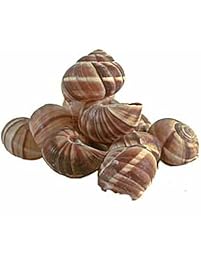
Also, I recommend the eating of snails.  This is very Roman. 

Romans traditionally eat snail of the Feast of John the Baptist, and so should you.

If you call yourself a traditional Roman Catholic…well… there’s no excuse.

Also, there is a witch connection with the snails and what Romans ate.

Romans would gather certain plants that were mature by this point, such as what we call St. John’s Wort, along with onions and garlic, which they thought drove off witches and demons.

Near St. John Lateran (named after both the Baptist and Evangelist) there was a little hill Monte Cipollario or “Onion Hill” that was eventually razed in the time of  Papa Lambertini – Benedict XIV.  It seems that lots of onions and garlic were cultivated in that zone.    In any event, the Romans gathered at St. John’s and ate lumache al sugo and greeted each other with the Roman dialect “Perdonamose!” (from “perdono… forgiveness”), a sort of way of mutual apologies and peacemaking.  It may be that the eating of snails comes from the fact, first, that at this time of year there are a lot of them and, next, they have horns, which could have symbolized discord and strife.  Hence, eating them did away with strife and promoted reconciliation.  “Perdonamose!”

To make and mess of lumache al sugo alla romana (aka ‘na ciumacata), you need well-purged snails, of course, along with tomatoes, olive oil, hot red pepper, onion, garlic, (preferably wild) fennel and/or mint. A couple versions I saw included anchovy.  Make your sauce and then add the snails, cook for a while, and serve hot with good bread.  This one is instructive HERE.  And, HERE. For wine …. why get fancy?  Stick with cold Frascati or another dry white from the Castelli Romani – even Velletri!

If you can’t get your hands on some snails, or enough snails, there’s always THIS… for lots of fun and conversation.   I am not making this up…

EDIBLE SNAIL ACTION FIGURE!

US HERE – UK HERE… nope, sorry!

Meanwhile get your canned or jarred snails and start planing: US HERE – UK HERE… nope, sorry again!

Finally, I sure would like to make some snails tonight.  Anyone want to pitch in?  HERE

Click!

There is also a very cool Medieval recipe I just found for cherries for St. John’s Day.


Posted in SESSIUNCULA |
4 Comments

Daily Rome Shot 198

Posted in SESSIUNCULA |
Comments Off on Daily Rome Shot 198

My View For Awhile: Knoxville’s Cathedral

In Knoxville they recently built a new Cathedral dedicated to the Most Sacred Heart of Jesus.

I’ll let photos speak for themselves.

Posted in SESSIUNCULA |
34 Comments

Daily Rome Shot 197

Photo by Bree Dail.

UPDATE your BOOKMARK


Posted in SESSIUNCULA | Tagged
2 Comments

DEVELOPMENT re: St Peter’s TLM Suppression. This could say something about rumored attack on Summorum Pontificum

BLURF ALERT

Bottom line… if there were serious talk in the Curia about suppressing Summorum, this news militates against it.


This is like clock work.  I’m trying to get on the road and this pops up.   So, without access to my laptop, etc., I’m working on an old Celeron!  It’s Zuhlsdorf’s Law.

You recall the St. Peter’s Suppression of Holy Mass in the Traditional Reform issued by the Secretariat of State founded on the most absurd of arguments about decorum, blah blah blah.

Today the Archpriest of the Basilica issued his own document which slightly walks back the harshness purposely levelled at the priests who desire to use the TLM, and therefore at Pope Benedict (still living).

After a great deal of rambling and gassy prose, you find some information about the Extraordinary Form:

Not my translation, below.

BUT… skip to EXCEPTIONS on the 2nd page.

“Everything possible must be done” to accommodate those who want to use the provisions of Summorum.  That’s a little funny, if you’ve lived in clerical circles in Rome.  A common response to requests is a wry smile, raised palms and a drawn out, “Non possumus!”

Permission for groups with “special needs” will be granted.  Who knows what that means.

Then…

Requests for individual celebrations can also be discerned from time to time, without prejudice to the principle that everything should take place in an atmosphere of recollection and decorum with vigilance so that what is exceptional does not become ordinary, distorting the intentions and the sense of the Magisterium.

Several points.   Which groups do you think are more likely to violate “decorum” in the Basilica?  A priest with some lay people for a LOW MASS at a side altar a zillion meters away from the chapels where some NO concelebration might be happening or perhaps a group of young people from Calabria with their guitars and gray-shirted cool priest in Italian?

And since when do these folks worry about the exceptional becoming the ordinary?   Like… Communion in the hand?

“Distorting the sense of the Magisterium….”?  Could someone please read me Benedict’s Letter with the release of Summorum?

Now look at the text yourself.

Posted in Si vis pacem para bellum!, SUMMORUM PONTIFICUM, The Coming Storm, The Drill | Tagged ,
14 Comments

22 June (Novus Ordo): St. John Fisher and St. Thomas More

In the Church’s traditional calendar St. John Fisher and St. Thomas More have their  feasts on 9 July.  More was martyred on 6 July and Fisher on 22 June.  In the Novus Ordo calendar they are celebrated today, together.


Pope John Paul II in 2000 declared St. Thomas more the patron saint of statesmen and politicians.

More makes you think about our catholic politicians today.   Fisher about our bishops.

Plus ça change…

Let us invoke the intercession of St. Thomas and of St. John for our public figures, secular and spiritual.

Animi caussa…

From the 2005 Martyrologium Romanum.

Sanctorum Ioannis Fisher, episcopi, et Thomae More, martyrum, qui, cum Henrico regi Octavo in controversia de eius matrimonio repudiando et de Romani Pontificis primatu restitissent, in Turrem Londinii in Anglia trusi sunt.  Ioannes Fisher, episcopus Roffensis, vir eruditione et dignitate vitae clarissimus, hac die iussu ipsius regis ante carcerem decollatus est; Thomas More vero paterfamilias vita integerrimus et praeses coetus moderatorum nationis, propter fidelitatem erga Ecclesiam catholicam servatam sexta die iulii cum venerabili antistite martyrio coniunctus est.

Anyone care to take a shot?

Mass texts in the Extraordinary Form for these two saints on 9 July are not easy to find.  I’ll give them to you in advance of July so you can get ready:  HERE

Huge thanks for the texts from my good friend, His Hermeneuticalness, Fr. Tim Finigan.  Pray for him.  He recently suffered a stroke.

Tonight… this great classic?

US HERE – UK HERE

Posted in Modern Martyrs, Saints: Stories & Symbols | Tagged ,
5 Comments