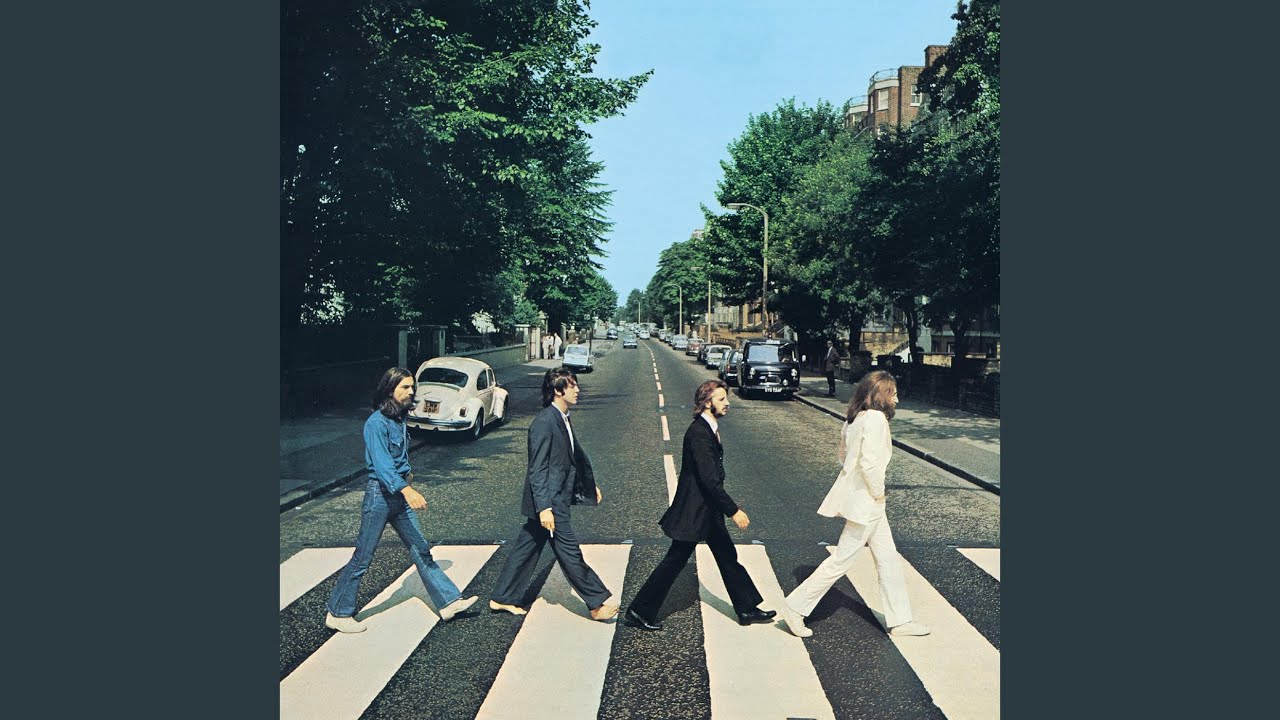
ROME 25/10 – Day 15: glimpses

Rome brightened with the rising sun at 17:17.

The light dissipated after sunset at 18:35.

The non-ringing of the Ave Maria Bell was at 18:45.

It is the Feast of Carlo Acutis. In celebration of such, an arsonist – perhaps a practitioner of the “religion of peace” torched the monastery in France where he received his 1st Holy Communion. Burned to the ground, with the exception of a statue of Our Lady. The nuns in the convent got out with their lives.

The crowds in Rome are dense.

Please remember me when shopping online and use my affiliate links.  US HERE – UK HERE  WHY?  This helps to pay for health insurance (massively hiked for this new year of surprises), utilities, groceries, etc..  At no extra cost, you provide help for which I am grateful.

In chessy news… the US Championship is going on in St. Louis.  My guy Wesley So is up again the unlikeable Hans Niemann.  There is no one I would like to see Wesley defeat more than Niemann (maybe more than Puer).  Anyway, they are in new digs and they haven’t considered all the issues of LIGHT through the skylights!   It was strong enough that the arbiter got an umbrella (lit. little shadow) to get the direct sunlight out of Wesley’s eyes.

Players were amused.  A commentator joked that Niemann could complain to the arbiter for unfair help!

As it turns out Wesley and Niemann drew.  That means that in over 10 ten years, Wesley has not lost in the 1st Round.

YouTube thumbnailYouTube icon


Posted in SESSIUNCULA |
2 Comments

ASK FATHER: You haven’t commented on Pope Leo’s new document?

From “readers” distilled.

QUAERITUR:

You haven’t commented on Pope Leo’s new document? How come?

The problem is that, by the spiritual abuse and constant drubbing we have had, over the last years, with the looming threat of some other looney off the cuff remarks or bizarre footnote even more bizarrely defended, many people have a kind of PTSD or the effects of moral abuse.

I remember back when we heard that a new papal document was about to come out and we would rub our hands together in anticipation.  We’d get it and work through it looking for all the good stuff.

Then, more recently, we hear there is a papal document and many say, “no, not another”.   Then you spend a week with the sort of dread you have on a Sunday Mass in a suburban parish wondering how cringeworthy the sign of peace will be…but it takes a “week”.   You ring your hands and look to the exits.  Then, when they get the document, their first impulse is to look for the bad stuff.  And they find it.

That’s NOT their fault.

We need now years of healing.  The damage of moral abuse does not go away easily.

That said…

This is not Leo’s intentional document, that is, programmatic for his pontificate as Redemptor Hominis was for John Paul II.

The document. It isn’t all that interesting. Take care of the poor.  Okay!  Greed is bad.  Okay!   Heaven is more important than earthly wealth.  Okay!

There are a lot of contingents to be sorted and people will have different solutions.

It seems to be a continuation in some vectors of what we had before which was profoundly uninteresting because of its lack of balance. For example, it isn’t just to speak of what everyone is supposed to do for a massive illegal influx of people across a sovereign nation’s border, without also addressing the disappearance of hundreds of thousands of children probably to trafficking of the worst sort, or the massive disturbance the newcomers make within a nation’s borders thereafter.

Gotta let’em all in is just shallow.  Does that also include single men of military age from China?

The walls around the Vatican remain very much standing.

However, I will also say that although there are many statements we can’t merely accept without reservation, this document is great for the depth and breadth of its scriptural, PATRISTIC (a main interest of mine), and historical treatment of poverty in the teachings and apostolic works of the Church throughout two millennia.

As for the usual suspects talking and writing about it making videos, etc., who pop up like midnight mushrooms now, I suggest that they at least get the NAME of the document right.  Its Dilexi te… not Delixit te (to the guy who decided not to respond to my multiple emails back when).

Just sayin’, friend.

Let’s take a look at a paragraph and see what can be extrapolated from it.

13. Looking beyond the data — which is sometimes “interpreted” to convince us that the situation of the poor is not so serious — the overall reality is quite evident: “Some economic rules have proved effective for growth, but not for integral human development. Wealth has increased, but together with inequality, with the result that ‘new forms of poverty are emerging.’ The claim that the modern world has reduced poverty is made by measuring poverty with criteria from the past that do not correspond to present-day realities. In other times, for example, lack of access to electric energy was not considered a sign of poverty, nor was it a source of hardship. Poverty must always be understood and gauged in the context of the actual opportunities available in each concrete historical period.” [10] Looking beyond specific situations and contexts, however, a 1984 document of the European Community declared that “‘the poor’ shall be taken to mean persons, families and groups of persons whose resources (material, cultural and social) are so limited as to exclude them from the minimum acceptable way of life in the Member States in which they live.” [11] Yet if we acknowledge that all human beings have the same dignity, independent of their place of birth, the immense differences existing between countries and regions must not be ignored.

I can’t shake the idea that this means that if you don’t have a mobile phone and internet, you are “poor”.

On the the hand, I remember times when you were thought to be “poor” when you couldn’t get work.

Having stuff or not is not a measure of poverty.  We mustn’t discount the spiritual poverty which Mother Theresa underscored and we must forget John Paul II on the dignity of work.

Now, it seems to be access to stull.  Mostly free stuff.  And there is no such thing as “free stuff” because ultimately someone had to pay to produce it.

Remember “Obama phones”?  I remember videos of people in Detroit lined up for free phones.  Asked where they came from, laughter, “I don’t know… his stash!”.

It is a corporal work of mercy to give aid to the poor.  This is an imperative from Christ.

However, I am not sure that this globalistic labeling of “poor” is what we are to be on watch for in our daily lives.

I’m reminded of Screwtape who told his student Wormwood to get his “patient” interested in “the poor”.  “The poor” … out there, the concept.  Not the poor guy right in front of you.

Keep it abstract.

A take away is that this document from Leo could prompt people to do deeper dive into the more profound social teaching documents which popes gave us some, say, 15 years ago and more.

In sum, this document… okay.  I look for something better, and more concrete, that says something new, down the line.  Still, repetitia iuvant.

Posted in SESSIUNCULA, The Drill | Tagged , ,
9 Comments

D. of Charlotte… worse than what happened in Canterbury Cathedral

Today I had a chance to talk to someone who lives in the geographical area affected by the Bishop of Charlotte’s cruel acts. What he said made it even clearer to me why it was so mean-spirited.

Posted in Be The Maquis | Tagged
3 Comments

Your Sunday Sermon Notes – 18th Sunday after Pentecost (N.O.: 28th) 2025

Too many people today are without good, strong preaching, to the detriment of all. Share the good stuff.

Was there a GOOD point made in the sermon you heard at your Mass of obligation for this 18th Sunday after Pentecost, the 28th Sunday of Ordinary Time in the Novus Ordo.

Tell about attendance especially for the Traditional Latin Mass.

Any local changes or (hopefully good) news?

A couple thoughts about the sign of the cross: HERE  A taste…

[…]

Paul says that the Corinthians, and we, their distant heirs, have been “enriched with all speech and knowledge,” so as to lack no spiritual gift while we wait for the Lord’s revealing. This enrichment is not mere eloquence or erudition but the infusion of faith that blossoms into wisdom. Augustine’s adage “Crede ut intellegas… Believe, so that you might understand” (cf s. 43.9) illumines the line like a shaft through stained glass, or through an opened roof. Knowledge (scientia) alone cannot reach the mystery; only wisdom (sapientia) rooted in faith can perceive its form. Isaiah’s words, “Nisi credideritis, non permanebitis… Unless you will have first believed, you will not endure,” link faith and firmness, belief and endurance. To believe is to stand solid on the rock that no storm can move. Augustine makes of this: Nisi credideritis, non intellegetis… Unless you will have first believed, you will not understand” (tr. in Io. 29.6).

[…]

Posted in Sermons, SESSIUNCULA | Tagged
4 Comments

YOUR URGENT PRAYER REQUESTS

PLEASE use the sharing buttons! Thanks!

In your charity would you please take a moment look at the requests and to pray for the people about whom you read?

Continued from THESE.

Let’s remember all who are ill, who will die soon, who have died recently, who have lost their jobs, who are afraid.

I get many requests by email asking for prayers. Some are heart-achingly grave and urgent.

As long as my blog reaches so many readers in so many places, let’s give each other a hand. We should support each other in works of mercy.

If you have some prayer requests, feel free to post them below.

You have to be registered here and approved to be able to post.

  • In your kindness continue prayers for my mother, who has been diagnosed with something grave, progressive and incurable.
  • Pray for me, for my circumstances and wisdom in my decisions.
  • Pray for a really good episcopal appointment which could have a massive impact.
Posted in Urgent Prayer Requests |
35 Comments

National Chess Day Sale – 11 October

Nice people! Great service!

Get some chess stuff!

Do you have a board already? Get one for a friend. Every house, especially with kids, should have chess set.

There are electronics you can use to train, along with books… remember books?

Interested in learning?  Try THIS.   From him also:

20 July is International Chess Day!

Posted in SESSIUNCULA | Tagged
Comments Off on National Chess Day Sale – 11 October

ROME 25/10 – Day 14: A blessing

7:16 is when the sun brought rosy fingered Dawn to Rome.

The  Roman sun sets today at 18:37.   We move from the 19:00 cycle to the 18:45 cycle for the non-ringing of the Ave Maria Bell.

It is the Feast of John XXIII on the official calendar.  I’m sure that the great devotion and cult for him outshines even that which Paul VI is famous for.   Churches all over the world are celebrating.

On the other hand, it is also the Feast of the Maternity of Mary in the traditional calendar.

In the newer calendar, it is the Feast of St. Philip the Deacon, one of the seven chosen by the Apostles.  He is mentioned in the blessing in the Rituale Romanum for a car.   The Ritual has “currus” for car but Fr. Foster (and the Holy See) has used also “autorhaeda”.

Here is the blessing, which is typical of the Roman genius, having a fun little twist while calling to mind our passage through this vale of tears towards eternal life:

Benedictio vehiculi seu currus

V. Adjutórium nostrum in nómine Dómini.
R. Qui fecit cælum et terram.
V. Dóminus vobíscum.
R. Et cum spíritu tuo.

Orémus.
Propitiare, Dómine Deus,supplicatiónibus nostris, et béne + dic currum istum déxtera tua sancta: adjúnge ad ipsum sanctos Angelos tuos, ut omnes, qui in eo vehéntur, líberent et custódiant semper a perículis univérsis: et quemádmodum viro Æthíopi super currum suum sedénti et sacra elóquia legénti, per Levítam tuum Philíppum fidem et grátiam contulísti; ita fámulis tuis viam salútis osténde, qui tua grátia adjúti bonísque opéribus júgiter inténti, post omnes viæ et vitæ hujus varietátes, ætérna gáudia cónsequi mereántur.Per Christum Dóminum nostrum.
R. Amen.
Et aspergatur aqua benedicta.

Here is an English version:

V. Our help is in the name of the Lord
R. Who made heaven and earth
V. The Lord be with you
R. And with your spirit

Let us pray
Be merciful, O Lord God, on account of our prayers, and with your holy right hand bless this car: appoint your holy Angels to accompany it, that all who travel in it may be delivered and protected at all times from every danger: and just as you through your minister Philip bestowed faith and grace upon the Ethiopian sitting in his chariot and reading the sacred Scriptures, so also show the way of salvation to your servants, who, aided by your grace and ever intent upon good works, after all the vicissitudes of this life and journey, may be found worthy to obtain eternal joy. Through Christ our Lord. Amen.
R. Amen.
The vehicle is sprinkled with holy water.

Just for fun.


Please remember me when shopping online and use my affiliate links.  US HERE – UK HERE  WHY?  This helps to pay for health insurance (massively hiked for this new year of surprises), utilities, groceries, etc..  At no extra cost, you provide help for which I am grateful.

Disgrace deserving of the severest scorn.

Continuation of last nights repast. Yesterday I gave you the first part.

Orata al forno.

It was perfect. And just right amount. Not too filling.

Homemade ciambelline and amaro.

And that concludes the Friday Supper Report.

Oh yes, we had a Catarrato with the whole meal.

Speaking of wine.

And this in California…

This is best with the sound down… weird choice of music.

In chessy news… chess.com… the 13th World Champion Garry Kasparov dominated to win 2025 Clutch Chess (Fischer Random). Coincidently precisely 30 years ago in October, Kasparov was defending his title against the challenger Anand in the 1995 World Chess Championship match.

White to mate in 4. Hardish.

NB: I’ll hold comments with solutions ’till the next day so there won’t be “spoilers” for others.

Priestly chess players, drop me a line. HERE

Posted in SESSIUNCULA |
6 Comments

Cross-Posting with One Peter Five: 18th Sunday after Pentecost

Some of you may know that I also post a weekly offering at One Peter Five.  I comment on the readings for the upcoming Sunday Mass, and sometimes also an oration.  Here is something of what I wrote for this week:


As the northern hemisphere drifts from the fullness of summer into the crisp melancholy of autumn, Holy Church too moves into a season of spiritual harvest. In her ancient cycle of Sundays, formed in the lands where the light fades earlier each day, she begins to turn her gaze toward the final realities – the waning of the world’s daylight and the dawning of the eternal. Our sacred liturgical worship becomes autumnal, charged with the scent of judgment and the rustle of things passing away.

Increasingly, the texts of Holy Mass speak of the end, of the apokalypsis, of the return of the Just Judge. It is no accident that in the modern Novus Ordo, the Epistle once heard on this 18th Sunday after Pentecost – St. Paul’s words to the Corinthians – now resounds on the first Sunday of Advent, the most eschatological of seasons. Even though some bishops amazingly try to curtail ad orientem worship, in both the Novus Ordo and the Vetus Holy Church in her liturgical worship, the warp and weft of our Catholic identity, turns her eyes eastward, ad orientem, to the rising of the true Sun, to the Advent of the Lord who is coming and who has come.

As the fields yield their last fruits, the Church gathers her own: souls recalled to grace, hearts turned again toward the Face that judges and saves.

Our Gospel this Sunday, Matthew 9:1-8, opens in Capernaum, Jesus’ adopted town. However, the fuller story begins, curiously, across the water. We need a wider context for this Sunday’s Gospel.  The preceding chapter of Matthew, the eighth, places Our Lord in the land of the Gadarenes (or Gerasenes) in Gentile country east of the Sea of Galilee. There He performs an exorcism and the unnerving miracle of the swine which rush screeching to their death in the sea.

Matthew 8:28–34, Mark 5:1–20, and Luke 8:26–39 each tell the story, with their own brushstrokes. Mark and Luke show us a single demoniac, naked, howling, cutting himself, fierce enough to snap chains, possessed by the demons who name themselves “Legion.” Matthew, however, has two demoniacs, the man possessed by “Legion” and another possessed by an unnamed demon. Discrepancies between the Gospels troubled the Fathers less than it troubles the modern literalist. St. Ambrose observed, “I think we should not idly disregard but seek the reason why the Evangelists seems to disagree about the number. Although the number disagrees, the mystery agrees” (Expos. in Lucam 4.44). Scripture, for Ambrose and his like, is not to be deconstructed but to be read with the mind of the Church.   He saw in the unclothed demoniac a figure of fallen humanity: “Whoever has lost the covering of his nature and virtue is naked…. A man who has an evil spirit is a figure of the Gentile people, covered in vices, naked to error, vulnerable to sin.”

When Christ cast out the demonic legion and the man appeared clothed and in his right mind, it was not merely a cure of madness, but an image of grace restored, of the garment of baptism laid again upon the shoulders of a fallen son of Adam.

The exorcism of the Gentile and the forgiveness of the Jew in the next chapter, this Sunday’s Gospel, mirror one another, showing the universality of the Savior’s mercy. The miracle east of the lake prefigures what will occur west of it: from both sides of the human divide – the pagan and the chosen – the Lord draws His new people into one.

Then Jesus crossed again by boat and came “into His own city”, Capernaum.  There, a small house, possibly Peter’s own, suddenly became the locus of revelation.

The scene: a crowd so dense that the doorway is blocked, the air thick with dust and expectation.  As the parallel passages in Mark 2:1–12 and Luke 5:17–26 report, there would suddenly have been muffled sounds of effort above as the roof is pried apart, tiles clattering down, light piercing the gloom. Several men then lower a pallet with a paralyzed man upon it. One can almost hear the startled shouts and see the upraised faces as daylight pours through the opening.

The scribes are present too, the grammateis, teachers of the Law, experts in the sacred letters. They stand apart, wary eyes narrowing.

Jesus sees the faith of the roof-breakers and the still figure on the stretcher. Instead of simply healing and commanding the limbs to move, He says something more astounding: “Take heart, my son; your sins are forgiven” (v.2).

The paralysis was deeper than muscle and bone; it was the stasis of a soul turned in on itself. The Lord heals first what is within, and only then what is without.

He reads the thoughts of the scribes, their silent charge of blasphemy.   The Lord says:

“Why do you think evil in your hearts? For which is easier, to say, ‘Your sins are forgiven,’ or to say, ‘Rise and walk’? But that you may know that the Son of man has authority on earth to forgive sins”—he then said to the paralytic—“Rise, take up your bed and go home.” And he rose and went home. When the crowds saw it, they were afraid, and they glorified God, who had given such authority to men.

A command that fuses heaven and earth: “Rise, take up your bed, and go home.”

At once the man stands, strength flowing through him like grace into dry channels.

This miracle is a miniature apocalypse, a revelation of divine authority.

As Paul wrote to the Corinthians, “You are not lacking in any spiritual gift, as you wait for the revealing [apokalypsis] of our Lord Jesus Christ.”

In the healed man the eschaton is prefigured: sin remitted, the body restored, man returned home – to paradise, to God.

It is a foretaste of the final judgment and resurrection, but also of every absolution spoken in the confessional.

In the confessional, too, the paralyzed soul, carried by the faith of others perhaps, lowered before the Lord through the roof of humility, hears the same words and rises clothed anew in grace.

The confessional is the room of that Gospel house; the priest, alter Christus, speaks.

The sinner enters on a stretcher and departs upright, carrying the very pallet that once bore his weight.

[…]


You might read the rest THERE.

Posted in SESSIUNCULA |
3 Comments

11 October 1962: Pope John XXIII solemnly opened the Second Vatican Council

A quote from his opening speech called “Gaudet Mater Ecclesia“.

The most IMPORTANT thing in the speech is not the famous bit about “to make use of the medicine of mercy rather than the weapons of severity”.  The MOST important bit is also the most IGNORED.

Let’s see some text.

I make here the observation that it is not especially easy to find an English translation of Gaudet Mater Ecclesia online.  HERE  The Vatican website has only Spanish, Italian, Latin and Portuguese.  No English, French, German….

No English?  After 63 years of being able to work up a translation?  I wonder why that is?

Happily some of us can read Latin.

The most important thing John said in Gaudet was (my emphases):

6. Having laid down these things, it is sufficiently clear, Venerable Brethren, what are the parts which, as regards doctrine, are entrusted to the Ecumenical Council.

Indeed, the Twenty-First Ecumenical Council — which avails itself of the effective and highly esteemed assistance of those who excel in knowledge of the sacred disciplines, in the exercise of the apostolate, and in right and orderly conduct — wishes to hand down the Catholic doctrine entire, not diminished, not distorted, [integram, non imminutam, non detortam] which, although amid difficulties and controversies, has become as it were the common patrimony of mankind. This is not, indeed, pleasing to all; [!] nevertheless, to all who are endowed with good will it is proposed as a ready and most abundant treasure.

Yet it is not our task merely to guard this precious treasure, as though we were concerned only for antiquity; rather, let us now, with eager spirit and without fear, apply ourselves to the work which our age requires of us, pursuing the road which the Church has followed for almost twenty centuries.

Nor does our work look, as though to its primary end, to disputing certain chief points of ecclesiastical doctrine, and thus to repeating at greater length those things which the Fathers and the theologians, ancient and recent, have handed down, and which we rightly think are not unknown to you but are fixed in your minds.

For, indeed, for the holding of such discussions alone there was no need that an Ecumenical Council be convoked. However, in the present circumstances it is necessary that the whole of Christian doctrine, with no part taken away, [nulla parte inde detracta] be received by all in our times with new zeal, with minds calm and peaceful, expressed in that accurate manner of conceiving and formulating words which shines forth especially from the acts of the Councils of Trent and Vatican I. It is necessary that, just as all sincere promoters of what is Christian, Catholic, and Apostolic earnestly desire, this same doctrine be more widely and more deeply known, and that minds be more fully imbued and shaped by it. It is necessary that this doctrine, certain and unchangeable, to which faithful obedience must be given, be examined and set forth according to that manner which our times demand.

For one thing is the very deposit of faith, that is, the truths contained in our venerable doctrine; another thing is the manner in which those same truths are expressed, though with the same sense and the same meaning. To this manner, indeed, much attention must be given, and patiently, if need be, labor expended upon it — namely, that there be introduced ways of presenting things which may be more in accord with the magisterium, whose character is above all pastoral.

Just pause here for a moment and think about what the Church is like right now.

Have you paused and thought?

John went on…

7. At the beginning of the Second Ecumenical Vatican Council, it is manifest, as never before, that the truth of the Lord remains forever. For, while one age succeeds another, we see the uncertain opinions of men one after another taking the place of others, and errors arising often quickly vanish as a cloud driven away by the sun.

Against these errors the Church has at no time failed to stand opposed; she has often also condemned them, and indeed with the firmest severity. As regards the present time, it pleases the Spouse of Christ [wait for it…] to employ the medicine of mercy rather than to take up the arms of severity; she judges that, more than by condemning, she ought to meet the needs of the present day by explaining her doctrine more abundantly in its power.

Not that there are lacking false doctrines, opinions, dangers to be guarded against and dissipated; but because all these are so openly at variance with right principles of honesty, and have produced such deadly fruits, that men today seem of themselves to be beginning to condemn them [?] — and namely, those ways of living which set God and His laws aside, the excessive confidence placed in the progress of technical skill, the prosperity founded solely upon the conveniences of life.

They themselves recognize more and more that the dignity of the human person and its fitting perfection are matters of great moment and of very difficult attainment. And what is of greatest importance, they have at length learned by experience that external force imposed upon others, the power of arms, and political domination are by no means sufficient for happily resolving the very grave questions which distress them.

In these circumstances, the Catholic Church, while through this Ecumenical Council she lifts up the torch of religious truth, wishes to show herself the most loving of all mothers—kind, patient, and moved by mercy and goodness toward her children who are separated from her.

To the human race, laboring under so many difficulties, she herself, as once Peter to that poor man who had asked alms of him, says:

“Silver and gold I have none; but what I have, this I give thee: in the name of Jesus Christ of Nazareth, rise and walk.” (Acts 3:6)

That is to say: to the men of our time the Church does not offer perishable riches, nor promise merely earthly happiness; rather she imparts the goods of heavenly grace, which, while they raise men to the dignity of the sons of God, are a powerful help and support toward rendering their life more human.

She opens the fountains of her more abundant doctrine, whereby men, enlightened by the light of Christ, are able to understand deeply what they truly are, by what dignity they excel, and what end they must pursue.

Finally, through her sons she enlarges everywhere the realms of Christian charity, than which nothing is more apt for rooting out the seeds of discord, and nothing more effective for promoting concord, just peace, and the brotherly unity of all.

*sigh*

Such overarching optimism.

There are a few more paragraphs.

The documents produced by the Council would have a highly anthropocentric turn in them, corrected by shining moments of beautiful Christocentrism (e.g., GS 22).  They would be written in such a way that would allow many with great influence to read their subtext, the meta-message, and do whatever they wanted thereafter.  Some would go so far as to claim that Vatican II was a turning point so important that it was like another Council of Jerusalem with the Apostles themselves, even a new Pentecost.

Some today think that every aspect of the Church’s life, all of her cult, code and creed (liturgy, law, doctrine) must be reinterpreted according to the subtext, the meta-text of which they are the discerners and interpreters.   In other words, rupture.

That flies in the face of what John XXIII said at the opening of the Council.

But a powerful bloc of bishops and experts took control and soon the Council was mostly out of John’s control.

You might read…

The Rhine Flows into the Tiber: A History of Vatican II by Fr. Ralph M. Wiltgen originally published in 1967.

The title is a metaphor for the influence of the bishops from the Rhine region on the proceedings and outcome of the council. It’s an inside account of the council from an eyewitness journalist, detailing the key events and figures and focusing on the impact of the German-speaking bishops.

John wanted to give us a Council to engage the world with hope and optimism after the horrors of WWI and WWII.  What we got was nothing like how the Council started, and not even completely according to the black on white of the subsequent documents.  What we got is the “spirit of the Council” about which only the members of the Gnostic Insiders Club™ are permitted to pronounce.

A pretty good historian of councils, a deceased Jesuit John W. O’Malley, wrote in his book What Happened at Vatican II something that explained the “spirit” of the Council, the most ongoing effect of the Council, its most essential contribution.   In nutshell, O’Malley – not a theologian and clearly a lib – thought that the real content of the Council was not the black on white of the documents but rather the marked change in tone.  It is in this change of tone or attitude that we find the deeper, authentic message of the Council, so strong that it trumps the texts themselves, the ink on the paper, and forces reinterpretation of everything that went before.

In short, justification for rupture.

In any event, on this day in 1962, 63 years ago, Pope John XXIII solemnly opened the Second Vatican Council.

Finally, I think that Vatican II is hardly to called the most important of all councils.  Nicea, Ephesus, Chalcedon, Trent… to name just four … were far more important.

It gets attention because it was the most recent, in our time.

Perhaps we should get over ourselves.

Posted in Linking Back, The Drill, The future and our choices, What are they REALLY saying? | Tagged , ,
6 Comments

Washington state will not enforce law requiring priests to violate Seal of Confession. Really?

From LifeSite we learn that, even though Washington state passed a law requiring priests to violate Seal of Confession, Washington state will not enforce the law.

Uh huh.

They passed it. It is on the books… until it isn’t.

This B as in B, S as in S is tried over and over in various places. Each time it is walked back. Walked back, but not completely. Each time the needle is bumped just a little farther in the direction they want. Put another way, they take 10 steps forward, but only 9 back.

Creeping incrementalism.

Posted in The future and our choices, The Last Acceptable Prejudice | Tagged , ,
10 Comments