L.A. Days 1-3: Of Finches, Bites and Libraries

The Octave of Easter is turning out to be a time of visits with friends, meals and monuments (in a wide sense).

Here is a monumental salad, chopped.  Presentation like this is difficult, by the way.

At the Getty, a lovely bit of glass, with superbly simply lines.   Notice that gentle touch but also the hand raised in blessing.

And we have a Christological Goldfinch sighting!   This is from the brush of Bernardo Fungai in about 1480.

The bird is on the ledge.

You know what the apple means, right?   So, bird v apple.

Off to the Ronald Reagan Presidential Library.   What a pleasure.  It is a great building and grounds in a beautiful spot.

All during his life, Ronald Reagan jotted notes on 3×5 cards.   Some of them are appropriate today.  In particular, enjoy the first remark on this card!

Do I hear an “Amen!”?

And as far as Antonio “2+2=5” Spadaro, SJ, is concerned, Paul V by Bernini is unimpressed.

Reagan’s Oval Office.

My view for a while… a least a couple more days here in El Pueblo de Nuestra Señora la Reina de los Ángeles del Río Porciúncula.

And I may add more food photos later… I have a lot.

Posted in Liturgy Science Theatre 3000, On the road, What Fr. Z is up to | Tagged , ,
14 Comments

ASK FATHER: Extraordinary Form marriage vows but Ordinary Form Mass

From a priest…

QUAERITUR:

A devout Catholic couple would like to get married using the EF vows (in English), but would like to have an Ordinary Form Latin Mass.  Could I do their vows in the EF outside of Mass, and then celebrate a non-wedding Mass in the OF?

As much as I am a proponent of using as much of the Extraordinary Form as possible, it seems to me that in this situation, you should choose one or the other.  Do the whole thing, either in the EF or in the OF.

If you want, you can have the whole of the Ordinary Form in Latin or in English, ad orientem with vestments that please and Gregorian chant, etc.

That said, it is possible to do the Extraordinary nuptial rites outside of Mass as you find them in the Ritual (with the nuptial blessing, etc.) and, then, after an – at least – logical (if not chronological) break, launch into a Mass in the Ordinary Form.

However, that still seems to me to be a less than optimal option, provoking questions that devolve into needless explanations.  If the marriage rite, then why not the Mass too?  Etc.

I am not sure about the reasoning behind such a collision of the rites.  Perhaps this needs to be thought through a bit more.

Posted in "How To..." - Practical Notes, ASK FATHER Question Box, Liturgy Science Theatre 3000 | Tagged ,
13 Comments

Wherein Fr. Z agrees with Fishwrap’s @MichaelSWinters … but…

The other day retired liberal SCOTUS Justice John Paul Stevens issued an op-ed in Hell’s Bible in which he argued for the repeal of the 2nd Amendment.

I’ll get to MSW in a moment.  Bear with me.

A writer for the WaPo, Aaron Blake, reacted with a measure of horror to Steven’s open words:

One of the biggest threats to the recovery of the Democratic Party these days is overreach. Having seen what Republicans have accomplished while pushing to the right, Democrats are debating how hard to push in the opposite direction — on the minimum wage, on abortion, on health care and on education. A party that was once afraid of being saddled with supporting “government-run” health care is increasingly okay with the word “liberal” and even voted in droves for a self-described socialist in 2016. And its 2020 hopefuls are leading the leftward charge.

But rarely do we see such an unhelpful, untimely and fanciful idea as the one put forward by retired Supreme Court justice John Paul Stevens.

In a New York Times op-ed on Tuesday, Stevens calls for a repeal of the Second Amendment. The move might as well be considered an in-kind contribution to the National Rifle Association, to Republicans’ efforts to keep the House and Senate in 2018, and to President Trump’s 2020 reelection bid. In one fell swoop, Stevens has lent credence to the talking point that the left really just wants to get rid of gun ownership and reasserted the need for gun-rights supporters to prevent his ilk from ever being appointed again (with the most obvious answer being: Vote Republican).

In effect, Justice Stevens named the love that dares not speaks its name… repeal of the 2nd Amendment.

Jonah Goldberg, while defending Stevens’ right to call for changes according to the process laid out in the Constitution itself, also noticed that Stevens hurt the liberal cause: “every now and then the mask slips“.  More Goldberg:

Stevens’s argument cuts through all of the fictions and double-talk and says plainly what millions of Americans and lots of politicians and journalists truly believe: Law-abiding citizens shouldn’t be able to buy guns easily, or at all, if it makes it easier or even possible for non-law-abiding citizens to get their hands on them.

But there’s another reason I applaud Stevens’s position. He seeks to change the meaning of the Constitution the way the Founders intended: through the amendment process.

So, Stevens violated the golden rule.  Don’t let the mask slip and say what the true goal is! Stevens named the love that dares not speak its name.

This is the key to understanding the dynamic of what follows.

Shifting gears to another issue, we find the same process at work.   A lib called out a lib for being unhelpful to the cause, for letting the mask slip, for naming the unnamable.

Over at Fishwrap, Michael Sean Winters wrote a blistering piece about the Loon in New Testament Studies at Jesuit-run Holy Cross College, Tat-siong Benny Liew, who suggested Christ might have been a “drag king” who harbored “queer desires.” Winters quotes some horrible stuff from this Loon’s writings. Blech.

Winters really laid into him, and rightly so, adapting a fabled SCOTUS hook of Justice Stewart: “I am no Scripture scholar, but I know one when I see one.”

The Holy Cross Loon let the mask slip and makes the whole lib agenda and homosexualist agenda in the Church look weird.

Just as strategy-minded enemies of the 2nd Amendment never want to admit in public that they want the rights of US citizens abolished, and therefore steer language into bromides like “commonsense gun laws”, etc., even while they advance their true agenda, so too those who have a homosexualist agenda in the Church will focus on certain phrases, all the time avoiding speaking openly what they are after in the long run.

Jesuits are good at this.

In any event, I find myself in agreement with Michael Sean Winters’ assessment of the motives and quality of the Holy Cross Loon’s offerings. Winters even thinks that it was blasphemy. Surely we agree on that.  It was creepy self-promoting blasphemy and it has no place in a Catholic institution.

On another note, Michael Sean is not known as the Wile E. Coyote of the catholic Left for nothing. He is nimble and creative, if generally unsuccessful in avoiding cliffs, falling rocks explosions, etc.

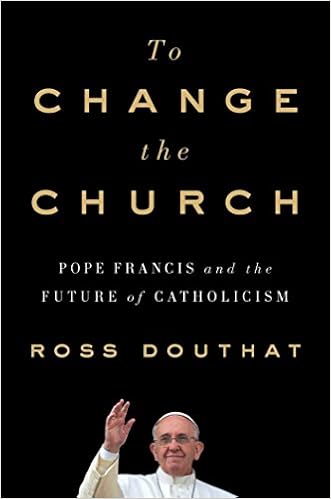
In dragging down the Holy Cross Loon, Wile E. scrambles after Ross “the Roadrunner” Douthat and his good new book on the pontificate of Pope Francis.

Just as I criticized Ross Douthat’s book on Pope Francis because it failed basic journalistic standards, theologians who support academic freedom need to take the lead in differentiating between pushing an envelope and pushing nonsense.

US HERE – UK HERE

This is nearly as funny as watching clips of Wile E. with the open crates of ACME products.

In his critique of Douthat, Winters said that Douthat cited – but didn’t name – certain disgruntled participants in the Synod on the Family. Not naming them, you see, was a journalistic No No. To refute and educate Douthat, however, Winters cited his own entirely gruntled Synod participants but… ooops… didn’t name them, hence hoisting himself on his own petard. But that’s what Wile E. does, right? Agere sequitur esse.

In this new Fishwrap piece about the Holy Cross Loon, on the other hand, Winters covers his ACME rocket burns by mentioning in passing parentheses the not entirely unknown “Chatham House Rule”, whereby those who hear a debate can use the information they hear publicly, but without identifying the people involved. The Chatham House Rule is intended to promote candor and open, honest debate.  In this Fishywrappy context, however, the Rule is probably a mask – a slipped mask – over another which you will recognize.

Rule, #4: “Make the enemy live up to its own book of rules.”

Winters is clearly irritated at what the Holy Cross Loon wrote, because he let the mask slip.  He is also irritated with Douthat because he reached out and yanked the mask off.   Hence, Winters even tries to draw a moral equivalence between the commonest of critters, a blasphemous self-promoting loony lib of bizzare sexual proclivities and Douthat, the rarest  of breeds, a mostly conservative and well-measured opinion writer for the hoary lady, Hell’s Bible.   Remember?   “Just as I criticized Ross Douthat’s book…”.

However, if you really want a sense of whom Wile E. sees as his nemesis, just review his review of Douthat’s book.  Pay attention to the over the top hysteria of his thoughts on Douthat.   Then compare that with language he used about the Holy Cross Loon.  Yes, it too is touchy, harsh and occasionally vitriolic, because… well… that’s our dear Wile E!  But it isn’t nearly as venomous as his treatment of Douthat’s book.

It all makes for another interesting day in the Catholic Church, wherein an observer of human nature will never be bored.

YouTube thumbnailYouTube icon

Posted in Biased Media Coverage, Green Inkers, Liberals, Lighter fare, The Drill | Tagged , , , , , , , ,
10 Comments

WDTPRS – Quasimodo Sunday “in albis”, Low Sunday

Caravaggio_-_The_Incredulity_of_Saint_ThomasIn the post-Conciliar calendar Sunday is technically the “Second Sunday of Easter.”

It is sometimes called “Thomas Sunday” because of the Gospel reading about the doubting Apostle.

It is also famously called “Quasimodo Sunday” for the first word of the opening chant, the Introit (cf. 1 Peter 2:2-3).  Quasimodo and Sicut modo are interchangeable. Quasimodo reflects a Latin Scripture version predating what became the Vulgate. So, today’s Mass begins by exhorting the newly baptized.

It is called “Low Sunday” probably in contrast to the hoopla of last Sunday.

Oh yes… now it is often called “Mercy Sunday” because of the emphasis on the dimension of the mercy of God’s redemptive act celebrated at Easter. The newest, third edition of the Missale Romanum of 2002 specifically labels this Sunday: Dominica II Paschae seu de divina Misericordia.

Most importantly, since ancient times this Sunday is called “Dominica in albis or also “in albis depositis”… the Sunday of the “white robes having been taken off.” 1 Peter 2:2-3 says:

“Like (Sicut modo – Vulgate) newborn babes (infantes), long for the pure spiritual milk, that by it you may grow up to salvation; for you have tasted the kindness of the Lord.”

This is the reading on Saturday “in albis” in the traditional Roman Rite.

Explanation:

In the ancient Church the newly baptized were called infantes. They wore their white baptismal robes for “octave” period after Easter during which they received special instruction from the bishop about the sacred mysteries and Christian life to which they were not admitted before the Vigil rites.

On this Sunday they removed their robes, which were deposited in the cathedral treasury as a perpetual witness to their vows. They were then “out of the nest” of the bishop, as it were, on their own in living their Catholic lives daily. St. Augustine of Hippo (+430), using the imagery of spring, compares the newly baptized to little birds trying to fly from the nest while the parent birds flap around them and chirp noisily to encourage them (s. 376a).

The new Collect for this Sunday (based on a prayer in the Missale Gothicum) for the 1970 and subsequent editions of the Roman Missal begins by calling God merciful.

COLLECT – LATIN TEXT (2002MR):

Deus misericordiae sempiternae,
qui in ipso paschalis festi recursu
fidem sacratae tibi plebis accendis,
auge gratiam quam dedisti,
ut digna omnes intellegentia comprehendant,
quo lavacro abluti, quo spiritu regenerati,
quo sanguine sunt redempti.

In general, when you encounter long, wordy orations, they are of newer composition.  This one is long and wordy.

The use of those clauses starting with quo, having no conjunctions (a trope called asyndeton) gives this prayer force. I like that sole sunt (with abluti…regenerati…redempti) imbedded elegantly in the last phrase.

Recursus is “a running back, return, a returning path.” In reference to sight it is something that has power to bring back an image. Recursus harks to the cyclical, “recurring” nature of the Paschal observance.

We have the opportunity to experience the Paschal mysteries each year. This is more than a memorial or re-enactment. By baptism we participate in mysterious events completed once and for all time, but for us in the liturgical year they sacramentally take place again.

Remember that sacramental reality is not less real that sensible reality.

According to the hardly mysterious Lewis & Short Dictionary, accendo means “to kindle anything above so that it burns downward” (the opposite of succendo or sub-cendo – to kindle from “below”, like the English “burn up” and “burn down”). You kindle a candle from above. Accendo is also “to set on fire, to kindle, light to light up, illuminate, to inflame a person or thing, to incite, to round up.” This word delivers the fiery liturgical imagery of the Vigil: when Christians are baptized the Holy Spirit (depicted as fire) comes to dwell in them. Intellegentia is “the power of discerning or understanding, discernment.”

The vast verb comprehendo is too complex to treat comprehensively. Literally it involves, “to lay hold of something on all sides.” Think of … well… “comprehensive”. Comprehendo also means, “take hold, grasp, seize” or negatively “attack, arrest.” It is also “to perceive with the senses, observe.” Especially it is to grasp with the mind, but in a thorough way (on all sides). In the Collect we want to “grasp with a worthy power of understanding.” This is a profoundly interiorized “grasping” in the sense of true possession.

A lavacrum is a bath. In Titus 3:5 we have, “He saved us, not because of deeds done by us in righteousness, but in virtue of his own mercy (misericordiam), by the washing of regeneration (lavacrum regenerationis) and renewal in the Holy Spirit, which he poured out upon us rightly through Jesus Christ our Savior, so that we might be justified by his grace and become heirs in hope of eternal life (vv. 5-7, RSV).” This refers to both the process and effects of baptism, worked in us by the mercy of God.

Abluo,  “to wash off, wash away, cleanse, purify.” In classical Latin, abluo is used by Cicero (+43 BC) to describe a calming of the passions coming from a religious rite of washing away of sin (Tusc 4, 28, 60) and also by the poet philosopher Lucretius (+ AD 55) in De rerum natura to describe the removal of darkness by the bringing in of light (4, 378).

Early Latin speaking Christians lacked vocabulary to express their faith. Abluo was ready made to be adapted to describe the effects of baptism.

OBSOLETE ICEL (1973):

God of mercy,
you wash away our sins in water,
you give us new birth in the Spirit,
and redeem us in the blood of Christ.
As we celebrate Christ’s resurrection
increase our awareness of these blessings,
and renew your gift of life within us
.

Do you want to know what the Latin prayer really says?

WDTPRS LITERAL TRANSLATION:

O God of eternal mercy,
who on this recurrence of the paschal feast
do kindle the faith of a people sanctified for Yourself,
increase the grace which You have given,
so that all may comprehend with worthy understanding
by what laver they were washed,
by what Spirit they were regenerated,
by what Blood they were redeemed
.

CURRENT ICEL (2011):

God of everlasting mercy,
who in the very recurrence of the paschal feast
kindle the faith of the people you have made your own,
increase, we pray, the grace you have bestowed,
that all may grasp and rightly understand
in what font they have been washed,
by whose Spirit they have been reborn,
by whose Blood they have been redeemed
.

In today’s Collect we pray that by the recurring sacred mysteries we veteran Christians and neophytes together as a People will be continually renewed and that our grasp of how we have been redeemed and the effects of that redemption will continually deepen.

We who were once set on fire with the indwelling of the Spirit, should want each day for God to rekindle us, burn us up again from above. We want an increase of grace, faith that seeks to grasp, comprehend, understand ever more fully who He is, who we have become in Him.

Grace and faith come first, of course. As the ancient adage goes: Nisi credideritis non intellegetis… Unless you will have first believed, you will not understand. We can only go so far on our own. Faith then brings to completion what reason begins to explore.

In a sermon addressed to the catechumens before their baptism at the Easter Vigil, St. Augustine used the imagery of light to help them understand who they were to become (cf. s. 223 and s. 260c):

“Keep the night Vigil humbly. Pray humbly with devoted faith, solid hope, brightly burning charity, pondering what kind of day our splendor will be if our humility can turn night into day. Thus, may God who ordered the light to blaze out of the dark make our hearts blaze brightly, that we may do on the inside something akin to what we have done with the lamps kindled within this house of prayer. Let us furnish the true dwelling place of God, our consciences, with lamps of justice”.

Augustine (and our Church) wants Christians truly to “possess” these mysteries in a way that made a concrete difference.

The newly baptized infantes eventually put off their white robes and get to the business, the work, of living as Catholics.

We who have done this already, perhaps long ago, must continue to wear them in our hearts.

And persevere.

Posted in Liturgy Science Theatre 3000, WDTPRS | Tagged ,
5 Comments

Season Opener: The Eagle Has Landed

You don’t see this every day.   And it is my hometown Twins home opener.

Posted in Just Too Cool | Tagged
11 Comments

Those wacky Germans. At it again!

“Up?  No, that’s really Down”, they say.  “Black is white.”  “2+2=5”

What?!?  You don’t see it?  Then you must either be a hater or you are afraid of something, or maybe you are incapable of loving.  Maybe you are stupid.

Since Amoris laetitia these are the things we have heard in responses to the observations made by many rather smart people that there are internal inconsistencies in the document.  One inconsistency is the suggestion that a person who is in the state of mortal sin, and is unrepentant, can be admitted to Holy Communion according to however that sinner’s “conscience” allows.   Don’t see it?  You must be afraaaaaid to luuuuuuhv.

The fact that there are internal problems in Amoris and in the things people say Amoris proposes is borne out by the fact of internal conflicts of discipline in the Church.  One bishops conference says one thing, while a difference conference says another.   From diocese to diocese there are differing disciplines.  Something is seriously wrong when that happens.   There is more than a problem of praxis.  The problem stems from lack of clarity or consistency in doctrine that underpins the praxis.

I saw a story in German about how some … some bishops within the German bishops conference are asking for…. get this knee slapper… a clarification from Rome about whether the non-Catholic spouses of Catholics can be admitted to Communion… or not.

Disagreement over communion in the Episcopal Conference: Woelki and other bishops send a letter to the Vatican

Joachim Frank is chief correspondent of Kölner Stadt-Anzeiger, Berliner Zeitung and Mitteldeutsche Zeitung.

In the Catholic German Bishops’ Conference there has been a serious dispute over the question of inter-communion for Protestant Christians. Without previous agreement with the chairman, Cardinal Reinhard Marx, seven bishops, led by the Cologne Cardinal Rainer Woelki, have approached the Vatican. They consider unlawful a pastoral mandate for mixed marriages decided on February 20 by the Episcopal Conference by a two-thirds majority, since in their view it violates the Catholic doctrine and unity of the Church.

In the view of the minority, the Bishops’ Conference exceeds their competence if, as provided for in the document, they open Communion for Protestant Christians who are married to a Catholic partner and wish to share church life with him in the Communion. In the face of several open dogmatic and canonical questions, the bishops in their letter to the “Kölner Stadt-Anzeiger” ask the Vatican for help and clarification. Specifically, the letter went to the Prefect of the Congregation for the Doctrine of the Faith, Luis Ladaria, as well as to the “Ecumenical Minister” of the Vatican, Cardinal Kurt Koch.

Three-page letter

In addition to Woelki, the three-page letter was also signed by Bishop Archbishop Ludwig Schick and bishops Konrad Zdarsa (Augsburg), Gregory Maria Hanke (Eichstätt), Wolfgang Ipolt (Görlitz), Rudolf Voderholzer (Regensburg) and Stefan Oster (Passau). The focus of opposition to Marx and the majority of bishops is thus in Bavaria, where Marx is also chairman of the Bavarian Bishops’ Conference.

Conflict calls to mind Meisner

The process is unprecedented in recent church history. It recalls the conflict between the German bishops and the then Pope John Paul II on pregnant women’s counseling. The former Cologne Cardinal Joachim Meisner had turned in July 1999 in a single-handed direct letter to the Pope, because he did not want to support the majority vote of his confreres to remain in the state advisory system for reasons of conscience. Meisner’s intervention had a few months later a papal instruction to exit the consultation result.

In a reply to the seven authors, Marx reveals his concern about their approach and emphasizes that this request for help refers only to a draft text [!] in which changes are still possible. The expressed doubts of the seven bishops expressly rejects Marx. Marx sent his answer on April 4 to both the Vatican and all German bishops.

Ahhh… that’s the safe out.  It’s only a “draft”!  It can be set aside or amended.  Right?

The problem is this: How in the world would a bunch of bishop ever come with this harebrained scheme in the first place?  How would such monumentally stupid thing garner enough votes as to pass even a first scrutiny?   How is it that only 7 of the German bishops raised a fuss about this?

This is madness.

I direct the readership’s attention back the the well-measured new book by Ross Douthat.  The book isn’t perfect, but he describes well what is going on today and… for the most part… why.   Remember: Wile E. Coyote hates the book.   That’s incentive enough to get it.

See the long and excellent new piece about this book at the UK’s best Catholic weekly, the Catholic Herald.  HERE

To Change the Church: Pope Francis and the Future of Catholicism

US HERE – UK HERE

Posted in Pò sì jiù, The Coming Storm, The Drill, The future and our choices | Tagged , ,
15 Comments

“as the churches come down all around me”

Churches come and churches go.  They are means to an end.  When there is need for a church, a church is built.  When there is no need – or these days no desire – for a church, the church falls into desuetude and is usually overwhelmed by time, entropy and other forces.



It can be sad, especially when there are people in the places where the crumbling churches are found, who just don’t care.   It is sad when our wounds are self-inflicted.

The cold slap of reality is that, if for one reason or another people don’t pay the bills, they lose their churches.

It is also the case that some priests and bishops would rather burn churches to the ground, pour bleach into the hole and then sow the fields with salt rather than try something new… by which I mean something traditional.

A long-time reader sent this story from the paper of his home town, Fall River, MA. My usual treatment has been applied.

Shame and comfort as Fall River’s churches fall

By
Herald News Staff Reporter

On my desk, in the right hand corner, is a well-used copy of a paperback book. Someone gave it to me, although I have another copy at home, one of my dead father’s books.

The little book is a history of Notre Dame Church, printed in 1925, written in French, a language I speak better than I read, as did most of my French-Canadian ancestors, back there in 1925, when not being able to read was common.

I was baptized in Notre Dame Church, as was my father. My mémère and pépère were married in that church, and my father attended Notre Dame School, and was an altar boy. He was in the 1938 first graduating class of Monsignor Prevost High School, located very near the old church.

The original church burned to the ground. My family was living in Kansas City, but the fire made the evening news. My father was not an emotional man, but his eyes were full of tears as he watched the 10-second news clip of Notre Dame burning.

They replaced the old Notre Dame with a new church that looked like an insurance office, like all new churches. [Well.  To be fair, some of them look like municipal airports.] Not long ago, Notre Dame merged with a nearby church and became St. Bernadette’s.

On the streets around the church is the old orphanage, the house of the Christian Brothers who taught here, the rectory, the convent, and a closed grade school.

Done.

Done on Irving Street. Done on Thomas Street. Done on Earle Street. Done on County Street. Done in the buildings that housed the French funeral homes. Done in the corner stores, the places like Vaillancourt’s, where my father did business in French well into the 1960s, speaking to the women he called “Les dames Vaillancourt,” which means “The Vaillancourt ladies,” in English.  [Lot’s of life the way it was is now “done”.]

[…]

Done. Done at St. Mathieu’s. Done at Ste. Anne’s. Done at St. Louis de France. Done at Dominican Academy. Done on Pleasant Street. Done on Arizona Street.

No matter how many lights blazed, or how many candles were lit, there was something dark about those old churches, dark laced with the smell of incense and the echoing sound of the door to the confessional closing, and the stares of the calm-eyed statues.

Immigrants built them as big as the mills where the boss couldn’t speak your language and called you names.

[NB]Here we are!” those old churches said. “We are poor, but we have made this so we will have something of our own, something everyone can see.[The faith of many having thin means made great and beautiful things because the wanted them.]

Done.

The little book I have says that when they dedicated the bells in the tower of the old Notre Dame, 15,000 people showed up for the celebration. Compare that to the vote total in Fall River’s last election.

And the little book is all I have, all that is left.

Oh, they’re still going to Mass at St. Bernadette’s, still driving or walking the narrow streets that lead to the church, but they’re worried about money.

[NB] We see it in bits and pieces, so we miss the whole, but the dismantling of the physical structure of the Catholic Church in Fall River is a huge story. [Read on.]

For a long time, the Church operated what was very nearly a parallel government. [No.  People provided in charity what people are supposed to provide.  Now, people have abdicated their moral and religious obligations to The “Mommy” State.] It provided health care, services to the poor, education, registration of births, marriages and deaths, many of the things we now expect from government.

The parish churches were the bones of a living thing. Even now, the old Catholic churches, open or closed, are the biggest structures in a lot of neighborhoods, and usually the only really beautiful building in the neighborhood.

[QUAERITUR:] Will our monument be the free-standing plaza with a dollar store, a drug store, a laundromat, and a place to buy discount cigarettes? Even in the suburbs, where the people have more money than they do in Fall River, they do not, and cannot, build anything like the huge and beautiful churches that even poor Fall River neighborhoods once took for granted. Will future generations guess what kind of people we were by looking at the ruins of a “fulfillment center,” or a marijuana “grow facility”?

I’ll keep the little French book. It shames me, and it comforts me as the churches come down all around me.

Friends, if when you get dressed in the morning, you discover that you have buttoned your shirt incorrectly, off by one, do you shrug and just go forward into your day, with your shirt askew?   You could.  After all the shirt is buttoned, right?  What difference does a button or two make, when the shirt stays closed in front.  Orrrrrrr, like normal – sane – people do you say, “Hmmm, that won’t do!”, and then undo the error by unbuttoning your misbebuttoned garment, and then button it back up the way that works the best?  That’s what we are facing.  We’ve been buttoning our shirts wrongly.   It’s time to unbutton, doublecheck and start buttoning again.

Friends, if when you set out on a trip from Chicago to, say, Fall River where the story above is set, and you find yourself after some hours of driving in, say, Wichita, but you really have to go to Fall River, do you say, “Oh well, if I drive around long enough, I’ll get to Fall River”, and continue on your errant and inefficient path?  Or, do you stop the car, check the map, turn around and drive back the other way?… the way toward Fall River and not away from it?

Friends, if when you are building a F you see that none of the pilings were either straight or driven deeply enough into the ground…

Friends, if when you decide finally to build that sailboat from scratch, you see that you didn’t seal the hull….

Friends, if when you try parachuting for the first time…  hmmm… there are those times when it is perhaps better to have planned ahead, thwarted the fatal flaw in your cunning plan.  Orrrrrr, what if the guy who trained you for the jump taught you the wrong way to pack your chute.


Posted in "How To..." - Practical Notes, Our Catholic Identity, The Coming Storm, The future and our choices | Tagged ,
17 Comments

Rex and Douthat on the edges and contours of the “Francis Effect”

At First Things, there is an essay cum review by Richard Rex (professor of Reformation history at Cambridge ) of Ross Douthat’s recent book: To Change the Church: Pope Francis and the Future of Catholicism

I wrote about Michael “Wile E. Coyote” Winters’ ACME-powered reaction HERE.  His sputterings confirm it as a good buy.

US HERE – UK HERE

Rex does a bit more than review the book.  He offers some strong commentary of his own about what’s going on in the Church today and what Pope Francis is doing about it.

He opens…

A Church In Doubt

It is beyond question that the Roman Catholic Church is currently in the throes of one of the greatest crises in its two-millennium history. In human terms, its future might be said to be in doubt for the first time since the Reformation. The broad contours of the present crisis are the onward march of secularization in Europe and North America, the purging of Christians from the ancient heartlands of the Middle East, and the erosion of South American Catholicism by the missions of the Protestant and prosperity gospels. More specifically, the horrific and continuing revelations of the sexual and physical abuse of the vulnerable by the clergy, and of the failure of the institutional Church to identify and address the issue, have in some places turned a Catholic retreat into a rout. The dramatic and utterly unforeseen collapse of Catholicism in Ireland in little more than a generation, for example, harks back to the tectonic religious shifts of the early sixteenth century. Only in Africa is there much by way of good news, and it is not always clear how good that news is.

[…]

In the face of this crisis, Pope Francis is seeking a rapprochement between the ideals of Catholicism and the realities of contemporary social norms by some softening of the traditionally hard lines of Catholic sexual and matrimonial morality.

[…]

Rex – and Douthat – write about contours and and edges of the ongoing “Francis Effect”

I recommend the First Things piece and Douthat’s book.


Posted in Francis, REVIEWS, The Coming Storm, The Drill, The future and our choices | Tagged , ,
12 Comments

An interesting development in “Hellgate”

A while back Pope Francis spoke with the superannuated non-note-taking atheist Communist Eugenio Scalfari, editor of La Repubblica (his name is pronounced with the accent on the 1st syllable “SCALfari”).

One of the writers at La Repubblica, Piergiorgio Odifreddi, took on Scalfari and the “fake news” that was spread over the last few years through his sloppy and biased accounts of his conversations with the Pope (including the recent confusion about Hell). HERE

Today I read that La Repubblica fired Odifreddi. HERE

They say that its not about his critique of Scalfari.  Uh huh.

Posted in Liberals, Linking Back | Tagged , ,
6 Comments

Two encouraging stories involving BISHOPS! Yes, you read that right! @ShrewsRCnew @NTCatholic

First, there is story at CNA about the 4th Bishop of Fort Worth, Most Rev. Michael Olson.

At the Chrism Mass during Holy Week, the bishop spoke about LITURGY!   I’ve been whining for a while now that bishops rarely speak about matters liturgical in any meaningful way.   Here is some of the story:

.- At the Chrism Mass celebrated during Holy Week, a Texas bishop offered reflections on the Church’s liturgical life, telling priests the straying from liturgical texts can be detrimental to the unity of Catholicism[YAY!]

“The importance of Christ-centered and shared repetition in our collaborative mission as the Church requires that we avoid the addition of words or gestures that are alien to the rites and liturgical texts provided us by the Church,” said Bishop Michael Olson of Ft. Worth, Texas.

“Even though such liturgical abuses might at first glance appear to begin as good willed efforts to avoid redundancy and tedium for a people with attention spans made numb by contemporary modes of communication, such efforts remain destructive because they take us away from the repetition that bears fruit in Catholic unity,” he continued.

The bishop’s words came during the Chrism Mass celebrated at St. Patrick’s Cathedral in Ft. Worth, TX on March 27.

Olson described the difference between redundancy and repetition, saying “redundancy can enslave us; repetition can liberate us.”

Redundancy, Olson said, is the practice of doing the same thing over and over again with the expectation of a different outcome. On the other hand, he said that repetition fosters the formation of character and “develops our incorporation into the mystery of God.

“Redundancy has to do with vicious circularity (doing the same thing again and again without making progress or accomplishing anything except narcissistic absorption);” he explained. “Repetition has to do with the spiral: there is always forward growth and momentum in a spiral even as it circles again and again over similar words, patterns, ideas, and themes.”  [I like this image: spiral, or maybe better a helix.  I reminds me of what I suppose to be the dynamic of the Beatific Vision.  A spiral is a curve that gets ever farther on the same plane from the point of emanation.  A helix does the same, but through different planes.  I imagine one force directing the spiral as being our longing for God in the eternally fascinating and alluring Beatific Vision.  At the same time, contemplation of the Beatific Vision will cause us also to contemplate ourselves as images of God and consider the beauty of the rest of the cosmos.  Thus these different forces working us on will result in a glorious spiral of movement toward God who, being God, will never be exhaustible, all the while revolving around ourselves as images constantly offering ourselves to God and receiving the transforming glory that comes from the relationship of the Trinity.   This must be captured in our sacred liturgical worship, by the way.  But I digress.]

“The bitter fruits of redundancy are isolation, complacency, and entitlement; the sweet fruits of repetition are gratitude, humility, and joy,” Olson continued. [Sounds “heavenly”.]

The practice of faithful repetition in the liturgy is crucial to the integrity of all Masses since it unifies the universal church, Olson said.  [Do I hear an “Amen!”?  I will add that this repetition is “faithful” also insofar as it is in continuity with tradition.  We must unify the Church today with our forebears as well.]

The Texas bishop also noted that straying from liturgical norms will produce “a greater sense of isolation and entitlement to our own individual preferences and opinions,” and will lead to the dangers of redundancy, causing “a sense of confusion of Catholic identity.”  [And what are we seeing nearly everywhere in the Church today?  CONFUSION OF CATHOLIC IDENTITY!]

“This can destructively differentiate our parish from other parishes to the point of exclusion by maintaining unique and aberrant liturgical practices,” Olson continued. [When I visit some churches and see what is done in them, I sadly but honestly think that they belong to a different religion.]

While fidelity to the liturgy may not always be received with “a favorable response” and may lead to rejection, Olson said that fidelity to the Church’s liturgical texts “grounds us effectively in Christ.”  [There it is!]

Olson additionally encouraged growth in pastoral leadership, which he said involves the “protection of the sheep both from the cunning of the wolf and the complacency of the hired hand who complains about the perceived redundancy of his ministry.”

“Redundancy in the spiritual life of a priest leads him to functional minimalism; [Reeeeally dangerous for worship and identity: “As long as it’s ‘valid’, we can change a whole bunch of stuff around.”] repetition in the spiritual life of a priest leads him into deeper waters of conversion and configuration with the life of Jesus Christ, Head and Shepherd of the Church,” Olson explained.  [Kenosis paradoxically produces fullness, theosis.]

“The essential difference in the life of the baptized Catholic between redundancy and repetition is the centrality of Jesus Christ, true God and true man,” he added.

Liturgical repetition, he said, is an antidote to the danger of redundancy.

“If we are to remain faithful to the mission of Christ, the mission of redemption entrusted to us through our anointings, we must repeat together the prayers of the liturgy in solidarity with every Catholic liturgical assembly in the Diocese and throughout the world in order to be saved from the slavery of redundancy.”

Fr. Z kudos.   This is good stuff.

Remember, dear readers, that no initiative we undertake in the Church will succeed and bear real fruit unless it is rooted in and returned to our sacred liturgical worship of God.  This is why a revitalization of our worship is absolutely necessary.  This is why Summorum Pontificum was so very important for the future of the Church: it is a major tool of that revitalization.  

Next, again at the UK’s best Catholic weekly, the Catholic Herald we read of the great 11th Bishop of Shrewsbury, Most Rev. Mark Davies, who has written a pastoral letter to be released soon.  He wrote about receiving the Eucharist.

This is really important for people like the Jesuit-led homosexualists out there.  This is really important for people who think that the divorced and civilly remarried who having adulterous sexual relations can be admitted to Communion.

Bishop Davies: Don’t receive Communion if your lifestyle contradicts the Gospel

Bishop Davies said that mortal sin, or ‘a lifestyle in contradiction with our Christian calling‘, must be confessed and repented before receiving the Eucharist

Receiving Holy Communion is “the most radical call to holiness” that any person can encounter, the Bishop of Shrewsbury will say in a pastoral letter this coming weekend[During his Chrism Mass he made a connection of Communion and the Sacrament of Penance.]

Bishop Mark Davies will warn them against viewing the Blessed Sacrament in terms of “secular inclusiveness” as this diminishes its true significance to little more than a “token of our hospitality”.  [RIGHT!  Haven’t I written many times that, for many today, receiving Communion has become a token of acceptance and affirmation?  That for many, Communion is the moment when they put the white thing in your hand and then they sing of the song together?]

Catholics must realise instead that through the Real Presence, the gift of Christ’s Body and Blood is the means to become the saint each of us is called to be.

Holy Communion restores strength to the faithful, breaks disordered attachments, separates Catholics from sin and helps them root their whole lives in Christ, the bishop will say.

Catholics must also repent of any mortal sin or lifestyle which contradicts their calling as Christians before they can receive Communion, Bishop Davies will remind his diocese.

“We see why we can never approach Holy Communion casually, still less if we have not confessed and repented of any mortal sin or of a lifestyle in contradiction with our Christian calling,” the bishop will say. [Confessed and repented … that is, confessed with a firm purpose of amendment.   And don’t forget absolution.  You can sincerely confess to a bartender, but you can’t absolution from him.]

“The Apostle Paul urged the first Christians to examine themselves carefully before receiving Holy Communion because anyone who did so in an unworthy state would, he said, be ‘guilty of profaning the body and blood of the Lord’.

“The Church calls us to frequent Holy Communion, prepared by the Sacrament of Penance and Reconciliation so that we might become holy, might become saints. The Second Vatican Council urged us to ‘frequent’ both these two Sacraments eagerly and devoutly as the path to holiness.”

“Let us ask ourselves how we seek to receive Him with the deepest reverence and love, and how we spend the precious moments after receiving Holy Communion,” he will add.  [Would, perhaps, involve silence and prayer?]

Yes, and yes again.  Fr. Z kudos to Bp. Davies.

There you have it, folks.  There is some sanity in the Church today!

We need a lot more of this.  A lot more.

Posted in Fr. Z KUDOS, Liturgy Science Theatre 3000, Our Catholic Identity | Tagged , , ,
17 Comments