Prophetic words from 1966 about the post-Conciliar state of the Church

Put aside everything else and go to First Things.

They have reprinted a piece written for The Tablet in May 1966… 1966… by Christopher Derrick, a student of CS Lewis and WWII RAF pilot.

He writes … in 1966… of how the fathers of a Vatican III would look back at Vatican II.  Amazing insights.

Here are some snips…

[…]

Brows will be furrowed, analyses undertaken, theses written. It may become a cliché to speak of our generation as having enacted a further chapter to Knox’s Enthusiasm. The ghost of Abbot Joachim was walking again, and we were restless for a new Pentecost in the fullest sense, impatient with the mixed and imperfect character of the Son’s dispensation; and with these things came the inevitable antinomian tendency, leading good men to propose obscenities in the name of love. More generally, we showed a remarkable lack of interest in balance, in trimming the boat. The ark had certainly been listing to starboard [the right] for a few centuries, a situation that called for some balancing action, tempered and cautious; but when this fact was officially admitted we smelt a trend, an intoxicating prospect of change, and we all crowded across to port [the left] in high excitement. The ark tilted the other way, and more sharply; many of us climbed and swung on the port railings, each trying to be further out than his neighbour; some gazed longingly overboard, in love with visionary calentures, [fevered delusions] privately suspecting that we could now walk upon water and needed this shabby old tub no more.

This imbalance, this fretful one-sidedness, will be capable of endless illustration. Theologically, we shall seem to have gone absurdly far in a Pelagian direction; and all the more so if our descendants have been driven the other way by the grief and pressure of events, and have come to remember that this religion of the Resurrection starts with the Cross, has evil and suffering and death as its raw material, its prime subject-matter. In other and particular matters, great and small, we shall be remembered as a generation that saw only one side of things. We loved “becoming” and hated “being”: We cherished the idea of an emergent and evolutionary Christianity, and looked in some apathy upon the faith once delivered to the saints. We stressed the priesthood of all believers and played down the particularity of order; we indulged a passion of ecumenicism, and hushed up the painful fact that schism and heresy are still sins. We wanted the Church’s outward seeming to reflect the poverty of Christ, never his majesty. We stressed the spiritual and symbolic, at the expense of gross incarnational fact: Hence, we played down the material element in morality, the ex opere operato aspect of the sacraments, the biological purpose of sex, the concrete burden of the historic Church. We asserted freedom, at the expense of responsibility; we asserted the corporate aspect of worship so overwhelmingly as to suggest that the individual had somehow ceased to carry his own conscience, that prayer and (especially) fasting had become back numbers. We cheerfully asserted the goodness of the world, seldom its taint, its spoiling, its death wish: We were always ready to judge the Church by the world’s standard, reluctant to do the opposite.

[…]

Please do read the whole thing.

Posted in Cri de Coeur, Hard-Identity Catholicism, The Coming Storm, The Drill, The future and our choices | Tagged ,
14 Comments

ACTION ITEM! Fr. Z calls for help for a wrongly imprisoned priest

It is possible that not all of you noticed a special feature in my “Christmas cards received” entry, which I am occasionally updating.

Fr. Gordon MacRae – falsely accused, unjustly imprisoned – sent me a kind Christmas card.

At his blog, These Stone Walls, Fr MacRae provides some interesting news:

The New Year will be ushering in a major change behind these stone walls. I don’t mean the blog, but rather the place in which it is written. The New Hampshire Department of Corrections is following a trend sweeping prisons across the United States.

After 23 years with severely limited contact with the outside world, a computerized tablet system will become available for sale to prisoners here in the first months of 2018[Get that?]

This prison has contracted with a company called Global Tel link (GTL.com) to sell tablets to prisoners with a series of paid subscription services to include email, video email, telephone, ebooks, subscriptions, and a list of other paid services such as music and movies. The nine-inch tablet will be similar to an Android-based Samsung with touchscreen for $149.00.

The biggest change for me will be the availability of Internet-based telephone and email services. Presently where I live, there are two telephones available for 96 prisoners. The phones are outside which means that placing a call during a New Hampshire winter to hear your messages and comments requires up to a one-hour wait bundled up against the cold and wind.

When I purchase a tablet, it will have a headset and the ability to place calls right from our toasty 60-square-foot cell with no waiting outside for an available telephone. Friends can still not call me but will be able to leave me messages. This will be the first time in my 23 years here that anyone can reach me directly from the outside world.

[…]

In addition to the initial costs for the tablets and services, telephone calls will have a per-minute charge, and emails will be charged per message and by volume of text, but the fees seem reasonable. Readers who are able and want to assist with the expenses may do so here at These Stone Walls or through the means described at our “Contact” and “Donate” pages. I will have further news about this in January.

In the year to come, May the Lord bless you and keep you. May He let his countenance shine upon you. May He bring you peace.

In your charity, please consider helping Fr. MacRae.

>>HERE<<

Posted in ACTION ITEM!, Priests and Priesthood | Tagged
6 Comments

ASK FATHER: Mary was an “unwed mother”? The Holy Family were “refugees”?

From a reader…

QUAERITUR:

At this time of year the inevitable ‘Mary was an unwed mother‘ and The Holy Family’s flight into Egypt makes them migrants sermons are very confusing. Can you clarify these interpretations? Or recommend a source that does.I discount them as political or ‘Social Justice’interpretations that use both events to their own purposes, which I think is wrong! A recent example was USCCB using the Feast of Our Lady of Guadalupe as ‘a day of Solidarity with Migrants’. I see my church becoming way too political. Thank you and Merry Christmas to you!

Yes… this sort of thing is inevitable: force the narrative into an agenda.

1 – Mary was an unwed mother… not.   

The Jewish marriage practice was to make the contract with the bride’s father and pay a bride-price (mohar) and the betrothal was the legal equivalent of a marriage ceremony. The bride would remain in her father’s home for up to a year, but she was considered to be married. Joseph would have paid the bride-price at their engagement, when the marriage contract was solemnized, but Mary would have remained in Joachim’s house. They were formally wedded in a ceremony after the angel instructed Joseph in the dream.

So, from the moment Mary was betrothed to Joseph she was legally considered to be the wife of Joseph.  Their relationship was sacred as if they had already had the wedding ceremony.  The bond could not be dissolved except, as after formal marriage, by divorce.

Calling Mary an “unwed mother” is dangerously close to blasphemy.

2 – The Holy Family were “refugees”.   Sort of, but not in the way that liberals want you to believe.

The Holy Family goes first to Bethlehem because of the census.   If you are going to your ancestral town mandated census, you are not a refugee.

“But Father! But Father!, libs are squealing, “They were denied a room in the inn.  Those innkeepers were mean refugee hating meanies!  They were undocumented migrants and the haters refused to let them in.   That’s what YOU would do!   That’s because you HATE VATICAN II!”

If you register in the census, you are not “undocumented”.

They weren’t migrants, because they were only there to register and then return home to Nazareth.

They didn’t get to stay at the inn or the khan, because – try to follow this – there was no room at the inn.  Which means there was no room at the inn.   They weren’t give room because there wasn’t any.  If there had been a room, they would have been given a room.  It was customary to take travelers into homes, as when people journeyed to Jerusalem to offer sacrifice.  As Alfred Edersheim explains the denial of a room had nothing to do with their poverty.  The rabbinic teaching was that travelers were to be received as the shekinah should be received.   So, they weren’t rejected because they were poor, or “different” or foreigners, blah blah blah.  The inn or khan was FULL.

The Holy Family went to Egypt.  Why?   Just before the Patron Saint of Planned Parenthood, Herod, ordered the slaughter of all the babies, an angel told Joseph in a dream to take his family to Egypt.   If an angel tells you to do something, you do it.  So, the flight into Egypt was not just due to the awful circumstances caused by Herod, it is also divinely directed because of what Herod was going to do.

Also, they had to to Egypt so that the prophecy would be fulfilled:

That it might be fulfilled which the Lord spoke by the prophet, saying: Out of Egypt have I called my son. (Matthew 2:15)

So, no, they Holy Family, seeking refuge in Egypt at the specific direction of God, is not the archetype of all refugees today.

If they sought refuge in Egypt, they were, in a sense, “refugees”.  However, they were a) three people, not thousands and they were b) fleeing the concrete danger of murder of their Child.  They sought sanctuary.

Moreover, the Holy Family were no threat to the national security of Egypt.

Finally, when the danger was over, they went home.

It is interesting to note that the Joseph of Genesis was driven into Egypt – sold as a slave and not a refugee – which led to the enslavement of the People. Joseph of the New Testament was driven into Egypt, which led to the salvation of the People.  Herod and Pharaoh both ordered the slaughter of infants. Moses and Jesus both escaped slaughter in Egypt and both led an exodus from bondage.

Just because biblical figures traveled somewhere – usually because God told them to go there – that doesn’t make them refugees. Adam and Eve were not refugees from Paradise, they were being punished.  Cain was not a refugee after he killed Abel, God punished him with wandering.  Abraham was called by God to go places.  Etc.


Posted in ASK FATHER Question Box | Tagged ,
29 Comments

Nuncio in Switzerland, “The Old Latin Mass is the future of the Church”

From Gloria.TV:

“The Old Latin Mass is the future of the Church”, Archbishop Thomas Gullickson (67), the nuncio to Switzerland and former nuncio to the Ukraine, said in September during a meeting with old rite priests in Sankt Pelagiberg, Switzerland.

The quotation is reported by Father Michael Wildfeuer, a mathematician and former member of the Priestly Society of Saint Pius X, in an interview published on Gloria.tv (December 23).

Wildfeuer describes Gullickson as a very educated and easygoing American.

I met him once, years ago, in Camden.  A fine gentleman.

I concur.

Posted in SUMMORUM PONTIFICUM, The future and our choices | Tagged
2 Comments

Father’s “shred clinic”

With a tip of the biretta to Rev. Mr. Kandra (open invitation to him to be the deacon in a Solemn Mass sometime).

In answer to his question: No, I can’t do that.  And he makes it look easy. Fr. Kenneth Petrie and “Runnin’ Down a Dream”.

YouTube thumbnailYouTube icon

Not in church but… whew!

Posted in Lighter fare | Tagged
1 Comment

ASK FATHER: Why do servers lift the chasuble during the elevation of the Host?

From a reader…

QUAERITUR:

Why do servers elevate the chasuble during the elevation of the host? I was looking for a good answer after my mom asked me. Thanks!

The practical answer is the best answer.

It is a custom to lift hems of chasubles and albs and copes which arose from practical need.  This is not prescribed in the rubrics.  [Actually, it is!  See below.]

Vestments of yore – and today – were fuller, draping lots of material over the arms, which could sometimes be heavy.  The weight of vestments were increased by ornamentation.  At the consecration, the edge of the the chasuble would be raised to assist the priest or bishop in raising his arms high enough so that the congregation could see the Host and chalice (as per the rubrics).

The same applies while the celebrant incenses the altar and other things.  Copes are held up and away from the arms so that the priest can move.  Yesterday, I used a heavy cloth of gold “Gothic” vestments instead of a Roman.  Hence, I had to instruct the server – not used to the Gothic – to hold it out of my way while incensing the altar.  It makes a difference.

Similarly, the lower hem of albs are held up as priests ascended the stairs, lest he trip or, worse, put his foot through precious handmade lace.

Don’t laugh.  Women would spend years making beautiful lace for albs out of their love for the Lord, because Holy Mass was the center of their lives.  Then some priest puts his foot through it.  I have seen that happen.  I’ve done it once by accident!

The worst case I’ve experienced was watching a know-it-all priest, whose half-baked partial knowledge of what to do inspired him in false know-it-all-ist “humility” to refuse to allow the deacon to lift the alb away from his foot.  Fr. Smarticus Pantsicus promptly put his foot through the beautiful lace.  Thus, he ruined a someone else’s alb.

So… Frs. Smartici Pantsici out there… when it is time for the servers to help you, shut the hell up and let yourself be helped!  Get over yourselves.

That’s the practical.  However, the practical, over time, can also take on symbolic meaning.

Sometimes you might hear that this physical contact with the eminently priestly vestment associates the server more closely with the priest.  Sure.  That’s works for me too.   Think of the woman who wanted to touch the hem of Christ’s garment to be healed.

I’ll conclude with this.

Servers, lift the edge of that chasuble…. BUT… just a little, okay?  Don’t lift it too high. Just a little, okay?  You don’t have to lift it half way up Father’s back.  Less is more.  This especially applies with the more modern Roman vestments which don’t impede the arms and aren’t very heavy.

UPDATE:

In the comments someone corrected my error. It is in the rubrics!  I looked it up.

However, I stand by not “not too high” because too much is too much.

Posted in "How To..." - Practical Notes, ASK FATHER Question Box, Liturgy Science Theatre 3000 | Tagged ,
11 Comments

The “Kalenda”, the solemn Christmas Proclamation – AUDIO

One of the many gifts we receive for Christmas is the singing of the Martyrology which has the special Proclamation of the Birth of Christ, the “Kalenda“.
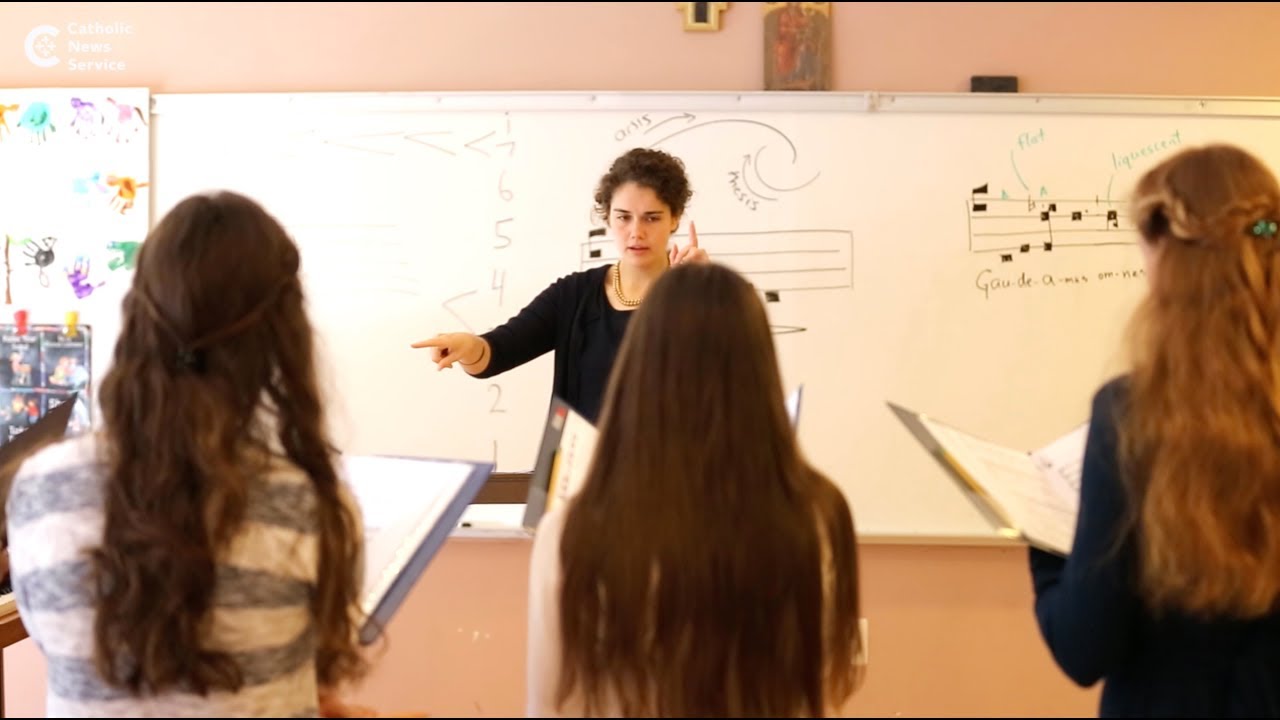
I am getting ready to sing it tonight.  It has been a while.

As a Proclamation, it has a formal character. The birth of Christ follows a list of important events, set points in history, which therefore puts the birth of Christ into the context of the history of salvation, beginning with the Creation of the world and culminating in the Nativity.

The “Kalenda” was sung at the Office of Prime before its suppression.  It can be sung or read before the 1st Mass Christmas. In the 1980’s Pope St. John Paul II restored it before his Midnight Masses and the custom has been reviving every since. (Read: Mutual enrichment – yet another reason for Summorum Pontificum.)

The Latin text of the traditional form (sung in Latin):

The twenty-fifth day of December [Octave (before) the January Kalends.]. The seventh Moon [in 2017].  In the five thousand one hundred and ninety-ninth year of the creation of the world from the time when God in the beginning created the heavens and the earth; the two thousand nine hundred and fifty-seventh year after the flood; the two thousand and fifteenth year from the birth of Abraham; the one thousand five hundred and tenth year from Moses and the going forth of the people of Israel from Egypt; the one thousand and thirty-second year from David’s being anointed king; in the sixty-fifth week according to the prophecy of Daniel; in the one hundred and ninety-fourth Olympiad; the seven hundred and fifty-second year from the foundation of the city of Rome; the forty second year of the reign of Octavian Augustus; the whole world being at peace, in the sixth age of the world, Jesus Christ the eternal God and Son of the eternal Father, desiring to sanctify the world by his most merciful coming, being conceived by the Holy Spirit, and nine months having passed since his conception, was born in Bethlehem of Judea of the Virgin Mary, being made flesh. The Nativity of our Lord Jesus Christ according to the flesh.

Remember that in the ancient world there was no standard calendar.  So, one way to pinpoint events was to say what else  was going on at the time according to other reckonings of time.  The overlap of the dates would then give you the desired result, like a chronological Venn Diagram.  The overlapping of the dates of the events cited in the Proclamation results in an accurate dating of the Nativity, that is 3/2 BC.  There is good scholarship that reinforces 3/2 BC and cleans up a dating error for the year of Herod’s death.  That’s another story.

Note the reference to the Kalends and the moon.

The Kalends, whence English “calendar”, in the Roman reckoning, is the first day of a month, thus beginning a new lunar phase, that is the sighting of the first sliver after a new moon.   Whereas we now think of days as following the first of the month, the Romans thought about them as preceding the kalends, the nones or the ides of the month.  And so for the date of Christmas, you count the number of days remaining before the kalends, 6, and you add 2 (because Romans liked to count the starting and ending days) and you get 8.  Hence, Christmas is the eighth day out from the Kalends of January.

As I was working on this today, I figured maybe some other priest out there might be also, and might be struggling with it.  So here is a working recording I made to play once in a while to help me get it into my head.

It is not a particularly easy chant, since it is so unlike everything else we do.  As a matter of fact, I’ve had to take a run at a few of the passages quite a few times.

I pitched this a little lower than I usually would, but I am getting over “the crud”, involving antibiotics, etc.  Hard to sing without coughing, so I take it easy.


Posted in "How To..." - Practical Notes, Just Too Cool, Liturgy Science Theatre 3000, PRAYERCAzT: What Does The (Latin) Prayer Really Sound L | Tagged , , ,
2 Comments

A parish’s immersion in Gregorian chant – YES, it can be done.

It can be done. All we have to do is try.

YouTube thumbnailYouTube icon

1600 views when posted

Sacrosanctum Concilium says:

116. Ecclesia cantum gregorianum agnoscit ut liturgiae romanae proprium: qui ideo in actionibus liturgicis, ceteris paribus, principem locum obtineat.

The Church recognizes Gregorian chant as a characteristic mark of the Roman liturgy:  which, therefore, in liturgical celebrations, other things being equal, must occupy the first place.

There isn’t a way around it.

It’s an identity thing.

Posted in Hard-Identity Catholicism, Liturgy Science Theatre 3000 | Tagged
10 Comments

Too ashamed to go to confession?

I saw an article at CNA which had a great point in it.

[Fr. Fortea] also noted the importance of ensuring truly anonymous confessions. In each city, he said, “there ought to be at least one confessional where instead of a grill, there is a metal sheet with small holes, making it totally impossible to see the person making their confession.”  [That’s why even when there is a grill, it is good to have a thin cloth as a “curtain” over the grate.  Which also keeps Father from being coughed on, by the way.]

The person confessing should not be visible to the priest as they approach or leave, he continued. If there is a window on the priest’s door, it should not be transparent.

“With these measures, the vast majority of the faithful can resolve the problem of shame,” Fr. Fortea said.

The issue of anonymity is HUGE.  Fathers, think about this and take measures.  Bishops, remind your priests about good confessional practices.  This is important.  For example, Fathers, when coming to and going from the confessional, keep your eyes down.  Don’t look at people who are waiting or coming in.  Don’t talk to them.  Don’t greet them.  Don’t even look at them.  EVER.

Everyone….

GO TO CONFESSION!

Sure, it can be hard sometimes.  That’s okay… accept that it’ll be hard and just do it anyway.

Review my

There is no sin that we little mortals can commit that our all-powerful and loving God will not forgive, provided we ask for forgiveness.

The Sacrament of Penance was established by Jesus Christ.  He intended that the sacrament by the ordinary means through which we return to the state of grace.   No matter what you have done, Christ – in the person of the priests in the confessional – washes that sin from your soul with His own Blood.

Once you have received absolution, those sins will not be held against you.  They are gone.   You will remember them, but their guilt is no longer with you.  You have to do penance for them, but the sins are removed, they are eradicated from your soul, they are no more.

GO TO CONFESSION!

“I absolve you from your sins…”

When was the last time you heard those words from the priest after confessing all your sins in kind and number?   Hmmm?

While we live we have the chance to get things right with ourselves, our neighbors and our God.

Get things right.

GO TO CONFESSION!

Fathers, if you don’t now offer decent times for confessions in the parish entrusted to you and if you don’t preach about this important sacrament and about sin, you are probably going to go to Hell.

Merry Christmas.

You had better go to confession, too.


Posted in "How To..." - Practical Notes, GO TO CONFESSION, Our Catholic Identity | Tagged ,
29 Comments

PHOTOS – New vestments underway for the TMSM!

As we get close to the end of the year, you may be thinking about tax-deductible donations.

PLEASE PLEASE PLEASE remember the Tridentine Mass Society of the Diocese of Madison!  501(c)(3)

I just received some photos from Gammarelli in Rome of vestments which are in production.

I ordered up a couple of violet “folded chasubles” to match our Pontifical set.

They were cutting the fabric.

“Folded chasubles”, Gammarelli style, literally fold up in front and secure by hooks.  Hence, they can be used as chasubles also.

Say one might be in a position to carry out a liturgical function in the manner even before the 1962 Missal.  Moments like Candlemas required deacons in folded chasubles.

Also, I ordered a humeral veil, antependium and dalmatics to bring the Missa Cantata set in Rose up to Solemn standards.   They will be here well before Laetare Sunday.

In the upcoming calendar year, I have set my priority on a Pontifical set in Black.  I want it to be really beautiful, which might be costly.  We will have a couple other projects as well.

All of this requires money!

So, dear readers, please help us out.

Those wishing to make a tax-deductible donation to support the Tridentine Mass Society of the Diocese of Madison, a 501(c)(3) organization, can do so without any service fees extracted by mailing a check to:

Tridentine Mass Society of Madison
733 Struck St.
P.O. Box 44603
Madison, WI 53744-4603

Or, you can go to the site – HERE – and donate instantly via PayPal (who do extract a service fee).   If you don’t like PayPal, visit the GoFundMe page.   Donating there also means that a fee is extracted, but it is fast!

Posted in "How To..." - Practical Notes, ACTION ITEM! | Tagged , , ,
1 Comment