Nuntii Latini: Finis transmissioni Latinae imminebat… NON!

My good friend His Hermeneuticalness posted on Twitter:

And so I rushed to find out what was what. HERE

Quomodo Nuntii Latini creverint

Nuntii Latini a Radiophonia Finnica Generali a Kalendis Septembribus anni millesimi nongentesimi undenonagesimi (1989) transmittuntur. Ut linguae Latinae amatores nuntios domi cum bona pace legere possent, textus sequenti anno in Televisionem Finniae textualem accepti sunt, quae etiam in terris septentrionalibus Finniae proximis visibilis est.
Postquam complures diurnarii et societates radiophonicae peregrinae certiora de Nuntiis Latinis scire volentes textus transmissionum identidem petiverunt, consilium de eis in formam libri redigendis captum est. Itaque nuntii inter primos decem annos redacti a Societate Litterarum Finnicarum in quinque voluminibus editi sunt.
Principio emissiones extra Finniam undis brevibus fiebant, quas auscultatores haud facile captare poterant, ut ex epistulis redactoribus allatis apparuit. [Ut ego ipse undis auscultaveram brevibus.] Sed postquam nuntii in interreti divulgari coepti sunt, homines in omnibus orbis terrarum partibus habitantes meliores facultates nuntios legendi et auscultandi habebant.
Iam primo nuntiorum biennio redactio epistulas ex triginta septem terris peregrinis accepit. Quinto biennio exeunte (1999) terrae erant iam quinquginta sex. Hodie Nuntii Latini in omnibus fere terris Europaeis et in omnibus partibus orbis terrarum auscultatores habent, ut ostendunt petitiones, quae his septimanis in interreti divulgatae sunt.

Finis transmissioni Latinae imminebat [Heu!]

Mense Novembri (23.11.) redactoribus Latinis inopinanter dictum est nuntios Latinos novo anno (2018) a Radiophonia Finnica iam non divulgatum iri. Cum finis nuntiorum imminens brevi tempore notuisset, fautores nuntiorum in interreti sponte sua petitionem posuerunt (adressit.com): “Appellate, ut nuntii Latini continuentur.”
Tria milia trecenti tredecim (3313) homines, ex quinquaginta terris oriundi, illi petitioni subscripserunt. Sunt inter illas triginta tres terrae Europaeae et septendecim ex aliis mundi partibus. Permulti subscriptores sunt ex Civitatibus Unitis Americae Septentrionalis (USA), multi etiam ex Canada et America Australi.
Auscultatores Nuntii Latini habent etiam in Australia et in Re publica Africae Australis, singulos praeterea in Abu Dhabi, insulis Caribicis, Georgia, Israele, Indonesia, Iaponia, Sinis (Hong Kong), Thailandia, Vietnam. Cum ita apparuisset Nuntios Latinos esse vinculum, quod latinistas totius orbis coniunxerit, fieri non potuit, quin consilium nuntios finiendi revocaretur.
Itaque Nuntii Latini anno bis millesimo duodevicesimo (2018) continuabuntur et sicut ante, tam radiophonice quam interretialiter septimanatim divulgabuntur. Restat, ut auscultatoribus in omnibus orbis terrarum partibus viventibus pro eorum fidelitate et subsidio gratias quam maximas agamus et novum annum faustum et Latinissimum exoptemus.

Tuomo Pekkanen.
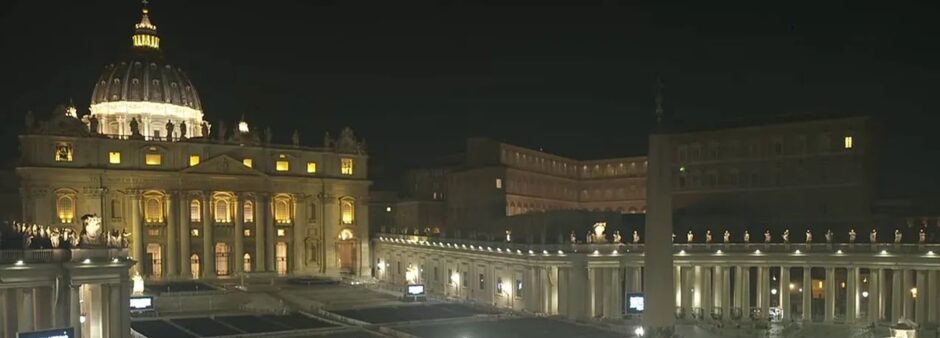
Nuntii Latini 29.12.2017

Let that be a lesson!

Argutans ungitur rota.

I suggest that you all bookmark the link to Nuntii Latini and visit to keep the stats up.
Posted in ¡Hagan lío!, "How To..." - Practical Notes | Tagged , ,
1 Comment

ASK FATHER: Prefaces “ad libitum” in the 1962 Roman Missal

From a reader…

QUAERITUR:

Father, what is this “Prefatio ad Libitum” in some 1962 Missals? I saw Prefaces for Advent, Sundays Throughout The Year, etc. May these be used in the Extraordinary Form?

Thank you so much for answering my question about Missa Sicca last time. Great help. Pray for more vocations here in the Diocesis S. Pauli in Insulis Philippinensis, :) Prayers for my household. Prayers for you too, Father.

Thank you for the prayers.

These are the so-called “Gallican Prefaces”, or perhaps “Neo-Gallican”, which were in some French altar missals going back to the 17th century, though the texts are more ancient, perhaps 8th c.    They were, once, proper to France, but they have come into the Roman Rite slowly but surely and, in a sense, are “tolerated”.   Some people are dead set against their use in the Roman Rite.   In new editions of the 1962 Missale Romanum they are included.  They are “ad libitum” (which is itself an oddity in the older Missal), which means that the priest can choose to use them, or not.

I would say that, yes, they can be used.  However, that doesn’t mean that they ought to be used or must be used.  Much depends on the sensibilities of the congregation.   People might not be aware of them and will be confused at hearing something that isn’t indicated in their familiar hand-missals.  That in itself doesn’t disqualify them, but we can’t just ignore the experience of the congregation.


Posted in "How To..." - Practical Notes, ASK FATHER Question Box, Liturgy Science Theatre 3000 | Tagged ,
1 Comment

CHICAGO: 30 Dec. – Solemn Mass @ststanschurch and a word from the pastor on ‘ad orientem’ worship

This afternoon there is to be a Solemn Mass at the beautiful and massive St. Stanislaus Kostka Church in Chicago (NB: at the time of this writing, their website comes up with music… grrrr).   They are celebrating their 150th year.

They have gone ad orientem at the parish and it has been quite the success.

The pastor sent me a note he is publishing in the bulletin.

A Joyful Proclamation
Dear Brothers and Sisters in Christ,
As the Church celebrates the Feast of the Holy Family and the Solemnity of the Holy Mother of God, I joyfully proclaim to you that we will continue offering the Holy Eucharist in the manner of our ancestors, the priest and the people together raising their eyes to the East, toward the Father and from where the Lord will come at the end of time. Having celebrated the Divine Liturgy, Ad Orientem, through the seasons of Advent and Christmas, I will continue this posture of prayer as we move forward here at St. Stanislaus Kostka.
That this option for offering the Sacred Mysteries of our faith was nearly universally eclipsed in the aftermath of the Second Vatican Council was unfortunate to say the least. [Do I hear an “Amen!”?] Over the years I have read innumerable commentaries on the ongoing need for the renewal and reform of the Mass. I assess, and agree with others, that a major key to authentic and enduring renewal is a simple gesture that is powerfully transforming. That the priest and people together raise their eyes Ad Orientem, inspires a shift in focus that reawakens the senses to the very essence of the Catholic Liturgy and therefore, a reawakening to the essence of our Christian identity.
We need only look to the Holy Family and the Saints who have preceded us on the journey. Their lives were characterized by a steadfast gaze on God, looking away from themselves in order to fulfill God’s will in their lives. Even Christ Jesus, when among us in the flesh, pointed beyond himself, to the Father.
With the Ancients of Old, the essence of our faith is not only a turning away from ourselves, but also a mutually shared sacrifice that is deeply life giving. Not only did Christ point us to the Father, he offered himself in atonement for our sins for the purpose of our salvation. The Blessed Virgin Mary participated deeply and intimately in the Sacrifice and down through the ages the Saints have done likewise.
In gratitude we share in Christ’s Sacrifice, and that of our ancestors, when we gather in sacred assembly – a gathering that is both communal and collective as well as private and personal. The Sacrifice is central to our adoration and worship of Almighty God, preceded and followed by our being fed in Word and Sacrament. Our turning Ad Orientem facilitates a proper response to having been fed with the Word of God as well as an appropriate preparation for the Supper of the Lamb.
The posture of the priest and the people together offering Christ and themselves in Christ, to the Father, is refreshingly counter-cultural and a healing remedy to the self-indulgence and narcissism sadly characteristic of the times in which we live. The priest, in persona Christi, is the shepherd who leads the flock and feeds the flock as together, priest and people, make the arduous journey from here to the full realization of Christ’s kingdom.
At the altar of sacrifice, the priest lays down his life and the sacred assembly does likewise. This is our mutual fiat – our “yes” spoken and offered in thanksgiving that the Lord receive us as a people in need of redemption. The Lord indeed comes to us with redeeming grace and remains with us in spite of our infidelities and failings. Together, priest and people offer themselves in Christ, to the Father, as a plea that God make all things new and keep us on the narrow, but difficult path that serves humanity even as it carries us to the homeland.
Simply put, in our time, priest and people have fallen prey to the seduction and sickness of a radically secularized society. Our turning Ad Orientem, following the ancient manner of offering the Sacred Mysteries, is a humble gesture that powerfully places all things in sacred perspective – we go to the Father in Christ and Christ comes to us that we not collapse as we strive to fulfill our mission of sacrificial love in deference to the Lord.
In the Holy Mother and Blessed Child,
Fr. Anthony Bus C.R., pastor

God bless Fr. Bus and his congregation.  Fr. Z kudos.

Click

Posted in ¡Hagan lío!, "How To..." - Practical Notes, Si vis pacem para bellum!, The future and our choices, Turn Towards The Lord | Tagged , ,
2 Comments

Blessing smart phones. Wherein Fr. Z rants about blessings and demons and present day stupidity.

US HERE – UK HERE

Yes, I have blessed smart phones, tablets and computers.

Consultation with exorcists will inform you that demons are really good at infesting electronic equipment.  I’ve heard enough scary stories from exorcists about that to leave me cautious and, at times, alarmed.

Hence, yes, I have blessed smart phones, tablets and computers.

Today I see at The Catholic Thing an offering about this very topic by Ines A. Murzaku. Let’s have a glance at some of it with my usual treatment.

A Blessed Smartphone?

A blessed smartphone or tablet? Yes. Parishioners at St. Matthew’s Church in Marsala (Sicily) were asked by Fr. Alessandro Palermo, a 30-year-old parish priest, to bring their smartphones and tablets to church for a special benediction this year before Christmas on the feast of St. Lucy: “With the advent of the Internet, social media and the technological revolution, mobile phones have become very important, we keep them always with us.”

[…]

Misuse of a cell phone or smartphone can result in a number of physical problems: digital eyestrain, blurred vision, headache, and other symptoms.

But worse than physical damage, misuse of technology can cause moral damage. “Eyes and sight must be educated, protected, trained even when we look at the screen of our mobile phone. It is not a question of health (staring too much with your eyes on a screen can hurt people’s vision), but it is also a moral issue,” explains Fr. Palermo.

In other words, smartphones can tempt us to evil thoughts through evil sight, so the eyes of the person who uses technology need protection and benediction. The tragedies caused by misuse of smartphones have ruined lives and have caused even death. “That is why a blessing can do good, not to the phone but to the people who use it,” said Fr. Palermo.  [Ummm…. I’m going to disagree with Father.  Both object and person can and must be blessed.  First, people should get into the habit of asking priests for a blessing.  That’s what priests are for.  However, I think that the phones, etc., ought to be blessed as well, precisely for the reason that I mentioned at the top.  Demons can infest places and things.  The sinful use of places and things can result in demonic infestation, which I think we will all agree is a sub-optimal situation.  But there’s more, I think, behind Father’s statement… read on.]

[…]

But what does Saint Lucy have to do with smartphones?

Saint Lucy (Santa Lucia in Italian) was a Christian martyr, patroness of Syracuse in Sicily who lived between A.D. 283 and 304 and died during the Diocletian persecutions of A.D. 304. According to tradition, she had her eyes gouged out. So she is the patron saint of the blind, glazers, and authors – and by extension seems poised to become a special guide for the beneficial use of digital media. [Taking “custody of the eyes” to a new level.]

“That is why I want to bless the smartphones,” comments Fr. Palermo. It’s important to understand what happens when the Church blesses an object. The Catholic Benedictionary or Book of Blessings includes benediction of “the instruments of social communication” (No. 927), or the blessing of things designated for ordinary usage.  [Herein lies the problem.  The “Book of Blessings” – which I will never use, contains all sorts of prayers which bless the people who might use something, but doesn’t actually bless the places or things.  The preface in the book eliminates the distinction between invocative and constitutive blessings, which is very bad indeed and reflects the worst of post-Conciliar, modernist tendencies.  The numbering of the Latin De Benedictionibus is different from the edition cited in the article, but I found the referenced “blessing” (not).  More, below.]

The Church sees reasons to bless many kinds of things: from grapes to wine for the sick; from medicine to beer, cheese or butter; from lard and oil to salt and oats for animals; from fire and airplanes to railway cars. Then, why not bless the most cherished modern object: the smartphone? The following formula from the Rituale Romanum of 1962 may be used by any priest for the blessing of anything that does not have its own special blessing:

God, whose word suffices to make all things holy, pour out your blessing + on this object (these objects); and grant that anyone who uses it (them) with grateful heart and in keeping with your law and will, may receive from you, its (their) Maker, health in body and protection of soul by calling on your holy name; through Christ our Lord.

All: Amen.

[It (they) is (are) sprinkled with holy water.]  [I’d use Latin.  The Devil really hates Latin.  And, yes, that blessing blesses things with a constitutive blessing.]

The Church has always displayed a passion for and attention to communication, through word or image, pen or paint. For every affliction and addiction, the Church has a Benediction. However unusual it may at first appear, in blessing mobile devices, the Church has begun a much-needed outreach, urging people to get the best out of technology and to use smartphones smartly, so that, rather than instruments of immorality, our devices become instruments of virtue and well-being.

Again, in that last part, the writer gets that the phone should be blessed.  The Sicilian priest said not the phone but the person.

Fr. Z says, both the phone and the person.

In De Benedictionibus (the dreadful Latin edition of the “Book of (non-) Blessings”) I found a section for “”Buildings for advancing social communication”, which would be radio stations, movie theaters, etc.  De Benedictionibus was issued in 1984.  I have its 1993 reprint.  In other words, this was before smart phones. I suspect there are newer editions… though I will never buy one.   I suspect that in any newer edition, the same wrong-headed and newfangled notion would be followed.

In the aforementioned “blessing” of a, say, TV studio, we read, “famulos tuos, Domine, respice benignus, qui his utentur technicis istrumentis…  O Lord, look kindly on your servants who use these gizmos…”.  Later the formulary blesses the people present, not the things to be used.  FAIL.  That’s the “Book of Blessings”, however.  Always the people, never the things or places.

Take things to Father to be blessed.  And head off the horrid Book of Blessings by taking with you a copy of the blessing from the Rituale Romanum “for all things” (or the more precise one if you can find it, for example, at the useful Sancta Missa site),

V. Adiutórium nostrum Cross Symbol in nómine Dómini.
R. Qui fecit cælum et terram.
V. Dominus vobíscum.
R. Et cum spíritu tuo.

Orémus.

Deus, cuius verbo sanctificántur ómnia, béne + dictiónem tuam effúnde super creatúram istam (creatúras istas): et præsta, ut quisquis ea (eis) secúndum legem et voluntátem tuam cum gratiárum actióne usus fúerit, per invocatiónem sanctíssimi nominis tui, córporis sanitátem et ánimæ tutélam, te auctóre, percípiat. Per Dóminum nóstrum Iesum Christum Fílium tuum: Qui tecum vivit et regnat in unitáte Spíritus Sancti Deus per ómnia s?cula sæculórum.

R. Amen.

Sprinkle with holy water (hopefully blessed with the older Rituale).

Now, please allow me to rant.

As I have written before, …

Does anyone believe that the Devil stopped attacking in the 60’s?

My recollection of the 60’s suggests that Devil’s attacks redoubled and with great effect.

Consider how the liturgical “reformers” with the inexplicable approved of Paul VI, dropped the exorcisms from the rite of Baptism, despite the teaching of the Church about the Enemy and  the effects of Original Sin.

Consider how the orations of Holy Mass in the Roman Rite were stripped of their clear references to sin, expiation, propitiation, judgment.

Consider how a “Book of Blessings” was issued that doesn’t really bless things or places, despite the clear fact of demonic activity.

Consider how a new rite of exorcism was published, which greatly diminished the power and efficacy of exoricisms.

Consider how the “Leonine Prayers” after Low Masses were dropped, which included the invocation of St. Michael the Archangel.

It is as if the Church simply caved in before the world and its Prince.

“But Father! But Father!”, you snivelers yammer from behind your Fishwrap, “The Council was lead by the spirit!  The spirit of the Council!  Everything is so much better now! It’s undeniable.  But yoooooou… you and your … your… GAH!  Vatican II didn’t go nearly FAR ENOUGH!   Küng says so!  But yooooou… you can’t see that because you don’t have the spirit of the Council!  And she doesn’t like you at all!  Why?  WHY?!?  Because YOU HATE VATICAN II!”

I love Vatican II so much that I won’t lie about it.

These days we have all manner of priest and prelate feeding us B as in B and S and in S about 2+2 equaling 5, and even worse phonus-balonus that people who are in the state of mortal sin can without a firm purpose of amendment receive the sacraments.  They attack the very foundations of the Faith.

This is the work of Satan.  You can tell that it is from the Enemy of the soul because it is creating greater and ever more bitter division and confusion.

And yet the great spiritual weapons Holy Church has in her arsenal are not being used, and indeed are being locked away by those who should have them firmly in well-trained battle-toughened hands.

Our Savior said that this world has its Prince.

We are in a constant state of spiritual warfare.  The Enemy neither lays down arms nor ceases the attack just because we idiots stop defending ourselves.  How stupid is that, anyway?

When we bless things or places with constitutive blessings, we rip them from the grasp of the Prince of This word and hand them over to Christ the King.

We must reclaim what has been lost and reintegrate it into our regular practices and daily lives.  We need what was won for us and handed down through the centuries of our forebears’ experience.

We need a wide-spread renewal of the older, traditional Roman Rite.

For the umpteenth time, no initiative we undertake in the Church will succeed without a revitalization of our sacred liturgical worship.

Fathers!

  • Use the older Rituale Romanum.
  • Learn the older, traditional Mass.
  • Turn those altars back towards the Lord.
  • Reinstate devotions such as novenas and Exposition with Benediction.
  • Preach about and hear confessions.
  • Teach about sacramentals.
  • Bring the Church’s language Latin back into your liturgical lives.
  • Reclaim your patrimony, your identity.

Don’t be afraid.

Posted in "But Father! But Father!", "How To..." - Practical Notes, Hard-Identity Catholicism, Liturgy Science Theatre 3000, Wherein Fr. Z Rants |
11 Comments

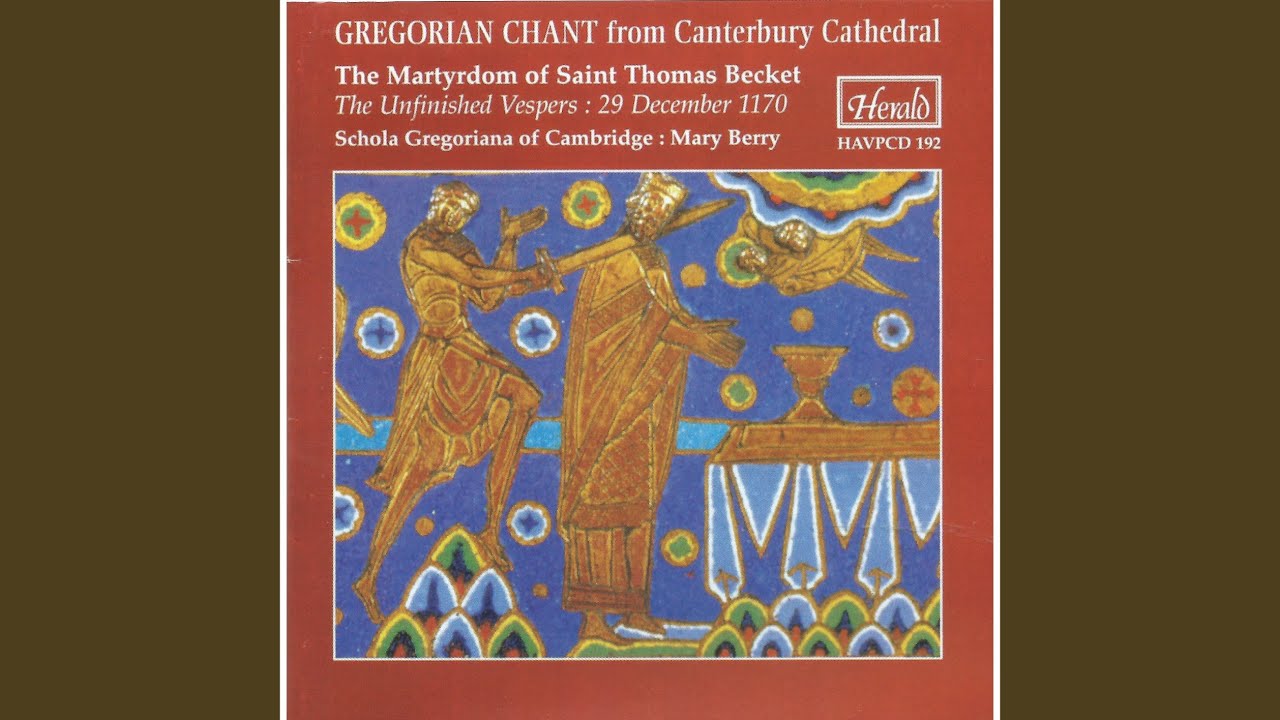
The “Unfinished Vespers” of St. Thomas Becket – 1170

For St. Thomas Becket.

A reader – who picked this up from Jeffrey Morse – writes:

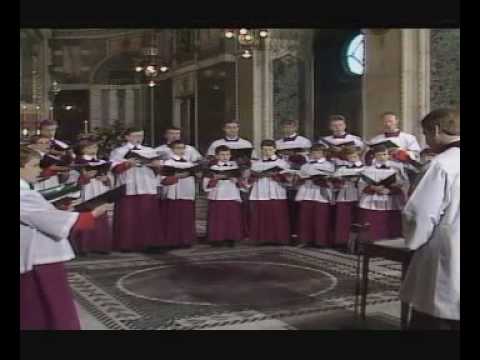
More bloodshed remembered on this 5th day of Christmas- St Thomas (Becket) of Canterbury- murdered in his Cathedral during the singing of Vespers on this day in 1170- here brought to life in a brilliant recording of the Schola Gregoriana of Cambridge, directed by Dr Mary Berry. [US HERE – UK HERE] Contemporary accounts say that the murder happened during the singing of the “capitulum”.

In this recording, at that moment, the reader’s voice trails off and the great bell of Canterbury takes over.

YouTube thumbnailYouTube icon

Posted in Saints: Stories & Symbols | Tagged
1 Comment

ASK FATHER: Penance on Friday in the Octave of Christmas

I’ve been texting with a Famous Catholic Author™ about today, a Friday in the Christmas Octave, and the obligation to do penance.  I’ve received email about it, too.
The Octave of Christmas does not have the “weight” of the Octave of Easter.  Easter Friday outweighs the penance thing, but Christmas Friday does not.

Note can. 1251 in the 1983 Code.

Can. 1251 Abstinence from meat, or from some other food as determined by the Episcopal Conference, is to be observed on all Fridays, unless a solemnity should fall on a Friday. Abstinence and fasting are to be observed on Ash Wednesday and Good Friday.

Friday in the Octave of Christmas is not a liturgical solemnity.  Hence, we are obliged to do penance today, Friday in the Octave.

However, you can ask your parish priest to dispense you or commute your act of penance.

Can. 1245 Without prejudice to the right of diocesan bishops mentioned in can. 87, for a just cause and according to the prescripts of the diocesan bishop, a pastor [parish priest] can grant in individual cases a dispensation from the obligation of observing a feast day or a day of penance or can grant a commutation of the obligation into other pious works. A superior of a religious institute or society of apostolic life, if they are clerical and of pontifical right, can also do this in regard to his own subjects and others living in the house day and night.

Members of religious communities and third orders should consult their own regulations and review to whom they turn for dispensations.

You can substitute another form of penance for abstaining from meat.  Make it penitential, however.  Abstinence from meat has good reasoning behind it.  For some, however, there abstinence from other things can be of greater spiritual effect.

Also, it may be that some local places have exceptions.   For example, if you belong to St. Thomas Becket parish, then today is your patronal feast.   Also, perhaps your conference of bishops made another ruling.  I believe that is the case for England and Wales.

Posted in "How To..." - Practical Notes, ASK FATHER Question Box, Canon Law | Tagged ,
5 Comments

USCCB: Created Male and Female: An Open Letter from Religious Leaders

I was alerted to something interesting on the website of the USCCB.  The bishops posted a letter signed by religious leaders of various groups.  HERE  My emphases.

Created Male and Female: An Open Letter from Religious Leaders
December 15, 2017

Dear Friends:

As leaders of various communities of faith throughout the United States, many of us came together in the past to affirm our commitment to marriage as the union of one man and one woman and as the foundation of society. We reiterate that natural marriage continues to be invaluable to American society.

We come together to join our voices on a more fundamental precept of our shared existence, namely, that human beings are male or female and that the socio-cultural reality of gender cannot be separated from one’s sex as male or female.

We acknowledge and affirm that all human beings are created by God and thereby have an inherent dignity. We also believe that God created each person male or female; therefore, sexual difference is not an accident or a flaw—it is a gift from God that helps draw us closer to each other and to God. What God has created is good. “God created mankind in his image; in the image of God he created them; male and female he created them” (Gen 1:27).

A person’s discomfort with his or her sex, or the desire to be identified as the other sex, is a complicated reality that needs to be addressed with sensitivity and truth. Each person deserves to be heard and treated with respect; it is our responsibility to respond to their concerns with compassion, mercy and honesty. As religious leaders, we express our commitment to urge the members of our communities to also respond to those wrestling with this challenge with patience and love.

Children especially are harmed when they are told that they can “change” their sex or, further, given hormones that will affect their development and possibly render them infertile as adults. Parents deserve better guidance on these important decisions, and we urge our medical institutions to honor the basic medical principle of “first, do no harm.” Gender ideology harms individuals and societies by sowing confusion and self-doubt. The state itself has a compelling interest, therefore, in maintaining policies that uphold the scientific fact of human biology and supporting the social institutions and norms that surround it.

The movement today to enforce the false idea—that a man can be or become a woman or vice versa—is deeply troubling. It compels people to either go against reason—that is, to agree with something that is not true—or face ridicule, marginalization, and other forms of retaliation.

We desire the health and happiness of all men, women, and children. Therefore, we call for policies that uphold the truth of a person’s sexual identity as male or female, and the privacy and safety of all. We hope for renewed appreciation of the beauty of sexual difference in our culture and for authentic support of those who experience conflict with their God-given sexual identity.

Sincerely Yours:

SIGNATORIES

Go there to see the list of signatories and their religious groups.

I was encouraged that this is posted on the site of the USCCB.

Let’s add something.

Same-sex sexual acts are intrinsically evil and God does not make people sexually attracted to members of the same sex.

Posted in One Man & One Woman, Our Catholic Identity, Sin That Cries To Heaven, The future and our choices | Tagged , , ,
14 Comments

Warning: you might not get through it dry-eyed

I posted this under my Childermas entry, but it deserves attention on its own.

Here is a reworking of Lully Lulla Lullay by Philip Stopford.  It’s about the Holy Innocents.

Warning: you might not get through it dry-eyed, especially when the descant comes in at about 3:30.

YouTube thumbnailYouTube icon

Lully, lulla, thou little tiny child,
By by, lully lullay, thou little tiny child,
By by, lully lullay.

O sisters too, How may we do
For to preserve this day
This poor youngling,
For whom we do sing,
By by, lully lullay?

Lully, lulla, thou little tiny child,
By by, lully lullay, thou little tiny child,
By by, lully lullay.

Herod, the King, In his raging,
Charged he hath this day
His men of might,
In his own sight,
All young children to slay.

Lully, lulla, thou little tiny child,
By by, lully lullay, thou little tiny child,
By by, lully lullay.

That woe is me, Poor child for thee!
And ever morn and day,
For thy parting
Nor say nor sing
By by, lully lullay!

Posted in I'm just askin'... | Tagged ,
4 Comments

28 Dec – Childermas: “They were the Church’s first blossoms” – Holy Innocents

holy innocents medieval greek 02

Monday was Christmas.

Today is Childermas, the Feast of the Holy Innocents.

The “Coventry Carol”, a lullaby of mothers to doomed children, dates to the 16th century. It was part of a Mystery Play, “The Pageant of the Shearmen and Tailors”, about chapter two of the Gospel of Matthew.

The carol is about the Massacre of the Holy Innocents.

Lully, lulla, thou little tiny child,
By by, lully lullay, thou little tiny child,
By by, lully lullay.

O sisters too, How may we do
For to preserve this day
This poor youngling,
For whom we do sing,
By by, lully lullay?

Lully, lulla, thou little tiny child,
By by, lully lullay, thou little tiny child,
By by, lully lullay.

Herod, the King, In his raging,
Charged he hath this day
His men of might,
In his own sight,
All young children to slay.

Lully, lulla, thou little tiny child,
By by, lully lullay, thou little tiny child,
By by, lully lullay.

That woe is me, Poor child for thee!
And ever morn and day,
For thy parting
Nor say nor sing
By by, lully lullay!

We could sing it on every street corner.

The carol came to greater popularity after the BBC broadcast it at Christmas of 1940, after the Bombing of Coventry: it was sung in the ruins of the bombed Cathedral.

Holy Innocents roundThere is sometimes attributed (wrongly) to St. Augustine a quote about the Holy Innocents with some beautiful imagery.  Here it is… mind you, attributed to the Doctor of Grace:

These then, whom Herod’s cruelty tore as sucklings from their mothers’ bosom, are justly hailed as “infant martyr flowers”; they were the Church’s first blossoms, matured by the frost of persecution during the cold winter of unbelief.

Lovely, no?  Augustine didn’t say that.  It was Caesarius of Arles who preached:

Quos herodis impietas lactantes matrum uberibus abstraxit; qui iure dicuntur martyrum flores, quos in medio frigore infidelitatis exortos velud primas erumpentes ecclesiae gemmas quaedam persecutionis pruina decoxit.  [s. 222, 2 in CCL 104]

Literally: Whom the impiety of Herod dragged from their mothers’ breasts; who rightly are called the flowers of the martyrs, whom, having sprung up in the midst of the cold of infidelity, bursting forth as the Church’s first jewels, a certain frost of persecution wasted.

or

Whom the ungodliness of Herod dragged as nursing babies from their mothers’ breasts; who rightly are called the flowers of martyrs, whom the frost of persecution cooked up, grown up in the midst of the cold, bursting forth as the first buds of the Church.

Some interesting things are going on in the Latin.  First, you need to know that gemma isn’t just “gem”, but can also be “bud, blossom”.    In Latin there are two related verbs, lacto, lactare, “to contain milk, to give suck”, and lacteo, lactere, “to suck milk, to be a suckling”.  However, in all periods they swap meanings.  We could use one English verb for both, “to nurse”. This is also why we for the famous line “out of the mouth of infants and of sucklings” both “ex ore infantium et lactentium” and “ex ore lactantium”.

By the way, if you like this drilling into Latin, try Latin Synonyms, with Their Different Significations, and Examples Taken from the Best Latin Authors, by M. Jean-Baptiste Gardin Dumesnil, translated into English, with additions and corrections, by the Rev. J. M. Gosset. US HERE – UK HERE

Decoquo is “to waste” or “to reduce by boiling”.  I found an interesting reference in Suetonius how Nero made a icy-cold drink decoction, a decocta.  Pliny uses decoctum as a medicinal drink.  Note the juxtaposition of the heat indicated in decoquo and the cold of frost.  The cold heat of persecution brought forth flowers before their day.

Here is the Collect from the 1962 Missale Romanum:

Deus, cuius hodierna die praeconium Innocentes Martyres non loquendo, sed moriendo confessi sunt: omnia in nobis vitiorum mala mortifica; ut fidem tuam, quam lingua nostra loquitur, etiam moribus vita fateatur.

O God, whose public heralding the Innocent Martyrs professed this very day not by speaking but by dying; mortify in us every ill of vices; so that (our) life might confess Your Faith, which we speak with our tongue, also by (our) morals.

Look at the not-so-subtle change made to the Collect by the cutters and pasters who glued together the Novus Ordo:

Deus, cuius hodierna die praeconium
Innocentes Martyres non loquendo,
sed moriendo confessi sunt:
da, quaesumus, ut fidem tuam,
quam lingua nostra loquitur
etiam moribus vita fateatur.

Can you spell “bowdlerize”?

LITERAL VERSION:

O God, whose public heralding the Innocent Martyrs
professed this very day not by speaking but by dying;
grant, we implore, that (our) life might confess Your Faith,
which our tongue declares,
also by (our) morals
.

That lingua nostra could, I suppose, be ablative, but it is probably the nominative subject of loquitur.  I originally swerved that into “which we speak with our tongue”.  There is a strong temptation to reconstruct these clauses when rendering it into English.

NEW CORRECTED VERSION:

O God, whom the Holy Innocents confessed
and proclaimed on this day,
not by speaking but by dying,
grant, we pray,
that the faith in you which we confess with our lips
may also speak through our manner of life
.

Did the translator not get that fateor is deponent?  The subject is vita, no? Accusative fidem is the object, not the subject.

What a mess.

OBSOLETE ICEL
:

Father,
the Holy Innocents offered you praise
by the death they suffered for Christ.
May our lives bear witness
to the faith we profess with our lips
.

I’ll stick with the older Collect in Latin, thank you very much.

St. Thomas Aquinas dealt with the question of how the Innocents could be considered martyrs if they didn’t yet have use of their free will so as to be able to choose death in favor of Christ and if they were not baptized.

The Angelic Doctor answered that God permitted their slaughter for their own good and that their slaying brought them the justification and salvation that would also come from baptism.

This was a “baptism of blood”. In their deaths they were truly martyrs. And they were indeed for Christ, since Herod, fulfilling the prophecy of Jeremiah 31:15, killed them from ill-will for the new-born Christ.

YouTube thumbnailYouTube icon

And a modern reworking of Lully Lulla Lullay by Philip Stopford which might quite simply make you choke up and then, at the descant about 3:30, completely lose it.

YouTube thumbnailYouTube icon

Like it?

US HERE – UK HERE

holy innocents 01

Adorazione_dei_Magi_by_Gentile_da_Fabriano_Predella Flight into Egypt sm

Posted in Liturgy Science Theatre 3000 | Tagged , ,
4 Comments

Benedict XVI penned a letter for Card. Müller’s 70th birthday.

Pope Benedict has written a longish letter to Card. Müller, once Prefect of the CDF and now… Card. Müller, on the occasion of his 70th birthday.



The German text is HERE.

The letter was written for a “Festschrift”, a commemorative collection of essays on the some important occasion or anniversary for an honoree.

I’m not in mood to work real hard tonight, but the thrust of Benedict’s letter, is that, even though Müller does not present have an office, he remains a role in the Church as a cardinal.  (Benedict knows something about not having an office, but retaining a “role”.)

A cardinal isn’t really ever “retired”.

Benedict praised Müller for defending the Faith but also for accepting the spirit of Pope Francis.  He praises Müller’s work as a theologian.

I am sure that the English translation will soon appear.

UPDATE:

A reader sent this:

Pope Emeritus Benedict XVI: Cardinal Müller will continue to serve the Faith.
Even though His Eminence Gerhard Ludwig Cardinal Müller is no longer the Prefect of the Holy Office, “A Cardinal never simply retires”. So says his friend and patron Benedict XVI very convincingly.
Cardinal Gerhard Ludwig Müller will continue to “serve the faith publicly”. Pope Emeritus Benedict XVI shows this in the introduction to a series of writings to celebrate the 70th birthday of the former Prefect of the Congregation of the Faith. Although Cardinal Müller, after the end of his five-year term as Prefect, “no longer holds a specific office, he is still a Priest and certainly a Bishop and Cardinal, and he cannot simply retire.”
In his welcoming address, the Pope Emeritus honoured the work of Cardinal Müller in Rome, first as a member of the International Theological Commission, where he was especially struck by the wealth of his knowledge and the fidelity to the Catholic Faith. After the retirement of Cardinal William Levada as Prefect of the Congregation of the Faith, Cardinal Müller was “the most suitable Bishop” to succeed the American. As Prefect, the former Bishop of Regensburg endeavoured to work “not only as a scholar, but as a sage, as a father in the Church.”
“You defended the clear traditions of the Faith, and in the spirit of Pope Francis sought an understanding, of how these can be lived today.”
In the four-page letter Pope Emeritus Benedict recalls how Cardinal Müller gave him an edition of his “Catholic Dogmatics for the Study and Practice of Theology” in 1995. In the Cardinal’s Dogmatics, the Pope Emeritus sees the project of a compact compilation of the Faith of the Church in a single volume. Benedict himself had not been able to realise a plan of his own accord because of his manifold duties as a theologian at Vatican II, as Archbishop of Munich and Freising, and finally as the Prefect of the Congregation of the Doctrine of the Faith. He pays particular tribute to Cardinal Müller’s account of the Faith of the Church “as unity and wholeness,” so that “the ultimate simplicity of faith becomes visible through all complicated theological reflections.”
This is the mark of a good theologian, says Pope Benedict: “In my opinion, a great theologian will not be treated by handling clever and difficult details, but by representing the ultimate unity and simplicity of the Faith.”
The greeting is preceded by the commemorative publication “The Triune
God: Christian Faith in the Secular Age”, which commemorates the 70th birthday of Gerhard Ludwig Müller on 31 December. It is published by Christian Schaller, director of the Benedict XVI Foundation in Ratisbon, and by George Augustine, lecturer in Dogmatic Theology in Vallendar, Germany. The authors include His Eminence Reinhard Cardinal Marx, recent Ratzinger Prize award-winner Bonn dogmatist Karl -Heinz Menke, and Karl Wallner, former Rector of the Holy Cross Philosophical-Theological College. Benedict XVI himself regrets in his greeting that he himself was “no longer able” to write a “proper scientific contribution”.

Posted in ¡Hagan lío!, Just Too Cool | Tagged ,
3 Comments