Help @TeamRubicon help in Hurricane Harvey

In the past I have posted about an organization called TEAM RUBICON.

Team Rubicon is made up of present and former first responders, former military, doctors, experts in many fields as a fast response team which swoops in as fast as possible when disasters of all kinds strike.

Hurricane Harvey has them ramping up.

Perhaps my bestest friend ever let me know about a donation just made to Team Rubicon.  HERE

May I recommend this good organization?  Read their story.

Posted in ¡Hagan lío! | Tagged
3 Comments

Watching Texas, etc. Dear readers… plan for disasters.

disaster_planning-resized-600.jpgI have just tuned in for the first time in several days with any real attention to the news.

I see that about an hour and a half ago as I write, N. Korea launched a missile over Japan.

My prayers go out to the people of S. Texas. Wow.

Many times I have urged readers to have a plan for natural disasters and the need to bug out fast, especially if you have children and others who depend on you. The need to bug out might come in the form of an angry ex-boyfriend.

Everyone, make plans. Make sure you have enough food, a way to secure and purify water, defend yourselves. Be sure to have documents and anything of that nature that can’t be replaced. Perhaps digitize important information and precious photos and keep them on something like an Ironkey 1GB Secure Flash USB Drive. US HERE – UK HERE  For your mobile phones, perhaps a small unit that can power your handheld even my solar.  A big option is like the JuiceBox, but it is heavy.  Smaller could be like this power-bank. US HERE – UK HERE  Consider any medications you might need. A hand held radio, such as a radio (get your HAM licence!) could make a huge different when cellular coms are down. US HERE – UK HERE.

Just think about what you need and what might happen.  Where will you meet if you are separated?  How will you move yourselves?  What can you quickly grab and carry?  What will really cause dangerous suffering if you lack it?

Look.  Terrible things can strike suddenly.  However, I hope never to read an email that any of you were seriously hurt or killed in some problem for which you could have prepared for ahead of time with relative ease.

And so, the most important thing, examine not just your material lives frequently, but also frequently your spiritual lives and …

GO TO CONFESSION!

Posted in "How To..." - Practical Notes, Semper Paratus, Si vis pacem para bellum!, TEOTWAWKI | Tagged ,
7 Comments

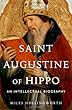
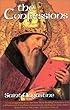
What is the best translation of St. Augustine’s “Confessions”?

What I call: “The biography of Augustine Pope Benedict would have wanted to write.”

On this glorious feast of St. Augustine, allow me to repost an answer to a question I get fairly often and answer off the blog:

QUAERITUR:

What is the best translation of St. Augustine’s Confessions?

It depends a little on who you are and why you are reading this magnificent work.

The Confessions is usually the only work most people are exposed to when it comes to the Doctor of Grace.

The best translation –  for most people –  is probably by Dame Maria Boulding, OSB, who was at Stanbrook Abbey.  She captures the aspect of prayer in The Confessions without, for the most part, sacrificing accuracy of translation in the process.

The Confessions is, of course, an extended prayer.

You can quibble about some of her choices, of course.  All translations limp.  For example, Augustine says in Book X that he was “loved and feared” (amari et timeri – 10.36.59) by his people.  (Get it Your Excellencies? Fathers?) She choose to say “loved and esteemed” (or something woolly like that), which does not get at what Augustine really said.

By the way, I wrote about that “amari et timeri” HERE. I even have a mini PODCAzT with the Latin.

Boulding’s is better – for most people – than Pine-Coffin‘s.  (I am not making up his name.) His translation is good but it is in a style of English many people are no longer used to.  Pinecoffin, however, sometimes hits it out of the park.  For example, when Augustine is talking about his profligate youth in Carthage, P. renders “amans vias meas et non tuas, amans fugitivam libertatem” (3.3.5) as “I loved my own way, not yours, but it was a truant’s freedom that I loved”.  Not precise, but dead on.  “A truant’s freedom”.  Wonderful.

Chadwick‘s… no thanks.

Boulding’s translation is also quite affordable.  The paperback is only $9 and the Kindle version is only $8.  UK Link HERE.

And speaking of The Confessions

GO TO CONFESSION!

Posted in "How To..." - Practical Notes, ASK FATHER Question Box, Patristiblogging | Tagged ,
12 Comments

ASK FATHER: Recitation of Office completely silently? Prepare, Fathers, to wince!

12_04_11_breviaryFrom a reader…

QUAERITUR:

I have seen a tendency for people who have a duty to say the Office attempt to satisfy their obligation without mouthing the words with air passing through the lips. Has the liturgical law changed? I’m pressure sure [I’m pretty sure that that’s “pretty sure”] the older manuals like Prummer [insert reverent head bow here] said each syllable must be uttered for the perfect satisfaction of the obligation.

So the question is must the Office be performed as vocal prayer rather than interior mental prayer?

For the perfect satisfaction of the obligation?

We are Unreconstructed Ossified Manualists.  Let’s look it up.

Let me just say that most diocesan priests and bishops – 99.99% I would guess – might be a little horrified to read the whole section De attentione et devotione in recitandis Horis in

Sabbetti-Barrett (see my note at the very end of the post):

Pronuntiatio debet esse vocalis, integra et continuata.  Et 1°. quidem debet esse vocalis, nam Officum recitari debet voce, et quidem distincta; non autem sufficit, ut sola mente legatur, aut tantum oculis percurratur; nec satis est, se recitetur gutture vel intra dentes, aut syncopando, linguave titubante abbreviando; nam id quod praecipitur est oratio propriae vocalis; oratio autem non censetur proprie vocalis, nisi voce distincta fiat;2°. debet esse integra, ad integritatem autem pertinent Pater, Ave Credo in principio et fine Horarum, prout in Rubricis adnotatur, non autem orationes Aperi Domine et Sacrosanctae, quae solum ex consilio recitantur; 3°. debet esse continuata; se proinde quaecumque notabilis interruptio intra unam Horam, si absque ulla causa fiat, culpa non caret; sed peccatum veniale non excidit. Cf. S. Alphons. n. 166.

So, yes, the Office must be recited, pronounced, since it is vocal prayer (cf. CCC 2700 ff.).

Also,

580 QUAER. 1°. An recitans Officium debeat se audire, ut possit dici vocaliter orare?

Resp. Neg., quia oratio vocalis dicitur per oppositionem ad mentalem, et vere habetur quoties verba vere pronuntiantur, utut a nemine audiantur; ac proinde sufficit, si recitans conscius sibi sit se verba pronuntiare. – Cf. S. Alphons. n. 163.

Deeply drilling Prümmer (1953) says (vol. 2, #370): “Ad plene satisfaciendum praecepto ecclesiastico Officium divinum recitari debet: 1. debito ordine, loco, situ, tempore; 2. integre; 3. continue; 4. vocaliter; 5. cum attentione et intentione.”

Notice that “plene“!

In the explanation in #375 he says:

“Immo est consuetudo haud laudabilis ita proferendi aut potius sibilandi verba Officii in recitatione privata, ut circumstantes inde molestiam patiantur.  Clericus mentaliter tantum Officium legens aut solis oculis percurrens non satisfacit suae obligationi; saltem si non habet speciale privilegium.”  

If you don’t say your Office vocally, and just do it mentally, according to Prümmer you don’t fulfill your obligation.  HOWEVER, he goes on to say that Leo X (of happy memory) gave the Friars Minor this privilege.  And also in #376,

“Propter auctoritatem S. Alphonsi, cuius sententias quilibet confessarius in praxi sequi potest, nisi Curia Romana expresse aliud statuerit, non auderem quidem peccati mortalis reum declarare clericum regularem, qui totum Officium mentaliter tantum dixerit, sed haud pauci auctores docent, privilegium istud a Leone X concessum hodie iam non existere.”

Something in the back of my mind tells me that that privilege was rescinded by Gregory V.

HENCE: Recitation of the Office should be aloud, since it is official and mainly vocal prayer. This is why of yore and even now priests move their lips when saying their Office.

I guess it could be possible to fulfill your obligation mentally, but only with permission from proper authority.  I imagine that that could be the diocesan bishop for diocesan priests.  After all, Sacrosanctum Concilium 101 says that the “ordinary” can give clerics permission to use the vernacular for the office.  More HERE.  One might argue that while Latin may not be of the essence of the Office, vocal prayer is.

However, even when you don’t read aloud, there is a measure of subvocalization going on when reading.

That said, I am of the opinion that a priest imperfectly fulfills his obligation even when not moving his lips, only reading silently.  I don’t know if that is a venial sin or not.  I suppose a great deal depends on the training the priest had about the nature of the Office.  I suspect that none of this is explained in seminaries, even from the point of view of historical interest.

In the instruction for the Liturgy of the Hours there is an explanation that biographical notes about saints are not for reading aloud.  That implies that the rest is read aloud.  Also, there is a paragraph at 103 says that “even when a psalm is recited and not sung or is said silently in private, its musical character should govern its use”.  But that seems to be about Psalms in general rather in about their specific recitation in the Office.

It seems to be that even in the lax days of the Liturgy of the Hours, the obligation of true vocal recitation remains as it did before.

If that is the case, we are in serious trouble as a Church and so is the whole world: the official prayer of the Church which clerics and religious should be offering for the sake of the whole People of God … isn’t being offered in a satisfactory way.

See my SAVE THE LITURGY – SAVE THE WORLD Manifesto.

And then there’s this!

17_02_07_Jesuit_breviary

When I read these manuals, especially the sections that pertain to clerical life, liturgy, etc., I am always left simultaneously edified and humiliated.

I am edified at the amazing ideals which are proposed according to law and reason.

I am humiliated in that in many respects I don’t come up to scratch.

I must rededicate myself – confess those faults which I think may be mortal – and then amend and improve.

So… I am now going to back away from this question and quietly, indeed silently and not even moving my lips, go back to my To Do List.

The moderation queue is ON (especially for those who want to provide translations of the Latin – which would be a great service to non-Latin reading bishops and priests out there).  If sound, I’ll integrate them into the post.

UPDATE:  Not satisfied… I found also this.

Sacred Congregation for Divine Worship Note Liturgiae Horarum Interpretationes (Not 9 (1973) 150)

Query: When a person recites the liturgy of the hours do the readings have to be pronounced or simply read?

Reply: It is enough to simply read them. The conciliar Constitution on the Liturgy says nothing about an obligation to oral recitation when a person says the office alone, although there was a difference of opinion on this among the conciliar Fathers. They decreed a reform of the breviary not for the purpose of shortening the time of prayer but of giving all who celebrate the liturgy of the hours a better time for prayer…Sometimes a surer guarantee for this objective of the liturgy of the hours in individual recitation may be to omit the oral recitation of each word, especially in the case of the readings.
Found on page 1098 of Documents on the Liturgy 1963-1979. Conciliar, Papal and Curial Texts. The Liturgical Press, 1982

With this explanation:

recitation office silent

I find in this a contradiction, especially in light of the expression of Paul VI about Christ’s voice echoing in us.

This is such a different approach.  It seems simply to sweep aside the characteristic liturgical prayer as vocal prayer.  NB: A priest cannot simply think the words of consecration or the forms of the other sacraments.

Posted in "How To..." - Practical Notes, ASK FATHER Question Box, Liturgy Science Theatre 3000, Mail from priests, Priests and Priesthood | Tagged , , , , , ,
17 Comments

ASK FATHER: 1965 Missal at Fontgombault

fontgombaultFrom a reader…

QUAERITUR:

I read this over at Tradinews [in French… my trans]:

When the Abbey of Fontgombault and the communities that were founded from it took up again the celebration of the traditional liturgy, they obtained permission from the Commission “Ecclesia Dei” to celebrate the conventual Mass according to a rite very close to the 1965 Missal (private Masses still being celebrated according to the 1962 Missal).

I have just learned of a letter sent by the Commission “Ecclesia Dei” on 26 March 1997 (No. 40/97) to an Australian bishop in which the Commission indicates that the indult granted to Fontgombault Abbey can also apply to the celebration of any Pontifical, Solemn or Sung Mass.

I’ll remind you that there are 8 modifications to the 1962 Missal that were granted to Fontgombault Abbey:

[…]

Since I have no natural talent for canon law, I always like to consult an expert before doing stupid things. [A sound practice.] The possibilities mentioned in the article for the most part don’t appeal to me anyway, apart from maybe inserting some short form of universal prayer in certain sung pilgrimage Masses at the shrine I’m caring for. Only, I wondered, since this indult dates back to 1995, does it still apply after the promulgation of Summorum Pontificum? I know some of these rubrics are being used in the liturgy of Le Barroux abbey, would that maybe have to do anything with this?

I, too, consulted a canonist about this.

Since these were privileges granted to Fontgombault, they would only apply at Fontgombault.  These privileges retain their force even after Summorum Pontificum, unless there was a private revocation, or subsequent action on the part of the Abbey or the Holy See to alter them.

My canonist concluded:

In short, what was granted to Fontgombault, stays at Fontgombault.

Bottom line: If you are not at Fontgombault, you can’t use the 1965 Missal.

BTW… Fontgombault is truly beautiful.  If you ever get the opportunity to visit, I warmly urge you to do so.

Posted in "How To..." - Practical Notes, ASK FATHER Question Box, Liturgy Science Theatre 3000, SUMMORUM PONTIFICUM | Tagged ,
14 Comments

NYC Day 3-4: Noodle Bliss, Trim & My View For Awhile

The all too brief Gotham jaunt continued.

After my breakfast of champions I made another foray to the Met.

I’ve seen most of the older European collection so often that many of the paintings now greet me by name.  Hence, I went to the well-organized and representative Modern section.   Mind you, I don’t usual spend time with this stuff, but I have to admit that the Met has a few good rooms which are worth your time… after you see the important stuff.

One thing I have some to understand about myself, to my shock, is that, somewhat against my will, I rather like Jackson Pollack’s drip and pour stuff.

You have to look at it for a while, to get how he made it.

Upstairs, they are repainting the emptied out hallway in preparation for the big Rodin display coming up in mid-September.  I must get back for that.

There was an exhibit of WWI art and objects, including propaganda posters.  This one is pretty much in your face.

I’d love a version of this for a new league of …say… Clement XIV.

Here is a prototype for an AMERICAN helmet!  WWI!

Back downstairs in that area between the medieval hall and the modern building housing the Lehman collection is a fascinating exhibit wherein they show daily and luxury objects and explain what they were worth back in the day as valued against something that held a constant value over a long period of time: a milk cow.   How to appraise what some object was worth way back when: figure out how many milk cows it would take to replace it.

A milk cow would have been worth 35 days of pay of a skilled craftsman in London or Antwerp, 59 days for unskilled labor, 27 bushels of wheat in Paris or Vienna, 5350 loaves of rye bread in Brussels.  So, if our currency is 1 milk cow….

This early 17th c. German chalice with beautiful angels made for the Speyer cathedral (alas, a 19th c. cup replacement), back in the days would have been valued at 🐄 x 255.

Also, there is an exhibit of a Mexican baroque painted, who really has game.  Here is a monumental altarpiece.  How they got it in, I have no idea.   It depicts – unusually – the Transfiguration above the scene of the Bronze Serpent.  Connection?   It’s there.  Work on it.

Look at the size of this thing relative to that larger than man fountain!

Whew.

Meanwhile, which drink is mine?

In one of my favorite places, Bryant Park, the Marshall Chess Club brought all sorts of gear for people to play chess and backgammon, etc. How cool is that?

bryant_park_chess

I was sooooo tempted.   I’ve been contemplating signing up for the Kasparov course online.  I used to play when I was young… a lot.   A really whole lot, often.  Tournaments, rating, etc.  Then…. pffffft… life got busy.

Off to the ecclesiastical trim and fabric place La Lame.  I needed appliques for the RED pontifical vestments, especially the humeral veil, which is too bare.  Also, I am starting the search for the best trim for the BLUE set.  HERE

Supper.

And a walk.

We finally got to Ivan Ramen on the lower East side.   This is now firmly on my list of places to return and not just for the ramen!

This was fun: Coney Island Tofu.   Not what you expect.

My selection, with an added tomato umami bomb.

It’s kind of a pain to get to, but it’s really good.

Just for nice: my favorite building.

On the way to the airport: CHINESE IN QUEENS

Shumai

Best xiao long bao anywhere.

Crispy beef

And then there are the shredded potatoes and hot peppers.

Then

MY VIEW FOR AWHILE.

Off to the airport.

At security I tried CLEAR for the first time and it worked like a charm.

As always, there is a lot to do here. The weather was magnificent. I got to see some friends, including good ol’ Fr. Murray and CPT G of the NYPD. All in all, a great success, leaving me wanting more.

So… time for a flight home. Will Delta get me there without interesting things happening?

Posted in On the road, What Fr. Z is up to |
26 Comments

ASK FATHER: Heavy-handed priest imposes quirky personal whims on TLM

good-idea-fairyFrom a reader…

QUAERITUR:

I kindly ask your opinion (and perhaps advice) on the following matter of great importance to our local TLM community.

The rector of the church (who sometimes celebrates the EF for us, but we are not a personal parish) has sent a letter to all organists, MCs and servers stipulating the following, after we had tried to improve various elements, such as serving and Sacred Music. Please bear in mind when reading that this priest is not, in his heart, a friend of the EF, nor does he know many of the most basic things about it. The points are, in summary:

  1. “The diocesan directives for the celebration of the EF are to be followed.” (This refers to some spurious liturgical prescriptions the diocese imposes on us, such as the vernacular in places.)
  2. There must be four vernacular hymns at every Missa Cantata […]. It eliminates anything else that might be sung by the schola or played on the organ).
  3. The Schola is not to sing anything (motets, etc.) beyond the Propers and Ordinary. (For about a year now, we’ve had a new schola form and sing regularly and they were hoping to gain new members so as to do polyphony)
  4. The celebrant is the one who decides absolutely everything, incl. how servers serve, musical organisation, etc.
  5. The servers are to do everything as it was done at this church a decade ago (which includes major forbidden, wrong and nonsensical things, such as lay servers handling the chalice).
  6. If Sung Mass is not possible (it is the norm for us) on a Sunday, there will not be a Low Mass to replace it, but Mass with Propers and Ordinary replaced by hymns.
I understand this is longer than the general messages you receive, but nevertheless I humbly ask for your opinion on these points, since the letter basically stamps out any initiative to grow the EF in our place. Would you think it helpful or advisable to ask Ecclesia Dei for help with this matter? Your help is greatly appreciated!

These abuse of power situations are frustrating.  Fathers, if you think you have just the greatest ideas in the world about how to improve Mass in a way that is contrary to the rubrics and it’s spirit, … knock it off.  You guys remind me of the military’s legendary “Good Idea Fairy” who flits and tinkers with things because they want to be noticed and to feel important and who feed on the chaos and frustration that results.

(There’s one at a parish nearby to where I am writing, as a matter of fact.  But I digress.)

Friend, you can always have recourse to the Holy See’s Pontifical Commission “Ecclesia Dei”.  However, I’d first consider going to the local bishop. Of course, the success or failure of that approach depends heavily upon who the bishop is!   In some cases, the bishop might rub his hands together say to Fr. Good Idea Fairy, “This time you hold them down so I can kick them!”

Some of the points the rector is trying to enforce seem to be contrary to liturgical law.  A Missa Cantata is just that.  Hymns at a Missa Cantata, instead of the proper texts, is wrong. That is something that the Pontifical Commission might be able to clarify.  I’m not exactly sure what he means by lay servers handling the chalice.  While setting up? During Mass itself, there not much “handling” of the chalice necessary except by the priest.  Perhaps you are referring to bringing a ciborium to the altar, etc.  However, I get the idea that the rector is trying to eliminate in your community distinctions of the priest or laity.  In most traditional communities, when setting up, lay people don’t directly handle the sacred vessels, but rather put on gloves first.

Unless the bishop is of the mind to correct this rector’s heavy-handedness, I’m not sure what recourse there would be.

It may be that you could try another approach.

Is the rector trying to set up a situation to prove that folks devoted to the EF are problematic and disobedient? If so, then obey his heavy-handed directives (even the wrong ones) to the letter. Frustrate his plans by showing just how devotedly obedient you are, and double your efforts to support the parish, financially and otherwise.

Also, figure out what his “thing” is. Does he have a heart for the poor?  Then make sure the EF folks are the first ones to help at the soup kitchen or food pantry.

Is he eager to do evangelization? The EF folks should be the most eager to get to the front lines of going door-to-door.

Is he passionate about the sick and elderly? The EF folks should be right there to help him in home visits to those folks.

The music aspect is probably the hardest point here.  Isn’t it always?  Music for Mass should be an integral and even integrating part of every liturgical action.  Artistic sacred music can foster growth in attendance.  On the other hand, banal music will frustrate good musicians and undermine attempts at growth.

Would there be the possibility of setting up some sort of choral society, to do sacred polyphony outside of the Mass … for now? Have a little concert on Sunday after Mass, or sometimes during the week.  Keep working on it and improving and then integrate it when the right moment comes.  People, hearing you, might say: “Why aren’t they singing for Mass?”

Above all, work with him and don’t allow your exchanges to become acrimonious.  If you get sharp and angry, you lose.  He holds the cards.  If he chooses to be a tyrant there isn’t much you can do about it.

Stay frosty.  Breathe.  Think.  Plan.  Organize.  Persevere.

Posted in "How To..." - Practical Notes, ASK FATHER Question Box, Liturgy Science Theatre 3000 | Tagged , ,
30 Comments

Canonist Ed Peters’ observations about post-Conciliar liturgical as “irreversible”

Today canonist Ed Peters provides some helpful notes (HERE) about something His Holiness of Our Lord said the other day about the liturgical reform after Vatican II being irreversible.   Pope Francis seemed in invoke the Magisterium.

Peters explains what sorts of things are the subjects of magisterial teaching, which things can be considered “irreversible”.

When I read that, I scratched my head a little.  First, no one denies that there was a liturgical movement in the 20th century which lead to the Council Fathers approving Sacrosanctum Concilium.  No one denies that, after SC there were massive changes to the Church’s worship and that those changes produced effects which are “irreversible”.  After all, they happened and they had there inevitable effect.  However, in the life of the Church there are movements and there can be counter-movements.   This has always been the way of things over the centuries.  So, I am not sure how a particular direction of liturgical reform can be called “irreversible” and how such a declaration can carry such authority that the faithful are somehow bound to believe or hold it.   In any event, Dr. Peters provides points of consideration.

Friends, this is enormously helpful.  Here is part of it:

[…]

Examples of infallible assertions that must be believed(credenda) are the points in the Creed, the Immaculate Conception and Assumption of Our Lady, the foundation of the Church by Christ, the precise number of sacraments, and so on. Examples of infallible assertions that must be held(tenenda) are canonizations, determinations as to which councils should be deemed “ecumenical”, the invalidity of Anglican orders, and so on. While infallible assertions demanding belief and infallible assertions demanding definitive retention are distinguishable from each other, their very close connections are equally obvious. As a result, among the many, many things that the Church asserts with various degrees of authority, relatively few are recognized as being asserted with certainty and, in that regard, as being irreversible. See 1983 CIC 749 § 3 and CDF’s 1998 “Doctrinal commentary on Ad tuendam fidem. But while it is fairly easy to spot matters of belief infallibly asserted (so-called “primary objects” of infallibility), matters requiring definitive retention (so called “secondary objects” of infallibility) are trickier to assess.

To offer some negative examples, the Church would never declare infallibly that the sun rose in Ann Arbor today at 6:54 AM local time—even though the assertion is true—because such an assertion is not divinely revealed nor is it necessary to defend or expound the deposit of faith; [And there were, in fact, reforms to the Roman Rite after Vatican II.] she would never affirm with certainty that St. Peter’s Basilica is the most beautiful church in the world because such an assertion is not divinely revealed nor is it necessary to defend or expound the deposit of faith (not to mention it being difficult to assign the notion of “most” to any judgment about the beautiful); [Some people think the reforms were great, and some don’t.] and she would never affirm with certainty and magisterial authority that the New Evangelization is “irreversible” because such an assertion is not divinely revealed nor is it necessary to defend or expound the deposit of faith (not to mention that the New Evangelization is a phenomenon that does not admit of easy categorization and is in part a response to its times). [Maybe there will be a New Evangelization, and maybe not.]

And so I think it can be confusing to the faithful for any prelate to “affirm with certainty” and/or with “magisterial authority” that liturgical reform is “irreversible” precisely because such language connotes in Catholic minds the exercise of a charism given not to underscore the importance of what is being asserted, but rather, to identify certainly and without error [NB] either what is divinely revealed and thus to be believed or what is required to safeguard reverently the deposit of faith and thus to be definitely held. [And neither matters of the liturgical reforms after Vatican II nor even the content of SC are in that category.]

To repeat, with Pius XII, Vatican II, St. John Paul II, and doubtless with Francis, a faithful Catholic may regard liturgical reform (properly understood, and apart from the travesties committed in its name) as springing from a movement of the Holy Spirit in the Church; [which could be… or not…] but whether it is prudent for any pope, in virtue of his “magisterial authority”, to “affirm with certainty”, that such reforms (whatever exactly those are) are “irreversible” (whatever exactly that means here) is, I think, a different issue.

I found this helpful.

It is, by the way, time for a good book which deals with levels of authority of various documents, etc.

It seems to me that, slowly but surely, we will know whether or not the post-Conciliar reform will bear good fruits and whether or not “the people”, whom the Holy Father invoked, will go with along with it.  Benedict XVI recognized that there are powerful forces in the Church when it comes to worship.  There has always been a slow and organic development of our liturgical worship.  When you tinker with that and impose massive changes suddenly, you disrupt the very life of the Church down to the last member.  So, by bringing back to the fore the traditional liturgical reforms, Benedict sought to, so to speak, graft together the artificially created post-Conciliar forms with what the Church had done for centuries… and in a way that Council Fathers would recognize as sound.  Remember that the Council Fathers in SC mandated that no changes be made unless they were for the good of the Church and that no changes be made that are not in keeping with previous liturgical forms.   However, both of those mandates were severely violated in what was eventually produced in the name of the Council.

When there is a wound, steps must be take to heal it.  What happened after the Council produced a wound.   Benedict took steps to heal it.

What Benedict did, however, didn’t “mar” the post-Conciliar reforms.  Neither did he “mar” the traditional forms.   When they are placed side-by-side in an irenic way, they will, assuredly, influence each other in a “mutual enrichment”, what I call a “gravitational pull”.

Precisely the things that Francis spoke of to those Italian (shudder) liturgists, are precisely the things that are happening where the traditional form is in place in a healthy way.   People are participating at Holy Mass with exactly the sort of full, conscious and actual/active participation to which the Council Fathers aspired in Sacrosanctum Concilium.   It’s obvious.  That, in fact, is a result of, first, the lack of availability of the traditional forms for so long and b) an insight gained from the use of the Novus Ordo, even when abused and not used properly.   The “mutual enrichment” is taking place.   And this is inexorable…even “irreversible”.   The only way to reverse it would be to abolish suddenly one of the two forms.   But that isn’t going to work, in my opinion.   The older form is back.  As Cardinal Sarah mentioned no long ago, it is now a modern and post-Conciliar form as well.

I don’t see what happening now as being irreversible.  It is producing great benefits and I think that people will want it and seek it no matter what.

Posted in Liturgy Science Theatre 3000, Our Catholic Identity, The Drill | Tagged ,
19 Comments

WDTPRS 12th Sunday after Pentecost: RUN! RUN FOR YOUR LIVES!

Today’s Collect survived the liturgico-surgical scalpels of the Bugniniites (cf. BUGNINICARE – “If you like your Latin in the Mass, you can keep your Latin in the Mass!”) to live on in the Novus Ordo for the 31st Sunday of Ordinary Time.  The prayer is ancient, and results in the Gelasian Sacramentary as well as in the Veronese Sacramentary during the month of July.

COLLECT (1962MR)

Omnipotens et misericors Deus, de cuius munere venit, ut tibi a fidelibus tuis digne et laudabiliter serviatur: tribue, quaesumus, nobis; ut ad promissiones tuas sine offensione curramus.

Let’s find out what this means by starting with some vocabulary.

“But Father! But Father!”, some of you papalatrous gnostic are whooping, “Pope Francis has said with his magesterial authority that we are now irreversible, and explanations are reverses, so you CAN’T explain the prayer.  It is FORBIDDEN!  But you don’t care because YOU HATE VATICAN II!”

Did someone say something?  No.  I thought not.

We have a loaded word in our Collect today: munus.  Before a Fishwrap writer accuses us of being “militaristic” for saying “loaded”, munus means essentially “a service, office, post, employment, function, duty.” Some synonyms are: officium, ministerium, honos.  A Greek equivalent of munus is “leitourgia” whence comes our word “liturgy”, originally standing in ancient Greek for a needed civic work or service one performs because he ought to for the sake of society.

Yes, yes, the other day Pope Francis said of the liturgy: “Liturgy is the life of the whole people the Church.  By its nature liturgy is, in fact, “popular” and not clerical, being – as etymology teaches – an action for the people (per il popolo), but also of the people.”

That said, let’s move on.

In the New Testament this old word was applied to a new Christian context for concepts like taking up collections for the poor (i.e., what man does for man) and religious services (man’s worship of God).   To make this more complicated, munus also means “a present, gift.”  When it means “gift” it seems often to be in the ablative case, as in the construction mittere alicui aliquid munere… “to send something to someone as/for a gift”.  I say munus is a loaded word because in theological writing we speak among other things of the three-fold office or tria munera which Christ passed to His Church, the Apostles and their successors: to teach, to govern, to sanctify.

When the Lord gives us commands (and He doese.g., love one another as I have loved you (John 13:34-35), take up your Cross and follow me (Mark 8:34-38), be perfect as your Father in heaven is perfect (Matthew 5:48), do this in memory of me (Luke 22:19), etc.) we can sum them up in the two-fold commandment of love of God and of neighbor (cf. Matthew 22:36-38; Mark 12:2-31; Luke 10:26-28).

All followers of Jesus have been given a two-fold munus to fulfill which reflects the three-fold munera Christ gave to the Church’s ordained priesthood.

I invite you to try an experiment.  See what happens to your perception of the Collect if you make munus mean “office” rather than “gift.” 

When I wrote about this Collect the first time, waaaay back in the first year of my WDTPRS series, I chose “office” over “gift”.  We might be able to say “ministerial gift” so as to get at both sides of the content of munus.  While reading this, can you keep both concepts simultaneously in mind?

Our dog-eared editions of the Lewis & Short Dictionary provide insight into offensio, closely related to the verb offendo.  This verb has many meanings though some are not obvious.  Primarily it stands for “to hit, thrust, strike or dash against something.”  Therefore it is also, “to suffer damage, receive an injury” and “blunder, make a mistake, commit an offense.” From our knowledge of the English cognates, offendo also can mean, “be offensive, shock, mortify, vex.”

However, offendo can also simply mean, “to hit upon, light upon a person or thing, i. e. to come upon, meet with, find.”

Personal Anecdote: Many years ago in Rome, during my intensive studies of Latin, I used to write postcards in Latin to my home parish.  During the summers the pastor, the late Msgr. Richard Schuler, was teaching some informal Latin courses to seminarians.  They weren’t receiving this essential training from the seminary (as is required in the 1983 Code of Canon Law).  I caused some surprise and not a little of anxiety once when I wrote: “Cardinalem Ratzinger offendi… I had by chance met Card. Ratzinger” or “I ran into Card. Ratzinger”, to get the sense of it, and greeted him from the aforementioned pastor whom the Cardinal knew.  When they read, “Cardinalem Ratzinger offendi” and that I greeted him in the name of the pastor, I am told that at first they were mortified.  They thought I had done something else to Card. Ratzinger, in the name of Msgr. Schuler and the parish.  The moral: Latin words have layers of meanings and sometimes the English cognates lead us into a false or deficient understanding of what the Latin really says.  But I digress…

Back to offensio.  The first meaning of offensio is “a striking against anything; a tripping, stumbling.”  By extension it can also mean the thing that causes one to trip or stumble, a “stumbling block.”  As a result, offensio indicates also an offense, either given to someone or received from someone.   In the Latin Vulgate offensio can be a thing which causes one to sin.

Some Latin grammatical constructions force us to scramble after an English paraphrase.  This verb serviatur signals one of those hard constructions. First, servio is one those verbs constructed with an “object” in the dative case (tibi) rather than in the accusative. L&S tells us that servio is virtually never used as a passive.  So, we can rule out saying something like munus … serviatur … “that the gift/office may be served”.  What we have instead is a periphrastic (Greek peri– “around” and phrastic – “saying”) or “roundabout” way speaking, using the third person and the point of reference in the dative.

And, of course, the verb curro means “to run, to move quickly (on foot, on a horse, ship, etc.), to hasten, fly”.

LITERAL WDTPRS TRANSLATION (1962MR):

Almighty and merciful God, from whose gift it comes that service be rendered unto You by the faithful worthily and laudably grant us, we beseech You, that we may run toward Your promises without stumbling.

OBSOLETE ICEL (1973 – 3rd Ord Sun.):

God of power and mercy, only with your help can we offer you fitting service and praise. May we live the faith we profess and trust your promise of eternal life.

CURRENT ICEL (2011 – 3rd Ord. Sun.):

Almighty and merciful God, by whose gift your faithful offer you right and praiseworthy service, grant, we pray, that we may hasten without stumbling to receive the things you have promised.

This Collect gives me the image of a person, a servant, hurrying to fulfill a duty or command given by his master or superior.  He is rushing, running.   He is, as usual, carrying a heavy burden.   While dashing forward, he is trying to be careful under his burden lest he stumble, fall, consequently spill what he is carrying and ruin it.

This could be a description of how we live our Christian vocations.

Each one of us was made in God’s image.  We were given something to do here.  When we discern God’s will and do our best to live well according to our state in life, we experience heavy burdens.  We have the opportunity to participate in carrying the Cross of Jesus.  By His incarnation, Passion and resurrection, Christ made us heirs of the Kingdom of heaven.

But we can lose the Kingdom.

The Lord Himself told us that if we want to be with Him, we must participate in His Cross.  We must pick up our Crosses and follow Him each day.

During His fearful Passion, our Lord literally carried His (and our) Cross.  Without a doubt He was hard pressed to stay on His feet under such a burden.  Envision the soldiers, probably the Temple guards, prodding Him while the Roman soldiers cleared the way.  They were forcing Him to go faster faster faster in order to beat sundown deadline and the Jewish holy days that followed.  The road He walked would have been uneven and rough, with edges and corners to catch weary feet.  He stumbled.  He fell even though He surely was being as careful as possible.

We stumble and fall too, though not like the sinless Lord.  We stumble mostly by choice.

In our Collect, we pray that we can hurry, even run (curro), rather than drag along toward the reward of heaven.  We beg God (quaesumus) that we do so without mishap.   We desire never to give offense to God by what we do (offensio) and we ask that the road be made free of stumbling blocks (offensio) for our feet as we run.  Indeed, we desire to do so not just without fault, but also in a praiseworthy way (digne et laudabiliter). He understands the tough road we travel.

When we stumble in sin, we give offense to God.

Here is an echo of our petition in the Lord’s own Prayer: lead us not into temptation, let us not be faced with burdens we do not have the grace to bear.

Do not forget that there is a tempter out there, an Enemy who desires us to fall and give offense to the Lord.  He with untiring malice and angelic guile will place obstacles before our feet.

That one we do not want to meet with (offendo) even by chance.

Pray without ceasing.

GO TO CONFESSION!

Receive the sacraments.

Do penance.

Run forward.
Posted in ¡Hagan lío!, Liturgy Science Theatre 3000, Our Catholic Identity, WDTPRS | Tagged
1 Comment

First thoughts on Pope Francis’ address to Italian liturgists

His Holiness of our Lord gave a speech to participants at a national assembly of Italian liturgists.  HERE

Given what I have seen and heard in Italy, my mind reels in dread at the very notion of a room full of Italian liturgists.

I’m am not sure who wrote this for the Pope, but I suspect it was not prepared by the Congregation for Divine Worship.  I have my strong suspicions, however.

It opens with a rehashing of various steps in reform of the Church’s liturgical worship in the 20th century.  There follows an encomium of Vatican II and Sacrosanctum Concilium. And then a panegyic of Bl. Paul VI who set in motion all sorts of changes (which, I must observe, went way beyond what Vatican II asked for, but I digress).

Then he says (my emphases):

Today there is still much work to do in this direction, especially in rediscovering the motives of the decisions taken with the liturgical reform, overcoming unfounded and superficial readings, partial receptions and practices that disfigure it.   One isn’t dealing here with rethinking the reform, reconsidering the choices, as much as to recognize better the underlying (sottese) reasons, also through the historical documentation, as if to interiorize the inspiring principles and to observe the discipline (disciplina) as well as the norm (regola).  After this teaching (magistero), after this long journey we can affirm with surety and with magisterial authority that the reform of the liturgy is irreversible.

There is a lot packed in there.  Let’s pull some of it apart.

It first talks about errors that were made which made the Vatican II reforms go astray.  We  could spend months listing those.   It mentions the underlying principles of the legislated changes to the liturgy, and it says that we have to figure out what they were (because, I guess, from the way the Vatican II documents were implemented, you would have thought that they had never been read in the first place).  It states that we have to read the documents: hurray!  It is an over statement to say that we have had a “long journey”: not in terms of the Church as view through the centuries before Vatican II and before the 20th century’s liturgical movement.  This is all in living memory: so it isn’t really much of a long journey… though it might seem long.  However, he also suggests that the liturgical documentation to which he refers is “magisterial” (we can agree) and he seems to invoke the Magisterium is saying that the reform of the liturgy is irreversible.

In a sense, this is not out of keeping with what Benedict XVI said in his letter to bishops explaining Summorum Pontificum… which is also magisterial.  Understood correctly, Benedict wanted none of the things that this Pope distances himself from.  In fact, Benedict’s view is that, yes, liturgy is living, growing changing, etc.  Verrrry slooooowly.  However, what happened with the way that Sacrosanctum Concilium was implemented resulted in an artificial form which stifled the natural organic evolution of liturgical worship.  Summorum Pontificum is about the future, not about turning the clock back.  It is a way to bring what happened (e.g., the deformities mentioned above) back into continuity (which is what SC demanded).

However, read another way, in a cynical way, this seems to be a shot at suggestions about a “reform of the reform”.  Mind you, I think that is what the ghost writer intended.

He goes on to the next section about a “Living liturgy for a living Church”.  This is where things get a little odd.

First, His Holiness of our Lord makes an analogy with a heartbeat.

“Just as there is no human life without a heartbeat, so too without the beating Heart of Christ there is no liturgical action.”

Ummm… well… yeah.  Okay.

I would only point out that we have a resting heartbeat.  Our heart rates speed up and slow down according to activity, etc.  The resting heartbeat is a baseline which is consistent, even, continuous.  When our heartbeat is erratic there are problems.   An arrhythmia can result in cardiac death.  This is probably what happened with the artificial imposition of many liturgical changes after the Council (not actually called for by the Council Fathers in SC): liturgical arrhythmias.  Think of ventricular fibrillation or paroxysmal supraventricular tachycardia: when the heart or part of the heart gets out of sequence and starts doing its own thing… not good. Another heartbeat problem is congestive heart failure: fluids build up around the heart such that it can’t beat properly, blood starts backing up into the wrong places, nasty things result. I suppose that might be like the oppressive constriction imposed by bishops and priests who, for example, failed to implement St. John Paul II’s norms (issued explicitly… without hints or suggestions or cryptic meanings… by his Apostolic Authority (which sounds magisterial) that respect should be shown to those who have the legitimate aspiration to participate in the Church’s traditional liturgical worship and when he called for – by his Apostolic Authority – that the norms should be applied generously.  “Pastors of souls” clamped down hard on the beating hearts of the faithful who desired traditional forms, such that they nearly died of broken hearts.  Another problem with a heartbeat can come from cardiomyopathy, when the heart is too weak to beat well.  I suppose that results liturgically when we, for example, slam shut the treasury of the Church’s sacred music or when we refuse to implement the actual mandates (rather than the imagined mandates) of Sacrosanctum Concilium in regard to the use of Latin, Gregorian chant, polyphony, pipe organ etc.  Hearts can have beat problems because of weak valves, when there is leakage between the chambers and a low ejection fraction.  I suppose that could be like being minimalists in our approach to worship, stingy, avoiding the beautiful and richly noble out of a perhaps pretentious disdain for “triumphalism”.  Cardiogenic shock is a really bad one for heartbeats.  This is when the heart is damaged.  Liturgical abuses can cause cardiogenic shock in the Body of Christ, the Church, like a gunshot or a knife slash.  There is a weakening of the heartbeat caused by lack of potassium called hypokalemia.  This might be likened to culpable ignorance about matters liturgical which could benefit the everyone by making liturgical worship stronger and more regular, after all, regular is the key to ritual which is the essence of worship.

Screw around with the Church’s liturgical heartbeat, and you wind up with what we have seen in the Church for the last 50 years, as virtually every aspect of Catholic life has become enervated, weak, lethargic and even necrotic.

So, I’m all for a strong, healthy, consistent liturgical heartbeat.  Aren’t you?

Next, His Holiness of our Lord says:

Liturgy is the life of the whole people the Church.  By its nature liturgy is, in fact, “popular” and not clerical, being – as etymology teaches – an action for the people (per il popolo), but also of the people.

Well, that’s great, isn’t it?  I would only observe that you won’t get very far liturgically without the clergy, especially priests who share in Christ’s priesthood in a qualitatively different way than the “people”.  That distinction of “people” and “clergy” seems to create a dichotomy.  Clergy are ALSO the people of God!  The two are complimentary.  Children and parents are complimentary too, but they are not interchangeable and they are not, in all aspects of family life, equals.  They are in some, but they aren’t in others.

Next,

The liturgy is life and not an idea to understand.  It brings us to live an initiatory experience, or rather and (experience) that transforms how we think and act and not to enrich one’s own baggage of ideas about God.  …  The rites and prayers… for what they are and not for the explanations we give them, become indeed a school of Christian life, open to those who have ears, eyes and hearts opened up to assimilate the vocation and the mission of the disciples of Jesus. This is in line with the mystogogical catechism of the Fathers….

While I get the main idea (we are to be receptive to what is offered in the liturgical action, not as dissectors or mere students of texts and bring what we receive into daily living), this seems confused.  We have to have explanations of the texts.  The texts are not exactly easy.  Without some explanation, how can participation be full and conscious?  This seems to be saying that we shouldn’t drill into them.  But then His Holiness of our Lord invokes the memory of the mystogogical catechism in the time of the Fathers of the Church… when great bishops such as Augustine and Ambrose explained to the newly initiated the meaning of new things they were being taught as Christians.

The rest is the usual sort of thing that these speeches have toward their conclusions.

So, what to say about this?

I need a little more time to think about it.  One thing I can say, however, is that those of us who have taken the Church’s liturgical reforms seriously, and who have availed ourselves also of what Summorum Pontificum opened up as part of Benedict XVI’s “Marshall Plan” for the revitalization of our liturgical lives, can hear in this speech what we have already been doing and seeing for a long time.   That is, people who are attending Holy Mass also in the Extraordinary Form are participating with that full, conscious and active mode of participation which the Council Fathers actually mandated.   Furthermore, they are using the Gregorian chant and Latin that the Council Fathers actually mandated.  In addition, they are learning to sing and to respond in Latin those parts that pertain to them, as Sacrosanctum Concilium required.  They are not doing anything out of harmony with the Church’s tradition, which was specifically commanded in the same Sacrosanctum Concilium.  Moreover, priests who learn the older form, are enriching their ars celebrandi in the Novus Ordo, and the laity who attend the older form begin to understand the newer form better as well.

This is all part of a living process which is strengthened and kept on a healthy course by attending carefully to the mandate of the Council Fathers for full, conscious and actual/active participation.

Finally, I note that Francis’ speech does not cite Benedict XVI a single time, though he had a lot to say about liturgy.  Hence, I assume that his ghost writer left him out on purpose (a hint as to who helped to write it).

Moreover, in the footnotes, His Holiness cites a daily homily he gave at Santa Marta.  That, to me, suggests that this document has perhaps less weight than some might want to think.  Otherwise, the conclusion is that each and every daily sermon he gives are, in some way, weighty contributions to the ordinary papal magisterium.  I wonder if His Holiness of Our Lord intends those to be at the same magisterial level as, for example, a sermon for the Vigil of Easter or the Feast of Sts Peter and Paul.

I’m turning the moderation queue ON for obvious reasons.


Posted in Francis, Liturgy Science Theatre 3000 |
67 Comments