WDTPRS – 17th Sunday after Pentecost: diabolical contagion

falling into hellIs this prayer appropriate today or what?!?

I used it as a starting point for my sermon today.

This Sunday’s Collect prayer – in the Extraordinary Form:

Da, quaesumus, Domine, populo tuo diabolica vitare contagia: et te solum Deum pura mente sectari.

The phrase diabolica vitare contagia is a glory of the Latin Church’s millennial life of prayer.

Note the wonder assonance and the separate of diabolica from contagia by the verb, a use of hyberbaton.

This Collect, used for centuries in the post-Tridentine Missale Romanum, is in ancient prayer books such as the Liber Sacramentorum Gellonensis, a form of the Gelasian Sacramentary.  It appears as the Collect for the Sunday after the Autumn Ember days (Spring in the Southern climes, though that wasn’t a consideration of the ancients).  As such, it would have been a time of prayer and fasting and for ordinations.

Let’s check our vocabulary to see if we can find treasures beneath the surface.

I am sure you know the words “contagion” and “contamination”.  In Latin we have, as our steadfast Lewis & Short Dictionary informs us, feminine contagio, onis, and neuter contagium, ii, or contamen, inis, which mean “a touching, contact, touch, in a good or bad sense”.  It comes then to indicate “a contact with something physically or morally unclean, a contagion, infection” and thence “an infection, pollution, vicious companionship or intercourse, participation, contamination, etc.”.  Surely those of you who were educated by the sisters or brothers lo those many moons ago in Catholic schools were warned to “avoid the company of bad friends”.  Not only is your reputation tainted with their stains but you subject yourself to their “contamination” and the near occasion of sin.

Go with bad friends, and you go down.

We won’t get into the complicated idea of mens, which can mean “mind”, but also “heart, soul”, in fact the whole of the human person in some contexts.  But we can glance at purus, the adjective for, basically, “clean, pure, i. e. free from any foreign, esp. from any contaminating admixture”.  Obviously, this can refer not only to physical cleanliness, but also moral faultlessness.  There are juridical and religious overtones as well.  For example, for the ancient Romans a thing which is purus, such as a locus purus, a “pure place”, was not just undefiled, it was unconsecrated, not sacer.  On the other hand, purus does also mean “undefiled”, in the sense that nothing dead had been there.  There had never been a funeral or burial, etc.  It is interesting how the Romans got down to brass tacks.

Then we have the verbs vitare and sectari.  While a sector, m. is a “cutpurse”, the sort of bad friend you don’t want to follow around, the verb sector, deponent (passive form but active meaning) is “to follow continually or eagerly, in a good or bad sense; to run after, attend, accompany; to follow after, chase, pursue”.   On the other hand, a vitor is, in fact, just a “cooper; basket-maker”. We are interested in vito, which is not the name of a character in The Godfather (well… it is and it isn’t).  The verb vito means “to shun, seek to escape, avoid, evade”.  The word sort of looks like it should be related to something having to do with “life”, vita.  In reality, however, vito is shortend from vicito, having the root vic-, related to the ancient root wik in Greek eikô (“to yield”).

The important thing to follow, and not avoid, is that in our prayer there are contrasting pairs: contamination v. purity, avoidance v. association.

Each pair reveals our need to make choices and to persevere in what is right.

LITERAL TRANSLATION:

Grant, O Lord, unto Your people, to shun diabolical contamination: and with a pure soul to follow You, the only God.


ICEL (1973 translation of the 1970MR):

This collect barely survived the scalpel-wielding experts of the Consilium, who sliced and diced our orations under the surveillance of the late then-Fr. Annibale Bugnini.   It was not in the typical edition of 1970 or the edito altera of 1975.

Then a miracle occurred.

The third edition, the 2002 Missale Romanum includes this Collect, though in nearly complete obscurity.   It took me a while to hunt it up in the 2002MR.  If you are interested, look in the section Missae et orationes pro variis necessitatibus vel ad diversa, subsection Ad diversa, 48. In quaecumque necessitate, scheme “C”, “Aliae orationes (shortcut, go to p. 1152).  The 1970 and 1975MR, both, had two schemes for Masses In quacumque necessitate (“In whatever necessity”). In the 2002MR a third was added.

The redactors of the newest edition added quite a few things, such as new schemes for vigils of important feasts and the “Prayer over the People” on the days of Lent.  It is as if they recognized that too much had been lost to the Novus Ordo.  Of course with the promulgation of Summorum Pontificum we can make use of the 1962 Missale Romanum and celebrate the sacred mysteries also in light of all we have learned of the ars celebrandi in the intervening decades.

CURRENT ICEL (2011):

Grant, we pray, O Lord, that your people may avoid the contagion of the devil and follow you, the only God, in purity of heart.

As I read and reread the Latin, and then the literal English version, the Biblical imagery of faithlessness as “adultery” or “prostitution” came to mind.  The relationship between the People and God was conceived as an exclusive covenant like a marriage bond.

When the People of Israel were faithless to God they are described as “going with”, so to speak, false idols, “whoring after” other gods.  Think for a moment of Jeremiah 3:6-11 wherein the people go up the mountains or under every tree like a prostitute.  

Could that pertain to some leaders and assemblages of God’s Holy People today?  But I digress.

It seems to me that we are dealing in this prayer with the time-hallowed warning of Christians to shun the three great temptations that corrupt the rational soul (mens) and pull it away from communion with the Holy Trinity.  The three contaminations are mundus, caro et diabolus, “the world, the flesh, and the devil”.

A solid reference to the trio is found in a sermon of a pseudo-Augustine, but it becomes a solid reference in late-antique and mediaeval spiritual thought.  The influential theologian Peter Abelard (+1142) puts it succinctly in his Exposition of the Lord’s Prayer: “Tria autem sunt quae nos tentant, caro, mundus, diabolus… For there are three things which try us: the world, the flesh, the devil” (petitio vi).  St. Bernard of Clairvaux (+1153) speaks of this deadly trio, as does St. Thomas Aquinas (+1274).  It is no surprise that the post-Tridentine Missale would include this prayer, for this was part of the warp and weft of Catholic spirituality.  The Sixth Session of the Council of Trent wrote, with heavy reliance on St. Paul, in its 1547 Decree on Justification about perseverance:

He that shall persevere to the end, he shall be saved, (Matt 10:22; 24:13) which cannot be obtained from anyone except from Him who is able to make him stand who stands, (Rom 14:4) that he may stand perseveringly, and to raise him who falls, let no one promise himself herein something as certain with an absolute certainty, though all ought to place and repose the firmest hope in God’s help.  For God, unless men themselves fail in His grace, as He has begun a good work, so will He perfect it, working to will and to accomplish. (Phil 1:6, 2:13)  Nevertheless, let those who think themselves to stand, take heed lest they fall, (cf. 1 Cor 10:12) and with fear and trembling work out their salvation, (Phil 2:12) in labors, in watchings, in almsdeeds, in prayer, in fastings and chastity. For knowing that they are born again unto the hope of glory, ( cf. 1 Pet 1:3) and not as yet unto glory, they ought to fear for the combat that yet remains with the flesh, with the world and with the devil, in which they cannot be victorious unless they be with the grace of God obedient to the Apostle who says: We are debtors, not to the flesh, to live according to the flesh; for if you live according to the flesh, you shall die, but if by the spirit you mortify the deeds of the flesh, you shall live. (Rom 8:12ff)

The language, and therefore the concepts, of those formative ages of our Catholic faith and spirituality are very much at risk today.  But it is being recovered and reconsidered, especially in the wake of Pope Benedict’s efforts to reinvigorate our Catholic identity in continuity with our profound past.

Of course, there are those who vigorously seek to snuff out all mention of these categories. It is unfashionable in many circles to speak things so distasteful as the sort of temptation to which you can’t, with just a sly wink and hint of naughty struggle, simply give into along with everyone else.

To remind people of sin, guilt, and their eternal consequences is now rude, especially from pulpits in many parishes and cathedrals.  If you speak of the devil and sinful temptations, and the contamination of the soul – as if it isn’t always and automatically pure – you are considered a throwback to an era before modern man grew up.

“No longer do we grovel!  The old bogey-devil won’t drive us down to our knees!  (But then neither does the Blessed Sacrament.)  How feudal! I choose what my boundaries are.  I choose when to receive Communion, with our without reference to the “official” church.”

As a consequence, what sense does it make in some circles now to speak of “perseverance”?

When we are our gods, what sense does it make to speak of all these distasteful, out-dated categories with which shriveled up old men tried to scare us, as a wicked uncles might terrify mere children?

I respond saying that the Enemy of the soul seeks our destruction. 

He seeks to thwart God’s design and our own best destiny of bliss in heaven by guiding us away from the only God down into false gods, created things. The Enemy seeks to accompany us, lead us, delicately into the ways of the world of which he is the prince, tempt us in our appetites and passions, so hard to control after the Fall he originally provoked, draw you into infidelity.

And for what?

In his eternal sickness of angelic malice Satan yearns to crow over your fallen soul, damned to eternal separation from God in hell and amidst the unending agony to boom heavenwards in a twisted oration: “Here’s another victory You will now not have!”

Each day sets choices before us.  Most of the time they are rather simple, even black and white. Only rarely are we ever truly at a loss as to what is right or what is the wrong thing to do.  Our habits and passions make our choices more difficult, as does the wound to our intellect.

But Holy Church gives us the guidance of authority, which steers our still marvelous ability to reason.  We have not just intellect, but our Faith as well.  We are not alone, but God gives us graces.

Today’s prayer gives us insight in an important dimension of our lives: contamination in sin v. purity with God – avoidance of sin and the Enemy v. association with God.

Posted in Liturgy Science Theatre 3000, WDTPRS | Tagged
1 Comment

We are all, I think, striving to understand how we got to the point where we are.

Sunlight and fire are both effective in purifying.

In the wake of The Viganò Testimony and in accord with what Francis said on the airplane, we need to get to the bottom of things, investigate, open the dark places up for exposure to light.   I say that we also need to debride the wounds in the Body of Christ and may even apply fire to cauterize.

Here is a video I picked up via a tweet by Damian Thompson.  It is part of a story at PJMedia.

YouTube thumbnailYouTube icon

We are all, I think, striving to understand how we got to the point where we are.

Posted in Clerical Sexual Abuse, The Drill | Tagged
14 Comments

ASK FATHER: What should we do for Ember Days?

Some (enlightened) bishops have asked the faithful in their dioceses to observe the traditional Ember Days as times of penance in reparation for sins.

From a reader…

QUAERITUR:

Dear Fr Z, I wish you would do a “how to” post on fasting for Ember Days and other occasions. Does it literally mean not eating all day? I have seen some directives that recommend two small meals and one regular one, but that hardly seems like a sacrifice at all. Or should we aim to give up our favorite indulgence as during Lent? (Don’t take away my coffee!)

Maybe it’s the coffee that you should give up.

Before the reforms which were not called for by the Second Vatican Council were instituted, on Ember Days Roman Catholics were to fast (only one full meal per day plus two partial meals).  That meant that on each of the Ember Fridays, there was both fasting and abstinence from meat).   Moreover, people were encouraged to go to confession during the Ember Days.

You can, prudently, do more.

BTW… in ancient times, when there were many more days of fasting and abstinence, people would donate the money they would have spent on food to the poor.  Even St. Leo the Great (+461) talks about that.

In 1966, came the near-disaster of Paul VI’s decree Paenitemini which revamped the entire practice of fasting and abstinence for Roman Catholics.  Among the near-disasters was the exclusion of Ember Days as penitential days.  Of course, left to themselves, with the Church’s law and without sound preaching, people simply stopped doing penance on Fridays.

When the Novus Ordo was issued in 1969, there was a squishy remnant of the Ember Days left as a vague option that conferences of bishops could use.  Or course, they did nothing.

Now, however, some people are waking up to traditional uses and devotions.

I would also recommend a return to the practice of Forty Hours Devotion throughout entire dioceses.  Forty Hours is not a long Corpus Christi or Holy Thursday.  Forty Hours is a devotion during which we pray to God to avert disasters, invasions, famine, disease, etc., or to beg for certain advantages for the community.

BRICK BY BRICK, my readers.  Brick by brick!


Posted in "How To..." - Practical Notes, ASK FATHER Question Box, Brick by Brick, Clerical Sexual Abuse, Hard-Identity Catholicism | Tagged ,
11 Comments

UPDATED – ACTION ITEM! 10 year old’s fundraiser for a Pregnancy Care Center

UPDATE 16 SEPT:

Go to the bottom of the post for the RESULTS!


Originally Published on: Sep 13, 2018

Everyone, here is a good news note!

I received this message from a 10 year old which was forwarded by his mother.  Xavier is one of the TLM altar boys who regularly serves my Masses.

Dear Father Z,

My name is Xavier ___. I am 10 years old and I am your altar server sometimes at St. Mary’s in Pine Bluff. I’m doing a fundraiser for the Pregnancy Care Center of Rockford to help women and babies, and I wanted to reach out to priests that I know. It’s a great pro-life organization, and my letter with all the information is below. If you are able to donate, or share my letter below, I’d appreciate it. I know you have a blog because my brother reads it every day.

Thank you!

Xavier___

Here is the letter itself that describes the project.

Hi, this is Xavier.

This is the letter for the Hike for Life to raise money for the Pregnancy Care Center of Rockford. I am raising money for them this year because they help families and women and children. They are a wonderful pro-life organization that is trying to reach out and help as many people as possible. My goal is to raise over $2000 for them. I will be doing a drawing for a $10 Amazon gift card that I bought for everyone who donates. Please tell your friends about this fundraiser – the Care Center would appreciate it!

To donate, you can go to this link:

http://www.fundeasy.com/m/4012468/

The Pregnancy Care center appreciates it and so do I. Every dollar counts!

Thank you,

Xavier

Ladies and gentlemen, I present Xavier, TLM Altar Boy, 10.

Could you find it in your heart to make a donation?   Let’s give this kid’s project a boost.  It’s a good cause.

The link is

>HERE<<

As of right now, he is not far from his goal.  Let’s try to triple it, at least!

UPDATE 14 Sept:

Good progress.  I did say, however, that we could TRIPLE his request.   This is the LAST day for this fundraiser.   Let’s get it done!  Look what happened in the last, slightly less than, 24 hours.

I had a note from Xavier sent via his mother.

Hi, Father Z, this is Xavier again.

I just wanted to say Thank You! for your more than generous post and donation! When I saw all the donations coming in, I could hardly believe it! The Care Center and I greatly appreciate it.

I’m not able to send thank you emails to everyone because some people didn’t share their email addresses, but I’m remembering everyone who donates in my daily rosaries.

Thank you,

Xavier

(Xavier’s mom here :) )

Dear Father Z.,

Wow!! Thank you SO much for your enthusiastic support of Xavier’s fundraising mission! Our entire family has been so excited to watch the donations come pouring in, and it’s brought such a beautiful feeling of comradery with the Faithful, far and wide, who are supporting this pro-life work! I am thrilled for the Pregnancy Care Center to receive all these donations, and as a mother, I am equally excited that Xavier has been encouraged in this way! This is his first year fundraising for the Center, as his two older siblings have taken turns raising money for this event in the past. He has been working hard to get donations – going around the neighborhood with his 8-year-old brother knocking on doors; bringing his donation sheet wherever we go so he can ask people; and coming up with creative photo shoots involving his younger siblings to post on (my) social media. In spite of his efforts, there has been some disappointment and rejection along the way, so to see such a tremendous response from your post has been amazing!

To which I respond, if you have a “force multiplier” why not use it?

UPDATE 16 SEPT:

Again from Xavier’s mom:

Hi Fr. Z!
I think Xavier told you when he chatted with you after Mass that he hit $10k! Your readers are amazing!!
We planned to take a picture with all the kids and a “Thank you” sign for your readers once we get home from Mass this morning (we have an hour drive, so it will be a bit still). [Yet another family who drives an hour for Mass.] No pressure to post it–we can also put it on Xavier’s donation page in case people check back for updates–but I wanted to let you know that was coming since Xavy said you were going to update the post.
Thanks again for your help to get such an amazing sum for the Pregnancy Care Center. The director and staff were overwhelmed with both excitement and emotion about the support from all over the world!!

You all did more than triple the goal.

$10060!

After Mass today.  He was pretty happy.

Posted in ACTION ITEM!, Emanations from Penumbras, Just Too Cool, The Campus Telephone Pole, The future and our choices | Tagged
12 Comments

At end of youth meeting, no Apostolic Benediction from Francis.

I think I understand what he is getting at. However, I don’t think this is the better approach, especially with young people.

Perhaps “refused” isn’t the right word. “Demured”? “Declined”? “Balked”?

It is hard to imagine that anyone would be offended by “A Pope who acts like a Pope”. Popes do certain things. It is expected of them. People are not surprised or, if they are sane, offended by a Pope who, for examples, teaches the perennial teaching of the Church on faith and morals, puts on certain vestments, or gives the Apostolic Benediction at the end of an audience of any kind. The only think that might surprise of offend would be a “A Pope who acts like a non-Pope” or maybe, “A Pope who does not act like a Pope”.

It seems to me that when the Sunday Angelus is recited in St. Peter’s Square, there are lots of non-Catholics. At Wednesday Audiences and other papal events, lots of non-Catholics. So, should there by no Apostolic Benediction?

I think I understand what he was proposing. I can’t bring myself to agree with the choice.

Posted in SESSIUNCULA |
37 Comments

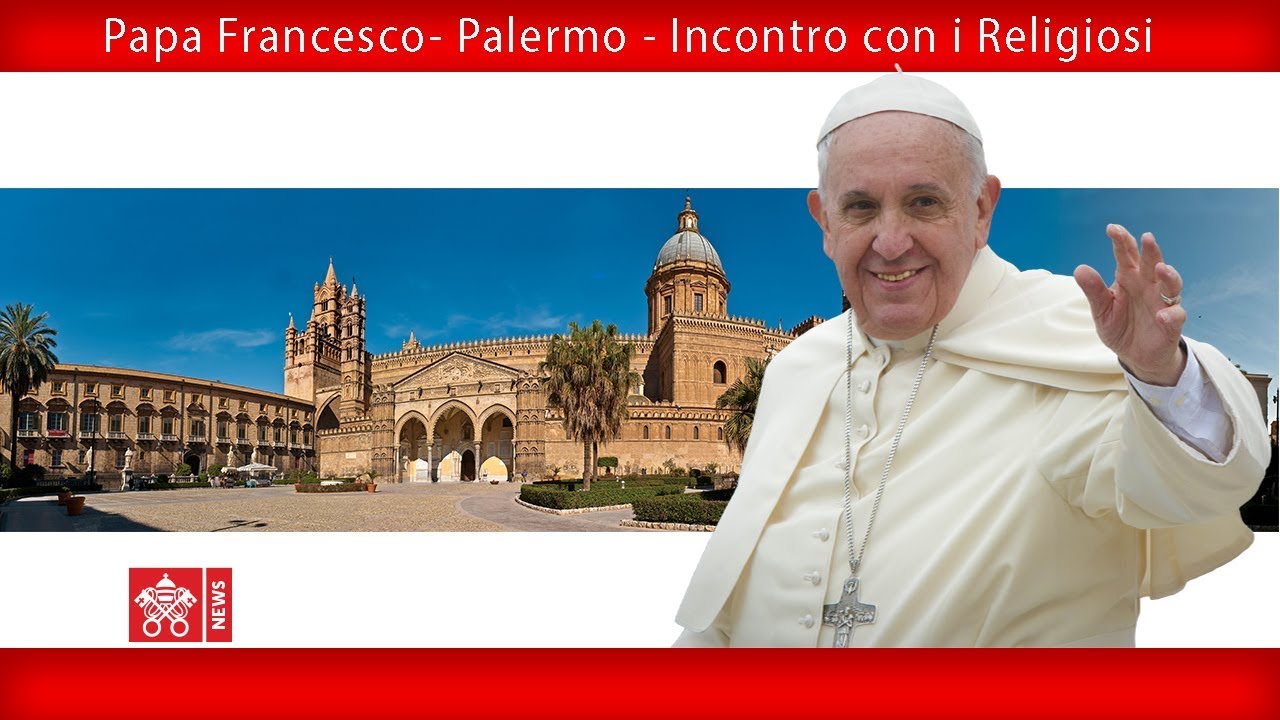
Francis to clergy, seminarians, religion in Palermo: “Clericalism… one of the most difficult perversions”

Francis made a pastoral visit to Palermo.  One of the events celebrated is the 25th anniversary of the death of Fr. Pino Puglisi, a venerated local figure.  He challenged the Mafia.  They killed him.

BTW… the infamous Stonewall Inn in NYC was started by the Mafia.

In one speech (not included in today’s public Bolletino for some reason – yet, at least), [It is updated HERE] Francis is said to have said in the afternoon when he visited the parish where don Pino was. He addressed the clergy, religious and seminarians.

“There must be banned every form of clericalism: it’s one of the most difficult perversions to get rid of today, clericalism is.”

Clericalism is one of the most difficult “perversions”?  A curious word to use.

When you hear “perversions” most people make the connection to things like homosexual acts.

I saw an embargoed text of a speech that Francis was to give in that occasion, which included part of that quote, above.  But it was a little different.   It didn’t mention “perversions”.   “Per questo, cari fratelli, va bandita ogni forma di clericalismo: non abbiano in voi cittadinanza atteggiamenti altezzosi, arroganti o prepotenti.”  Then again, Francis goes off text and you have to stick to what he actually says rather than what is sent out beforehand under embargo.

In this version – HERE – the coverage quotes the released, embargoed version, without the mention of “perversions”.  However, that is not what he actually said.

However, in the video, you here him say what Tridente wrote in the tweet. He got it right.

YouTube thumbnailYouTube icon

I don’t want to read too much into this single line, but… commonsense suggests that Francis is, once again, worried about The Present Crisis.  It seems to be on his mind.

He and his Team have been redirecting attention away from the mastodon in the rectory, a homosexual subculture in the Church (even if it includes a relatively small number of priests compared to the whole, but of priests and of bishops in positions of greater influence).    It’s not homosexuality in the clergy that causes abuse of young men, seminarians, priests.  No no.  It clericalism.  Clericalism is a real perversion!

Francis spoke off the cuff very often in that speech – a nightmare for journalists, frankly.  However, he thought this important enough to say.  That word “perversion” seems to be the give away.

On another note, Francis also spoke about the “maternal” role of women religious in the Church.  When the finalized transcript is released, that could be worth checking.

Posted in Clerical Sexual Abuse, What are they REALLY saying? | Tagged
26 Comments

UPDATE: 15 Sept: Seven Sorrows of Mary, Mater Dolorosa, Queen of Martyrs – Queen of Clergy

UPDATE 16 Sept

I received a request from a priest in Germany for the base artwork.  He wants to translate the prayer and make cards in German.

And so it begins.

Originally Published on: Sep 15, 2018 @ 09:56

Today is the Seven Sorrows of the Blessed Virgin Mary.  Can you name them?

Many priests and bishops chose to have some kind of piacular event yesterday, Exaltation of the Cross.  To my mind, however, today may be even more appropriate.

Mary stayed there and suffered, and her particpation in the Cross of her Son was transformative and exemplary.

Here the entry from the Roman Martyrology:

Memoria beatae Mariae Virginis perdolentis, quae, iuxta crucem Iesu adstans, Filii salutiferae passioni intime fideliterque sociata est et nova exstitit Eva, ut, quemadmodum primae mulieris inoboedientia ad mortem contulit, ita mira eius oboedientia ad vitam conferret.

In the older, pre-Conciliar Missale Romanum we find this wonderful Collect for today’s Holy Mass.

COLLECT (1962MR):

Deus, in cuius passione, secundum Simeonis prophetiam dulcissimam animam gloriosae Virginis Matris Mariae doloris gladius pertransivit: concede propitius; ut qui dolores eius venerando recolimus, passionis tuae effectum felicem consequamur.

LITERAL VERSION:

O God, at whose Passion, according to Simeon’s prophecy, the most sweet soul of the glorious Virgin, Mary our Mother, was pierced by a sword of sorrow: mercifully grant that we who observe her sorrows by veneration may attain to the happy result of Your Passion.

Also, in the old Communion Antiphon we have a connection between the great sorrow of Mary at the Cross and how she merits to be called Queen of Martyrs:

ANTIPHONA AD COMMUNIONEM: 

Felices sensus beatae Mariae Virginis, qui sine morte meruerunt martyrii palmam sub Cruce Domini.

Sensus is an incredibly complicated word. It means, among other things, the faculties of sensing and perceiving, but also of the sentiments of the heart and mind. In a collective “sense” sensus stands for “the common feelings of humanity, the moral sense”. Sensus is also our disposition of mind or humor and inclination. It signifies understanding of the thinking faculty, in the sphere of reason.

LITERAL VERSION:

Blissful the sentiments of the Blessed Virgin Mary, which beneath the Cross of the Lord, without death merited the martyr’s palm.

This antiphon underscores how the totality of Mary’s being, “magnified” by God at every point of her life, was united with her Son as He endured the sufferings of the Cross.

This counter-intuitive feast reminds us that there is a path to holiness through the sufferings and sorrows we endure. 

We must learn to unite them to the sufferings of our Lord.  Mary teaches us to do this.  The martyrs teach us to do this.

Here is something that I wrote for the best Catholic weekly in the UK, the Catholic Herald in my column “Omnium Gatherum”:

September is traditionally designated for devotion to the Seven Sorrows of Mary, a feast celebrated in the heart of the month, the 15th, immediately after the Feast of the Exaltation of the Cross. These feasts, together with other traditional observances, imbue the whole month with a somber tone.
Speaking of somber, other traditional September observances might deepen the penitential and reparative spirit without which our Catholic identity is enervated and incomplete.
For example, in September’s third full week on Wednesday, Friday and Saturday, we have the Ember Days, moments of fasting and penance. Bishops can even yet today, using the post-Conciliar Ordinary Form calendar, assign Ember Days observances in the dioceses entrusted to them. This year, for example, in the wake of horrifying new clerical scandals some bishops in the United States have called for people to penance on Ember Days. Bishop Morlino of Madison in Wisconsin has invited people to fasting and abstinence, “in reparation for the sins and outrages committed by members of the clergy.” “Some sins, like some demons, can only be driven out by prayer and fasting,” the bishop wrote.
What we face as a Church right now surely has a strong demonic content and intent. We have to tackle this crisis with all the spiritual tools at our disposal. Fasting is recommended by the Lord. Without chosen penance, we cannot be who our Lord calls us to be as Catholics.
This week, on 17 September, we celebrate the Feast of the Impression of the Stigmata on St Francis of Assisi at La Verna in 1224. Francis, like other great saints such as Padre Pio, Catherine of Siena, Gemma Galgani, and perhaps the Apostle Paul (Galatians 6:17), received the wounds of the Crucified Lord. Francis was fasting during the annual “St Michael’s Lent”, 40 days stretching from 15 August, Assumption of Mary, to Michaelmas, 29 September, the Feast of the Dedication of the Basilica of St Michael the Archangel on Mount Gargano in Italy.
Somber September, with our celebration of the Lordly Cross and Marian Sorrows, with its saintly Stigmata and seasonal Ember Days, with its Lent of St Michael, was traditionally a time of fasting and penance for our forebears. Why shouldn’t it be also for us?
The Church’s laws are greatly relaxed, but, given what is going on, who of us are exempted from some form of regular acts of penance, fasting and abstinence?

Posted in Liturgy Science Theatre 3000, Our Solitary Boast |
3 Comments

@BishopZubik announces traditional practices for @DioPitt

Bp. Morlino, in his 27 August Statement, asked the faithful of the Diocese of Madison to observe the Ember Days as times of reparation for the sins that brought on The Present Crisis.  HERE

I read at LifeSite that Bp. Zubik of Pittsburgh, which has suffered dreadfully and while was a focus of the PA AG Report, has asked the faithful of that Diocese also to observe the Ember Days.

I am hopeful that this course of events, a return to traditions and devotions that work and that have a track record, will bear fruit.

Pittsburgh bishop revives traditional devotions in response to abuse crisis

PITTSBURGH, September 14, 2018 (LifeSiteNews) – Traditional devotions that have all but vanished from the majority of Catholic parishes will be revived in one prominent American diocese on account of the abuse crisis.

Bishop David Zubik of Pittsburgh has announced a “Year of Repentance” in his diocese that will begin on Sunday, September 23, 2018. Zubik has asked all clergy to fast and pray for the purification of the Church “in light of the scandal of sex abuse.”

In service of this fasting and prayer, the bishop has instructed the priests to observe the twelve Ember days of the coming year by abstaining from meat and praying before the Blessed Sacrament for an hour on those days.

[…]

Tradition works.

When Benedict XVI wrote to the Irish people, after their world fell apart, he recommended a return to traditional devotions.

May he was on to something?

It is interesting how the Ember Days have been dusted off.

Oh yes… there’s more:

In addition, the Bishop of Pittsburgh has asked his priests to consider leading the Prayer to Saint Michael the Archangel after all Masses, a devotional practice established in 1884 and discontinued in most parishes after the Second Vatican Council. Two or three other American bishops have recently requested its return.

Rather than creep up to it, why not just institute the Leonine Prayers, the whole thing?

Still, Fr. Z kudos.

Posted in ¡Hagan lío!, "How To..." - Practical Notes, Clerical Sexual Abuse, Fr. Z KUDOS, Liturgy Science Theatre 3000 | Tagged ,
19 Comments

Bits and pieces

At The Weekly Standard there is a superb summary article about The Present Crisis in the Church.

It is rather devastating for papalotrous and blinkered Team Francis.

The Catholic Church Is Breaking Apart. Here’s Why. by Jonathan V. Last

At the bottom, there are a few factual errors which have been corrected.  They are not substantive.  Also, there are a couple more errors in the piece, again, not substantive.

The best line:

Then again, the church survived Caligula, the bubonic plague, the Third Reich, the Gather hymnal, and the autoharp. It will survive McCarrick, Wuerl, and Francis, too.

Also, check out remarks by Fr. Wilson, whom I’ve know for many a year.  He responds to a question at VirtueOnline:

Q: “This is a stunning betrayal of all that you must hold near and dear. My prayers are for you as a priest, ministering in the midst of knowing all this. How do you, dear friend, move forward?”

One of best parts from that piece.

Over this past Summer I began with great profit to read systematically through the wonderful writings of Saint Teresa of Avila, a great Doctor of the Church on the sixteenth century. We have spiritual works and many letters of hers, suffused with her lively personality. She founded a reformed branch of the Carmelite Order; her nuns would live very simply in small convents and focus on prayer behind their cloister walls.

She wrote a book on prayer for them called “The Way of Perfection”, and at the beginning of it she says something so pertinent to our situation today that it startled me. Right at the start of the treatise she says to her sisters, Why do you think I founded the Reform? It is because of the state of the Church, those dreadful Lutherans up there in the North who are rejecting the Mass and the authority of the Church, the people who are confused, the courageous priests who are attacking the heresies… Women like us cannot go to the front of the battle lines, but we can found oases where Jesus can find welcome and rest and home in a world which has forgotten Him. And that is what our convents shall be, where we dwell with Him. This from a cloistered nun!

And there, she draws us right back to the one thing only that is necessary, doesn’t she? We persevere in the place in the vineyard where He had put us, we watch, we pray, and look for the day when He raises up a Dominic, a Francis, a Teresa of Avila, and the renewal begins. We look for holiness, we try to open ourselves to grace, we try to make of ourselves a cloister for Him. The scandalous failure of our leadership really does not surprise me at all; most of our bishops are anything but leaders. When Mass attendance falls from 88% (1965) to perhaps 14% today (and clearly they are doing their damnedest, literally, to drive it lower) and there is no visible sign of concern let alone panic, but a constant chanting of the mantra age of renewal over fifty years; no question raised, Can we have done something wrong???, it’s hard to take them seriously. There is a great gent named Frank Walker who runs the invaluable canon212.com blog, covering the crisis in the Church (a must read every day twice a day at least), who startled me out of my wits recently by quoting something I said in, I think, 2004 in an article: “Watching the bishops’ conference in action is like viewing the film of a train wreck over and over again. With bright-colored clowns hanging out the train windows, waving and blowing kisses. One only wishes one had a tomato.” That about sums it up.

Posted in SESSIUNCULA |
15 Comments

Videos and hi-res photos of the Consecration of the Abbey and Abbess of Gower

I’ve written a few posts about the recent Consecration of the Abbey, and the Abbess, of Gower.

HERE and HERE

It was a terrific occasion, in the deepest sense of “terrific”.

There are now available hi-res photos of the events.

>>HERE<<

Also, the videos are available.

The ceremonies were streamed through the generosity of Conception Abbey.

www.conceptionabbey.org/live.

Download the “worship aid” for the Consecration of the Church by clicking HERE.

These are rare ceremonies even in the newer rites, which have lost much of the depth and meaning of the traditional ways.  To be able to watch this is a true gift.

Consecration of the Abbess…

Download the Worship aid for the Abbatial Blessing and Professions by clicking here.

Posted in Hard-Identity Catholicism, Just Too Cool, Our Catholic Identity, Women Religious | Tagged , ,
2 Comments