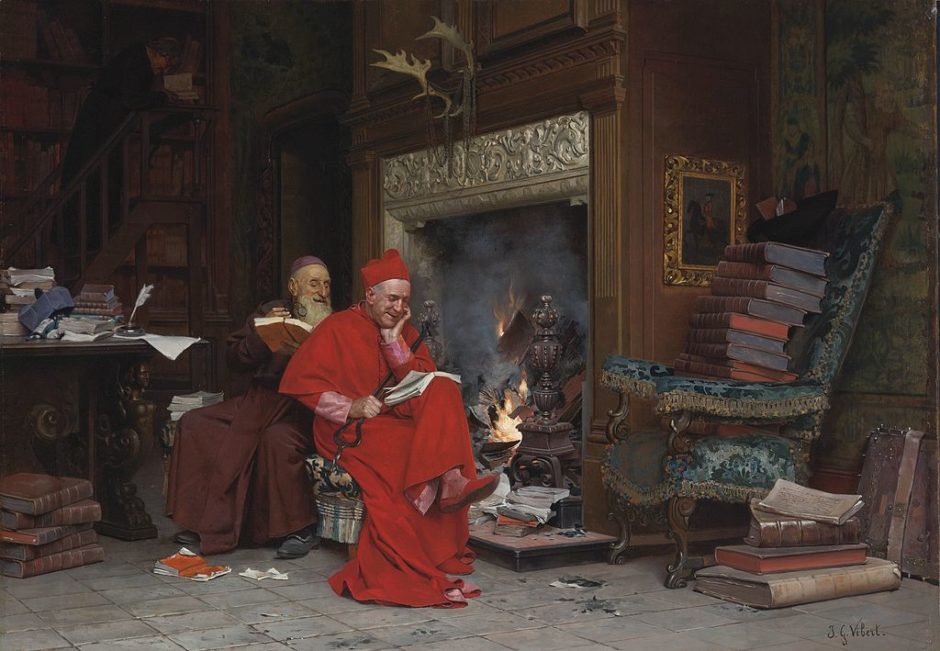
“Do you remember a time when…”

At The Catholic Thing, Anthony Esolen has again posted a clear-eyed piece about effeminacy in the Church.  Here’s a foray into his piece:

Vesting in Lavender

Do you remember a time, readers, when you could spend a whole day, actually a whole month, occasionally even a year, and not give one passing thought to the issue of sexual perversions?

Do you remember a time when not one liberal in a thousand would have thought it a good idea to have drag queens do story-hour for children in a public library? […]

Do you remember a time when not one liberal in a thousand would have thought that a man who said he was a woman or a woman who said she was a man was in touch with reality and not prey to a destructive fantasy or delusion?  [Tell that to Fishwrap.]

Do you remember a time when liberals, precisely because they were liberals, held men and women up to high standards of sexual decency, and (wrongly) believed that they were capable of maintaining those standards without the ministrations of the Church?

Do you remember a time when it would not have occurred to you in a hundred years that your priest was anything other than an ordinary man, a real man, following the special call of the Lord? A man who in another life, with a different call, would have been married with a passel of children, a pillar of his community?

Do you remember a time when a priest could march alongside miners and auto workers and look like one of them, not like a breathless female reporter in the locker room of a football team? Do you remember when nobody, absolutely nobody, would have considered that a female reporter should even be in that locker room?  [Tell that to Amerika.]

Do you remember a time when divorce was a scandal?

[…]

Heu, tempus fugit. There are a lot of you reading this who don’t, in fact, remember those times. Let’s continue. Esolen goes on with the ghastly topic of Card. McCarrick. He’s but an example, alas. And then, moving towards his peroration…

The Mass itself is made soft and effeminate – neither masculine nor feminine. I have often noted that every single hymn in vast repertory of Christian hymnody that has anything to do with fighting for Christ, hymns going back all the way to Prudentius and Venantius Fortunatus, has been banished from the hymnals, except for For All the Saints.

That one exception we may attribute to the need to have something or other for All Saints’ Day, and even then, in many hymnals I have seen, the lyrics are made squishy, or the stanzas with the most fight in them are simply dropped.? These leaders are simply not interested in taking on the world.

But that is the raison d’être of the brotherhood. Men who are friends, soldiers in the field, do not gaze into each other’s eyes, melting. Your drill sergeant does not call himself Uncle Ted. He does not write lovey letters to you, after he has snuggled you into a compromise. He does not engage in spiritual bribery and blackmail.

Men who stand shoulder to shoulder – you can picture them in your mind’s eye, leaning against a fence or a car or a tank – look out in the same direction, towards the world to conquer. That has been the orientation, the direction to take, of every true leader of men the Church has known, from Peter and Paul to Benedict, from Francis and Dominic to Ignatius, from John Bosco to Jose Maria Escriva.

We have the Lord’s own choice to follow, ordaining men to form that band of brothers. Men, not just anatomical males. They might get something done.

Do I hear an “Amen!”?

Interesting point about being side by side, facing the same direction….

It often happens that when men talk to each other about important things, they sit side by side to do so.  Women tend to face each other.   Men and women relate differently.   While equal in dignity, they have different roles.

Discuss.
Posted in Hard-Identity Catholicism, Priests and Priesthood, Seminarians and Seminaries, Si vis pacem para bellum!, The Coming Storm, The future and our choices, Turn Towards The Lord | Tagged ,
21 Comments

BOOKS received and read: Sacramental vision and Dystopian hell

I am thrilled that Angelico Press sent me copies of books by true heroes in our struggle to revitalize our Catholic identity through the reclamation of sacred liturgical worship.

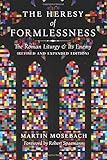
First, Martin Mosebach has updated his great The Heresy of Formlessness: The Roman Liturgy and Its Enemy (Revised and Expanded Edition) and it has been republished by Angelico.

US HERE – UK HERE

This is an extremely important book.   Make sure your priests and seminarians have it.

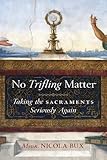
Next, from the man who gave us the famous BUX PROTOCOL™, Msgr. Nicola Bux, No Trifling Matter: Taking the Sacraments Seriously Again:

US HERE – UK HERE

A cursory examination is really promising.   This would be a superb book for a catechumen, or a revert or fallen/falling away Catholic.   A priest could find it a good source for preaching and catechesis in a project to bring congregations back to a proper Catholic view of things.

Bux addresses what the sacred is and what its implications are for worship, and the consequences of the loss of the sense of the sacred, the loss of the transcendent and slid into immanentism.

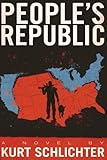
Also, a reader here (and sometime contributor of great tales of Tracer Bullet), recommended a book, which, it being 4 July, I decided to read.

US HERE – UK HERE

UPDATE 5 July:

I’ve now read the last in the list.  It is humorous… but not.   He describes a situation which could result from the trajectory we are on now.    If you want confirmation, just read the American bashing and gender-bender crap at Fishwrap in the days surrounding Independence Day.  Such as HERE and just about anything by Madame Lafarge or Jamie.

Posted in Liturgy Science Theatre 3000, New Evangelization, Our Catholic Identity, REVIEWS | Tagged
Comments Off on BOOKS received and read: Sacramental vision and Dystopian hell

Races to and away from the bottom: 20% of priesthood ordination in France are traditional

This morning I saw some tweets about new priests:

And…

And

And

In contrast….

From the UK’s best Catholic weekly, the Catholic Herald:

Traditionalist priests now account for 20 per cent of ordinations in France

The number of new ordinations in France has fallen this year, from 133 in 2017 to 114.

According to figures from La Croix, 82 of these new priests are diocesan, while the rest are members of various orders and societies of apostolic life.

Paris and Bordeaux are the dioceses with most ordinations – six each – however, this still marks a considerable decline for Paris, which had 10 in 2017 and 11 in 2016.

Lyon, Versailles and Fréjus-Toulon follow with five each, then Evry with four.

However, a total of 58 dioceses had no ordinations at all.

In contrast, the “traditionalist” communities, where priests primarily celebrate Mass in the Old Rite, are continuing to grow. La Croix calculates that 20 per cent of new priests this year come from communities classed as “traditional” or “classical”.

These include three ordinations for the Institute of the Good Shepherd, two for the Priestly Fraternity of St Peter (FSSP) and two for the Institute of Christ the King. Younger priests are particularly well-represented among these groups.

La Croix also reports that France has witnessed a rise in late vocations in recent years as the number of older people studying for the priesthood steadily rises. These include the new Archbishop of Paris, Michel Aupetit, who entered seminary at the age of 39.

A survey by the French bishops’ conference of first and second-year seminarians in 2016 found that four per cent were aged 36-40, while a further two per cent were 41-45. This means that by the time they are ordained, around a dozen will be 42 or older.

It is a race to the end, I think.   We will see a huge drop in congregations as millennials entirely tune out and the number of priests drops… that is, the number of non-traditional or tradition-resistant priests drops.

However, 20% of ordinations in France came from traditionalist communities.

Another interesting thing to look at is where new priests come from in US dioceses.  Are they American born and raised?  Are they native to the diocese or to the region?  In other words, are some dioceses producing local vocations and others not so much?

Posted in SSPX, SUMMORUM PONTIFICUM, The Coming Storm, The future and our choices | Tagged , , ,
16 Comments

Tricoteuse of the New catholic Red Guard: @MichaelSWinters (aka Madame Defarge)

Look at this piece from from Politico:

Hey Democrats, Fighting Fair Is for Suckers

[…]

The list of those changes is dizzying. Grant statehood to D.C. and Puerto Rico, and break California in seven, with the goal of adding 16 new Democrats to the Senate. Expand the Supreme Court and the federal courts, packing them with liberal judges. Move to multi-member House districts to roll back the effects of partisan gerrymandering. Pass a new Voting Rights Act, including nationwide automatic voter registration, felon enfranchisement and an end to voter ID laws. Grant citizenship to millions of undocumented immigrants, creating a host of new Democratic-leaning voters: “Republicans have always feared that immigration would change the character of American society. Democrats should reward them with their very worst nightmare.

The other day I posted on a book I just read.  Talk about “Black Swans”!

US HERE – UK HERE

____ Originally Published on: Jul 3, 2018 @ 15:24

Occasionally libs slip and reveal more of what they really think than they usually intend.  Remember, scratch a lib and find, beneath, a well of venom.

Over at the National Schismatic Reporter, dated 13 Ventôse CCXXVI, usual suspect Michael Sean Winters has let the cover slip from the cauda.

Here is a bit of thinking which fully justifies a new nickname as a member of the New catholic Red Guards.  Remember who they were?  The Red Guards?   After Mao sparked the youth in the Cultural Revolution, they rampaged through the byways, targeting political enemies for public humiliation and execution.

Or maybe a better image is the Terror of the French Revolution.

Some of you young’uns might not know who the Tricoteues were.

As the French Revolution descended into the Reign of Terror, the women of the streets and markets who had been active were sidelined from politics.   In sullen protest, they parked themselves near the guillotine and did their knitting.  Thus, Tricoteuses … knitter women.   In literature, you might remember the ghastly figure of Madame Defarge in Charles Dickens’ A Tale Of Two Cities.

In his melt-down about recent Supreme Court decisions, MSW concluded:

I had been prepared for the Janus decision to go the way it did. I was, therefore, surprised by how angry I got when the decision was released and how my anger did not dissipate. I left my computer to go work in the garden, something that almost always restores equanimity, but not this time. The Supreme Court had a chance to defend the decency of the nation and it failed to do so.

Normally, when I get into a debate with a conservative friend and we are at an impasse, with no hope for resolution, I try to ease the tension with levity, and say, “Well, when the revolution comes, I will put in a good word for you and your family.” To my friends in the Republican political and legal establishment who have not stood up to Trump: When the revolution comes, you are on your own, and I will be clamoring not for mercy but for a seat next to the guillotine, where I can do my knitting.

In a more jocular mood, I prefer the less horrifying image of MSW as the Wile E. Coyote of the catholic web.

Now he is Madame Defarge, Tricoteuse of the catholic Left.   He has risen from his fainting couch and moved to the guillotine with his needles.

His is a particularly venomous mind but this vision of the future is what the Left really wants.

UPDATE:

I remind the readership of the sort of tolerance that Madame Defarge displays towards people who challenge him.  For example, he wants Prof. Chad Pecknold to lose his livelihood because of an opinion he doesn’t agree with.  HERE  And HERE Defarge thinks that converts shouldn’t be allowed to voice an opinion… because they are conservative.

Posted in Green Inkers, Liberals | Tagged , , ,
43 Comments

BRICK BY BRICK in Archd. Los Angeles

Here is some great Brick By Brick news from the City of Angels.

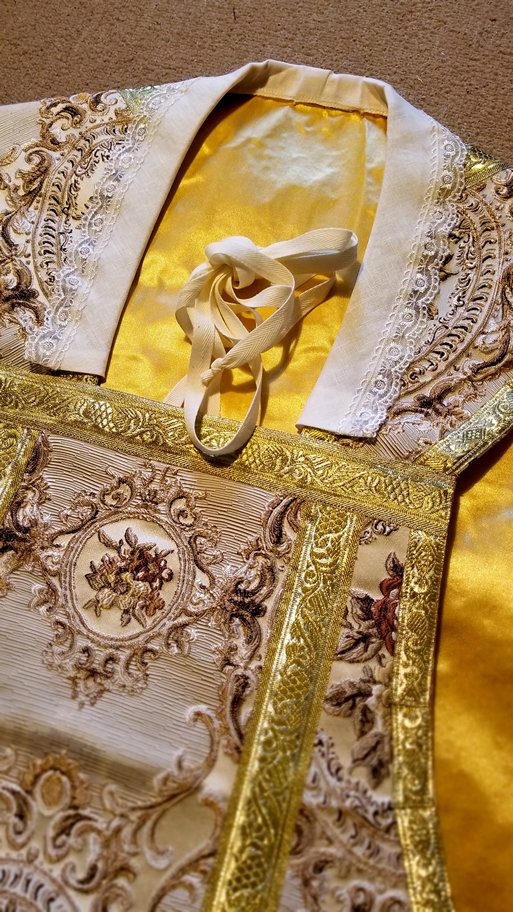
Archbp. Gomez official set up a traditional parish, staffed by the FSSP, exclusively for the traditional Roman Rite.  Fr. James Fryar, a fine priest whom I met in NYC, is the pastor.

SAINT VITUS CATHOLIC CHURCH
Priestly Fraternity of Saint Peter — Archdiocese of Los Angeles
607 4th Street
San Fernando 91340

Sunday 8:00am (Low Mass)
Sunday 10:30am (High Mass)
Sunday 4:00pm (Vespers) …starting in August
Sunday 5:00pm (with Spanish and English Sermon)
Daily Mass schedule forthcoming.

An interesting note: A parishioner made the vestments.

New Evangelization!

UPDATE:

Great photos of their building project.  Really interesting.


Posted in "How To..." - Practical Notes, Brick by Brick, New Evangelization, Our Catholic Identity | Tagged ,
9 Comments

Energetic pro-family talk in London

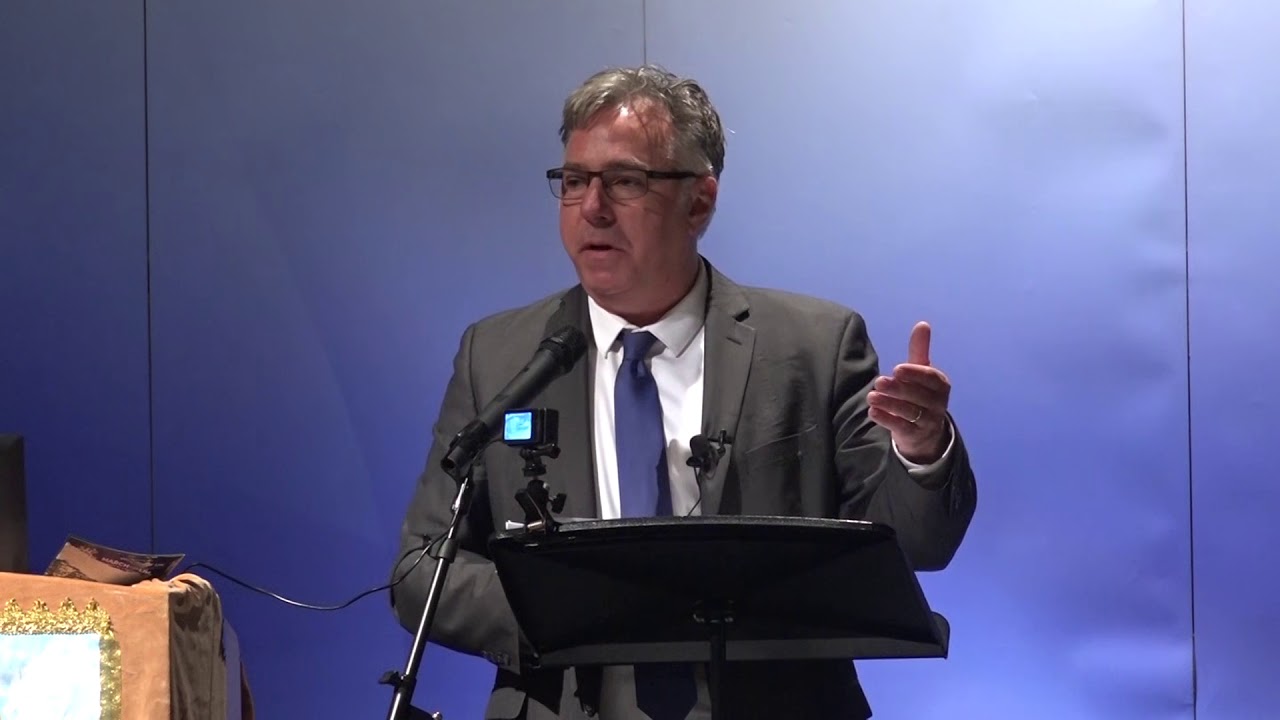
My old friend Michael Matt of The Remnant gave a rousing pro-family talk in London recently.  You might want to tune in.

And, take note of the spiffy title!

YouTube thumbnailYouTube icon

Along the way Michael reminds the listeners that Card. Caffara (one of the Five Dubia Cardinals) had received a note from Sr. Lucia saying:

“A time will come when the decisive battle between the kingdom of Christ and Satan will be over marriage and the family.”

Matt used a title which rings familiar around these electronic pages.   A long-time assertion here is “Save The Liturgy, Save The World”.   Matt’s title and my slogan do not contradict each other.  They compliment each other.

The family is the basic natural unit created by God as the foundation of all human society.  Composed of images of God in relation to each other, the family reflects the love of the Persons of the Trinity.   When sanctified by the sacraments, Holy Church calls the family the “domestic Church”.   The greatest of all the sacraments, about which all the others revolve, is the Eucharist.  The Eucharist is known as the “source and summit” of our identity.  Both the Blessed Sacrament Itself and Its celebration which is Holy Mass, and the liturgies which flow logically from this source and summit, must be our starting point and our goal in all our endeavors.   Our liturgical choices shape our families.   Ergo…

Posted in ¡Hagan lío!, Hard-Identity Catholicism, One Man & One Woman, Si vis pacem para bellum!, The Coming Storm, The future and our choices, The Last Acceptable Prejudice | Tagged ,
Comments Off on Energetic pro-family talk in London

“How unspeakably cold is the idea of a Temple without that Divine Presence!”

Click

The UK’s best Catholic weekly, the Catholic Herald print edition (not online), had a great piece by the renowned Newman scholar, Fr. Ian Ker about Newman’s conversion and the Real Presence in Catholic churches.

Here it is in toto:

‘Awful and real’

Before Newman’s conversion, he avoided Catholic churches.
Then he discovered what made them unique

The story of Newman’s conversion to Catholicism is not quite the same as his subsequent discovery of Catholicism. There were then very few Catholic places of worship, and, in any case, to avoid the charge that the Oxford or Tractarian Movement was really just a preparation for conversion to the Church of Rome, Newman had carefully avoided Catholics and Catholic services, even when he was on his Mediterranean tour of 1832-3 and when he could hardly avoid being exposed to both.

And so it was that the feature of his new religious life as a Catholic that most struck him came as a complete surprise – namely, the reservation of the Blessed Sacrament in Catholic churches. He wrote in a letter to a close friend, herself about to become a Catholic a few months later:

We went over not realising those privileges which we have found by going. I never allowed my mind to dwell on what I might gain of blessedness – but certainly, if I had thought much upon it, I could not have fancied the extreme, ineffable comfort of being in the same house with Him who cured the sick and taught His disciples … When I have been in Churches abroad, I have  religiously abstained from acts of worship, though it was a most soothing comfort to go into them – nor did I know what was going on; I neither understood nor tried to understand the Mass service – and I did not know, or did not observe, the tabernacle Lamp – but now after tasting of the awful delight of worshipping God in His Temple, how unspeakably cold is the idea of a Temple without that Divine Presence! One is tempted to say what is the meaning,  what is the use of it?

It is remarkable how it was the reservation of the Blessed Sacrament in Catholic churches that more than anything else impressed and moved Newman, even more than the Mass itself. And it tells us something very important not only about Newman but also about a central aspect of the impact of Catholicism on the imagination of the 19th-century English Protestant convert. Thus Newman is not only making a devotional and spiritual point when he writes to an Anglican friend:

I am writing next room to the Chapel – It is such an incomprehensible blessing to have Christ in bodily presence in one’s house, within one’s walls, as swallows up all other privileges … To know that He is close by – to be able again and again through the day to go in to Him …

Newman is saying something very  significant about objectivity and reality.

For it was that concrete presence of Jesus in a material tabernacle which, for Newman, above all produced that “deep impression  of religion as an objective fact” and which so impressed him about Catholicism. He admired “every where the signs of an awful and real system”.

When Newman arrived in Italy a year later to prepare for the priesthood, he was immediately and vividly aware of a reality that powerfully impinged on his imagination, but of which he had been oblivious on his previous visit. Arriving in Milan, he immediately noticed that he had now an added reason for preferring classical to Gothic architecture, since its simplicity meant that the high altar stood out as the focal point of the church, with the result  that the reserved Sacrament had particular prominence – for “nothing moves there  but the distant glimmering Lamp which betokens the Presence of our undying Life, hidden but ever working”.

His almost obsessive preoccupation with this “Real Presence” was more than simply devotional: “It is really most wonderful to see this Divine Presence looking out almost into the open streets from the various Churches … I never knew what worship was, as an objective fact, till I entered the Catholic Church.”

Click

For what Newman had discovered  was that the objectivity of the worship  which so impressed him only reflected the objectivity of Catholicism, which he came to believe was a quite different religion from Anglicanism or Protestantism. Now he was delighted to find, as he thought, “a real  religion – not a mere opinion such that you have no confidence your next door neighbour holds it too, but an external objective substantive creed and worship”.

Newman’s fascination with the  reservation of the Sacrament reflects  his celebrated philosophical distinction between the notional and real, notions  being intellectual abstractions and the real what we personally and concretely experience. Catholics, he insisted, worshipped not dogmatic definitions but “Christ Himself”, believing in the “[Real] Presence in the sacred Tabernacle not as a form of words”, or “as a notion, but as an Object as real as we are real”.

Fr Ker’s Newman on Vatican II (2014) was reissued this year in paperback by OUP

US HERE – UK HERE

Posted in Hard-Identity Catholicism, Liturgy Science Theatre 3000 | Tagged , , , ,
7 Comments

ACTION ITEM! SAVE @LoomeBooks

We Catholics love our books.

For years a particular Catholic used book dealer in the midwest has been providing great titles of all kinds.

Loome Theological Bookseller is famous.

They need help.

On a personal note, back in the darkest days of liturgical and theological chaos of the ’80s, we prospective seminarians and seminarians and young priests would trek from the Twin Cities and other far flung places to drive over to Stillwater for some hours of browsing at Loome’s.  It was there that I spent more money than I should have for liturgical books and volumes of history of the Church and sets of philosophical texts such as the St. Thomas Aquinas that I still treasure and old manuals that I still consult.   Those books gave me a ladder into higher Catholic things which stood me in good stead through seminary (sniffing out their lies and heresies) and readying me for the wars that were to come my way.  They provided weapons and armor and helped to forge my hard-won Catholic identity.

They were a kind of redoubt against the insanity that swept through the Church.

Loome Theological Bookseller has changed hands and location, but they still have a mission: provide precious and hard to find books to people all over the world.

Loome Theological Bookseller needs help right now to keep their brick and mortal store open and to avoid going to mail order only.

They have a GoFundMe campaign on.

I ask you, please, to help.

I’ll be that 10,000 of you could afford, say, $5.

Please help this store, which has helped us in the identity wars.

Posted in ACTION ITEM! | Tagged ,
3 Comments

A massive storm has changed the appearance of Mars!

From Spaceweather I learned that a massive dust storm on Mars has changed the appearance of the planet.

DUST STORM SWALLOWS MARS: A martian dust storm that started in late May, silencing NASA’s Opportunity rover, [sigh] has now wrapped itself around the entirety of Mars, transforming the appearance of the Red Planet. “Mars has essentially vanished beneath the dust,” says longtime Mars photographer Damian Peach of the UK. He created this animation showing how much has changed:

“The animation shifts back and forth between a reference image of the Tharsis region taken by the Mars Global Surveyor spacecraft and my own image taken on June 28th,” he explains. “The volcanic peaks of Tharsis remain clear, and also a dark spot in Valles Marineris, but little else matches known albedo markings, especially the dark/light streaks.”

In Rome, Italy, amateur astronomer Raffaello Lena has also been monitoring Mars. In this image he compares a picture he took in June 2016 with one taken just yesterday:

“Although the same side of Mars was facing us in both images, the planet looks totally different,” he says. “Dust is hiding all of the usual surface markings.”

Even naked-eye observers can see the effects of the storm. Mars is shining brightly the constellation Capricornus, easy to see at midnight. The planet’s usual sharp burnt-orange color has been replaced by a wan salmon hue characteristic of dust. [sky map]

Mars is approaching Earth for a 15-year close encounter in late July. Astronomers have had this month marked on their calendars for years, expecting unusually clear views of the Red Planet. Martian dust may have other ideas. Stay tuned for updates.

I sense the need to watch The Martian tonight, as soon as I am done with my good book mystery book.

US HERE – UK HERE

You might try the book, by Andy Weir

US HERE – UK HERE

Posted in Look! Up in the sky! | Tagged , ,
5 Comments

ASK FATHER: Could an invalidly ordained priest, be validly consecrated bishop?

From a reader…

QUAERITUR:

Would an invalidly ordained priest who became a bishop be able to validly ordain a priest? If one of Bella Dodd’s 1000+ Communist, homosexual and apostate seminarians were ordained, who rose to the rank of bishop, would any of the Sacraments they officiate at be valid and would their ordaining of a new priest be valid? I suppose it would also be possible, I suppose, for a complete apostate seminarian to falsify a birth certificate and and then receive an invalid ordination might also perpetuate priests or would be bishops from possessing valid Holy Orders. I can find nothing covering this in my searches.

This question opens up a can of worms.

First, for those who don’t know, Bella Dodd was a Communist activist who eventually entered the Catholic Church.  She testified that as a Communist she worked to get committed radicals to enter seminaries in order to undermine the Church from within.  Alice von Hildebrand said that Dodd told her that she knew of cardinals in the Roman Curia were working for the Communist Party.   Someone else made claims along these lines.  Marie Carré wrote a book called AA-1025 which is problematic, but which still describes an eerily accurate vision for destroying the Church from within.

Before the Council of Trent, some Scholastic theologians thought that the consecration of a bishop did not so much confer additional powers, but rather additional jurisdiction, namely, to ordain.  In fact, though in the ancient Church some sources said that priests could not ordain, there are examples in history of non-bishops being allowed to ordain.

There was a dispute wherein some theologians held that consecration as a bishop itself conferred the fullness of priesthood, absolutely.  So, any baptized male could go straight to episcopal ability to confect the Eucharist, forgive sins, confirm, and ordain.  Other theologians held that consecration was not so absolute, but rather an extending of priestly power, adding the authority to ordain.  That would mean that a man had to be a priest before being consecrated bishop.

I don’t have the skill or space to try to resolve that.  Suffice to say that by Pius XII and his Apostolic Constitution Sacramentum ordinis the consecration of bishops is assumed to be sacramental, not just jurisdictional.  Many centuries of practice of consecrating only priests as bishops suggests also a theological reality.

I suspect that there are some with greater knowledge about this issue could chime in.  In the meantime, salvo meliore iudicio, I also suspect that most theologians today would say that for episcopal consecration to be valid, the man would have to be already validly ordained to the priesthood.

Of course the scenario that you bring up is pretty awful to contemplate.   Were some invalid but supposed bishops to slither in to undermine the Church for various motives (e.g., infiltration by masons, communists, homosexuals) they could do a lot of damage.    Think about the question, above.  If the theologians who tie consecration to an extension of jurisdiction are right, then perhaps “Ecclesia supplet” might play some sort of role.  If consecration confers the whole nine yards absolutely, then it wouldn’t matter.

Consider, therefore, with what great care Holy Church takes in verifying that men can be validly ordained.  When I was ordained, I had to assemble some dozen documents, from an authenticated or long form birth certificate to, diplomas, letters saying that I had been made a lector and acolyte, to being admitted as a candidate for orders, to attestations of my canonically required examinations, my professions of faith and adherence to doctrine and law, and even a dimissorial letter from the bishop saying to the Cardinal Vicar of Rome that the the Pope could ordain me!

However, another sore spot in this nasty bit of business must be considered: For sacraments to be valid, there must be a proper intention to administer the sacrament.  If bishop were to withhold his intention, purposely choose even while in the act of ordaining a priest or consecrating a bishop that he didn’t intend to ordain despite going through the actions, the ordination would be invalid.  If the man receiving ordination made a full act of will to refuse to be ordained while being ordained, that would also result in invalid orders. In these cases, “Ecclesia supplet” wouldn’t pertain.

This, too, is one of the reasons why the Church requires that at least three bishops consecrate a new bishop.  At least one of the three would not have a flaw in his own valid consecration or intention.

And another thing… no, on second thought, I should stop.


Posted in "How To..." - Practical Notes, ASK FATHER Question Box, Mail from priests, Priests and Priesthood | Tagged
17 Comments