Author of “The Dictator Pope” revealed (officially) and book format now available

Some people were clued in a long time ago, but were asked to keep it under wraps.  Now it is out in the open.

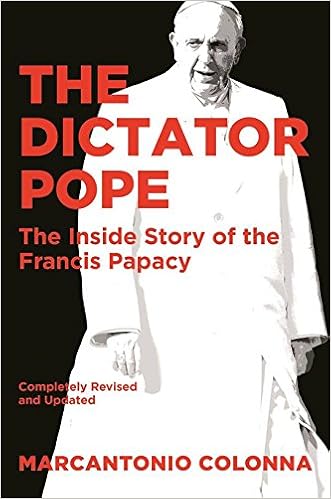
The Dictator Pope (revised and updated)now available in hard copy from Regnery for pre-order (23 April – US HERE – UK HERE) highly critical of Pope Francis and those around him, originally was published under the pen name of “Marcantonio Colonna”.

Previously, it was available only on Kindle.

Now his name has been revealed.  HERE

ABOUT THE AUTHOR
Marcantonio Colonna is the pen name of Henry Sire (H. J. A. Sire), an author and historian. Sire was born in 1949 in Barcelona to a family of French ancestry. He was educated in England at the Jesuits’ centuries-old Stonyhurst College and at Exeter College, Oxford, where he gained an honors degree in Modern History. He is the author of six books on Catholic history and biography, including one on the famous English Jesuit, writer, and philosopher Father Martin D’Arcy, SJ. The Dictator Pope is the fruit of Henry Sire’s four-year residence in Rome from 2013 to 2017. During that time he became personally acquainted with many figures in the Vatican, including Cardinals and Curial officials, together with journalists specializing in Vatican affairs.

He is also the author of another book, which I’ve noted here in the past.

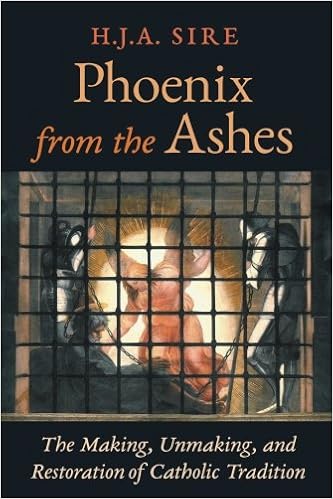
Phoenix from the Ashes: The Making, Unmaking, and Restoration of Catholic Tradition

US HERE – UK HERE

Posted in Francis, The Campus Telephone Pole | Tagged , ,
11 Comments

ASK FATHER: Absolution at jail through glass, phone in visitor’s room

From a priest…

QUAERITUR: 

I’m a priest who occasionally gets asked to hear confessions in a jail where the only way to speak to a person is through glass and a telephone headset. Without using the phone, one can barely hear the other talking through the glass. It got me thinking about the validity of the sacrament. Is this valid, given the situation, to hear confession through the phone, with the person right there in front of me behind the glass?

Yes, it is valid. You don’t know who may be listening in… but it’s valid.

Absolution long-distance via technology is invalid.  Many years ago there was a response given to a question about absolution communicated via telegraph (which shows how long ago it was).  Such an absolution would be invalid.  Some time later, I don’t have the reference, there was a question about telephone.  The answer was the same.  Invalid.

In your case, however, even though a telephone was used, you were face to face.  You were both physically and morally present.  The phone was only a means to amplify your voices to each other across the glass barrier.   You weren’t sending your voices across town.

The principle, however, is important: you cannot give or receive absolution via skype or internet chat or video phone calls, etc. That includes text messages.  INVALID.

There is a possibility of contracting marriage long distance, or even via proxy, but not any other sacrament.  And that is another and more complicated question which we will not delve into here.

No confession by long-distance.  It must be a real, and personal meeting of penitent and confessor.

Of course there are situations where people who are physically present to the confessor may have to use some artificial means to speak, as in the case of the jail meeting.  Also, a priest could use a sound amplifier for a person who is present who is also hard of hearing.  That’s not a problem.  Many old confessionals had hearing/speaking devices like phones. It also could be that the person is not immediately close to the confessor, but is still within view or earshot.  In that case the person is still “morally” present and absolution is valid, even by bullhorn.

However, it a penitent is both physically and morally completely separated from the confessor, artificial means cannot be used validly to impart absolution.

So, all things being equal, your absolution at the jail is valid.  You don’t know who may be listening in… but it’s valid.

For the rest of you out there, don’t wait until you are in jail… again…

GO TO CONFESSION!

Posted in "How To..." - Practical Notes, ASK FATHER Question Box, GO TO CONFESSION, Liturgy Science Theatre 3000, Mail from priests | Tagged , ,
25 Comments

The fruits of dumbing everything down, down, ever down.

Over at my old stomping ground, The Wanderer, there is a good piece by Chris Montesano which uses as its springboard the shooting at the school in Florida.  Along the way he quoted Book IX of Plato’s Republic:

“The teacher fears and panders to his pupils, who in turn despise their teachers and attendants; and the young as a whole imitate their elders, argue with them and set themselves up against them, while their elders try to avoid the reputation of being disagreeable or strict by aping the young and mixing with them on terms of easy good fellowship.”

Doesn’t that sound like the modern and modernist church these days?  Substitute some terms.

The fruits of dumbing everything down, down, ever down.

Posted in The Drill, The future and our choices, The Olympian Middle | Tagged , ,
2 Comments

Your Sunday Sermon Notes and Passion Sunday POLL: veils on images

Was there a good point made during the sermon you heard for your Mass of obligation this  5th Sunday of Lent (Novus Ordo).

From this Sunday, traditionally called 1st Sunday of the Passion, it is customary to veil images in churches.  In the Gospel in traditional Form of the Roman Rite we hear:

Tulérunt ergo lápides, ut iácerent in eum: Iesus autem abscóndit se, et exívit de templo.  … They therefore took up stones to cast at Him; but Jesus hid Himself, and went out from the temple.

What is going on where you are?

This is a fine old tradition.  It has to do with deprivation of the senses and the liturgical dying of the Church in preparation for the Lord’s tomb and resurrection.  We do this to sense something of the humiliation of the Lord as he enters His Passion, something of His interior suffering.

We are also being pruned during Lent.  From Septuagesima onward we lose things bit by bit in the Church’s sacred liturgy until, at the Vigil, we are even deprived of light itself.  The Church is liturgically dying.

We are our rites.

Choose your best answer.  Anyone can vote, but only registered and approved users can comment.   Let us know what you saw!

At my Latin Rite church, for this 1st Passion Sunday (5th of Lent) - 2018 - I saw:

View Results

Posted in "How To..." - Practical Notes, Liturgy Science Theatre 3000, POLLS | Tagged , ,
12 Comments

Dumb down liturgy. Great idea, right?

I seriously object to the dopey notion that liturgy has to made “understandable”. First, liturgical worship involves mysteries, such as that one about Christ turning the substances of bread and wine into His Body and Blood. How is that easy?  Indeed, Mass ought to be hard!

But no… let’s dumb everything down.  How insulting to congregations that attitude is.

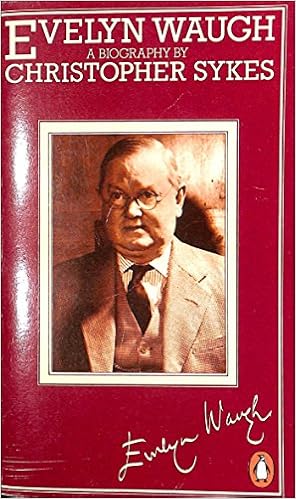
A long-time reader and benefactor of this blog (thanks!) sent me this quote about the changes (Bugnini) made to Holy Week from Evelyn Waugh: A Biography by Christopher Sykes (US HERE – UK HERE) with added emphases:

“(in the mid-1950s) ….the new service retained much of the beauty of the old, and the overwhelmingly impressive Maundy Thursday Mass, the ‘Altar of Repose’, the night offices of Tenebrae, and the liturgical masterpiece, the Good Friday ‘Mass of the Presanctified’, remained intact. Not for long. The belief grew that the celebration of Holy Week would be more valuable, would compel a greater corporate sense in the Church, if it was expressed in ceremonies which did not involve a keen appreciation of symbolism, if they were more easily understood by ordinary people and invited more ‘mass participation’ in the form of community singing; if they appealed less to the sense of awe, they avoided the accusation of meretricious aestheticism, above all of excessive indulgence of the sense of the past. Nowhere did the notion of a ‘Century of the Common Man’ exert more fascination than on Roman Catholic clergy. The entire edifice of the Holy Week Liturgy was swept away as being over-elaborate, and it was substituted by services of a more everyday kind. This was the beginning of a movement which was to reduce all Roman Catholic ceremonial to commonplace and to abolish the traditional order of the Mass in favour of a prayer-meeting in which only essential vestiges of the traditional celebration were retained.

Posted in Hard-Identity Catholicism, Liturgy Science Theatre 3000, SUMMORUM PONTIFICUM | Tagged , , , , ,
18 Comments

UPDATE: Even more comes about The Letter™: additional missing text

UPDATE 18 March:

Here is an interesting tweet from expert canonist Ed Peters.

___ Originally

There is an Italian saying that the Devil makes great saucepans, but doesn’t provide lids for them.  Eventually, people will see what’s cooking: the truth will come out.

Just when you may have thought we had gotten to the bottom of The Letter™, or Lettergate, as Ed Pentin called it, more floats by, like a body face down in a slow moving river.

I have several updates about Lettergate – HERE – but this deserves a separate post.  It seems to me that this whole mess needs to be understood and remembered.  Hence, posts.

First it was revealed that the head of the Vatican’s office for communications (not the Holy See Press Office  – a separate but now subordinated entity) doctored a photo of alleged letter of Benedict XVI about a series of booklets about the theology of Pope Francis in order to avoid the embarrassing revelation that Benedict neither read them nor intended to read them.

I said “alleged” letter.  Now we learn that there was even more in Benedict’s original letter that was redacted out of the version that was read to the press during the presentation of the booklet series.  And again Sandro Magister has the story.  HERE

[…]

Between the paragraph omitted in the press release and the valediction there were, in fact, other lines.

And this much could be guessed just by observing the photo of the letter (see above).

In fact, between the first two lines that were made illegible in the photo, at the bottom of the first page of the letter, and the valediction and signature of Benedict XVI on the second half of the second page, there is a space too big to be occupied only by the last part of the paragraph omitted in the press release.

And what else was written there, that Viganò was careful not to read in public and took such pains to cover up in the photo with the eleven booklets on the theology of Pope Francis?

[NB] There was the explanation of the reason why Benedict XVI had not read those eleven booklets nor intended to read them in the future, and therefore why he had declined to write “a brief and dense theological page” of presentation and appreciation for the same, as Viganò had requested of him.

The reason adopted by Benedict XVI in the final lines of his letter – we are told by an incontrovertible source – is the presence among the authors of those eleven booklets of the German theologian Peter Hünermann, who was an implacable critic both of John Paul II and of Joseph Ratzinger himself as theologian and as pope.

About Hünermann, a professor at the university of Tubingen, it may be recalled that he is the author of, among other things, a commentary on Vatican Council II that is the polar opposite of the Ratzingerian interpretation.

It is therefore clear that, given what Benedict XVI writes in the second half of his letter, the first half also takes on a new significance, entirely different from the one that Viganò wanted to attribute to it in his mangled and biased press release.

[…]

Here’s the English rendering of what Benedict wrote in the last part of The Letter™:

Translated:

[…] all the more so in that I am under other obligations to which I have already agreed. [That’s where it seemed to end, before this new part came out.]

Just as a side note, I would like to mention my surprise at the fact that the authors also include Professor Hünermann, who during my pontificate put himself in the spotlight by heading anti-papal initiatives. He participated to a significant extent in the promulgation of the “Kölner Erklärung,” which, in relation to the encyclical “Veritatis Splendor,” attacked in a virulent manner the magisterial authority of the pope especially on questions of moral theology. The Europäische Theologengesellschaft, which he founded, also was initially designed by him as an organization in opposition to the papal magisterium. Afterward, the ecclesial sentiment of many theologians blocked this tendency, making that organization a normal instrument of encounter among theologians.

I am certain that you will have understanding for my declination, and I cordially greet you.

Yours,

Benedict XVI

This certainly sheds more light on why Benedict declined the honor of writing a preface to the series.

It’s like:

“Thanks for insulting me by asking me to praise this series, when it is in part penned by someone who stood diametrically opposed to the Magisterium… at lease my Magisterium and that of John Paul before me.  I can’t square this circle now and I have better things to do in the future. Thanks but no thanks.  Have a nice day.”

This monumental goat rodeo just gets worse and worse.

Doesn’t this remind you of the seemingly inevitable truth that while a crime is bad, it’s the cover up that really brings you down.

Posted in SESSIUNCULA | Tagged , , ,
24 Comments

FSSP North America Blog

Okay… I’ll give this a boost. From my email…

I am the editor of the Missive (https://fssp.com/the-missive),
the official blog of the North American District of the FSSP. We are
trying to expand our readership, and I was wondering if I may request
a mention for the Missive on your blog. Thank you!

Posted in "How To..." - Practical Notes, Mail from priests, Si vis pacem para bellum!, SUMMORUM PONTIFICUM, The Campus Telephone Pole | Tagged
Comments Off on FSSP North America Blog

“Christ with me, Christ before me, Christ behind me,…” The Lorica of St Patrick

During these dark days, we can benefit from the use of this prayer, called the Breastplate, or Loríca of St. Patrick, “The Cry of the Deer” (Latin Lorica is pronounced lo-REE-ka).  It is said that St. Patrick (+461) sang this when an ambush was set for him so that he could not go to Tara to evangelize.  Patrick and companions were then hidden from the sight of their enemies, who thought that they were deer when they passed by.  However, some scholars date the prayer to the 8th c.  Either way, this is a mickle, puissant prayer!

The Latin word loríca means “a leather cuirass; a defense of any kind; a breastwork, parapet”.  In effect, it means “armor”.   “Loríca” is also associated with an rhythmic invocation or prayer especially for protection as when going into battle.

The Lorica of St. Patrick is rooted in an un-confused belief in the supernatural dimension of our lives, that there truly is a spiritual battle being waged for our souls.  This prayer reflects our absolute dependence on the One Three-Personed God.

One could pray this prayer each and every morning, upon arising.

On St. Patrick’s Day, instead of indulging in meat on a Friday of Lent (pace bishops, etc.) and drinking green beer, pastors of parishes should invite people to come to Church for confessions, recitation of the Rosary, Mass, Exposition, the praying of the Lorica, Benediction.  Think about it.  Suggest it to your priests.

Latin English
Sancti Patricii Hymnus ad Temoriam. The Lorica, Breastplate, of St. Patrick (The Cry of the Deer)


Ad Temoriam hodie potentiam praepollentem invoco Trinitatis,
Credo in Trinitatem sub unitate numinis elementorum.
I arise today
Through a mighty strength, the invocation of the Trinity,
Through belief in the Threeness,
Through confession of the Oneness
of the Creator of creation.
Apud Temoriam hodie virtutem nativitatis Christi cum ea ejus baptismi,
Virtutem crucifixionis cum ea ejus sepulturae,
Virtutem resurrectionis cum ea ascensionis,
Virtutem adventus ad judicium aeternum.
I arise today
Through the strength of Christ’s birth with His baptism,
Through the strength of His crucifixion with His burial,
Through the strength of His resurrection with His ascension,
Through the strength of His descent for the judgment of doom.
Apud Temoriam hodie virtutem amoris Seraphim in obsequio angelorum,
In spe resurrectionis ad adipiscendum praemium.
In orationibus nobilium Patrum,
In praedictionibus prophetarum,
In praedicationibus apostolorum,
In fide confessorum,
In castitate sanctarum virginum,
In actis justorum virorum.
I arise today
Through the strength of the love of cherubim,
In the obedience of angels,
In the service of archangels,
In the hope of resurrection to meet with reward,
In the prayers of patriarchs,
In the predictions of prophets,
In the preaching of apostles,
In the faith of confessors,
In the innocence of holy virgins,
In the deeds of righteous men.
Apud Temoriam hodie potentiam coeli,
Lucem solis,
Candorem nivis,
Vim ignis,
Rapiditatem fulguris,
Velocitatem venti,
Profunditatem maris,
Stabilitatem terrae,
Duritiam petrarum.
I arise today, through
The strength of heaven,
The light of the sun,
The radiance of the moon,
The splendor of fire,
The speed of lightning,
The swiftness of wind,
The depth of the sea,
The stability of the earth,
The firmness of rock.
Ad Temoriam hodie potentia Dei me dirigat,
Potestas Dei me conservet,
Sapientia Dei me edoceat,
Oculus Dei mihi provideat,
Auris Dei me exaudiat,
Verbum Dei me disertum faciat,
Manus Dei me protegat,
Via Dei mihi patefiat,
Scutum Dei me protegat,
Exercitus Dei me defendat,
Contra insidias daemonum,
Contra illecebras vitiorum,
Contra inclinationes animi,
Contra omnem hominem qui meditetur injuriam mihi,
Procul et prope,
Cum paucis et cum multis.
I arise today, through
God’s strength to pilot me,
God’s might to uphold me,
God’s wisdom to guide me,
God’s eye to look before me,
God’s ear to hear me,
God’s word to speak for me,
God’s hand to guard me,
God’s shield to protect me,
God’s host to save me
From snares of devils,
From temptation of vices,
From everyone who shall wish me ill,
afar and near.
Posui circa me sane omnes potentias has
Contra omnem potentiam hostilem saevam
Excogitatam meo corpori et meae animae;
Contra incantamenta pseudo-vatum,
Contra nigras leges gentilitatis,
Contra pseudo-leges haereseos,
Contra dolum idololatriae,
Contra incantamenta mulierum,
Et fabrorum ferrariorum et druidum,
Contra omnem scientiam quae occaecat animum hominis.
I summon today
All these powers between me and those evils,
Against every cruel and merciless power
that may oppose my body and soul,
Against incantations of false prophets,
Against black laws of pagandom,
Against false laws of heretics,
Against craft of idolatry,
Against spells of witches and smiths and wizards,
Against every knowledge that corrupts man’s body and soul;
Christus me protegat hodie
Contra venenum,
Contra combustionem,
Contra demersionem,
Contra vulnera,
Donec meritus essem multum praemii.
Christ to shield me today
Against poison,
against burning,
Against drowning,
against wounding,
So that there may come to me an abundance of reward.
Christus mecum,
Christus ante me,
Christus me pone,
Christus in me,
Christus infra me,
Christus supra me,
Christus ad dextram meam,
Christus ad laevam meam,
Christus hine,
Christus illine,
Christus a tergo.
Christ with me,
Christ before me,
Christ behind me,
Christ in me,
Christ beneath me,
Christ above me,
Christ on my right,
Christ on my left,
Christ when I lie down,
Christ when I sit down,
Christ when I arise,
Christus in corde omnis hominis quem alloquar,
Christus in ore cujusvis qui me alloquatur,
Christus in omni oculo qui me videat,
Christus in omni aure quae me audiat.
Christ in the heart of every man who thinks of me,
Christ in the mouth of everyone who speaks of me,
Christ in every eye that sees me,
Christ in every ear that hears me.
Ad Temoriam hodie potentiam praepollentem invoco Trinitatis. I arise today
Through a mighty strength, the invocation of the Trinity,
Credo in Trinitatem sub Unitate numinis elementorum.
Domini est salus,
Domini est salus,
Christi est salus,
Salus tua, Domine, sit semper nobiscum.
Through belief in the Threeness,
Through confession of the Oneness
of the Creator of creation.
[Salvation is from the Lord,
Salvation is from the Lord,
Salvation is from Christ,
Your Salvation, O Lord, is with us always.]
Amen. Amen.


Posted in "How To..." - Practical Notes, PRAYER REQUEST, Semper Paratus, The Coming Storm | Tagged ,
6 Comments

UPDATES – More of and about The Letter™ of Benedict XVI on the booklets

Because I have about 60 emails having to do with this, and since I’ve already made a few comments about this odd story elsewhere, here is a follow up, for the sake of completeness.

Sandro Magister posted the full text of The Letter™ from Benedict XVI’s about some volumes published on Pope Francis theology. At first we had just some blurbs from the letter, which caused a not a few people to scratch their heads in puzzled wonder.

Context:

Last January, the Secretariat for Communications under Msgr Dario Edoardo Viganò, sent Benedict XVI 11 booklet series with offerings of various authors concerning “The theology of Pope Francis,” published by  Libreria Editrice Vaticana.  On 7 February Benedict wrote to Viganò about receiving the booklets.  On 12 March Viganò read the letter during the presentation of the series to the press, just before the 5th anniversary of the election of Francis.  Only portions of the letter were distributed to newsies.  The press took the two things as being connected and as a comment of Benedict on the pontificate.  It seems fairly certain that it was Viganò’s intention that Benedict’s letter should be taken as a ratification of the pontificate.  The “doctoring” of the photo of the letter seems to confirm that.

Whereas only bits of the letter were known before, but now the text is out.  Magister transcribed it from the video of the conference he also attended in person.

Benedictus XVI
Papa Emeritus

Rev.mo Signore
Mons. Dario Edoardo Viganò
Prefetto della
Segreteria per la Comunicazione

Città del Vaticano
7 febbraio 2018

Reverendissimo Monsignore,

La ringrazio per la sua cortese lettera del 12 gennaio e per l’allegato dono degli undici piccoli volumi curati da Roberto Repole.

Plaudo a questa iniziativa che vuole opporsi e reagire allo stolto pregiudizio per cui Papa Francesco sarebbe solo un uomo pratico privo di particolare formazione teologica o filosofica, mentre io sarei stato unicamente un teorico della teologia che poco avrebbe capito della vita concreta di un cristiano oggi.

I piccoli volumi mostrano, a ragione, che Papa Francesco è un uomo di profonda formazione filosofica e teologica e aiutano perciò a vedere la continuità interiore tra i due pontificati, pur con tutte le differenze di stile e di temperamento.

Tuttavia non mi sento di scrivere su di essi una breve e densa pagina teologica perché in tutta la mia vita è sempre stato chiaro che avrei scritto e mi sarei espresso soltanto su libri che avevo anche veramente letto. Purtroppo, anche solo per ragioni fisiche, non sono in grado di leggere gli undici volumetti nel prossimo futuro, tanto più che mi attendono altri impegni che ho già assunti.

Sono certo che avrà comprensione e la saluto cordialmente.

Suo

Benedetto XVI

And now… with some emphases:

Benedictus XVI
Papa Emeritus

Rev.mo Signore
Mons. Dario Edoardo Viganò
Prefetto della
Segreteria per la Comunicazione

Città del Vaticano
7 febbraio 2018

Reverendissimo Monsignore,

I thank you for your courteous letter of January 12 and for the attached gift of the eleven small volumes edited by Roberto Repole.

I applaud this initiative which is intended to oppose and react to the foolish prejudice according to which Pope Francis would be only a practical man devoid of particular theological or philosophical formation, while I would be solely a theoretician of theology who could understand little of the concrete life of a Christian today. [Odd, for Ratzinger.  By this phrase, indeed this paragraph, I must conclude that Benedict never expected this to see the light of day, much less to be weaponized.]

The little volumes demonstrate, rightly so, that Pope Francis is a man of profound philosophical and theological formation, and they therefore help in seeing the interior continuity between the two pontificates, albeit with all the differences of style and temperament.

Nonetheless, I do not feel that I can write a brief and dense theological page about them because for my whole life [!] it has always been clear that I would write and express myself only on books that I had also truly read. [!] Unfortunately, even if only for physical reasons, I am not able to read the eleven little volumes in the near future, all the more so in that I am under other obligations to which I have already agreed. [I’d love to know what they are.  Could it be something else he has committed himself to write?  Could it be his early commitment not to make certain comments?]

I am sure that you will understand, and I extend to you my cordial greeting.

Yours

Benedict XVI

It could be that the letter which was sent to Benedict with the volumes – which clearly was trying to get out of him that much-desired “brief and dense theological page” itself was the source of the dichotomy that Benedict rejects: “You know, Holiness, that there are people out there who say X about Francis and Y about you.  Why don’t you write something that refutes that claim?”

Ratzinger didn’t take the bait.

So, Benedict ends up saying: I haven’t read them and I am not going to read them.  But thanks for sending them.  Pontificates are different and yet the same.  I don’t have much more for you than that.

Moreover, as I mentioned elsewhere, I find it entirely out of keeping with Ratzinger’s style to make such a blatantly self-referential defense.  If there is anything that anyone will notice in the writings of Benedict is his theme of self-referentiality.  As I wrote elsewhere, some enterprising student of theology could write a thesis on the subject.  I suspect that, given that he said that he wasn’t planning on reading them, his letter would not be weaponized… as it was by leaving out that paragraph when giving printed material to the press.


Meanwhile, La Nuova Bussola has something.  Inter alia, we read…

In effetti in tanti hanno notato la singolarità del messaggio sia per lo stile – così diverso da altri interventi del Papa emerito – sia per i contenuti, anche se dalla portata molto meno sconvolgente di quanto si sia fatto credere.

Yes, I am one of them who noticed that.

Meanwhile, more from Pentin HERE:

The Associated Press reported Wednesday that the Vatican admitted it had “altered a photo sent to the media of a letter from retired Pope Benedict XVI about Pope Francis.” It added that the “manipulation changed the meaning of the image in a way that violated photojournalist industry standards.”

The report said that the Vatican admitted to blurring “the two final lines of the first page” where Benedict explains that he “didn’t actually read the books in question” and “cannot contribute a theological assessment of Francis” as he had other commitments.

The AP added: “The Vatican didn’t explain why it blurred the lines other than to say it never intended for the full letter to be released. In fact, the entire second page of the letter is covered in the photo by a stack of books, with just Benedict’s tiny signature showing, to prove its authenticity.”

AP’s report continued that the missing content “significantly altered the meaning of the quotes the Vatican chose to highlight, which were widely picked up by the media.” [NB] The suggestion given was that Benedict “had read the volume, agreed with it and given it his full endorsement and assessment,” it said.

The news agency said the doctoring was “significant” because news media “rely on Vatican photographers for images of the Pope at events that are closed to independent media.”

The AP made the point that as with most independent news media, it follows “strict standards that forbid digital manipulation of photos” and that “no element should be digitally added to or subtracted from any photograph.”

This episode is particularly embarrassing for the Vatican, coming barely a month since it issued Pope Francis’ message for this year’s World of Social Communications in which the Holy Father called for a “journalism of peace” in an era of “fake news.”

Meanwhile…

National Review Online:

Faith, Sorely Tested: Today’s Edition

Despair is a sin — Bill Buckley said that frequently, and he was right to do so. It’s practical: One needs to keep repeating that so as not to lose faith. We shall prevail against the Gates of Hell — This is another mantra which many traditional/conservative Catholics say to keep the faith. Given the troubling machinations and trends of Holy Mother Church’s leaders and of Vatican bureaucrats, I find myself saying or thinking this daily.

Today’s reason for almost-despair is an Associated Press story: Vatican doctors photo of Benedict’s praise for Francis. Read it. Turning [weaponizing] the retired pope into a prop for the current pope’s theological play-acting is deeply embarrassing, but of no surprise for an ancient institution whose timid bureaucrats and diplomats (timid, except when it comes to hating America) are eagerly handing the faithful in China over to the Commie regime, whose ultimate leader, Pope Francis, has heaped scorn on abuse victims, and whose leftist cardinals are trying to rewrite dogma on sex, marriage, and sin.

We shall prevail against . . .

UPDATE 16 March:

Meanwhile, at Reuters there is a blurb, but with something rather curious that is fully in keeping with this developing “goat rodeo”.   Reuters writes about the kerfuffle, calling it Lettergate in their title  They quote something from Ed Pentin (clearly the best working Anglophone Vaticanista in Rome right now):

In an email to Reuters, he dubbed the whole episode the Vatican’s “Lettergate”.

And at the bottom of the piece Reuters add… here’s a screen shot.

“Dropped the word ‘angry’ in paragraph 10”!

So… where was that word originally?

It just gets better.

UPDATE:

Meanwhile…

Even ultra-lib and card-carrying member of the New catholic Red Guards, the virtually always wrong Robert Mickens has a blistering piece at mostly wacky La Croix International about the handling of The Letter™ and about, especially, the head of the Vatican’s “reformed” (HAH!) Secretariat for Communications Msgr. Dario Viganò.

Here in one piece do we verify not one but two apothegemata, namely, the one about broken clocks and the other about enemies of enemies.

First, Mickens gives fulsome praise to L’Osservatore Romano for resisting Viganò and his “wrecking ball tactics, and his failure to provide precise details on what the final configuration of this new multi-media conglomerate is supposed to look like”.  Micken’s describes also the dismantling of Vatican Radio (for which, if memory serves he worked for while, in the English section).  Frankly, I think the dismantling of the short wave radio effort was deeply stupid.  Only lack of imagination and competence prevented all of Vatican Radio from being resorted and revitalized.  And let’s not even bring in the lack of basic social justice issues, such as just and ethical pay and treatment of employees.

Mickens raises questions about Viganò, including the pretty basic: How the heck did he get this job in the first place?  Quote:

It is still a mystery to almost everyone how the prefect got his current position. No one seems able to positively identify the people with influence (most likely in the Italian hierarchy) that helped him get a Vatican job in the first place.

[…]

But how and why he eventually got his current high-profile job is still unclear. At the time, many believed that the leading and more qualified candidate was Msgr. Tighe.

I say: If they need someone, I’m available.  I might even give Mickens a job, back at Vatican Radio!

Anyway, a lot of his article concerns The Letter™ and its surrounding Goat Rodeo and how it all revolves about Msgr. Viganò.  It’s brutal.

Ultra-liberal La Croix International is behind a paywall, but they let you read a few free articles.

 

Posted in SESSIUNCULA | Tagged ,
14 Comments

Fr. Stravinskas breaks it down to the essential

At Catholic World Report, we find an address Fr. Peter Stravinskas recently gave to a chapter of Legatus about liturgical issues.   He breaks down, Barney style, some super important issues which, today, are controversial. Inter alia he:

  • strongly endorses Robert Card. Sarah and his invitation to priests to celebrate Mass ad orientem
  • he explains the utility of Latin in a highly mobile age
  • examines distribution of Communion by lay people
  • looks at Communion in the hand – quite a bit of space, to this! – and advocates Communion on the tongue while kneeling

He has an amusing rejoinder to those who say that we are just trying to “turn the clock back”.

These issues are controversial today.  They shouldn’t be.  But they are.

They are controversial and they should be.   We must talk about them.  In fact, we have to have the fight about them, that’s how important they are.

Why?  Because our sacred liturgical worship is our collective ecclesial unum necessarium.

I have long advocated a widespread increase in the use of the traditional Roman Rite from the conviction that it will, as Pope Benedict intended, exert a strong “gravitational pull” (my image) on the way the Novus Ordo is celebrated.   As priests learn the older form, their ars celebrandi changes.  In turn, that will have a knock on effect on congregations and, thereafter, the whole life of the Church in every sphere.

Why?  Because WE ARE OUR RITES!

As I have been pounding away at for years, decades as a matter of fact, if by the virtue of justice we are bound to give to human persons what is owed to them, then also by the virtue of religion we are bound to give to the Divine Persons what is owed to them, chief of which is worship.   

In our relationships and in our actions there is a hierarchy.  What goes to God must be first and foremost.

If we don’t have worship of Almighty God squared away, then nothing else that devolves in our hierarchies of relations and actions will be properly ordered and effective.

This is why I am constantly harping on the fact that no initiative we undertake in the Church will be effective unless it begins in worship pleasing to God and returns to worship.

God helps us to get all of this straight by giving us a Church with His own authority to teach us and to tell us how to worship in sacred liturgy. The Church’s sacred liturgical worship is pleasing to God when we are faithful to it and we give our very best to it.

Hence, my perpetual lament – echoed just the other day – that priests and bishops (especially bishops!) get up in front of people and make speeches about this or that issue but they almost never bring liturgical worship of God into the picture.   When they occasionally do, I get pretty worked up (for example HERE).

It is as if most bishops see themselves as senators or aldermen rather than as priests.

Again, all our initiatives are doomed to failure if they are not rooted – first – in sacred liturgical worship.

Remember that whole thing about the Eucharist (Itself and Its celebration which is Mass) being the “source and summit” of our Christian lives?

Again, we are our rites.  Change them and you change our identity and, hence, our impact in the world around us (as in “Save The Liturgy, Save The World“)… not to mention our path to salvation.

Hey bishops and priests!  Wanna promote social action with real fruits?  Then revitalize worship!  Clean up the abuses!  Say the Black and do the Red (after all, each gesture and worship in our liturgical rites is Jesus Christ the High Priest gesturing and speaking)!  Get down on your knees before God!

Stravinskas hit for six on this point in the opening section of his talk, where he wrote/said:

I told an archbishop-friend of mine that I was going to address business people about liturgical concerns. He was slightly bemused [sigh] and said, “With all the problems in the Church and the world, you’re going to talk about liturgy?” He went on: “Of all the clergy I know, you and Cardinal Sarah are at the top of my list, but I don’t get the stress on liturgy.” I replied: “The principal reason for the existence of the Church is to offer fitting praise and worship to Almighty God. There is nothing more important. [Do I hear an “Amen!”?] If we can’t get that right, we can’t get anything else right, either.[My exact perennial and incessant point.] Indeed, every other good thing we may want to accomplish flows from our life of worship.” He seemed to “get it,” although I am not sure if it will stick with him long-term. I hope I can have a more lasting effect on you.

I’ve disagreed with Fr. Stravinskas on a few practical issues now and then, but there is absolutely not the hint of a question that, on the connection of liturgy and – well – EVERYTHING that we hold dear as Catholics, he truly gets it.

Would that in the future and soon more priests and bishops, especially, will get it.  Then we all have to close ranks and really get to work… together.

Enough of the fragmentation and turf-defending B as in B, S as in S!

Lay people: You have a role to play.  You have great influence.  You have a right to sound sacred liturgical worship, faithful to the Church and consistent with what our forebears understood, loved, foster and bequeathed to us as our rightful and honored patrimony.

Priests: I’m going to promote myself.  If you want a serious talk about these matters with your own parish, I’ll come and do the heavy lifting.  I always weave this stuff into what I speak about, for example during parish missions.  Just ask the great iPadre, whose parish I recently visited for a parish mission.   I’m sure that Stravinskas and other good priests who get it would also do this well and often.   We should form a team, a kind of Joint Sacred Liturgy Task Force…. Joint Catholic Identity Task Force?  Joint SURVIVAL Task Force? Same thing.

We need a revitalization of our worship here, there and everywhere.  Let’s get on it, together.

BASIC ACTION ITEMS:

  • Liturgical catechesis
  • Communion on the tongue and kneeling
  • Fewer lay ministers
  • Ad orientem worship

¡Hagan lío!


Posted in ¡Hagan lío!, "How To..." - Practical Notes, Hard-Identity Catholicism, Liturgy Science Theatre 3000, Mail from priests, Si vis pacem para bellum! | Tagged , , , ,
6 Comments