O sol salútis, íntimis – a look into the Lenten hymn for Lauds

On occasion I have drilled into hymns from the Roman Breviary, some of which remained in the “Novus Ordo” Liturgy of the Hours more or less the same.

Today, perhaps because there is a mockingbird outside going through its repertoire, in reading Lauds I was moved to look more carefully at the Lenten hymn.

We don’t know the date of this, though it could be as early as the 6th c.  And why not?  In any event, there are lots of variation in the MSS tradition and those who had to put the Breviary together did some of their own cobbling.  I call to mind the work of Card. Sirletto, whom I mentioned in the Lenten podcast whose Station is S. Lorenzo in Panisperna (i.e., today).

LATIN
O sol salútis, íntimis,
Iesu, refúlge méntibus,
Dum, nocte pulsa, grátior
Orbi dies renáscitur.dum can imply immediate succession
SUPER LITERAL 
O sun of salvation, O Jesus
shine into our innermost souls
until, after night has been banished,
the more pleasing day of the world is reborn.
Dans tempus acceptábile,
Da lacrimárum rívulis
Laváre cordis víctimam,
Quam læta adúrat cáritas.

caritas is “sacrificial love” which is usually the translation of Greek agape

Giving (us) the acceptable time,
grant (us) to cleanse by streams of tears
the sacrifice of (our) heart
which joyful agape-love burns.

The image is that of an Old Testament burnt offering., not cattle, etc., but our hearts, i.e., everything.

Quo fonte manávit nefas,
Fluent perénnes lácrimæ,
Si virga pœniténtiæ
Cordis rigórem cónterat.

nefas is a strong word for something truly abominable and criminal.

From the font whence once flowed sin
there stream continuous tears,
if the rod of penance
shatters hardness of heart.This image is also probably from the OT, Moses striking the rock with his staff.
Dies venit, dies tua,
In qua reflórent ómnia:
Lætémur et nos in viam
Tua redúcti déxtera.
The day, Your day,
in which all things bloom again:
Let also us rejoice, guided back
into the way by Your right hand.

Dies.. dies… filled with longing, may refer to Easter, Haec dies quam fecit Dominus…. 

Te prona mundi máchina,
Clemens, adóret, Trínitas,
Et nos novi per grátiam
Novum canámus cánticum.
Amen.
O merciful Trinity, may the fabric of the cosmos,
prostrate, worship You.
and let us, new creatures through grace,
sing a new song.

Ronald Knox did a metrical translation:

O Jesus, Sun of Salvation,
shine within the depths of our souls,
so that all darkness being driven from thence,
a more perfect day may dawn here below.

In granting us this time of grace,
draw streams of tears from our repentant hearts,
that cleansed from all the guilty taint of sin,
they may become the victims that a joyous love consumes.

From that same source from whence flowed forth iniquity,
issueth forth a ceaseless stream of tears;
to cease not ’till the rod of penitence
has softened the hardness of our hearts.

Behold the day, they day now cometh
when all things bloom anew;
brought back to thy way by thy merciful right hand,
we will also rejoice thereon.

Let the entire universe bow down
and adore thee, O most august Trinity,
that restored by thy grace,
we may sing thy new canticle.
Amen.

I am impressed at his ability to stick so close to the Latin and get the meter.

I didn’t find this chant in Gregorian notation in the Liber hymnarius.  Instead, I hunted it down in in Solesmes’ 1960 Liber antiphonarius.   

Here it is, sung – alas, by me.  I think I went a little flat which I don’t usually do.

Sing along! Follow the bouncing neum.

BUT WAIT!  There’s more.  There is a second tone.


Posted in LENT, PRAYERCAzT: What Does The (Latin) Prayer Really Sound L, WDTPRS | Tagged ,
4 Comments

Daily Rome Shot 1268

Please remember me when shopping online and use my affiliate links.  US HEREWHY?  This helps to pay for health insurance (massively hiked for this new year of surprises), utilities, groceries, etc..  At no extra cost, you provide help for which I am grateful.

And me… if I were ref at “walking together about walking togetherity”.  Or maybe a conclave, dunno.

Pretty crazy. 150 minutes of penalties in the 3rd period.

In chessy news… HERE

White to move and mate in 4.


Posted in SESSIUNCULA |
10 Comments

Purim 2025 and a Blood Moon Eclipse

The Jewish holiday of Purim is from the evening of Thursday 13 March through 14 March 14th. It commemorates the Jewish people’s deliverance from a plot to destroy them in ancient Persia.

On Thursday night there is to be a Blood Moon Total Lunar Eclipse. HERE

The eclipse is viewable anywhere in the Western Hemisphere that has clear skies, including every state in the U.S.

The moon will start to look a little different just before midnight EDT on Thursday. The eclipse will start shortly after 1 a.m. EDT Friday and totality happens between about 2:30 a.m. and 3:30 a.m. EDT.

What is Purim?

Purim celebrates how God, through Esther and her adoptive father Mordechai, saved the Jewish people from the hateful Hamman and the King during the Persian captivity.  Purim is not one of those major festivals like Passover or Tabernacles, but it was a time of rejoicing, annually celebrated with traditions.

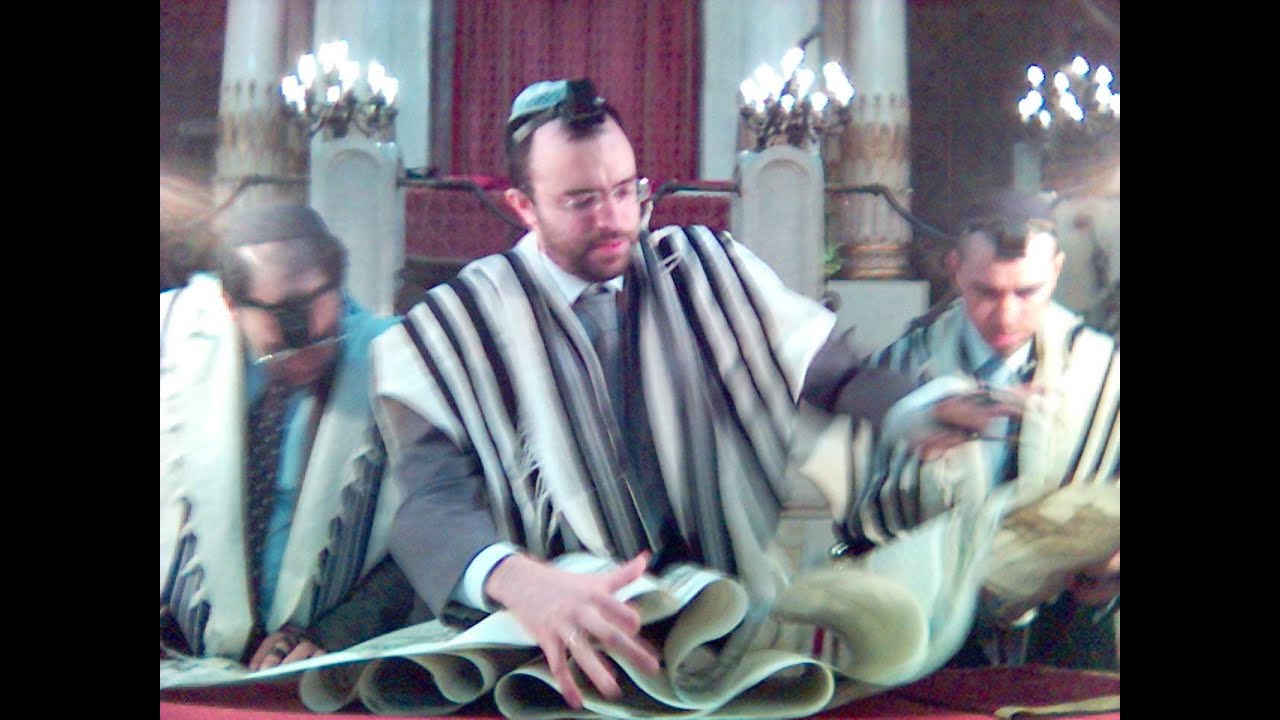
One of the customs of Purim is to read or sing the whole Book of Esther, which is called “the whole megillah (megillat – scroll)”.   Now you know where that phrase comes from. There are several “megillah books”, but Esther is probably the most associated with the word.

During the singing of the whole megillah, when the name of the evil Hamman is pronounced, the people often shout and make noise with noisemakers to blot out his name, a kind of damnatio memoriae.  There are some interesting Youtube videos of the singing of Esther that have this blotting out of “Hamman”.   For example, HERE, at synagogue in Tampa, they really get into it.  Check out about 1:30.

By the way, don’t be puzzled by the seemingly cheerful raucous music that introduce some of these Megillah Esther videos.  Purim is a time of serious partying.   There is a lot of dressing up in costumes and feasting.

Here is a singing of Esther from the Synagogue in Rome (Hebrew with an Italian accent).  Chapter 3 starts at 12:35 or so and right after is a mention of the hated Hamman.

YouTube thumbnailYouTube icon

It is probable that when the Lord went up to Jerusalem for a “feast of the Jews” in John 5, and when he healed a man at the Pool of Bethesda, it was Purim.

BTW… you might review the dialogue of the Lord with the man who was for so long by that pool.  Given that this pool was outside the walls, where no one dwelt, and the man in theory couldn’t get around on his own, and therefore had to be brought there daily, the Lord’s question: “Do you want to be healed?” takes on a new quality.


Posted in Look! Up in the sky!, SESSIUNCULA | Tagged
1 Comment

Daily Rome Shot 1267

Please remember me when shopping online and use my affiliate links.  US HEREWHY?  This helps to pay for health insurance (massively hiked for this new year of surprises), utilities, groceries, etc..  At no extra cost, you provide help for which I am grateful.

Welcome Registrant:

Contra Mundum

There is a reaffirmation that the writings of Maria Valtorta are not of supernatural origin. HERE

Black to move and mate in 3.

NB: I’ll hold comments with solutions ’till the next day so there won’t be “spoilers” for others.

Posted in SESSIUNCULA |
1 Comment

Daily Rome Shot 1266

On one day of the year, 9 March, the Feast of St Frances of Rome, the Benedictine sisters (founded by Francesca) allow people into the convent to see her rooms, etc.

Photo from The World’s Best Sacristan™.

My tech continues to fight me.  Yesterday for the live stream the video was terrible and for no apparent reason, but I am pretty sure it was on my end.   Also, the shoulder and neck pain… is now also in my left foot.  Pretty obvious what’s going on.  I might need a cane before the day is out.

Please remember me when shopping online and use my affiliate links.  US HEREWHY?  This helps to pay for health insurance (massively hiked for this new year of surprises), utilities, groceries, etc..  At no extra cost, you provide help for which I am grateful.

A long time reader who travels a lot wrote:

Saw your video of the hotel door being broken into/opened.

This happened to me once in OK City and I ended up in an altercation.

He says he found a solution: HERE

From the Getty, St. Hedwig and the nun with a Hedgehog HERE 


In chessy news…. World #1 Magnus Carlsen scored 3/3 in the Norwegian Team Chess Championship. His wins saw him gain 4.1 rating points to climb to 2837.1, 35 points above Hikaru Nakamura and 50 points above World Champion Gukesh Dommaraju.

White to move and mate in 4.

NB: I’ll hold comments with solutions ’till the next day so there won’t be “spoilers” for others.

Posted in SESSIUNCULA |
3 Comments

Your Sunday Sermon Notes – 1st Sunday of Lent 2025

Too many people today are without good, strong preaching, to the detriment of all. Share the good stuff.

It is the 1st Sunday of Lent in the Novus Ordo and in the Vetus Ordo.   Surprisingly, the experts of the Consilium didn’t do away with Lent completely.

The Roman Station is St. John Lateran.  QUESTION: At the Mass you went to, was the Station mentioned?  Let us know in the combox.

We are now in the first stage of Lent.

Was there a GOOD point made in the sermon you heard at your Sunday Mass of obligation?

Tell about attendance especially for the Traditional Latin Mass.

Any local changes or (hopefully good) news?

I have a few thoughts about the orations in the Vetus Ordo for this Sunday: HERE

A taste:

These are the three root causes of all sins, as described in 1 John 2:16: “the lust of the flesh and the lust of the eyes and the pride of life”.   “Lust of the flesh” is the disordered desire for pleasure, such as eating something that is forbidden.  “Lust of the eyes” is the desire to possess that which doesn’t belong to us.  It is generally true that people come to desire what they see.  This is why we should maintain “custody of the eyes”.  Remember: You can’t unsee something.  “Pride of life” is the disordered self-love that results in pride, vanity, the desire to put ourselves in the place of God.

Therefore, the Tempter comes to the New Adam in the wilderness (not a Garden), terribly hungry and thirsty (not satisfied with every good thing the Garden had).  The Lord’s temptations were essentially the same as those of Eve in the Garden: change these stones to bread to satisfy your appetite (“the tree was good for food” which is “lust of the flesh), worship me to possess all the world (“delight to the eyes” which is “lust of the eyes”), and show how wonderful you are in everyone’s full view by throwing yourself from the Temple (“pride of life” which is to displace God by putting yourself in the center of your universe).

Posted in Liturgy Science Theatre 3000, Sermons | Tagged
2 Comments

Daily Rome Shot 1265

Please remember me when shopping online and use my affiliate links.  US HEREWHY?  This helps to pay for health insurance (massively hiked for this new year of surprises), utilities, groceries, etc..  At no extra cost, you provide help for which I am grateful.

If it is Minnesota, its the State Boys High School Hockey Tournament and time also for a blizzard (10 inches recently) This goes to show why there are more players in the NHL from Minnesota than anywhere else. And… that Rogers, where my friend the late Fr. Mike (“Dead Mike”,… God rest him) was as pastor on this goal attempt beat hated Edina (which was next to S. Minneapolis where I grew up) makes this better.

White to move and mate in 5.

[NB: I’ll hold comments with solutions ’till the next day so there won’t be “spoilers” for others.]

Posted in SESSIUNCULA |
2 Comments

Lent brings an old Roman tradition for Mass: the Oratio super populum… the Prayer over the people

The Oratio super populum… the Prayer over the people at the end of Mass was reintroduced in the Latin edition of the 2002 Missale Romanum.   It never left the Vetus Ordo.  With the new 2011 English translation we’ve had this back in use in these USA and elsewhere for some years now.

This is an important custom for Lent.

The origin of the Oratio super populum is quite complex and hard to pin down. The use of this prayer is ancient, found in both the Eastern liturgies of Syria and Egypt and in the West.  It became part of the Roman liturgy very early on.

Turning to Fr. Joseph A. Jungmann’s monumental two volume The Mass of the Roman Rite: Its Origins and Development we find a history of this prayer at the beginning of the section concerning the close of the Mass (II, pp. 427ff). Something Jungmann emphasizes that caught my attention is the fact that we are at a “frontier” moment, the threshold of the sacred precinct of the church and the world.

When properly formed we want the influence of our intimate contact with the divine to carry over into the outside world.  This happens especially through our lectio divina and time in prayer and in our full, conscious and actual active participation in our sacred liturgical worship.  We are our rites.

Unlike the Postcommunio, the object of the prayer is not “us”. Instead, the priest prayers for and over the people, not generally including himself as he does in the prayer after Communion.

By the time of Pope Gregory the Great (+604) this Prayer over the people was only in the Lenten season, probably because this is perceived to be a time of greater spiritual combat requiring more blessings. Indeed it was extremely important for those who were not receiving Holy Communion, as was the case of those doing public penance before the Church, the ordo poenitentium.

How important was this prayer to the Romans?

In 545, when Pope Vigilius (537-55) was conducting the Station Mass at St. Cecilia in Trastevere, troops of the pro-Monophysite Byzantine Emperor Justinian arrived after Communion to take the Pope into custody and conduct him to Constantinople. The people followed them to the ship and demanded “ut orationem ab eo acciperent… the they should receive the blessing prayer from him”, by which was meant the Prayer over the people. The Pope recited it, the people said “Amen” and off went Vigilius who would return to Rome only after his death.

Lent is a time of spiritual combat. The Prayer over the people is meant to strengthen you on the threshold between the sacred precinct of the church and the world which you are charged both to shape and to endure.

Posted in Liturgy Science Theatre 3000, Save The Liturgy - Save The World | Tagged ,
1 Comment

Daily Rome Shot 1264

Please remember me when shopping online and use my affiliate links.  US HEREWHY?  This helps to pay for health insurance (massively hiked for this new year of surprises), utilities, groceries, etc..  At no extra cost, you provide help for which I am grateful.

Welcome Registrant:

Padre Foley

There is a new TLM app available called Sanctifica. May I recommend that you click over and visit? At least boost their stats and… maybe check out the app! (It looks good.)

I can’t unsee this…

In chessy news… HERE

Interim, motus ad lusorem cum militibus albis pertinent. Scaccus mattus, scilicet mors regis, duobus in motis veniat.

Posted in SESSIUNCULA |
3 Comments

“Ministerial Miranda”? Another attack on the Seal of Confession on priests… and on YOU.

Most American and many illegals know a little about the Miranda Warning, sort of. In short, it is a notification given to “suspects” advising them of their right to silence and protection from self-incrimination and legal representation. There was a famous Supreme Court case Miranda v. Arizona in 1966 about these rights which found that the Fifth and Sixth Amendment rights of Ernesto Arturo Miranda had been violated. There are exceptions. Don’t assume you know all about Miranda rights if you are in a jam.

A canonist and civil lawyer whom I occasionally consult, a zealous advocate for priests, sent an article about Washington State DEMOCRATS. HERE

A Ministerial Miranda? Washington State Democrats Target Priests in Latest Attack on Religion

Washington Democrats are adding a fifth stage for confessions under a new law. If passed, examination, confession, absolution, and penance will be followed by arrest. The blatantly unconstitutional legislation would target priests who learn of any “reasonable” basis to believe that a child “has suffered abuse or neglect.” Putting aside the obvious violation of the sanctity of the confessional, it presents a novel problem for priests if they both encourage the faithful to unburden themselves while at the same time reminding them anything that they say can and will be used against them in a court of law.

The bill would amend the state law that currently applies to law enforcement, teachers, medical professionals or child care providers to report cases of child abuse or neglect. Clergy would be added to the list. The sponsors would also exempt clergy from the exception afforded to lawyers and others who obtain information “solely as a result of a privileged communication.”

The law would apply to any “ordained minister, priest, rabbi, imam, elder, or similarly situated religious or spiritual leader of any church, religious denomination, religious body, spiritual community, or sect, or person performing official duties that are recognized as the duties of a member of the clergy.”

[…]

This is one of the brass rings of the Democrats, destroy the Church through prosecution of even frivolous cases, eliminate tax exempt status, drive the clergy underground or hamstring them to the point of enervation.

Putting aside the unconstitutionality, it is a law that is ripe for abuse. The state would be using the church as an agent to compel confessions on the threat of damnation and then turn over the evidence to the police. Worse yet, if the priest does not give a type of ministerial Miranda, the confessant may not realize the danger. However, it is rather hard for a priest to say that a person must confess their sin while reminding them of the right to remain silent.

Posted in GO TO CONFESSION, Pò sì jiù, Si vis pacem para bellum!, The Coming Storm, The Drill, The future and our choices, The Last Acceptable Prejudice | Tagged
1 Comment