ASK FATHER: Could a Bishop be consecrated with the “Usus Antiquior”?

From a reader…

QUAERITUR:

Could a diocesan Bishop be consecrated in the “usus antiquior”?

Because, only in Institutes of Consecrated Life and Societies of Apostolic Life which are under the Pontifical Commission Ecclesia Dei is permitted to use 1962 Pontificale Romanum for ordination (cf. Instruction “Universae Ecclesiae” art. 31).

Of course a bishop could be consecrated with the older form.  I wish that were the case all the time, as a matter of fact.  The older form of consecration was much richer and more explicit in what it intended.

Permission would have to be granted by the Holy See.

Likely?

Odds are that you are more likely to win the Powerball on a day with a Blue Moon during the Transit of Venus.

Posted in "How To..." - Practical Notes, ASK FATHER Question Box, Liturgy Science Theatre 3000 | Tagged
1 Comment

From a Father of the Church to everyone who texts and tweets

A note from a Father of the Church to everyone who texts and tweets. Tip o’ the biretta to the Laudator.

Basil, letter XII (to Olympius; tr. Roy J. Deferrari):

You used to write us little enough, but now you do not write even that little; and if your brevity keeps increasing with the time, it seems likely to become complete speechlessness.

ἔγραφες ἡμῖν πρότερον μὲν ὀλίγα, νῦν δὲ οὐδὲ ὀλίγα· καὶ ἔοικεν ἡ βραχυλογία προϊοῦσα τῷ χρόνῳ παντελὴς γίνεσθαι ἀφωνία.

Posted in Lighter fare, Patristiblogging | Tagged , , ,
3 Comments

ACTION ITEM! POLL ALERT! Wisconsin Judge strikes down law requiring abortion docs to have hospital privileges

At the Milwaukee Wisconsin Journal Sentinel there is a poll about a recent decision of a federal judge (an Obama appointee, probably raised Catholic HERE) to strike down a law requiring that doctors performing abortions (aka infanticide) also have admitting privileges to hospitals.

After all… what could go wrong?

Click HERE for the article and voting page.

The voting box is on the sidebar.

15_03_27_poll_00

And at the time of this posting.

15_03_27_poll_01

I suspect that the readership might have some input for this poll.

Posted in Emanations from Penumbras, POLLS | Tagged , , ,
26 Comments

Monthly donations: a request

I had posted this back on 3 December and 13 February (which had been “lean” days) and there was a great response.  Let’s give it another try.

I am always grateful when donations come in, either ad hoc (one offs) or on a regular, monthly basis through the subscription option (at the bottom of the blog).  I keep track of everyone’s name and remember them in my prayers and in intentions for Holy Mass.  It is important that we remember our benefactors in prayer.

That said, some days of the month have quite a few regular subscribers signed up and other days very few.   Today, the 27th of the month, is one of those days!  (There are others, too, believe me.)

There are only two (2) people subscribed for today, the 27th of the month. [It turns out that only 1 was signed up!]

If you are using the blog regularly, please consider subscribing today to send a monthly donation. That way I have steady income I can plan on, and you wind up regularly on my list of benefactors for whom I pray and for whom I periodically say Holy Mass.

Some options

UPDATE

Some of you have signed up or shifted your monthly donation. Thanks! So far…

27 March – DG, MK, MC, SB, SD, ARCLLC, DLaG, WG, MS

28 March – SS, MK, JW, TS, GS

29 March – AP, SZ, GG

BTW… I had a few of my “thank you” notes bounced back to me as undelivered.  FYI

Posted in SESSIUNCULA |
Comments Off on Monthly donations: a request

ASK FATHER: Holy Ghost or Holy Spirit?

From a reader…

QUAERITUR:

I have known many people who will change “Holy Ghost” to “Holy Spirit” the moment they come across it in a prayer, about as readily as they may switch “thee, thou and thy” to “you, you, and your.” I know that changing the words of a prayer because you don’t like something is wrong, but this goes both ways. Can a person legitimately revert back to the use of “Holy Ghost” in, say, private use of the Divine Office, or public praying of the Rosary? And is there an objective superiority of the one term over the other, other than the fact that one is a clearer cognate of the Latin, while the other is more traditional and frankly more English?

As far as I’m concerned we can use both, interchangeably.

I’m pretty sure that we English speakers have traditionally used Holy Ghost because of early translations of Holy Writ, namely the King James Bible and the Douay Rheims, even though both those Bibles use both Ghost and Spirit (fewer times).  It became a matter of common parlance. People memorized traditional prayers with Ghost.  We sang hymns with Ghost.

Ghost, related to German Geist (which is used today for the Holy Spirit), in its roots is any sort of spirit.  Ghost often translated Bible Greek pneuma and Latin spiritus.

I think we should also use archaic words in our prayers, private and congregational.  Prayer should be from and of the heart, but we can use he richness of our language to express ourselves, even in solidarity with our forebears.

Any way, I don’t think all the old words are about to give up the ghost quite yet.

Posted in "How To..." - Practical Notes, ASK FATHER Question Box | Tagged , , , ,
40 Comments

ASK FATHER: Delaying baptism until after Lent

baptism ancientFrom a reader…

QUAERITUR:

The pastoral associate at our NO parish makes a point of insisting every year that we don’t do Baptisms during Lent, supposedly as a way of showing unity with the Catechumens. A couple of years ago, for my daughter that was born in late February, I effectively demanded the sacrament for her based on on CCC 1250, which tasks both the Church and the parents to “confer Baptism shortly after birth” without noting any exception based on the liturgical calendar. Our pastor was on my side and so obviously the Baptism occurred (during Lent, much to the PA’s chagrin). This practice of delaying the sacrament continues at our parish unless one gets the pastor involved.

The question is: Is there a tradition of such a practice as delaying Baptism until after Lent? Is such a practice documented anywhere?

In the ancient Church, baptisms most often involved adults.  They were done at the Easter Vigil, after a lengthy period of catechesis.

While it’s always good to look back to the foundations of our faith for guidance and direction, it’s also good to look at why our forebears stopped doing what they did.

baptism_01Once Christianity was legalized and being Christian didn’t automatically subject one to suspicion, probable arrest and likely execution, we could be a bit more open about how we welcomed newcomers into the faith. Coupled with Christ’s clear command to baptize, we started baptizing new believers, including children, more frequently. No longer a once-a-year event, baptism came to be relatively commonplace.

Fast forward to today. There is no prohibition in the law against baptizing during the season of Lent. None.

Canon 867 in the 1983 CIC places on parents the obligation to have their infants baptized “in the first few weeks.”

The ritual books place a preference on baptizing adults at the Easter Vigil, but even that is not mandatory.

Baptism should come when the adult has “manifested the intention to receive baptism, been instructed sufficiently about the truths of the faith and Christian obligations, and been tested in the Christian life through the catechumenate.”

Baptism. It’s not a thing to be trifled with.  It should not be delayed too long, especially out of what might sometimes be but a sentimental reason.

Posted in "How To..." - Practical Notes, ASK FATHER Question Box, Liturgy Science Theatre 3000 | Tagged , , ,
21 Comments

ASK FATHER: Do vestments really matter?!?

ahhhhh

Building the kingdom, one yellow chasuble at a time.

From a deacon…

QUAERITUR:

Does the kind, shape, color, and texture of vestments worn to celebrate the Mass really matter? Or, is it the person wearing the vestment is about building God’s Kingdom here on earth?

Wow… interesting.

I am reminded of John 12.

Jesus therefore, six days before the pasch, came to Bethania, where Lazarus had been dead, whom Jesus raised to life. And they made him a supper there: and Martha served: but Lazarus was one of them that were at table with him. Mary therefore took a pound of ointment of right spikenard, of great price, and anointed the feet of Jesus, and wiped his feet with her hair; and the house was filled with the odour of the ointment. Then one of his disciples, Judas Iscariot, he that was about to betray him, said: Why was not this ointment sold for three hundred pence, and given to the poor? Now he said this, not because he cared for the poor; but because he was a thief, and having the purse, carried the things that were put therein. Jesus therefore said: Let her alone, that she may keep it against the day of my burial. For the poor you have always with you; but me you have not always.

Actually, the kind, shape, color, and texture of the vestment really doesn’t matter.

Nor does the person wearing the vestment matter.

The only thing that matters is Him. Everything else is contingent.  There is one thing necessary (cf Luke 10: 41-42).

When, during Holy Mass, we are in attendance upon the one Who is necessary, then our feeble attempts to put forth our best foot become all-important.

Have you ever seen a child picking a bouquet of dandelions for his mother? He is careful to pick only the most beautiful ones, in full flower and not yet gone to seed. He meticulously finds the largest blossoms, arranges them carefully and presents them to the object of his affection proudly with a puffed-out chest and beaming smile.

They are worthless. Mere weeds that, under the best circumstances, will last for a few hours in a vase. Yet, they are the most precious things in the world because of the love and care that has gone into their selection. The boy gave his best to find the best possible dandelions for his mother.

Should we put less effort into our gift of worship to Almighty God?

So, yes, the vestments matter, and, no, they don’t matter at all.

gold angel vestments

Posted in "How To..." - Practical Notes, ASK FATHER Question Box, Liturgy Science Theatre 3000 | Tagged , , ,
31 Comments

ASK FATHER: Can a Bishop be a Deacon for a Priest in a Solemn Mass?

From a reader…

QUAERITUR:

Would it be licit for a Bishop to offer to serve as Deacon for a Extraordinary Form Solemn High Mass Extraordinary Form celebrated by a Priest who is not a Bishop?

That would be just plain weird.

I have no idea how the ceremonial of it all would play out. Fortescue, Wapelhorst, … any of the other standard Rubricians wouldn’t be of much help to figure it out.

This is in the great category of The Possible. A Bishop was ordained as a Deacon. He still possesses the diaconal character.

It is also in the great category of The Inadvisable.

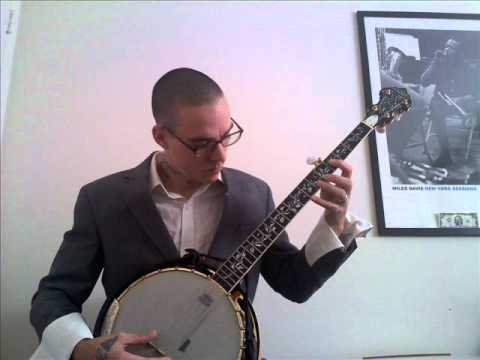
It would be like … putting ketchup on sushi or playing Vivaldi on a banjo.

YouTube thumbnailYouTube icon

Posted in "How To..." - Practical Notes, ASK FATHER Question Box, Linking Back, Liturgy Science Theatre 3000 | Tagged ,
25 Comments

Another Cardinal stands up to Card. Marx and German bishops:

His Eminence Kurt. Card. Koch, President of the Pontifical Council for Christian Unity (Card. Kasper’s old billet), has firmly rejected the progressivist notions which Card. Müller called “absolutely anti-Catholic”.  From LifeSite with my emphases and comments:

Vatican cardinal tells German bishops: We can’t adapt the faith to the times like Christians did under the Nazis

ROME, March 26, 2015 (LifeSiteNews.com) – An influential Swiss cardinal at the Vatican has warned Germany’s bishops that the Church cannot merely adapt itself to the times as some Christians did in order to support the Nazis.

In an interview with the German Catholic newspaper Die Tagespost, Cardinal Kurt Koch firmly (but politely) refuted the proposal of Cardinal Reinhard Marx and Bishop Franz-Josef Bode, both delegates to the upcoming Synod on the Family, that the Catholic Church has to adjust herself more to the “life realities” of Catholics today, and liberalize its attitude toward remarried divorcees. Cardinal Marx had even declared that the German bishops will make their pastoral decisions independently of Rome.  [Boooo!]

Cardinal Koch’s comments followed a strong rebuke of Cardinal Marx by German Cardinal Paul Josef Cordes. “A Cardinal cannot easily separate the pastoral approach from the teaching,” Cardinal Cordes said, “unless he wants to ignore the binding meaning of Christ’s words and the binding words of the Council of Trent.”

Cardinal Koch, president of the Pontifical Council for Promoting Christian Unity, said that Bode’s words should remind us of a similar historical situation: namely the time of the Third Reich, where the “German Christians” adjusted their faith to the worldview of National Socialism, namely its racist and nationalistic ideas. [Wow.  That will get their attention.] He said: “Let us think of the ‘German Christians’ during the time of National Socialism, when, next to the Holy Scripture, they also raised up the Nation and the Race as sources of revelation, against which the Theological Declaration of Barmen (1934) [which rejected the submission of the Protestant churches under the state] protested. We have to differentiate very carefully here and listen with sensitivity to the signs of the times – and to the spirit that reveals itself in these signs: Which ones are signs of the Gospel, which ones are not?”

With this comment, Koch made clear that it is not the Catholic Church’s mission to adapt her irreformable teaching to the spirit of the time, the Zeitgeist, but, rather, the Church has to follow Christ’s teaching at all times, throughout history.

In this context, it is wise to point to that part of German history, where many Christians, mainly Protestants of the movement called “German Christians,” subjected parts of Christ’s teaching under the ideology of Adolf Hitler. Such an adaptation might have sounded convincing at the time, but there will also always be a “time after,” where many Christians then had to regret their inordinate submission to such a false teaching.

In reference to our own time, we can apply Cardinal Koch’s words and determine not to adapt to a morally lax atmosphere that has spread throughout the Western world since the cultural revolution of the 1960s, which now also permeates more and more of the culture of the Catholic Church. The standard of Christ is still applicable now, and will always be – it is timely, and timeless.

[NB] Cardinal Koch thus insisted that it is dangerous to declare “life realities” as a third source of revelation: “To see how and in which way people are living their Faith today, is of course helpful and important, in order to recognize the challenges of the pastoral duties of the Church. However, this [the “life realities”] cannot be a third reality of the revelation next to Holy Scripture and the Magisterium.”

Posted in One Man & One Woman, Our Catholic Identity, Synod, The Coming Storm, The Drill | Tagged , , , ,
12 Comments

The silly season is still in full swing!

Sent to me by a reader.

No, this isn’t… weird.  Not at all.  Nope.

Caption:

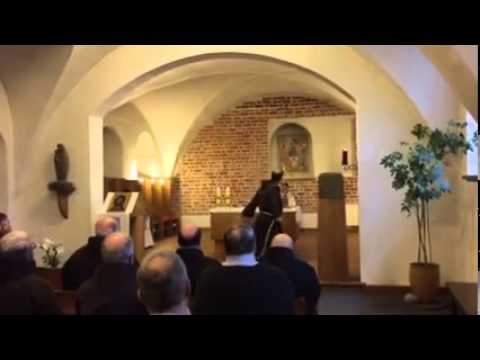
French Provincial Minister Michel Laloux expressed himself in dance during our morning Mass for the Annunciation.

I’m not making this up.

Watch and try not to laugh or roll your eyes. Face palms are acceptable.

This was posted, seemingly with admiration and approval, by the ENGLISH SPEAKING CONFERENCE – Order of Friars Minor.

French Provincial Minister Michel Laloux expressed himself in dance during our morning Mass for the Annunciation.

Posted by ENGLISH SPEAKING CONFERENCE – Order of Friars Minor on Wednesday, March 25, 2015

[Within minutes of my posting this, someone pulled the video.  But it is also on YouTube!]

YouTube thumbnailYouTube icon

I wonder if he practiced that.

And then there is the fellow who gave the guys an “instrumental reflection” during the morning’s liturgy.  Instrument? Clarinet.

Not really my thing.

Posted in Liberals, Lighter fare, You must be joking! | Tagged
47 Comments