Wherein Fr. Z muses on a growing trend

Let me put some facts together for you.
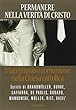
At La Stampa Marco Tosatti is reporting that, before the upcoming Synod on the Family in October, things are already heating up.   It seems that Cantagalli, the Italian publisher of Permanere nella verità di Cristo (the Five Cardinals Book™ Remaining in the Truth of Christ, UK HERE) is suing the ultra-liberal “Bologna School” and Kasperite writer Alberto Melloni for defamation.  It’s usually only liberals who sue the faithful.

And there is a short paragraph in Tosatti’s piece about the reaction of Card. Nichols to the 500 Priests Letter™.

Next, I see at nocristianofobia the Archbishop of Santiago, Card. Ricardo Ezzati, has sacked from the Catholic University of Chile a Jesuit, Jorge Costadoat Carrasco, SJ, from the theology department, because the Jesuit publicly supported the bizarre notions of the Bishop of Anversa, Johan Bonny, once a collaborator of Card. Kasper at the Pontifical Council for Christian Unity.  As you will recall, Bonny called for the approval of “gay” relationships.  The Jesuit also called for Communion for the divorced and remarried (the Kasperite position).

Then note that Paul Card. Cordes (aka Hero Of The Week) really stood up to Card. Marx and the German bishops HERE.

Note also the way that, some time ago, Fr. Fessio of Ignatius Press stood up to Card. Baldisseri in the mysterious case of the Missing Books.

Note too the reactions of support and opposition that the 500 Priests Letter™ is garnering.

It seems – feels – as if those who seek to silence the Voice of Orthodoxy (the Voice of the True Faithful) are no longer going to be given a pass.

Pastors of souls should take notice: Coming to a diocese near you.

Just be sure not to gossip or chatter about any of this.

UPDATE:

And now Card. Koch says that what Card. Marx and the German bishops are suggesting sounds like what Christians did in Germany when they adapted their doctrines to National Socialism.  The idea is this: “it is dangerous to declare ‘life realities’ as a third source of revelation”.


Posted in One Man & One Woman, Our Catholic Identity, Si vis pacem para bellum!, The Drill, The future and our choices | Tagged , , , , ,
10 Comments

“Blessed are they who persecute the righteous, for they shall be called the children of God.”

The estimable translator and teacher Anthony Esolen has a wickedly biting commentary piece at Crisis today.  Read it in the context of controversy over the upcoming Synod on the Family in October, namely, there are those who suggest that Christ didn’t really mean what Scripture says he said about adultery.

Sample:

A Modern Translation

The Church, I’ve been hearing, has to change, if she is going to have any leverage with men and women of our time. What that means, of course, is that they would like a sexual permission slip. It’s the only thing they care about. What’s it to them, after all, if the Church does not change her teachings, even if she could? They don’t obey them anyway.

But perhaps they are setting their revisionary sights too low. Why change the Bride of Christ, when you might as well go for Christ Himself? Why trick out the bride in lingerie from Astarte’s Secret, you can put new words on the lips of the bridegroom, or give him a new interest?

The Lord says that He comes not to abolish the law and the prophets, but to fulfill them. He is the true and only agent of moral evolution. He reveals the truth that had lain hidden in the shadows, or encrusted with local or tribal customs. He is the refining fire, making ore into gold. So His teachings stretch our dust to infinity.

[…]

So we need a Jesus who will fit; a god we can put in the cave to stay. I translate His words accordingly:

“You have heard me say, let your yes be yes and your no be no. What’s the use? Consider the clods of the earth, how they crumble. Are not your words worth less than they? Be content with maybe. Say what you will, to make your days comfortable, because they are few, and they will pass.”

“You have heard me say, he who will not take up his cross and follow me is not worthy of me. What’s the use? I accomplished nothing on the cross. I have no baptism of fire for refining the earth. Don’t bother. Be not too eager to cause other people to suffer, but at the same time be not too eager to expose yourself to suffering.”

“Blessed are the modestly well off, for theirs are the good schools and the suburbs.”

“Blessed are they who chuckle, for they need not give a damn.”

“Blessed are they who believe in themselves, for they shall cover the earth.”

“Blessed are they who scoff at righteousness, for they shall be less than hypocrites.”

“Blessed are the indifferent, for they shall be left alone.”

“Blessed are the sly of heart, for they shall see porn.”

“Blessed are the compromisers, for they shall win elections.”

“Blessed are they who persecute the righteous, for they shall be called the children of God.”

[…]

There’s more of this amusing but mind-chewing stuff which you can read over there.

Fr. Z kudos.

You might recall that he wrote the piece How to kill vocations – Feminize everything! with which he scored a direct hit.

Also, check out his translation of the Divine Comedy, one of the most important things every penned by man.  If you have read Dante then… well…. pffffft.

Click!

You could start with Esolen (Part 1, Inferno HERE) or perhaps with Dorothy Sayer’s fine version (Part 1, Inferno, HERE).  There are many renderings to choose from.  I would very much like to teach on Dante someday.  Maybe it’ll happen.

When you make the excellent choice to read the Divine Comedy, here are a couple tips.  First and foremost, make the decision that you will read the whole thing.  Don’t read just the Inferno.  The really great stuff comes in Purgatorio and Paradiso.  Also, read through a canto to get the line of thought and story and then go back over it looking at the notes in your edition.  Sayers has good notes.  Dante was, I think, the last guy who knew everything.  Each Canto is dense with references.  You will need notes to help with the history, philosophy, cosmology, poetic theory, politics, theology, etc.

In any event, Esolen did a good job.

Posted in Fr. Z KUDOS, Lighter fare, Our Catholic Identity, Synod | Tagged , ,
13 Comments

Card. Müller: Delegate doctrinal decisions to regional conferences? “absolutely anti-Catholic”!

Cardinale-MullerRecently Card. Marx and the German Bishops conference flexed their muscles a bit and suggested that they should have oversight of doctrine (rather than Rome) and that they were pretty much not subordinated to Rome.

I have now read an interview which Card. Müller gave to Famille Chrétienne. He said that to delegate certain doctrinal or disciplinary decisions on matrimony or the family “is an absolutely anti-Catholic idea”.

I have to agree.  It has been kicked around in the discussion of restructuring the Roman Curia that perhaps doctrinal oversight could be devolved to regional bishops conferences.  That is the liberal’s Shangri-la, the progressivist’s Eldorado, the dissenter’s nirvana.  It would also be, of course, total disaster.

Were such a thing approved, I believe I might simply withdraw to a cave to finish out my natural span in prayer and penance.

Regional conferences do not constitute some kind of parallel or equal body alongside the Holy See’s Congregation for the Doctrine of the Faith, which has it’s mandate from and in the name of the Successor of Peter.  The Roman Pontiff delegates his own authority to his Congregations in matters that concern them.

You might take a few minutes to read Apostolos suos.  (Latin HERE)

In a nutshell, conferences of bishops do not exercise teaching authority as the whole body of bishops does.  Individual bishops do (when they are in unity with Roman Pontiff), but conferences don’t.  Conferences must submit their doctrinal declarations to the Holy See for a recognitio (approval).  But then the doctrinal statement is authoritative not by authority of the conference but because the Holy See has backed it up.  Conferences don’t have their own doctrinal authority.  They “borrow” it.  And, again, individual diocesan bishops are not subjected to the regional conference.  They have their own authority in their dioceses by virtue of their belonging to the college of bishops, as successors of the Apostles.  Conferences can’t command them to do X or Y.  They can agree to follow what the conference as a body decides.  In general, that’s what happens: they act in solidarity.


Posted in Our Catholic Identity, Si vis pacem para bellum!, The Coming Storm, The future and our choices | Tagged , ,
16 Comments

Card. Nichols reacts to the 500 Priests

The other day I posted about an open letter, in the UK’s weekly the Catholic Herald, signed by almost 500 priests of England and Wales.  The letter urged the members of the upcoming Synod in October to stand firm on the Church’s traditional teachings concerning reception of Holy Communion.  HERE

I now see in the Catholic Herald a reaction/response to the priests’ letter from His Eminence Vincent Card. Nichols, Archbishop of Westminster.  His Eminence isn’t happy.  Here is his statement (my emphases):

“Every priest in England and Wales has been asked to reflect on the Synod discussion. It is my understanding that this has been taken up in every diocese, and that channels of communication have been established,” the statement said.

“The pastoral experience and concern of all priests in these matters are of great importance and are welcomed by the Bishops. Pope Francis has asked for a period of spiritual discernment. This dialogue, between a priest and his bishop, is not best conducted through the press.

During his general audience today, Pope Francis called for prayer not “chatter” ahead of the Synod. He said: “So here is what I, with my collaborators, have thought to propose today: to renew the prayer for the Synod of the Bishops on the family. We are taking up this commitment again next October, when the ordinary Assembly of the Synod, dedicated to the family, will take place. I would like for this prayer, and the whole Synod journey, to be animated by the compassion of the Good Shepherd for His flock, especially for persons and families that, for different reasons, are ‘troubled and abandoned, like sheep without a shepherd’ (Mt 9:36).

“So, sustained and animated by the grace of God, the Church can be ever more committed, and ever more united, in the witness of the truth of the love of God and of His mercy for the families of the world, excluding none, whether within or outside the flock. I ask you, please, to not neglect your prayer. All of us – the Pope, Cardinals, Bishops, priests, religious, lay faithful – we are all called to pray for the Synod. There is need of this, not of chatter! I also invite those who feel far away, or who are not accustomed to do so, to pray. This prayer for the Synod on the Family is for the good of everyone. I know that this morning you were given a little prayer card, which you have in your hands. It might be a little wet. I invite you to hold on to it and keep it with you, so that in the coming months you can recite it often, with holy insistence, as Jesus has asked us.”

The prayer which the Pope distributed reads:

“Jesus, Mary and Joseph,
In you we contemplate
The splendour of true love,
We turn to you with confidence.

Holy Family of Nazareth,
Make our families, also,
Places of communion and cenacles of prayer,
Authentic schools of the Gospel,
And little domestic Churches.

Holy Family of Nazareth
May our families never more experience
Violence, isolation, and division:
May anyone who was wounded or scandalized
Rapidly experience consolation and healing.

Holy Family of Nazareth,
May the upcoming Synod of Bishops
Re-awaken in all an awareness
Of the sacred character and inviolability of the family,
Its beauty in the project of God.

Jesus, Mary and Joseph,
Hear and answer our prayer. Amen.”

Damian Thompson of The Spectator offered his views on this exchange.

Also, don’t miss what the great canonist Ed Peters offered at his blog In The Light Of The Law.  Sample:

British priests have canonical rights, too

There isn’t a word—not one single word—in the short, open letter signed by hundreds of British Catholic priests to the Catholic Herald (London) defending Church teaching on marriage and sacraments that any Catholic could not, and should not be proud to, personally profess and publically proclaim. The priests’ letter is a model of accuracy, balance, brevity, and pastoral respect for persons. It fortifies the soul to know it exists. It gladdens the heart to actually read it.

I am at a loss, therefore, to understand why Vincent Cardinal Nichols seems to chastise priests who signed letter for their allegedly “conducting [a] dialogue, between a priest and his bishop … through the press.” The priests’ letter is statement of Catholic belief, not an opening gambit in a negotiation; it is addressed to a journal editor, and through him to lay and clerical public, not to a particular prelate. Moreover, the letter is a text-book example of clergy exercising a canonical right guaranteed to all the Christian faithful, namely, “to manifest to sacred pastors [Code for ‘bishops’] their opinion on matters which pertain to the good of the Church and to make their opinion known to the rest of the Christian faithful, without prejudice to the integrity of faith and morals, with reverence toward their pastors, and attentive to common advantage and the dignity of persons.” Canon 212 § 3, my emphasis.

[…]

Posted in ¡Hagan lío!, Mail from priests, One Man & One Woman, Our Catholic Identity, Synod, The Coming Storm, The future and our choices | Tagged , , ,
35 Comments

25 March – D. Madison – Pontifical Mass at the Throne

Today, Wednesday 25 March at 7 pm, His Excellency Most Reverend Robert C. Morlino, Bishop of Madison, will celebrate a Pontifical Mass at the Throne (Extraordinary Form) at Chapel of the Bishop O’Conner Center (MAP) for the Feast of the Annunciation.

All are welcome.

• Gregorian chant: Gregorian propers (treble schola); Credo III
• Polyphony
o Missa super Dixit Maria (Haßler) — Kyrie, Gloria, Sanctus, Benedictus, Agnus Dei
o Gabriel Angelus (Marenzio) — Offertory motet
o Dixit Maria (Haßler) — Communion motet I
o Ave Regina Cœlorum (Soriano) — Communion motet II
• Hymns
o Entrance: Praise We the Lord This Day (Swabia) — 6 vv.
o Exit: The God Whom Earth and Sea and Sky (Eisenach) — 4 vv.

UPDATE:

We had a beautiful Mass.

A couple shots.

15_03_25_Annunciation_01

15_03_25_Annunciation_02

Posted in Events, Liturgy Science Theatre 3000, SESSIUNCULA, The Campus Telephone Pole | Tagged ,
10 Comments

1st Joyful Mystery: The Annunciation

This is from my old Patristic Rosary Project

Because October is dedicated in a special way to the Most Holy Rosary of the Blessed Virgin Mary, during the month I, as a dedicated patristiblogger, will work my way through the Mysteries of the Rosary offering some comments from the Fathers of the Church.  Let’s jump right in!

1st Joyful Mystery: The Annuniciation

Commenting on Luke 1:26-38, the announcement of Jesus’ birth, St. Ambrose of Milan (+397) makes a connection between Mary and the Church.  :

And, therefore, the Evangelist, who had undertaken to prove the incorrupt mystery of the incarnation, thought it fruitless to pursue evidence of Mary’s virginity, lest he be seen as a defender of the Virgin rather than an advocate of the mystery.  Surely, when he taught that Joseph was righteous, he adequately declared that he could not violate the temple of the Holy Spirit, the mother of the Lord, the womb of the mystery.  We have learned the lineage of the Truth.  We have learned its counsel.  Let us learn its mystery.  Fittingly is she espoused, but virgin, because she prefigures the Church which is undefiled (cf. Eph 5:27) yet wed.  A virgin conceived us of the Spirit, a Virgin brings us forth without travail.  And thus perhaps Mary, wed to one, was filled by Another, because also the separate Churches are indeed filled by the Spirit and by grace and yet are joined to the appearance of a temporal Priest.  [Exposition of the Gospel of Luke 2.6-7]

The Marian thought of Ambrose has an ecclesiological dimension.  The Second Vatican Council cited this important passage in Lumen gentium, the dogmatic constitution on the Church:

63. By reason of the gift and role of divine maternity, by which she is united with her Son, the Redeemer, and with His singular graces and functions, the Blessed Virgin is also intimately united with the Church. As St. Ambrose taught, the Mother of God is a type of the Church in the order of faith, charity and perfect union with Christ.  For in the mystery of the Church, which is itself rightly called mother and virgin, the Blessed Virgin stands out in eminent and singular fashion as exemplar both of virgin and mother.  By her belief and obedience, not knowing man but overshadowed by the Holy Spirit, as the new Eve she brought forth on earth the very Son of the Father, showing an undefiled faith, not in the word of the ancient serpent, but in that of God’s messenger. The Son whom she brought forth is He whom God placed as the first-born among many brethren, namely the faithful, in whose birth and education she cooperates with a maternal love.

Because of Mary’s “Fiat mihi“, we can be members of the Church with Mary as our Mother.  Our baptism integrates us into this wondrous bond.  St. Leo the Great (+461) in one of his glorious sermons says:

Each one is a partaker of this spiritual origin in regeneration.  To every one, when he is reborn, the water of baptism is like the Virgin’s womb, for the same Holy Spirit fills the font, who filled the Virgin, that the sin, which that sacred conception overthrew, may be taken away by this mystical washing.  [s. 24.3]

Theopanes BrandedThis is not merely a Western insight.  While it is a little late for our Patristic interests, here is a snip from fascinating Kontakion of the Annunciation by the 9th century Theophanes Graphtos, the Branded:

The Theotokos said: Thou bringest me good tidings of divine joy: that Immaterial Light, in His abundant compassion, will be united to a material body.and now thou criest out to me: all-pure one, blessed is the fruit of thy womb!
The Archangel said: Rejoice, lady; rejoice, most pure virgin! Rejoice, God-containing vessel! Rejoice, candlestick of the light, the restoration of Adam, and the deliverance of Eve! Rejoice, holy mountain, shining sanctuary! Rejoice, bridal chamber of immortality!

The Theotokos said: The descent of the Holy Spirit has purified my soul; it has sanctified my body: it has made me a temple containing God, a divinely adorned tabernacle, a living sanctuary, and the pure Mother of Life.

The Archangel said: I see thee as a lamp with many lights; a bridal chamber made by God! Spotless maiden, as an ark of gold, receive now the Giver of the Law, who through thee has been pleased to deliver mankind’s corrupted nature!

Here the Blessed Virgin represents the Temple, the Tabernacle and the Ark of the Covenant, images of the Church.

Posted in Liturgy Science Theatre 3000, Patristiblogging | Tagged , , , , ,
9 Comments

Of the Premonstratensian Rite and Confessions

I received a note from the MC at my friend Fr. Ray Blake’s parish in Brighton.  They recently had a retreat which ended with Holy Mass in the Extraordinary Form of the Premonstratensian Rite (Norbertine). There are some fine photos.  I am told that confessions were heard during Mass and that there was a queue at all times.

Here is a fine photo.  All the statues are covered for Passiontide.  Well done.

15_03_25_Brighton_01


I note that Fr. Blake was a signatory of the recent letter that almost 500 priests of England and Wales signed asking that the upcoming Synod clearly affirm the Church’s teachings concerning Communion for the divorced and civilly remarried.  HERE

Also, Fr. Blake has warmly asked for prayers for the newly appointed Bishop of Arundel and Brighton, Most Rev. Richard Moth. HERE.


Posted in GO TO CONFESSION, Liturgy Science Theatre 3000, Mail from priests, Our Catholic Identity | Tagged ,
6 Comments

WDTPRS: Annunciation – Lady Day

Tanner AnnunciationThis is the very Feast of the Incarnation.

Today we celebrate that moment when our Lord elevated our humanity by taking our human nature into an indestructible bond with His Divinity.  In the Incarnation God opened for us the path to “divinization”, His sharing of something of His own divine glory with us in the eternal happiness of heaven.

In the sin of our First Parents, offending God and loosing so many of our gifts, the whole human race sinned.  In justice a human being had to correct the offense, but such a correction was entirely impossible for a mere mortal human.  Such a correction required the intervention of one who was both man and God.

In the Incarnation, the Word made flesh, made man, made Jesus the Lord and Savior, not only begins to save us from our sins in His earthly ministry, but begins also the mysterious revelation of man more fully to himself (cf. GS 22).

Part of the Lord’s mission was also to teach man more fully who He is in the beauty of His own Person.  However, He did not begin to do this only from the beginning of His public ministry.  He began this from the very moment of the Incarnation.

Remember: From the instant of His conception, the Word made flesh begins to teach man more fully who man is.

Light from Light sheds light on the dignity of man, God’s image, from the instant of conception, from man’s humblest beginning.

Here are the Collects for this beautiful Feast of the Annunciation, Lady Day.  Here are the “Opening Prayers” from both the older, traditional, extraordinary form of the Roman Rite and the newer, post-Conciliar, ordinary form.

You might discuss their differences, their respective strengths.

COLLECT (1962MR):

Deus, qui de beatae Mariae Virginis utero Verbum tuum, Angelo nuntiante, carnem suscipere voluisti: praesta supplicibus tuis; ut, qui vere eam Genetricem Dei credimus, eius apud te intercessionibus adiuvemur.

LITERAL VERSION:

O God, who desired Your Word to take flesh from the womb of the blessed Virgin Mary the angel announcing it: grant to your supplicants; that we who believe truly in the Mother of God, may be helped in Your sight by her intercessions.

COLLECT (2002MR):

Deus, qui Verbum tuum in utero Virginis Mariae
veritatem carnis humanae suscipere voluisti,
concede, quaesumus,
ut, qui Redemptorem nostrum
Deum et hominem confitemur,
ipsius etiam divinae naturae mereamur esse consortes
.

LITERAL VERSION:

O God, who wanted Your Word to take up
the truth of human flesh in the womb of the Virgin Mary,
grant, we beseech,
that we, who confess our Redeemer to be God and man,
may also merit to be the sharers of His divine nature
.

This is of new composition, though there is a reference here to Letter 123 Ad Eudociam Augustam – “De monachis Palaestinis” of St. Pope Leo I, “the Great” (+461).

“Fides enim catholica sicut damnat Nestorum, qui in uno domino nostro Iesu Christo duas ausus est praedicare personas, ita damnat etiam Eutychen cum Dioscoro, qui ab unigenito Deo Verbo negant in utero Virginis matris veritatem carnis humanae susceptam.”

NEW CORRECTED ICEL VERSION:

O God, who willed that your Word
should take on the reality of human flesh
in the womb of the Virgin Mary,
grant, we pray,
that we, who confess our Redeemer to be God and man,
may merit to become partakers even in his divine nature
.

Posted in Liturgy Science Theatre 3000, WDTPRS | Tagged , , , , ,
13 Comments

Card. Cordes tackles hard the German Bishops Conference

From CNA:

German prelate breaks rank with Cardinal Marx, insists on fidelity to Rome

Munich, Germany, Mar 24, 2015 / 02:32 am (CNA/EWTN News).- A German cardinal has publicly opposed the words of two other German bishops who have suggested that the nation’s Church can form its own policies without direction from Rome.

Cardinal Paul Josef Cordes published a letter earlier this month objecting to the pronouncements of prominent leaders of the Church in Germany that the nation’s bishops’ conference will pursue its own program of pastoral care for marriages and family regardless of the outcome of October’s Synod on the Family.  [The sheer arrogance.  This is the fruit of a couple generations of priests raised up under the theology of Rahner and the like.]

At a Feb. 25 press conference following the German bishops’ plenary assembly, Cardinal Reinhard Marx of Munich and Freising, who is president of the conference, stated, “We are not a branch of Rome. Each conference of bishops is responsible for pastoral care in its cultural context and must preach the Gospel in its own, original way. We cannot wait for a synod to tell us how we have to shape pastoral care for marriage and family here.” [And, frankly, Synods can’t tell bishops to do boo.]

Cardinal Marx, whom the German bishops have chosen as one of their three delegates at the upcoming Synod on the Family, added that there are “certain expectations” of Germany in helping the Church to open doors and “go down new paths,” and that “in doctrine, we also learn from life.”

He was echoed by Bishop Franz-Josef Bode of Osnabruck – a fellow synod delegate – who called the Synod on the Family a “historically important” moment and a “paradigm shift,”urging that “the reality of men and the world” be a source for theological understanding.  [i.e., doctrine shifts with the changing times]

Cardinal Cordes – who was ordained a priest of the Archdiocese of Paderborn and is president emeritus of the Pontifical Council Cor Unum – published a strenuous objection to the media statements of his fellow German bishops in the form of a March 7 letter to the editor of Die Tagespost, a prominent German language Catholic newspaper. The text of the original letter was translated to English by CNA’s Jan Bentz.

“Since the words of the highest representative of Catholics in Germany have a guideline-like character, and create substantial waves in the media, it makes sense to object publicly to some of the utterances, in order to limit the confusion which they have caused,” Cardinal Cordes wrote.

The cardinal noted that the February press conference was focused on the Synod on the Family, and on particular of the proposal by Cardinal Walter Kasper – another German – to admit some among the divorced and civilly remarried to Communion.

“The problem was addressed with the beautiful words of ‘new solutions’ and ‘opening doors’,” Cardinal Cordes wrote.

He responded to Cardinal Marx’ characterization of the Church in Germany as an exemplar by saying that “if he wanted to express that Germany is example in leading the faithful to a giving oneself up to Christ, then I think the bishop is fooled by wishful thinking. The existing German ecclesial apparatus is completely unfit to work against growing secularism.”  [whew!]

“It was not without reason,” Cardinal Cordes wrote, that Benedict XVI strongly urged the Church in Germany to become less worldly during his 2011 visit there. [Do I hear an “Amen!”?]

“In themes of faith, realism counts above all,” the cardinal reflected. “Therefore one has to consider the facts.” He noted that a recent survey shows that among Catholics in western Germany, only 16 percent believe God to be personal: “all other Catholics see in God a faceless providence, an anonymous fate along the lines of a primordial power. Or they simply deny his existence flat out. What do they think of when they pray the Our Father? So there is no reason to pride ourselves on our faith if we stand in comparison to other countries.”

Cardinal Cordes then commented on Cardinal Marx’ ecclesiological statements, saying his “theological blurriness makes you wonder,” adding that statements like “we are not a branch of Rome” are more suited “to the counter of a bar.” [whoa!]

[…]

You don’t want to miss the rest of that one.

Posted in SESSIUNCULA | Tagged , ,
16 Comments

Brick by Brick in Greenville

Screen Shot 2015-03-24 at 19.05.39There is a good article at greenvilleonline.com:

Old Latin past illuminates future for Catholic church [Great headline]

Tom Kelly felt like something was lost 50 years ago this month, when traditional Latin Mass was abandoned by the Roman Catholic Church with a Second Vatican Council ruling that Mass could be said in local languages with alternate choreography. [Alternate choreography.  That’s about it.  BTW… I just saw videos of the “liturgies” from the annual Three Days of Darkness in LA.]

The intention was to make the ceremony more accessible, more understandable, simpler, but connection that lasted through centuries evaporated. [The problem was, the reform that was mandated by the Council Fathers is not the reform that we received.]

Holy reverence and awe seemed to be exchanged for colloquial comfort. [I can’t think of other words… ]

Now, though, the formal worship is making a comeback in South Carolina and at Catholic churches worldwide.

The daily Latin Mass held at Prince of Peace Catholic Church in Taylors – among services that also include English and Spanish Mass – led Kelly and his family to move to the area.

It’s so very reverent,” said Kelly, a native of Long Island, New York, who moved with his wife Donna and children from Rutherfordton, North Carolina, to Taylors in 2005 to be closer to Latin Mass. “You can go to a Mass in New York, you can go in South Carolina, you can go in Rome, you can go in China and it doesn’t really matter. You’re attending the same Mass.”

“I can tell my children this is the Mass that all of the saints that they’re learning about in school would’ve been at,” said Joel Raines, a Campobello resident who travels with his wife, Marty, and four children to Prince of Peace almost weekly. “From my perspective with my kids, I try to tell them that the Catholic faith is 2,000 years old, but the Mass that we were taking them to was kind of new. It had contemporary music. It was English. It was like handing them a penny and telling them it’s a 300-year-old penny, but it looks shiny and new. It’s kind of hard to buy into that if you’re a kid.”

Now, though, as the smell of incense rises through the sound of Gregorian chants, they more easily sense that they are part of a tradition that’s been handed down from the second century.

Prince of Peace Catholic Church, with more than 2,000 families as members, is one of the few churches in the nation to celebrate a daily noon Latin Mass in the Extraordinary Form of the Roman Rite. It’s one of only two in the state – Stella Maris Roman Catholic Church on Sullivan’s Island is the other – to celebrate the Latin Mass on a weekly basis.

Father Christopher Smith, formally installed as the parish’s pastor just last week after three years as administrator, said it’s helping the church grow.

“I think that there are as many reasons that people come to it as there are people,” Smith said. “One of the things that we’ve found very interesting is that a lot of older people who grew up with the Latin Mass and then switched to the vernacular when they were growing up, a lot of them are just not really interested in the Latin Mass anymore. What we’ve found – and this is the case all over the world – a lot of younger people tend to be attracted to the Latin Mass.

“What they tell us is they see a great sense of beauty and reverence and devotion, and also a sense of historical continuity. You know when you come to a Mass that’s celebrated in Latin that you’re praying the same prayers that saints from 1,500 years ago were praying when they went to Mass, in the same language. There’s a great sense of connectedness, and I think a lot of young people are searching for something very concrete and very deep in their spirituality. The Latin Mass fulfills a need that many of them gravitate towards.”

[…]

This is a great development.  Kudos to all!

Posted in Brick by Brick | Tagged , ,
4 Comments
























