What Fr. Z is watching and reading

There is a movie to avoid Amen, which is – on the surface – about the Nazi Reich’s extermination of the Jews and of “unproductive” people.  A military scientist (based on a real person) who realizes what is going on – the Final Solution -and then, having a conscience, tries to stop it with the help of a young (fictional) Jesuit.

Under the surface, the movie is anti-Catholic disinformation. Actually, a lot of the anti-Catholic stuff is on the surface.

It is really creepy in some of its “good” elements.  There have to be good and truthful elements in order to lack the lies slither into your brain and start replacing facts and common sense:

  • A girl is doing math word problems.  She is asked to figure out how many middle class homes could be built for the cost of on insane asylum.   This comes right after a scene in which patients in a hospital are euthanized.
  • Archbp. von Galen, the “Lion of Münster”, marches into a government building and threatens the officials that he will expose what they are doing.  Later, he is denouncing from the pulpit what is being done to “unproductive” people.
  • There is an elaborate scene in which the principal tries to find a way to listen to Pius XII’s 1942 Christmas radio address (but it gets the text wrong).

These are intended to distract you.

Be warned: There is strong undercurrent of propaganda in it against Pius XII and the Catholic Church.  This film is based on the vile 1963 play by Rolf Hochhuth, The Deputy, a Christian Tragedy, which was a project of the KGB to attack Pius XII and the Catholic Church through “disinformation”.

The production values are fairly high, for there was clearly a lot of money behind it.  Happily, the film at a certain point becomes incoherent, ridiculously preachy in all the wrong ways.

After watching this slithery dreck I cleansed by mind and heart by watching a John Wayne movie.  Refreshing.

There are other antidotes to the disinformation dreck.

Be sure to check out Gary Krupp’s Pope Pius XII and World War II: The Documented Truth: A Compilation of International Evidence Revealing the Wartime Acts of the Vatican   There is, I believe, an early and a more recent edition of this book, which I wrote once about HERE.   The great thing about this book is it provides photographic images of primary evidence.

An important book, not only for what was purposely done to Pius XII (such as The Deputy), but also what is happening today in many circles in these USA, is by Prof. Ron Rychlak, called Disinformation: Former Spy Chief Reveals Secret Strategies for Undermining Freedom, Attacking Religion, and Promoting Terrorism co-authored with, principally, Lt. Gen. Ion Mihai Pacepa.  Pacepa was the head of intelligence in Romania who fled to the West when he was asked to start killing people. He is an expert on the Soviet technique of framing, disinformation, creating false narratives and history. The book exposes the Communist background of seemingly-benign organizations and explains the treatment received by Cardinals Stepinak, Mindszenty and Wysznski and, of course, as I mentioned above, Pius XII.  More HERE.

You also want to read, for sure, Rychlak’s Hitler, The War, And The Pope.   Rychlak is a professor at Ol’ Miss who teaches in the Law School about evidence.

I also just finished reading the new book by Dick Morris called Power Grab.  This is about the efforts of the Obama Administration to create a one party nation (guess which one).  The descriptions of the way Obamacare was implemented, how the EPA works, what is being done by executive order.  It is well documented.

Finally, I am well into The Great Bridge: The Epic Story of the Building ofthe Brooklyn Bridge by David McCullough. This is a ripping good yarn about an amazing feat during an interesting transitional period of American history.  David McCullough is superb.  If you haven’t read his biography of John Adams, you have a treat in store.

I have a whole bunch of ancient Roman historical fiction novels in the queue and some more nautical, Royal Navy items as well.  I am grateful to readers who have sent Kindle books.

In any event, get Kindle, keep reading, keep learning, keep expanding yourselves.

Do you need a Kindle?  I read more now than ever.  Click HERE  UK click HERE

Posted in Sin That Cries To Heaven, The Coming Storm, The future and our choices, What Fr. Z is up to | Tagged , , , , , , , , , ,
14 Comments

Posting comments here

People who register here, and whose registrations I approve, can post comments.  I use the “about you” section to determine whether or not you are a real (and serious) person or a vile spammer or bot of some kind.  It can’t be viewed by others.

I am also – more and more, it seems – manually switching on the moderation queue for my entries here.

Some blogs have suspended their comboxes completely.  I don’t want to do that.

As we see circumstances in the world and in the Church becoming… interesting, I have seen an uptick of what I can only call “spew” in my combox.

If you call specific people “idiots” or suggest that they are possessed by the devil because of this or that, I am not going to approve comments.  That’s because you are attacking the person.  Stick to the issues.  Comment on words and deeds and their effects.   Let the spectacularly uncharitable Fishwrap or Amerika commentators cravenly hide behind internet anonymity and sink into the slime of ad hominem attacks.

I ask you to be better than they are, no matter how frustrated, angry or anxious you might be.  Sometimes I fail in charity and patience sometimes, so I know that there is a temptation from time to time to go over the top, but, be better than they.  It won’t be that hard, actually.

Over the years I have tried to provide a place where people can also “vent” a little, though I have also tried to place boundaries around the venting.

Avoid hyperbole (aka spittle-flecked nutty language, aka knuckle-headed stuff).  Exercise a little restraint in your language and tone.

 I welcome active comboxes, with many views.  I learn a lot from some of you.  It constantly amazes me how knowledgeable you readers are.  Sometimes I’ll post a question of my own or a request and – BAM! – back come great answers.   You are humorous, passionate, informative, enlightening… but… frankly, some of you are pushing me to close the combox.  Some of you, happily not many, whom I assume wish this blog well and want it to continue as it is, are not helping matters.

Some hints.

1) Think before posting.  Review what you wrote before hitting that post button.
2) I delete comments with comments on my choices to moderate comments.  I don’t care if you think that’s unfair.  That’s what I do.  I am benevolent dictator, but a dictator nonetheless.  It can’t be any other way and have an open combox.
3) If you comment on someone else’s comment, make sure the first thing you write is that persons name or handle and then include, if needful, a brief quote pertaining to your point.
4) This is not Twitter.  Save your @ thingy for tweets.  We don’t do that here.
5)  We can handle all sorts of points of view in the combox.  But don’t expect that heresy or persistent error (which isn’t always at the level of heresy) or consistent and insistent obtuseness is going to be tolerated forever.
6) Avoid both rabbit holes (stick to topics) and hyperbole.
7) Did I mention sticking to issues and not making ad hominem attacks?  If I didn’t, I’m saying it here.
8) Anonymity doesn’t mean that God and the angels – holy and fallen alike – don’t know you and what you did.  Remember the Four Last Things.
9) Examine your consciences and GO TO CONFESSION.  That’ll help you keep your eyes and heart clear when you post here.
10)  HERE


Posted in SESSIUNCULA |
Comments Off on Posting comments here

I still want that Veyron, but this was pretty spiffy.

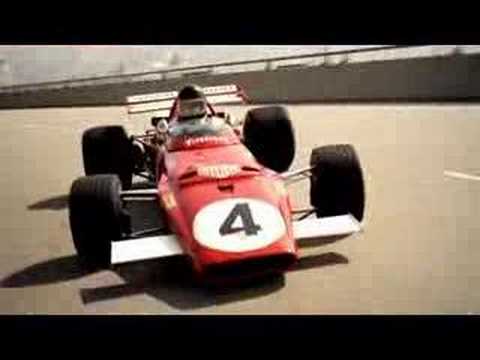
This is just too cool not to share.  Let’s take a couple minutes away from how the world and the Church are both flying apart at the seams and simply enjoy this.  Even if you are not really into cars (and I’m not), this is a pleasure to watch.

It is a gasoline commercial, but… not.  Real classic Ferrari models on real streets of great cities, doing their Ferrari thing.

Listen to the different sounds of the engines from different periods.

I’d turn the volume waaaaay up.

YouTube thumbnailYouTube icon

I still want that Veyron, but this was pretty spiffy.

Posted in Just Too Cool | Tagged
17 Comments

Of Latin oddities

I can’t resist this one from Dr. Peters:

Lighter fare: [thanks for the homage] can bad Latin save a papacy?
by Dr. Edward Peters

I got an odd one a few days ago (okay, I get lots of odd ones, but this one kinda struck me), namely: that Pope Benedict XVI’s resignation was invalid because of mistakes he (allegedly) made in the Latin of his resignation letter. [Yes, that’s odd.] My correspondent claims two medieval Church laws in support of the claim, one of which I could track down: Lucius III (reg. 1181-1185), dec. Ad audientiam, c. 11, X, de rescriptis, I, 3 (or Friedberg 20 fbo those for whom QLD citations are impenetrable).

Now, granting that Ad audientiam does attach negative canonical consequences to bad Latin, the context of that question was documents whose Latin was so bad it that raised questions of authenticity (this, of course, being a practical concern in an age of ecclesiastical forgeries). Looking lightly at some commentary on Lucius’ decretal (always fun to have an excuse to do that!), [Who doesn’t turn to Lucius for light reading?] it seems that debates arose over how bad ‘bad’ needed to be before it was too bad, over what kind of bad could be ignored or rehabilitated, and so on. Interesting stuff, granted, but it’s all moot.  [In a related issue, how bad do a cardinal’s arguments have to be before they can’t be rehabilitated?]

When the great Gasparri [Cardinal Pietro] prepared canon law for its first codification at the beginning of the twentieth century, he had before him, among other things, the whole of Gregory IX’s decretal law (which contained Lucius’ letter on bad Latin along with nearly 2,000 other provisions on nearly 200 other canonical topics). And guess what?Ad audientiam did not make it into the 1917 Code, although almost every other norm de rescriptis did, in some form or another, get carried into codified law. Nor was Ad audientiam resurrected for the 1983 Code.

What the 1983 Code does say, as did the 1917 Code, is this: “Only those laws must be considered invalidating … which expressly state that an act is null …” (c. 11). Because no canon of the 1983 Code, under which Benedict XVI submitted his resignation (c. 332 § 2), addresses the quality of the Latin used in papal documents, let alone does any canon make the Latinity of papal documents go to their validity, I say, odd question answered: bad Latin does mean that one must remain pope. [Whew!  Otherwise we might be in serious trouble in a few more years.]

PS: Now that we’re thinking about it, winking at bad Latin (assuming btw that Benedict’s was bad Latin, I wish I could write it as well!) probably makes sense these days. Consider: when the 1983 Code came out, it was marred by more than 100 typographical errors. I would hate to think we’ve all been spinning our canonical wheels since then!

PPS: Don’t even ask about mistakes on the Vatican website.  [Pretty awful.  I recently had to do some proofreading for some Latin Church documents for a book and… sheesh.   They sometimes scan, you see, with OCR and the people posting the texts don’t know Latin and/or don’t proof read.]

There are all sorts of funny stories out there about clerics and their lack of Latin.  My favorite is about the simple country priest who walked out to meet the bishop who was riding out on the appointed day for a parish visitation.  As the parish priest drew close to the bishop and the rest of his retinue, to the astonishment of all, Father, after greeting the bishop bowed low to the bishop’s horse.   “Why, Father,” quoth the bishop, are you bowing to my horse?”  The priest, momentarily flummoxed, responded “Your Grace, do we not say every day during Holy Mass, ‘equum et salutare‘?”

brrrrDMP

Yes, folks, be sure to tip your waitresses.  I’m at HaHa’s in Cleveland next week.

Posted in Lighter fare | Tagged , ,
18 Comments

I am not making up this coffee flavor!

Okay… I just had to post this.

I saw at Mystic Monk that there is now a flavored coffee (if you are into that sort of thing) called… and I am not making this up…

Snickering Monk Candy Bar.

Click HERE

And don’t forget the seasonal Pumpkin Spice and their now widely sough Monk Shots! They may be billed as “single serve” but some of you readers have written that they get more from each one, since they seem to have more coffee in them than other K-Cups.

Refresh your coffee supply now with Mystic Monk Coffee and help the Wyoming Carmelites build their new monastic complex!

Besides, it’s swell!


Posted in The Campus Telephone Pole | Tagged ,
8 Comments

Scratching my head about the bishop in Paraguay

I will be the first to admit that what we do not know about this case, could fill volumes.  However, there are a few curiosities that leave me scratching my head.

Here is a story form CWN about the Paraguayan bishop recently relieved of his mandate by Pope Francis.

Keep in mind that while the Supreme Pontiff exercises full jurisdiction in the Church and that his decisions have no appeal, should the Supreme Pontiff want there to be sound rule of law through the Church at every level, he, too, will observe the laws of which he is the Legislator.  So, the removal of bishops by the Pope should have some canonical basis.  It doesn’t have to, technically, but it really should.

Let’s have a look:

Bishop Rogelio Ricardo Livieres Plano, [Argentinian, by the way, and Opus Dei] who was removed from his post in Paraguay, has issued a bitter complaint, charging that other bishops conspired against him [which is plausible] and saying that Pope Francis “must answer to God” for his removal.  [Which is true.  We all must answer to God for all that we do or fail to do that we ought.]

The deposed bishop, in a letter to Cardinal Marc Ouellet, the prefect of the Congregation for Bishops, said that he was being “persecuted” for his orthodoxy, [!] and complained that he had not been given an opportunity to defend himself.

The bishop’s letter, which was leaked to the media in Paraguay, [who knows by whom] said that the action against him was “unfounded and arbitrary.” He angrily charged that although Pope Francis has spoken often about “dialogue, mercy, openness, decentralization, and respect for authority of the local churches,” he did not give Bishop Livieres a chance to “clarify any doubts” about his ministry. [In my discussions with Argentinians recently, I have come to learned, from explanations made by the same Argentinians, that their dialogue tends to be blunt even to the point of rancorous.]

Father Federico Lombardi, the director of the Vatican press office, observed that the bishop’s letter was “a very violent reaction.” He remarked to reporters: “Maybe it is easier to understand why there was a problem.” [No.  That actually doesn’t help at all.  “Blunt speech” and “voicing an opinion” are not a canonical basis for removal from office unless the opinion is obviously heresy.]

Father Lombardi had earlier said that Bishop Livieres had been removed from office because of his discordant relations with the other bishops of Paraguay. [Again, how is “not getting along with others” a canonical basis for removal from office?] Most observers have agreed that the case pivoted on the bishop’s decision to promote a priest who had been characterized by an American diocese (Scranton, Pennsylvania) as a danger to children. [And yet Fr. Lombardi clarified the other day that the case of the Vicar General was not a major element in the decision!  So, which is it?  By the way, that choice for VG was really a bad move.  No question.  What was he thinking?]

I am left with some questions, but it is unlikely that we will get answers.  I am not sure we need answers.  However, since some answers that don’t add up are being offered, I am left scratching my head.

Don’t get me wrong.  I don’t have a problem with the removal of bishops who are a disaster.  It may be that removal of this bishop was surely founded on canonical grounds and for good reasons.  But when the reasons given publicly don’t add up very well, I start to wonder what’s really going on.  Removal of a bishop is a serious event.  It should make everyone stop and think about their own conduct in their own state of life.

This is an “examine your conscience” moment for all of us.

Oh… and another thing.  This Argentinian bishop serving in Paraguay will be criticized by liberals for fighting back.  But those same liberals praised the Bishop of Toowoomba in Australia for getting all feisty.   He, you see, was “prophetic”, but the Paraguayan must be an “ideologue”.

Moderation queue is ON.

Posted in The Drill | Tagged , ,
29 Comments

Kneeless in Seattle

St. Margaret beating the Devil with a hammer. A bit fuzzy…but hey!

From Fr. Carota’s blog:

I received this text message yesterday (Sunday) from a young man who is a member of “Juventutem” and had to go to Seattle for work.   When he went to mass there, this is what happened:

“In the Seattle Cathedral I was just denied communion kneeling and made a scene of.  He eventually, after a minute standoff scoffed, said I ought to learn obedience, and then threw the Sacred Host sideways into my mouth.”

“For every knee shall be bowed to me, and every tongue shall swear.” Isaiah 45:24

“That in the name of Jesus every knee should bow, of those that are in heaven, on earth, and under the earth:”  Philippians 2: 10.

Very ironically, the exact above reading (from St. Paul to the Philippians) was read at the Novus Ordo Mass this young man went to where he was spiritually abuse by the priest.   St. Paul is saying we need to kneel at only the name of Jesus.  What does that mean we need to do in front of the the presence of Jesus in Holy Communion which is a billion times more holy than on His Name.

God compelled the devil to show himself to the Desert Father Abba Apollo.  He was ugly, black, skinny limbs and had NO KNEES to adore God on.  Pope Benedict said: “The inability to kneel is seen as the very essence of the diabolical”.

[…]

That priest didn’t get the memo.

Redemptionis Sacramentum states:

[91.] In distributing Holy Communion it is to be remembered that “sacred ministers may not deny the sacraments to those who seek them in a reasonable manner, are rightly disposed, and are not prohibited by law from receiving them”. Hence any baptized Catholic who is not prevented by law must be admitted to Holy Communion. Therefore, it is not licit to deny Holy Communion to any of Christ’s faithful solely on the grounds, for example, that the person wishes to receive the Eucharist kneeling or standing.

Posted in Be The Maquis, Cri de Coeur, Liberals, Liturgy Science Theatre 3000, Our Catholic Identity | Tagged , , ,
85 Comments

FOLLOW UP: Good news on the Spanish Front! – Spanish TLMs in D. Raleigh a success!

Do you recall that just a while back I posted about a parish initiative launched by Fr. Paul Parkerson in Dunn, North Carolin in the Diocese of Raleigh?  HERE

In his parish he implemented two TLMs on Sundays.  One will have English re-readings and sermon, the other SPANISH.

This last weekend was the maiden voyage of this project.  I was curious as to how it turned out.

No sooner thought, than received.

One of Fr. Parkerson’s parishioners sent me a copy of a letter she sent to Fr. P.  My emphases:

I wanted to thank you for making the bold, revolutionary, but most of all, pastoral step of offering the Holy Mass in the extraordinary Form twice this past Sunday, one Holy Mass with repeated readings and homily in English and another with repeated readings and homily in Spanish. My initial assessment of the changes to the schedule and the “form” of the Masses this past weekend was that it was a great success.

When the upcoming transitions in the Mass schedule were first announced, there was a great deal of enthusiasm among the parishioners. Many offered to donate Spanish-Latin Missals and more English-Latin Missals, as well. Several new people have joined the choir/schola and have offered to sing at both Masses. For the first time, though, there is actually a choir made up of primarily Latinos, who were grateful and visibly moved to be part of the Mass in the Extraordinary Form on Sunday. Some of our more seasoned young men who serve at the Altar have offered to help train new boys so that there would be enough altar servers to serve both Masses on Sundays. Some of the fathers in the parish have generously volunteered to found a chapter of the Knights of the Altar and there is a real eagerness amongst not only English speaking boys, but also Spanish speaking boys who anticipate learning how to serve the Mass in the Extraordinary Form on a regular basis.

My biggest surprise on Sunday, the first Sunday of our new Mass schedule, was that both Masses were well attended by both English and Spanish speaking parishioners. We gave out 100 Spanish-Latin Mass Missals and also used all of our English-Latin Missals at both Masses. Both Masses were beautiful and reverent but there was a unity that we had not experienced here prior to Sunday. It was the Latin language and the ancient Form of the Mass that provided us all with the opportunity to worship together. Kneeling together, I caught a glimpse of the Church, the One Holy Church, what it was in the past and what it can be now (thanks be to God) and what it needs to continue to be in the future!

There was a true communion, not only with the people of our own parish, but also with the whole Church here on earth, with those in purgatory and with the Communion of Saints.

May God continue to bless you and the flock you serve here at Sacred Heart.

Fr. Z kudos to Fr. Parkerson.   In the Extraordinary Form we have a common patrimony.

I have written occasionally about the need to reach out through the traditional forms of our Catholic Faith to the Latino communities with whom we share our places of worship.  We have to bring communities together.  A while back I posted a question about Extraordinary Form resources in Spanish HERE.  There were good responses.  And recently I posted about a beautiful new Latin and Spanish hand missal from Angelus Press HERE.


Posted in "How To..." - Practical Notes, Brick by Brick, Fr. Z KUDOS, Hard-Identity Catholicism, Just Too Cool, Linking Back, New Evangelization, SUMMORUM PONTIFICUM, The future and our choices | Tagged , , , ,
9 Comments

¡Hagan lío! Taking HIM to the streets!

From the Catholic Sentinel:

CHARLOTTE, N.C. — Attendance at Mass remains central to Catholics’ faith because they must be nourished by Jesus’ body and blood or they will not remain strong Catholics, said Bishop Peter J. Jugis of Charlotte.

“Take a moment to ask yourself: Why do you go to Mass?” he said in his homily for the closing Mass of the 2014 Eucharistic Congress in Charlotte.

He emphasized that Catholics need the Eucharist to remain focused on Christ and keep their faith alive.

“You need the Eucharist. You need Jesus. If you think you can live a Christian life without Jesus, you are mistaken,” he said at the Sept. 20 Mass. “You are not really living. A Catholic without the Eucharist will not remain a strong Catholic for long. One’s faith will become watered down, if he is not constantly being fed by Jesus.”

The 10th annual congress, organized by the Diocese of Charlotte, focused on the theme “Behold, I make all things new,” from Chapter 21, Verse 5 of the Book of Revelation. It drew an estimated 13,000 people to the Charlotte Convention Center for Mass and eucharistic adoration, confession, educational talks and music Sept. 19-20. [13k!]

“Sometimes if we are not careful,” Bishop Jugis said in his homily, “our Mass attendance can become routine,” a habit that Catholics don’t really think about.

[…]

During the congress, 7,000 Catholics participated in a eucharistic procession through downtown Charlotte.

Marie De Mayo, a member of St. Gabriel Church in Charlotte, recalled attendance at the first congress, when 3,500 Catholics processed through downtown — an unusual sight for the majority Protestant region.

“As the procession was moving along Tryon Street that first year, there were a lot of curious stares from non-Catholics, construction workers hanging on windows,” she told the Catholic News Herald, Charlotte’s diocesan newspaper. “Even policemen did not know what to make of the bishop, priests and devout Catholics in total devotion, silence and prayer.”

“As the Lord was passing and families knelt down, there was a hush of the real presence of Jesus blessing the people and the city,” she added.

Now, she said, “after 10 years, the numbers have increased greatly as more Catholics participate.”

Meno chiacchiere – più processioni. … Less jabbering – more processions.” 

Posted in ¡Hagan lío!, "How To..." - Practical Notes, ACTION ITEM!, Be The Maquis, Brick by Brick, Fr. Z KUDOS, Hard-Identity Catholicism, Just Too Cool, Our Catholic Identity, The Coming Storm, The future and our choices | Tagged , , , ,
6 Comments

Card. Kasper gives YET ANOTHER interview to America Magazine and an Argentinian daily

Walter Card. Kasper, author of a proposal for the civilly remarried to receive Communion – and thus to create an under-class of Catholics, “tolerated but not accepted” Catholics, has given an interview – yet another – to Amerika, which has been an open and biased cheerleader for Card. Kasper’s notions, and La Nación, a major daily in Argentina.  (No, I’m sure it’s just a coincidence that he chose a paper that the Pope is likely to follow.)

Q. There is much interest in this synod, especially regarding how it will deal with the question of whether there will be some opening towards Catholics who are divorced and remarried.

A. [KASPER] Yes, this interest in church questions is a positive thing and we should be grateful for it. But the problem is that some media reduce everything at the synod to the question of Communion for the divorced and remarried people. The agenda of the synod is much, much broader and concerns the pastoral challenges of family life today. The problem of divorced and remarried is one problem, but not the only one. Some media give the impression that there will be a breakthrough and start a campaign for it. [Like… Amerika?  Which has been Card. Kasper’s official English Stratocaster?] I too hope there will be a responsible opening, but it’s an open question, to be decided by the synod. We should be prudent with such fixations otherwise, if this doesn’t happen, the reaction will be great disillusion.  [And who can say that that isn’t among the objectives of the Left?]

Q. Some cardinals and bishops seem to be afraid of this possibility and reject it even before the synod meets. Why do you think there is so much fear of a development in the church’s discipline?

A. I think they fear a domino effect, if you change one point all would collapse. That’s their fear. This is all linked to ideology, an ideological understanding of the Gospel that the Gospel is like a penal code.  [?!?  No, that’s not nasty.  Keep reading.]

But the Gospel is, as the Pope said in ‘The Joy of the Gospel’ (Evangelii Gaudium), quoting Thomas Aquinas, the Gospel is the gift of the Holy Spirit which is in the soul of faithful and becomes operating in love. That’s a different understanding. It is not a museum. It is a living reality in the church and we have to walk with the whole people of God and see what the needs of the people are. Then we have to make a discernment in the light of the Gospel, which is not a code of doctrines and commandments. [So, Gospel = joy.  Doctrines and commandments = … ?]

Then, of course, there is also a lack of theological hermeneutics because we cannot simply take one phrase of the Gospel of Jesus [Which we know mostly from the Gospels of MML&J.] and from that deduce everything. [We can’t take just one phrase… even if it’s crystal clear and the words of the Lord Himself?] You need a hermeneutic to see the whole of the Gospel and of Jesus’ message and then differentiate between what is doctrine and what is discipline. Discipline can change. So I think we have here a theological fundamentalism which is not Catholic.  [I think he just suggested that defense of the non-admission of civilly remarried Catholics to Communion, based on a phrase – never mind that it is the Lord speaking – is “theological fundamentalism”.  Am I wrong?]

Q. So you mean you cannot change doctrine but you can the discipline?

A. Doctrine, in so far as it is official binding doctrine, cannot change. So nobody denies the indissolubility of marriage. I do not, nor do I know any bishop who denies it. But discipline can be changed. Discipline wants to apply a doctrine to concrete situations, which are contingent and can change. So also discipline can change and has already changed often as we see in church history. [What is the message in this?  Okay, we teach that marriage is indissoluble.  Now that we have admitted that, you who are living in civil re-marriage can just pretend that the doctrine of indissolubility doesn’t apply to you because, if it did, you would feel bad.  Is that it, or did I get that wrong?]

Q. What did you feel when you learned that this book of the five cardinals was being published which attacks what you said?

A. Well first of all everybody is free to express his opinion. [Or…maybe not! We all know that this isn’t entirely true in the Church.] That is not a problem for me. The Pope wanted an open debate, and I think that is something new because up to now often there was not such an open debate. Now Pope Francis is open for it and I think that’s healthy and it helps the church very much.

Q. There seems to be fear among some of the cardinals and bishops because as the Pope said we have this moral construction which can collapse like a pack of cards.

A. Yes, it’s an ideology, it’s not the Gospel.  [?!? Read that again.  It’s an “ideology”.]

Q. There’s also a fear of the open discussion at the synod.

A. Yes, because they fear all will collapse. But first of all we live in an open pluralistic society and it’s good for the church to have an open discussion as we had at the Second Vatican Council. It’s good for the image of the church too, because a closed church is not a healthy church and not inviting for the people of the day. On the other hand when we discuss marriage and family we have to listen to people who are living this reality. There’s a ‘sensus fidelium’ (‘sense of the faithful’). [The problem is that for there to be a “sensus fidelium“, the sensus is of the fidelium… the faithful.  “The faithful” aren’t just the rank and file, just lay people.  They are also the clergy.  Also, they must be “faithful”, which doesn’t mean simply that they have some opinion or other, more or less well-formed.  Moreover, in no way can “sensus fidelium” be a matter of polling or majority opinion.] It cannot be decided only from above, from the church hierarchy, [nor can the hierarchy be excluded!] and especially you cannot just quote old texts of the last century, [Like that outdated Catechism of the Catholic Church or the even older Familiaris consortio.] you have to look at the situation today, [and then again, and again and again… tomorrow and tomorrow and tomorrow…] and then you make a discernment of the spirits and come to concrete results. I think this is the approach of Pope Francis, whereas many others start from doctrine and then use a mere deductive method. [I think he just contrasted “discernment” and “deduction”. Is that what you read?]

Q. In a sense the synod is like a replay of the Second Vatican Council.

A. Yes, I think it is a very similar situation. Immediately before the Second Vatican Council there were Roman theologians who had prepared all the texts and expected the bishops would come and applaud and in two or three weeks it would all be over. But it didn’t happen in this way, and I think it will also not happen this time.

Q. In an Italian daily, Il Mattino, you are reported as saying that you think the real target of these attacks is the Pope not yourself.

A. Maybe it was a bit imprudent of me to say it. But many people are saying this; you can hear it on the street every day. I myself do not want to judge the motives of other people. [Watch this!] It is obvious that there are people who are not in full agreement with the present pope, [See what he did there?  The people who are defending the Church’s doctrine and discipline are against the Pope. See?] but this kind of thing is not totally new, it happened also at the Second Vatican Council. Then there were people against the ‘aggiornamento’of John XXIII and Paul VI, though perhaps not in this organized way. Even Cardinal Ottaviani, the Prefect of the Holy Office at that time, was against the intentions of the majority of the Council. [That was a dig at the present Prefect Card. Müller, head of the CDF, he being in the role of Card. Ottaviani and Francis in the role of John XXIII or Paul VI.]

Q. Many analysts think it’s not a coincidence that this book comes now precisely on October 1. There has been resistance to Francis from the beginning, but this seems a more organized kind of resistance.

A. Yes, it is a problem. I do not remember such a situation where in such an organized way five cardinals write such a book. [What this!] It’s the way that it’s done in politics but it should not be done in the church. It’s how politicians act, but I think we should not behave in this way in the church.  [Look in the mirror, Your Eminence.  You yourself put out a book.  Card. Kasper has been incessantly giving interviews.  That’s what politicians do, even as they give stump speeches.  Moreover, it was affirmed, above, that Pope Francis wanted discussion.  Card. Kasper said that himself.  It is precisely through books and articles, rather than through interviews with secular newspapers that true, working theologians discuss and debate.  Let’s review: “The Pope wanted an open debate.”  Card. Kasper now has the experience of open debate as desired by Pope Francis.  His arguments are on display for the world to see.  The other books that are coming, the “Five Cardinals” book, the “Pell intro” book, the scholarly articles in Communio, present their responses and counter arguments.]

Q. In recent weeks the Pope said we must read the signs of the times. He wants the synod to do this.

A. Yes, to read the signs of the times was fundamental for the Second Vatican Council. I cannot imagine that the majority of the synod will be opposed to the Pope on this point.

[But wait!  There’s more.  Now the press.. the media we were warned about, above, as creating expectations and conflicts that can lead to disillusionment, takes up the Cardinal’s water bucket…] Q. In recent weeks too Pope Francis, in his homilies, has spoken again and again about mercy, and insisted that pastors must be close to their people, and avoid having a closed mind… it seemed as if he was referring to people like the five cardinals and supporting you on the question of mercy.

A. I think there is often a misunderstanding on what mercy is all about. Some are thinking that mercy is cheap grace, and ‘light’ Christianity. But it is not that, I think mercy is a very demanding virtue; it is not a cheap thing. It does not take away the commandments of the Lord; that would be absurd. But as it is the fundamental virtue according to St Thomas Aquinas, mercy is a hermeneutical key for interpreting the commandments.  [What just happened?  Did he do anything to dispel the leading suggestion of the questioner? That the cardinals who are responding to Kasper are, in the Pope’s eyes “closed minded”?  Indeed, he did not.  Also, note the use of “hermeneutic” again.  See what he did?  Earlier, Kasper says that his opponents are fundamentalists, who have an “ideology”, which is about the worst thing you can have, sort of like ecclesiastical Ebola.  Card. Kasper, on the other hand, has a “hermeneutic”, by which he interprets the Gospel of Jesus (with or without phrases from Matthew and those other guys).  Then he invokes St. Thomas Aquinas.  I suspect that Aquinas would find the proposal that those who are living in an adulterous relationship are properly disposed to receive Communion simply absurd.]

Q. Some were surprised that the Pope appointed a number of very conservative participants to the synod?

A. I think he did this because he didn’t want to be criticized by selecting only those who are in favor of one position. He wants an open discussion; he wants the other group too to have their voice. He wants to be fair. He does not want to exclude anybody, but to include everybody and have all participate in the discussion. He wants to hear everyone, and everyone should have a voice. And I think this is very positive.  [Is this a different person responding now?]

Q. His understanding is that God speaks through the people and their real situations. [?  Okaaaay… and… ?]

A. Of course. That’s the theological conception in the last book of the New Testament: Listen to what the Spirit is saying to the Churches! In the synod there should be a listening and prayerful atmosphere.

Q. Coming back to the question of communion for the divorced and remarried. Is the communion the prize for the perfect one or is it something to help the sinner?

A. We are all sinners. Nobody is really worthy to receive Holy Communion. [Nobody is worthy….  And, therefore, we shouldn’t worry about grace and mortal sin?] Communion has a healing effect. Especially people living in difficult situations need the help of grace, and need the sacraments. [John 8:11.   Ooops.  That’s just one phrase.  Here’s another 1 Cor 11:27-29.]

Q. So in terms of the sacraments, do you think that at the end of the day the decision should be up to the individual or the couple?

A. No, the sacraments aren’t only private events but public celebrations of the whole Church. The admission to the Eucharist goes through baptism and, after sin, through the sacrament of penance, that is, confession and absolution. [Which requires – from the conscious, at least – for validity a firm purpose of amendment.] Absolution is an official act of the Church, a juridical act. [Watch this…] Therefore divorced and remarried people should find a good priest confessor [do you have the players in mind so far?] who accompanies them for some time [… doing what, exactly?  Hearing their confessions, as a confessor?  Just talking to them?] and if this second, civil marriage, is solid [“solid” in what sense? “Solid” over and against a valid previous union?  Is the Cardinal suggesting that the civil marriage approved by the state now bequeaths to us some spiritual, theological data to consider?  That the civil marriage says something about the validity of the first (actual) marriage?  That the civil marriage says something about .. what… spiritual character of the second “marriage”?] then the path of new orientation can end with a confession and absolution. [And the couple is still living together… right?  With or without sexual relations?] Absolution means admission to Holy Communion. I do not start immediately with the question of admission to communion but with a penitential path. This does not mean to impose special acts of penance because normally these persons are suffering a lot; a divorce is not such an easy thing. It’s suffering. In this situation they need the help of grace through the sacraments and if they have an earnest desire and do what they can do in their difficult situation the Church should find ways to help them in a sacramental way. [This, friends, is dangerous ground indeed.]

Q. This then is a development of pastoral practice.

A. Yes, it is pastoral practice ending in a sacramental practice. [Oh no, it’s only pastoral, it’s not doctrinal.  And so what will this mean to all the people who are preparing to marry in the Church?  They will hear Father explain that marriage is for life, indissoluble.  They will then look at each and, knowing that the divorced and remarried go to Communion all the time, that this talk about indissolubility and “for life” is a shame, will just smile and nod their heads.] The Church by its nature is a sacramental reality. It’s not just pastoral counselling, it’s a sacrament and the sacrament has its own value. To say, “I absolve you” is different from giving good human counsels. It is saying: God says Yes to you and accepts you anew; you have a new chance.

[…]

There is a lot more of this stuff.  Go look at it yourselves.

By now it is clear that I don’t agree with His Eminence.

As a former Lutheran, my antennae are red hot.  This reminds me of what Luther would respond when challenged.  Luther, and lots of catholic liberals today, will appeal to a “Gospel” which is somehow over and against, beyond the Church.  They create another “magisterium” which contrasts with the Church’s institutional Magisterium.  They are “prophetic” and “of the people” which is the true locus of the Holy Spirit, whereas others are hierarchical institutional, hide-bound, book-bound, facing only the past, ideological and fearful.

I’m turning on the moderation queue.


Posted in One Man & One Woman, Our Catholic Identity, The Drill | Tagged , , ,
45 Comments