SMS et Pipationes … LATINE! MVR!

Picked up via rogueclassicism and a Google+ page:

+Lauren Stein suggested coming up with a list of Latin abbreviations for texting. I’m pasting in here some ideas for that which already surfaced at the eClassics Ning a couple of years ago: please chime in if you are a Latinist who has some fun texting abbreviations to share and let’s see what we can come up with! I’m also keeping the list over at the Bestiaria blog: where you can leave anonymous comments, no login or anything required. :-)

QC: Quam citissime. = ASAP
AFP: Amici fidelissimi perpetuo. = BFF
BT: Brevi tempore. = BRB
RA: Redibo actutum. = BRB
NCOQL: Ne credas omnibus quae legis. = DBEYR
FIS: Fac ipse sibi. = DIY
NS: Nescio. = DK
SHM: Sententia humili mea. = IMHO
UEQO: Ut ego quidem opinor. = IMHO
OME: Opus mihi est. = ISO
LT: Ludo tantum. = JK
FMC: Fac me certiorem. = LMK
MVR: Magna voce ridens. = LOL
ROR: Rotundo ore rideo. = LOL
VR: Valde ridens. = LOL
SC: Sine cura. = NP
IMV: Iam mihi video. = OIC
PDI: Proh di immortales. = OMG
HPR: Humi provolutus ridens = ROFL
HPC: Humi provolutus cachinnans = ROFLOL
VVTM: Vae, vae tibi maledicto. = STBY
GF: Gratias futuras. = TIA
NMD: Nimis mihi dicis. = TMI
TCPM: Tecum colloquar postmodo. = TTYL
IATG: Immortales ago tibi gratias. = TYVM
QNI: Quidnam Inferorum. = WTF
AMSV: Apud me sis volo. = WYWH

AAV: Ave atque vale.
CUV: Cura ut valeas.
DTA: Di te ament.
FFF: Felix, faustum, fortunatum.
INC: Ista non curo.
MC: Mea culpa.
MMC: Mea maxima culpa.
MPD: Me pudet dicere.
MTE: Me tibi excuso.
MVE: Macte virtute esto.
NL: Non liquet.
RTC: Res tuas cura.
SD: Salutem dicit.
SPD: Salutem plurimam dicit.
SSE. Satisne sanus es?
SVBEEV: Si vales bene est ego valeo.
UBD: Ut breviter dicam.
UR: Uti rogas.
FDA: Facilis descensus Averno.

Posted in "How To..." - Practical Notes, Just Too Cool, Lighter fare | Tagged , , , ,
10 Comments

Priest physically assaulted for celebrating TLM and bringing back sacred tradition

The liberal approach.

Our friends at Rorate posted a translation of an article in Italian about an incident in Ronta, near Florence.

My emphases and comments:

You have been tough, but we will smash your head. Signed, Your friend Satan”. That was one of several threatening messages sent to Father Hernán García Pardo, parish priest of San Michele, in Ronta [Mugello region of the Province of Florence, Tuscany]. His fault [was] that of celebrating the Latin Mass, liberalized by Benedict XVI in September 2007.  [NB: “The Latin Mass” can also be the Novus Ordo.]

The warnings, which had been recurrent for some time, had not made the priest, who despite everything has continued to say Mass according to the ancient rite, give up. The last chapter [took place] last Wednesday, when he was beaten up by a ‘faithful’ in the town’s rectory in the presence of his aged mother. The beating led to bruising on his back; having been sent to the emergency room of Borgo San Lorenzo, he was medicated.

The news item was published today in the Giornale della Toscana; the accusations made against Father Hernán are those of scattering the flock; above all, he is not forgiven for distributing communion in the mouth [to the] kneeling [faithful], instead of on the hand, in the same manner as Benedict XVI. For others, the Italian-Argentine priest has only brought back some sacred austerity to the parish, excluding guitars from the functions and bringing back to within the walls of the church the ancient Gregorian chant. …

This is a dramatic example of someone who was more than likely not taking his meds.  But this is how liberals work.  They use violence, either by words or by actions.   This is the case in many spheres of life.

Say a prayer for the disturbed man who raised his hand against the Lord’s anointed.

BTW… the rather melodramatic threat of the disturbed man doesn’t seem so melodramatic when you know that real Satanism is on the rise in some parts of Italy.

Posted in Our Catholic Identity, The future and our choices, Throwing a Nutty |
32 Comments

QUAERITUR: Eucharistic “Danny Boy” Prayer. Fr. Z rants.

From a reader:

That is strange.

Last weekend we had a visiting priest and something strange happened.
He sang the first part of the Eucharistic prayer to the tune of “Danny Boy”. Well, needless to say most of us were a little more than thrown off by this priest’s crooning. He had a good voice but it was so strange. After mass it was explained to several of us that chanting is acceptable and this was just another musical version of the prayer, like the chant. Can a priest set the prayers of mass to whatever tune it suits him?

Weird.  And wrong.

Singing the Eucharistic Prayer to the tune of “Danny Boy” is reason #24456 for why we needed Summorum Pontificum.

And would I be right in assuming that this was a Mass “facing the people”?  And that the priest was….not particularly young?

While there are approved liturgical books with musical notation for the Eucharistic Prayer, there is no one approved way to sing it.  Sadly, some priests and bishops have made up their own versions.  Results vary.  Priests are wise to stick to approved books, in my humble opinion, or at the very least stick closely to the model of sacred chants of our tradition.

Music for Mass is not a mere ornament, external to the liturgical action.   We cannot simply change it arbitrarily.  It is of the essence of the liturgical action, and integrating part of the liturgical action.  Music for Mass must be artistic and sacred.  The texts which are set should be sacred texts proper for liturgical worship.  The music should be art and in an idiom which is recognizable as sacred.  That is a tricky issue, of course.  Allow me to illustrate by simplification.

“Danny Boy” has a nice, sentimental tune, but there is nothing of the sacred about it.  When you hear Danny Boy, you think of Irish pubs.  And the more pints you have, the better you are at singing it, alone or with others.  When you hear a Sousa March you think of a parade or sporting event.  You don’t, however, go to a parade or football stadium and expect to hear Gregorian chant… unless of course that parade is a liturgical procession.   You don’t want Sousa in church or chant at the ball game.

“Danny Boy” doesn’t belong at Mass.  No matter how well the priest could sing it, the tune of Danny Boy has the wrong idiom for Mass.

I have often wondered if, in the case of priests who make up their own idiosyncratic thing, they are not making Mass about themselves.  “Look at me!  Listen to how clever I am!”

It seems to me that, as younger men come up in the ranks, men who are open also to our older, traditional Form of Holy Mass, this sort of thing will quickly fade.

Priests have to get themselves out of the way of the liturgical action, of what the Lord – the true Priest at Mass – is doing.

In Sacramentum caritatis 23 we read that:

… priests should be conscious of the fact that in their ministry they must never put themselves or their personal opinions in first place, but Jesus Christ. Any attempt to make themselves the centre of the liturgical action contradicts their very identity as priests. The priest is above all a servant of others, and he must continually work at being a sign pointing to Christ, a docile instrument in the Lord’s hands. This is seen particularly in his humility in leading the liturgical assembly, in obedience to the rite, uniting himself to it in mind and heart, and avoiding anything that might give the impression of an inordinate emphasis on his own personality.

Posted in "How To..." - Practical Notes, Liturgy Science Theatre 3000, Our Catholic Identity, Wherein Fr. Z Rants | Tagged , , ,
63 Comments

Exorcism of a Community

Troops and officers who go into battle would do well to familiarize themselves with all the weapons at their disposal.  They should know a) that they have them, b) what they do and c) how to use them and when.  If they don’t know these things, when the fighting begins, they will probably be wiped out or routed, which can lead to the same end.

From a priest (edited):

I was appalled by the report you published from Australia [About a legislative attack on the Seal of Confession.]. I read somewhat on the Irish brouhaha that one of the ecclesiastical spokesmen said that this would go away once tempers cooled and reason once again dominated their government. I remember praying that this would be true. I also followed some of the abundant vitriol that was poured out upon Archbishop Chaput and the Vatican on the announcement of his accession to Philadelphia and was also horrified.

You have been asking for prayers and warning against the devil at work among us. I am familiar with this and you have my prayers. As I read though, the full realization came to me that all the horrors of the morals crisis in the Church and the blunders of the Church in dealing with the situation, the vicious attack on the bishops and clergy, guilty and innocent, the poor condition of the faith among the laity since Vatican II was so derailed and now the opening attack on the Sacrament of Confession and ultimately on the Sacrament of Holy Orders and the Authority of the Church – all of this is a well-planned and orchestrated plan of battle long since begun by Satan to bring down the Church and spit in God’s face. I am no alarmist and no believer in conspiracy theories but in this the pieces have suddenly come together for me and the fog has cleared – I am seeing the big picture. I was fooled into thinking that all this was disconnected vileness.

I wish we had never abandoned the prayers at the end of Mass, and we need them again! When I was facing strong opposition in my former parish, I went to my Bishop and asked permission to quietly and privately pray annually the “Exorcism of a Community” from the old Roman Ritual over my parish. It helped considerably and I suggest the same to priests if their bishops will grant permission.

Perhaps bishops would do the same for their dioceses!

Fraternally yours…

Perhaps the first step of a “promotion of a New Evangelization”?

It is good to find a priest who is aware of these weapons of spiritual warfare.

In the pre-Conciliar Rituale Romanum, in Part XIII on exorcism, in Chapter III, there is a rite of “Exorcism of Satan and the Fallen Angels”.

Chapter II has the rite for a particular person,  but Chapter III is for a community or locality.  The rite can be used by bishops or by priests who have permission.  Deacons cannot use it.  Lay people cannot do it and should never use it.  This is something which requires the priestly character.  In other words, this is one for the officers.

We are members of the Church Militant.  Under the banner of our King we are marching to our homeland through the territory which has its own Prince (cf. John 14:30-31), the Enemy.  There will be skirmishes along the way, attacks from spiritual terrorists, and pitched battles.

Posted in "How To..." - Practical Notes, Mail from priests, New Evangelization, Our Catholic Identity | Tagged , ,
24 Comments

26 July: Sts. Joachim and Anna, parents of Mary, Mother of God, grandparents of the Lord

Today is – in the reformed, post-Conciliar calendar – the feast of both Sts. Joachim and Anna, the parents of the Blessed Virgin Mary, grandparents of the Savior. In the traditional calendar it is the feast of St. Anna.

Here is their entry from the 2005 Martyrologium Romanum.

Memoria sanctorum Ioachim et Annae, parentum immaculatae Virginis Dei Genetricis Mariae, quorum nomina ab antiquis traditionibus christianorum ex Iudaeis servata sunt.

I have relics of both Joachim and Anna.

Also sharing the reliquary are St. Nicholas (yes, Santa Claus) and St. Paul, the Apostle, and St. Blaise, of throat blessing fame.

Maybe someone would like to render the Latin of the 2005 MartRom entry into perfect, smooth English?

Posted in Saints: Stories & Symbols | Tagged ,
13 Comments

ReplayTV redivivus

Do any of you readers use the great DVR ReplayTV?

Posted in "How To..." - Practical Notes | Tagged , ,
8 Comments

Monday Supper

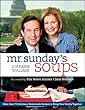
I was in the mood for soup, and I didn’t care if it was a summer soup or winter soup.  Therefore, I opened up my very own autographed copy of Lorraine Wallace’s Mr. Sunday’s Soups. “More than 75 delicious homemade recipes to bring your family together.”

Lorraine Wallace is the wife of Fox News’s Chris Wallace, a fine gentleman I had the pleasure to work with once upon a time.  Because of the Wallace’s busy Sunday schedule – for a long time – they have soups on Sundays.

I was also thinking down the line to an annual gathering of priests coming up.  I will do some of the cooking so we can keep the expenses down a bit.  Thus, I am looking at soup recipes.

I opted for the White Bean Soup, with Great Northern Beans, which I have in abundance.  Since I am not 10 people, the amount the recipes makes, I made a half recipe.

I soaked the beans from the early morning, several hours.

For the base you sweat onion and carrot and then red swiss chard.  I like chard and often buy it.  I had some on hand, which helped by make the choice of this recipe.  You then add in diced garlic, diced tomatoes, chopped basil, the beans and chicken broth.  You could use vegetable broth if you wanted it to be wholly veggie.  See the book for the proportions.

20110725-022334.jpg

When the beans are tender, you put half the soup in a blender or processor till smooth and add it back in.

20110725-022341.jpg

Add the other half of the chard you held back.  NOTE: I should have chopped the second half into smaller pieces.

20110725-022346.jpg

This would go well with a hearty, crusty bread and a wedge of sharp cheddar cheese.

My variation was a dash of ground cayenne pepper.

20110725-022354.jpg

Great stuff, this soup.

20110725-022406.jpg

Soup is always good, easy to make in large or small quantities, usually inexpensive, of nearly infinite variety and provides great flexibility for serving times.  But you do need to plan around it.  When you use ingredients such as beans, you have to plan ahead.

Soup is swell with Mystic Monk Coffee, by the way.

Posted in "How To..." - Practical Notes, Fr. Z's Kitchen, Lighter fare, Linking Back | Tagged , ,
14 Comments

QUAERITUR: cremation

From a reader:

Father..I’m making end of life arrangements. I am a cradle Catholic.  We have a columbarium in our ____ and it all makes sense but…cremation freaks me out. Do you think Our Lord will be angry at me if I have my body cremated? All this hesitation comes from my childhood.

I am glad you are making some arrangements now.  That is the responsible thing to do.

We affirm that to bury the dead is a corporal work of mercy.  We also affirm that the bodies of the deceased baptized are worthy of respect because people are made in the image and likeness of God and have great dignity and because they were temples of the Holy Spirit.

The Catechism of the Catholic Church teaches:

2301 [… ]  The Church permits cremation, provided that it does not demonstrate a denial of faith in the resurrection of the body.

In the ancient Roman cremation was very common, but inhumation (burial) was more common for the Jews.  Early Christians followed the Jewish practice more than the pagan.  In the case of plague, however, and some other situations, cremation was abandoned.

However, the practice of cremation was rekindled in modern times.  The Church forbade it since it seemed like a denial of the teaching of bodily resurrection.  The 1917 Code of Canon Law funeral rites for the cremated.  In 1963, however, the prohibition was lifted.  The 1983 Code of Canon Law allows cremation but inhumation is strongly recommended.  However, if there is a way in which the cremation is a statement in some way against the teaching of bodily resurrection, cremation would be prohibited.  I don’t know what censures there would be.  We need the Canonical Defender!

So, in short, cremation is permitted by the Church.

Absolutely prohibited as in wrong wrong wrong is the scattering of ashes.

It is understandable that Catholics would have a… hesitation about cremation.

That said, friend, I don’t think you need to fear that the Lord will be unhappy with you for doing something the Church allows, so long as you have striven to know Him, love Him and serve Him in this life.

Posted in ASK FATHER Question Box | Tagged , , , ,
35 Comments

Prof. Peters on canon Law and “presumed death”

The Canonical Defender, Prof. Ed Peters, has on his excellent blog In The Light Of The Law, an interesting post about marriage and presumption of death.

I suspect that this issue could include also military combatants who are MIA.

Thus, Prof. Peters:

Arthur Gerald Jones, declared dead in 1986 some seven years after he had simply disappeared under ambiguous circumstances, was recently found alive and well, working under the name of Joseph Richard Sandelli. Jones, whose religious affiliation was not identified, was married with children when he vanished, and it seems that he has not remarried since then, but, as technological advances make more likely the discovery of other erroneous declarations of death, the Jones-qua-Sandelli episode occasions three quick points about the canon law of “presumed death” per Canon 1707.

1. A civil certificate of presumed death is not sufficient basis for a bishop to declare a “survivor’s” freedom to marry in the face of a prior marriage per Canon 1085. An ecclesiastical determination of presumed death must be made.

2. In making that ecclesiastical determination, a bishop find evidence (albeit not proof) of actual death, and not merely of absence, however protracted.

For example, a man books a passage on ship, but he never shows up at the dock, and is not heard from again, even for many years. Such a fact pattern is insufficient for a canonical declaration of presumed death because there is no evidence that the man died. Alternatively, a man books a passage on ship and is seen on the ship before it sinks at sea with loss of life. He is not heard from after the shipwreck. That would be much closer to providing a basis for an ecclesiastical declaration of presumed death, because circumstances pointing to death are present.

3. If a spouse remarries after having received an ecclesiastical declaration of presumed death, but the original spouse is later found alive, the second marriage is null and a petition declaring such nullity should be filed, if necessary, by the promoter of justice per Canon 1674.

Read more about the canon law of “presumed death”: CLSA New Comm (2000) at 1798-1799 or GB & I Comm (1985) at 949.

Posted in "How To..." - Practical Notes | Tagged , , , ,
6 Comments

More about the new, corrected version of the Confiteor

Elsewhere I answered a question about the new, corrected ICEL version of the Confiteor.  I said I would post something more about the Confiteor.  Liberals will hate this new version, by the way.  We have already seen that (here).

Here is something I wrote for my weekly column in the UK’s best Catholic weekly, The Catholic Herald.

And With Your Spirit
by Fr John Zuhlsdorf

Confiteor

The first major change people will notice in the new, corrected English translation for Holy Mass will be, as we saw last week, the response “And with your spirit”.  After that, in many places – depending on the penitential rite option chosen by the priest – the next major change will be to the Confiteor (“I confess”). I suspect younger priests will more and more choose this option.

Our English word “confess” comes from the Classical Latin confiteor, confessus, “to acknowledge, confess, own, avow (an error, mistake, or a fact previously denied or doubted, etc., implying a sacrifice of will or a change of conviction”.  In ancient Christian Latin, a confessio was the witness, unto death, made by a martyr. Confiteor was used for recognition of the greatness of God, and then later recognition of one’s faults.  When we speak of a Confiteor now, we mean the public declaration, together with others, of our own fallen sinful state at the beginning of Mass.

In Matthew 18 Our Lord urges us to make peace with each other before coming to the altar of sacrifice.  In Luke 18 He tells the parable of the tax collector who beat his breast in the temple, calling himself a sinner.  When we enter the holy precincts of a church for the sacred action of Mass, we should have a healthy sense of our unworthiness which leads to outward expressions in our worship or sorrow and thanksgiving.

That said, try reading this aloud.

THE NEW CORRECTED TRANSLATION:
I confess to almighty God and to you, my brothers and sisters, that I have greatly sinned in my thoughts and in my words, in what I have done and in what I have failed to do, [And, striking their breast, they say:] through my fault, through my fault, through my most grievous fault; [Then they continue:] therefore I ask blessed Mary ever-Virgin, all the Angels and Saints, and you, my brothers and sisters, to pray for me to the Lord our God.

Note the changes.  We will now admit in English, as Catholics have done together for centuries in Latin, that we have not merely sinned, we have “greatly sinned”.  The strong, uncommon word “grievous”, echoing pre-Conciliar hand missal translations, emphasizes that even a lesser sin is a true offense against God’s love.

The most dramatic difference in the new, corrected translation will be the reintroduction of the provocative three-fold mea culpa.  And we are to strike our breast.  Please do strike your breast!

In 5th century North Africa, the great Doctor of Grace St. Augustine of Hippo (d. 430) observed in a sermon (s. 67.1) how the people automatically beat their breast whenever they heard the word confiteor.  In another place he said they struck themselves so forcefully that the sound resounded in the church.  The 20th century writer of the Liturgical Movement, Romano Guardini (d. 1968) wrote in his 1955 work Sacred Signs:

“To brush one’s clothes with the tips of one’s fingers is not to strike the breast.  We should beat upon our breasts with our closed fists. … It is an honest blow, not an elegant gesture.  To strike the breast is to beat against the gates of our inner world in order to shatter them.  This is its significance. … ‘Repent, do penance.’  It is the voice of God.  Striking the breast is the visible sign that we hear that summons. … Let it wake us up, and make us see, and turn to God”.

The future Pope Benedict XVI wrote in Spirit of the Liturgy (p. 207): “We point not at someone else but at ourselves as the guilty party, [which] remains a meaningful gesture of prayer. … When we say mea culpa (through my fault), we turn, so to speak, to ourselves, to our own front door, and thus we are able rightly to ask forgiveness of God, the saints, and the people gathered around us, whom we have wronged.”

We oh-so-modern Catholics will benefit from clear talk about sin and the physical action of beating our breast to counteract the “I’m Okay, You’re Okay” rubbish so prevalent today. We need Mass precisely because we are not “okay”. Sinners need a Saviour. A realistic recognition of who we are and who we are not is a necessary starting point for all worthy prayer and liturgical worship.

The revised, corrected translation of the Confiteor will have a greater impact on us as we begin to pray at Mass.  It will remind us more forcefully that we should be in the state of grace before receiving Holy Communion. The improved translation will, over time, repair a sense of continuity with our forebears as well as strengthen our need for a regular examination of conscience, frequent sacramental confession, and deeper gratitude during Mass.
Posted in WDTPRS | Tagged , , , , ,
15 Comments