22 October: a new feast day and an old feast day!

A long-time participant here just pointed out to me in my email that the new feast day designated for Bl. John Paul II, 22 October, is also the feast of Sts. Nunilo and Alodia!

Nunilio and Alodia were 9th c. virgin martyrs in Huesca, Spain.  They were born to a Muslim father and Christian mother.  They chose their mother’s Christianity.

During the Emirate of Abd ar-Rahman II they were first put in a brothel and then were executed as apostates according to Sharia law.

Posted in Just Too Cool, Linking Back | Tagged ,
32 Comments

NYT: liberals massaging liberals over the new, corrected translation

I have dozens of emails alerting me to the fact that Hell’s Bible (aka The New York Times) ran an A1 page story by the always objective Laurie Goodstein about the new, corrected English translation and… this will shock you… those who object to it!

The Decrepit Lady hit the usual benchmarks for any article on the Church, which includes a bias in favor of liberals with a few tokens touched just to say they are fair.

The New York Times on the new translation.  Imagine the combox.

This was another chance for readers of that paper to receive another does of back-patting self-affirmation.

But here is a hermeneutic to use if you do read the piece and look at the combox.

From Bill Donohue of The Catholic League:

What accounts for the relentless attacks on the Church? Let’s face it: if its teachings were pro-abortion, pro-gay marriage and pro-women clergy, the dogs would have been called off years ago.

Irritate some liberals.

  • Subscribe to The Catholic Herald and The Wanderer and The Remnant.
  • Attend a TLM and bring a friend.
  • Buy Pope Benedict’s book Jesus of Nazareth.
  • Drop donations in my box on the side bar.
  • Buy lots of Mystic Monk Coffee…. or tea.
  • Pray the Rosary for an increase in vocations to the male-only priesthood.
  • Support organizations like Courage and Priests For Life.
  • Convince a friend to drop the New York Times.

I am sure you can come up with a few of your own.

Posted in The Drill | Tagged
Comments Off on NYT: liberals massaging liberals over the new, corrected translation

WDTPRS Tuesday 5th Week of Lent: bittersweet

COLLECT
Da nobis, quaesumus, Domine,
perseverantem in tua voluntate famulatum,
ut in diebus nostris
et merito et numero populus tibi serviens augeatur.

In the Tridentinum and in the 1962 Roman Missal this prayer is listed for Tuesday after Passion Sunday as the Oratio super populum.  It also has roots in the Gelasian.

The verb famulor gives us famulatus, which in the Lewis & Short means “servitude, slavery”.  In Blaise/Chirat there is an additional meaning, which is predictable, “service de Dieu, dévotion” attested to by, for example, St. Augustine of Hippo (cf. conf 10.35.56).

LAME-DUCK ICEL:
Lord,
Help us to do you will
that your Church may grow
and become more faithful in your service
.

7 months… 12 days….

SLAVISHLY LITERAL TRANSLATION
Grant us, we beg, O Lord,
persevering service in Your will,
so that in our days
the people serving You may be increased both in merit and in number.

NEW CORRECTED ICEL:
Grant us, we pray, O Lord,
perseverance in obeying your will,
that in our days the people dedicated to your service
may grow in both merit and number
.

My instant reaction to this prayer is rather bittersweet.

The Church’s shifting demographics in wealthy countries reveals that, while more people may be identifying themselves as Catholic, the percentage of Catholics going to Mass remains steady or is falling.

This means that we are going backward.

Also, in European countries which were once Catholic countries, such as Italy, the birth rate is far below replacement rate.  Yet “Eur-Arabia” is swiftly multiplying.  Contraception and abortion is killing off one dimension of the life of the Church.

The forces of the “Prince of this world” do prevail, will prevail in some places.

Pope Benedict has called for a “New Evangelization”.

How is that going to happen?

While Our Lord promised that “the gate of Hell” would not ultimately prevail, He did not promise they would not prevail in some places, such as the United States or Europe…. or your home town.

We can take an example from the fate of North Africa, the land of the great St. Augustine.  Where there was a powerful, vital and thriving Church, to which we in the modern world are so indebted, there are now… well… not much.  The word famulatus is rooted in the ancient Oscan word faama.  In its root, this word for service derives from the house or household and the extended relationships within a household.

The prayer’s force turns on the ut with the subjunctive.  Our increase in merit and number depends on our perseverance in dedicated service to God’s will not our will.  Rather, our will also insofar as it is in conformity with God’s will.

Even our ability to persevere is a grace given to us by God.

He begins good things in us and, when we chose to cooperate, He makes us strong enough to bring to completion what He began in us.

A lot of work is to be done to bring people back to regular use of the sacraments.  Perhaps the new, corrected translations around the world will help.

I am convinced they will help only if they are accompanied by a reclamation of our liturgical traditions.  There are many elements which must be refitted so as to bring about a healthy organic whole.

We need a sound and widespread liturgical catechesis as part of a larger effort to present and instill a Catholic identity in many of the last two generations who know nothing of their Church, what she teaches or who she really is.

Posted in New Evangelization, WDTPRS | Tagged , ,
6 Comments

We do not know the day or the hour.

We do not know the day or the hour.

I had seen this video before, but Patrick Madrid posted it on his page.

It reminds me of in our Latin Church we sometimes pray about living amidst the vicissitudes of this world.

It reminds me that we as Catholic pray in the petitions of the Litany of Saints to be preserved from a sudden and unprovided death.

This is a video of the tsunami which struck Japan a month ago.

Warning: The last couple minutes are hard to watch.

[wp_youtube]8vZR0Rq1Rfw[/wp_youtube]

Life is not CGI, friends.  Bad things happen to nice people who are going about life just like you.

As this Lent continues, ask yourself the questions:

  • Are you ready now to go before the Lord your Maker and your Judge?
  • Have you helped those for whom you are responsible to be ready?
  • When was the last time you made a good and complete confession of your sins and received valid absolution?

“But Father! But Father!”, some of you may be saying now.  “Are you trying to scare us?  Shouldn’t we go to confession out of love and not fear?”

Yes, I am trying to scare you.  I want to scare the hell out of you.

Going to confession for the higher purpose of expressing sorrow for violating God’s love is laudable.  But going to confession because you are afraid of hell and because you know your life could end at any moment is enough.   If I can get you out of your complacence and into a confessional even out of fear, fine.  I take that.

I’ll take the fear now for a confession. We can work on the love part brick by brick.

Priests… bishops… this includes you.  Your judgment … our judgment… is going to be exacting, for so much more has been given.  “I don’t have time” isn’t a good plan.  Just go.  Die in the state of mortal sin and you’ll go to hell.

On that note, I see also that, as I write, A G1-class geomagnetic storm is in progress, sparked by a high-speed solar wind stream which is buffeting Earth’s magnetic field.

High latitude sky watchers should be alert for auroras.  For more see Space Weather.

Posted in Global Killer Asteroid Questions, Look! Up in the sky!, The future and our choices | Tagged , , ,
32 Comments

QUAERITUR: Mephitidae

From a reader:

Father,

I have read with interest your posts on Mice in the Rectory. Now, perhaps you have something for Skunks under the Farmhouse.

Our air-conditioner repairman just informed us that we have a family of skunks residing under our 100+ year old farmhouse. He had to go through the crawlspace to fix the overflow drain pipe and saw them in a corner which is probably right under the dining room. (!)

The exterminator will be out tomorrow, but he says the only way to get rid of them is to trap them when they come out, but that could take weeks as each one is trapped and then disposed of.

QUAERITUR: Do you have a “potent” prayer for getting skunks to come out from under the house and into the waiting trap – without spraying everything and everyone?

I can understand why you would want to avoid going in after them, with the usual mephitic consequence.

A prayer?   I think the imprecatory prayer mentioned in regard to rats could work with adaptations.  I think skunk is a viverra putorius.

Otherwise, to get them to go on their own…. could you get someone to announce a Synod?

Posted in "How To..." - Practical Notes, ASK FATHER Question Box | Tagged ,
12 Comments

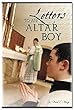
REVIEW: Letters to an Altar Boy (Angelus Press)

The publishing arm of the SSPX has reprinted a 1952 work by Fr. David E. Rosage, Letters to an Altar Boy (reprint 2011).

The thin book begins with a quote from Rev. Thomas O’Donnell, CSC (Director of the Knights of the Altar):

Any lad who read this book is bound to be better and to have a better understanding of the great privilege that is his.

The book is laid out well and there are recent color photos which nevertheless could have been from 1952.

The idea of the book is clear: give boys a sense of the importance of what they are called to do, the honor there is in being able to do it, and then to conform their lives to that as an identity.  It stresses things that boys resonate with: belonging to a group, doing clearly spelled out tasks, doing something important, making sacrifices, being loyal, advancing to new duties, etc.

Along the pages many important issues are addressed, such as being of good character and reliable, tidy, pure in heart, avoiding filthy language.  There are practical points, such as making sure your hands are clean, your shoes are shined.  There is even a short list of the four brushes:  scrub brush, shoe brush, hair brush, tooth brush!

There are practical pointers about what to do with your hands when you serve, making a thanksgiving after Mass, keeping silent, seeing Mary as the mother of altar boys…

I found this book charming. I actually have a touch of envy for boys and men who grew up in the culture that could still produce such a book.  Of course it wasn’t perfect, but it was a bit more connected to what really matters.  And one of the best things about this book is that it acknowledges time and time again that you may not be a perfect boy, but you can always try to be the very best at what you do, and be virtuous and faithful as you grew up, taking those same lessons into manhood and, perhaps, the seminary if that is your calling.

In the last few decades there has been such a horrible war on boys.

Finally, it must be said that this book has nothing to do with altar girls.  No-thing.

Parents.  Have boys?  Go to the other form of Mass?  Are some of them servers?

Posted in "How To..." - Practical Notes, Brick by Brick, REVIEWS, SUMMORUM PONTIFICUM | Tagged ,
23 Comments

WDTPRS: Writing in your books

I love books.  I enjoy and use books (cf. utor and fruor).  I might actually have too many books.

(Hmmm… Possible?)

I also write in books.

I write in my own books, occasionally, depending on the book.   I often read with pen or pencil in hand… again, depending on the book.  For example: I have often filled the margins of books on theological issues, or poetry, or contemporary issues, or novels…. or … cook books… ummmm… okay… nearly any book on anything.

I wasn’t always this way.  But, as I get older, I write in books more and more.  Also, some books don’t have adequate indices.  I compensate for the defect by notes in the margins and even making my own index in the back.  Ignatius Press is a real culprit for books with this dire flaw, btw.

Pros?  Cons?

What do you do?

Select your best answer and then add a comment.

I know that this may be as controversial as the infamous “Gins & Tonic?” question some years ago, but try not to come to fisticuffs.

Writing in books you own.

View Results

Posted in POLLS, The Drill | Tagged ,
73 Comments

Something to spark your reading interests

I noticed that Amazon is pushing now their Kindle reader at a lower price with the tradeoff that they can push ads and sponsored screensavers to your device.

You can pre-order Kindle with Special Offers (read = ads) for $114 today.  Kindle for #139 and Kindle 3G for $189 (includes free 3G wireless) also continue to be available, without special offers and sponsored screensavers (read – ads).  There is also the bigger Kindle for $379.

In my opinion, I would rather spend just a little more and get the version that doesn’t have any ads.  However, you might not mind them and might want to save a few bucks.  It is nice to have the option.

I didn’t think I would take to this method of reading books, but I have.  I wouldn’t want to use a Kindle for everything.  I tend to write in my books. I read pen in hand.  You can add notes to Kindle pages, however.  It is clunky, but it can be done.  You can highlight and bookmark passages.  You can see what other people who read the book highlighted as interesting to them.

My main uses of the Kindle are a) when I am traveling and b) when I want to read something which I don’t need or want to retain on my bookshelf.   I use the public library as much as possible.  I use the Kindle: the Kindle version of many books I don’t want to retain on my shelf is lower than a store bought or Amazon bought book.  You can also download daily newspapers and magazines.  However, the catch is that you have to have the actual Kindle device: you can’t get subscriptions if you have only the free apps.

If you are not using your wi-fi or 3G and switch them off the Kindle holds a standby charge for a very long time.

You can use Kindle to read this blog, btw.

I have the 3G version.  I can connect it to my wi-fi at home or any phone network, without an additional cost, when I am out and around.

The Kindle will automatically sync your purchased books between the Kindle app on your iPhone and iPad.   I also use the Kindle app on the iPad… the advantage is that you can read the iPad in the dark: the Kindle does not have a back lit screen.  You can read the Kindle easily in sunlight, but not the iPad.

I imagine many readers of WDTPRS have experience with other devices.  It would be interesting to hear about them and how they are being used.

I don’t think a Kindle would be everyone’s cup of Mystic Monk Tea, but it has been – in my book at least – a great tool.  I am grateful to the kind reader who sent it to me from my wish list.  I use it often.

Posted in REVIEWS, The Campus Telephone Pole | Tagged
29 Comments

Sensible examination of the beatification, the Assisi meeting and ecumenism

There is a very smart post over at The Sensible Bond.

He deals with the beatification and the Assisi meeting and the important question of what ecumenism is.

My usual treatment is applied.

Blogging from the geopolitical epicentre of the culture of death … [Britain… review here.]

Monday, 11 April 2011

The Assisi Obex

I’m dismayed this morning, cher lecteur, mon semblable, mon frère. [Baudelaire and Eliot.  Actually… I don’t know if I like this… hey… wait!  No!] I know what is going to happen in the next few weeks. Quite apart from the liturgical season, it is going to be full of excitement about the approaching beatification of John Paul II. As I remarked yesterday, the buzz on the blogs is all about the alternative bloggers’ meeting in Rome. [Sounds fun!] The weather here in the UK is hot. We’ve forgotten the worst of the recent past, and the year is full of Spring promise.

So nobody wants to read or hear about reservations with the good ship Vatican at the moment. Tribalism is alive and well. If we object to the current mood, then we must either belong to the lunatic fringe of the Great-Dotty Traditionalist variety, or we must just be sour pessimists. I cannot say I agreed with half of the content of the recent petition that was got up to protest at the beatification of John Paul II, but I certainly share their fear that the beatification will not simply stand for beatification of the person of John Paul II – a man of immense piety, sacrifice, devotion to duty and chronic suffering – but a stamp of approval on his papacy, good and bad. [Recently Card. Amato said that the beatification is not about the papacy of the late Pope.  I wonder about that.  As I see it, it seems to me that over the last few decades there has been a shift in the theology of “heroic virtue”. But… they didn’t ask me.]

The biggest mistake in this beatification is that we have no historical perspective. Comparisons with popular acclamations of holiness by the faithful in the past are lame. [This is where the vox populi, the popular dimension, comes to hold great sway perhaps over the vox Dei dimension (confirmed by authenticated miracles), and the vox ecclesiae which has a process by which everything is verified.] We live in an age of fadism and fancy where yesterday’s fringe indie is today’s modishness, and where last week’s scapegoat is next week’s pop idol. John Paul II’s holiness would not change one bit if the Church left it ten or twenty years before going any further in this beatification process. But another ten years would give us calmer minds and spirits, greater objectivity, and more willingness to sift and discern. [Qui bene distinguit bene docet.]

For me, the greatest sign of the refusal to discern further is this meeting planned for October in Assisi. Don’t get me wrong. I believe the traditionalist position which states that such meetings contravene the First Commandment is not well founded. I also applaud the changes in format in this meeting which are meant to be another barrier against such intepretations.

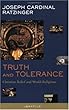
No, the Assisi Obex is the way that it embodies a certain philosophy of religion which is unbalanced. You can read all about it [ehem] in Cardinal Ratzinger’s book Truth and Tolerance in which he describes the change in how theologians view other religions. Nowadays the procedure is to regard all religions from the perspective of the religion of the Three Kings.

[… go over to his blog for this partI like this bit …]

Of course it is marvellous that we ‘share’ the Sacred Scriptures with our Protestant brethren, but we cannot thereby air-brush out of existence the fact that Sola Scriptura is the context in which vast swathes of Protestants receive those writings. In other words, at the very point we can acknowledge what we have in common, we have to acknowledge the gulf in how we conceptualise the passing on of Revelation.

But that would be considered unecumenical. In practice – I’m not speaking of the theory – ecumenism seems to be an ecclesiological form of the English vice of saying the very opposite of what we mean. [What – a – great – sentence.] ‘Oh, yes I’m quite comfortable’; ‘oh, yes, I’ve had enough to eat’; ‘oh, I don’t mind at all.’ In point of fact, we aren’t comfortable, we’re starving, and too right we bloody mind! But we had better not say it for fear of making a scene.

What I’m saying here is that Assisi III, even if it avoids the symbolic manifestation of indifferentism, will necessarily articulate an entirely benign – and, therefore, unbalanced – view of such religious distinctions.

[… again, go over there … good stuff here, but I want you to go there … ]

Please tell me what ecumenism has done, other than encourage the idea that we all belong to the same slightly odd club of ‘religious people’?

But Christ isn’t religious. He is religion. How did we forget?

So, what is my conclusion? Simply that we cannot deal with other religions solely as seedbeds of the Word. THIS is the Assisi Obex. Nor indeed should we go back to treating them as if they are simply the work of the partisans of error. But Christ spoke sometimes with compassion and sometimes with anger: mustn’t the Church do the same? How very sad that this failure to distinguish – this failure that, for me, will always mar JPII’s memory – is going to be reinforced by Pope Benedict whose own motto declares his commitment to cooperating in the truth.

Very insightful.

Remember my post on Pius IX’s Mortalium animos?

We cannot turn our backs on the ecumenical challenge.  But ecumenism must be authentic.  We must make distinctions about truths and about the way we express them.  There is a hierarchy of truths, and yet not one iota can be denied.  How do we maintain that fidelity in the face of an irreversible ecumenical course?

Posted in New Evangelization, Our Catholic Identity, Pope of Christian Unity, The Drill, The future and our choices | Tagged , , , , ,
1 Comment

QUAERITUR: TLM “straw” subdeacon

From a reader:

I serve Low Mass five or six days out of the week as well as participating in Sunday Vespers, so my priest recently asked if I would be able to serve as the straw subdeacon for the Mass. I expressed my willingness, but when I started to read, I found out that the Church mandates straw subdeacons to be Instituted Acolytes. This was the first time I had even heard of such a status, and after researching it, I don’t know anyone that would be, unless it is the same thing as a “lay minister.”

My priest is prudent and knowledgeable man, so I don’t think he would ask me unless he thought it permissible. I want to be obedient to the Church, and I also want to help make a Solemn High Mass for the Easter Vigil possible. I plan on contacting a transitional deacon from an adjoining diocese to see if he would be able to do it, but if he can’t, is this something that, while not ideal, I could do this once.

If you can do it once, you can do it more than once.

When for good or ill Pope Paul VI suppressed the minor orders with Ministeria quaedam, he said that the role of the subdeacon was assumed by the new version of lector and acolyte.  He also said that  Acolyte 2.0 could be called “subdeacon”.

In the past, even though the rubrics assumed that those serving in all roles in the sanctuary were tonsured clerics, the non-tonsured, non-cleric substituted for altar servers in the natural course of things.  So it is today.  So it is that non-acolytes and non-lectors substitute for those installed ministries
now.  Let’s say the “beta” version of Acolyte 2.0.

Moreover, the Pontifical Commission “Ecclesia Dei once responded to a question posed by the Australian Ecclesia Dei Society in the early nineties about this very issued.  The reference for this PCED letter is 7 June 1993, Prot. 24/92 to the Australian Ecclesia Dei Society. The PCED said then that, yes, an officially installed acolyte could take the role of the subdeacon in a Solemn Mass if a cleric wasn’t there to take the role.

It seems to me quite reasonable that a non-installed lay person could substitute for an installed acolyte lay person in the role of subdeacon, who would not now be a cleric anyway in the Latin Church.

An installed acolyte would not wear a maniple.  He would not wipe the chalice after the ablusions, etc.

That said, I doubt that a non-installed acolyte substituting for an absent subdeacon in a solemn TLM is an “abuse”.

It is not the ideal, but it wasn’t an abuse in the past when things were far stricter in many ways.  Someone who says it is an abuse should produce his own documentation saying that it is.

For notes and documentation, you need to 1983 Code, Ministeria quaedam, and you can get help from the new (and older) edition of Fortescue-O’Connell edited by Reid.

The can of worms opened up by this line of argument is that there has been an official interpretation of CIC 1983 can. 230 §2 indicating that females can substitute for absent acolytes and lectors in some liturgical actions.  If that is the case, what – other than common sense, a horror of the downright wrong, and a healthy sense of self-preservation – would prevent a female from substituting for the absent acolyte who would be substituting for the absent cleric to take the role of subdeacon in a Solemn or even Pontifical TLM?

Posted in "How To..." - Practical Notes, ASK FATHER Question Box | Tagged ,
35 Comments