13 Dec – St. Lucy and the Advent Ember Days

13 December was the darkest day – with the least length of sunlight – of the old Julian calendar.  Hence, it was once the Winter Solstice.

Today in the Gregorian calendar is the feast of St. Lucy, whose name from the Latin lux, for “light”, reminds us who dwell in the still darkening northern hemisphere that our days will soon be getting longer again.

Lucy will usually be depicted in art with a lantern, or with a crown of candles, or – most commonly – with her own eyes on a platter.

Some accounts have Lucy slain by having her throat thrust through with sword.  Other accounts say that to protect her virginity she disfigured herself by cutting her own eyes out and sending them to her suitor, a plot likely to discourage him.  St. Lucy is therefore the patroness of sight.

St. Lucy shows up fairly often in Dante’s great Divine Comedy.  She is first in the Inferno.  It is Lucy who asked Beatrice to help Dante.  In Purgatory the eagle that bears Dante upward in a dream is actually Lucy who is bearing him to the gate of Purgatory.  Eagles, of course, are “eagle-eyed” and see very well.  In the Paradiso she is placed directly across from Adam in the Heaven of the Rose.  She can gaze directly at God.

St. Lucy was something of a patroness for Dante and that he was devoted to her because, as we glean from various works, he may have had a problem not just with his eyes but also struggling with sins of the eyes.

Next week we also have Ember Days, which in Advent come after the Feast of St. Lucy.   Do you remember the little mnemonic poem?  “Lenty, Penty, Crucy, Lucy”, or else “Fasting days and Emberings be / Lent, Whitsun, Holyrood, and Lucie.

Ember Wednesday will be the Missa aurea.

In the meantime, let’s have a look at Lucy’s Collect in the Ordinary Form.

This prayer was not in the pre-Conciliar editions of the Missale Romanum. It is based on a prayer in the ancient Gelasian Sacramentary for St. Felicity (VIIII KALENDAS DECEMBRIS).

Intercessio nos, quaesumus, Domine, sanctae Luciae virginis et martyris gloriosa confoveat, ut eius natalicia et temporaliter frequentemus, et conspiciamus aeterna.

First, you will have immediately caught the elegant hyperbaton, the separation of intercessio and the adjective that goes with it, gloriosa.  There is also a nice et… et construction.

Confoveo is “to cherish, caress, keep warm.”  It is a compound of foveo which essentially is “to be hot, to roast”.  It obviously deals with heat, flame, light.  This is a good word for this time of year in the northern hemisphere (unless you are in, say, Florida).

Conspicio is “to look at attentively, to get sight of, to descry, perceive, observe”. We are obviously dealing the seeing and sight.  This word should ring mental bells for the throngs of you readers who attended Holy Mass in the Novus Ordo celebrated in Latin.  Conspicio is in the Collect for the 3rd Sunday of Advent, used in a an extremely clever way juxtaposed to exspecto.  They share a common root.  But I digress.

Natalicia refers to birthdays.  In the Christian adaptation of this word, we are always referring to the saints being “born” into heaven.

CURRENT ICEL (2011):

May the glorious intercession of the Virgin and Martyr Saint Lucy give us new heart, we pray, O Lord, so that we may celebrate her heavenly birthday in this present age and so behold things eternal.

Perhaps you might say a prayer today to St. Lucy, that she will intercede with God and implore Him, for us in the vale of tears, to open the eyes of so many of our Church leaders.

Also, let anyone having problems with their eyes, literally, pray to St. Lucy for help.

Posted in Liturgy Science Theatre 3000, Saints: Stories & Symbols |
2 Comments

Daily Rome Shot 879

As you think about shopping for Christmas… please remember me when shopping online. Thanks in advance. US HERE – UK HERE These links take you to a generic “catholic” search in Amazon, but, once in and browsing or searching, Amazon remembers that you used my link and I get the credit.

ALSO… regarding CHRISTMAS CARDS.

I am a frustrated man.  The PO BOX hasn’t been checked and items have not been forwarded.  So, I trust I will get a rather large batch.  (I hope so.)  However, please please PLEASE do NOT send packages without contacting me first.  PLEASE.  Packages get tricky, slow and costly to forward.

Meanwhile, yesterday in Toronto at the Chess Champions Finals there was a STUNNER of a game between Magnus Carlsen and my guy Wesley So. They had played to two ties and were set for an “Armageddon” game. The players make length of time bids to see who will have black. Black has less time, but a draw is counted as a win. A clearly disappointed Wesley was undercut in his bid by Magnus, who wound up with black.  Magnus is so good that if he wants a draw he’ll get a draw.  The closed Sicilian opening was a quiet and then Wesley, knowing he had to get a win and not let Magnus set up his position for a draw – BAM! – struck on the king side where Magnus had castled with an amazing knight sacrifice and then a rook sac. From there on it was attack attack attack and Magnus went down in flames. The video of the game is HERE.

Of course in the post match interview So characteristically gave glory to Christ for the win. HERE Nice to see. He went on to beat Nodirbek and is in full possession of the lead now. Tomorrow, if I understand rightly, he has to play the very tough Fabiano (world #2).

White to mate in 2.

NB: I’ll hold comments with solutions ’till the next day so there won’t be “spoilers” for others.

Priestly chess players, drop me a line. HERE

Posted in SESSIUNCULA |
3 Comments

ASK FATHER: “Pray without ceasing”?

From a reader…

QUAERITUR:

I took your advice and I’m starting to look at the upcoming readings for Sunday a few days ahead and reviewing them after.  I’m stuck on the second reading for this coming Sunday.  [3rd Sunday of Advent] I have to go to the Novus Ordo.  I hope that’s okay.  It from 1 Thess 5:16-24 and Paul says that it is the “will of God” that we “pray without ceasing”.  I don’t know about you, but I can’t do that.  Life is really busy and I’m not a nun.  You’ve said that we are not bound to do the impossible, but this seems impossible but we are bound to do it.  There must be an answer.

Firstly, it is okay that you are going to the Novus Ordo for your Sunday obligation.  We don’t let the good be the enemy of the perfect, after all.  These days we do what we can do.

Secondly, you might need to revise your notion of what nuns do all day.  They have a lot of chores and duties apart from formal prayer.

Thirdly, perhaps the distinction between formal prayer and praying “without ceasing” can be teased out a little more.

Let’s see the reading in the RSV (rather than the NAB used at Mass).

16 Rejoice always, 17 pray constantly, 18 give thanks in all circumstances; for this is the will of God in Christ Jesus for you. 19 Do not quench the Spirit, 20 do not despise prophesying, 21 but test everything; hold fast what is good, 22 abstain from every form of evil. 23 May the God of peace himself sanctify you wholly; and may your spirit and soul and body be kept sound and blameless at the coming of our Lord Jesus Christ. 24 He who calls you is faithful, and he will do it.

This reading appears only once in the three year cycle of the Novus Ordo.  Too bad.   However, in the Vetus Ordo it is only on Ember Saturday of Lent, an important day, to be sure, but not a Sunday.   I wonder if the fact that this is such a well-known reading that it was not considered necessary to have it often in the Lectionary for Mass.

This is at the end of Paul’s letter.  He is giving dense bullet points for the sake of the perfection and holiness of the listeners (in ancient times, letters were read aloud).  Paul isn’t speaking in half-terms or partial aspirations.  Notice the first three points are all marked with “always”.  The words are “always… constantly… all circumstances…”.  That’s pretty much every waking moment.

He doesn’t say, “When you get around to it, pray a little.  If there’s nothing better to do, be grateful.  Life’s hard but once in a while you might try to be happy.”

Later in the reading Paul refers to being sound and blameless in “spirit and soul and body”, which is a way of describing the whole person, and that which we do via those three elements of Paul’s understanding of how man is made up (anthropology).

Hence, in obedience to God we also depend on God to do the heavy lifting: “May the God of peace himself sanctify you wholly” and “He who calls you is faithful, and he will do it.”

Sometimes when writing about the will of God and our vocations I’ll add that we accomplish good things that He gives us to do through grace and elbow grease.  He gives the work and He makes our hands strong for that work in such a way that the work done is both ours and His, with His merits giving that work its goodness.

To the point that God doesn’t require what is impossible and yet Paul seems to be saying that God is asking for the impossible.  After all, parents with children are busy and distracted away from formally praying by their parental duties.  This goes for anyone with a job to be done, or even those who are afflicted or ill or suffering in some way.  Even those are recreating are distracted from “praying constantly”.

It seems to me that we untie the knot along the lines of what St. Augustine says (ep. 130) about this command (not suggestion) from Paul.  First, we have to have at least a disciplined and consistent prayer life that reasonably accounts for the duties of our state in life.  That’s a given.  However, over time we also strive to orient our whole person (in Paul’s terms spirit, soul, body) toward God such that even in the midst of other activities we are still making all we do an offering to Him in gratitude (“give thanks in all circumstances”).    It is good for us to be busy in fulfilling the duties of our vocations.  So there must be a way also to fulfill Paul’s exhortation about unceasing prayer and thanksgiving in joy.  Its the interior orientation of our minds and hearts so that their default setting, so to speak, is above all other things that joyful and grateful devotion to God’s will and goodness that informs everything else that we do, whether it is being ill, taking care of a obstreperous child, washing dishes, playing chess, studying for exams, driving to work (which might be a real challenge).  Augustine underscores the need to desire to pray.  We need to have a consistent prayer life and make use of certain times for more formal prayer.  Yet in all that we do, we should at least in desire be lifting our hearts and minds to God.  Augustine also stresses this in his commentary on the Psalms (en. ps. 35, 13-14):

For the desire of your heart is itself your prayer. And if the desire is constant, so is your prayer. The Apostle Paul had a purpose in saying: Pray without ceasing. Are we then ceaselessly to bend our knees, to lie prostrate, or to lift up our hands? Is this what is meant in saying: Pray without ceasing? Even if we admit that we pray in this fashion, I do not believe that we can do so all the time.

Yet there is another, interior kind of prayer without ceasing, namely, the desire of the heart. Whatever else you may be doing, if you but fix your desire on God’s Sabbath rest, your prayer will be ceaseless. Therefore, if you wish to pray without ceasing, do not cease to desire.

The constancy of your desire will itself be the ceaseless voice of your prayer. And that voice of your prayer will be silent only when your love ceases. For who are silent? Those of whom it is said: Because evil has abounded, the love of many will grow cold.

The chilling of love means that the heart is silent; while burning love is the outcry of the heart. If your love is without ceasing, you are crying out always; if you always cry out, you are always desiring; and if you desire, you are calling to mind your eternal rest in the Lord.

Other great writers have dealt with this as well, and along the same lines.  St. Francis de Sales in Introduction to the Devout Life comments on it.  St. Theresa of Calcutta prayed short prayers in the midst of her labors.   Also, St. Therese of Lisieux in Story of a Soul, who experienced the challenge of infirmity, offered her discomforts to God.  She said that her prayers were like “glances at heaven”.  She wrote:

“For me, prayer is an aspiration of the heart; it is a simple glance directed to heaven, it is a cry of gratitude and love in the midst of trial as well as joy; finally, it is something great, supernatural, which expands my soul and unites me to Jesus.”

Notice in that we find the “always”, with “prayer”, “thanksgiving” and “joy”.  Moreover, it is God who then works in her whole person.

I think you get the drift.

Three last things.   St. Thomas Aquinas in his commentary on 1 Thessalonians says that giving alms is a way of inspiring constant prayer in others on our behalf.

The constitutive repetitions in the Rosary are a good link between “formal” prayer and our desired “default” setting.

Also, if it is true that we do not sin when we are asleep, could it be true that our sleep can be a kind of prayer time?   I don’t know about that, because the will during sleep is… I don’t know what it is.  However, before going to sleep I make a conscious act of entrusting my sleep time to the Blessed Virgin Mary, Queen of Priests, asking also for her protective mantle to keep me from spiritual attacks.

Posted in SESSIUNCULA | Tagged ,
5 Comments

Daily Rome Shot 878

As you think about shopping for Christmas… please remember me when shopping online. Thanks in advance. US HERE – UK HERE  These links take you to a generic “catholic” search in Amazon, but, once in and browsing or searching, Amazon remembers that you used my link and I get the credit.

Photo by The Great Roman™

White to move.  Mate in 3.

NB: I’ll hold comments with solutions ’till the next day so there won’t be “spoilers” for others.

Interested in learning?  Try THIS.

Priestly chess players, drop me a line. HERE

Maybe some beer for the parish priest for Christmas?

Use FATHERZ10 at checkout

In other news, I’m strongly considering not making more Adventcazts.  Stats are … not great.  You just aren’t that interested.

In Toronto, Magnus and Wesley are tied. Magnus defeated Fabiano Caruana and Hikaru Nakamura on Sunday. Wesley So beat Maxime Vachier-Lagrave and Alireza Firouzja. Some scary chess was played. These guys are amazing. For my part I got my ChessUp board functioning in view of playing long distance with a priest friend, but the game didn’t materialize. Someday.

This board interfaces with chess.com and lichess and it stands on its own as a chess computer.

Lastly, today is a very lean day for subscribed monthly donors.  VERY lean.  If you can…


Posted in SESSIUNCULA |
13 Comments

Your Sunday Sermon Notes – 2nd Sunday of Advent 2023

It’s the 2nd Sunday of Advent.

Was there a GOOD point made in the sermon you heard at your Sunday Mass of obligation?

Share the good stuff.  Quite a few people are forced to sit through really bad preaching.  Even though you can usually find – if you are willing to try – at least one good point in a really bad sermon, that can be a trial.  So… SHARE THE GOOD STUFF which you were fortunate enough to receive!

Tell about attendance especially for the Traditional Latin Mass. I hear that it is growing. Of COURSE.

Any local changes or (hopefully good) news?  We really need good news.

I have some thoughts about the Sunday Epistle reading posted at One Peter Five.

Under the hammer of persecution against traditional doctrine and worship, organizations have risen to deliver news.  Anyone and everyone with a webcam is carrying on.  Coalitions or societies have formed in support of cancelled priests.  All have good motives.  Lately, however, a cacophony has amplified with internecine squabblings.  Unsavory and scandalous bickering and finger pointing has erupted to discourage us all and make us into our own laughingstock.

Posted in SESSIUNCULA | Tagged
7 Comments

News of the Church 04

It’s 10 December 2023 and it is the 2nd Sunday of Advent. Some time ago, I saw a movie called News of the World in which years after the Civil War a former confederate officer eeks out a living going about and reading various newspaper stories from all over to people who pay a dime a head – in today’s money about 2.50. The idea caught my imagination and here I am, a gazetteer.

An audio “gazette” of Catholic things.

00:13 – Init
00:56 – Le Amis du Monastère 188 from Le Barroux
09:45 – Newsletter Monastère Saint-Benoît 19, Advent 2023
13:12 – Sodality Newsletter – Corpus Christi, Maiden Lane, London
31:38 – SURPRISE!
39:01 – The Wanderer 30 November 2023 – Priest Delivers Twins
43:04 – Sacristan murdered by jihadist in Cadiz-Cueta, Spain
47:40 – Exit

Posted in News of the Church, SESSIUNCULA | Tagged
2 Comments

Daily Rome Shot 877 – Wherein Fr. Z blew it.

Photo by The Great Roman™… nearly in real time!  Look at that lovely evening light.

Meanwhile, as I write I’m watching Day one of the Champions Chess Tour Finals in Toronto, my guy Wesley So took down Hikaru Nakamura 1.5 to 0.5.  In a couple minutes some Armageddon play starts between Fabi and MLV.  For my part today, I played OTB and won two.  Rather, I blew one and came back to win it (a pretty queen and knight mate) and then won another and blew it at the end by stalemating my opponent.  Grrr.  That’s frustrating.  It was a good game, however, against a very strong player.

Meanwhile, white to move and mate in 4? 5 for sure I think.  Thanks Fr. JC for sending it!   I’d rather we were enjoying this with cigars.


1. Qxf7+ Rxf7 2. Ra8+ Qd8 3. Rxd8+ Rf8 4. Bxe6+ Kh8 5. Rxf8#
NB: I’ll hold comments with solutions ’till the next day so there won’t be “spoilers” for others.

Can you believe I blew this? GRRR. Then I blew it on the king side, too. GRRRRRRR.

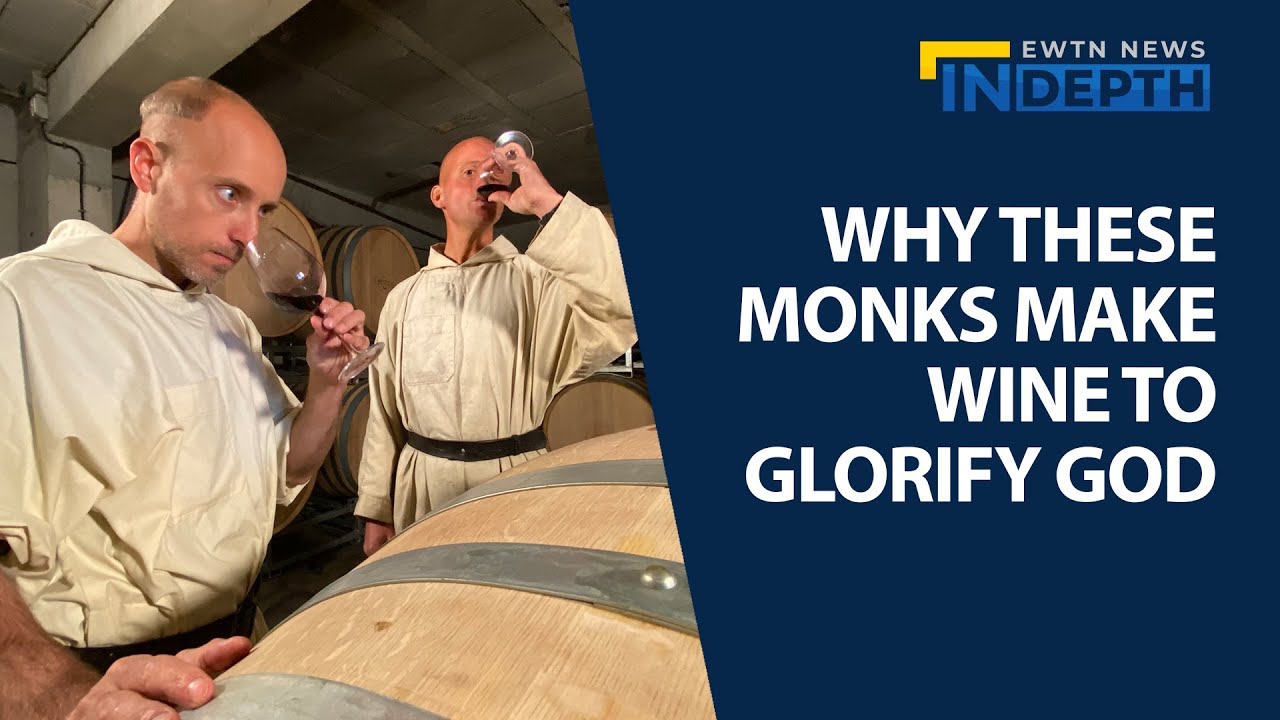
You don’t want to blow this!   Help the wonderful Benedictines of Le Barroux and get some great wine at the same time. FATHERZ10 at check out will get you 10% off.

Learn more about them!

YouTube thumbnailYouTube icon

Posted in SESSIUNCULA |
3 Comments

9 December – Feast of St. Juan Diego. ASTONISHING miracle story!

St. Juan Diego

Remember…

If we do not believe in miracles, we do not ask for them. If we do not ask for them, they will not be granted.

We are not alone: the Church Militant and the Church Triumphant are closely knit, interwoven in charity. We on earth must intercede for each other and believe and ask for the intercession of the saints.

Today is the Feast of St. Juan Diego, of Our Lady of Guadalupe fame.  Mexican, native-American St. Juan Diego Cuauhtlatoatzin (+1548), was granted an apparition by Our Lady Virgin Mary four times on the hill of Tepeyac.   He had been declared Venerable in 1987.

St. John Paul II decided to beatify him without the approved miracle.  He was beatified on 6 May 1990.

Under normal circumstances, for a beatification there must be a miracle which has been rigorously studied and approved by the Congregation for Causes and Saints accepted by the Holy Father.   St. John Paul bypassed the process.  Pope Benedict did done the same occasionally.

There was a miracle for Juan Diego’s canonization, however.  It is quite a story.

Juan Jose Barragan Silva, of Mexico City, was a drug addict from his adolescence.  He and his mother had been abandoned by his father.

On 3 May 1990 – note the date – Juan Jose, after getting drunk and high on marijuana with a friend, went home and started to cut himself on the head with a knife.  His mother, Esperanza, tried to get the knife away but failed.  She implored him to stop abusing himself and give up the alcohol and marijuana.   He shouted that he didn’t want to live any more so loudly that the neighbors came to see what was going on, but the door was locked.

Juan Jose threw himself off the balcony of their second floor apartment (in the USA this would be counted as the third floor).

In that moment, Esperanza had a “flash”.  Knowing that Pope John Paul was to be in Mexico for the beatification of Juan Diego, she called on Juan Diego to intercede for her son.

Juan Jose fell about 10 meters and landed close to a friend of his, Jesus Alfredo Velasquez Ramirez, who saw him land on his head on the concrete pavement.  Juan Jose was bleeding copiously from the mouth, nose and ears.  They covered him, thinking he was dead.  He suddenly sat up, rose and went to the stairs leading to his apartment.  On meeting his mother coming down the stairs he asked his mother’s forgiveness.  They embraced and remained that way for another ten minutes or so before the ambulance came.

During the ambulance ride Juan Jose said he had lost his vision.  He was able to say a Our Father.  He was registered at Sanatorio Durango at 1830.

The medical prognosis was very pessimistic.

The doctor, Juan Homero Hernandez Illescas, later explained that it was already incomprehensible that he was still alive.

They did tests immediately and found that Juan Jose had a fracture of the epistropheus, a large hematoma in the right temporal-parietal region extending to the lateral part of the neck and lacerations of the muscles about the parapharyngeal space,  fractures from the right orbital to the clivus, intracranial hemorrhages and air in the cranial cavity and in the cerebral ventricles.

Fr. Manuel Ponce gave him the last rites under the impression that Juan Jose would soon be dead.

He continued to live.

Fore the first few days Juan Jose was sedated. On the fifth, doctors found that his pupils were symmetrical and reactive and that he could move his arms and legs.  On the sixth day he was released from the ICU to a regular ward.  On the seventh day his feeding tube was removed.  He was released on the tenth day after the fall.   Subsequent tests by neurologists and other specialists showed a total recovery.  Juan Jose subsequently gave up his drug habit and started school.

It was determined that his change of condition came on 6 May at the very time John Paul II beatified Juan Diego.

For a miracle of curing to be authenticated as such, the cure has to be sudden, complete and lasting.  It has to be inexplicable by science. It has to be demonstrated that the venerable or blessed was invoked in a particular way.  There are usually spiritual effects, such as conversion of life of the person cured and also witnesses.

The decree concerning this miracle was promulgated on 20 December 2001.  Holy Father Pope John Paul II canonized St. Juan Diego on 31 July 2002.

Friends, if we want miracles… we have to ASK for them!

Let’s ask St. Juan Diego and our Lady of Guadalupe to intercede for a miracle.   You might, in your prayers, mention my mother.

Posted in Saints: Stories & Symbols | Tagged
4 Comments

WDTPRS – 2nd Sunday of Advent: “We escape neither the Enemy lion nor the glorious Lion of Judah”

Our Novus Ordo Collect (once called the “Opening Prayer”) for the 2nd Sunday of Advent was not in the pre-Conciliar Missale Romanum but it was in the so-called Rotulus (“scroll”) of Ravenna, dated perhaps as early as the 5th century.

Omnipotens et misericors Deus,
in tui occursum Filii festinantes
nulla opera terreni actus impediant,
sed sapientiae caelestis eruditio
nos faciat eius esse consortes
.

Impedio (built from the word pes, pedis, “foot”), at the core of this prayer, is “to snare or tangle the feet”.   A consors is someone with (con-) whom you share your lot (sors).   The phrase “faciat eius esse consortes” recalls both the Collect for Christmas Day and the priest’s preparation of the chalice during the offertory.  Deus, “God”, is declined irregularly. In solemn discourse the nominative is used as the vocative form (e.g. cf. Livy 1, 24, 7).  Sapientia (“wisdom”) and eruditio (“learning”) are packed, technical terms from ancient rhetoric and philosophy.

BRUTAL LITERAL RENDERING:

Almighty and merciful God,
let no works of worldly impulse impede
those hurrying to the meeting of Your Son,
but rather let the learning of heavenly wisdom
make us to be His co-heirs.

OBSOLETE ICEL (1973):

God of power and mercy,
open our hearts in welcome.
Remove the things that hinder us
from receiving Christ with joy,
so that we may share his wisdom
and become one with him
when he comes in glory,…

CURRENT ICEL (2011):

Almighty and merciful God,
may no earthly undertaking hinder those
who set out in haste to meet your Son,
but may our learning of heavenly wisdom
gain us admittance to his company.

Last week in our Collect we rushed to meet the Coming Lord while striving for our reward through works made meritorious by Him alone.  During Advent, as the Baptist warns us, we are to make ready the path for the coming of the Lord.

This week we are still rushing but perhaps we are wiser after the first rush of excitement.

This week we are wary of obstacles which could impede us, snare our feet.  These impediments are merely worldly ways and works, not meritorious for salvation since they are not performed in Christ.  Worldly ways entangle us.  St. Paul contrasts the wisdom of this world with the Wisdom of God (cf. 1 Cor 1:20;  3:19; 2 Cor 3:19).  In Romans 12:2 Paul admonishes,

“Do not be conformed to this world but be transformed by the renewal of your mind, that you may prove what is the will of God, what is good and acceptable and perfect.”

This is not just a Pauline concept.  Compare today’s Collect with 2 Peter 1:3-4:

“His divine power has granted to us all things that pertain to life and godliness, through the knowledge (cognitio: cf. eruditio) of him who called us to his own glory and excellence, by which he has granted to us his precious and very great promises, that through these you may escape from the corruption that is in the world because of passion, and become partakers of the divine nature (efficiamini divinae consortes).”

St. Augustine of Hippo (+430) dismantled Donatist arguments that all clerics ordained by a sinful bishop would automatically be stained by the same guilt. He used imagery reminiscent of today’s prayer:

“The mire (lutum) their feet are stuck in is so thick and dense that, trying in vain to tear themselves out of it, they get their hands and head stuck in it too, and lingering in that muck they get more tightly enveloped” (c. Don. 25).

The Donatist argument was based on worldly, not heavenly, wisdom.  Sticky lutum is a metaphor for a worldly, sinful life. Augustine contrasts being lutum with being children of God. “Noli esse lutum …Don’t be muck, but become (efficere) a child of God through His mercy!” (diu. qu. 68.3).

If we neglect God, we weak sinners can eventually convince ourselves of anything: down becomes up, back becomes front, black is white, wrong is right, and muddy is clean.  We excuse away our sins.  Once self-justification becomes a habit, it is a vice in more than one sense of that word.

Our consciences may occasionally struggle against the vice of self-deception, but the proverbial “Struggle” supplies permission: “I really ‘struggled’ with this, … before I did it.”

If we go off the true path into the sticky mire of error, we escape neither the Enemy lion seeking whom he might devour (1 Peter 5:8), nor the glorious Lion of Judah who will open the seals and read the Book of Life (Rev 5:5).

During Advent, let us make straight Christ’s path and watch our step.

Nevertheless, no matter how sticky may be the mess we have gotten ourselves into, Christ’s loving mercy washes its stain away in a good, complete confession before Christmas.

GO TO CONFESSION!

Posted in ADVENT, WDTPRS | Tagged
Comments Off on WDTPRS – 2nd Sunday of Advent: “We escape neither the Enemy lion nor the glorious Lion of Judah”

Daily Rome Shot 876 – twofer

Welcome new registrant:

hb391015

Meanwhile… BLACK to move and mate in 4.


NB: I’ll hold comments with solutions ’till the next day so there won’t be “spoilers” for others.

Some have asked me to post about what I’ve been cooking. I thought this a good substitute!

Use FATHERZ10 at checkout

Please remember me when shopping online. Thanks in advance. US HERE – UK HERE  These links take you to a generic “catholic” search in Amazon, but, once in and browsing or searching, Amazon remembers that you used my link and I get the credit.

Posted in SESSIUNCULA |
3 Comments