The Holy See’s 5 conditions for the SSPX – my comments and a prayer

The intrepid Andrea Tornielli has the five points which the Holy See has offered to the SSPX.  Here is my translation:

I have gotten hold of the letter (written in French) which Dario Card. Castrillon Hoyos wrote with the five conditions sent to [Bp.] Fellay in view of a return to full communion with Rome.  Contrary to the first leaks, there is no mention of acceptance of the Council or the new Mass:  they are prior general conditions.  In fact the Holy See, showing a great generosity, asks that they not attack the person of the Pope.  [Bp.] Fellay asked Benedict XVI for the revocation of the excommunication, so the request to respect authority without first pretending to be the recipients of a a "superior" Magisterium to that of the reigning Pontiff seems to me to be a commonsensical condition!  This is the text of the letter which bears the signature of the Cardinal President of Ecclesia Dei:

Conditions resulting from the 4 june 2008 meeting between Dario Card. Castrillon Hoyos and Bishop Bernard Fellay:

  1. A commitment to a proportioned response to the generosity of the Pope.
  2. A commitment to avoid any public speech which does not respect the person of the Holy Father and which can be negative for ecclesial charity.
  3. A commitment to avoid the pretense of a Magisterium superior to the Holy Father and to not put forward the Fraternity [SSPX] in opposition to the Church.
  4. A commitment to demonstrate the will to behave honestly in full ecclesial charity and in respect to the authority of the Vicar of Christ.
  5. A commitment to respect the date – fixed at the end of the month of June – to respond positively.  This will be a required and necessary condition for the immediate preparation for adhesion to have full communion.

Okay.   Huge stuff here.

Isn’t this basically a papal "offer you can’t refuse"?

Let’s parse some of this.

The Holy See has not made any theological requirements beyond those inherent in having a proper relationship of respect with the Vicar of Christ.   The office of the Vicar of Christ, the Petrine Ministry, is a theological point in itself, a constitutive dimension of the Church willed by the Lord Himself.  Therefore a proper attitude of respect for a) his person and b) his teaching office, are both practical and theological.  Union with the Roman Pontiff must at least fulfill these points, at the very least. 

There are practical aspects here too.  Not long ago, speaking in Paris, Bp. Fellay said some harsh things about the Pope, calling him a "perfect liberal" in a sermon.  I posted on that here.   This must stop, clearly.   Also, recall that some people said "But Father! But Father!", in high dudgeon, "you shouldn’t talk about what Bp. Fellay said!  That’s unhelpful!"   No, friends.  This was an important point that had to be taken care of.  It concerns ecclesial charity.

Also, and I think this must be brought out – though some will bridle at the suggestion the question implies: Could some dissenter such as, say, Kung accept these conditions?  I suspect not. 

We have now moved firmly to the real point of the conflict: Who is Peter in the Church?

Denial of unity with Peter is now the serious problem to be overcome and it must be done in charity, which means at times some difficult questions and corresponding sacrifices.

The basis of all union in the Church has to be charity, first exemplified by Jesus on the Cross in His great act of self-oblation. 

There is no mention in the conditions of doctrinal details. 

Also, the word "adhesion" needs some thought.  In my days at the P.C. Ecclesia Dei, all that meant was that you signed a document which had the Creed and a statement that the New Mass was valid and that you didn’t deny the Second Vatican Council.  Nothing more.  It didn’t require that you like the New Mass or that you had to celebrate Mass in the Novus Ordo.  It say you had to think everything in the Council was peachy.  It was simple.  Like the word idoneus in Summorum Pontificum, the standard is always the minimum necessary. 

Keep in mind who the Pope is.   He is a highly gifted theologian who was in charge of the CDF for a very long time.  He did his own scholarly work on Augustine and Bonaventure, learning from them the nature of the Church and how to resolve conflicts.  He had practical experience in dealing with theologians.

Pope Benedict respects theological differences and debates, so long as they are conducted fairly and in charity.  He has never been out to hammer people who disagree either with him personally or with the Church in doctrine if there can be a discussion and a meeting of minds.  That has been his modus operandi for years.

I sense from this that theological discussions about doctrinal points can take place at some time down the line, but this first step must be undertaken. 

The bickering must cease right now.  Then we can move forward.

O God, our common Father who knows us better than ourselves,
pour graces through the Holy Spirit into the hearts of the members of the SSPX
to bend what is rigid and warm what is cold,
that in union with the Vicar of Christ,
to whom Your Son our Lord gave His own authority to bind and to loose
and whom He gave as a gift to the Church as a visible point of of unity,
we may together in ecclesial charity strive in grace and zeal to renew
Your people in our Holy Catholic Church
.


Posted in SESSIUNCULA |
126 Comments

RSS feed

If any of you are having problems with the RSS feed, please know that this is getting some attention today.

I have had constant problems with the feed for this blog.  Even worse is the feed for the PODCAzTs, and iTunes, which baffles me completely.

Posted in SESSIUNCULA |
7 Comments

St. John the Baptist: notes and oldie PODCAzT

St. John the Baptist: notes and oldie PODCAzTToday is the Feast of the one whom the Lord called the greatest man ever born of woman.

Here is his entry in the new Martyrologium Romanum:

Sollemnitas Nativitatis sancti Ioannis Baptistae, Praecursoris Domini, qui iam in utero matris, Spiritu Sancto repletae, exsultavit gaudio ad humanae salutis adventum cuiusque ipsa nativitas Dominum Christum prophetavit; et tanta gratia refulsit in eo, ut ipse Dominus de illo diceret neminem maiorem inter natos mulierum Ioanne Baptistae.

I’ll et you readers tackle that in your own perfect versions.

Let’s have a look at the Collect

COLLECT:
Deus, qui beatum Ioannem Baptistam suscitasti,
ut perfectam plebem Christo Domino praepararet,
da populis tuis spiritalium gratiam gaudiorum,
et omnium fidelium mentes dirige
in viam salutis et pacis.

I like the sound of the ends of the clauses – suscitasti… praepararet… gaudiorum and then a big change with salutis et pacis.   Remember!  These prayers are to be sung!   Suscitasti is, as you now recognize, a syncopated form, short for suscitavi­sti, which would have diminished the rhythmic coherence in the first three clauses.

LITERAL TRANSLATION:
O God, who raised up blessed John the Baptist,
so that he would prepare a perfect people for Christ the Lord,
grant to your peoples the grace of spiritual joys
and guide the minds of all the faithful into the way of salvation and peace.

This modern Collect of the 1970 Roman Missal is based on the Collect of olden days:

Deus, qui praesentem diem honorabilem nobis in beati Ioannis nativitate fecisti: da populis tuis spiritualium gratiam gaudiorum; et omnium fidelium mentes dirige in viam salutis aeternae.

Perhaps the terrible wars of the 20th c., by far more bellicose than even the 16th c., drove the composers of the newer version to include the petition for peace.  One can hardly object.  The first part of the present Collect also is a bit more theological and significant.  All in all, it seems to me that the newer Collect represents an improvement over the older version: which we cannot always say when comparing old and new prayers.

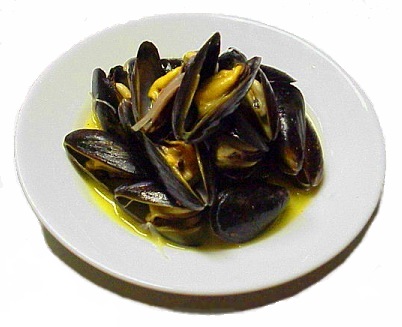
In Rome today on the feast of St. John it is the custom to eat snails.    It is nice to have as your Patron the great Baptist, for I get two feasts a year, his Nativity and his Beheading!  In honor of the memory, if I can’t get snails tonight, I might try for mussels or some other mud bug.

St. John the Baptist: notes and oldie PODCAzTSnails apart, I cannot help but remember a marvelous St. John’s Day when rather than snails I had wonderous mussels with a dear friend, an occasion I would repeat every year, if I could. 

For the Vigil of St. John in the old Roman Ritual the priest would once bless bonfires!  

This is lovely custom calls to mind that many places celebrated the feasts of saints with great festivity.  By this day all the cuttings and trimmings of the orchards and vineyards were dried and crackly and ready to be burned.  The evening is about as long as the year can offer, so a great party could be had well into the night with much cooking in the open and revelry.  After the usual introduction, the priest would bless the fire:

Lord God, almighty Father, the light that never fails and the
source of all light, sanctify + this new fire, and grant that
after the darkness of this life we may come unsullied to you who
are light eternal; through Christ our Lord.
All: Amen.

St. John the Baptist: notes and oldie PODCAzTIt is almost as if the fire, and our celebration, is baptized.  At this point the fire is sprinkled with holy water and everyone sings the hymn Ut quaent laxis which is also the Vespers hymn.

For the feast of St. John in June for centuries the Church has sung at Vespers the hymn beginning Ut queant laxis.  Those of you who are lovers of the movie The Sound of Music will instantly recognize this hymn as the source of the syllables used in solfège or solmization (the use of syllables instead of letters to denote the degrees of a musical scale).  Both the ancient Chinese and Greeks had such a system.   The Benedictine monk Guido d’Arezzo (c. 990-1050) introduced the now familiar syllables ut re mi fa sol la for the tones of the hexachord c to a… or, more modally, the tonic, supertonic, mediant, etc. of a major scale.   The Guidonian syllables derive from the hymn for the feast of St. John the Baptist:

Ut queant laxis resonare fibris
Mira gestorum famuli tuorum,
Solve polluti labii reatum
Sancte Ioannes.
 

After the medieval period (when music became less modal and more tonal) to complete the octave of the scale the other syllable was introduced (si – probably taken from S-ancte I-oannes) and the awkward ut was replaced sometime in the mid 17th c. with do (or also doh – not to be confused in any way with the Homeric Simpsonic epithet so adored by today’s youth, derived as it is from the 21st century’s new liturgical focal point – TV) and do came to be more or less fixed with C though in some cases do remains movable.

So, now you know where Doh, Re, Mi comes from!  

Finally, here is a PODCAzT I did on St. John, an oldie.

St. Augustine of Hippo (+430) preached about St. John in Carthage in 401 (s. 288).  This isn’t, btw, the same reading as you would find in today’s Office of Readings, which is from s. 293).  We also get into Ut queant laxis.

Build a fire tonight, eat snails, and sing something in honor of St. John!

Posted in SESSIUNCULA |
21 Comments

NCR: the ban on lay preaching Archd. St. Paul & Minneaapolis

This is interesting.

Take a look at this piece from the ultra-lefty National Catholic Reporter.

My emphases and comments.

Lay Ministries: Minnesota parishes tussle with impending ban on lay preaching

By KRIS BERGGREN, Minneapolis

Publication date:  June 13, 2008

An archbishop’s recent order to end lay preaching in the St. Paul-Minneapolis archdiocese has brought a deep sense of loss to Catholics who believe in the practice and the theology behind it. In some parishes, lay leaders are seeking ways to register their disagreement with the new ban or to keep lay voices alive despite it.  [Okay… right off the bat we have a stress on feelings and personal " belief" that clashes with the Church’s law and teaching.]

And some people are voting with their feet and finding other places to worship.  [Where?  If this is for the whole Archdiocese, they are going outside the diocese or to non-Catholic churches?]

Archbishop Harry Flynn sent the letter in January to all archdiocesan pastors instructing them to end lectionary-based liturgical lay preaching by May 2, his retirement date, calling such preaching a “liturgical abuse.”  [He was trying to clear the deck for the new Archbishop.] While Canon 766 of the 1983 revised Code of Canon Law states that lay preaching may be permitted when deemed useful  [Apparently the Archbishop did not deem it useful.] or necessary according to norms developed by episcopal conferences, Flynn’s directive appears to be guided by the restrictions in the 2004 Vatican instructional document Redemptionis Sacramentum, which narrows the criteria for allowing lay preaching only to accommodate a scarcity of priests or the needs of a specific community.  [Yes… we do have to pay attention to Redemptionis Sacramentum.]

Some 29 parishes  [Good grief!  Do they have General Absolution in those places too?] here are affected by the ban. Some offered formal ministry training and formation for lay preachers, while others offered informal support and resources.

The targeting [Interesting choice of words.  It makes the Archbishop seem like the enemy and the lay preachers victims.] of lay voices deeply disturbs Patricia Hughes Baumer who, with her husband, runs Partners in Preaching, an Eden Prairie, Minn., organization that has trained 500 lay preachers here and in five other dioceses since 1997.

“[Lay preaching] isn’t an abuse now and it wasn’t even by constructionist standards,” said Baumer, who believes the ban ignores “the direction of canon law” away from prohibition and toward authorization of lay preaching since Vatican II.  [GREAT!  Patty doesn’t think its an abuse.  But Patricia doesn’t get to make that decision, does she?  She has decided first that there is a new "direction" or vector hinted at in Canon Law, that is to say that down the line sometime Canon Law will permit lay preaching.  That is her dreamy opinion.  Maybe she is right.  Maybe she isn’t.  But the fact is that the present Code not only says what it says, but there are other documents governing liturgical life that may not be ignored.  I am also pretty sure this will make a dent in her budget.]

Some have speculated that Flynn was cleaning house for his successor. [Of course he was.  He knew what the new man would do about it and took some of the heat off of him ahead of time.  A good thing to do.]

Baumer said, “It was widely anticipated that Archbishop [John] Nienstedt would not be open to the continuation of [lay preaching] and that Archbishop Flynn made the request so that parishes could attempt to respond with grace, that it was not going to be an immediate termination, [which] would be experienced as far more harsh. [Look how she paints the new Archbishop.] Clearly, if you believe something is an abuse, you don’t give people four months to terminate it.”

Bishops can and do interpret instructional documents and episcopal norms differently, said Passionist Sr. Elissa Rinere, a canon lawyer. “The fact that it can change easily is the nature of the system.” It is important to understand how that system works, she said. For example, instructional documents such as Redemptionis Sacramentum may well inform a bishop’s decision-making but should not supersede canon law itself.   [She pits the documents against each other.]

In a 2006 article for Preach magazine, Rinere called the language on lay preaching in the instruction “chilling.”  [Oooooo!] She explained that the instruction not only lacks the legislative standing to trump existing canon law or episcopal norms, but contains discrepancies in wording compared with the canon’s text. Rinere wrote: “The instruction cites the canon as saying ‘Laypeople may preach outside Mass in churches or oratories (161).’ Canon 766 does not contain the words ‘outside Mass.’ ”

Catholics who support lay preaching have expressed dismay, even grief, at the ban.

“I just feel as if somebody stole my church,” said Miriam Meyers, a retired professor of linguistics and a longtime member of St. Stephen Parish in Minneapolis, which has involved lay preachers for almost two decades. “I think the loss [of lay preaching] is profound and really rather devastating.”

Mary Wilmes, also of St. Stephen, resents the effective silencing of the voices of women and gay, lesbian, bisexual and transgender people.  [Thanks be to God!] As the unofficial archivist at St. Stephen, she has collected 336 sermons, which she e-mails to parishioners who request them.

“Different things appeal to different people,” Wilmes said.  “When you have a range [of preachers], you are going to be touched more than you will ever be touched by one preacher. Many parts, one body, isn’t it? It is an incredible richness.”  [Or great confusion, depending on what is being preached.  I am forced, unpleasantly, to wonder what they were preaching, these "gay, lesbian, bisexual and transgender people".]

Frank Schweigert of St. Frances Cabrini in Minneapolis spoke emotionally [Lot’s of emotion so far to supplement the opposition to the Church’s law and the local Archbishop.] about the importance of lay preaching in setting an example of living with faith for other laypeople, especially “in a formative way for boys and girls. It did a lot to enhance ecclesial understanding of what it means to be a baptized Christian.”

Parishes are wrestling with how to comply yet retain lay presence and perspective. A typical solution is to schedule the lay preacher before Mass.   [And then we can implement Summorum Pontificum in those parishes and see what happens.]

St. Joan of Arc [One of the strangest parishes in the USA.  Remember this?] changed its preaching model well before Flynn’s letter, said associate pastor Fr. Jim Cassidy. Formerly, lay preachers spoke after the Gospel. Now they’re scheduled before Mass. The priest preaches a homily. The advantage to the community, Cassidy said, “besides wanting to respect the guidelines of the liturgy,” is that the two often complement each other. “It is a win-win situation.”

Others find two speakers unwieldy. Staff liturgist Chris Kosowski at St. Frances Cabrini said laypeople have preached for some four decades with the “invitation, encouragement and support of pastors. We have had a feeling of mutuality between lay and clergy.” Parishioners feel various proposals to keep lay preaching in different ways have shortcomings, said Kosowski. “The proposals we have to consider place [clergy and laypeople] on different planes. [You see, this is really about eliminating the Catholic distinction of ordained priesthood and the priesthood of the baptized.] There’s the sense of not wanting two ‘homilies’ in one Mass. And just the feeling of how can something that was OK, allowed by canon law since 1983, all of a sudden not be OK?”   [Right.  Let’s ask these people if it was right to virtually supress the older form of Mass.]

St. Joseph Parish in suburban New Hope will schedule its usual rotation of lay preachers before Mass but they will not vest or process, said Martha Blenkush, a lay preacher and a board member of Partners in Preaching. “[We’ll be] pointing to the readings rather than referring to them. [?] It’s outside of Mass but still allows for diversity of voices, [bzzzz   This is the common theme.] which we think to be important.”

Lay preachers are important in parishes without a resident priest, and where members and pastor aren’t fluent in the same language, advocates of lay preaching say.

“People have the right to have the Gospel proclaimed and hear the word preached in a language they can understand,” said Blenkush.  [Hmmm… ]

Spanish-speaking lay preachers have been active in the St. Paul-Minneapolis archdiocese for about six years.

Wilmes has decided to worship with a breakaway group from St. Stephen that retains ties with the parish but has arranged for offsite worship space on Sunday mornings. She’s joined by at least 100 parishioners who feel similarly, including Miriam Meyers.

Others aren’t taking the order lightly, either: One parish council is considering its finance committee’s request to withhold 10 percent of the parish assessment to the archdiocese until lay preaching is restored, according to a lay preacher at that parish.   [Oh my.  I think I wouldn’t want to test Archbp. Nienstedt that way.]

Even as they await unwelcome changes, many advocates of lay preaching are grateful for the opportunities they’ve enjoyed. Art Zannoni, a lay preacher at St. Cecilia Parish in St. Paul, [and signer of the infamous pro-abortion ad in the NYT many years ago.] said, “We chose as a parish to thank Archbishop Flynn for allowing [lay preaching] the number of years he did.”  [A far more gracious response than the others.]

Partners in Preaching will continue to offer training. Its board has commissioned Baumer to work on a book documenting the impact of lay preaching on the Catholic church. She said, “We will continue to advocate for diversity of voices, believing it really is a need of God’s people.”

Kris Berggren writes from Minneapolis.

National Catholic Reporter June 13, 2008

A couple things.

First, there is issues of law, which perhaps our canonists con comment on. 

Remember when dealing with people or arguments like those presented here that at times you simply must reject the premise.  For example, above we read: "the importance of lay preaching in setting an example…".  I think we can simply reject the premise.  I am not convinced that lay preaching is important in most of the places mentioned in this article.  I can see that it might be in the case where a non-Hmong speaking priest is assigned to the Hmong personal parish.  But in that case, the person should probably work with the priest to translate his sermon and make adjustments for cultural peculiarities. 

Secondly, note the phrase "diversity of voices".  Not "a diversity", just "diversity".  Why do liberals hate articles, anyway?  They talk about "Church" and not "the Church".  This "diversity of voices" is a buzz phrase they have had instilled into them probably by their trainer(s) and workshops.  Tell me this isn’t ideological.

Also, note the hyper-exaltation of feeling.  Feelings trump everything – law, reason, tradition – everything.

Posted in SESSIUNCULA |
97 Comments

The birds and the bees

The masked berry patch thugs are still hanging around, like a bunch of punks at the corner store.

The birds and the bees 

Someone asked for shot of bees, liturgical or otherwise.

The birds and the bees

Sorry this is so blurry, but Mrs. Skunk (I think), a newcomer to the Sabine wildflower zone, was bookin’!

The birds and the bees

It was a beautiful day, yesterday.  But the weather was variable, with intermittent showers.

The birds and the bees

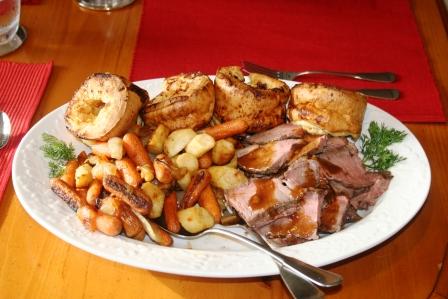
I had a guest for supper last night.  I made roast beef and Yorkshire Puddings with horseradish and roasted vegetables.  We had a fine Cabernet Sauvignon, a 1998 Silver Oak from Napa.

The birds and the bees

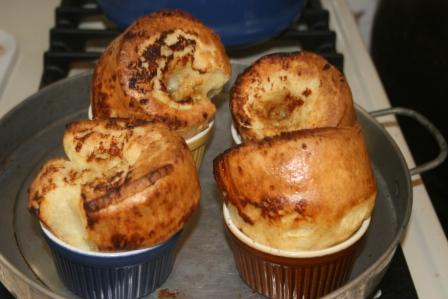
Since I hadn’t made Yorkshire Pudding before, I had a trial run simply with butter.  I used ramekins, which were a gift from a very kind person of my long acquaintance.

The trial run first batch:

The birds and the bees

The second batch, for supper, had drippings from the roast added to the batter and also in the bottom of the hot cup before the batter was poured in.

The birds and the bees

Next time, I think I will make it in the pan itself.

Posted in SESSIUNCULA |
34 Comments

Neo-Catechumenals must adhere to the Roman Rite

The recent approval of the statutes of the Neo-Catechumenal Way had me scratching my head a little.

I was mostly wondering about their liturgical practices.

Frankly, I didn’t have time to read everything about this when it happened. Therefore I am very grateful that Sandro Magister has filled in the gaps for me.

Take a look.  My emphases and comments.

The Old Form of the Neocatechumenal Mass Is Illicit

This is established by the new statutes for the community founded by Kiko, imposed by the Vatican authorities. It is prohibited to take communion seated around a table. Homilies in dialogue form are also forbidden

chiesa neocatecumenali kiko rylko

by Sandro Magister

ROMA, June 23, 2008 – The Neocatechumenal Way has a new, definitive set of statutes. They were approved by the Vatican authorities last May 11, the feast of Pentecost, and officially handed down ten days ago by Cardinal Stanislaw Rylko, president of the pontifical council for the laity, to the international leadership group of the Way, made up of Francisco José (Kiko) Gómez Argüello, Carmen Hernández, and Fr. Mario Pezzi.

The previous statutes, dated June 29, 2002, were experimental and valid for only five years. So they had expired nearly a year before when the new statutes were approved.

The reason for this delay can be intuited by comparing the two texts. Especially in article 13, where the variations are most evident.

Article 13 concerns the celebration of the Mass. For the Neocatechumenals, this has always been the source of the sharpest contrasts with the rest of the Catholic Church.

Especially concerning the times and places of the celebrations.

The Neocatechumenals typically celebrate their Masses not on Sunday, but on Saturday evening, in small groups, separated from the rest of the parish community. And because each Neocatechumenal group corresponds to a particular stage of the Way, each group has its own Mass, in different places.

Then there are the features of the celebration.

The Neocatechumenals typically celebrate the Mass in the form of a banquet, around a large square table, taking communion seated. Moreover, together with the homily, the give a great deal of latitude for the spontaneous comments of those present.

At least, this is what they did until a short time ago. And as, in part, they continue to do.

On December 1, 2005, Cardinal Francis Arinze, prefect of the congregation for divine worship, sent them a letter, in the name of the pope, to call them back to faithful observance of the liturgical regulations. And the following January 12, Benedict XVI in person urged them to obey. But in practice, this twofold reminder fell on deaf ears almost everywhere.

On February 22, 2007, in an audience with the clergy of Rome, Benedict XVI made it clear that the new statutes would not be approved if they did not follow these instructions.

And in the end, the pressure worked. The new statutes approved last May 11 require the Neocatechumenals to celebrate the Mass following the general liturgical regulations of the Roman rite. [Extraordinary use, I suppose… not.] They must receive communion standing.  [Ummm… can they kneel?] The homily can no longer be replaced with a variety of comments. Their Masses on Saturday evening will be "part of the Sunday liturgical service of the parish," and will be "open to other members of the faithful as well."

The only concessions: they can receive communion "while remaining in their places," and they can exchange the sign of peace before the offertory instead of before communion.  [That should be the case for the Novus Ordo, period.] But it must be noted that the latter arrangement is already used in the Ambrosian rite in the archdiocese of Milan. And in the near future, it could also be introduced into the Roman rite, according to what Benedict XVI himself foreshadowed in the post-synodal exhortation on the Eucharist, "Sacramentum Caritatis."  [Excellent.]

According to the new statutes, all of the Neocatechumenal communities in the world must immediately adhere to the new rules in celebrating the Mass.

The Neocatechumenal Way, founded in Spain in 1964, says that it is present in 107 countries on five continents, with 19,000 communities in 5,700 parishes in 1,200 dioceses. In total, it has about half a million members. It has 60 "Redemptorists Mater" seminaries all over the world. It has been active in Italy since 1968, and numbers 4,500 communities in 200 dioceses, with about 100,000 members.

After the new statutes, the "Guidelines for catechist teams," the instructional texts created by the founders Kiko and Carmen, are also supposed to be published soon. Following a long examination by Vatican authorities, they will be issued in a revised edition.

Here he posts the the old and new statutes in comparison.

Posted in SESSIUNCULA |
12 Comments

Countdown: accord between Holy See and SSPX

The very reliable Andrea Tornielli of the Italian daily Il Giornale is reporting that

My translation of the blog post with my emphases and comments.

Countdown: accord between Holy See and SSPX

The countdown has started for an accord between the Society of St. Pius X, founded by the French [archbishop] Marcel Lefebvre, and the Holy See, as I write in Il Giornale today.  The Lefebvrites, who asked for the revocation of the excommunication, must respond by 28 June to the proposals presented on behalf of Benedict XVI by Dario Card. Castrillon Hoyos, President of the Pontifical Commission "Ecclesia Dei".  At issue are five points to be signed off on, which once clarified the SSPX can enter again into full communion with Rome.  It is an one time offer (irrepetibile): for quite a while the Lefevbrites were asking for the derestriction of the old Missa, and Pope Ratzinger gave full citizenship back to the pre-Conciliar rite with the Motu Proprio Summorum Pontificum cura, and the recent "catechesis" coming from Papal Masses, with the recovery of some traditonal elements, can’t be denied.  The Society must accept the Second Vatican Council and the full validity of the post-Conciliar liturgical rite (both these points were already accepted by the same [Archbishop] Lefebvre in 1988), and concerning its canonical arrangement, it could be set up as a "prelature".  It is known, however, that there is internal resistance: Bishop Bernard Fellay, Superior of the SSPX, will have to seek to overcome this in the upcoming days, on the occasion of the General Chapter.  Now that the old Missal has been derestricted – even though there were many difficulties and noisy disobedience – many faithful traditionalists don’t understand why the SSPX will not enter into an accord with Rome, returning fully into Catholic communion.  In all probablity such favorable conditions will not come again.

The longer article in Il Giornale adds that a few days ago Bp. Fellay and some other SSPX members met with Card. Castrillon but doesn’t say much more that new than this brief blog entry.

I would point out that, if this story is accurate in its details, they are talking about perhaps setting up a canonical structure for the SSPX along the lines of what Opus Dei enjoys, a "personal prelature".  Think of a "personal parish" in a diocese, fully a parish but without geographical boundaries, such that it overlaps other territorial parishes, designed for the needs of, say, German speaking immigrants or, as Summorum Pontificum provides for, people who want the older forms of Mass and sacraments.  Extend that model out to a "personal diocese", much like that of the aforementioned Opus Dei or, perhaps, diocesses for military personnel and their families.  This would not give absolute autonomy from local bishops, but it would provide great freedom to work and a structure for administration and, most importanly faculties to marry and hear confessions, say Mass licitly, etc.

As I have been saying all along, the issue of the excommunications and the canonical structure are relatively easily resolved.  I think they will even be likely to sign off on the affirmation that the Novus Ordo is valid.  They aren’t, after all, being told they have to like the Novus Ordo.  They won’t be told they have to celebrate it.  They just will have to say it is valid. 

After that, the theological issues will have to be hammered out.  The Council’s document on Religious Liberty and probably on the Church in the Modern World (Gaudium et spes) will provoke tough discussions. 

However, I don’t see why those can’t take place over time after an accord.  After all, the Church’s teaching on religious liberty is not a dogma of faith like the Holy Trinity or the two natures of Christ.

I am very happy to read about this.  I trust that you, together with me, will pray in a special way for the positive outcome of the SSPX General Chapter.  I will especially invoke their guardian angels to help them in their deliberations, St. Peter and St. Paul to guide all they do concerning the unity of the Roman Church and the Roman Rite.

Posted in SESSIUNCULA |
79 Comments

Chicago: workshop for laypeople on the TLM

I posted this before, but here is a reminder:

A workshop for the lay faithful about the Extraordinary Use of the Roman Rite will be held from August 25-29, 2008, and a workshop for clergy and seminarians will be held from September 8-12, 2008. Both of these workshops, led by the Canons Regular of St. John Cantius, will be held at the Cardinal Stritch Retreat House on the campus of Mundelein Seminary.

For details contact Fr. Scott Haynes, S.J.C. at Canons Regular of St. John Cantius, 825 N. Carpenter St., Chicago, IL 60642. Call 312 243 7373. Visit here for details.

Posted in SESSIUNCULA |
1 Comment

Oceanside, CA: a priest who gets it

I received this nice note:

Dear Fr. Z,
 
Today, at the end of Mass, our pastor, Fr. Cavanna Wallace, spoke about what he said is now being called the "Gregorian" Mass. He directed our attention to the red Latin Mass booklets now in the pews (along with our usual missalettes), [Nice move!  Put them in the pews and let people get used to them.  Very good.] and talked about how it takes some work to get to know the older Latin Mass. (He also said it can’t really be called the "old" form because it was never outlawed, merely "set aside for a time–a relatively short time" in a Church history of two thousand years, and is therefore still current.) In order to help us get to know and understand this form better, he will be devoting his sermons at all Masses in the months of July and August to exploring and explaining the Extraordinary Form of the Mass (1962 Missal). He also mentioned that this understanding could lead to a "cross-pollinization" between the two forms.  (Is that a real word?)   [Yes.  I believe it is.]

I think this is terriffic!  [So do I!] I am looking forward to this homily series.  I have not yet been to the 6:00 Sunday evening EF Mass, but I do know that Father Wallace is posting two separate sermons on his website each week–one for the NO calendar, and one for the 1962 calendar.   (  http://printedaspreached.blogspot.com/  )  This is all happening at:

St. Margaret’s Catholic Church
4300 Oceanside Blvd.
Oceanside CA 92056

Parish website: http://oceanside4christ.com/

(Note: St. Margaret’s is in the Diocese of San Diego, whose bishop, Robert Brom, recently issued the memo that you discussed in your blog 

Fr. Wallace gets high WDTPRS kudos for this. 

Well done, Father! 

We hope for updates all along the way. 

Posted in SESSIUNCULA |
33 Comments

Lake Charles, LA: Solemn TLM – 29 June

I got this notice via e-mail:

Dear Father Z,

We will be having a Solemn High Mass at the Cathedral of the Immaculate Conception in Lake Charles, Louisiana, on June 29th – the Feasts of SS. Peter and Paul – at 2:00 PM. If you would, could you advertise it on your blog sometime this week? It will be the first Solemn High Mass in our area in probably over 40 years. Here’s some more info:

Celebrant: Rev. Fr. Rommel Tolentino
Deacon: Rev. Fr. Nathan Long
Sub-Deacon: Rev. Deacon Scott Conner
Master of Ceremonies: Mr. Bryan Thompson

In Attendance:
The Most Rev. Glen John Provost Bishop of Lake Charles (expected)
Rev. Fr. Roland Vaughn (Extraordinary form chaplain) (expected)
Rev. Fr. Joseph McGrath (expected)
The Seminarians for the diocese (expected)

Unfortunately, there does not seem to be too much advertising yet about this Mass. In the local paper, the diocese pays for a page called the "Catholic Calender", but that had no information about it. So I was thinking about calling the bishop to see if the diocese would do a press release about the Solemn High Mass to get the word out. There are lots of people I’ve talked to who regularly go to the Novus Ordo who don’t want to go to the TLM there because of the time in the afternoon. So I also think they ought to eventually move the regular time slot.

Anyways what have other communities done to ensure the success of their Solemn High Masses? Since I’ve helped in small ways to get the whole thing started, I definitely want to see more people than the usual 100 at the Tridentine Mass every Sunday.

Posted in SESSIUNCULA |
1 Comment