
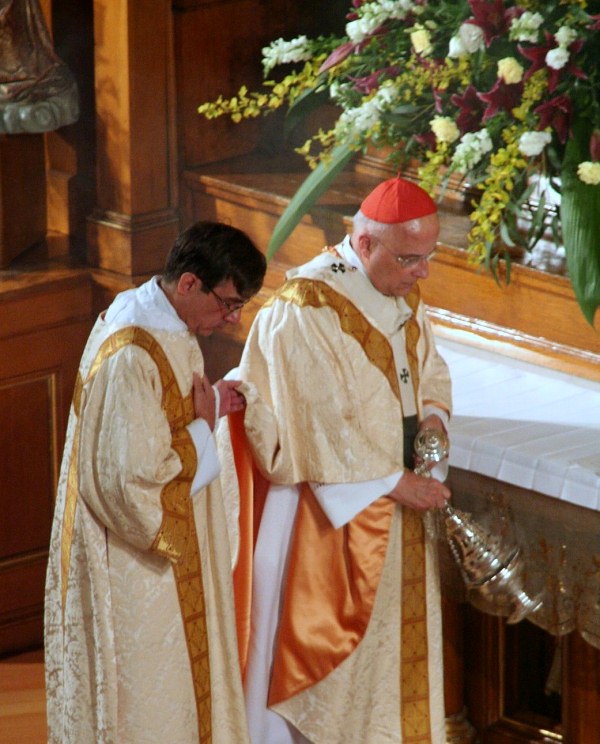
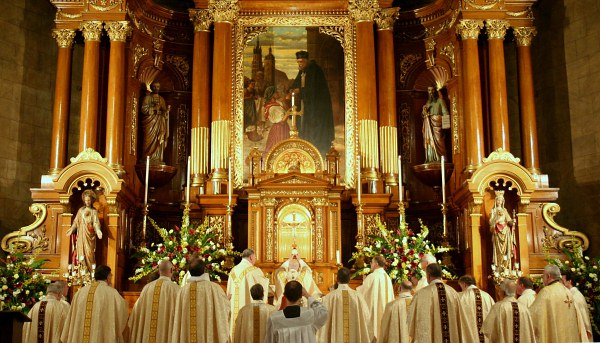
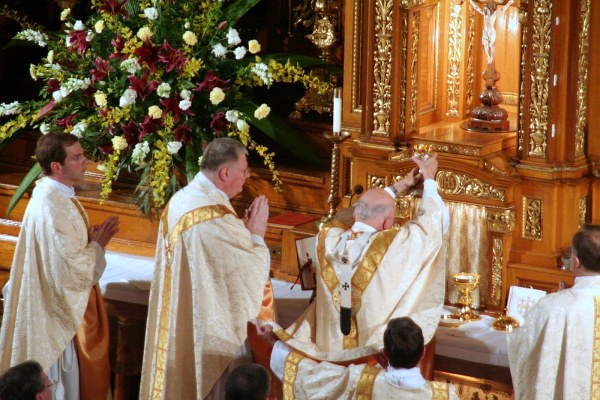
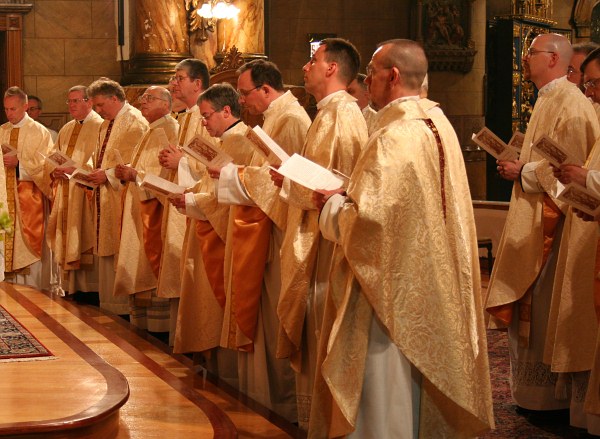
Holy Church asks for full, conscious and active participation at every Holy Mass, regardless of the form, whether the Novus Ordo or the more traditional, Extraordinary Form.
However, this sort of participation has often been misunderstood. For decades the dominant view of active participation has been that for everyone to be "actively participating" everyone has to be singing every world, carrying stuff around and doing things.
This false understanding of active participation runs very contrary to the sort of participation we have the opportunity to engage in during celebrations of the "Tridentine" Mass, wherein we are much quieter.
True active participation, as the Church understands it, is more along the lines of active receptivity, uniting our heart, mind and will to the words and gestures in the sacred Action of the Mass. Christ is the true Actor in the liturgy. Sometimes He uses our voices and gestures. At other times we participate in his words and gestures through the priest and sacred ministers, always being open to what Christ is offering. In this way we are actively receptive. There is nothing passive about listening and watching intently, in union what what is being said, sung and enacted.
However, for those who are unfamiliar with the older form of Mass, which requires a good deal more focus and concentration, more discipline of mind and will than the newer form of Mass, this kind of active participation is hard to engage in: if you understand what is going on, you can’t really "get into it". We need a basic familiarity with the texts and actions, especially in light of the differences between the newer form of Mass and the older, before our participation can be fuller, more conscious, and more actively receptive.
Therefore, I think it is a wonderful idea that St. John Cantius parish in Chicago is offering a worshop for lay people, to help them understand better what the TLM is all about.
I received this via e-mail:
Workshop For Laity
Monday August 25 to Friday, August 29, 2008
Extraordinary Form of the Mass – 1962 Missale Romanum
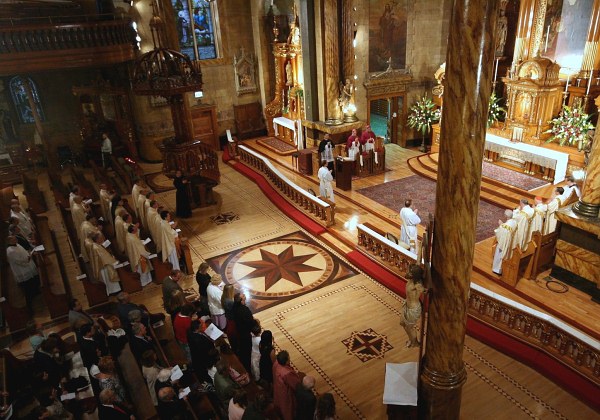
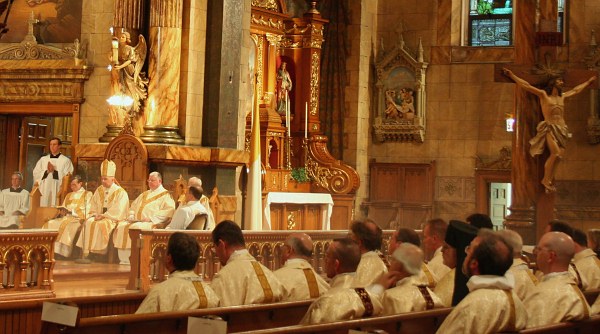
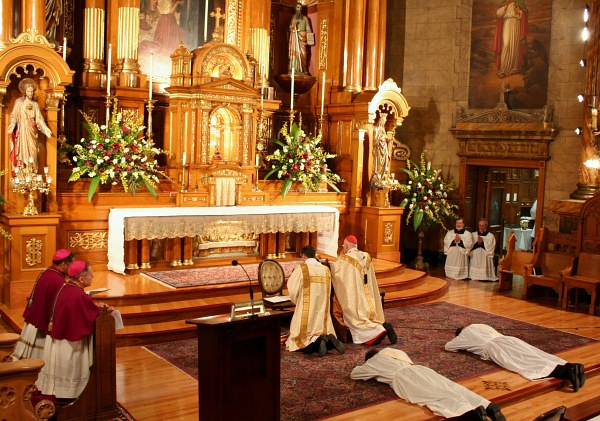
Join the Canons Regular of St. John Cantius in Chicago for the "Workshop for Laity" in the Extraordinary Form of the Mass. The workshop will provide registrants with an in-depth examination and spiritual meditation on the Traditional Latin Mass through the presentation of lectures and tutorials.
Participants will also have opportunities for Eucharistic Adoration to extend the worship of our Lord in the Blessed Sacrament. Devotion to Our Blessed Lady will be fostered by the recitation of the Holy Rosary in Latin. Additionally, sacramental Confession will be offered frequently throughout the week for the spiritual benefit of those attending the workshop. And best of all, each day of the workshop, registrants will participate in the celebration of the Traditional Latin Mass, with an ever-deeper love and appreciation of the Church, her liturgical traditions and of her Savior, Jesus Christ.
Lectures• History of the Mass of the Roman Rite
• Explanation of the Prayers and Ceremonies of the Mass
• Mystical Theology and the Spirituality of the Mass
• The True Meaning of Active Participation in the Liturgy
• The Splendor of Beauty and the Liturgical ArtsLatin Prayers and Chants for the People
The tutorial in the Latin Prayers and Chants for the People will help you to gain experience in the basic pronunciation of ecclesiastical Latin. We will have group rehearsal of the most essential Latin prayers and responses for the Traditional Latin Mass. Gaining greater ease and confidence in the execution of the Latin prayers and chants will help the participants to experience the Extraordinary Form of the Mass (1962 Missale Romanum) in a more meaningful and intelligible manner.
Latin Prayers and Chants for the People will also address provide instruction to church musicians in the rubrics of Sacred Music for the Extraordinary Form (1962 Missale Romanum), reviewing the sacred traditions of Gregorian chant and sacred polyphony, and rehearsing examples of chant. Participants will also be presented with the resources that are available today to vocalists, music directors, and organists for the restoration of our musical heritage.
Liturgy and devotions
• Daily Mass in the Extraordinary Form (1962 Missale Romanum)
• Eucharistic Adoration and Devotions in Latin
• Sacrament of Confession








 waalaw on Daily Rome Shot 1119: “In 1st variation, 2. . . . . . Q-g1# also works. As does 4. . . . . .…”




























