Tablet picks up on Card. Cipriani’s (Lima, Peru) ban of Communion in the hand

I posted on this issue back on 17 April, but The Tablet has it now.
 

Church in the World
26 April 2008
Peru

Cardinal bans Communion in hand

A Peruvian cardinal has banned the practice of receiving Communion in the hand in his diocese to guard against devaluing the Eucharist, an Italian website has reported.

Opus Dei Cardinal Juan Luis Cipriani Thorne told Petrus: "I maintain that the best way to administer Communion is on the tongue, so much so that in my diocese I have forbidden the host in the hand."

The cardinal, who is Archbishop of Lima and a member of the Congregation for Divine Worship and the Discipline of the Sacraments, said that "the relaxed attitude of many priests" was to blame for a decline in reverence for the Eucharist among the faithful. "In Masses with great attendance, in the past we even found hosts thrown on to the pavement of the church," he added.

A missionary priest working in Lima told The Tablet the ban "would only apply to his jurisdiction of the Archdiocese of Lima". "The remainder of the dioceses around Lima would not go for such a practice," he said.

Oddly, there is no more than that.  I suspect there will be editorials to come! 

Posted in SESSIUNCULA |
81 Comments

What is Twitter and why we should want to know

As familiar as I am with some dimensions of blogging, I am rather more unfamiliar with other personal networking technologies.

For example, what is TWITTER, anyway?

I got interested on knowing about this whole twitter thing because of the following CNN story:

Student ‘Twitters’ his way out of Egyptian jail

By Mallory Simon
CNN
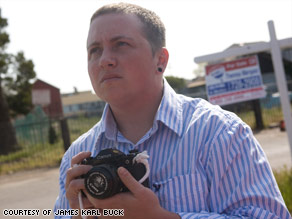
What is Twitter and why we should want to know(CNN) — James Karl Buck helped free himself from an Egyptian jail with a one-word blog post from his cell phone.  [Something I think we might all find useful!]

 Buck, a graduate student from the University of California-Berkeley, was in Mahalla, Egypt, covering an anti-government protest when he and his translator, Mohammed Maree, were arrested April 10.

On his way to the police station, Buck took out his cell phone and sent a message to his friends and contacts using the micro-blogging site Twitter.

The message only had one word. "Arrested."

Within seconds, colleagues in the United States and his blogger-friends in Egypt — the same ones who had taught him the tool only a week earlier — were alerted that he was being held.

Twitter is a social-networking blog site that allows users to send status updates, or "tweets," from cell phones, instant messaging services and Facebook in less than 140 characters.

Hossam el-Hamalawy, a Cairo-based blogger at UC-Berkeley, was one of the people who got word of Buck’s arrest.

"At first I was worried about his safety," el-Hamalawy said.

Then, el-Hamalawy took to the Web and wrote regular updates in his own blog to spread the information Buck was sending by Twitter. Nobody was sure how long Buck would be able to communicate.

 But Buck was able to send updates every couple of hours saying he was still detained, he had spoken to the prosecutor, he still had not been charged, and he was worried about Maree.

"Usually the first thing the police go for is the detainees’ cameras and cellular phones," el-Hamalawy said. "I’m surprised they left James with his phone."

Twitter is normally used to keep groups of people connected in less urgent situations.

But Biz Stone, co-founder of Twitter, said he and others knew that the service could have wide-reaching effects early on, when the San-Francisco, California-based company used it to communicate during earthquakes.

Stone said that as the service got more popular, they began to hear stories of people using Twitter during natural disasters with a focus on activism and journalism.

Buck’s urgent message is proof of the value of Twitter, Stone said. Buck’s entry set off a chain of events that led to his college hiring a lawyer on his behalf.

"James’ case is particularly compelling to us because of the simplicity of his message — one word, ‘arrested’ — and the speed with which the whole scene played out," Stone said. "It highlights the simplicity and value of a real-time communication network that follows you wherever you go."

Initially, the Twitter message was a precaution — something people could trace in case anything went wrong, Buck said.

"The most important thing on my mind was to let someone know where we were so that there would be some record of it … so we couldn’t [disappear]," Buck said. "As long as someone knew where we were, I felt like they couldn’t do their worst [to us] because someone, at some point, would be checking in on them."

Buck began using Twitter as a way to keep up in touch with the bloggers at the heart of his project and the events going on in Egypt that he intended to cover. Buck was working on a multimedia project on Egypt’s "new leftists and the blogosphere" as part of his master’s degree thesis.

Buck found out from a Twitter message that a planned protest against rising food prices and decreasing wages in Mahalla had been shut down by Egyptian authorities April 6.

The next day, tensions rose as family and friends of protesters who had been detained took to the streets, eventually throwing Molotov cocktails and setting tires on fire, he said.

On April 10, Buck returned to Mahalla, where protests continued.

"I was worried about getting arrested, so I made sure to stay at a distance from the protest so there was no way I could be accused of being part of it," Buck said. "Mohammed and I had a bad sense; it was really tense."

When the men tried to escape, they were detained. That’s when Buck thought of Twitter and sent out his message.

Buck and Maree were interrogated, released and then detained again by the same police officers.

"We are really worried that we are off the radar now," Buck said.

Eventually Buck was released, but Maree was transferred to another police station.

As he left the station, Buck reached into his pocket, as he did less than 24 hours earlier.

Another one-word blog entry said it all: "Free."

As happy as he was to be free, Buck said, his biggest frustration was leaving behind the translator who helped protect him during the riots.

Although the Twitter message helped him find contacts to get out of prison, he says it was more the power of the network he had as an American that enabled him to be released so quickly.

"Mohammed was sitting next to me," he said. "But he didn’t have the network to call. I tried to use my network to shield him until they tore us apart."

Twitter may not have been able to secure Maree’s release, but Buck hopes his initial reason for using Twitter will help find his missing friend.

"It was my big hope that people would get [the message] right away and at least put a thumbtack on the map as far as our location," Buck said.

There has been no official confirmation regarding Maree’s whereabouts.

Attiya Shakran, press counsel for the Egyptian Consulate in San Francisco, said Maree was released April 13.

Maree’s brother Ahmed Maree said that he had not heard from his brother and that he believes he is still in jail.

Government officials in Egypt could neither confirm nor deny Maree’s release, despite repeated requests for comment.

Buck is now using his story and Twitter page as a way to rally people looking for answers about Maree’s status. He’s gone as far as publishing the phone number of the press counsel of the Egyptian Consulate in San Francisco and posting a petition for Maree’s release.

For Buck, the main story is no longer about his quest for freedom from jail; it’s a quest to find answers and, eventually, find his friend.

And I hope he does.

But the fact remains, I think we could use some discussion of Twitter.
 

Posted in SESSIUNCULA |
27 Comments

Card. Mahony on what the Pope’s visit did for him personally

If you haven’t seen this from the Archbishop of Los Angeles, His Eminence Roger Card. Mahony in The Tidings.  My emphases, no comment:

Published: Friday, April 25, 2008
Reflection: The Pope’s Pastoral Visit
By Cardinal Roger M. Mahony

Pope Benedict XVI came as our Pastor and as our Shepherd, and he spoke to us of our most human joys and sorrows, our hopes and our failures. He came in the name of Jesus Christ and he reminded us "to keep our eyes fixed on Jesus" [Hebrews 12:2].

Our Holy Father did not hesitate to lift up for us challenges and difficulties which our Church was facing here in the United States, but he never left us alone with our failures and problems. He stood with us, acknowledged the shame of sinful behavior, and urged us forward in the name of our Risen Lord.

He openly spoke of the scourge of sexual misconduct on the part of clergy over these past decades, he visited with victims of that abuse, he reminded us of our immigrant roots and urged us to be present to today’s immigrant peoples and their plight, he spent quiet prayerful time at Ground Zero, he met with those young people suffering with physical disabilities, he spoke of the futility of violence and war, and he did not hesitate to alert us to the conflict between the Gospel of Jesus and our contemporary society.

But he never left us mired in our troubles and our difficulties. Rather, he pointed out time and again that God’s presence and grace are far more powerful than the forces of evil in the world. Again and again he led us to focus not on the pain and sufferings of our human failures, but rather, on the redeeming grace of our Risen Lord.

Time and again he led us back to our friendship with Jesus Christ, and urged us to recognize the presence, love, and mercy of Jesus surrounding us.

For me personally, the two most memorable moments of grace with our Holy Father were ones shrouded in quiet prayer, silence and few public words: his meeting with victims of sexual abuse in Washington, D.C., and his visit to Ground Zero in New York. Both of these events had the dignity of silence, the depth of sadness, and the promise of hope-filled prayer – and both captured deeply the most wounded parts of our Church and of our country.

Yes, the great outdoor Masses were inspiring, the meetings with ecumenical and interfaith leaders were moving, and the gathering with young people and seminarians was memorable. But the power of those times of quiet healing moved me more deeply than all the rest of the Holy Father’s many public appearances.

At first, I didn’t know why. After all, concelebrating Mass with the Pope and tens of thousands of people was surely uplifting and a source of joy for us all. Slowly the realization became real: those times of quiet healing grace were exactly what I needed at this time in my own journey of faith. My own mistakes and failures over the years had continued to burden me – a weight that I failed to realize was holding me down.

The gentle and quiet manner of Pope Benedict touched me in the most vulnerable depths of my soul. I felt uplifted by our Shepherd and my heavy burdens somehow seemed lighter. How did our Holy Father accomplish this? Through his consistent call to faithful discipleship in Jesus Christ, and his reassurance that we are truly saved by hope in our loving God! His recent Encyclical Letter, Spe Salvi [Saved by Hope], continues to point us forward and upward on our journeys. He does not allow us to remain mired in our sins and faults, but instead, kept repeating the call to "true freedom" in Jesus who has come as "the way, the truth, and the life" for each one of us.

I return to Los Angeles a different disciple of Jesus than when I left a week ago.
Thank you, Lord, for sending us not only the Vicar of Christ and the Successor of Peter, but also a brother and friend who knows Jesus personally and gave us six extraordinary days of grace and hope!

Posted in SESSIUNCULA |
Comments Off on Card. Mahony on what the Pope’s visit did for him personally

NYT: Steinfels on aftermath of Pope Benedict’s visit to the USA

The NYT has an article by Peter Steinfels on the Pope’s visit.

My emphases and comments.

NYT: Steinfels on aftermath of Pope Benedict's visit to the USAApril 26, 2008
Beliefs
Pope Benedict and the Lasting Impact of His U.S. Trip
By PETER STEINFELS

Pope Benedict XVI has come and gone. To a population that knew little about him, he almost certainly left a favorable impression. Once the afterglow fades, however, what will remain?

There are a variety of categories, of course, for sorting through the messages and images. But here are two useful ones: the God crisis and the church crisis.

As theologian and now as pope, Joseph Ratzinger has been, above all, a man of the God crisis. For him, God is the answer to questions that “can never be erased from the human heart,” as he said in his Washington meeting with other religious leaders.

“What is the origin and destiny of mankind?” he said to them. “What are good and evil? What awaits us at the end of our earthly existence?

“Only by addressing these deeper questions can we build a solid basis for the peace and security of the human family.”

Yet in his view modernity, in a myriad of ways — from materialism to relativism to the technological mind-set — has shunted those questions aside or thrown up intellectual barriers to answering them.

Europe has been the heartland of the God crisis. So naturally it has preoccupied a European intellectual like Benedict. His response has two parts. Over the years he has offered a finely woven fabric of ideas about Christian faith, reason, truth and freedom. His arguments are certainly not beyond challenge, not even by theologians and philosophers who share his conclusions. [Oh?  What are they?  The writer just tosses this onto the table, splat, and leaves it there.] But there is little doubt that they are serious and substantial.  [But, if they are "serious and substantial", what are they?]

But Benedict has never thought that a purely intellectual response was adequate. There was also an inescapably personal dimension to the God crisis — a matter of opening oneself, of inner conversion and personal decision.

This movement of the heart could be stirred by the witness of believers, by the solidarity and charity of the Christian community, by the power of worship or the beauty of religious art. Warning against an individualistic piety, Pope Benedict told the American bishops, “If we are truly to gaze upon him who is the source of our joy, we need to do so as members of the people of God.”

The God crisis, therefore, cannot be separated from the church crisis. If the church [here is a problem] has become dysfunctional, inarticulate or spiritless, it will be incapable of addressing those deeper questions with responses that satisfy both the mind and the heart.  [The Church, in its deeper sense, is not dysfunctional.  Members of the Church or structures in the Church can be dysfunctional.]

But for Benedict, the God crisis always takes priority. [Well… duh!  That being the fundamental question of man’s existence.] Whether speaking of truth to educators or human rights to the United Nations, he returns again and again to the question of “foundations,” which for him ultimately mean God. He grows impatient whenever talk of the church seems to supplant talk of God. [Rightly so.  And, thus we must ask, if someone addresses man’s problems without the God dimension, can those approaches, or criticisms of Benedict’s approach which don’t take adquate account of God, be "serious and substantive"?]

Of course, Benedict came to the United States knowing that the God crisis is hardly as acute here as it is in Europe and that what has been troubling American Roman Catholicism is the church crisis. [As a result he had to so something about those structures or people in the Church who are dysfunctional.] And just as the God crisis has both a personal dimension and an intellectual one, the church crisis has both a personal dimension and a structural one.

The pope certainly addressed the personal dimension. He exhorted the bishops to be “engaging and imaginative.” [for example, it is entirely possible that many bishops today, so pressured by matters of administration, have come to see themselves more as senators or CEO’s than bishops.] He worried out loud about the state of the liturgy [Because liturgy is the tip of the spear.] and whether preaching had “lost its salt.” He underlined the need for more priests. He urged the healing of divisions in Catholic ranks. [A main division is that which now exists in many places between priests and their bishop.] He called on all Catholics to take their beliefs into public life. [This is a key point, which needs more attention: in order to give something useful in the public square, we must have a clear identity!] Most of all, in meeting with victims of sexual abuse by priests, he offered a model of pastoral sensitivity.

About the structural dimension of the church crisis, however, he said nothing. Does the American church need new or refurbished structures of transparency, accountability and consultation in a wide range of matters, including finances, parish closings and the appointment and assignment of bishops and pastors?  [It sounds like the writer is advocating for this, disguising advocacy as a question.]

Should new roles for the laity in parish leadership be more formally recognized? ["Formally"?  How?  Only clerics can exercise certain levels of jurisdiction.] Are changes beyond prayer and exhortation needed to combat the growing shortage of priests?  What about the ordination of married men or women or the reintroduction of female deacons?  [What about them?  This is advocacy, not the mere raising of questions. And notice the word "reintroduction"?  There never were female deacons, at least not as clerics or in holy orders.  So, this is deceptive in some ways.]

Such structural changes are favored by many moderate-to-liberal Catholics. [I dispure the premise.  I do not believe that any Catholic who is truly moderate, or anywhere near moderate, will advocate the "reintroduction" of female deacons (who never existed).] There are less publicized ones favored by some conservatives, including tight episcopal control over Catholic higher education, ["Tight" control?  I wish more bishops exercised "some" control!  According to the document Ex corde Ecclesiae!] restoration of traditional forms of seminary training and broad resort to oaths of fidelity.  ["Broad resort" … what to make of that phrase.  It smacks of desperation, no?  I think what the writer is doing is presenting "positive" solutions from the liberals and "desperate" crackdowns from conservatives.  Or am I getting this wrong?]

The pope’s silence about all such institutional nuts and bolts is not surprising. For one thing, he believes that church structures must evolve, as he says, “organically” rather than by grand design.  ["Nuts and bolts".  I wonder if the problems can be reduced to that.  The hierarchical dimension of the Church is so "nuts and bolts" that it is a constitutive part of the Church.]

His suspicion of structural changes goes further, however. He often dismisses them, especially liberal ones, as “power games” or as superficial diversions from the foundational God crisis and the interior transformation it entails.

Indeed, the very mode of calculating gains and losses in Catholic ranks, parishes without priests, a decline in religious literacy or Mass attendance among young Catholics seems foreign to Benedict’s outlook.  [On the other hand he has openly wondered about the future and perhaps seeing a smaller Church.  So, it is not entirely foreign.]

At one level, this stance is unassailable. Who would deny his reminder of some years ago that “the church does not exist for herself but must be God’s instrument”?

But what if the instrument needs significant repair or reconstruction? What if, to change the metaphor, the problem is not so much weak foundations, at least not yet in the United States, as a leaking roof, bad wiring and faulty plumbing?

Will addressing the God crisis, perhaps with the pastoral sensitivity Benedict demonstrated on his visit, spontaneously generate responses to the church crisis? Or is addressing the structural dimension of the church crisis a prerequisite to successfully addressing the God crisis?  [I don’t see why one can’t do both at the same time.  This isn’t a zero sum game.]

The lasting impact of Pope Benedict’s visit may hang on the answers to those two questions.


Plop.  At the end, does this really go much beyond leaving the reader with the vague impression that the "conservative" approach to this is somehow inadequate?  I think that might be the writer’s position. 

Posted in SESSIUNCULA |
15 Comments

WDTPRS problems and Sabine frustrations: the Enemy ATTACKS!

Some of you will have encountered problems accessing the blog.

Obviously we are back!

"But Father! But Father!" some of you are surely saying.  "What happened? I was worried your provider went out of business, or the server died, or… well… maybe you pulled the plug!"

Not this time, and not yet.

There were two problems.

First, so many people come here now that we had to increase the maximum number of connections possible.

Also, the blog has gotten so big that the database was running out of diskspace!  So, we have done some maintainence to clean things up and, cause the files to compress and rotate.

Furthermore, while I was away from the Sabine Farm on my trip to Virginia and Florida, there was some sort of storm here which caused problems for my Sabine network.  Folks, I have some pretty hefty surge protectors and UPS units.  You need stuff like that when you are out in the country and on a pretty spread out power grid.  This must have been a pretty big blast.

I have various computers hooked together, as well as all sort of other equipment that can connect to a network.  First, I found that my remote network power switch was blown away.  This is a super useful gizmo.  I would use that switch, through a web interface, when out on the road or in Rome to cycle power off and on on certain pieces of equipment such as my Slingbox (blessings on its creators).  This  way I can renew IP addresses, etc.  I can also set it to cycle on a schedule.  That eliminates the needWDTPRS problems and Sabine frustrations: the Enemy ATTACKS! for someone physically to have to come into the house when I am gone and do it manually.  These switches are often used on computers and other equipment in remote locations, such as ATM machines, so that a techie doesn’t have to go out physically to reboot it.  Anyway, I cannot anymore access the web interface for power switch, which makes it useless.  That must be replaced.

Also, a couple network switches were damaged as well, so my network was broken.  I also couldn’t use my internet phone (Vonage). Yesterday I found D-Link switches on sale for $10!  No kidding! $10!  So, those were replaced and now my equipment can talk to each other again.

Then there is the car.  I had some work done on the car while I was gone.  But when I got home, the car was dead, so I had to put the handy slow charger on the battery and get it going.  No good explanation there.

Then last night there was another storm with lightening while I was having a little work out.  "KABOOM", quoth the storm.   By the time I got to the door of the barn where the workout space is, I couldn’t see the house for the rain.   Arriving at the house and shutting down electronics, I found later that the TV now shows only green and pink!  That is going to be really annoying.  I wonder if it isn’t time to switch to the digital thing.  Grrr.

Later I discovered that there was no water. 

"Hmmm"… quoth I… well…  not quite that. 

The water pump for the well is about 3 football fields away but the fusebox is in the basement.  One of the fuses had literally had the front blown off.  I concluded that that was in fact the problem with the water.  I replaced the fuse.  Voila , water. 

Then this morning I find that the blog has been down, all night I think, since there were very few fresh comments. 

In any event, I seem to be under attack by Old Scratch and electric stuff seems to be the front. 

I will be fighting back with prayer and fasting as well as requesting your prayers as well.  I suggest we get out guardian angels to work on this together.

Oh yes… its 33 degrees (F) and trying to snow.

Posted in SESSIUNCULA |
15 Comments

UK: Coordination of liturgical calendars

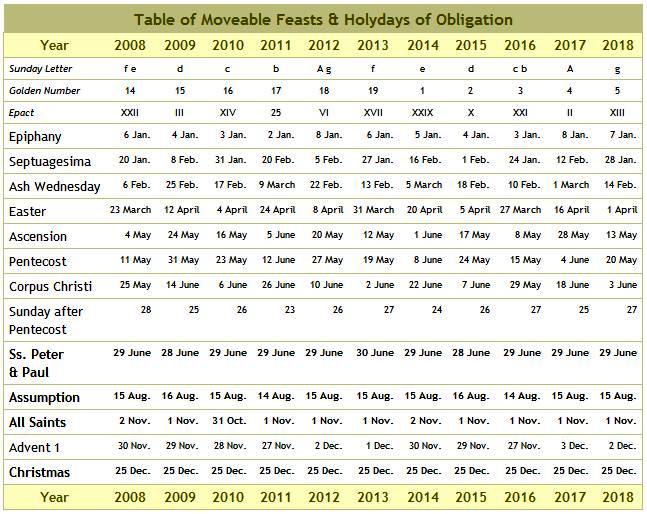
The Pontifical Commission Ecclesia Dei has responded to the Bishops Conference of England and Wales about the coordination of calendars of for the Novus Ordo and the TLM regarding feasts.

Apparently they received a response to a dubium proposed to the PCED conveying…

Following a request for information the Bishops’ Conference of England and Wales submitted a dubium to the Pontifical Commission Ecclesia Dei which confirmed that in the Roman Rite, whichever Form of the liturgy is being celebrated, the Holydays of Obligation are held in common. Where the obligation has been removed and the Holyday transferred to the Sunday, the Epiphany of the Lord, the Ascension of the Lord and Corpus Christ, this is to be followed in both Ordinary and Extraordinary celebrations of Mass.

The Liturgy Office of the Conference put this on their site:

The table below gives an outline of moveable dates and Holydays of Obligation for celebrations of the Extraordinary Form. The list of months to the right give access to the basic Calendar for the Extraordinary Form according to the Missale Romanum of 1962. The Latin Mass Society of England and Wales offers a more detailed yearly Ordo.
Holydays of Obligation

Following a request for information the Bishops’ Conference of England and Wales submitted a dubium to the Pontifical Commission Ecclesia Dei which confirmed that in the Roman Rite, whichever Form of the liturgy is being celebrated, the Holydays of Obligation are held in common. Where the obligation has been removed and the Holyday transferred to the Sunday, the Epiphany of the Lord, the Ascension of the Lord and Corpus Christ, this is to be followed in both Ordinary and Extraordinary celebrations of Mass.

The Sunday Letter

In the first column of each month of the Calendar, against each day of the month will be found one of seven letters: A, b, c, d, e, f and g. These are known as the Sunday letters and they show which days of a particular year are Sundays. For example: the Sunday letter for the year 2011 is b; therefore each day which bears this letter will be a Sunday throughout the year 2011: 2, 9, 16 January, etc. A leap year has two Sunday letters, the first showing the Sundays as far as 24 February, the second one showing the Sundays from 25 February until the end of the year, and the Sunday letter f is used for both 24 and 25 February. (In the terminology of the old Roman Calendar both dates are called the Sixth day before the Calends of March.) For example: the Sunday letters for the 2011 are A and g. The first letters shows the Sundays up to 24 February: 1, 8, 15 January… 19 February; then the second letter, g, is used: 26 February, 4, 11 March, etc.

The Old Roman Calendar

In the second column of each month of the Calendar there will be found three fixed points, the Kalends, the Nones and Ides, with Latin numerals counting down to these, the day before each of the three foxed points being note as the Pridie or Eve. The old Roman practice was to count down to the fixed points, with the having the number I, the Eve being the second day before it, the day before the Eve being the third day before it, and so on. The Kalends was the first day of each month. Thus 1 January was called the Kalends of January. The Nones of March, May, July and October was the seventh day of these months as we reckon them; in the other months it was the fifth day. The Ides of March, May, July and October was the fifteenth day of theses months; in other months it was the thirteenth day. For example: 2 January was the fourth day before the Nones of January; 2 March the sixth day before the Nones of March; 14 February the sixteenth day before the Kalends of March; 8 March the eighth day before the Ides of March.

UK: Coordination of liturgical calendars

Posted in SESSIUNCULA |
81 Comments

Archd. NY vocation crisis: surge after Pope Benedict’s visit

I found this nice story from the NY Daily News.

Pope Benedict’s visit proves a godsend for city seminary

BY ADAM NICHOLS
DAILY NEWS STAFF WRITER

Friday, April 25th 2008, 4:00 AM

A clergy-starved Archdiocese of New York was facing a crisis – until Pope Benedict arrived.

For the first time in 108 years, St. Joseph’s Seminary in Yonkers was preparing for a year with no new students. [!  How is that possible!?]

But, after the Holy Father’s whirlwind city tour, dozens have heard the call.

"It’s been like a tsunami, a good tsunami of interest," said the archdiocese’s vocations director, the Rev. Luke Sweeney.

"I’ve been meeting people all week and have a lot of e-mails I haven’t had the chance yet to respond to. It has been incredible."

Only 23 seminarians are expected to be ordained into the city’s priesthood during the next four years, following decades of decline in the ranks.   [Unbelievable!]

In 40 years, the numbers of Catholic men of the cloth in the city has been cut in half, to only 648 – even as the number of Catholics has swelled to 2.5 million.

The city’s ratio of priests to congregation members is now among the worst in the country, according to a study carried out by the Catholic World Report.

And before the Pope’s visit, nobody had signed up for this year’s intake of trainees.

"We are facing a severe shortage," said Sweeney, the mastermind of a recently launched recruitment campaign that uses the slogans "The World Needs Heroes" and "You Have To Be a Real Man If You Want to Become a Priest."

"We were hoping the Pope would convince many who were considering the priesthood to make the next step. It looks like he did."

In only three days since the Pope left New York after a visit that included speaking to 25,000 young people on the seminary’s grounds, dozens of prospective priests have contacted Sweeney.

"One said he came, saw the crowd, heard what the Pope said and then called us," said Sweeney. "He said his questions and concerns were answered when he heard him speak."


There is no lack of vocations, people.  There are defects in the way the call is being "broadcast" and then fostered. 

Posted in SESSIUNCULA |
24 Comments

L’OssRom: revealing interview with H.E. Piero Marini (former MC)

[uc]

In today’s L’Osservatore Romano there is an interview with the former papal MC, H.E. Archbp. Piero Marini, now head of the office for Eucharistic Congresses.   In interview begins with comments about the upcoming Congress to be held in Quebec.  However, it also delves into the question of these huge outdoor Masses, the implementation of the post-Conciliar reform, and Summorum Pontificum.

Here are some excerpts form His Excellency’s comments in my rapid translation.  I will add to this as time allows.   (Sometimes I wish this were a group blog…)

My emphases and comments in what follows.

Q: Today it seems there has returned to present interest the debate on the liturgical reform sparked by the Council.  How do you judge the progress made in the last 40 years?

MARINI: I followed, starting from the period of Vatican II, the implementation of the liturgical reform for some 22 years, first in the Consilium ad exsequendam constitutionem de Sacra Liturgia [On this see the recent kiss-and-tell book that came out under Marini’s name.] and then in the Congregation for Divine Worship.  After that, for more than 20 yeas I was able to celebrate the liturgy desired by the council [Grrr… this is a problem phrase…. pay attention to how Marini uses it.  We must be on guard against phrases like this and not leaven them unchallenged.] in more than 100 countries, on the occasion of the journeys of Papa Wojtyla.  And so I organized with local experts numberless celebrations of the Eucharist, of the Liturgy of the Hours, of the Word of God, of sacraments, ecumenical celebrations in many languages and cultures. [He has first established his credentials to be able to speak on this…  Now watch the sweeping statements.]  Everywhere, the liturgy desired by the Council was celebrated with lively participation and enthusiasm.  [When the Pope shows up, what do you expect?]  Everyone perceived the liturgy as belonging to the local Church and, at the same time, as an expression of the universal Church. [The real point here is Marini’s emphasis on the local Church.  This is his true love: liturgy which is inculturate.  This comes out again and again in that book and this interview.] The celebrational practice confirmed that the liturgical reform was necessary because it was based on profound theological principles and was of perennial validity. [See how circular that was?  It was necessary because we did it?] For this reason it is an irreversible journey. [This is a shot at Benedict XVI and Summorum Pontificum and at the present papal MC Msgr. Guido Marini, who is restoring traditional things to papal liturgies.]  The Council Fathers and the Roman Pontiff in Sacrosanctum Concilium, making their own the words of Pius XII, defined the renewal of the liturgy as a passage of the Holy Spirit in the Church. [Marini has just invoked the Holy Spirit as a way to justify his ideals] The meaning of this affirmation thus forms a part of the fabric of daily ecclesial faith.  The celebration of the liturgy, therefore, cannot be separated form the life of the Church.  And the Church which lives – I am citing Paul VI – is the Church of today, not the Church of yesterday or or tomorrow.  [This is a good example of how men like Archbp. Marini and some others such as Bp. Trautman, are so focused on the present moment of the Church that they create a de facto rupture with the past and present. Their starting point of the "present" would logically require contant changes in liturgical practice and innumerable adaptions for local communities.]

And this was the reason for which the Council occupied itself especially [?] with the liturgy.  For the Council the renewal of the Church, ecumensim and missionary action depended on the way in which the liturgy is lived.  [Yes… but you see… the men of the Consilium had long-reaching motives that were really theological and ecclesiological and the liturgy was the key to implementing them.  The book under Marini’s name describes this in no uncertain terms: they wanted to reshape the Church.  They went far far beyong the mandate given them by the Council.  That is why when Marini uses the phrase "the liturgy desired by the Council" we must all instantly and firmly reject the premise.  The liturgy we got after the Council was absolutely NOT the liturgy desired by the Council!  The Council mandated a few points for reform.  The Consilium went way beyond the mandate for ideological reasons and they used the Council as the blunt instrument to impose their will, as the Marini book documents.]

But to celebrate the liturgy desired by the Council, as Papa Montini affirmed, is not an easy thing, as it is not easy to live the life of the Church.  [You know… I always get nervous when I hear people talk about how hard and complicated it is to celebrate Mass or simply to be Catholic. That strikes me as an excuse not to be faithful to the Church’s teachings and obey the rubrics.]  Rather, celebrating the liturgy of the Council is difficult and delicate.  There is need for directed and methodical interest, it requires patience, perseverence, personal and loving dedication and great pastoral charity.  ["Such as I, with great personal sacrifice, – sigh – have exemplified so humbly all these years."] This is all necessary, however, if we desire that the life of the Church be renewed and all feel themselves called to salvation.  [Dramatic!] Pastoral liturgy is a task which is ever enduring.  ["Pastoral" liturgy…. what the heck is that, anyway?  Liturgy which doesn’t have to celebrated according to the book?]

Let us allow ourselves, therefore, to be guided by the Holy Spirit who inspired the liturgical movement, Paul VI, and the Council Fathers and let us continue to carry forward with renewed dedication and ethusiasm pastoral liturgy in our ecclesial communities.

Q: Many have interpreted Summorum Pontificum as a "speed bump" (battuta d’arresto) in this journey of implementation.  What notion has come from this matter?

The text of the Motu Proprio must be read in the context in which the Pope situated it. [Here it comes.   Watch how he invokes context and then ignores the way the Pontiff contextualized it.] "Today", Benedict XVI says in the accompanying letter addressed to bishops, "his glance at the past imposes an obligation on us today: to make every effort to enable for all those who truly desire unity to remain in that unity or to attain it anew."  [Yah… he also spoke of how there are problems with the way the liturgy is treated and about how young people are drawn to the older forms.  But for Marini, the MP has to be reduced to a handful of dirt thrown to those who are not in unity with the Church.  It can’t be for people who simply want the older form, because that would mean that there was a check on the "Church of this present moment" style liturgy which is his ideal, because he wants a decentralized power-based in the Church.  Watch how he talks about the Pope…] For us Catholics the Pope is the visible sign of unity in the Church, and he is Bishop of the Church of Rome called to preside over all the other Churchs in charity.  The Pope was called by the Lord to exercise the Petrine ministry, and thus to make every effort that the net of the Church remain whole.  And so he has the right and duty to see to the unity of the Church.  Who can deny this duty and obligation?  It is precisely the liturgy, for the one who lives authentically, that is the school which forms the true sense of the Church in respect to the different tasks and ministries and in obedience to the one who presides.  [This way of talking, while correct, is part and parcel of the ecclesiology of those who see the Pope as a kind of primus inter pares and the Church of Rome as a mere reference point, whereas local Churches are really fully their own Churches with their own bishop as their point of reference – all true of course – but in such as way as to diminish the actual authority of the Pope and the Curia in those local Churches.]

Finally, it is necessary to remember that the Motu Proprio does not intend to introduce modifications in the present Roman Missal  [GREAT!  I love this.  What the real fear of the Marini-types is that the older form of Mass may come back to exert a check on the great progress of inculturation etc etc going on.  They are afraid of the gravitational pull which is already taking place.  They see the reintroduction of a sure point of liturgical reference rooted in greater structure, more directive rubrics, a tradition of many centuries as the ultimate threat.  They cannot stand the idea that the older form might influence the newer form.] nor to express a negative judgement on the reform desired by the Council [NB: Reject the premise!] : the Roman Missal promulgated by Paul VI is the ordinary expression of the "law of prayer"; the Missal promulgated by Pius V must be considered as the extraordinary expression of the same "law of prayer". [Yah… but it is still an expression of the lex orandi in the ROMAN RITE!] With this new disposition Benedict XVI did not want that "the authority of the Council be damaged" or that "there be put into question the liturgical reform".  Rather, the decision of the Pope has not yet entailed any change in the celebrative prayer of our ecclesial communities at all.  His was only a gesture in the service of unity.  [See?  But we see it as a gesture for unity also with the past.] Let us therefore look foward and continue with enthusiam the journey undertaken by the Council.

Posted in SESSIUNCULA |
77 Comments

ORDINARY form in Glasgow: images

You should check out this page with photos and clips of the Ordinary form of Holy Mass celebrated in the Glaswegian Diocese.

A sample:

Play video

I am very concerned that the TLM will in ome cases shove the Ordinary form, the Novus Ordo entirely into the vernacular.  I hope the gravitational pull works its wonders.

Posted in SESSIUNCULA |
27 Comments

Oh my! Bugatti Veryon convertible!

The mighty Bugatti Veyron will have a convertible version!

There must be a Black/Red version! 

Posted in SESSIUNCULA |
18 Comments