ROME 22/10 – Day 3: Of a hairy bear, a column, and a case of littering.

Sunrise in Rome today was at 7:07 and sundown is projected to be at 18:51. The Ave Maria is at 19:00. It is the feast of a Roman martyr, St. Candidus who was killed in the time of the Emperor Decius at a place called, delightfully, Ursus Pileatus.

Today is the Feast of St. Thérèse de Lisieux.

I call upon her intercession today in a special way, for myself and for my benefactors.

One of my two 1st class relics of St. Thérèse, to whom I am grateful.

The windows in my place were replaced today with new ones that reduce noise by some 60 db.

Therefore, guess where I spent a lot of the day….

I visited one of the “talking statues”.

You can tell that he saw the consistory list.

On the consistory list, he had nothing to say.

I’ll have a lot more to say about columns, in these electronic columns.  This is the one Marcus Aurelius’ son Commodus raised in honor of the victories on the Danube.  Sixtus V put St. Paul on this column and St. Peter on the Column of Trajan at the Forum.  That was a pretty bold thing to do, since from the time of pagan ancient world, columns with statues were considered pagan idols.

More on columns –  fascinating – as the days go by.  Stay tuned.

I had not visited San Silvestro for a long time.

In the entrance is the famous inscription by Pope Damasus in that unmistakable script.

I believe this was one of the cars James Bond used during his first mission in Italy.

I thought this a lovely funeral monument.  It teaches in stone and word.

Who wants to try the Latin?   Right click and open in a new tab for larger.

I stopped at Gammarelli and saw the vestment I had made for a priest of my acquaintance who learned well and implemented in his parish the Vetus Ordo before the pogrom began.    A “Filipo Neri” cut.  Griffons.  It should be spectacular.

On the way home, I noticed that someone had thrown their cigarette butts on the street in complete dereliction against Laudato si!  The things you see.  The nerve!

Even the rat saw the consistory list.

Posted in SESSIUNCULA | Tagged
5 Comments

“They hate the Old Rite because the Enemy has set fear in their hearts.”

The great Fr. Hunwicke at his esteemed page has composed an insightful post.  He is dead on target.   The reason the haters of the Vetus Ordo fear and hate the Vetus Ordo is because of the moral life implied in the content of the rites of the VO, prayers and rubrics.

With his assumed permission, here is the whole thing.  Be sure to visit his place in gratitude for his insight and also check the comments over there.  My emphases.

So beautiful … why do they hate it so much?

Perhaps a couple of years ago, in Western Ireland, I had the privilege to be in the company of a very great prelate just after he had offered a pontifical High Mass in the old rite.

Suddenly, quite out of the blue, he murmured: “So beautiful, so beautiful. Why do they hate it so much?”

Afterwards, I started to recall the events which followed our entry into Full Communion with the See of S Peter. A determined effort was made to prevent my own admission to the presbyterate of the Latin Church. During those long, difficult, and extraordinarily painful months, I had the advice and support of some very good and holy men. I shall eternally be grateful to them. I remember all of the things that were said to me.

One of them said, and repeated it a number of of times, “John, you simply must realise how strongly these people feel about the ‘Extraordinary Form'”.

Another said he would explain to me why there was such prejudice against the old Mass. “It’s because they associate it with a form of Catholicism which they think of as rigid, sin-obsessed, oppressive, and, frankly, frightening. They are afraid that, with the old Mass, the entire moral and cultural complex which they think they remember will return. And the thought terrifies them.”

As the Bergoglians attack the Faith, it seems to me that the most insidious detail is their attempt to keep the Old Mass entirely out of normal parish life. But we need priests in parochial ministry who share the mind and methods of the great Fr Tim, once, so gloriously, of Blackfen. God forbid that the old Mass should be, or even appear to be, a precious ghetto for precious and exclusive clergy and for laity anxious to hide away from their fellow Catholics.

What is necessary is ‘dual economy’ parishes … such as those often provided by the Oratories. An easy and gracious and unneurotic symbiosis

Joseph Ratzinger said in the 1990s when some English Catholic bishops were violently resisting a ‘Corporate Solution’ for Anglican Catholics: “What are they so afraid of?”

So … To answer the question in my heading … Fear. They hate the Old Rite because the Enemy has set fear in their hearts.

And, as C S Lewis once put it, our Foes are “those who have no joy.”

Fear is his weapon of choice.

Posted in Blogs You Might Consider, HONORED GUESTS, Our Catholic Identity, The Drill, The future and our choices, What are they REALLY saying? | Tagged ,
17 Comments

ROME 22/10 – Day 2: Still getting it together and an ASK FATHER question

The Roman sun rose today at 7:06 and will set at 18:53.  The Ave Maria is slated for 19:00, which is a 15 minute shift from yesterday.  Gosh, things change so fast.

Breakfast today was more along the lines of what I might eat on a Sunday back in the States.  The bread however is not.  This is pane di Lariano.

Along the edge of the Campo de’ fiori there are all sorts of restaurants. I can’t vouch for any of them. They strike me as very touristy. that doesn’t automatically mean they are bad… but. I like what these folks did, however. The flower boxes are full of bushes of basil. Very aromatic.

The decorated building I’ve shown you before. It was the locus of “Tata Giovanni” who had a school for training children who were abandoned in some trade. They came to be called “callarelli”. The madonnella has an inscription: IN MANIBUS TUIS SORTES MEAE. The institute still exists, I think, though it moved long ago.

Just in case I were to have some company, I did a little Sunday shopping… I know, I know. What makes this interesting is the back of the place probably includes a remains of the Theater of Pompey.

Nearby a place where I once stayed, which needs work. The restaurant below, however, while a bit touristy, is only so because there are a lot of tourists. It’s a good place and, while I don’t eat out often here, I go there with friends when the occasion calls.

Just a glimpse of the morning.

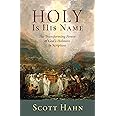
Right now I am reading Scott Hahn’s newest

Holy Is His Name: The Transforming Power of God’s Holiness in Scripture

It has a forward by Peter Kreeft.  That’s a really good sign in itself.

Please remember me when shopping online. Thanks in advance.

US HERE – UK HERE

And, for your chessy news today, I had an ASK FATHER question!

“Is It A Sin To Play Sleezy Openings In Bullet Chess?”

From a reader…

QUAERITUR:

I recently was gloating to a friend of mine that I am now in the top 1/3rd of bullet chess players on chess.com, though I confessed many of my wins came from King’s Gambit ideas around Bc4, Qh5, and checkmate on f7. We wondered how Catholic moral teaching might govern employing such sleezy tricks, and thought you were the only priest qualified to answer. I am prepared to make amends and reform my life if my regrettable conduct rises to the level of sin.

Here is a prime example: HERE

I am being sarcastic, of course.

Sarcasm aside, the answer is “No!”

It is not a sin to defeat your opponent over those 64 squares.  If your opponent falls into your trap, then so be it.  Perhaps he will learn from the experience and improve his game.  In that case you have done him a favor.   Masters of the game lose many thousands of games before they attain the chimeric and misleading title of “Master”.  Who can master chess, as the engines are showing us?

A puzzle.  This one is complicated.   I struggled with it.   It has a lot to do with what happens when a piece is moved.  Remember that when you move a piece, it exerts pressure on a new set of squares, BUT it releases pressure on others!  Notice from the beginning that your bishop is hanging.  What to do?  Black has a lot of pieces on the queen side, while white has pieces on the king side.  This is not going to be easy.  Some attacks result in a loss of material and the attack peters out to self-destruction.

White to move.

UPDATE:

Remember that camera I repaired?  I may have forgotten to bring my biretta and a sturdy pall, but I did bring the camera.

A couple of shots as I experimented for the first time.

Crisp and clear?

From the phone…


Posted in "How To..." - Practical Notes, ACTION ITEM!, ASK FATHER Question Box, Fr. Z's Kitchen, On the road, What Fr. Z is up to |
7 Comments

ASK FATHER: 1st Communion at a special Mass rather than at a regular Sunday Mass

From a reader…

QUAERITUR:

I am wondering about the practice of holding First Holy Communions at the regular Sunday Masses instead of a special, separate Mass for the whole class.  My own was on a Saturday, with 60 other CCD children; the parish school had theirs the previous Saturday, with another 60-some children.  Even just logistically, it seems like it would have been very awkward to incorporate that into the weekend Masses.  I think this comes from something in Vatican II, although I think it might be “diocesan policy” (which often seems questionable … at least in my diocese), and I have seen the argument made that First Communion should take place within the “parish family” and not as a separate event; but I am really curious if this was only done after/because of Vatican II, because one sees all these lovely, old photographs of churches packed full of First Communicants, and I always presumed that was a Saturday!  It bothers me, because it seems “new-fangled,” and there’s just something so beautiful about the procession of children in white, and the focus being on it as a very special day.  But then I wonder if maybe that’s just my Italian love of a spectacle, and very superficial of me.  I’m very curious to know your thoughts if you would help to clear this up!  Thank you!

I really don’t have a strong opinion about this issue.  I think it has a lot to do with the individual parish or community.

Perhaps the readership can jump in here with some descriptions of their own 1st Communions and what they arranged for their own children.

Posted in Liturgy Science Theatre 3000, Our Catholic Identity | Tagged
30 Comments

WDTPRS 27th Ordinary Sunday: Of ashes, soap and you.

When we pray with the right attitude, particularly when kneeling before the altar of Sacrifice, joined in heart and mind with our mediator, the priest, Christ Himself makes up for what we are incapable of accomplishing on our own.

St. Augustine (+430) says that Jesus

“prays for us as our priest, prays in us as our Head, and is prayed to by us as our God.  Therefore, let us acknowledge our voice in Him and His in us” (en Ps 85, 1).

What a magnificent starting point for you to use as a reflection on your own participation at Holy Mass!

With a minor variation this week’s Collect, for the 27th Ordinary Sunday (Novus Ordo), was in the ancient Gelasian Sacramentary and in the post-Tridentine editions of the Missale Romanum for the 11th Sunday after Pentecost.

Omnipotens sempiterne Deus, qui abundantia pietatis tuae et merita supplicum excedis et vota, effunde super nos misericordiam tuam, ut dimittas quae conscientia metuit, et adicias quod oratio non praesumit.

Supplex, an adjective used also as a substantive, is “humbly begging or entreating; beseeching; supplicant.”  In the ancient world it was not uncommon for the supplicant to wrap his arms around (plecto) the knees of the one from whom he was begging the favor.

LITERAL TRANSLATION:

Almighty and everlasting God, who in the abundance of Your goodness surpass both the merits and the prayerful vows of suppliants, pour forth Your mercy upon us, so that You set aside those things which our conscience fears, and apply what our prayer dares not.

OBSOLETE ICEL (1973):

Father, your love for us surpasses all our hopes and desires. Forgive our failings, keep us in your peace and lead us in the way of salvation.

What a joke.  Compare and contrast!  We endured this for decades.  No wonder the faith is so enervated.

CURRENT ICEL (2011):

Almighty ever-living God, who in the abundance of your kindness surpass the merits and the desires of those who entreat you, pour out your mercy upon us to pardon what conscience dreads and to give what prayer does not dare to ask.

We have a contrasting pair: God must remove from us our sins which merit punishment in justice, and He must add to us His graces which we can never merit.

We are unworthy, incredibly audacious beggars.

Our Collect gives us a model for an attitude of prayer.

We present ourselves, in the priest’s prayer, as one who is supplex, a suppliant frightened by the Judge because of the sins which bother his conscience.

This lowly beggar prays and prays, entwining his arms about the knees of his only hope.

He petitions the Almighty Father, merciful and good, to calm his fears by removing his damning sins totally and then by supplying him with whatever he dares not ask or does not even know that he ought to beg for (non praesumit).

He simultaneously has the humility of the kneeling suppliant and the boldness of sonship.  He dares that which is far beyond his own capacity because God the Father made him His son through a mysterious adoption.

He is emboldened to ask many things of the Father with faith and confidence (cf Mark 11:24 and 9:23).  Luke recounts in chapters 11 and 18 Christ’s parables about the persistent, even audacious, prayer of petition.

In many places, celebrations of Holy Mass have been stripped not of pride but of humility

Idiotic liberals will now respond,

“But Father! But Father! People like YOU –  HATE Vatican II – want ARROGANT Masses loaded down with gold and lace and music the common little people can’t understand.  We need humble Masses, with guitars and clay cups and burlap vestments – if any vestment at all.  We luuuuuv Amoris and you racist homophobic xenophobes just lord it over El Pueblo with your high falutin’ languages, and rigid cassocks and hats and stuff.  Liturgy should have hugs and … and children holding hands around the altar, and women distrib…. no, I mean non-gender specified…”

What I mean by liturgy stripped of humility means that, in many places, instead of abasing ourselves humbly before our awesome and mysterious God during the renewal of the Sacrifice of Calvary, we celebrate ourselves while somewhat remembering our non-judgmental buddy Jesus.

Jesus isn’t our pal.

Jesus is the Good Shepherd, not the Nice Shepherd.

Good shepherds say, “No!” and sometimes beat the flock to keep them from doing harm to themselves.

Vesting Holy Mass in the very best that human arts can attain is a response to the need to recognize who we are before God’s transcendent majesty, His just mercy.

It is no wonder that many liberals have screwy ideas about how to express humility in liturgical worship.

The concept of humility inherent in supplex was systematically expunged from the now–obsolete translations of prayers, contemporary music in parishes, and (in churches now lacking kneelers) architecture.  Change how we pray, and you change what we believe, our very identity.

One of the most Catholic of prayers, nearly eliminated after Vatican II, underscores an important dimension of healthy spirituality.  In the Dies Irae, the haunting sequence of the Requiem Mass, we contemplate our inevitable judgment by the Rex tremendae maiestatis… the King of fearful majesty, the iustus Iudex… our just Judge:

“Once the accursed have been confounded / delivered up to the stinging flames, / call me with the blessed. / Suppliant and bowing down (supplex et acclinis), / my heart ground down like ash, I pray: / Have a care for my end.”

The use of supplex in our prayers prompts an attitude of contrition for our sins which in turn gives greater joy to our more confident petitions.  A lowly attitude keeps in focus the reality of our sins, God’s promises of forgiveness, the ordinary means of their cleansing, and thus the great joy we have in forgiveness and the hope of heaven.  We need these contrasts in our prayers.

God takes our sins away, but only when we beg Him to.  We remember them, but they no longer stain us.  When we recall that we are ashes and we confess our sins to the priest, those sins are washed clean away.

These are GREAT sisters!  

Soap, by the way, was once made in part from ashes.

In ancient times, no doubt our distant ancestors noted that in the places where they often cooked meat over fires, the stones would be clean where the fat and ashes ran. Thus, they learned to make soap from the ashes and lye and fats of their sacrifices.

Living can be messy. Ministry can be dirty. In one of his finest sermons, St. Augustine explained Christ’s washing of the feet of the Apostles using the moment in the Song of Songs when the lover calls to his beloved to rise and come to him. She demures at first saying that she had already washed her feet and doesn’t want to dirty them. The world, the flesh and the Devil get to us. We besmirch ourselves. Christ wanted the Apostles to get up and get their feet dirty in His service and that He would wash them as they needed.

The grit of the world and the grease of the flesh and the grime of the Enemy must be constantly cleansed.

For Christ’s Blood to wash us clean of sin we need a heart as contrite as ashes.

To begin the cleansing, we must know what must be cleansed and then seek out the divine cleanser.

I’ll now get up on my soap box pulpit and urge you to examine your consciences and…

GO TO CONFESSION!

Posted in SESSIUNCULA |
1 Comment

WDTPRS – 17th Sunday after Pentecost: diabolical contagion

falling into hellIs this prayer appropriate today or what?!?

This Sunday’s Collect prayer – in the Vetus Ordo:

Da, quaesumus, Domine, populo tuo diabolica vitare contagia: et te solum Deum pura mente sectari.

So dense!  Concise.

The phrase diabolica vitare contagia is a glory of the Latin Church’s millennial life of prayer.

Note the wonder assonance and the separate of diabolica from contagia by the verb, a use of hyberbaton.

This Collect, used for centuries in the post-Tridentine Missale Romanum, is in ancient prayer books such as the Liber Sacramentorum Gellonensis, a form of the Gelasian Sacramentary.  It appears as the Collect for the Sunday after the Autumn Ember days (Spring in the Southern climes, though that wasn’t a consideration of the ancients).  As such, it would have been a time of prayer and fasting and for ordinations.

Let’s check our vocabulary to see if we can find treasures beneath the surface.

I am sure you know the words “contagion” and “contamination”.  In Latin we have, as our steadfast Lewis & Short Dictionary informs us, feminine contagio, onis, and neuter contagium, ii, or contamen, inis, which mean “a touching, contact, touch, in a good or bad sense”.  It comes then to indicate “a contact with something physically or morally unclean, a contagion, infection” and thence “an infection, pollution, vicious companionship or intercourse, participation, contamination, etc.”.  Surely those of you who were educated by the sisters or brothers lo those many moons ago in Catholic schools were warned to “avoid the company of bad friends”.  Not only is your reputation tainted with their stains but you subject yourself to their “contamination” and the near occasion of sin.

Go with bad friends, and you go down.

We won’t get into the complicated idea of mens, which can mean “mind”, but also “heart, soul”, in fact the whole of the human person in some contexts.  But we can glance at purus, the adjective for, basically, “clean, pure, i. e. free from any foreign, esp. from any contaminating admixture”.  Obviously, this can refer not only to physical cleanliness, but also moral faultlessness.  There are juridical and religious overtones as well.  For example, for the ancient Romans a thing which is purus, such as a locus purus, a “pure place”, was not just undefiled, it was unconsecrated, not sacer.  On the other hand, purus does also mean “undefiled”, in the sense that nothing dead had been there.  There had never been a funeral or burial, etc.  It is interesting how the Romans got down to brass tacks.

Then we have the verbs vitare and sectari.  While a sector, m. is a “cutpurse”, the sort of bad friend you don’t want to follow around, the verb sector, deponent (passive form but active meaning) is “to follow continually or eagerly, in a good or bad sense; to run after, attend, accompany; to follow after, chase, pursue”.   On the other hand, a vitor is, in fact, just a “cooper; basket-maker”. We are interested in vito, which is not the name of a character in The Godfather (well… it is and it isn’t).  The verb vito means “to shun, seek to escape, avoid, evade”.  The word sort of looks like it should be related to something having to do with “life”, vita.  In reality, however, vito is shortend from vicito, having the root vic-, related to the ancient root wik in Greek eikô (“to yield”).

The important thing to follow, and not avoid, is that in our prayer there are contrasting pairs: contamination v. purity, avoidance v. association.

Each pair reveals our need to make choices and to persevere in what is right.

LITERAL TRANSLATION:

Grant, O Lord, unto Your people, to shun diabolical contamination: and with a pure soul to follow You, the only God.

ICEL (1973 translation of the 1970MR):

This collect barely survived the scalpel-wielding experts of the Consilium, who sliced and diced our orations under the surveillance of the late then-Fr. Annibale Bugnini.   It was not in the typical edition of 1970 or the edito altera of 1975.

Then a miracle occurred.

The third edition, the 2002 Missale Romanum includes this Collect, though in nearly complete obscurity.   It took me a while to hunt it up in the 2002MR.  If you are interested, look in the section Missae et orationes pro variis necessitatibus vel ad diversa, subsection Ad diversa, 48. In quaecumque necessitate, scheme “C”, “Aliae orationes (shortcut, go to p. 1152).  The 1970 and 1975MR, both, had two schemes for Masses In quacumque necessitate (“In whatever necessity”). In the 2002MR a third was added.

The redactors of the newest edition added quite a few things, such as new schemes for vigils of important feasts and the “Prayer over the People” on the days of Lent.  It is as if they recognized that too much had been lost to the Novus Ordo.  Of course with the promulgation of Summorum Pontificum we can make use of the 1962 Missale Romanum and celebrate the sacred mysteries also in light of all we have learned of the ars celebrandi in the intervening decades.

CURRENT ICEL (2011):

Grant, we pray, O Lord, that your people may avoid the contagion of the devil and follow you, the only God, in purity of heart.

As I read and reread the Latin, and then the literal English version, the Biblical imagery of faithlessness as “adultery” or “prostitution” came to mind.  The relationship between the People and God was conceived as an exclusive covenant like a marriage bond.

When the People of Israel were faithless to God they are described as “going with”, so to speak, false idols, “whoring after” other gods.  Think for a moment of Jeremiah 3:6-11 wherein the people go up the mountains or under every tree like a prostitute.  

Could that pertain to some leaders and assemblages of God’s Holy People today?  But I digress.

It seems to me that we are dealing in this prayer with the time-hallowed warning of Christians to shun the three great temptations that corrupt the rational soul (mens) and pull it away from communion with the Holy Trinity.  The three contaminations are mundus, caro et diabolus, “the world, the flesh, and the devil”.

A solid reference to the trio is found in a sermon of a pseudo-Augustine, but it becomes a solid reference in late-antique and mediaeval spiritual thought.  The influential theologian Peter Abelard (+1142) puts it succinctly in his Exposition of the Lord’s Prayer: “Tria autem sunt quae nos tentant, caro, mundus, diabolus… For there are three things which try us: the world, the flesh, the devil” (petitio vi).  St. Bernard of Clairvaux (+1153) speaks of this deadly trio, as does St. Thomas Aquinas (+1274).  It is no surprise that the post-Tridentine Missale would include this prayer, for this was part of the warp and weft of Catholic spirituality.  The Sixth Session of the Council of Trent wrote, with heavy reliance on St. Paul, in its 1547 Decree on Justification about perseverance:

He that shall persevere to the end, he shall be saved, (Matt 10:22; 24:13) which cannot be obtained from anyone except from Him who is able to make him stand who stands, (Rom 14:4) that he may stand perseveringly, and to raise him who falls, let no one promise himself herein something as certain with an absolute certainty, though all ought to place and repose the firmest hope in God’s help.  For God, unless men themselves fail in His grace, as He has begun a good work, so will He perfect it, working to will and to accomplish. (Phil 1:6, 2:13)  Nevertheless, let those who think themselves to stand, take heed lest they fall, (cf. 1 Cor 10:12) and with fear and trembling work out their salvation, (Phil 2:12) in labors, in watchings, in almsdeeds, in prayer, in fastings and chastity. For knowing that they are born again unto the hope of glory, ( cf. 1 Pet 1:3) and not as yet unto glory, they ought to fear for the combat that yet remains with the flesh, with the world and with the devil, in which they cannot be victorious unless they be with the grace of God obedient to the Apostle who says: We are debtors, not to the flesh, to live according to the flesh; for if you live according to the flesh, you shall die, but if by the spirit you mortify the deeds of the flesh, you shall live. (Rom 8:12ff)

The language, and therefore the concepts, of those formative ages of our Catholic faith and spirituality are very much at risk today.  But it is being recovered and reconsidered, especially in the wake of Pope Benedict’s efforts to reinvigorate our Catholic identity in continuity with our profound past.

Of course, there are those who vigorously seek to snuff out all mention of these categories. It is unfashionable in many circles to speak things so distasteful as the sort of temptation to which you can’t, with just a sly wink and hint of naughty struggle, simply give into along with everyone else.

To remind people of sin, guilt, and their eternal consequences is now rude, especially from pulpits in many parishes and cathedrals.  If you speak of the devil and sinful temptations, and the contamination of the soul – as if it isn’t always and automatically pure – you are considered a throwback to an era before modern man grew up.

“No longer do we grovel!  The old bogey-devil won’t drive us down to our knees!  (But then neither does the Blessed Sacrament.)  How feudal! I choose what my boundaries are.  I choose when to receive Communion, with our without reference to the “official” church.”

As a consequence, what sense does it make in some circles now to speak of “perseverance”?

When we are our gods, what sense does it make to speak of all these distasteful, out-dated categories with which shriveled up old men tried to scare us, as a wicked uncles might terrify mere children?

I respond saying that the Enemy of the soul seeks our destruction. 

He seeks to thwart God’s design and our own best destiny of bliss in heaven by guiding us away from the only God down into false gods, created things. The Enemy seeks to accompany us, lead us, delicately into the ways of the world of which he is the prince, tempt us in our appetites and passions, so hard to control after the Fall he originally provoked, draw you into infidelity.

And for what?

In his eternal sickness of angelic malice Satan yearns to crow over your fallen soul, damned to eternal separation from God in hell and amidst the unending agony to boom heavenwards in a twisted oration: “Here’s another victory You will now not have!”

Each day sets choices before us.  Most of the time they are rather simple, even black and white. Only rarely are we ever truly at a loss as to what is right or what is the wrong thing to do.  Our habits and passions make our choices more difficult, as does the wound to our intellect.

But Holy Church gives us the guidance of authority, which steers our still marvelous ability to reason.  We have not just intellect, but our Faith as well.  We are not alone, but God gives us graces.

Today’s prayer gives us insight in an important dimension of our lives: contamination in sin v. purity with God – avoidance of sin and the Enemy v. association with God.

Posted in WDTPRS |
1 Comment

ROME 22/10 – Day 1: Getting it together

On this (N.O.) Feast of the wonderful St. Therese, (St. Remigius ) who saved my vocation, in Rome the sun rose at 7:05, and I saw it, and will set at 18:54.   The Ave Maria should be rung at 19:15.

With great gratitude and not a little relief, I have arrived safely and soundly with all my impedimenta intact. I am grateful to my buddy in Brooklyn who picked dropped me at JFK.

During the flight I mainly slept, eschewed the meals, and played chess against the airplane’s system’s engine.  It wasn’t much of a challenge on the hardest setting.  Keeping an eye on my back rank vulnerability, but things are pretty much in hand… as we landed.

On the way in, going past EUR.

Via Ostiense.

Piramide.  Obviously.  Behind it is the “Protestant” Cemetery.

Having dropped impedimenta at the apartment, breakfast was sought.

The things one sees.  That’s an old one, a ROMA F1 plate.

Shopping for necessities required multiple stops and more than one trip.  I still have a few things to collect, including some pre-positioned things from last time.

Everywhere, smiling upon us.  Here they are with necklaces as well as crowns.

At the Campo de’ Fiori, I also bought some flowers for the apartment.  As one does.

The gals at the grocery store asked for a blessing.  Nice.  They liked the Latin.  So did the people in line behind me.

More later.  I must fight jet lag now, with might and main.

Posted in On the road, SESSIUNCULA, What Fr. Z is up to |
8 Comments

Daily Rome Shot 578, etc.

Soon I won’t be pulling from the archive!


Your use of my Amazon affiliate link is a major part of my income. It helps to pay for insurance, groceries, everything. Please remember me when shopping online. Thanks in advance.

US HERE – UK HERE


Posted in SESSIUNCULA |
Comments Off on Daily Rome Shot 578, etc.

“The Devil, the Enemy of the soul, always tells us what he is up to.” Sancte Michael Archangele, defende nos in proelio, contra nequitiam et insidias diaboli esto praesidium!

There are lots of “signs” these days.

The Devil, the Enemy of the soul, always tells us what he is up to. He puts small hints and indications right in front of our faces woven together with other things that appear to be innocent or beautiful.

Sometimes the signs the Foe reveals are compulsive. He, demons, and human agents can’t help but show them.

Other times, it’s a sort of gloating, a “Look at what I’ve done!” sign.

As for human agents, some higher ups in satanism do all they can to hide their affiliation while the lower echelon members show it off.

Nonetheless, the upper ranks still reveal something of their affiliation without thinking they are doing so.

It has ever been so, but now it seems to be accelerating.

Sancte Michael Archangele, defende nos in proelio, contra nequitiam et insidias diaboli esto praesidium. Imperet illi Deus, supplices deprecamur: tuque, Princeps militiae caelestis, Satanam aliosque spiritus malignos, qui ad perditionem animarum pervagantur in mundo, divina virtute, in infernum detrude.

Amen.

St. Michael by Daniel Mitsui

Here are shots of the great shrine to St. Michael near Turin, which I visited last June.  This is one of the points along the “Sword of St. Michael”.

Posted in SESSIUNCULA | Tagged ,
8 Comments

How can the “four camps” in the Church be reconciled? 

Today at Crisis (aptly named) editor Eric Sammons argues that there are four camps (roughly speaking) in the Church today – perhaps the Latin Church in the Northern Hemisphere.  Can they be reconciled?  Do they constitute different religions?

The core:

In summary: the hyperpapalists want a Catholicism that is only the current pope; the sedevacantists want a Catholicism that only has a perfect pope; the liberals want a Catholicism where the zeitgeist is the pope; and the restorationists want a Catholicism that includes all the popes, past and present.

How can these four camps be reconciled? To be blunt, they can’t. They are, in practice, four different religions, currently contained within one visible Church. When the very rule of faith is different, then so is the religion. This is a situation that cannot hold; eventually, the veneer of unity will wear thin and disappear. And, if we are being honest, none of the above camps can exist for the long-term.

Go and have a look.

Is he right?

Frankly, I think, as you know, that as the demographic sinkhole opens under the Church there will be a few strong currents left which will have to co-mingle: charismatics (who aren’t like charismatics used to be), converts from Evangelical communities and others with zeal, and “trads” or “restorationists”.  They will overlap.  I know former/present charismatics strongly attached to the TLM.  The same with converts.

There will be frictions, but there will also be a co-mingling, out of which something really interesting – and genuinely Catholic – will develop.

It will not include hyperpapalism.

Posted in Our Catholic Identity, The Drill, The future and our choices | Tagged
18 Comments