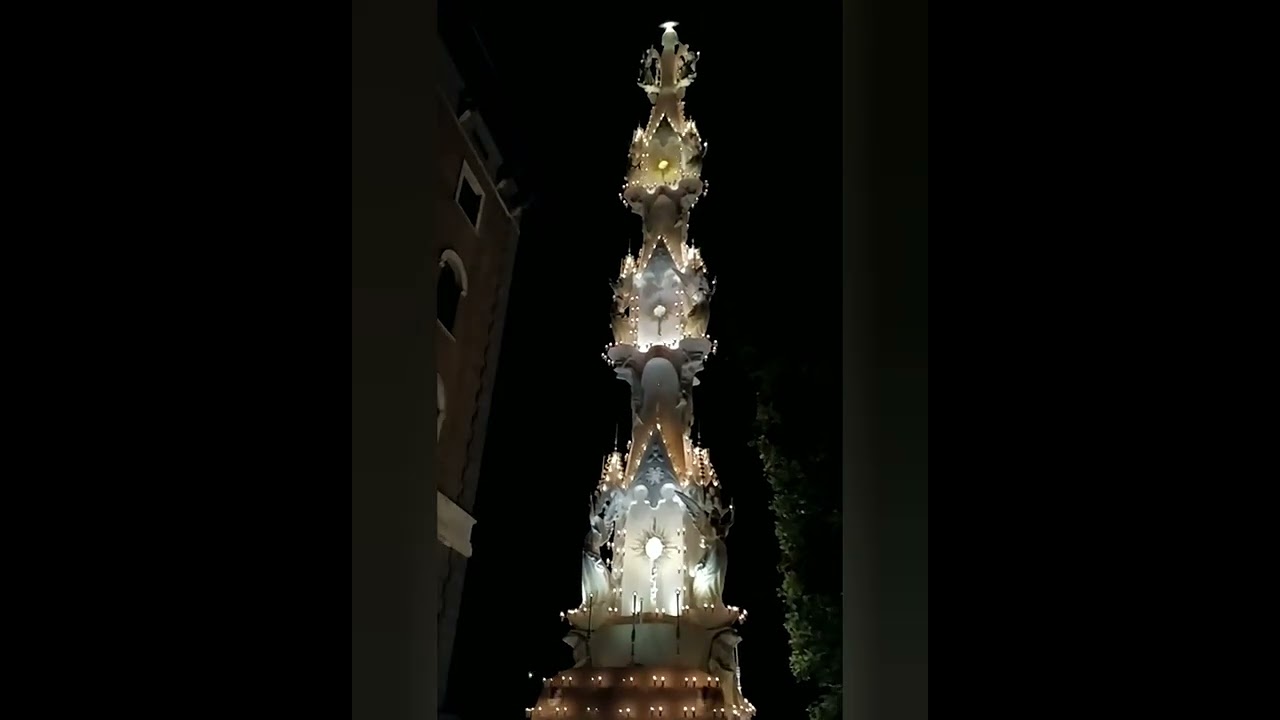
Daily Rome Shot 555, etc., high drama

High chess drama in St Louis yesterday where the Sinquefield Cup is underway with some of the best players in the world… except…

Yesterday the arguably-best-player-ever, Magnus Carlsen, stunned everyone by withdrawing from the tourney with a cryptic comment intimating that he thought one of the opponents, namely Hans Niemann, was cheating.  Niemann had beaten Carlsen the day before with black, but his after game interview comments were… weird.  Also, some time back Niemann did, in fact, cheat in online play, and admitted it.  He also had fairly recently a rather amazing leap in his rating, hundreds of points.  Thus the chess world exploded all day yesterday.  Carlsen’s games were blotted from the competition though not from ratings.  Carlsen has never withdrawn from a tournament, even when sick.  He didn’t quit because he had lost.  As the players entered for round 4 they were carefully wanded and checked with an RF detector used to find listening devices, trackers, hidden cameras, etc.

A variant of this.

These are handy for hotel rooms, etc.  I have one.  HERE

Also, for yesterday’s round another anti-cheating measure was employed: the transmission of the games was delayed by 15 minutes.  That means that any communication with the outside world would result in critical time loss on the cheaters clock, a serious deterrent.

The game between Caruana and MLV is worth a peak.  One commentator quoted Tartakower who had said that the winner is the one who makes the next-to-last mistake.  That is a pretty good reminder for how life works, too.

The daily puzzle at Chess.com was a little tricky.  It’s white’s move.  A couple pieces are hanging.  What to do?

Meanwhile, in the Roman Martyrology today we learn that it is the Feast of St. Zachary, Old Testament Prophet.

Posted in Chess |
7 Comments

“What, Papa, is ‘Jesuit’?” – “I think you’d better ask your Mother.”

From the might pen of Fr. Hunwicke comes this gem.  You should immediately go also to read the comments.  In case you don’t know already, Christine Mohrmann demonstrated in her 1957 masterpiece Liturgical Latin that in the early Roman Church the Latin that was spoken by the people in the streets and the Latin used in worship were not the same.  Hence, the argument that, today, the language of the worship should be of the same register as the language commonly spoken (and hence up for constant revision) is, essentially, rubbish.  This falsehood is still, like a noxious worm, tormenting us today.

November 20 Anno Domini 2121: a family dialogue
A favourite of some appreciative readers, reprinted by request with one or two tinkerings.

Literate and Latinate six-year-old: Papa, why, this morning, was the psalmody of the Mass in honour of St Pius X so odd? I mean, in the psalmus of the Introit, why did we have Gratias Domini in aeternum cantabo, rather than Misericordias …? And why has ecclesia been replaced with coetus?
Papa: Well, my child, when that Mass was added to the Missal, the Holy See was rather keen on the Bea psalter.
Literate …: What was the Bea, Papa?
Papa: It was an evil German Jesuit who …
Literate …: What, Papa, is ‘Jesuit’?
Papa: I think you’d better ask your Mother … not many people nowadays know the answer to that question … I’m not sure I do … but the Bea had acquired the confidence of Pius XII …
Literate … (fiercely): Ah, the pope who appointed Hasdrubal Bugnini who engineered the Great Liturgical Deformation of the twentieth century?
Papa: Exactly, best beloved, except that his name was Hannibal … Hasdrubal was his brother … sort of … perhaps I have allowed you to read too much Livy … and the Bea began its evil work by doing a new translation of the Psalter into Classical Latin and …
Literate …: But surely, Papa carissime, St Christine Mohrmann, the great Dutch Latinist and Doctrix of the Church, had just demonstrated that Liturgical Latin was an exquisite deeply Christian form of Latin expressly crafted to convey in all its transcendent beauty the Catholic Faith?
Papa: Indeed she had, but Pius XII, a weak and foolish pope, ignored her scholarship and allowed the Bea to do its worst. And …
Literate …: But, Papa, consider the rendering coetus. It is profoundly wrong. Because the Vulgate rendering ecclesia binds together the Church’s appropriation of Scripture with the text of the Old Testament. Coetus elides that linkage. Be honest with me, pedantic Parent: Coetus also ruptures the link with the Septuagintal rendering … ekklesia megale. Thus the harmony of the Hebrew, the Greek, and the Latin is rudely sundered! So why was today’s Mass not subsequently corrected when St Benedict XVII completed the Great Liturgical and Doctrinal Restoration in 2031 by promulgating the Sixteen Definitive Anathemas against Bergoglianism?
Papa: Because the liturgy, learned offspring, bears within it marks of all the periods through which, in its triumphant march across the centuries, it has passed. These profoundly eccentric details provide a powerful incentive to historical research such as that upon which you, after your Seventh Birthday, will embark. Now run along and finish your doctoral thesis on the de Beatificatione et Canonizatione of St Benedict XIV. Then you can ask your Mother what ‘Jesuit’ means before I read you your bed-time story from the newly recovered papyrus text, Oxyrhynchus 26,091, of the Hecale of Callimachus.
Literate …: Thank you, Papa. I warmly anticipate each of those three agenda.

Posted in Lighter fare | Tagged ,
8 Comments

Concerning the “bipolar pontificate”

For some years now, Andrea Gagliarducci has issued a weekly news/analysis column called Monday Vatican.   This week is a must read.  HERE

Excerpts…

Pope Francis and the paradox of the Council

[…]

Pope Francis wants to be the Pope who puts the Council into practice.

[…]

For [secretary of the Council of Cardinals, Bp Marco] Mellino, the fact that the laity can cooperate in government means they can take part in the government that the bishops take part in by vocation.

This interpretation is widely contested. Before the Consistory, interventions on the subject by cardinals Antonio Rouco Varela, Marc Ouellet, and even Walter Kasper had been disseminated. Everyone questioned that this decision to centralize everything in the hands of the Pope ultimately, even the distribution of power, was in the spirit of the Second Vatican Council.

Even the historian Alberto Melloni had denounced the anti-conciliar turn of Pope Francis, who, instead of delegating, increasingly centers his powers on himself.

[…]

[I]t was the Second Vatican Council that, intending to return to the sacramental nature of the Church, defined that the sacred powers of the bishops, even before being jurisdictional, concerned not only those of sanctifying and teaching but also that of governing.

[…]

Also, this is paradoxical if we consider that Pope Francis wants to link everything to the correct reception of the Second Vatican Council. Indeed, the Pope is particularly ferocious on these issues, especially regarding the liturgy.

The Traditionis Custodes, which cancels all the concessions made on the celebration of the ancient rite, was justified by the Pope as the need to apply the Council, and with the emphasis that the Council must be received in every part because it is the life of the Church.

If this is the way of thinking, what is one to think of the consequences of the Praedicate Evangelium? Can’t the Constitution itself jeopardize the reception of the Council?

It may be easy to argue that liturgy and government are very different issues. But however different they are, the underlying principle remains the same. In the end, there is a contradiction.

This contradiction, after all, pervades many actions of Pope Francis’ pontificate. There is an impulsive Pope and a less impulsive Pope, like two sides of the same coin, which create a fluid and bipolar pontificate and, therefore, one difficult to interpret.

[…]

Now, the Second Vatican Council is the guideline of every inspection, every provision, even harsh ones by the Pope. Yet it is profoundly questioned on one of its foundations by an apostolic constitution written “by trial and error,” and with the awareness that it will have to be substantially amended.

Meanwhile, Pope Francis has decided to bring his cardinals together to present them with a fait accompli.

[…]

The Consistory, after all, was a “noncistory.” It is a college that seems more to be an electoral committee than an actual advisory body of the Pope, though many said that the discussion in the groups were lively and free and that nobody felt pressures. Indeed, there is almost a fear of speaking openly.

[…]

Posted in The Drill | Tagged ,
27 Comments

Daily Rome Shot 554, etc. including a whopper

This is from a tweet.  The painting was being worked on by restorers.

Things are looking grim for black. But it’s black’s move.

UPDATE:

So that you know, for sure, what we are up against (only figuratively, thanks be to God).  From the cesspool that is Twitter.

This is total B as in B, S as in S.  However, according to the Big Lie Theory, if you tell a lie, make it a) a big one b) repeat it often.  The idea is that, eventually, people will start to doubt their correct inclination that they are being lied to and will then wonder if, since the liars are not relenting, maybe what they are told is … maybe… maybe?… true.

The “underlying message” of the BIBLE is “inclusion” of … sodomy?


Posted in SESSIUNCULA, Sin That Cries To Heaven |
11 Comments

Daily Rome Shot 553, etc.

Posted in SESSIUNCULA |
3 Comments

4 Sept: St. Moses, Old Testament lawgiver and prophet

Today is the feast of St. Moses, lawgiver and prophet in the Old Testament.

Many people do not realize that may Old Testament figures are considered by Holy Mother Church to be saints. Many of them are listed in editions of the Roman Martyrology, both pre-Conciliar and post.

Here is today’s entry for Moses.

1. Commemoratio sancti Moysis, prophetae, quem Deus elegit, ut populum in Aegypto oppressum liberaret et in terram promissionis adduceret; cui etiam in monte Sina sese revelavit dicens: “Ego sum qui sum”, atque legem proposuit, quae vitam populi electi regeret.  Ille servus Dei in monte Nebo terrae Moab coram terra promissionis plenus dierum obiit.

Anyone want to take a crack at What The Martyrology Really Says?

Also, a question/request to readers:

Have any of you ever seen a stained-glass window of Moses at the cleft in the rock in Exodus 33?

I would like a good photo.

Posted in Saints: Stories & Symbols |
3 Comments

La Macchina di Santa Rosa 2022!

Some years ago I went to Viterbo for the Feast of Santa Rosa and the incredible spectacle of the Macchina di Santa Rosa.

Here is some video from this year.  Yes, this is being carried by a bunch of men.  HERE and HERE and HERE

YouTube thumbnailYouTube icon

Posted in Hard-Identity Catholicism, Just Too Cool | Tagged
Comments Off on La Macchina di Santa Rosa 2022!

WDTPRS – 23rd Ordinary Sunday: Submission, manumission, filiation

roman sarcophagus man sonThe Collect for the 23rd Ordinary Sunday – this Sunday – was not in any pre-Conciliar edition of the Roman Missal, but it was in the 8th century Gelasian Sacramentary in a section for evening prayers during Paschaltide.

You have to wonder how they – the cutting and pasting experts – made these decisions.

Deus, per quem nobis et redemptio venit et praestatur adoptio, filios dilectionis tuae benignus intende, ut in Christo credentibus et vera tribuatur libertas, et hereditas aeterna.

Take note of the lovely chiasms (so-called because, stylistically, they form a X or Greek chi): redemptio venit…praestatur adoptio (subject verb… verb subject) and also vera libertas…hereditas aeterna (adjective noun…noun adjective).  And the two passives make a nice bridge.

It is brilliantly crafted and typically terse, according to the Roman genius.

chiasmus

Vocabulary connections suggest to me Patristic sources for this prayer (e.g., in St Hilary of Poitiers (+ c. 368) de trin 6, 44; St Ambrose of Milan (+ 397) ep 9, 65, 5).

Praesto, -iti, -atum means effectively “to stand before or in front”.   It has a wide range of meanings, however, including “to fulfill, discharge, maintain, perform, execute” and concepts surrounding the same, making praesto a little confusing.  The lexicographer Souter says that in about the 2nd century praesto meant, “lend” (like French “prêter”) and from the 4th century onward “offer”.  Cassiodorus (+ c. 583) and other authors use praesto for “help, aid, give”.   A. Blaise suggests the French “accorder” when praesto concerns God.  Some weeks ago, (19th Sunday) we saw adoptioHereditas can be, “heirship” or the inheritance, the patrimony, itself.

OBSOLETE ICEL (1973):

God our Father, you redeem us, and make us your children in Christ. Look upon us, give us true freedom and bring us to the inheritance you promised.

BTW.. in all the years that I wrote these columns, I constantly reminded people that the slavishly literal versions I provided week in and week out were intended to help you see how the Latin works, to get the bones of the prayers, for the sake of comparing and contrasting more easily the official translations..  They were never intended to be liturgically ready versions… even though they were often better than what we got!  So, keep that in mind.  They are workhorses, merely.

SUPER LITERAL RENDERING:

O God, through whom to us come both redemption and adoption is guaranteed, kindly give attention to your beloved children, so that both true freedom and the inheritance everlasting may be bestowed on those believing in Christ.

See what I did in there?

CURRENT ICEL (2011):

O God, by whom we are redeemed and receive adoption, look graciously upon your beloved sons and daughters, that those who believe in Christ may receive true freedom and an everlasting inheritance.

What do you think?

By the fact of our unity with Christ in His and our common human nature, the way to divine sonship was opened up to us by the Father in Christ.

Christ is the Father’s Son by nature, we are sons and daughters by grace.

Our adoption through grace is “perfect” (adoptio perfecta) because it complete. Perfecta is from perficio, “bring to an end or conclusion, finish, complete”.  From God’s point of view our adoption is perfect because He puts His mark upon us, especially in baptism and confirmation.  Since God is not limited by time and for Him there are no past or future distinct from the present, He sees in perfection the results of every gift of adoption.  From our point of view adoption will only be completed when we see Him face to face.  Because of baptism the Father’s mark is sealed into us forever.  In this marvelous adoption the Holy Spirit brings the Father and Son to us when He takes up His rightful place in our souls, thus creating the perfect communion, even family, within our souls.

Today’s Collect has its foundation certainly in the New Testament imagery of adoption, but I think it also flows out of ancient Roman legal concepts of manumission and adoption, freeing of slaves and adoption of heirs.

Ancient prayers rang differently in the ancient ears than they do in ours.  Trying to get the content that rang then to ring also today is tricky.  Sometimes it can’t be done, and still retain the prayer’s concision, a characteristic of the Roman style.

Let’s bang our hammer on the bell that is “adoption” for a while and see what rings out.

Our adoption by God takes us out of slavery and gives us a new status as free members of the Church and as sons and daughters.  Baptism confers this freedom, membership, and adoption.

Even natural children of a father in ancient Rome required the father’s recognition (Latin recognitio – which is what today’s Motu Proprio on translation dealt with!) before they were legally considered to be his legitimate children and heirs with any rights.  Adoption could grant those same rights and privileges.  Roman adoptio removed a person from one familia and put him in another, while adrogatio legally placed people not under the power of a parent into a familia, thus placing them under the authority of the paterfamilias.  In Latin, a familia is a house and all belonging to it, a family estate, family property, fortune.  A familia had a head, the paterfamilias (or –familiae, the –as being a Greek genitive), the master of the house.

The baptized are no longer subject to Satan and destined for hell, but are now under new mastership of God.

In Rome there was also an “adoption” by being named an heir with the right of taking the name of the one bequeathing the patrimony.  However, this was not an adoption in the fullest sense: you became heir of the father’s name and property without the other powers of a paterfamilias until they were confirmed by magistrates, etc.

Even after baptism our state can be deepened through confirmation.

Ancient slaves could be freed, but that did not make them Roman citizens with the greater rights.  By baptism, we become citizens of heaven, members of the family of the Church.  Not only are we free, but we gain even the chance of eternal salvation.

In ancient Roman a slave could become a citizen through certain types of manumission, by adoption, through military service, or a special grant to a community or territory.  In a way, we have undergone all of these: by laying His hand on us (manus “hand” and mittere), we have been freed.  We have been made sons and daughters of a heavenly Father.

We are now soldiers in the Church militant.

By membership of the society of the Church, a holy and priestly People, we gain privileges and obligations.   God has recognized us as His own children with a perfect adoption.  This is true freedom and true heirship, excluding nothing and, in some sense, lavishing on us even more than we might have had before we fell under the Devil’s dominion through sin.

This is a difficult mystery to grasp: we are already sons and daughters in a perfect sonship by adoption, but that sonship is not yet complete: we lack the final essential component, that is, perseverance in faith and obedience for the whole course of our lives and their ratification in death and our particular judgment.

It is through many trials that we come to the perfection of adoption which we now share in an imperfectly perfect way.

These collects during the summer, during Ordinary time, contain reminders of who we are and, therefore, what we are to do.

Christ reveals both.

Posted in WDTPRS |
1 Comment

Beatification homily for John Paul I: just another occasion to bash people who love Tradition

Today there was a ceremony held in St. Peter’s Square for the beatification of the short-lived Pope everyone forgets to remember, John Paul I, Luciani (+1978).

In his sermon for the event, Francis seems to have doubled down on the message of Biden’s speech that was shouted against the luciferian red background.

Capita anche oggi: specialmente nei momenti di crisi personale e sociale, quando siamo più esposti a sentimenti di rabbia o siamo impauriti da qualcosa che minaccia il nostro futuro, diventiamo più vulnerabili; e, così, sull’onda dell’emozione, ci affidiamo a chi con destrezza e furbizia sa cavalcare questa situazione, approfittando delle paure della società e promettendoci di essere il “salvatore” che risolverà i problemi, mentre in realtà vuole accrescere il proprio gradimento e il proprio potere, la propria figura, la propria capacità di avere le cose in pugno.

[…]

The same thing happens today, at times of personal or societal crisis, when we are especially prey to feelings of anger or we fear things that threaten our future. We become more susceptible and thus, on the tide of emotion, we look to those who can shrewdly take advantage of the situation, profiting from society’s fears and promising to be the “saviour” who can solve all its problems, whereas in reality they are looking for wider approval and for greater power, based on the impression they make, their ability to have things in hand.

I’m pretty sure this is a shot at Bad Orange Man with a touch of self-projection, perhaps.

And then there’s this.

Con il sorriso Papa Luciani è riuscito a trasmettere la bontà del Signore. È bella una Chiesa con il volto lieto, il volto sereno, il volto sorridente, una Chiesa che non chiude mai le porte, che non inasprisce i cuori, che non si lamenta e non cova risentimento, non è arrabbiata, non è insofferente, non si presenta in modo arcigno, non soffre di nostalgie del passato cadendo nell’indietrismo.

[…]

With a smile, Pope John Paul managed to communicate the goodness of the Lord. How beautiful is a Church with a happy, serene and smiling face, a Church that never closes doors, never hardens hearts, never complains or harbours resentment, does not grow angry or impatient, does not look dour or suffer nostalgia for the past, falling into an attitude of going backwards.

What a beautiful image Francis has of so many people who just want to have traditional worship.  Truly the heart of a pastor.

Meanwhile, Francis can really draw those big crowds.  The weather in the morning wasn’t perfect, but… sheesh.

Compare and contrast with the beatification of other Popes.   Even the not so beloved Paul VI.

Do we really need a photo of the crowd for John Paul II, beatified by Pope Benedict XVI in 2011?

Here are the overflow crowds near Castel Sant’Angelo.

Posted in SESSIUNCULA |
13 Comments

VIDEO: Another example of Francis “unique expression” of Novus Ordo (turn your volume down or you will frighten the dogs of the neighborhood)

The Vetus Ordo is against Vatican II! That’s why it has to be crushed and the people who want it marginalized and demoralized to the point that they will quite simply leave the Church. Instead, what will bring about the Vatican II springtime of joy we have been waiting for since 1965, the closure of that pivotal moment that reinterpreted the entire history, doctrine and worship of Christianity, is the only, that is to say, the unique expression of the Roman Rite, the Novus Ordo as interpreted hereunder in a video from Sacred Heart Church in Omaha.

Notable moments in a “Celebration of Life” for a deceased priest.  If anyone does anything remotely like this for me, I will haunt you for the rest of your natural lives.

From the beginning there are a string of “eulogies”.

55:00 Gloria… this is truly hideous.

1:05:00 end of the Gospel (turn your volume down a little or you are certain to frighten the dogs of the neighborhood

1:25:00 Super oblata and beginning of Eucharistic Prayer

1:32:00 End of Eucharistic Prayer

1:33:00 Our Father (get a barf bag)

1:36:00 Sign of Peace chaos

YouTube thumbnailYouTube icon

Posted in Liturgy Science Theatre 3000, Pò sì jiù, The future and our choices, You must be joking! | Tagged
19 Comments