St. John Chrysostom: Patron Saint of Telling It Like It Is: ordination of women

I have some great quotes from St. John Chrysostom, Patron of Telling It Like It Is.

On the Priesthood 3,9:

The divine law has indeed excluded women from the priesthood, but they endeavor to thrust themselves into it; and since they can do nothing by themselves, they attempt this through the agency of others. These women have become invested with so much power that they can appoint or eject priests at their will:

[…]

It would be better if men were to rule instead of women, because the latter have not received a commission to teach. Why do I say teach? For the blessed Paul did not permit them even to speak in the Church! But I have heard someone say that these women have obtained such a large privilege of free speech that they even rebuke the prelates of the church, and censure them more severely than masters do their own servants.

Posted in SESSIUNCULA | Tagged
1 Comment

“In light of this article, I was going to write Pope Francis a letter.”

At NCREg there was a piece entitled: “Pope Francis to Parents: Never Condemn a Child”

From a reader…

Dear Fr. Z,

In light of this article, I was going to write Pope Francis a letter.

Dear Pope Francis,

My oldest son is….. a trad.

Please advise.

Sincerely,

Distressed Dad

I wonder what his response would be were he to be asked that from parents all across the world.

Posted in Cri de Coeur, Traditionis custodes | Tagged
6 Comments

Daily Rome Shot 398 etc.

Today’s Fervorino.

3:16 isn’t just in John.

Posted in Sermons | Tagged
1 Comment

A look at the Letter purporting to forbid “ad orientem” worship in the Diocese of Venice

I received a copy of the letter which Bp. Dewane sent to his priests in which he attempts to forbid ad orientem celebration of Holy Mass according to the Novus Ordo.

This is a steaming mess.  There many things wrong with this.

Let us make a start.

First, it seems to me that if you are going to try to forbid something you should at least know how to spell it correctly.  Correct is, of course, ad orientem.

Second, decrees have canonical weight.  This is not a decree.  This is an expression of the bishop’s wishes.  Note that “should”.  Note that this doesn’t say it is a decree.  It is not in the form of a decree.  It is not, for example, countersigned by anyone, such as the chancellor.  That doesn’t mean that this doesn’t have weight.  Because a bishop has the power to hurt priests in a thousand ways, this letter has the weight of an episcopal tire iron with which he can beat them.  Some would call this bullying.  Others would say that this is business as usual: bishops issue high sounding letters about liturgical preferences that really don’t have the force of law, and they get away with it because, well, they can.

Third, the decision, determination, preference, whim expressed in the letter is founded on what can only be called a lie, after all these years.   In the second paragraph, note that reference to GIRM #299.  The letter claims that 299 says that Mass (in the Novus Ordo) should be celebrated facing the people “which is desirable whenever possible”.

NO!  That is NOT what GIRM 299 says.   This is a BAD TRANSLATION of the Latin of 299 which was explained in Response to a Dubium from the Congregation for Divine Worship in 2000 (Prot. No. 2036/00/L).   The CDW responded and included also an explanation of the Latin.  

Come to think of it, since this letter demonstrates a certain lack of knowledge of basic Latin, in that misspelling, let’s review.  Here is the CDW response:

The Congregation for Divine Worship and the Discipline of the Sacraments has been asked whether the expression in n. 299 of the Institutio Generalis Missalis Romani constitutes a norm according to which the position of the priest versus absidem [facing the apse] [i.e., ad orientem] is to be excluded. The Congregation for Divine Worship and the Discipline of the Sacraments, after mature reflection and in light of liturgical precedents, responds:

Negatively, and in accordance with the following explanation.

The explanation includes different elements which must be taken into account. First, the word expedit does not constitute a strict obligation but a suggestion that refers to the construction of the altar a pariete sejunctum (detached from the wall). It does not require, for example, that existing altars be pulled away from the wall. The phrase ubi possibile sit (where it is possible) refers to, for example, the topography of the place, the availability of space, the artistic value of the existing altar, the sensibility of the people participating in the celebrations in a particular church, etc.

Did you get that?   The phrase ubi possible sit refers to the layout of the altar not the direction is it used.

299. Altare maius exstruatur a pariete seiunctum, ut facile circumiri et in eo celebratio versus populum peragi possit, quod expedit ubicumque possibile sit.

That quod refers back to the main clause of the sentence.   It does not refer to the ut clause.

The US Bishops conference had issued a document called Built of Living Stones, in which 299 was mistranslated.  They issued that document after the Congregation issued the clarification!  But people are still quoting that bad translation after TWENTY-TWO years of common knowledge about the correct translation.

Hence, while there is a slight possibility that the person who wrote this and/or signed it, was using only the USCCB BLS document (with its bad translation) the writer really ought to have known about the problem with the bad translation of 299.

If you go to a doctor for some malady, you expect that that doctor, out of both professionalism and care for patients, will be up-to-date on the drugs and treatments for your problem.  You expect that he will know that Method A is now no longer good because something wrong was found with it.  Instead, you expect him to know that Method B corrected the problems and it is now the best way to proceed.  If that applies to medicine, which is about the body, how much more does it apply to our spiritual lives rooted in sacred liturgical worship, the primary way by which we fulfill our duties according to the virtue of Religion.

Fourth,  for the umpteenth time, if you open the Missale Romanum in its recent editions, you will find that the priest is specifically directed in the rubrics to turn around toward the people and then turn back to the altar.  That is a rubric in the Missal.  Bishops can’t change rubrics like that.  But you have to know Latin.

Fifth, please note the jaw-dropping double-standard operative in the phrase:

“With pastoral concern, I ask priests to abide by the norms in the instruction and not create confusion about the proper celebration of the Roman Rite.”

Let’s unpack this.

“Pastoral concern”… for whom?  For the priests?  For the people who desire ad orientem (note the spelling) worship?

“I ask” priests.  Again, along with “should”, above, this communicates a preference.

“abide by the norms”…. Amazing.   This is about 50 years too late, isn’t it.  Has the bishop taken steps to make sure that all the priests of the diocese are abiding by the norms?   Would a review of Masses in the diocese find that norms are habitually being violated to one degree or another?

“not create confusion about the proper celebration”   What creates confusion is issuing a letter than misspells the point being addressed, is founded on a falsehood about GIRM 299, and which doesn’t have the force of a decree but is written in such a way that it seems to have the force of a decree.

THAT‘s confusion.

Sixth, the letter says that priests have to have “written permission” to say Mass “ad orientum”.  I guess a priest could say, “Hmmm, since I don’t do that, since I say Mass ad orientem“, this doesn’t apply to what we do here at St. Swithen’s.”   Seriously, the idea that “written permission” could be given means that ad orientem worship is not in fact forbidden.

But… and this is a big deal for morale and for the relationships of priests with bishops… should priests really have to crawl timidly forward into the episcopal shadow to beg to do something a) that our forebears have been doing for centuries and b) is actually the correct way of celebrating Mass according to the (still official) Latin rubrics?

These bishops!   With phrases like “pastoral concern”, they reduce priests to Mudfog workhouse oakum-weaving parish boys in a Dickens novel.  Talk about “clericalism”.

Lastly, I can’t help but wonder about coordination between bishops and the the dates of these moves against traditionally-minded Catholics.

It’s curious that this was issued after Cupich in Chicago pulled the same stunt about ad orientem worship.   Well… maybe there’s no connection.  In Chicago they spelled it correctly.

Then there is the date: the Conversion or Turning Around of St. Paul.  Really?

MEANWHILE…

Here’s a Mass in Diocese of Venice. Two days before the letter, above.

This is really groovy.

YouTube thumbnailYouTube icon

Posted in Be The Maquis, Hard-Identity Catholicism, Liturgy Science Theatre 3000, Our Catholic Identity, Pò sì jiù, Save The Liturgy - Save The World, The Drill, Turn Towards The Lord | Tagged ,
23 Comments

ASK FATHER: Lack of attachment to sin, even venial sin, to gain plenary indulgences? Is that even possible?

From a reader…

QUAERITUR:

You have written in the past about the conditions necessary for a plenary indulgence and acts of perfect contrition.  Both of these require a lack of attachment to sin, even venial sin.  Yet we know we’ll experience temptation until we die.  If we continue to be tempted to a specific sin, even if we fight it faithfully and rarely, if ever, actually commit it, the same thing as being attached to it?

Thank you for all your good work.

Interesting.  I just answered a couple of indulgence questions in email.

Let’s make a distinction from the beginning: a temptation is not the same as attachment.  Temptations can be fleeting and brushed aside, or they can be really tough, perhaps because we are still working to detach from something and we haven’t yet developed the necessary virtues.  The test of attachment, and this is something you have to read in yourself with brutal honesty, has to do with consent of the will.  Resisting temptations can be meritorious, also.  So, temptations are not the same as attachments, though they can overlap.

Looking at this from a couple different angles, I think we will agree that being detached even from venial sin is a good thing, right?  Shouldn’t we have high standards?

Also, the Church does not ask us to do things that are impossible.   It is indeed possible to free oneself from attachment to sins.  It might involve some suffering along the way, but it can be done and the benefits are obvious.

Next, the Church offers plenary indulgences (a condition for the gaining of which is the detachment from even venial sins we are addressing) precisely because she wants the faithful to obtain them!  Hence, far from being impossible, while it is harder than gaining a partial indulgence, it can’t be all that hard.  Normal people can do this.

You don’t have be hermit living on top of a tree beating your head with a rock to be free of attachment to sin so as to gain a plenary or “full” indulgence.

So, what does it mean to be “detached” of sin?

Generally, if someone is motivated to obtain an indulgence, he does so from true piety, desire to please God and to help oneself and others.

When it comes to complete detachment from sin, even venial, few of us live in that state all the time.

Nevertheless, there are times when we have been moved to sorrow for sin after examination of conscience, perhaps after an encounter with God as mystery in liturgical worship or in the presence of human suffering, that we come to a present horror and shame of sin that moves us to reject sin entirely.  That doesn’t mean that we, in some Pelagian sense, have chosen to remain perfect from that point on or that by force of will we can chosen never to sin again.  God is helping us with graces at that point, of course.  But we do remain frail and weak.

God reads our hearts.

In a similar way, when we go to confession, to obtain absolution we say that we intend to amend our lives.  And, in that moment, we must sincerely desire to amend our lives and not sin any more.  If you don’t intend to stop sinning, no valid absolution.  So, it is important to stir in ourselves OFTEN those good Catholics senses about attrition and contrition, so that we develop the habit of detesting sins, so that it becomes easier and easier to detest them and detach from them.   We can get to work on this so that God’s graces will be of greater effect.

A good way to do that is to contemplate the Four Last Things and also to spend time contemplating a Crucifix.

Keep your eyes fixed on the prize of indulgences.   Never think that it is useless to try to get any indulgence, partial or full, just because it seems hard.

Perhaps you are not sure you can attain complete detachment from all sin, even venial.  Before you perform the indulgenced work, ask God explicitly to take away any affection for sin you might be treasuring.  Do this often and, over your lifetime, and you may find it easier and easier. Support your good project with good confessions and good communions.  You need those graces.

A person does not become expert in worldly pursuits overnight or without effort.  Why would not the same apply to spiritual pursuits? It takes time and practice to develop skills and virtues.  It takes time to develop habits of the spirit as well.

We can do this.  And when we fall short, we still have the joy of obtaining the partial indulgence and that’s not nothing.

As a bonus, waaaaay back in 2006 my good friend Fr. Tim Finigan had a clear explanation of being detached from sin and the disposition you need to gain indulgences.  HERE

Posted in "How To..." - Practical Notes, ASK FATHER Question Box, Our Catholic Identity | Tagged , ,
3 Comments

How would H.L. Mencken have described Francis’ “Traditionis custodes”?

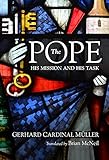
Card. Müller has a new book out now, in which he talks about, inter alia, the Francis Regime.  If that isn’t a spur to check it out….

However, my main point in this post is to relate what I saw at The Catholic Thing by Casey Chalk.  Incipit:

Liturgy and Imbecility

The Latin Church,” wrote the prolific satirist H.L. Mencken, “which I constantly find myself admiring, despite its frequent astounding imbecilities, has always kept clearly before it the fact that religion is not a syllogism, but a poem.” Given that Mencken was a religious skeptic who wrote columns lambasting fundamentalists at the 1925 Scopes “Monkey Trial,” we should consider his remarks on Catholicism a sort of compliment. . . even if the Church is guilty of “imbecilities.”

I wonder what words Mencken would use to describe the recent document from the Congregation for Divine Worship and the Discipline of the Sacraments, Responsa ad dubia (“Responses to doubts”), on certain provisions of Pope Francis’ July 2021 Motu Proprio, Traditionis Custodes, regarding the Traditional Latin Mass (TLM), which further limits its practice.

Actually, based on what Mencken said about the liturgy, I think I can guess. In that same 1923 essay, he wrote:

“A solemn high mass must be a thousand times as impressive, to a man with any genuine religious sense in him, as the most powerful sermon ever roared under the big-top by a Presbyterian auctioneer of God. In the face of such overwhelming beauty it is not necessary to belabor the faithful with logic; they are better convinced by letting them alone.”

Mencken warned the Catholic Church in the United States to stop “spoiling poetry and spouting ideas,” lest they suffer the same fate as the brands of Protestantism he found so risible. As someone with a graduate degree in Catholic theology, I take issue, of course, with Mencken’s description of Christianity as illogical and only of aesthetic value.

I thought about Mencken’s opinions on the TLM when reading Gerhard Cardinal Mueller’s recently translated book, The Pope: His Mission and His Task.

[…]

You can read the rest there.

Meanwhile…

The Pope: His Mission and His Task

US HERE – UK HERE

Posted in Francis, Liturgy Science Theatre 3000, One Man & One Woman, Pò sì jiù, Save The Liturgy - Save The World, The Drill, Traditionis custodes | Tagged ,
2 Comments

The war on Mass “ad orientem”.

And so it begins.

This just in from a reader…

My bishop (Venice in Florida) has just (via a letter to his priests) forbidden the use of ad orientem in any Novus Ordo Masses with a congregation. He asserts that the Novus Ordo mandates versus populum and that any other interpretation is false.


It would be interesting to see that letter, wouldn’t it.


Posted in Liberals, Liturgy Science Theatre 3000, Pò sì jiù, Save The Liturgy - Save The World, Turn Towards The Lord | Tagged
20 Comments

Daily Rome Shot 397 etc.

Photo by The Great Roman™

Fervorino from today’s live Mass stream. HERE

Use your phone’s camera!

Posted in SESSIUNCULA | Tagged
Comments Off on Daily Rome Shot 397 etc.

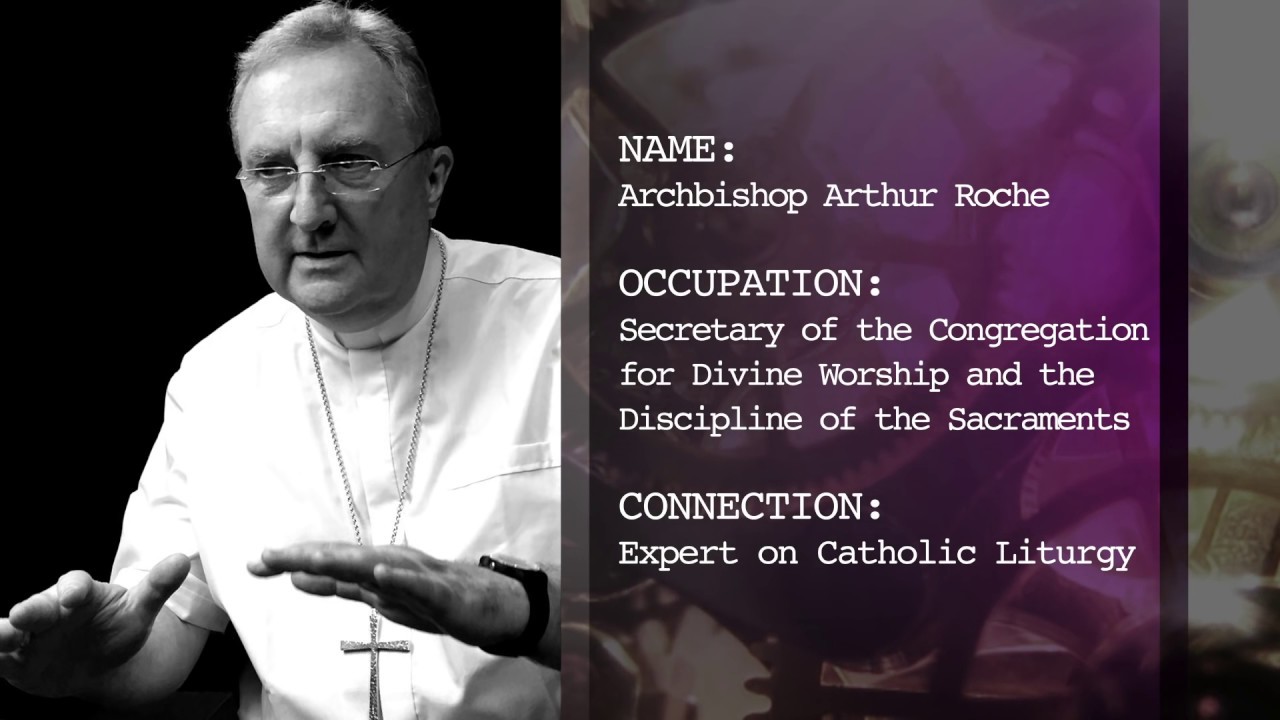
Compare what Archbp. Roche said in 2015 to what he is saying now.

It is very hard to respect clerics who are just weathervanes, waving around, changing directions under the pressure of whomever is at the moment in power.

YouTube thumbnailYouTube icon

Archbp. Roche, now in present role as Prefect of the CDW, now one of the chief enforcers of the cruel legacy document of the Francis’s Regime, in 2015 said that the Traditional Latin Mass is a “valid expression of the Church’s liturgy”.

“Unity … [is] not looking just for simple uniformity,” he said, adding that Pope Francis “talks about unity with diversity. We’ve got to find that in the Church.”

These days, he seems to have done a complete 180.

I wonder. Did Roche, when he was bishop ordinary of a diocese, or as auxiliary, or as a priest, ever celebrate the Traditional Latin Mass for people? Ever? In any ministerial role has he actually used the Vetus Ordo? Not just as an altar boy, which he may have been. As a priest?

What unmitigated temerity from clerics, who judge the TLM without ever having celebrated one for people.

Posted in Liberals, Pò sì jiù, What are they REALLY saying?, You must be joking! | Tagged
14 Comments

6 February ’22: Rosary Rally in Chicago for end to the persecution of Catholics who want the Traditional Latin Mass

Before anything else.  Prelates cannot persecute the Mass.  They cannot persecute a book.  They cannot persecute a Rite.   They persecution PEOPLE who want Holy Mass through a book, the Missale Romanum, of the Roman Rite in the Vetus Ordo.

They persecution the people.

I received this notice:

Please join us for a Rosary Rally outside of Holy Name Cathedral on Sunday, February 6th from 11AM – Noon.

We will have a banner – please bring your Rosaries, and feel free to bring signs.
We will be praying for the full freedom of the Latin Mass in the Archdiocese of Chicago, especially in light of the Cardinal’s recent restrictions.

Our message to Cardinal Cupich will be: Your Eminence, why are you persecuting faithful Catholics? As Catholics in Chicago and the surrounding area, we simply desire to pray and attend the Holy Mass in the way that so many saints have done. Why are you depriving us of the Traditional Latin Mass on the first Sunday of every month? What have we done to deserve such a punishment?

This event is being organized by ordinary Catholics who love Holy Mother Church and the Traditional Latin Mass. Facebook event page: https://fb.me/e/1Zz7ItQsS

If you are anywhere near Chicago, or you can go there, GO!

Meanwhile, commit to these simple things each day for

  • the softening of hearts of those interpreting Traditionis custodes (bishops, Roman Congregation officials);
  • the overturning of, or reversal of, or major amendment of Traditionis custodes.

Namely, commit to

  • recite the beautiful and powerful Memorare prayer DAILY;
  • make an act of physical or material penance for the two intentions ONCE A WEEK.

This is what I call being a “Custos Traditionis… a Guardian of Tradition”, in contrast to what bishops are being called to become, “Jailers of Tradition… Traditionis Custodes”.

More HERE

Posted in Traditionis custodes | Tagged
8 Comments