URGENT PRAYER REQUEST: Fr. Jackson of the FSSP, recently arrested – Prayer for priests – UPDATED

UPDATE 4 November 2021:

From what I have heard, Fr. Jackson is now being held on federal charges.  This is not a good development, as it implies that there is something more complicated than simple possession of illegal material.

A GoFundMe campaign had been set up for him and it raised a significant amount, but the campaign was axed by GoFundMe.

While we continue in a presumption of innocence, there is little to see that is positive in this case.   While I believe it is good to harbor a sober, eyes-open optimism, at the same time – in my considered opinion – it is also a good idea to begin to steel ourselves for very bad news.

Please continue to offer prayers for Fr. Jax as well as for all those involved in the investigation of this case.  It is important that the truth be the goal of everything that is done.  We all know that that isn’t always the motive of some in either law enforcement or the legal profession… or the Church.


Originally Published on: Oct 31, 2021 

I am distraught to report that Fr. James Jackson of the FSSP was recently arrested and is now detained for possession of … certain images that no one should ever have.

The FSSP issued a statement HERE.

Fr. Jackson, as I have known him, was an upstanding good priest. His book Nothing Superfluous is terrific and will continue to be terrific, all other things notwithstanding.

It kills me to read these things about any bishop or priest, but especially if I know the man.

The Devil hates all of us and wants our destruction. The Enemy’s war on us is relentless and driven with twisted but still angelic abilities. If the Enemy can bring down a bishop or priest, great harm can be done to the Faith and to souls, who can become discouraged.

In the face of this bad news, and whenever you hear of a fallen priest, our first response should be to offer prayers and penances in reparation for sins committed and also for the fallen himself.

Keep this in mind. In these USA we still have the (increasingly tenuous) presumption of innocence when crimes have been committed. While the reporting on these matters looks pretty grim, we don’t have all the facts.

It doesn’t look good but, frankly, it is not impossible that this could be a frame up, things being planted. Again, the Enemy hates priests, especially effective priests, and the Enemy has many willing human agents ready, willing and able to do such things.  Anyone who thinks that such frame ups don’t happen is naive.

That said, we much let the course of justice play out now.

Also, remember that when one member of some group strays, that doesn’t mean that all members of that group are bad.

Fr. Jackson was in the Marines. His crime, if he is guilty, does not stain all Marines. Fr. Jackson is in the FSSP. His crime, if he is guilty, does not stain all members of the FSSP.  Fr. Jackson is a priest.  His crime, if he is guilty, does not stain every priest, though we all suffer by it.

Lastly, if some highly visible Jesuit homosexualist activist happened to be arrested for something awful, I would be writing the same thing about him right now even though he wishes ill upon me. We owe this to our brothers and sisters in charity – eyes-wide-open charity.

That said… damn…. just… damn, this is dreadful news.

Oremus.

O Almighty Eternal God, look upon the face of Thy Christ, and for the love of Him who is the Eternal High Priest, have pity on Thy priests. Remember, O most compassionate God, that they are but weak and frail human beings. Stir up in them the grace of their vocation which is in them by the imposition of the bishop’s hands. Keep them close to Thee, lest the Enemy prevail against them, so that they may never do anything in the slightest degree unworthy of their sublime vocation.

O Jesus, I pray Thee for Thy faithful and fervent priests; for Thy unfaithful and tepid priests; for Thy priests laboring at home or abroad in distant mission fields; for Thy tempted priests; for Thy lonely and desolate priests; for Thy young priests; for Thy aged priests; for Thy sick priests, for Thy dying priests; for the souls of Thy priests in Purgatory.

But above all I commend to Thee the priests dearest to me; the priest who baptized me; the priests who absolved me from my sins; the priests at whose Masses I assisted, and who gave me Thy Body and Blood in Holy Communion; the priests who taught and instructed me, or helped and encouraged me; all the priests to whom I am indebted in any other way, particularly N. O Jesus, keep them all close to Thy Heart, and bless them abundantly in time and in eternity. Amen.

IMPRIMATUR
+Robert C. Morlino, Bishop of Madison, 6 September 2018
Posted in ACTION ITEM!, Priests and Priesthood, Urgent Prayer Requests | Tagged
81 Comments

4 Nov: The Death Mask of St. Charles Borromeo – VIDEO

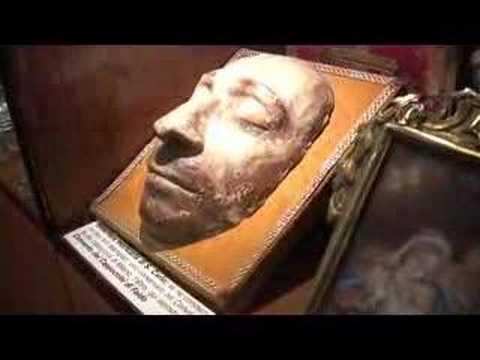
A few years ago a priest friend of mine in an area of Switzerland which was of the Ambrosian Rite of Milan, sent me a video of a rare death mask of St. Charles Borromeo. He died after visiting that area and had actually left his biretta behind, which my friend’s church preserved.

The death mask of St. Charles Borromeo.

Truly one of the great noses of all time.

YouTube thumbnailYouTube icon

Posted in Saints: Stories & Symbols | Tagged
2 Comments

Daily Rome Shot 323

Click for larger

Photo by The Great Roman™

Use your phone’s camera

Posted in SESSIUNCULA | Tagged
Comments Off on Daily Rome Shot 323

ASK FATHER: Father said “I absolve you OF your sins” instead of “FROM your sins”.

From a reader…

QUAERITUR:

I recently made a confession (of mortal sins) where the priest used the full absolution formula, EXCEPT, he said “I absolve you OF your sins” instead of “I absolve you FROM your sins.”

Do I need to redo this confession?  Last year’s story of the priest in the Archdiocese of Detroit who found out he was never validly baptized because the deacon said “WE baptize you” instead of “I baptize you” has me concerned.

Be at ease.

The official English translation of the core of the form of absolution is: “I absolve you from your sins in the name of the Father +, and of the Son and of the Holy Spirit.”

That said, there is not a huge gap of meaning between “I absolve you of…” and “I absolve you from…”.  The difference in meaning is NOT enough to invalidate the absolution.

In short, Father is getting it wrong, but not so severely wrong that it invalidates the absolution.

You might politely ask him about it, but not in a confrontational way.  He might not even realize that he is getting is slightly wrong.  If he has the true heart of a priest, he will be glad to know what the correct wording is and will make a change.  If this is all about him, he won’t appreciate the information.

There are some jackass priests out there who really screw around with the forms of sacraments.

If you confess to a priest who regularly does something really dodgy with the form of absolution, I would politely bring it up.

People are within their rights to have the form of absolution spoken as it is in the book.  If it really bothers you, or if you ever hear something that you are pretty sure is too far off base to be admissable, ask the priest to give you absolution with the proper form. Do not be nasty or aggressive about this.

If that doesn’t help, talk to the pastor of the parish and/or the local bishop.

Remember that the priest himself cannot talk about the confession because he is bound by the Seal.  Therefore, you can politely inform the the bishop about your experience of the form of absolution.  You would have to include that you have been to this priest several times and that he has always done the same thing.  Do not run him down.  Do not add lots of observations.  Do not try to teach the bishop his job or theology.

Ideally, the bishop (or pastor) would then have a chat with the priest during which the priest would be informed that word had come that he isn’t using the proper form of absolution and, if true, that should be corrected – lest in the future he receive in spades the wrath of the whatever from high atop the thing.

If that doesn’t produce results, send a copy of your correspondence to the Congregation for the Doctrine of the Faith (not Divine Worship) and seek a clarification.

Fathers!   Don’t fool around with the words of absolution or of any other sacrament  Remember what happened when men screwed around with the form of baptism!   At the minimum about are being anxiogenic!   It may be that you have slipped into some variant and, over the years, don’t even realize you are doing it.  REVIEW.   This is the nuts and bolts of our work!    And it isn’t even that hard!

As for the rest of you…

GO TO CONFESSION!

BTW….

That decision of the CDF about the form of baptism is not without its critics.  However, “We” could be a substantive change to the form of the sacrament.


Posted in "How To..." - Practical Notes, ASK FATHER Question Box, GO TO CONFESSION, Hard-Identity Catholicism, Liturgy Science Theatre 3000, Save The Liturgy - Save The World | Tagged ,
7 Comments

ITALY: Vocations to the priesthood waaaaaay down

From VaticanNews.va in Italian:

Italy, CEI: fewer seminarians, families may be a nursery for vocations [What’s….. family?]

The data of a report by the Italian Bishops’ Conference reveal that in just ten years the decline in vocations has reached 28%: in fifty years the seminarians have more than halved. Don Michele Gianola, undersecretary of the CEI: “This situation must not make us lose hope. The attention of the Church today must be directed to all vocations, not just to the priesthood.”

Lemme stop there.  In the ANSA coverage has, instead of priesthood, “il ministero ordinato…. ordained minister”.  Vatican News tidied it up.  “Ordained minister” is a term of art that intends to blur the disticntion of the priesthood of the priest and the priesthood of the laity.  This was the B as in B, S as in S we got in seminary in the 80’s, distilled from Rahner and Schillebeeckx.

SIR, has more numbers.  Alarming.

Fr. Z responds, they have systematically destroyed the terroir for vocations in Italy for decades and now they wonder that they don’t have as many now as before.

God is not calling fewer men to the priesthood, friends.  It’s just that they can’t hear.  They’ve been deafened.

I wonder what would happen with a radical inside the box (the new “outside the box”) approach to vocations, including preaching about the family and having sound liturgical worship.

Posted in Seminarians and Seminaries, SESSIUNCULA, The Coming Storm, The Drill, The future and our choices | Tagged ,
11 Comments

Robert Royal on the Biden – Francis meeting

Robert Royal has a terrific column at The Catholic Thing about the meeting of Biden with Francis.  He summarized the thoughts of many.

Tastes:

[…]

The Vatican press office has not denied Biden’s account and has only said that it was a private conversation. And that it doesn’t comment on private conversations.

This already is close to an outright lie

[…]

The press office is noticeably maladroit in handling controversies like this one. During the Amazon Synod, for instance, press officials were repeatedly asked to clarify what the Pachamama was doing there. All they did was mumble that symbols have different uses in different cultures.

[…]

There’s some evidence that Biden is lying. He claims that abortion was not discussed.

[…]

The biggest problem in all of this is that Francis even met with Biden at this precise moment. It not only undercut our American bishops – by a pope who otherwise has been seeking to devolve power away from Rome and talks incessantly now about “walking together” – i.e. synodality.

[…]

And there’s this…

The editor of any publication these days knows in advance that anything you publish will result in a flurry of emotional reactions in the Inbox. Readers accuse you and all of your writers – who were chosen to present a variety of perspectives, some not your own – of all believing the same outrageously wrong thing. Or maybe the opposite wrong thing. The reactions are not always based on a close reading of the original text.

You said it, friend.

The artwork he chose for the column is spot on.

Check it out.

Posted in Emanations from Penumbras, Liberals, The Drill | Tagged ,
13 Comments

Daily Rome Shot 322

Photo by The Great Roman™

Posted in SESSIUNCULA | Tagged
1 Comment

ASK FATHER: If you are excommunicated do you stop being Catholic? Can you just go to confession? Do you have to be re-baptized?

Excommunication ceremony (British Library Royal, 6 E VI f216v)

From a reader…

QUAERITUR:

Like Marines, I’ve heard that once you’re baptized a Catholic, you’re always a Catholic, no matter if you fall away from the faith, or don’t even practice Catholicism.
It is something that once given, cannot be taken away. Is that correct?
Are you still considered Catholic if you get excommunicated?
If you get excommunicated, do you just need to repent of your sins through Confession, or does one need to get re-baptized?

Firstly, you know from the Creed that there is ONE baptism for the forgiveness of sins.  A person can never be re-baptized.  The sacrament, once given, imparts an ontological character to the soul that never goes away.  Once baptized, you are baptized for eternity, no matter where you wind up.

You can never be a non-Catholic after you are baptized or received into the Catholic Church.  Once you enter into formal membership, that’s it.  You can attempt to make formal separations from the Church.  You can behave as if you were never Catholic.  But if something comes up that requires interaction with the institution of the Catholic Church for some reason, you will be treated as a Catholic, not as a non-Catholic.  The Church still considers you bound by her laws no matter what.

Most of the time, when we sin we don’t incur a censure that would prohibit us from receiving the sacraments or, in the case of clerics, an office.  Most of the time, we can just go to confession and that’s that.

Some sins incur censures.  They are dealt with by getting the censure absolved AND the sin absolved.

A first principle to keep in mind is that an excommunication can only be incurred if the person commits a mortal sin.  That means that all the conditions for a mortal sin must apply.  It must be grave matter, known to be wrong, and willed anyway when performed.  If a person truely doesn’t know any better, or is under duress or is otherwise in his or her will not giving consent to sin, then the person is not guilty of comitting a mortal sin, even though objectively he did something gravely wrong.

Examples, a woman is threatened with harm unless she has an abortion, a man is drunk when he steals a Host, a bishop is absolutely convinced in true sincerity that he must consecrate bishops for the good of the Church even if he has been begged by the Pope not to do so.

There are different ways to incur excommunication, a censure which means that you cannot receive the sacraments, even in most cases receive absolution!  The censure has to be lifted first.

There are excommunications that are incurred automatically and those that are declared or imposed.  The automatic ones (latae sententiae), if the sin/crime that incurred them is public, manifest, are usually then confirmed by competent authority with a declared censure (ferendae sententiae).

Most censures can be lifted by either a priest with the faculty to do so (most confessors) and diocesan bishops.   Some censures, having to do with very serious sins, are reserved to the Holy See for their lifting or absolution.   These very serious reserved censures have to do with violations of things that are close to the core of the life of the Church, like abuse of the Eucharist, breaking the Seal of confession, etc.

In most cases, however, if a person is aware of incurring an excommunication in a hidden, non-public way, she can usually go to a local priest who is a confessor and have the censure lifted in the context of sacramental confession.  The censure is lifted and then the person can be absolved.

However, if the sin incurred an excommunication that is hidden and reserved to the Holy See, the confessor cannot lift the censure.   In this case  – if he knows what to do and seminaries generally don’t teach what I am about to write – he can absolve the sin, but must exhort the person to make an appointment to return after a period of a some days, perhaps ten days. In the meantime, that priest must communicate the situation to the Apostolic Penitentiary (AP) in Rome, which handles censures in the interal forum (confession).  He gives the AP a generic, anonymized description of the person, circumstances, and sin and asks a judgement, the faculty to lift it if deemed opportune, and a penance.  This can be sent by priest to the AP by fax.  The AP always answers within 24 hours.  The priest confessor would receive an envelope from the AP through the papal nuncius office and post, containing another envelope with the comments and faculty from the AP.    The next time that penitent came, at the appointed day and time, the priest could then communicate the advice of the AP, the penance, and then lift the censure.  At that point the penitent could freely make use of the sacraments again.

If the excommunication is a public matter, the Holy See (or bishop who imposed it) would also have to make public statements that the imposed censure was lifted.

Keep in mind that, now, there are no more reserved SINS.  There are reserved CENSURES.   Sins and censures are absolved separately.  Think in terms of a gravely evil act being a grave sin AND a grave crime.  Two steps are needed, one for the sin and another for the crime.  So, while it is possible to absolve a sin in case of necessity or undue burden to the person who otherwise might have to wait, the censure can only be absolved by a priest with the faculty to do so.

NB: Virtually all priests now have the faculty to absolve the sin of abortion and the censure it incurs.

The older, traditional rite of penance, with its form for absolution was far more pastoral and merciful than the post-Conciliar modern form, because it spells out the issue of absolution of censures before the absolution of sins.  Here is the older, traditional form (always in Latin but here in translation):

May our Lord Jesus Christ absolve you; and I, by His authority, absolve you from every bond of excommunication (suspension [for clerics only]) and interdict, in as much as I am able and you require. + Thereupon, I absolve you from your sins in the name of the Father, and of the Son, + and of the Holy Spirit. Amen.

Notice the two steps: censures, if any and according to the priest’s faculties, and then sins.

In the older form of absolution you know what is going on and, it being in Latin, you never have to doubt its validity.

The modern, new-fangled, post-Conciliar Ordo Paenitentiae has a form for absolution of censures, but I’ll wager that 99/100 priests who say only the Novus Ordo don’t know anything about it or have every used it, even when they should.

This is important stuff, obviously.

Holy Church is beautifully merciful in making sure that people in these delicate situations don’t have to wonder if they are absolved of sins or reconciled with the Church.  The Church’s law is dripping with mercy so that people can be at ease.  That is why priests need to know this stuff and also apply it in preaching and the confessional.

For further clarity, folks should have recourse to Dr. Ed Peters’ book, Excommunication and the Catholic Church.

Ed Peters Excommunication

Remember, there is no sin that we little mortals can commit that is so bad that God will not forgive,provided we confess our sins and ask for forgiveness.  God’s mercy is magnificent and it is ours for the asking.

GO TO CONFESSION!

Posted in SESSIUNCULA | Tagged , ,
11 Comments

Daily Rome Shot 321

Photo by The Great Roman™

OPPORTUNITY
10% off with code: FATHERZ10

Posted in SESSIUNCULA | Tagged ,
Comments Off on Daily Rome Shot 321

An idea for All Saints next year

At the traditional parish in Rome, Santissima Trinità dei Pellegrini, there was a nice ceremony in honor of all the saints.

This could also be done on the Feast of Holy Relics, on 1o December in the 1962 calendar.  Before 1962, Holy Relics was on 30 October.

Relics are remains of saints after their death, flesh, bone, hair, ashes and, by association, clothing and possessions.   Christians have venerated the graves and relics of saints since the earliest years of the Church.

Consider how people carried the sick into the streets so that Peter’s shadow would fall on them and they would be healed.   How much more relics of saints.

Countless miracles have been worked by God through contact with the relics of saints.

Back to Santissima Trinità dei Pellegrini.  They brought out all the relics they have, brought them one by one to the parish priest who showed them to the people while their names were proclaimed to the people.  Then they were placed on the main altar.  However, they had so many that they had to use a side altar in the transcept.  Then they sang 2nd Vespers of all Saints.

Something like this could be done at a parish or chapel where there are some relics.  Or perhaps several parishes could combine forces so that there would be more relics on hand.

A lovely way to honor the saints, who do so much for us.

There is an interesting poem (19) by St. Paulinus of Nola, beautiful Latin, inspiring saint, about St. Felix and relics of saints, their translation, etc.  We read this fascinating passage (its all in Latin poetry.  Here’s a taste with English prose version:

Sed Deus ut cunctorum hominum sator, omnibus istam 307
De sanctis indulsit opem procedere terris:
Ut jam de tumulis agerent pia dona beati
Martyres, et vivos possent curare sepulti. 310
Nec satis hoc donum Domino fuit, ut sua tantum
Nomine, sive opibus loca martyres illustrarent:
Ex iisdem tumulis etiam monumenta piorum
Multiplicans multis tribuit miserator eosdem
Gentibus. Et referam varias ab origine causas, 315
Ex quibus haec orta est variis benedictio terris
Nam quia non totum pariter diffusa per orbem
Prima fides ierat, multis regionibus orbis
Martyres abfuerant, et ob hoc, puto, munere magno
Id placitum Christo nunc inspirante potentes, 320
Ut Constantino primum sub Caesare factum est,
Nunc famulis retegente suis, ut sede priori
Martyras accitos transferrent in nova terrae
Hospitia: ut sancto non olim antistite factum
Novimus Ambrosio, qui fultus munere tali, 325
Postquam ignoratos prius, et tunc indice Christo
Detectos sibimet mutata transtulit aula,
Reginam prompta confudit voce furentem. ….

The lifespan of one mortal man could not suffice to dissolve the pollution which had gathered over a long period; the few years in which Felix lived in the flesh as confessor and priest, his words as teacher, his record as martyr, his deserving deeds and duties as presiding priest were not enough. So the Almighty Lord caused Felix’s mortal span in the body to continue in a higher way, for he extended the healing activities of our busy martyr so that after burial he would exercise the powers which he had wielded whilst still in the flesh through the strength of Christ. In this way he could after death abide physically in the city he had espoused. Though only the spirit of the martyr laid to rest showed its healing presence (since the physical appearance of their dear patron lay concealed from the longing hearts of his beloved people, withdrawn temporarily from their eyes) is ready healing could always be at hand for the curing of the sick. So undying distinction and fame halo Felix, and his efficacious power flourishes without cease. True, he was buried in a mound long ago, and being mortal lies hidden in the covering earth; yet a living grace quickened by God outlives his limbs, and brings fame to the martyrs bones which exhale divinity. He is buried, but the power of his merit lives on among his folk, so that dense crowds from different regions constantly venerate the tiny tomb of the great confessor.

But since God is father of all men, he allowed this helped to pass from his Saints to all lands, so that the blessed martyrs could now provide kindly presents from their tombs, and the buried could attend the living. But the Lord did not content himself with allowing the martyrs to bring Radiance with their names or assistance only to their own regions. He multiplied the memorials of the saints from these tombs, and in his pity conferred the same martyrs on many regions. I shall state from the beginning the various occasions from which this blessing has originated in various countries.

Since the faith had initially not been spread through the whole world alike, many areas of the earth were without martyrs. This I think is why Christ has both inspired princes (in the first place when Constantine was Caesar) and acquainted his servants with his most generous decision to summon martyrs from their earlier homes and translate them to fresh lodgings on earth. So, for example, we know of the recent action of the holy Bishop Ambrose; relying on this gift, he translated and set in a different church saints who were earlier unknown but whom he later identified on the information of Christ, and thus he has confounded the raging queen with the light he has uncovered.

When Constantine was founding the city named after himself, and was the first of the Roman kings to proclaim himself a Christian, the godsent idea came to him that since he was then embarking on that splendid enterprise of building a city which would rival Rome, he should likewise emulate Romulus’ city with a further endowment – he would eagerly defend his walls with the bodies of apostles. He then removed Andrew from the Greeks and Timothy from Asia; and so Constantinople now stands with twin towers, vying to match the hegemony of great role, and more genuinely rivaling the walls of Rome through the evidence that God bestowed on her, for he counterbalanced Peter and Paul with a protection as great, since Constantinople gained the disciple of Paul and the brother of Peter.

In widely separated regions along that road greatly increased help was afforded by these Saints to the tasks of human living, and those regions demonstrate this even today. Where ever the carriage, equal to its holy burden, halted at an established post station, wherever the holy bodies lodged and the bearers of their consecrated ashes rested, the evidences of miracles cry out in each and every place. God’s hand is at work with healing strength along all the roads where the holy bodies imprinted their living traces on that sacred journey.

This, then, was the means by which the faithful and zealous escorts of the relics were afforded a chance at promoting of faith to break off some keepsakes from the holy bones as their deserved reward, so that they could individually bear back home for their personal protection the reward for their service and the payment for their toil. As a result, the sacred ashes have been scattered over different areas like life-giving seeds. Wherever a drop of view has fallen on men in the shape of a particle of bone the tiny gift from a consecrated body holy grace has brought forth fountains in that place, and the drops of ashes have begotten rivers of life.

From this source Christ’s abundance, so rich in its tiniest forms, has fallen on us also; for we, too, have received, in the form of a fragment of dust, the sacred tokens of the apostles’ flesh. St. Felix, Lord and father of our lodging, guardian of our soul, protector of our salvation, has accepted these in the neighboring shrine close by.

I warmly recommend an apostolate run by a friend of mine, Fr. Carlos Martins, called Treasures of the Church.

BTW… in that same poem of Paulinus, he describes the reaction of demons who possessed people to the presence of holy relics.  There had been pagan worship and people were affected.  REMEMBER: Every pagan god and idol is a demon (e.g., Pachamama = demon).  The relics of St. Felix put demons into agony, and the ergumens manifested the same symptoms that exocists see today.  More from Paulinus:

The demons who were worshiped as deities in all the shrines are disarmed and tormented throughout God’s temples, and those who presumed to accept honors appropriate to the gods are now beaten and subjected to the laws of men. These demons whom we observe in the crowded church of Felix being tormented, crying out, and being pulled along in the bodies they have captured, are kept in prison in those very bodies into which they trusted themselves; thus their own decision devised for them human torments. So now they play the part of the guilty, and hollow at their punishment, whereas before they had been gods of spurious divinity. Before God was worshiped, they had with their counterfeit godhead devoted to their own the service living men who saw no sign from heaven; but now that true faith has been exposed by Christ’s light, they cannot withstand even men enclosed in the tomb.

The nature of the demons voices makes it more manifest that they who are tortured before the thresholds of tombs of the saints are the same as those to whom the enslaved human race once sacrificed and insanely offered sacred reference; for they quite often groan with the same voices, so that one can recognize from the shouting their habitual madness. Usually their mouths appear to hang open quite loosely, they gnash their teeth, foam at the lips, cause their hair to stand on end. Their hands pull at their hair and shake it heavenward; they stand on tiptoe, feet and hair erect. From time to time they remember those ancient rights in which they used to lick the entrails of slain cows, to feed on the sacrificial offering, to lead wanton bands in ivy-clad processions. Even now they attest that theirs was the ritual at which the drunken mob uttered the crazed shout “Euhoe”; they gaspingly ape this cry of Bacchus with effeminate voices and swivel there necks with slow circular movements.

As I read this, I recalled a post of some years ago.  Jesuits like homosexualist activist James Martin were promoting Jesuit yoga – no, really.  Fr. Gabriel Amorth, long-time late exorcist of Rome, said that yoga opens people up to demons.  The CDF commented on yoga.  And yet the homosexualist activist promoted their “Ignatian Yoga Retreat”… Jesuit Yoga, I guess, with its appropriately and “downward facing dog”.

Brrrr.   My exoricst friends tell me about how demons react to relics, and certain demons to relics of particular saints.


Posted in Just Too Cool, Our Catholic Identity, Patristiblogging, Saints: Stories & Symbols | Tagged ,
4 Comments






















