ASK FATHER: Is Mass valid if it is offered in a desecrated place? Wherein @fatherz rants.

From a reader…

QUAERITUR:

After a black mass or an occult rite occurs that consecrates the sanctuary of a Catholic Church to Lucifer (heaven forbid), but before that sacred space has been reconsecrated and restored for Catholic use, what would be the consequences of a Mass that was celebrated in that same sanctuary? Would the Mass still be valid?

Were a church to be mistreated like that, desecrated, before the space is used for liturgical worship again it ought to be re-consecrated.

If, by chance, that doesn’t happen, re-consecration, and Mass is celebrated in that place, there is no question that the Mass would be valid.

The true celebrant of every Mass is the High Priest, Jesus, Son of God.  Christ is not thwarted by the “Prince of this world”.  As the Lord says, the Enemy has nothing on Him (John 14:30).

When the ordained priest, alter Christus, acting in Christ’s person, in persona Christi, says the words of consecration over bread and wine, the wonderous change of transubstantiation takes place.   The two-fold consecration separates the Body and Blood.  The priest consumes both species of the Eucharist.  The Sacrifice is renewed.

There is nothing that the enemy can do to change that or thwart that, short of some sort of demonic party trick to distract the priest.

The Mass, even in a desecrated place, would be valid.

I am more and more concerned about the lack of awareness that many Catholic priests and bishops seem to have about the supernatural battle that is being waged around us and about the real difference between, for example, invocative and constitutive blessings, the transcendent and immanent, the sacred and the profane.

There are sacred – sacred – things, places and people.   Sacred means that they have been removed by constitutive blessings and by consecrations from the realm of the “Prince of this world” and handed over to the King.  Sacred does not necessarily mean “better” in a worldly sense.   Ordination to the priesthood, which makes a man a sacred person, doesn’t confer on him greater intelligence or strength, etc.  Sacred means that the person (priests and consecrated religious) or places (churches, cemeteries) or things (chalices, rosaries, vestments, bells, etc.) are now set apart for the service of God.

One of the dire effects of Modernism that pervades every level of the Church right now, involves a need constantly to try to reduce the supernatural to the natural, to discount the sacred and bring it into the profane or secular.  “Profane”, as an opposite of sacred, doesn’t mean “bad”.  It means “not sacred”, in the sense that it is not consecrated.  It still belongs to the world.  It is “pro+fanum … outside the fanum, the temple“.   Something that is sacred is dedicated to the service of God.  The profane is still under the domination of the “Prince”.  That doesn’t mean that thing is “evil”.  And there are sacred persons and places and things that are used for evil purposes.  The sad horror is that living sacred beings, such as priests who do not lose their consecration, can be true agents of evil… a horrible distortion of the sacred.  Misuse of the sacred is “profanation”.

Sometimes when I look around at what is going on, I read the news about churchy issues, I wonder if any of the movers and shapers have a sense anymore – if they had it at all – of the spiritual realm and the battle that is perpetually going on, between the faithful holy angels and the fallen apostate angels.  I look at how Mass is celebrated, consider the music and the vestments and the comportment of all involved (especially manifested in the ars celebrandi of the priest or bishop) and wonder if they have any notion of the sacred and the profane, the transcendent and immanent.

Quite a lot of Catholics today are mired in what might be called Immanentism Lite.  It’s not that they deny the transcendent.  They just don’t ever think about it.  If pushed, they will sort of get the idea that there is a difference.  But they’ve never been led to think about it.  Why would they?

Think about what they see in their churches on Sundays, the catechesis they had, the sermons they’ve heard, the news stories about corrupt priests and bishops, mad and even plainly idolatrous antics at the highest levels.

Do they get a sense of the sacred from all of that?
YouTube thumbnailYouTube icon

No wonder Traditional Catholics are the most marginalized demographic in the Church.    They and what they want give a large number of our leaders the willies: they fear what they don’t grasp.

There is obviously a spectrum of awareness of the sacred and the profane, transcendent and immanent.

Back to the question.

Would Mass be valid in a church so desecrated?  Yes.  However, lingering problems would more than likely remain, probably to manifest themselves “sideways”, as it were, in and around the place.

This would be the case if the church were tiny and humble St. Ipsidipsy in Tall Tree Circle or St. Peter’s Basilica on the Vatican Hill.

Posted in "How To..." - Practical Notes, ASK FATHER Question Box, Hard-Identity Catholicism, Priests and Priesthood, Save The Liturgy - Save The World, The Drill, Wherein Fr. Z Rants | Tagged , ,
14 Comments

ASK FATHER: “Can a priest say the Latin Mass if he doesn’t know Latin formally?”

From a reader…

QUAERITUR:

Can a priest say Latin mass if he doesn’t know Latin formally?

Message:
For instance, could a Novus Ordo priest be convinced to do a Low Mass even though he is not fluent in Latin? By reciting the Latin?

Context: was going to ask my parish school to do Low Mass and Leo XIII prayers for the school children.

Say what you want about the late Card. Egan of New York, but he was indisputably a good canonist and an even better Latinist.

When he commented on Benedict XVI’s Summorum Pontificum in 2007, Egan – not a friend of Tradition – wrote that:

Priests who choose to celebrate Mass in the “extraordinary” form must have a sufficient knowledge of the Latin language to pronounce the words correctly.  

This is excellent.  It applies the proper interpretive principals.  A priest does not have to be an expert Latinist.  He must have sufficient knowledge to pronounce the words.  That is what is wrapped up in idoneus along with proper faculties: idoenus points to minimum qualifications, not to expertise.

Let’s use an analogy.  Say there is a priest who does not speak Hmong fluently, but he has learned to say the texts of the Mass in Hmong.  Should he not be allowed to say the Novus Ordo Mass for the Hmong community because he is not fluent?  Say that they want the Traditional Latin Mass and he has someone who will translate his brief sermon into Hmong with proper transliteration.  Should he not be allowed to preach?

So, a priest whose knowledge of Latin is not all that strong, but who is able to pronounce it properly, can use the 1962 Missale Romanum.

Fathers.  Put on your Big Boy Underwear and learn your Rite!

If little boys can learn to pronounce the Latin prayers and memorize them, so can a grown up Roman Catholic priest.

Posted in Canon Law, Liturgy Science Theatre 3000, PRAYERCAzT: What Does The (Latin) Prayer Really Sound L, Save The Liturgy - Save The World | Tagged
9 Comments

The Lord’s Ascension, Beans, and You

I so very much wanted to be in Rome this month.  My anniversary is coming up.  The strawberries and artichokes are around, along with broad beans.

We have lovely customs in our wonderful Roman Catholic Church, including special blessings on certain feast days, often tied to the changing of the seasons… in Rome, that is.  It’s the Roman Church, after all.

Tomorrow, the Feast of the Ascension of the Lord, was and is decorated with the opportunity to bless beans.

In Rome at this time of year the “broad beans” are usually at their peak. Broad beans are best enjoyed simply with pecorino cheese and cold white wine.  The combination of which is a material proof of God’s love.

The connection of this time of year in the Roman calendar with beans is ancient indeed.  Remember: I am not talking here about a certain attention seeking, bomb-throwing sociologist.  I mean the vegetable.  Although… the two can often produce similar effects.

During May in ancient Rome the master of the house would walk around the dwelling on the nights of the Lemuria (9,11, 13) waving beans to ward of evil spirits.  On the Kalends of June (1 June) there was a pagan feast of the Sacrum Carnae Deae when beans and bacon were offered in sacrifice and consumed.  In fact, the June Kalends were called Kalendae Fabariae.  Latin faba is, of course, “bean”, and the Italian is still the same, “fave”.  The essentials don’t change much.  For this feast the ancient Romans ate a mess of beans and bacon.  Any excuse, right?  In his Fasti the poet Ovid writes of beany blessings:

Pinguia cur illis gustentur larda Kalendis
Mixtaque cur calido sit faba farre, rogas?
Prisca dea est, aliturque cibis quibus ante solebat,
Nec petit adscitas luxuriosa dapes.

I enjoy Ovid… it just rolls and rolls out so effortlessly.  In any event, beans and bacon were as big back then as they are now.  It’s amazing how consistent we are.  You get much of the same effect with your fave and pecorino cheese (salty fat).

And don’t forget the awe inspiring fave in tegame.

The the ancient Roman cookbook complied in the 4th c. and attributed to Apicius (US HERE – UK HERE), there are various bean and pea recipes. A good one.  HERE and HERE

Pisam Vitellianam sive fabam (Peas or Beans à la Vitellius)

Pisam coques lias. teres piper, ligusticum, gingiber, et super condimenta mittis vitella ovorum, quae dura coxeris, mellis uncias III, liquamen, vinum et acetum. haec omnia mittis in caccabum et condimenta quae trivisti. adiecto oleo ponis ut ferveat. condies pisam, lias, si aspera fuerit. melle mittis et inferes.

Peas or beans with yolks are made thus: cook the peas, smoothen them; crush pepper, lovage, ginger, and on the condiments put hard boiled yolks, ounces of honey, also liquamen, wine and vinegar; mix and place all in a sauce pan; the finely chopped condiments with oil added, put on the stove to be cooked; with this flavor the peas which must be smooth; and if they be too harsh in taste add honey and serve.

If you don’t have a lot of liquamen, use garum (or substitute colatura or even Vietnamese fish sauce, which is similar).

A Bean Blessing is not, alas, in the Rituale Romanum, but another blessing, for any sort of food, can be used.  Bring lots of beans, perhaps along with bacon, to Father and ask him to bless them.  Remember that the Rituale says that blessings are to be done in Latin or they are invalid.  Sorry…I’m not making that up.

I’ll give the Latin below.  The intro is familiar.  In the bean blessing I made plurals and used an adjective rather than genitive.

P: Our help is in the name of the Lord.
All: Who made heaven and earth.
P: The Lord be with you.
All: May He also be with you.

Let us pray.

Bene+dic, Domine creaturas istas fabales, ut sint remedium salutare generi humano: et praesta per invocationem tui sancti nominis; ut, quicumque ex eis sumpserint, corporis sanitatem et animae tutelam percipiant.  Per Christum Dominum nostrum.

Lord, bless + this creature, [beans – “beany creatures”)], and let it be a healthful food for mankind. Grant that everyone who eats it with thanksgiving to your holy name may find it a help in body and in soul; through Christ our Lord.

All: Amen.

It is sprinkled with holy water.

There is a separate blessing for bacon (“lard”… ascension of the lard?):

P: Our help is in the name of the Lord.
All: Who made heaven and earth.
P: The Lord be with you.
All: May He also be with you.

Let us pray.

Bene+dic, Domine, creaturam istam laridi, ut sit remedium salutare generi humano: et praesta per invocationem tui sancti nominis; ut, quicumque ex eo sumpserint, corporis sanitatem et animae tutelam percipiant.  Per Christum Dominum nostrum.

Lord, bless + this creature, lard, and let it be a healthful food for mankind. Grant that everyone who eats it with thanksgiving to your holy name may find it a help in body and in soul; through Christ our Lord.

All: Amen.

It is sprinkled with holy water.

I hope you will all be “full of beans” for this Feast of the Ascension of the Lord!

Fr. Hunwicke once had a fun post about Ascension Beans! HERE

He includes the blessing for grapes… “Benedic +, Domine, hos fructos novos vineae…”.

The Ritual has blessings for all sorts of food items, such as bread and pizza or cake, beer, cheese and butter, birds, eggs, lamb, oils, whatever other food (ad quodcumque comestibile).


Posted in "How To..." - Practical Notes, Fr. Z's Kitchen, Lighter fare |
4 Comments

REMINDER: Ascension THURSDAY – usually Holy Day of Obligation

It ought to be clear to everyone that THURSDAY 13 May is the Ascension of the Lord.  THURSDAY is Ascension… not Sunday.  There really is no such thing as Ascension Thursday Sunday.  It ought to be either Sunday after Ascension (TLM) or 7th Sunday of Easter (NO).

In many places, diocesan bishops are ending their dispensations from Sunday and Holy Day Mass participation.   In other words, in most places people were not obliged to attend Mass on Sundays, etc., because of the CCP Virus which has resulted in ongoing COVID Theater.   Bishops here and there are ending that dispensation.  That means that, where you are, you may be once again obliged to attend Holy Mass on Sundays and Holy Days of Obligation.

Ascension Thursday is – in normal circumstances – a Holy Day of Obligation.   All Sundays are Holy Days of Obligation.

You should check in your local diocese to see what the dispensation situation is.  Has the obligation been restored?   Find out.


Posted in "How To..." - Practical Notes, Canon Law, Liturgy Science Theatre 3000 | Tagged
8 Comments

Daily Rome Shot 155

Posted in SESSIUNCULA | Tagged
2 Comments

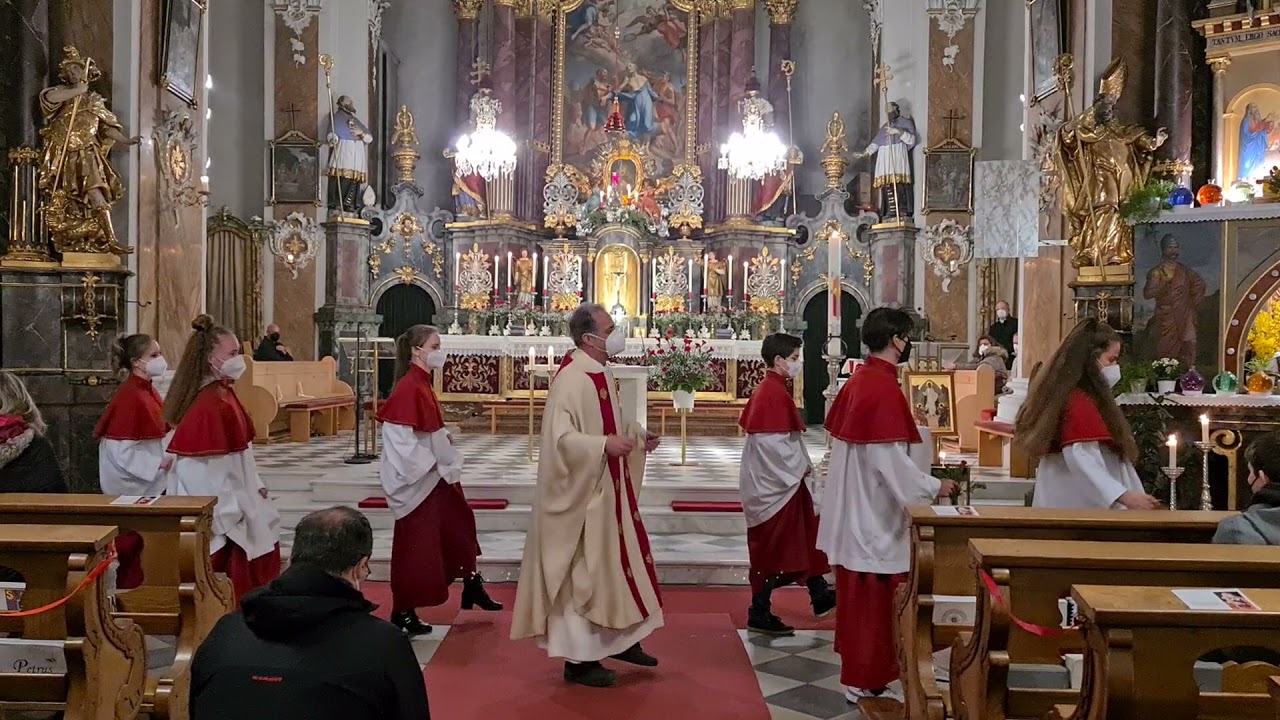
ASK FATHER: LESSONS IN CLERICALISM – How to wear the cassock.

From a deacon…

QUAERITUR:

Could you recommend where to look to find info on, or yourself explain, the intricacies of wearing a cassock? I’m am ordering one and basically going in blind. I know there is a collar worn underneath it and that there is the sash, fascia, worn apparently at sometimes but not always? I’ve seen many a post, here and other places, encouraging its wearing but haven’t seen much in the way of a “how to” for it. Similar to how there are entire sites dedicated to dressing sharp in suits. I’m a relatively new permanent deacon. I received great formation but in the midst of my weekend warrior style formation this wasn’t something that was covered. I thank you for your time and understand if you don’t have the time or see the need to address this question. Be assured of my prayers.

How to wear a cassock.

When I put on a cassock, I put my arms into the sleeves rather than letting the sleeves hang down empty.  I also wear it with the buttons in the front, chest side.  Another thing, the narrow band part is placed upward, about the neck.  That’s the top.  The long part below the sleeves goes on the bottom and it hangs downward toward the floor.

Seriously, here is some formation in proper, healthy clericalism.

Firstly, cassocks ought to be blessed.  There is a lovely blessing in the traditional Rituale Romanum. I like the way the description begins…

Si quis militiae clericalis candidatus…  If anyone striving belong to the clerical service…”

It goes on in the blessing to talk about “putting off the ignominy of secular clothing… deponentes ignominiam saecularis habitus“.

The best education in wearing the cassock is, frankly, wearing the cassock.  Fabricando fabri fimus, after all.

The length will vary.  For choir cassock, the length should drop to the bridge of the foot.  For more active days, perhaps a touch shorter.  A fascia will raise it up.

Collar height… I think the average is 3.5cm.  It depends on your neck.  I suggest cord trim around the collar, sleeves, etc.  It keeps the wear and tear down, especially on the collar.

For daily wear, don’t use the fascia.  Use it in choir.   I remove mine when vesting for Mass.  It’s up to you whether or not to have “loops” in back for the fascia.  For a daily use use, they are just in the way.  On a nicer cassock, they can be helpful.  The fascia is worn high, between breast bone and belly button at elbow level.  It falls to the right side with the two falls matching in length.

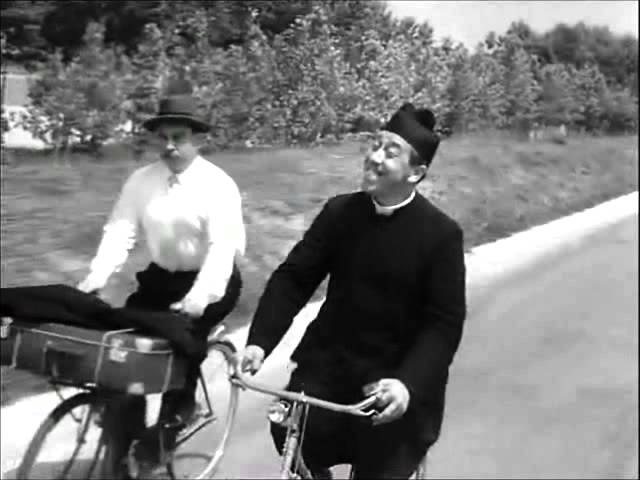
When going down a flight of stairs reach back, take a handful of fabric, and lift a bit, so you are not dragging over dirty surfaces.  Lifting the front edge when ascending can be helpful… for the whole not tripping and falling thing.  It depends on the length of your cassock.   For driving, as you are about to step in, gather it in front and pull it up toward your lap.  For other necessary moments, if you get my drift, you might gather the whole thing up and throw it over your shoulder.  It’s pretty important to have control of your cassock when riding a bike. If you don’t… results vary.

YouTube thumbnailYouTube icon

There is a way to put your cassock on over the head, rather than stepping into it, and also taking it off so that it isn’t dragging on the floor.  One way is handy, because it turns the top part of it inside out, which on a hot day helps a lot.

Also, you might want to practice buttoning with both hands in two directions, top hand from the neck down and lower hand from the bottom up.  It takes a while but it is handy for speeding up the dressing process.  This is a seminary thing.

Under the cassock… different customs.  I’ve noticed that the French tend to have short pants and high stockings.  In our world, black pants and black socks (unless you are a prelate).  Plain black leather shoes.  In 1962 I believe it was still on the books that clerics had to have silver buckles.  I don’t use those except for Mass on my Bate’s 8′ tactical boots.

The cassock should be worn when vesting for any sort of liturgical function.  Use the cassock and surplice and stole for leading prayers or baptizing, etc., rather than the white moo-moo or gunny-sack and cincture.

I like linen collars.  I get mine from Rome.

Don’t stand around with your hands in your pockets.  Just… don’t.

There is a prayer for vesting in a cassock, said while buttoning up.

In a cassock for an MC, paonazza (magenta), when going outdoors cover up even in hot weather with a greca (long coat).  It is also right to use the Roman flat hat or “saturno”.  When in black, it was usual to use a ferraioletto, but that usage is gone.

First, wash your hands (whenever vesting) saying:

Da, Domine, virtutem manibus meis ad abstergendam omnem maculam ut sine pollutione mentis et corporis valeam tibi servire.

Give virtue to my hands, O Lord, that being cleansed from all stain I might serve you with purity of mind and body.

When putting on the cassock, say:

Dominus, pars hereditatis meae et calicis mei, tu es qui restitues hereditatem meam.

O Lord, the portion of my inheritance and my chalice, You are He who will restore my inheritance.

When putting on the surplice, say:

Indue me, Domine, novum hominem, qui secundum Deum creatus est in iustitia et sanctitate veritatis. Amen.

Invest me, O Lord, as a new man, who was created by God in justice and the holiness of truth. Amen.

Of course these are prayers for males, because only males should ever wear the cassock, etc.  The rest is abomination in the sight of God.

So, those are a few practical notes for your proper use of the cassock.  Wearing it lot is the best school.


Posted in "How To..." - Practical Notes, ASK FATHER Question Box, Just Too Cool | Tagged
9 Comments

ASK FATHER: What should I do with an old, now unused pyx once intended for Communion calls?

“Vetus” pyx

From a reader…

QUAERITUR:

I can’t thank you enough for your ministry, it has been helpful in more ways than I can say.

When I was a young man I converted to the Catholic faith from agnosticism via evangelical Protestantism.

Shortly afterward I was recruited to bring Holy Communion to older Catholics in retirement communities. I was given a pyx to use and did so. I have carried that pyx with me through many moves because I have no idea what to do with it. I will not use it for its intended purpose as it is not a proper container for the Host as the inside is plastic.

What should I do with a container that has held the Eucharist but was not a proper container in the first place?

Thank you for your time and please be assured of my prayers.

Thanks for being diligent about this.  Also, your coming into the Church from an Evangelical background is interesting in light of your consistent reading here, given what I’ve written about the demographic sink hole that is opening up under Church in these USA.

A couple things are possible.

The simplest would be to take that pyx to the parish with you and give it to the priest.  To the priest.  Not to the secretary.  To the priest.  Perhaps to a deacon.

If you are not able to get it to a priest at the parish right away, you could give it a soak in water for a couple of days, and then pour that water onto the ground.  Dry it well and wait to turn it in.

“Novus” pyx

Once you have taken a step or two to make sure that it is clean and there are no particles of the Eucharist in it, there isn’t a huge rush.

Otherwise, if you really can’t turn it in, for the reason that it is of an unworthy material, you could use a high temperature fire and then bury what is left in the ground.

This raises questions about selection of and training of lay people who bring the Eucharist to the sick and shut it.   What are their practices?   For example, when do they get Hosts?  At Communion time?  Then they are finishing hearing Mass while they have the Blessed Sacrament.  Do they leave right away?  Then they’ve left before Mass was over.  Do they hang out and chat with people?  Do they go straight to the home or place where the shut in person is waiting, or do they go to the gas station or run home first, etc.  Do they keep the pyx until the next week?  Do the purify it?

There are a lot of questions.

Consecration of the hand’s of priests during ordination means something or it doesn’t.

How we treat the Blessed Sacrament reveals something about our Faith.


Posted in "How To..." - Practical Notes, ASK FATHER Question Box, Liturgy Science Theatre 3000, Save The Liturgy - Save The World | Tagged
7 Comments

ASK FATHER: Asperges before Low Mass?

From a reader…

QUAERITUR:

Can the Asperges rite can take place at a Sunday Low Mass if it is the principal Mass?

Firstly, since this is still the Season of Easter, on these Sundays we are still singing Vidi aquamAsperges returns after Pentecost.

Auctores scinduntur… authors are divided about this question.  Some say that the Asperges or Vidi aquam sprinkling rite ought to be performed only before Sung or Solemn Masses.  Others say before the principal Mass sic et simpliciter, thus even if it is a Low Mass.

I think the most common practice is to have the Asperges before Masses that are at least sung.   Once upon a time in England the bishops ordered that it be done at the principal Mass no matter what level.   In these USA I think the Council of Baltimore said it was to be every Sunday no matter what level.

So, I don’t think it would be wrong to have the Asperges before a Low Mass that is the principal Mass of the parish (a place where there is a baptismal font).  It would not be wrong but it wouldn’t be customary.

One might ask the question: “Why deny people the benefit, just because it isn’t a Sung Mass?”

Posted in "How To..." - Practical Notes, ASK FATHER Question Box, Liturgy Science Theatre 3000, Save The Liturgy - Save The World | Tagged
6 Comments

Daily Rome Shot 154

Posted in SESSIUNCULA |
6 Comments

There’s a first time for everything.

The other day I repeated my Novus Ordo and Vetus Ordo food analogy.  I’ve often compared the shift from attendance at the Novus Ordo to participation in the Traditional Latin Mass as a kind of growing up and out of the need for soft baby foods and into more substantial things like steak and cabernet.   Mind you, there is nothing wrong with baby food… for the very young.  That’s what they need.  Hopefully, they won’t have to have it forever.  On the other hand, while adults can survive on baby food, they won’t thrive.   It’s just a matter of what different people need at different times.    For the last few decades a lot of our people have been infantilized by lousy catechesis (if any), lousy preaching, and lousy liturgy.   They are just ready and waiting to thrive.  But the introduction to something better might have to be a process.

All analogies limp.  You get my point.

Anyway, I was sent a video of babies having their first taste of lemon.  It’s a hoot.  It reminded me that some people find the TLM to be a real shock to their system.  They have to get used to it.  Some take to it more quickly than others.

There’s a first time for everything.

Just don’t YOU be the sour element in their first taste of the TLM.

Enjoy.


Posted in Lighter fare, Liturgy Science Theatre 3000, Our Catholic Identity | Tagged
12 Comments