2 May: St. Athanasius, Bishop and Doctor. Shall we ever see his like again?

It being the 4th Sunday after Easter (N.O.: 5th of), we don’t give a lot of space to the veneration of saints at the altar today.

However, today is the Feast of St. Athanasius, Bishop and Doctor of the Church.  He died on this date in 373.

Athanasius is a figure of titanic importance in the history of the Church and of her doctrinal orthodoxy.  He was Bishop of Alexandria at the time when Arianism had swept through the Church to the point that St. Jerome would describe those times in stark terms: “The whole world groaned, and was astonished to find itself Arian.” Athanasius struggled mightily against Arianism and was treated with brutal harshness by secular and church authorities who had fallen into the heresy. Athanasius is one of the four great Eastern Doctors, along with Sts. John Chrysostom, Basil the Great, and Gregory of Nazianzus.

He experienced exile five times. St. Athanasius, pray for me. At last he returned to Alexandria in his final years and put his shattered diocese back together by preaching the Nicean Faith.

A great Creed is attributed to St. Athanasius, but he did not compose it. It was a later work. But it is a terrific creed and you should know it! The Church acknowledges it as one of its approved creeds. HERE

His body eventually was taken to Venice, to the Chiesa di San Zaccaria, where you can venerate it along with that of Zachary, father of John the Baptist.

Let’s have a quick look at the Collect for the Mass for St. Athanasius in the Ordinary Form..

2002MR:
Omnipotens sempiterne Deus,
qui beatum Athanasium episcopum
divinitatis Filii tui propugnatorem eximium suscitasti,
concede propitius,
ut, eius doctrina et protectione gaudentes,
in tui cognitione et amore sine intermissione crescamus
.

propugnator is one who fights “in the place of” another, as indicated in that proposition pro in this compound.  “Champion” is a good way to convey that subtlety.

OBSOLETE ICEL (1973):
Father,
you raised up St. Athanasius
to be an outstanding defender
of the truth of Christ’s divinity.
By his teaching and protection
may we grow in your knowledge and love
.

CURRENT ICEL (2011):
Almighty ever-living God,
who raised up the Bishop Saint Athanasius
as an outstanding champion of your Son’s divinity,
mercifully grant,
that, rejoicing in his teaching and his protection,
we may never cease to grow in knowledge and love of you
.

You decide.

Sometimes the late Archbishop Marcel Lefebvre is compared to St. Athanasius.  I think the comparison limps a little.  However, there is no doubt that the late Archbishop was a zealous champion of the Faith and that he was, from time to time, treated badly by those in power.

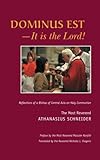
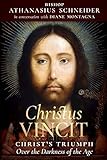
And let us not forget to pray for another, current propugnator, Bishop Athanasius Schneider, of Kazakhstan.

Try his books:

Dominus Est – It Is the Lord! Reflections of a Bishop of Central Asia on Holy Communion

US HERE
Christus Vincit: Christ’s Triumph Over the Darkness of the Age

US HERE
Posted in Saints: Stories & Symbols, WDTPRS | Tagged
2 Comments

How cool, how quotable is St. Catherine of Siena? Have a look.

The other day, 30 April, was in the traditional calendar the Feast of St. Catherine of Siena, Doctrix of the Church. In the Novus Ordo her feast falls on 29 April (her dies natalis). She was canonized by a favorite of mine, Pius II, in 1461. Her feast started out on 29 April, her death date, but because that conflicted with the feast of St. Peter Martyr (of Verona), and since he was a really hot saint at the time, Catherine’s celebration was moved to the 30th. However, since the veneration of saints with time will ebb and flow, and as interest in St. Peter Martyr waned, in 1969 Catherine resumed her feast on her birth date into heaven, 29 April.

She is a distinguished saint, a Third Order Dominican, showered with honors and with marks of confidence by the Church. For example, Bl. Pius IX made Catherine of Siena co-patroness of Rome, along with Sts. Peter and Paul and St. Philip Neri. Ven. Pius XII made her patroness of Italy along with St. Francis of Assisi. St. John Paul II named her Patroness of Europe together with with St. Teresa Benedicta of the Cross (Edith Stein) and St. Bridget of Sweden. Most of all, in 1970 Paul VI named her Doctrix of the Church.

Among her accomplishments in life was the prompting of Pope Gregory XI (de Beaufort) from Avignon to Rome. Her biographer says that when she was a child she had visions of Christ and she vowed her life to God. At 21 she experienced what was called a “mystical marriage” with the Lord, which is a common way of depicting here in art. She also received the stigmata. She travelled widely in her time and was enormously influential. Catherine wrote extensively to authorities. Eventually in Rome, she would die at 33 years of age. Her written The Dialogue of Divine Providence, dialogues with God, was probably dictated in a state of ecstasy, not unlike the writings of St. Veronica Guiliani.

The other day I posted something from St. Catherine’s Dialogue, God describing how even though demons incite the sin of same-sex acts, those acts so offend the angelic intellects of the demons that they won’t remain present while they are being committed. That stirred the predictable screeching and puerile personal attacks on me from Twitter twits, presumably because those who were screeching engage in those acts or at least condone them. Sorry, twits. Take your case up with God.

I bring all this up about St. Catherine because my friend Ann Barnhardt, at her place, offered a terrific post with sayings of this great saint. I’ll give you a sample and then you can visit her place for the full blast experience:

“Be who God meant you to be and you will set the world on fire.”

Yes, Ma’am.

“Start being brave about everything. Drive out darkness and spread light. Don’t look at your weaknesses. Realize instead that in Christ crucified you can do everything.”

Yes, Ma’am.

“You are rewarded not according to your work or your time but according to the measure of your love.”

Yes, Ma’am.

He will provide the way and the means, such as you could never have imagined. Leave it all to Him, let go of yourself, lose yourself on the Cross, and you will find yourself entirely.

Yes, Ma’am.

Preach the Truth as if you had a million voices. It is silence that kills the world.

Yes, Ma’am.

A soul cannot live without loving. It must have something to love, for it was created to love.

Yes, Ma’am.

It is only through shadows that one comes to know the light.

Yes, Ma’am.

To the servant of God… every place is the right place, and every time is the right time.

Yes, Ma’am.

Nothing great is ever achieved without much enduring.

Yes, Ma’am.

We are of such value to God that He came to live among us… and to guide us home. He will go to any length to seek us, even to being lifted high upon the cross to draw us back to Himself. We can only respond by loving God for His love.

Yes, Ma’am.

We’ve had enough of exhortations to be silent! Cry out with a hundred thousand tongues. I see that the world is rotten because of silence.

Yes, Ma’am.

Strange that so much suffering is caused because of the misunderstandings of God’s true nature. God’s heart is more gentle than the Virgin’s first kiss upon the Christ. And God’s forgiveness to all, to any thought or act, is more certain than our own being.

Yes, Ma’am.

You must believe in truth that whatever God gives or permits is for your salvation.

Yes, Ma’am.

Do not be satisfied with little things, because God wants great things!

Yes, Ma’am.

And of what should we be afraid? Our captain on this battlefield is Christ Jesus. We have discovered what we have to do. Christ has bound our enemies for us and weakened them that they cannot overcome us unless we so choose to let them. So we must fight courageously and mark ourselves with the sign of the most Holy Cross.

Yes, Ma’am.

Enrich your soul in the great goodness of God: The Father is your table, the Son is your food, and the Holy Spirit waits on you and then makes His dwelling in you.

[…]

There’s more there, but I’ll cut off after this mention of the Holy Spirit, for whom the Church prepares once again to greet at Pentecost.

St. Catherine of Siena, pray for us.


Posted in Saints: Stories & Symbols | Tagged
6 Comments

Your Sunday Sermon notes – 4th Sunday after Easter (N.O. 5th of Easter) 2021

Was there a GOOD point made in the sermon you heard at the Mass for your Sunday (obligation or none), either live or on the internet? Let us know what it was.

Too many people today are without good, strong preaching, to the detriment of all. Share the good stuff.

Also, are your churches opening up? What was attendance like?

Mine.

If you are involved with preparing coffee and donuts after Mass (yes, this is returning) consider using Mystic Monk Coffee.  Use my link. You help the monks, you help yourselves, you help me.  A pretty good deal.

Posted in SESSIUNCULA |
8 Comments

Daily Rome Shot 145

Posted in SESSIUNCULA | Tagged
1 Comment

The CDW added SEVEN new invocations to the Litany of St. Joseph

According to the Bollettino, today for the ongoing observance of 15oth anniversary of proclamation of St. Joseph as Patron of the Universal Church, the Congregation for Divine Worship and Discipline of the Sacraments added SEVEN new invocations to the Litany of St. Joseph.   The Letter explains the origins of the titles.

Custos Redemptoris (Guardian of the Redeemer)
Serve Christi (Servant of Christ)
Minister salutis (Minister of salvation)
Fulcimen in difficultatibus (Support in troubles)
Patrone exsulum (Patron of exiles)
Patrone afflictorum (Patron of the afflicted)
Patrone pauperum (Patron of the poor)


So the Litany now runs in Latin… (by the way, I am a little puzzled by their choice of Fúlcimen, since the Latin word is fulcīmen, ĭnis, n., which has a long ī as the penultimate syllable. According to the rules of Latin accentuation, you accent the antepenultimate syllable if the penultimate is short. People make this mistake also with lōrīca. So, I am pretty sure that it ought to be Fulcímen in difficultatibus.

LITANIÆ IN HONOREM S. IOSEPH SPONSI B. MARIÆ V.

  • Kyrie, eléison.
  • Christe, eléison.
  • Kyrie, eléison.
  • Christe, audi nos.
  • Christe, exáudi nos.
  • Pater de cælis, Deus, miserére nobis.
  • Fili, Redémptor mundi, Deus, miserére nobis.
  • Spíritus sancte, Deus, miserére nobis.
  • Sancta Trínitas, unus Deus, miserére nobis.
  • Sancta María, ora pro nobis.
  • Sancte Ioseph, ora pro nobis.
  • Proles David ínclyta, ora pro nobis.
  • Lumen Patriarchárum, ora pro nobis.
  • Dei Genitrícis sponse, ora pro nobis.
  • Custos Redemptóris, ora pro nobis.
  • Custos pudíce Vírginis, ora pro nobis.
  • Fílii Dei nutrítie, ora pro nobis.
  • Christi defénsor sédule, ora pro nobis.
  • Serve Christi, ora pro nobis.
  • Miníster salútis, ora pro nobis.
  • Almæ Famíliæ præses, ora pro nobis.
  • Ioseph iustíssime, ora pro nobis.
  • Ioseph castíssime, ora pro nobis.
  • Ioseph prudentíssime, ora pro nobis.
  • Ioseph fortíssime, ora pro nobis.
  • Ioseph obedientíssime, ora pro nobis.
  • Ioseph fidelíssime, ora pro nobis.
  • Spéculum patiéntiæ, ora pro nobis.
  • Amátor paupertátis, ora pro nobis.
  • Exémplar opíficum, ora pro nobis.
  • Domésticæ vitæ decus, ora pro nobis.
  • Custos vírginum, ora pro nobis.
  • Familiárum cólumen, ora pro nobis.
  • Fúlcimen* in difficultátibus, ora pro nobis. [Fulcímen in difficultatibus]
  • Solátium miserórum, ora pro nobis.
  • Spes ægrotántium, ora pro nobis.
  • Patróne éxsulum ora pro nobis.
  • Patróne afflictórum, ora pro nobis.
  • Patróne páuperum, ora pro nobis.
  • Patróne moriéntium, ora pro nobis.
  • Terror dæmónum, ora pro nobis.
  • Protéctor sanctæ Ecclésiæ, ora pro nobis.
  • Agnus Dei, qui tollis peccáta mundi, parce nobis, Dómine.
  • Agnus Dei, qui tollis peccáta mundi, exáudi nos, Dómine.
  • Agnus Dei, qui tollis peccáta mundi, miserére nobis.

℣. Constítuit eum dóminum domus suæ.

℟. Et príncipem omnis possessiónis suæ.

Orémus.

Deus, qui ineffábili providéntia beátum Ioseph, sanctíssimæ Genitrícis tuæ sponsum elígere dignátus es, prǽsta, quǽsumus, ut, quem protectórem venerámur in terris, intercessórem habére mereámur in cælis. Qui vivis et regnas in sǽcula sæculórum.
℟. Amen.

Posted in "How To..." - Practical Notes, Liturgy Science Theatre 3000 | Tagged
9 Comments

“To refuse to give Holy Communion to dissident Catholic politicians is not to politicize the Eucharist.”

Today at The Catholic Thing, there is a great, clear piece by distinguished theologian Fr. Thomas Weinandy, OFMCap about politicizing the Eucharist.

Libs and those antinomians who have given themselves to the wisdom of this world falsely accuse those who would – in regard to manifestly, persistently dissenting catholic politicians – uphold the Church’s law of “politicizing the Eucharist”.

That is not true.   Rather, those who would uphold laws like can. 915 and teach about can. 916 are worried about the salvation of souls, rather than – like their critics – the creation of a “reset” utopia.

Let’s have some clear thought from Fr. Weinandy:

[…]

To refuse to give Holy Communion to dissident Catholic politicians, however, is not to politicize the Eucharist.  The politicizing of the Eucharist occurs in the act of the Catholic politician presenting himself or herself to receive Communion even though he or she is well aware that to do so is contrary to what the Church teaches.

[…]

[S]uch Catholic politicians, in presenting themselves, are using – and so abusing – the Eucharist for seemingly political purposes – to present themselves as “devout” Catholics.  Therein lies a threefold irony.

[…]

First, those who are unquestionably devout Catholics do not need to identify themselves as such – it is evident to all that they are.   …  Second, when a dissident politician declares that he or she is a devout Catholic, one immediately perceives that something is awry. … The third irony is that no one is fooled by this charade, except maybe the self-deluded politician. …

[…]

The Catholic faithful must pray, therefore, not only for the conversion of so-called “devout Catholic” politicians, but also for the Lord’s protection of his Holy Church.

Do I hear an “Amen!”?

Posted in 1983 CIC can. 915, Our Catholic Identity, The Drill | Tagged ,
8 Comments

Daily Rome Shot 144

Posted in SESSIUNCULA | Tagged
Comments Off on Daily Rome Shot 144

1 May – St. Joseph the Worker: An intercessor in time of need

Georges_de_La_Tour_Joseph_Carpenter_workerI have often asserted in these pages that St. Joseph is a powerful intercessor.  I have received amazing interventions by this great saint, who is foster father of the Son of God.  I recently committed my material cares to him in this time of need.  Since then I have experienced his intercession as at no other time in my life.  He has interceded in ways that are so obvious – it is so clear that it is he doing things – that it’s funny.

Pray to St. Joseph, especially in your needs concerning your work and your vocation.  St. Joseph is a powerful intercessor.  He comes through for you especially when you are specific about what you need and when you need it.

I recommend St. Joseph especially for fathers in families.  Fathers, GO TO CONFESSION!  I think that would please Joseph.

May I suggest that you pray, often, the Litaniae Sancti Ioseph?

And remember the mighty Bux Protocol™.  This is more needed today than ever before.  Joseph is the Patron of the Church, after all.

Today’s feast of St. Joseph, the Worker, is modern.  It was given to the Church by Ven. Pope Pius XII in 1955.

We celebrate Joseph today especially as a patron of workers.  No doubt the thought behind the feast was, among other motives, to offset the incorrect atheistic, materialist view of work and workers presented by Socialism and Communism.

May Day had been a civic feast in many places since ancient times and festivals were held.

COLLECT 1962MR:

Rerum conditor Deus, qui legem laboris humano generi statuisti: concede propitius; ut, santi Ioseph exemplo et patricinio, opera perficiamus quae praecipis, et praemia consequamer quae promittis.

Do not to confuse the verbs condo, condere and condio, condire, both of which give is “conditor“… one being cónditor and the other condítor.

SLAVISHLY LITERAL VERSION:

O God, creator of things, who established the law of labor for human kind: grant, propitiously; that, by the example and patronage of Saint Joseph, we may bring to completion the works which you command, and we may attain the rewards which you promise.

At the heart of our vocation as images of God we all have work to do.  God, our Creator, “worked” and then rested and saw that His work was good.  This is also our paradigm as His images.

When our First Parents revolted against God’s command, the entire human race fell.  The human race consisted of only two people, but it was the whole of the human race.  In their fall, we fell.

As a consequence of the Fall, man is now out of sync with God, himself, others and nature.  We do not live in the harmony that would make the tasks of stewardship of the gift of life and the honor of being at the pinnacle of material creation without sorrow, toil and pain.

And yet even before the Fall man had been given labor by God the Father.  Man had duties in the Garden.  It was our Fall that transformed that labor into toil.

God knew every one of us from before the Creation of the universe.  He calls us into existence at the exact point and place in His plan He foresaw in His providence.  We have a role to play in God’s plan.  We have work to do.

When we dedicate ourselves to fulfilling our part in God’s plan according to our vocations, whatever they may be in our own circumstances, God will give us every actual grace we need to do His will and come to our perpetual reward in heaven.

He gives us the work, the grace and the glory.  The harder the times and work, the greater the honor and glory.

With our wounded nature, our disordered passions and appetites, it is hard to understand that the work we do in life is a manifestation of both present grace and anticipated glory.

As an early American preacher once said,

“grace is but glory begun, and glory is but grace perfected”.

Put another way, God gives us the work and then He makes our hands strong enough for the task.  The achievement is therefore both His and truly ours.

As St. Augustine says, God crowns His own merits in us.

And, finally, don’t forget the Prayer For The Conversion Of The Fishwrap.  It’s always linked on the top “header” menu.

Posted in "How To..." - Practical Notes, GO TO CONFESSION, Hard-Identity Catholicism, Saints: Stories & Symbols | Tagged
3 Comments

Wile E., eat your heart out

In a far cry from what Wile E. Coyote does does either in the venerable short flicks or in the pages of the Fishwrap when attempting commentary on can. 915…

YouTube thumbnailYouTube icon

… a couple of Marine Majors and tech guys solved a problem by strapping an anti-ship Naval Strike Missile onto a modified unmanned joint light tactical vehicle and – from the land – hitting a target at sea. This gives the Marines a way to deny enemies “the use of key maritime terrain”. In other words, they have another way to take out vessels coming ashore and staying off shore in support.

There is a really interesting article about this in Marine Times.

And this was a good opportunity to mentioned Wile E.’s recent ACME experience!

Posted in Going Ballistic, Just Too Cool | Tagged ,
6 Comments

30 April (N.O.) – St Pius V – A Pope who dealt with clerical depravity

Today in the Novus Ordo calendar is the Feast of St. Pius V, a great Pope, at the time of the important Battle of Lepanto.


Some years ago I made a podcast about Pius V and his bull Quo primum.  HERE

Here’s another great thing about Pius V, whose body is in St Mary Major’s Sistine Chapel in Rome.

Confronted with clerical depravity in Rome, Pius V did not say, “Who am I to judge?” On 30 August 1568 Pius V issued the bull Horrendum illud scelus.


Horrendum illud scelus, quo pollutae foedataeque Civitates a tremendo Dei iudicio conflagrarunt, acerbissimum Nobis dolorem inurit, graviterque animum nostrum commovet, ut ad illud, quantum potest, comprimendum, studia nostra conferamus.   That horrible crime, by which corrupt and obscene cities were destroyed by fire through divine condemnation, [hence, “sodomy”] causes us most bitter sorrow and shocks our mind, impelling us to repress such a crime with the greatest possible zeal.
§ 1. Sane Lateranensi Concilio dignoscitur constitutum, ut quicumque Clerici, illa incontinentia, quae contra naturam est, propter quam ira Dei venit in filios diffidentiae, deprehensi fuerint laborare, a Clero deiiciantur,
vel ad agendam in Monasteriis poenitentiam detrudantur.
  § 1. Quite opportunely the Fifth Lateran Council [1512-1517] issued this decree: “Let any member of the clergy caught in that vice against nature, given that the wrath of God falls over the sons of perfidy, be removed from the clerical order or forced to do penance in a monastery” (chap. 4, X, V, 31).
§ 2. Verum ne tanti flagitii contagium, impunitatis spe, quae maxima peccandi illecebra est, fidentius invalescat, Clericos huius nefarii criminis reos, gravius ulciscendos deliberavimus, ut qui animae interitum non hor­rescunt, hos certe deterreat civilium legum vindex gladius saecularis.   § 2. So that the contagion of such a grave offense may not advance with greater audacity by taking advantage of impunity, which is the greatest incitement to sin, and so as to more severely punish the clerics who are guilty of this nefarious crime and who are not frightened by the death of their souls, we determine that they should be handed over to the severity of the secular authority, which enforces civil law.
§ 3. ltaque quod Nos iam in ipso Pontificatus nostri principio hac de re decrevimus, plenius nunc, fortiusque persequi intendentes, omnes,  et quoscumque Presbyteros, et alios Clericos saeculares, et regulares, cuius­cumque gradus, et dignitatis, tam dirum nefas exercentes, omni privilegio clericali, omnique officio, dignitate, et beneficio Ecclesiastico praesentis cano­nis auctoritate privamus. Ita quod per ludicem Ecclesiasticum degradati, potestati statim saeculari tradantur, qui de eis illud idem capiat supplicium, quod in laicos hoc in exitio devolutos, legitimis reperitur sanctionibus con stitutum.   § 3. Therefore, wishing to pursue with greater rigor than we have exerted since the beginning of our pontificate, we establish that any priest or member of the clergy, either secular or regular, who commits such an execrable crime, by force of the present law be deprived of every clerical privilege, of every post, dignity and ecclesiastical benefit, and having been degraded by an ecclesiastical judge, let him be immediately delivered to the secular authority to be put to death, as mandated by law as the fitting punishment for laymen who have sunk into this abyss.    [Use your imagination and review the Rite of Degradation of a Priest or Bishop. After which the walking tragedy is handed over.]
Nulli ergo, etc.   Nothing to the contrary withstanding, etc.
[Bull. Rom., tom. 4, III, p. 33]    

NB: The Bull says “removed” OR “forced to do penance”.

And one wonders what the “civil” penalties were.

Having just read Fr. Longenecker’s latest comment about the new “woke” heresy of antinomianism, Pius’ strong action against this rot in the clergy should be taken to heart by bishops today.   

Pope Saint Pius gives us an example of the medicinal power of law.

St. Pius V, pray for us. Pray for our bishops. Pray for religious superiors.

PRAY FOR US!

____

I wonder what he’d say about certain roving Jesuits today.

Posted in Linking Back, Saints: Stories & Symbols | Tagged
6 Comments






















