#ASonnetADay – SONNET 139. “O call not me to justify the wrong…”

Posted in Poetry, Sonnet A Day | Tagged ,
1 Comment

Daily Rome Shot 125

Posted in SESSIUNCULA | Tagged
5 Comments

ASK FATHER: Can we eat meat on Friday in the Octave of Easter?

We are now in the Easter Octave – Happy Easter! Let’s get out in front of this before the calendar clicks over to Friday

From a reader…

QUAERITUR:

My wife and I recently returned to the traditional Friday abstinence from meat year round.

Traditionally, would the Friday abstinence from meat also apply during Fridays of the whole Easter season?

What about just the octave?

Congratulations for wanting to adhere to the traditional practices.  Kudos.

You’ve asked a good question.

Here is canon 1251:

Can. 1251 Abstinence from meat, or from some other food as determined by the Episcopal Conference, is to be observed on all Fridays, unless a solemnity should fall on a Friday. Abstinence and fasting are to be observed on Ash Wednesday and Good Friday.

The days of the Octave of Easter are celebrated as Solemnities (in the Novus Ordo calendar).    Therefore, there is no obligation for Catholics for the Friday abstinence on this coming Friday.

Note well that the other Fridays of Eastertide are not Solemnities.  The relief from abstinence applies only to the Friday in the Octave of Easter.

BTW… this does not apply to the Octave of Christmas, for those days of that Octave are not counted as “Solemnities” as are those of the Easter Octave.

This is how the 1983 Code of Canon Law handles Friday in the Octave of Easter, and this applies also to those who prefer the Extraordinary Form (which did not have “Solemnities”).

As far as other Fridays are concerned, outside the Octave of Easter or some other Solemnity, you can ask your parish priest to dispense you or commute your act of penance.

Can. 1245 Without prejudice to the right of diocesan bishops mentioned in can. 87, for a just cause and according to the prescripts of the diocesan bishop, a pastor [parish priest] can grant in individual cases a dispensation from the obligation of observing a feast day or a day of penance or can grant a commutation of the obligation into other pious works. A superior of a religious institute or society of apostolic life, if they are clerical and of pontifical right, can also do this in regard to his own subjects and others living in the house day and night.

Abstinence from meat has good reasoning behind it. For some, however, abstinence from other things can be of great spiritual effect.

Certainly you would never abstain from reading this blog… or from ordering…


Posted in "How To..." - Practical Notes, 1983 CIC can. 915, ASK FATHER Question Box, Our Catholic Identity | Tagged , , ,
10 Comments

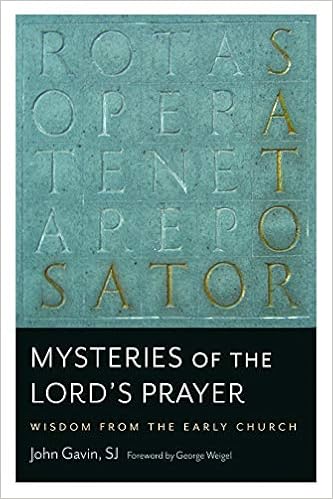
BOOK: Mysteries of the Lord’s Prayer

Lo those many years ago in Rome, I was in school studying the Fathers of the Church (Patristics) with one of the fine young Jesuits who are rising up in many places.

I just received a new book by this good Jesuit.

Mysteries of the Lord’s Prayer: Wisdom from the Early Church by John Gavin, SJ.

US HERE – UK HERE

The writer, Fr. Gavin, offers a “new way of reflecting on the Lord’s Prayer” which is actually ancient.

Fr. Gavin digs into ancient, Patristic commentaries on the Our Father, which are amazing.  He looks at the different petitions of the Prayer and approaches each one from the point of view on an aporia, or “problems”.  For example, recently we heard about how in Italy the liturgical version of the Lord’s Prayer was changed so as to deal with the aporia about the petition “lead us not into temptation”.  Does God lead us into temptation?  What does that mean?

Another… if God is God, ultimately transcendent, beyond all imagining, how is it that we can call God “Father”?

I’ve just received this and I’ve done some spot reading here and there.  This is really an exciting book.

One reason I like it is because Fr. Gavin is doing something that Pope Benedict XVI said needed to be done in his introduction to his first volume of Jesus of Nazareth.   For a long time in Biblical scholarship, “technicians” (my word) have been interpreting scripture.   You cannot simply apply tools of modern scholarship, such as the historical-critical method, form criticismetc., to Scripture without also concerning yourself with the who behind each word.  Papa Ratzinger asks us, in his preface, to reconnect with Scripture in a way closer to that the of early Fathers of the Church.  Put another way, the Fathers are important now especially because they reconnect us with a way of reading Scripture.  They teach us how to read the Bible anew.

Therefore, Fr. Gavin’s book is a great contribution.  He brings in the primary sources of the Fathers to help us gain more from our own praying of Christ’s prayer, which we say so often.

Get a copy for yourself and your parish priest.  Then pay attention to see if it affects his preaching!

Posted in Patristiblogging, REVIEWS | Tagged , , ,
4 Comments

PARIS: Priests arrested because of COVID-1984 guidelines

A priest friend of mine in Paris wrote to let me know that someone ratted out the priests of Saint-Eugène Sainte-Cécile because for the Easter Vigil they did not strictly follow the COVID-1984 guidelines.    Le Monde.

After that, the Archbishop of Paris started a canonical process against them.

Just now, I am told that the police have arrested the priests and they are in custody.

Pray for them and a good resolution to this.

The YouTube channel of Saint-Eugène:  HERE

Posted in The future and our choices, The Last Acceptable Prejudice | Tagged
11 Comments

Vatican “rehabilitation” of … Judas?

I saw something that really bothered me the other day at Ann Barnhardt’s site.  She picked up on a post by Tradition In Action which reported that the Vatican’s daily, L’Osservatore Romano, published something on Holy Thursday (Anno CLXI n. 74 – 1 aprile 2021) which seems very much like an attempt to “rehabilitate” the betrayer of the Lord, Judas.

Rehabilitate Judas.

Rehabilitate…. Judas.

Think about that for a moment.

Christ does NOT owe His glory to Judas.

L’Osservatore Romano is a notorious disaster of a site.  However, Tradition in Action captured screenshots of the relevant pages.

In an introduction by one Andrea Monda, we read that the abysmal figure of Judas is counterbalanced by the abyss of mercy which is the Lord.  He goes on to explain who else will be writing in this mini-section on Judas… on Holy Thursday.  Monda says that this special focus was inspired by Francis’ meditation in a book from 2018 in which Francis said that he had a photo of a capital of a column in a romanesque church in France, depicting the hanging and then deposition of Judas.   Francis thinks it is the Good Shepard who has come to retrieve the dead Betrayer.  There is a large photo of the capital.  It clearly is not the Good Shepherd, btw.

The writers include a famous leftist activist populist Italian priest writing in the 1950’s, Primo Mazzolari (“Our Brother, Judas”), super-liberal, late Jesuit Card. Carlo Maria Martini (“Shadows and light” from a book in 2007), Giuseppe Berto (“Glory” from a book of 1978), Giovanni Papini (“The mystery of a ‘no'” from a book of 1921).   They had to dig.  This last piece mentioned has the writer suggesting that when Satan entered Judas’ heart it was “improvvisamente”.  To which I respond “B as in B, S as in S”: Judas was, all along, a thief, stealing from the common purse.  For sometime he sought a way to betray the Lord.  Scripture doesn’t say, “Judas sought a way to play a sophisticated pre-determined and vital role so that Christ could fulfill prophesies.”  He sought to betray the Lord.

Let’s be straight about Judas.  After the night at Bethany, when the woman with the alabaster box and precious nard anointed Christ’s feet and Judas complained about the expense (because he was stealing from the common purse), Judas, on that Spy Wednesday, sold the Lord’s upcoming betrayal for 30 silver pieces.  The next night, the Passover, Christ said in Matthew 26:24-25:

The Son of man goes as it is written of him, but woe to that man by whom the Son of man is betrayed! It would have been better for that man if he had not been born.” 25 Judas, who betrayed him, said, “Is it I, Master?” He said to him, “You have said so.”

He didn’t respond, “You have a really complicated role to play, filled with subtle distinctions and aporia.”

“It would have been better for him if he had not been born.”

Even a period in purgatory so long that you were the only one left, and for a long time, would still be great because of the promise of heaven.  The only ones about whom you would say, “better not to have been born” are the damned.

While hanging on the limb, did Judas truly repent?   Christ does not suggest such an outcome for the Betrayer.  During the same meal, evening, Christ predicts Peter‘s betrayal but that, in contrast to Judas, Peter would be okay.

The constant teaching of the Church for centuries has held Judas to be the betrayer of the Lord who receives punishment for his action.

A bare few nights ago, I sang the Holy Thursday Collect. Remember that liturgical prayer is doctrine, it is a theological locus that must be respected. The Collect assumes a contrast between the fate of the Good Thief on his cross-limb and the fate of Judas on his tree-limb: one received “reward” because of his confession of faith (confessionis praemium) which is heaven and the other “punishment” of his guilt (reatus poenam) which is anti-heaven, hell.  So the Church has prayed for centuries.  It has been prayed at least since the mid-9th c. as it appeared in the Liber sacramentorum Augustodunensis.  That’s a 1000 years, at least.  The variations of the prayer include “Iudas proditor”.

That “reatus“, “guilt”, a concept systematically stripped from the edited and composed prayers of the Novus Ordo, is a key.  We can commit acts which are objectively sins and not bear all or any of the guilt of the objectively sinful act.  For example, if compelled by fear or being out of our minds or wholly deceived, etc., we can be subjectively not guilty even though an objectively sinful act was committed.   But that was not Judas’ condition.  And so the prayer says that he received the reatus poenam… “punishment of guilt”.

In the Roman Canon we clearly say, “on the night he was betrayed“, not “on the night when He was nuanced into custody”.

“But Father! But Father!”, you apokatastasists are squealing, “Scripture says ‘Judas repented’, but, No!, you don’t pay attention to the Scripture you don’t like because YOU HATE VATICAN II!”

I know enough about Scripture to seek the help of those far greater than I in interpreting it.  For example, the Fathers of the Church.   The Fathers (St John Chrysostom, St. Leo the Great, St. Augustine) point out that Judas’ suicide shows that his “repentance” is not the sort that lead to a request for mercy.  While the Fathers are firm in saying that had Judas sought pardon, it would have been given, instead Judas did not have the sort of remorse that lead to true repentance.

However Judas died, and there are variations, I don’t think there is much doubt about where he is now.

So why would one purposely maintain an image of Judas in one’s clear view?

I don’t know why a Jesuit would have one.  I don’t think like they think.

Were I to have one it would be to remind myself that, in my every sin, I betray the Lord, that my sins crucified Him.  “Don’t be a Judas.”

I don’t have an image of Judas.  That’s just a little creepy.

I do have one of Miguel Pro.

I take note of a contribution in that L’OssRom by the Jesuit Card. Martini.  I call to mind the Jesuit participation in the making of the movie “Silence” which, from the book by Endo, portrays the betrayal of Jesuit missionary in Japan by a “Judas” figure. Instead of remaining a Christ-figure (as the Whiskey Priest does in Graham Green’s book) he himself becomes a Judas, seemingly at the Lord’s own prompting, as if the Lord were saying, “I would betray me so you can too”.  What an evil book and movie.

Oh, how sophisticated we are!  We can rehabilitate Judas!

Is it coincidence that on 23 March 2021, Jesuits, including Jesuit homosexualist activist James Martin, our modern Geryon, held a webinar entitled, “Hope for Judas? A spiritual conversation on Judas and God’s boundless mercy for us all”?

I rather think not.

A last thing about that L’Osservatore Romano showcase on Judas.  On the front page of L’Osservatore – on Holy Thursday – there is a poorly executed sketch of a naked Christ (implying that he is fresh from the tomb immediately after the resurrection)  cradling the dead body of the thief, suicide, formerly possessed, betrayer, Judas.   There is a strong tradition that the first mission/appearance of the Lord after His resurrection was to His Mother, Mary.  Here, the implication is that it was to suicide-dead Judas, whom Christ called the “son of perdition” (John 17:12).

Folks, Hell is a reflection of God’s justice and love.  He loves us and lets us freely make our choices.  Hell and its punishments also reflect God’s great holiness.  Eternal separation from God of evil, that which is inimical to God, reveals God’s infinite holiness, for holiness cannot be united with what is evil.  God’s wrath also reveals God’s infinite goodness.  God must put apart and away from Himself, whatever it is evil.

On the one hand, I don’t like the idea that there is anyone in Hell because I want everyone to be happy.  On the other hand, if a soul going to Hell is the result of God’s justice and love, and it always is, therefore … “Hell, yeah!”, as they say.  E’n la sua volontad è nostra pace.

Those of you who don’t read Italian are at a disadvantage in reading and responding to this post.  I will keep the combox open, but turn on moderation.

Posted in "But Father! But Father!", The Coming Storm, The Drill, The future and our choices | Tagged
35 Comments

POLL: Traditional Latin Mass with VERNACULAR readings for low Masses

There are groups which celebrate the Traditional Latin Mass and which, for Low Mass, have their readings in the vernacular. Alternatively, for example on a Sunday, while the priest reads the reading at the altar in Latin, someone reads the readings in the vernacular at the ambo.   This is especially a custom in, I think, France.

Summorum Pontificum says:

“In Masses celebrated in the presence of the people in accordance with the Missal of Bl. John XXIII, the readings may be given in the vernacular, using editions recognised by the Apostolic See.”

Universae Ecclesiae, which is in instruction on the application of Summorum Pontificum says:

Regarding that which is established in article 6 of the Apostolic Letter Summorum Pontificum, it must be said that the readings for Holy Mass, which are contained in the Missal of 1962, may be pronounced either in Latin alone, Latin with a vernacular version following, or in read [low] masses even in the vernacular alone.

I’m curious.

Insofar as reading vernacular during or instead of the Latin for the readings (not Latin and then vernacular)…

Choose your best answer. You can comment if you are registered and approved. (BTW… many of you are in fact registered and were approved but might have problems logging in.)

Vernacular readings for Traditional Latin Mass (Low Mass) DURING or INSTEAD of the Latin (not first in Latin and then in the vernacular)...

View Results

Posted in Liturgy Science Theatre 3000, POLLS | Tagged , ,
36 Comments

Fishwrap, La Crock team up with Beans to attack Archbp. Chaput’s new book

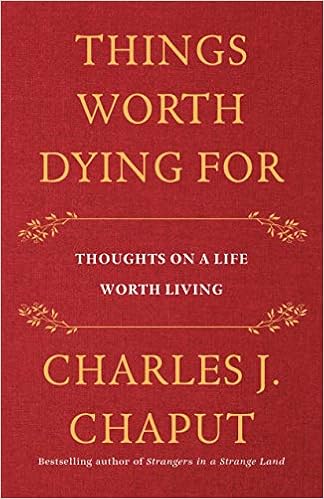
At Fishwrap there is a frantic tirade from Beans about a new book from Archbishop Charles Chaput, Emeritus of Philadelphia.  The title…

Things Worth Dying For: Thoughts on a Life Worth Living

You can see why this offering might give them all a case of the collywobbles.  What a scary idea for them.  There are things worth dying for?

Massimo “Beans” Faggioli is spooked by this book.  He complains, in this piece regurgitated from ultra-liberal La Croix International, that there are conservative bishops and others who are engaged in a “culture war”, while on his side, the Vichy catholic, collaborator-with-the-world side (cf Rom 12:2),

“there are no bishops that publish books that offer a vision of the Church and of society that is different and alternative to the one offered by Archbishop Chaput, Cardinal Sarah and Mr. Weigel.”

The reasons for that are obvious.

Faggioli has a list of reasons for this problem on his side of things.   They oscillate between “Gosh! Our side, with our ‘Francis bishops’, is so intellectual and sensitive! Fighting a ‘culture war’ is … is… bad!” and “Gee! Their side has EWTN and think tanks and … and… ‘the ecclesiastical-industrial complex’!”

I’m not making up that last part, “the ecclesiastical-industrial complex”. He really did go there.   If there is a side in this ecclesial landscape that has had total dominance over Catholic media it is the progressivist left.   That said, just as in the secular sphere a conservative alternative finally emerged, which responded to the views of the majority, so too in the Church a more conservative and traditional alternative has evolved, and the libs don’t like it one little bit.  Just as in the secular sphere, liberals scream for “fairness” and then start repressing conservative views, so too in the Church.  That’s what this piece is from Beans and Fishwrap and La Crock: he names the writers whom he thinks ought to be silenced and shunned.

From Beans:

In this asymmetry, conservatives have a very clear playbook — the culture wars.

Progressives are trying to withdraw from those wars that have caused huge damage to the Church, both intellectually and spiritually.

Raimon Panikkar, a Catholic philosopher and theologian whose Spanish mother was a Catholic and Indian father was Hindu, famously said that “cultural disarmament” is an effective way to peace.

But cultural disarmament must be explained and articulated, otherwise it looks like unconditional surrender.

When we deconstruct what Beans wrote, we see him exposing his esteem for the figures he blasts, Weigel, Arch. Chaput, Card. George, etc.

Bean’s piece is an acknowledgement of effective opposition to exactly what he is trying to do: fight a culture war he claims he doesn’t want.

A concrete way to respond to the attack on Archbp. Chaput’s book is to buy Archbp. Chaput’s book.

Buy it in large quantities and spread them around.

If Fishwrap and La Crock are attacking it, it must be good.

I suggest buying two to start, one for yourself and one for your local priest.

Things Worth Dying For: Thoughts on a Life Worth Living

US HERE – UK HERE (in UK available 19 April – pre-order)

It is available also on Kindle, of course, as well as Audible.   The publisher did not send me an advance copy of this one, so I’ll put a Kindle version on my wishlist.

Posted in ACTION ITEM!, Liberals | Tagged , , ,
11 Comments

Daily Rome Shot 124

Photo by Bree Dail.

Posted in SESSIUNCULA | Tagged
Comments Off on Daily Rome Shot 124

Daily Rome Shot 123

Photo by Bree Dail.

Posted in SESSIUNCULA | Tagged
Comments Off on Daily Rome Shot 123