“Great as no goddess’s Was deemèd, dreamèd”

Today is, in the older Roman calendar, the Feast of the Queenship of Mary.  In the Novus Ordo calendar, this Feast was transferred to mere Memorial status on 22 August.  In the Novus Ordo calendar, 31 May is the Feast of the Visitation.

Pius XII wrote of Our Blessed Mother:

“Let all Christians, therefore, glory in being subjects of the Virgin Mother of God, who, while wielding royal power, is on fire with a mother’s love.”

Pius, in his 1954 encyclical Letter Ad caeli Reginam, proclaimed the Queenship of Mary and established her Feast.  He included in his encyclical many patristic references, amongst which is a quote from St Gregory Nazianzen (d 390) calling Mary, “Mother of the King of the universe,” and the “Virgin Mother who brought forth the King of the whole world.” There are also liturgical references from both East and West, including lines from the Tract of the Feast of our Lady of Sorrows: “Near the cross of Our Lord Jesus Christ there stood, sorrowful, the Blessed Mary, Queen of Heaven and Queen of the World.”  Since her earliest years, Holy Church has revered the Mother of God.

Here is a marvelous exhortation from Pius’ encyclical no less suitable for our own day and devotional lives than it was in 1954:

  1. Let all, therefore, try to approach with greater trust the throne of grace and mercy of our Queen and Mother, and beg for strength in adversity, light in darkness, consolation in sorrow; above all let them strive to free themselves from the slavery of sin and offer an unceasing homage, filled with filial loyalty, to their Queenly Mother. Let her churches be thronged by the faithful, her feast-days honored; may the beads of the Rosary be in the hands of all; may Christians gather, in small numbers and large, to sing her praises in churches, in homes, in hospitals, in prisons. May Mary’s name be held in highest reverence, a name sweeter than honey and more precious than jewels; may none utter blasphemous words, the sign of a defiled soul, against that name graced with such dignity and revered for its motherly goodness; let no one be so bold as to speak a syllable which lacks the respect due to her name.

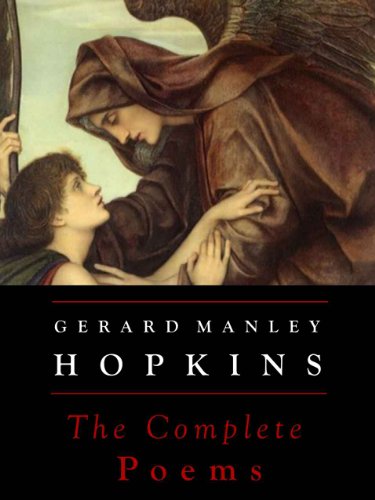
There is lovely poetry in the feasts of our Faith, particularly when we celebrate the Blessed Virgin.  We could spend a moment with her today through the lens provided by one of the great poets of Modern English.

Hopkins is not easy.  First, simply try reading it through, aloud, and quickly.  Then go back and savor more slowly.

The Blessed Virgin compared to the Air we Breathe.
Gerard Manley Hopkins, 1918

Wild air, world-mothering air,
Nestling me everywhere,
That each eyelash or hair
Girdles; goes home betwixt
The fleeciest, frailest-flixed
Snowflake; that ‘s fairly mixed
With, riddles, and is rife
In every least thing’s life;
This needful, never spent,
And nursing element;
My more than meat and drink,
My meal at every wink;
This air, which, by life’s law,
My lung must draw and draw
Now but to breathe its praise,
Minds me in many ways
Of her who not only
Gave God’s infinity
Dwindled to infancy
Welcome in womb and breast,
Birth, milk, and all the rest
But mothers each new grace
That does now reach our race–
Mary Immaculate,
Merely a woman, yet
Whose presence, power is
Great as no goddess’s
Was deemèd, dreamèd; who
This one work has to do–
Let all God’s glory through,
God’s glory which would go
Through her and from her flow
Off, and no way but so.

I say that we are wound
With mercy round and round
As if with air: the same
Is Mary, more by name.
She, wild web, wondrous robe,
Mantles the guilty globe,
Since God has let dispense
Her prayers his providence:
Nay, more than almoner,
The sweet alms’ self is her
And men are meant to share
Her life as life does air.

If I have understood,
She holds high motherhood
Towards all our ghostly good
And plays in grace her part
About man’s beating heart,
Laying, like air’s fine flood,
The deathdance in his blood;
Yet no part but what will
Be Christ our Saviour still.
Of her flesh he took flesh:
He does take fresh and fresh,
Though much the mystery how,
Not flesh but spirit now
And makes, O marvellous!
New Nazareths in us,
Where she shall yet conceive
Him, morning, noon, and eve;
New Bethlems, and he born
There, evening, noon, and morn–
Bethlem or Nazareth,
Men here may draw like breath
More Christ and baffle death;
Who, born so, comes to be
New self and nobler me
In each one and each one
More makes, when all is done,
Both God’s and Mary’s Son.

Again, look overhead
How air is azurèd;
O how! nay do but stand
Where you can lift your hand
Skywards: rich, rich it laps
Round the four fingergaps.
Yet such a sapphire-shot,
Charged, steepèd sky will not
Stain light. Yea, mark you this:
It does no prejudice.
The glass-blue days are those
When every colour glows,
Each shape and shadow shows.
Blue be it: this blue heaven
The seven or seven times seven
Hued sunbeam will transmit
Perfect, not alter it.
Or if there does some soft,
On things aloof, aloft,
Bloom breathe, that one breath more
Earth is the fairer for.
Whereas did air not make
This bath of blue and slake
His fire, the sun would shake,
A blear and blinding ball
With blackness bound, and all
The thick stars round him roll
Flashing like flecks of coal,
Quartz-fret, or sparks of salt,
In grimy vasty vault.

So God was god of old:
A mother came to mould
Those limbs like ours which are
What must make our daystar
Much dearer to mankind;
Whose glory bare would blind
Or less would win man’s mind.
Through her we may see him
Made sweeter, not made dim,
And her hand leaves his light
Sifted to suit our sight.

Be thou then, O thou dear
Mother, my atmosphere;
My happier world, wherein
To wend and meet no sin;
Above me, round me lie
Fronting my froward eye
With sweet and scarless sky;
Stir in my ears, speak there
Of God’s love, O live air,
Of patience, penance, prayer:
World-mothering air, air wild,
Wound with thee, in thee isled,
Fold home, fast fold thy child.
US HERE – UK HERE


Posted in Liturgy Science Theatre 3000, Our Solitary Boast, Poetry |
4 Comments

31 MAY – MADISON, WI – Pontifical Mass at the Throne for Feast of the Queenship of Mary

This evening, 31 May, the Feast of the Queenship of Mary, we will have a wonderful Pontifical Mass at the Throne at 6 PM at Immaculate Heart of Mary Church in Monona, WI.  The Extraordinary Form Mass is organized by the TMSM with Bp. Robert C. Morlino, Bishop of Madison.

We will be using the new Pontifical Set in White.  NB: The Extraordinary Ordinary’s coat of arms on the “Filipo Neri” style chasuble.

To help with the work of the TMSM: >>HERE<<

Posted in Events, The Campus Telephone Pole | Tagged , ,
2 Comments

The Religion of Peace 102: Dawa

Today at The Catholic Thing there is useful information about Islam and its tenets.

Is “Dawa” in your vocabulary?

So, what do you know about dawa? You know what jihad is, and what sharia is. That is Islamic vocabulary 101.

At the more advanced end of the lexicon are terms such as taqiyya (a form of lying specifically permitted to advance the cause of Islam). Or the formerly obscure taharrush, which might sound familiar inasmuch as it – the practice of groups of men surrounding and sexually assaulting women in public – rudely materialized in several European cities recently. That there is a name for it suggests it is a frequent enough occurrence. Charming.

[… cutting out a bit which you should read, over there…]

Dawa can be likened to proselytizing, but it is much more than that. It might be summed up as the insidious project to Islamize the world – as cultural imperialism bent on corroding Western liberties and ultimately imposing sharia law. It is an all-encompassing precursor to jihad, a summons to conquer non-violently, and utilizes any number of mechanisms to achieve that end.

[…] [Years ago I read a transcription of a Friday sermon by an imam in Italy.  He told his listeners to “take their women”.  “If before we did not win with the long sword, we will win with the short sword.”  This is an example of dawa.]

Dawa is nothing short of the effort to subvert from within. It is “to the Islamists of today what the ‘long march through the institutions’ was to twentieth-century Marxists.” We have a hard time imagining the immutable designs of Islam, even though Islamic leaders themselves forthrightly say they will conquer Europe and America though dawa, not the sword. [!]

It would be hard to find this more explicitly spelled out than in the Strategic Plan of the Muslim Brotherhood for North America – a land they see as territory to be settled:

The [Muslim Brotherhood] must understand that their work in America is a kind of grand jihad in eliminating and destroying the Western civilization from within and “sabotaging” its miserable house by their hands and the hands of the believers so that it is eliminated and God’s religion is made victorious over all other religions.

To bring this about, alas, they are to become masters in the art of cooperation and coalition building. Authorities happened to stumble upon that document back in 2004, making their partners in “dialogue”– however much they want to seek common ground – all the more willfully credulous today.

[…]

We must not be ignorant of the tenets of the dominant religions of the world (including our own). Words matter, because they convey concepts which dedicated adherents of religions put into practice.

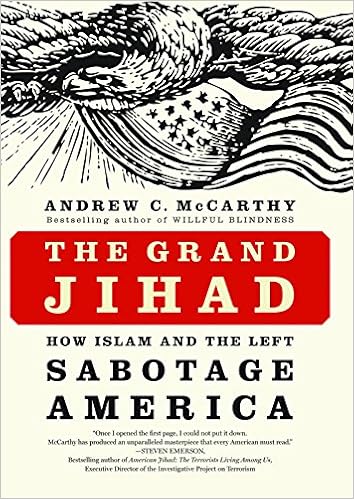
I recommend The Grand Jihad by Andrew McCarthy.  This explains how and why the liberal left coddles and cooperates in the destruction of Western culture.

US HERE – UK HERE

And, of course…

Defeating Jihad: The Winnable War by Sebastian Gorka.

US HERE – UK HERE

More on this HERE.

Many thanks to the reader who sent me the Kindle version from my wishlist.

Get a Kindle!  US HERE – UK HERE

Sts. Nunilo and Alodia, pray for us!

Our Lady of Victory, pray for us!

Posted in "How To..." - Practical Notes, The Coming Storm, The future and our choices, The Religion of Peace | Tagged , , , , , ,
19 Comments

Archd. Denver restores order of the Sacraments of Initiation

archbishop-aquilaThis comes from the National Catholic Register.

Archbp. Samuel Aquila of Denver has decided to make some changes.

Making Benedict XVI’s Dream Come True in Denver

On Pentecost Sunday, Archbishop Samuel Aquila made history in the U.S. by announcing that the Archdiocese of Denver would be the first U.S. Latin-rite archdiocese to restore the order of the sacraments of initiation to Baptism, then Confirmation, and finally Holy Eucharist.

As the Register reported on Saturday, the age for Confirmation will be lowered to third grade and received right before First Holy Communion at the same Mass, reversing a century long custom in the Latin Church in favor of a traditional order for receiving the sacraments that dates back to the Acts of the Apostles.

In this Register interview, Archbishop Samuel Aquila shares that he decided to restore the order to help as many Catholics as possible in his archdiocese “reach heaven” with the graces of Confirmation. And by doing so, he’s fulfilling a dream pope-emeritus Benedict XVI has had for the entire Latin-rite Church.

[…]

Read the Q&A with the Archbishop there. It concludes:

Thanks so much, Archbishop Aquila. As a final comment, can you share the personal impact that then-Pope Benedict XVI made on you regarding the restored order?

During my 2012 ad limina visit while I was Bishop of Fargo, I shared with Pope Benedict and the other bishops present what I had done to restore the order of the sacraments of initiation for children baptized in infancy. After my presentation, his response surprised me, “You have done what I always wanted to do.”

Posted in ¡Hagan lío!, Hard-Identity Catholicism, Liturgy Science Theatre 3000 | Tagged , , ,
49 Comments

A bishop says: “the actual pastoral action of Jesus Christ… does not first demand a change of life”

fishwrapThe National Schismatic Reporter (aka Fishwrap) ballyhoos heterodoxy and immoral actions.

They have a story about a commencement address delivered by the Bishop of San Diego, Robert McElroy, to graduates at Jesuit-run Santa Clara University, a member of the Graduate Theological Union of Berkeley, who made strange claims about the teaching of Pope Francis.  Although, given the locale of the talk, I’m pretty sure that very few people found anything odd about them.  McElroy said of Pope Francis’ pastoral theology…

“It demands that moral theology proceed from the actual pastoral action of Jesus Christ, which does not first demand a change of life, [ummm…] but begins with an embrace of divine love, proceeds to the action of healing and only then requires a conversion of action in responsible conscience.” [According to the variant reading of John 8:11, the Lord said to the woman taken in adultery: “Fuggedaboutit! Go and amend no more!  Take a little time to think about changing your life.”]

Noting that people are confronted with “overwhelming life challenges” that prevent them from following the Gospel, he added, “The pastoral theology of Pope Francis rejects a notion of law which can be blind to the uniqueness of concrete human situations, human suffering and human limitation.” [Is that another way of saying that, for some people, it is impossible to follow God’s commandments?  That God denies some people the grace to live according to His will?  I must misunderstand, because that would be a denial of the action of grace.  I wonder if that is an accurate reading of Pope Francis.  That would put Francis’ magisterium in direct contrast to the magisterium of the 19th Ecumenical Council, of Trent?  In the balance, I’d rather think that the bishop got it wrong rather than the Roman Pontiff.]

McElroy encouraged the school’s faculty to focus on the pope’s pastoral theology and to place it “at the very center and life of this institution.” [And they should remember to study the Pope’s theology in the context of what the Church taught before 2013.]

“It will be one of the greatest theological projects of our age to understand how this new theological tradition should be formed — how it can bring unity, energy and insight into the intersection of Catholic faith and the modern world.”  [A “new theological tradition…”]

So, what’s up here?  What’s with… “the actual pastoral action of Jesus Christ, which does not first demand a change of life, but begins with an embrace of divine love, proceeds to the action of healing and only then requires a conversion of action in responsible conscience.”

What does “responsible conscience” mean?

An example of the actual pastoral action of Christ is found in John 8.  An adulteress is brought to the Lord.  She is probably going to be stoned to death.  The Lord stops it.  He tells her to do two things: 1) to go and 2) to sin no more.  I cannot speculate about what amazing graces God poured into her heart at that moment.  I’ll wager, however, that Christ meant what He said, when he said: “καὶ ἀπὸ τοῦ νῦν μηκέτι ἁμάρτανε … kai apo nun meketi hamartane… and from now on sin no more”. I have a hard time getting my mind around the notion that the “actual pastoral action of Jesus Christ”, does not first demand a change of life. I don’t think that the Lord was under the impression that every single person whom He dealt with would be the perfect person He wanted them to be thereafter without lapses (think Peter and his betrayal), but He doesn’t give me the impression that He thought people didn’t have to stop sinning. Am I wrong? “Go, and sometime down the line sin no more.” Nope. It’s not happening for me. Am I wrong? Am I missing something?

Let’s apply this.  Does “does not first demand a change of life” apply to, say, a child molester?  Does this apply to the employer who mistreats employees and cheats them of their proper wage?  Does this apply to the drug dealer who gives free smack to kids to get them hooked?  Does this apply to terrorists who recruit suicide bombers?

Fishwrap would have you think so. Don’t worry about your habitual sins. As a matter of fact, conversion is… down the line somewhere, if at all.

It seems to me that the merciful thing to do is precisely what Jesus did: Tell the sinner to “sin no more”. Then, help the sinner develop a plan of attack on the habitual sin and occasions of sin. Help the sinner get ready to face the suffering that comes from saying “no” to sin. While we recognize that not all penitents succeed every time, we don’t tell sinners that they can continue to sin.

The moderation queue is ON.

Posted in Francis, The Drill |
33 Comments

ASK FATHER: What if we are alive when Christ returns?

12_12_02_JudgmentFrom a reader…

QUAERITUR
:

Is it true that we will all die? If Jesus comes at this very moment many people will be alive. Do we die before going to hell or Heaven?

First, we don’t know exactly what is going to happen, the sequence of events, when the Lord returns.  We know that, when the day of the Lord comes, “the heavens shall pass away with great violence and the elements shall be melted with heat and the earth and the works which are in it shall be burnt up” (2 Peter 3:10).  So, you tell me what’s going to happen to you in the midst of that!

We don’t know what is going to happen.

However, if we are alive in the moment of the Lord’s return… and we should reflect on this constantly… it would help if we had wide-spread ad orientem worship… whether we are alive or not will not matter too much: everyone who has ever lived is judged by the King of Fearful Majesty in both an individual, or Particular Judgment, and in a General Judgement, when all things will be laid bare and weighed with each other.

The best plan for all of us is to reflect often, even daily, on the inevitability of the Four Last Things: Death, Judgment, Heaven and Hell.

If we are prudent, we will think often about our death and think about where we would like to spend eternity.

One day, dear reader, your heart will cease its beating, you will draw your last breath, your soul will separate from your body, and you will die.

Most of us don’t know when that is going to happen.

Examine your conscience and…

GO TO CONFESSION.

Fathers, that goes double for you!

And pray pray pray that we are able to receive the last sacraments.  This is the constant prayer of Christians for many centuries in the Litany:

A subitanea et improvisa morte… From a sudden and unprovided death, spare us O Lord.”

A sudden death can be a blessing. A sudden and unprovided death – unprovided in the sense of having no recourse to the sacraments when you are not in the state of grace – is a horrifying prospect. Make plans for, provide for, the needs of both body and soul for yourselves and those in your charge.

You don’t know when your death will come, natural or not.


Posted in Four Last Things, GO TO CONFESSION | Tagged , ,
11 Comments

ASK FATHER: Why do priests impose hands during ordinations?

imposition of hands ordination priesthoodFrom a reader…

QUAERITUR:

I attended the sacerdotal ordination of 5 priests for my diocese last Saturday.

After the bishop imposed hands, other priests participating in the Mass also imposed hands on the candidates. Since priests lack the fullness of the priesthood, what is the purpose and effect of the priests’ imposition of hands on the candidates?

The imposition of hands by the priests present at the ordination symbolizes the bond of ordained priesthood that all the men share.

However, on a related note, it seems that it was once possible for priests to ordain priests. There were a number of ancient references to this and we have documentation from the medieval period. In 1400 Pope Boniface I gave permission to the Abbot of S. Osith in Essex to ordain to the priesthood. The permission was revoked in 1403. The validity of their orders was not questioned. Today, however, the Church affirms that only bishops ordain priests.


Posted in "How To..." - Practical Notes, ASK FATHER Question Box, Priests and Priesthood | Tagged ,
13 Comments

Sec. Mattis on what keeps him awake at night

SecDef Mattis (USMC-Ret) on what keeps him awake at night:

We need more of this attitude in Holy Church, especially from our officers, the clergy.

Posted in ¡Hagan lío!, Just Too Cool | Tagged
16 Comments

‘Tis the season for ordinations

17_05_05_ordination_card_01This is ordination season in many places.  I’ve been getting news about priestly ordinations and some of it is good. While my impression is that diocesan vocations are down in the last few years, some places there is growth.


In Wichita, Kansas [HERE] we read that 10 men were ordained to the priesthood, a remarkable number today for that diocese.

And since today is Memorial Day, let us not forget that Servant of God Fr. Emil Kapaun is from that diocese.

Today at the site of the UK’s best Catholic weekly we read good news for the Anglican Ordinariate. Speaking of 10 men:

Cardinal Pell to ordain 10 transitional deacons for the ordinariate

The 10 men are expected to be ordained as priests next year

Cardinal George Pell is to ordain 10 men as deacons for the Ordinariate of Our Lady of Walsingham next month.

The group includes two men who are in their fifth year of studies for the priesthood and are on course to become the first clergy who have undertaken their entire formation within the ordinariate.

The other eight men are former Anglican priests who have taken a specially designed two-year course.

It is likely the 10 candidates will be ordained to the priesthood next year. They will join 80 clergy serving 50 ordinariate groups in England, Wales and Scotland.

The ordination Mass will take place on Saturday June 17 at St James, Spanish Place. The Mass will be celebrated according to the ordinariate’s distinctive liturgy, Divine Worship. Cardinal Pell, former Archbishop of Sydney and prefect of the Secretariat of the Economy, will be the ordaining bishop and will be assisted by Mgr Keith Newton, the ordinary of Britain’s ordinariate.

The Ordinariate of Our Lady of Walsingham was formally established in 2011. It followed Anglicanorum coetibus, an apostolic constitution issued by Benedict XVI two years earlier, which allowed Anglicans to become Catholics while still retaining some elements of Anglican patrimony.

The Ordinariate of the Chair of St Peter was later established in North America and the Ordinariate of Our Lady of the Southern Cross followed suit in Australia and Japan.

What is interesting to track is how many of the ordinands are from the diocese for which they are being ordained. For example, the Diocese of Paterson also ordained 10 men this year, 8 of whom are from Poland and 2 from Columbia!

At the parish where I have helped out on weekends, people are now praying a Prayer for Vocations at every Sunday and holy day Mass. HERE

Let us pray for the newly ordained and for more sound vocations to the priesthood.

Posted in Priests and Priesthood | Tagged , ,
16 Comments

The penny dropped for another musician

The penny dropped for another musician.

At increasingly useful Crisis today I read a piece by a musician about the state of church music today.  His summary: disaster resulted from the degradation of sacred worship in Latin.   Of course it did.  In the Latin Church the loss of Latin is going to have a profoundly negative impact.

Let’s see some of what he has to say.  My emphases and comments:

Abandoning Latin Changed Liturgical Music … for the Worse
DEACON JIM RUSSELL

After 35 years as a liturgical musician, it’s amazing how little I really know about the liturgical music of the Roman Rite.

Then again, what should I expect when my earliest memories of music at Mass tend to involve now-forgotten attempts to make Ray Repp tunes, guitar-group versions of Beatles songs, social-justice-pop-folk songs, and patently juvenile compositions like “Sons of God” and “Here We Are” seem at home in the most august Holy Sacrifice of the Mass? [A good question.  Part of the problem stems from the loss of understanding of the function of music in liturgical worship.  For example, music in these USA was effectively hijacked into the disaster lane after the Council when an advisory board of the liturgy committee of the US bishops conference issued (without authority) a statement that included the catastrophic and false notion that the purpose of liturgical music was to create a truly human experience.  From that point on, with the cover this provided, music swirled ever faster down the pipe.]

When it comes to the “hermeneutic of discontinuity,” I lived the experience. Yet, despite the poverty of my personal liturgical roots, I’m convinced that things aren’t really as bad as some people today might think, in terms of the pre-Vatican II vs. post-Vatican II liturgical-music landscapes.

No. They’re actually worse. [Bingo!]

Why? Because the narrative is not really as simple as saying “we really had our liturgical-music act together before the Council, and after the Council everything collapsed.”

Rather, the more historically accurate narrative sounds like: “we really had only taken the first few baby-steps toward getting our liturgical-music act together in the decades before the Council, and then after the Council everything collapsed.”

It might be fairer to say that after the Council everything certainly changed, if not collapsed. [He’s trying to hedge here.  I’ll stick with “collapsed”.] Or at least that one specific change caused one particular collapse. I’m referring to the seismic shift in liturgical music that arose from the largely unrestrained embrace of the “vernacular” in the liturgy.

[… skipping way down…]

“Attention, All Personnel….!!”

Thus, the Church in the US was treated to the musical “M*A*S*H” unit that was first to arrive on the scene, offering not “meatball surgery” but offering “meatball liturgy.” And it wasn’t very life-saving—at all. As the Mass hemorrhaged its Latin, the wound, scarcely cleaned, received the Bandaid of the banal texts and melodies that at least initially came largely from the pop-folk era previously inaugurated by the 1957-1958 Kingston Trio smash hit “Tom Dooley.” [hence the rise of the sol-called “hootenanny Mass”] By the mid-1960s, the exuberant and carefree folk revival had given way to protest music and politics, and that volatile mix of elements gave us that visceral novelty of “now” liturgical music (so called) in the vernacular—guitars and even banjos mercilessly subjecting the faithful to everything from “Sounds of Silence” to “Let It Be” to Catholic “youth” music like “Wake Up, My People,” “Till All My People Are One,” “Allelu,” “To Be Alive,” and “Joy Is Like the Rain.”  [When Latin was abandoned the door slammed shut on the treasury of the Church’s sacred music.  There was no vernacular music!  So, there was a scramble for something, anything.  That and the fundamental misunderstanding of the role of music in worship resulted in reduction of music to the lowest common denominator (= devastation).]

Now, fifty years later, the discontinuity does indeed seem staggering. It leaves liturgical music in a sort of limbo. The legitimacy of the pre-conciliar effort to restore chant must be reconnected with the legitimacy of the post-conciliar openness to organically growing new liturgical music from that root. [This is what my mentor the late Msgr. Richard Schuler was all about at St. Agnes in St. Paul.]

How much different would things have been if there had been real continuity? Well, I’m pretty sure a young believer like me, destined to be a liturgical musician for more than 30 years, would have benefitted greatly from hearing way more Latin, more chant, more Latin polyphony—anything that would have made it clear to me that these are truly the hallmarks of our Roman-Rite tradition. In my view, it’s not merely a missed opportunity for the Mass itself, but it’s a missed opportunity for me as a Catholic.  [At my aforementioned home parish, on Saturday mornings there was a sung Mass in Gregorian chant, and the entire congregation sang the Ordinary.  There were baskets with the Kyriale at the doors.  After some years, people didn’t need then anymore.  Before Mass, the cantor would say, “Today we are singing Mass IV” (for the feast of an Apostle), and everyone would sing Mass IV.  Easy.]

Mass is not supposed to make me musically comfortable—it’s supposed to make me more holy.  [Right.]

Some may say that whatever doesn’t kill you makes you stronger, but I’m here to tell you: singing “If I Had a Hammer,” “Get Together,” and “Day by Day” at Mass never, not once, made me feel stronger—or holier. Let’s reclaim our rightful patrimony and try to rediscover—yet again—the liturgical music roots of the Roman Rite.

He did have a hammer and he hit the nail directly on its head.

If you want to know more about how Church music was hijacked, then make some Mystic Monk Coffee (or Tea), and download the following.

A Chronicle of the Reform: Catholic Music in the 20th Century 

This is a must-read for those who are involved in Church music (we all are) and for those who are interested in Church music (we all must be).  NB: The typos are probably a result of the scanning of the text – they aren’t in the originals.

Also, friends, remember these principles:

  • we are our rites
  • change the way we pray and you change what we believe
  • liturgical music is not an add on
  • true active participation must be actual participation rooted in active receptivity
  • liturgical music is an “integrating” element in worship
  • liturgical music must be sacred and artistic

All of this is grounds for thanksgiving for the great gift Benedict XVI gave to the whole Church: Summorum Pontificum.

UPDATE:

One of you wrote to me via email:

I appreciated your latest posting, “The penny dropped on another musician.” It mirrors my own experience and ongoing education regarding the liturgy. Unfortunately, we have the women religious to thank for the acceleration of the degradation of our liturgy as well. I ran across a recording of this “Mass,” the installation of the “Leadership Team” of the western province of the Sisters of Charity of Nazareth, Kentucky, an order that taught me in grade school. While I should not be surprised, I was still nonetheless shocked by how far these sisters gone in their attempts to dismantle the Roman Rite as prescribed by the Church.

Western Province Leadership Team Installation from Sisters of Charity of Nazareth on Vimeo.

From the very beginning, it’s just plain dreadful, but dreadful picks up speed at 03:45. From 20:15 onward the estrogen-bedraggled priest lets sister read the Gospel. Guess who preaches. More weirdness begins at 34:00 when three sisters do their “installation” thing with stoles and hugs all around.
Check out 1:07:00 for the final “blessing” and… what follows, whatever the hell that is.

UPDATE:

Well… it looks as if the Sisters deleted or “privatized” that video.

Posted in Hard-Identity Catholicism, Latin, Liturgy Science Theatre 3000, New Evangelization, The future and our choices | Tagged , , ,
37 Comments