ASK FATHER: How to explain changing parishes without sounding “elitist”

From a reader…

QUAERITUR:

Wondering if you had any advice on how to explain to family and friends why my wife and I have decided to go to mass on Sunday at another parish the next town over without sounding self righteous or elitist? Basically our territorial parish is quite liberal and we like the reverence and beauty of our new parish. Hard topic to discuss with people happy at the old place.

Thanks for all you do. I have learned so much from this blog.

That’s can be a tough call.  Do you stay at a parish with problems and try to be part of a solution?  Do you cut your losses and go to a better place?

I don’t see why giving an explanation about your preference to go to a different church would be “self-righteous” or “elitist”, provided that you give your sincere reasons for the decision.  If the people with whom you are talking think that desiring beauty is elitist, the problem is theirs, not yours.   You might ask them to go with you and then, over a leisurely brunch (for which you pay) have a discussion about the differences.

When it comes to nourishing our spiritual lives, shouldn’t we want the very best?  If that best cannot be attained in one place, and attempts to improve it or adapt to it aren’t working, then it is reasonable to seek elsewhere when there are alternatives.

This is one of those situations in which the admonishment of 1 Peter 3:13-17 is important:

Now who is there to harm you if you are zealous for what is right? But even if you do suffer for righteousness’ sake, you will be blessed. Have no fear of them, nor be troubled, but in your hearts reverence Christ as Lord. Always be prepared to make a defense to any one who calls you to account for the hope that is in you, yet do it with gentleness and reverence; and keep your conscience clear, so that, when you are abused, those who revile your good behavior in Christ may be put to shame. For it is better to suffer for doing right, if that should be God’s will, than for doing wrong.

Have it clear in your minds why you are making the change, so that you can give an explanation which is clear and charitable.

NB: Your territorial parish remains your true parish.  Registration in a parish does not make you a member of that parish.  Registration is helpful when it comes to receiving services and giving support.   Unless there are issues of a personal parish involved (nationality, etc.) your territorial parish remains your official parish.  In these days of easy mobility people will sometimes forget this as they seek alternatives to their insufficient territorial parish.

Posted in "How To..." - Practical Notes, ASK FATHER Question Box | Tagged , ,
22 Comments

ASK FATHER: Butter in coffee on Ash Wednesday

From a reader…

QUAERITUR:

I know this is a bit early for Ash Wednesday and Good Friday, but I am curious (and excited about Lent). There’s a trend of putting butter into one’s coffee.

Basically it’s supposed to make you feel fuller longer and slow caffeine energy spikes. I know milk in coffee doesn’t break the fast ( not sure about honey instead of sugar), but would this break the fasting laws as well?

Firstly, it is good to be thinking about these things before Ash Wednesday.   The Latin Church has two days of the year when most Catholics are obliged both the fast and to abstain from meat.  While some wiggle room is allowed for the sick, or other factors, this covers the multitude.  Since we have so few obligations as Catholics, it’s good to get them right.

To review, and this will come up again before Lent…

FASTING: Catholics who are 18 year old and up, until their 59th birthday (when you begin your 60th year), are bound to fast (1 full meal and perhaps some food at a couple points during the day, call it 2 “snacks”, according to local custom or law – two snacks that don’t add up to a full meal) on Ash Wednesday and Good Friday.

There is no scientific formula for this. Figure it out.

ABSTINENCE: Catholics who are 14 years old and older are abound to abstain from meat on Ash Wednesday and on all Fridays of Lent, and Good Friday in the Triduum.

In general, when you have a medical condition of some kind, or you are pregnant, etc., these requirements can be relaxed.

You would do well to include works of mercy, both spiritual and corporal.

I also recommend making a good confession. Let me put that another way:

GO TO CONFESSION!

“But Father! But Father!”, some of you are saying anxiously, “What about my Mystic Monk Coffee? I can drink my Mystic Monk Coffee, can’t I? Can’t I? And can I put butter in it?!?”

Yes, you can have coffee and, yes, you can put butter in your coffee, as part of your full meal and two “snacks”(portions that wouldn’t make a full meal).   There isn’t that much difference between putting cream in coffee and putting butter in coffee.   Cream is milk with 30-55 percent of milkfat and is still liquid.  Butter is a semisolid form of milk with 80 percent milkfat.  Put a little of either one into coffee (presumably hot) and they dissolve into the coffee.

How about in between?

The old axiom, for the Lenten fast, is “Liquidum non frangit ieiuniumliquid does not break the fast”, provided you are drinking for the sake of thirst, rather than for eating.

Common sense suggests that chocolate banana shakes or “smoothies”, etc., are not permissible, even though they are liquid in form. They are not what you would drink because you are thirsty, as you might more commonly do with water, coffee, tea, wine in some cases, lemonade, sports drinks such as “Gatorade”, etc.

Again, common sense applies, so figure it out.

Drinks such as coffee and tea do not break the Lenten fast even if they have a milk (cream, butter) added, or a bit of sugar, or fruit juice, which in the case of tea might be lemon.

Coffee would break the Eucharistic fast (one hour before Communion), since – pace fallentes – coffee is no longer water, but it does not break the Lenten fast on Ash Wednesday or Good Friday.

If you want to drink your coffee and tea with true merit I suggest drinking it from one of my coffee mugs.

There’s always the Liquidum non frangit ieiunium mug.

Click!


Posted in "How To..." - Practical Notes, ASK FATHER Question Box | Tagged , ,
7 Comments

ASK FATHER: Missing Mass in a winter storm

From a reader…

QUAERITUR:

This Sunday morning a big snow storm made the roads look treacherous.

I live 10 miles from church. I assumed Mass was cancelled but could find no texts or other notices either way. Later, I found out Mass was, indeed, celebrated (to a congregation of 15). I shall confess my failure to attend Mass. I’m concerned I’ve incurred a mortal sin. What do you think?

I don’t think you have to confess that as a mortal sin.  You made a mistake in judgment about the cancellation and there was a big winter storm.

In the case of a serious winter storm, or similar circumstances, one no longer has the obligation to attend Mass.

There are a couple of principles in law which help us understand our obligations.  First,  ultra posse nemo obligatur… no one is obliged to act beyond his powers and nemo ad impossibilia tenetur… no one is held to the impossible.

If you travel some place and there is no Mass, you are not obliged to go to Mass.  If you are sick or someone in your care is sick, you are not obliged.  If the weather or conditions are really bad, you are not obliged.

It may be that some did brave the storm.  That also may have been highly imprudent.  They might say, “I got to Mass and back, no problem. Therefore it wasn’t ‘impossible’.”  Maybe so.  But maybe not, under your circumstances.

Of course I am not talking about seeing a few snow flakes curl down and saying, “WHOA! It’s snowing! I’m staying in.”  God cannot be fooled.  However, if you know that it’s going to be full blizzard by the end of Mass, that’s another snow-cone altogether.

Even though we are not bound to the impossible, we also remember that being Catholic also means that we have obligations which sometimes require sacrifice.

Also, your proper, territorial pastor has the ability to dispense or commute the obligation (can. 1245).  Holy Church provides that, if attendance at Mass is not possible, taking part in a liturgy of the Word celebration be a priority, and if that, too is not possible, spending “an appropriate time in prayer, whether personally or as a family, or as occasion presents, in a group of families” (can. 1248, 2).

Pastors, parish priests, can commute the obligation to a recitation of the Rosary or reading Sacred Scriptures, especially the Gospel of the day, and spending time in quiet contemplation.


Posted in "How To..." - Practical Notes, 1983 CIC can. 915, ASK FATHER Question Box | Tagged ,
20 Comments

ASK FATHER: Catholic marriages without Nuptial Masses

From a reader…

QUAERITUR:

It has been over 20 years since I’ve attended a marriage in the OF between two Catholics that has had a Nuptial Mass. Why doesn’t the Church require that if two Catholics are getting married, they must have a Nuptial Mass?

My reason for asking this is I’ve noticed in magazines and on the internet that Brides are being encouraged to keep the ceremony short (anything over 30 minutes is apparently unacceptable in order to avoid boring one’s guests) and get on with the party. Furthermore, I read “Catholic” brides discussing keeping their ceremony as short as possible, cutting out anything that isn’t necessary and choosing the shortest readings, in order to get it over and done with. I feel like the option to not have a Nuptial Mass is being abused and over-used. Why do we go along with this? To me it suggests that someone isn’t ready to enter into a Catholic marriage because if they knew what it was about and entailed, they’d want all the graces and help they can get.

GUEST PRIEST RESPONSE: Fr. T. Ferguson

The current practice of the Church is that, normally, the wedding of two baptized Catholics takes place during the context of the Holy Mass. This hasn’t always been so – in fact, prior to the Second Vatican Council, very few things were done within the Mass. Marriage, for example, between two Catholics would have been solemnized and then, after the wedding there would have been a Nuptial Mass. One of the (unintended) result of the post-Conciliar reforms was the inclusion of everything within the Mass – marriage, confirmation, graduations, May crowning, Bingo, potlucks, parish council elections, dance recitals… I exaggerate (but not too much), and the nearly complete elimination of many beautiful ceremonies of the Church that are not Mass.

In recent years we’ve seen a gradual recovery of the Church’s tradition of Exposition and Benediction, but Sunday Vespers or any other of the Hours are rare in parish churches, as are the formerly ubiquitous novenas, processions, devotions.

But I digress.

The priest who marries a Catholic couple has some leeway in permitting the marriage to take place outside of Mass, but the liturgical norms would seem to indicate that he needs a good reason for doing so. The desire to make things as short as possible doesn’t seem to me to be a good reason.

At the same time, I’m well aware that some brides, and some grooms, and some parental units can be… demanding. I have a hard time thinking ill of an overworked, stressed out priest, not being willing to die on that hill if the bridal party throws a fit.

What seems odd to me is the number of times I’ve had to talk with folks upset that the priest won’t do the wedding within the Mass when one of the parties is not Catholic. Those weddings SHOULD take place outside of Mass, and can only be celebrated within Mass for a good reason and with the permission of the local ordinary.

I blame soap operas for what’s happened to our wedding culture – everyone now feels the need to “create” a special and bizarrely unique moment, but that’s perhaps a rant for another day.

Posted in "How To..." - Practical Notes, ASK FATHER Question Box, Liturgy Science Theatre 3000, One Man & One Woman | Tagged ,
20 Comments

Wikileaks: Francis’ private letter about power struggle over Knights of Malta

UPDATE:

At the Register Ed Pentin provides some explanations.  HERE


Originally Published on: Jan 30, 2019

Wikileaks.   Whatever you may think of Wikileaks, this is interesting.  HERE

My emphases:

Pope’s Private Letter Reveals Early Involvement in Power Struggle
30 January, 2019

Documents released by WikiLeaks today shed light on a power struggle within the highest offices of the Catholic Church. Amongst the documents is a private letter written by Pope Francis. The existence of this letter, addressed to the papal envoy [of the Sovreign Military Order of the Knights of Malta] Cardinal Raymond Burke, has been the source of much speculation in the media [1]. It is now published for the first time in full and with the Pope’s signature.

This letter concerns the Sovereign Military Order of Malta, also known as the Order of Malta or the Knights of Malta, originally founded in Jerusalem during the Crusades in 1099. As the name indicates, it has been widely recognised as a sovereign entity in itself despite theoretically being subject to papal authority as a Catholic institution.

This ambiguous status cuts to the heart of the dispute as it reached a fever pitch after Pope Francis forced the abdication of Matthew Festing as Prince and Grand Master of the Order in January 2017. A month earlier Festing had dismissed the Order’s Grand Chancellor Albrecht Freiherr von Boeselager.

The reason for the dismissal is said to be that Boeselager, who served as health minister for the Order, was held personally responsible for having approved funds for an aid mission in Africa that distributed condoms, amongst other things. This directly contravenes Church teachings on contraception and Festing was adamant that Boeselager be held responsible.

Boeselager, however, appealed to Pope Francis, who in turn deeply undermined the Order’s independence and sovereignty by appointing a papal commission to investigate the matter and report back to the Holy See. Boeselager was subsequently reinstated at the same time as Festing was ousted. The papal letter, published by WikiLeaks today, shows the Pope was aware of and involved in the dispute since at least November 2016 when he met with Cardinal Burke.

The Pope’s dramatic moves in January 2017 effectively abolished the sovereignty of the Order and have been described by its harshest critics as the annexation of one country (the Order) by another (the Holy See) [2]. Members of the Order even went so far as to challenge papal authority on the matter and refused to co-operate with the Vatican’s investigation [3]. This is seen by many observers as part of a larger power struggle between conservative and liberal elements within the Church, represented by Festing and Boeselager respectively (for example, [4]).

Adding yet more intrigue to the tale are rumours that some high-ranking members of the Order have also attended Masonic lodges or other organisations deemed suspect by the Church [5]. Some of this seems to be confirmed by the Pope’s letter, which is dated 1 December 2016 (over a month before Boeselager was reinstated and Festing dismissed).

In the letter Pope Francis states: “In particular, members of the Order must avoid secular and frivoulous (sic) behaviour, such as membership to associations, movements and organisations which are contrary to the Catholic faith and/or of a relativist nature.” He goes on to state that any members of such organisations need to be removed from the Order.

Regarding the condom scandal at the heart of this matter, the Pope states: “I would be very disappointed if ? as you told me ? some of the high Officers were aware of practices such as the distribution of any type of contraceptive and have not yet intervened to end such things.” He further states that: “I have no doubts that by following the principle of Paul and speaking the truth in love (Ephesians 4:15), the matter can be discussed with the Officers and the necessary rectification obtained.”

The letter also confirms that Cardinal Burke had an audience with the Pope on 10 November 2016 to discuss the mounting crisis. This was before Boeselager was even removed by Festing. The text of the letter makes clear that the Pope was already committed to asserting his authority over the Order at this early stage. He writes: “Your Eminence, together with the leaders of the Order, will have to make ever more clear the close connection which unites the Sovereign Military Order of Malta to the Roman Pontiff, both from a structural and operational point-of-view.” Along with the Pope’s letter to Cardinal Burke, WikiLeaks has published several other documents relating to the dispute. These include internal communications and memos, some of which have been quoted in the media.

[1] https://catholicherald.co.uk/commentandblogs/2017/01/25/the-vatican-has-destroyed-the-order-of-maltas-sovereignty-what-if-italy-does-the-same-to-the-vatican/

[2] https://www.economist.com/the-economist-explains/2017/02/07/why-the-pope-has-taken-control-of-the-knights-of-malta

[3] https://www.theguardian.com/world/2017/jan/11/knights-of-malta-condom-scandal-stretches-from-myanmar-to-the-vatican

[4] http://www.italy24.ilsole24ore.com/art/panorama/2017-01-30/pope-francis-imposes-pacification-on-the-order-of-malta-100122.php

[5] https://catholiccitizens.org/news/69506/pope-ordered-card-burke-clean-freemasons-knights-malta

Posted in The Drill | Tagged , ,
9 Comments

CREEPING INFANTICIDE: NY style ghoulish abortion bill now introduced in Virginia

It had to happen.  If it was successful in NY, it would be attempted in other states..

Read at LifeSite about a bill in Virginia that would allow abortion even at the point of giving birth.   Good heavens… is “abortion” even the right word at that point.

HERE

Known as the Repeal Act, Virginia House Bill 2491 would eliminate current restrictions on late-term abortions.

According to the bill’s summary, the proposed law:

  • Eliminates the requirement that an abortion in the second trimester of pregnancy and prior to the third trimester be performed in a hospital.

  • The bill eliminates all the procedures and processes, including the performance of an ultrasound, required to effect a woman’s informed written consent to the performance of an abortion; however, the bill does not change the requirement that a woman’s informed written consent be first obtained.

  • The bill eliminates the requirement that two other physicians certify that a third trimester abortion is necessary to prevent the woman’s death or impairment of her mental or physical health, as well as the need to find that any such impairment to the woman’s health would be substantial and irremediable.

  • The bill also removes language classifying facilities that perform five or more first-trimester abortions per month as hospitals for the purpose of complying with regulations establishing minimum standards for hospitals.

Posted in Emanations from Penumbras, You must be joking! | Tagged
14 Comments

Canonist Ed Peters on trying Gov. Andrew “the Ghoul” Cuomo for heresy. Fr. Z makes some observations.

When I was travel back to these USA from Tokyo, I was addressed by fellow travelers about Gov. Cuomo.  “When is he going to excommunicated?”  They were really angry.

People are angry.  Rightly so.  They want action, not words, from bishops.  Rightly so.  They have vague notions about something dramatic called “excommunication”, so they want that.

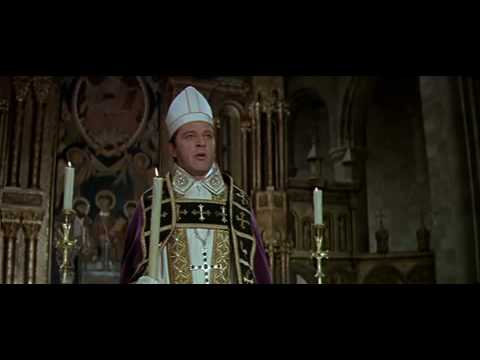
Frankly, I wouldn’t mind some Richard Burton/Becket style bell, book and candle against Cuomo’s backside, but only if the law truly supported it.

However, the fact remains that we have laws in the Church.  When it comes to application of censures to people who commit sins we have to interpret the law as strictly as possible in order to protect the rights of the accused.  That makes the “prosecution’s” case much harder to argue.

Today, canonist-galore Ed Peters has long and pretty comprehensive look at another canonists idea that Gov. Cuomo could be tried for heresy: “the obstinate denial or obstinate doubt after reception of baptism of some truth which is to be believed by divine and Catholic faith”.  Peters breaks down all the terms and looks at the feasibility of such a case.

Anyone interested in what “heresy” is, or how canonical procedures work, would do well to read his whole offering.  It is a mini-workshop and very informative.  At the very least it will give the average reader a new view of how high the bar is for imposing a sanction on a person.

Peters also make the point that a failed attempt at imposing a censure on Cuomo would make matters worse.  Whatever is undertaken has to be done meticulously.

NB:  In another state capital, Springfield of Illinois, after the governor signed same-sex marriage legislation, Bp. Paprocki performed an exorcism over the whole state.  HERE  It may be that excommunication will be difficult to impose.  That doesn’t mean that bishops must do nothing.   

Every single bishop of New York can take up his copy of the Rituale Romanum and perform an exorcism over the whole state.

Abortions are sins that attract demonic influence and oppression.  Exorcism of any place where abortions are performed is appropriate and necessary.

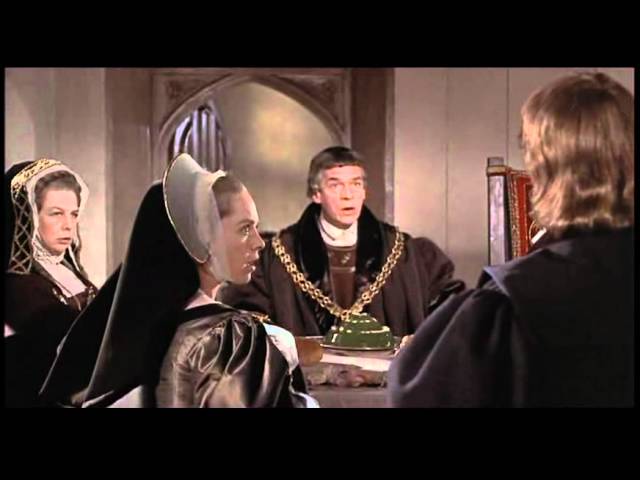
Once again, the well-known observation of St Thomas More comes to mind, that was strikingly portrayed in the movie A Man For All Seasons.  According to Thomas’ biographer William Roper, the saint did say indicate something along these lines, and it made it into Robert Bolt’s play and screenplay.  But the dramatic version makes the point crystal clear.

Scene: Richard Rich, who later betrays Thomas, leaves the room.

ALICE MORE: Arrest him!
SIR THOMAS MORE: For what?
ALICE: He’s dangerous!
WILLIAM ROPER: For libel, he’s a spy!
MARGARET MORE: Father, that man’s bad.
MORE: There is no law against that.
ROPER: There is! God’s law!
MORE: Then God can arrest him.
ALICE: While you talk, he’s gone!
MORE: And go he should, if he were the Devil himself, until he broke the law!
ROPER: So! Now you’d give the Devil benefit of law!
MORE: Yes. What would you do? Cut a great road through the law to get after the Devil?
ROPER: Yes! I’d cut down every law in England to do that!
MORE: Oh? And when the last law was down, and the Devil turned round on you, where would you hide, Roper, the laws all being flat? This country is planted thick with laws, from coast to coast — man’s laws, not God’s — and if you cut them down — and you’re just the man to do it — do you really think you could stand upright in the winds that would blow then? Yes, I’d give the Devil benefit of law, for my own safety’s sake!

YouTube thumbnailYouTube icon

And just because I mentioned Becket, above, here are scenes which serve to increase my desire to see bishops of this stripe today.

When people come up to priests on airplanes and in airports to vent about Gov. Cuomo, what they are really calling for a bishops who bishop.

First, how a bishop ought to deal with errant, obstinate Catholic politicians in serious matters.  Sure, it reverses the role here, where the state accuses a bishop, instead of the other way around, but… damn… backbone!

Very dramatic.   But people today long for the spirit of this episcopal display.

Next, the excommunication scene.  Again, theatrical.  But, people want the strength and conviction of this moment, after decades of hand-wringing and placating.

YouTube thumbnailYouTube icon

Posted in SESSIUNCULA | Tagged , , , , , ,
19 Comments

ASK FATHER: Marijuana and validity of marriage

From a reader…

QUAERITUR:

Recently marijuana was legalized in Canada. As such, the issue has come up that Marijuana can stay within the system for a very long time and a habitual user can be impaired by marijuana even if he/she hasn’t used it recently. My understanding is that Catholics cannot be impaired by drugs and alcohol at the time of the wedding for the sake of validity because of their inability to give free consent to the marriage. Would this mean that habitual pot heads wouldn’t be able to marry in the Catholic Church? If so, what would you recommend if, hypothetically speaking, a legal pot head were to be planning on getting married in the Church and is concerned about validity?

GUEST PRIEST RESPONSE: Fr. Tim Ferguson

Whether or not marijuana is civil legal or not, the question is a good one. Habitual use of any intoxicant can impede a person from being able to use his discretionary faculty – that faculty which allows us to freely choose something, in this case, marriage.

To marry, the Church requires that a person have the ability to exercise his free will. Without internal and external freedom, matrimonial consent can fall under a shadow of possible invalidity. The Church would presume – before any investigation is done – that the consent is valid, but upon investigation, someone who was shown to be regularly under the influence of marijuana – and under that influence at the time of the wedding in particular – might be proven to have not posited a valid act of consent.

If someone accustomed to using marijuana – or alcohol, or any intoxicant that numbs the senses – with regularity were to come to me preparing for marriage, I would first take pains to remind him of the moral gravity of surrendering his free will through the use of intoxicants. Our free will is a precious gift from God, and should not be lightly surrendered.

Secondly, I would urge him, at the very least, to observe a period of sobriety of at least several days before and certainly during the wedding. If I were a priest preparing such a person, I would inform him that, unless I had confidence that he was sober and clear of mind the morning of the wedding, said wedding would not be taking place.

Posted in "How To..." - Practical Notes, ASK FATHER Question Box, Liturgy Science Theatre 3000, One Man & One Woman | Tagged ,
6 Comments

BOOKS RECEIVED: Breviarium Romanum

As you know, Summorum Pontificum affirms that priests and those obliged to say the Office, can use the traditional, pre-Conciliar Breviarium Romanum.  A while back I answered a query about use of the Breviarium Romanum published by the SSPX.  HERE  I came down on the side “Yes, you can use it.”

In that answer I mentioned that I didn’t have the edition about which I was being queried.

So, turn the clock to the present day and, having returned from Tokyo, I find a box from Angelus Press with – lo and behold – breviaries.  HERE

Behold.

These volumes are of bible paper, bound imitation black leather. There are four ribbons tops in different colors.  The pages are gilded.

Helpful cards.

Note the publisher, in France.

What edition is this?  This is the last decree included in the front of the first volume.  1960.

By contrast, the three volume, English/Latin facing edition reprinted by Baronius Press is the 1961.

Note that the psalms go across the page.

The appendix has all the bits one expects.

I am very grateful for the set.  I will spend a little time with the present volume, to see how we get along.

Posted in Liturgy Science Theatre 3000, REVIEWS, SUMMORUM PONTIFICUM | Tagged , ,
7 Comments

TOKYO – Day 4-8: Woodblocks, Chow and Fuji

The adventure to Tokyo has wrapped up, and the long flight home endured. I thought some of you might like a few more images.

First, I am a bit of a sucker for Tokyo subway posters. I marvel at them. So very… odd.

Another kind of subway poster, however, lead me to trek to Roppongi Hills to see a fantastic exhibit of a favorite, Katsushika Hokusai.   He had some 30 names over his career.  He died at 90.  His production was olympian.

This was a different exhibit from the one I saw at the Hokusai Museum near the Edo-Tokyo Museum and the Sumo Stadium.  In this exhibit there were about 500 pieces!

Alas, photos were not permitted in the exhibit.  I bought the catalog, however.  I only do that for the vest best exhibits.

He is most famous for the magnificent wave print.

At the cafe there I had some curry.  Gimmicky, but fun.

The view from the museum floor.  In Tokyo, you have get used to thinking vertically.  The museum was on the 54th floor.

Back to food.

One of the best places for pork-based ramen is in Shijuku.  Fuunji.

\

Happily the queue was short.

Heavenly stuff, this ramen.

One of the more interesting buildings.  Cocoon.

Of course we had to go to the food hall at Isetan.

Photos are frowned on.  However, let’s just say that there are an underground football field’s worth of showcases with the most beautiful food you have ever seen, either prepared or produce.   I’d like a couple months in Tokyo to cook myself through some of these marvels.

An example of one of the beautiful presented preparations.

One evening we went to have tempura from a true master of the art.  Here is a leaf called shisu with uni, sea urchin.

There was a great deal more, to be sure.

Dessert, two large red beans.

There was, in the entry way, an antique set of playing cards for a game based on a set of poems by 100 poets called Ogura Hyakunin Isshu.  This is played, as it was explained by the great Augustin-san who was with us, in January.  He plays it and his children are learning.

The basic idea is that that you draw a card.  There is half of a poem on the card.  You have to complete the poem.

On a more commercial them.  I am amazed at the artificial food on display outside of restaurants.  Sort of a 3D menu to entice you in.

Which drink is mine?

A nice way to prepare a lime slice for your Gins and Tonic.  Or is it Gin and Tonics?

We touched most of the bases in Tokyo: Shabushabu, ramen, tempura, sukiyaki.  Of course we had sushi in Tsukiji.

Here’s our set, with a few closeups.

This ain’t your grocery store sushi friends.  It’s in a whole different class.

With a slight char.   I prefer without, but they were outstanding, nevertheless.

At the end of the set, we had an elective.  Augustin-san and I went for the two on the right – shrimp – still twitching.  I have a video HERE.

After those, the heads, after a bath in hot oil.

Crunchy.

A tsukiji street at night.  Lot’s of places to try.

Some people have wondered about my Mass set up during trips.  Here is how I set up this time in my little hotel room.  Frankly, the space is not completely set up yet, and you can see, of the vestments, only the little antependium, and you can’t see the antimensium.  This is from the reversible travel vestments that were given by JS, J&MS, JD.  I remember you when I use them.  I didn’t bring the travel altar this time. Maybe next time.

The room had a view, however.  Fuji is in the background.

And so, having concluded a great trip, and having met wonderful Catholics and eaten good food and seen spectacular exhibits and enjoyed the sumo basho, it was off to the airport.

Surely Hoksusai would have made the following, final view of Mount Fuji into one of his (more than) 36 Views.

Play
Posted in On the road, What Fr. Z is up to | Tagged , , ,
17 Comments