Thanks for the birthday greetings and a clarification

Many thanks to you who sent birthday greetings with notes.

Several of you said that you would have Masses said for me, which is very much appreciated.

Another several wrote along the lines of, “You are THAT OLD?!?”

Others, reading my line about entering my “sixtieth year” assumed that I turned 60.  Sorry.  I am not as old as you think.  I turned 59.  Your 59th birthday is the beginning of your 60th year.   That’s one of the reasons why I began a post yesterday with the canon about fasting.

In any event, thanks everyone for the greetings!  I accept them even on a belated basis.

Posted in Lighter fare |
7 Comments

ASK FATHER: How to gain the 1-8 November plenary indulgence

From a reader…

QUAERITUR:

Thanks to you and your blog, I am intending to receive a plenary indulgence or three (aim high!) for the souls in purgatory over Nov 1 – Nov 8. Reading through the Manual of Indulgences, from the fourth edition (1999) of Enchiridion Indulgentiarum: Normae et Concessiones, N23 states:
“To gain an indulgence it is sufficient to recite the prayer
alternately with a companion or to follow it mentally while it is
being recited by another”.
To me this reads as though an indulgence cannot be granted if I only say the prayer silently to myself; that the prayer(s) need to be said with someone or recite them mentally when someone else is saying the prayer out loud. Have I interpreted this correctly? Can you please clarify?

At the Vatican site HERE we find the current text.

29
Pro fidelibus defunctis

§ 1. Plenaria indulgentia, animabus in Purgatorio detentis tantummodo applicabilis, conceditur christifideli qui

1° singulis diebus, a primo usque ad octavum novembris, coemeterium devote visitaverit et, vel mente tantum, pro defunctis exoraverit;

2° die Commemorationis omnium fidelium defunctorum (vel, de consensu Ordinarii, die Dominico antecedenti aut subsequenti aut die sollemnitatis Omnium Sanctorum) ecclesiam aut oratorium pie visitaverit ibique recitaverit Pater et Credo.

There is no mention of having to pray with someone else.  Also, it says that the prayer can be offered “mentally”, so it doesn’t have to be aloud.

You can go to the cemetery and each day and gain the indulgence from 1-8 November by praying for the dead.   On All Souls (and other days determined by the bishop) could can gain the indulgence by visiting the church and praying the Our Father and Creed.

The usual conditions apply for a plenary indulgence.

The Church is pretty flexible with these grants.  While it is good to be in a group, sometimes that’s not possible.  Other people can’t get to church, so they can pray at home. We should try for the idea: at church or with others.  But the important thing is the get the indulgence!

I hope that people will pray for me when I die.

Posted in "How To..." - Practical Notes, ACTION ITEM!, Our Catholic Identity | Tagged
5 Comments

“I’ll take ‘25000 Words Of Blah Blah And Landmines’, for 200, please, Alex!”

I’ve been, as much as possible ignoring the Synod’s (“walking together”) document.  First, I’ve wanted a pleasant day.  Was the Synod really about producing a document?   Or was it about creating smokescreens and providing cover for the placement of poison pills and landmines?

25000 words.

The document, with the voting tallies for the paragraphs, is HERE in Italian only.   Gosh, I’ll bet that was helpful for the non-Italians.   Let’s rush through voting on paragraph after paragraph – there are, after all, only 167 – how long could that take?  what could go wrong? – in a language that not everyone is able to grasp in its subtleties.   And, as the old phrase goes, “The Devil speaks Italian”.

My friend Fr. De Souza wrote:

The inability or unwillingness of the synod secretariat to provide translations of texts — despite repeated requests from the English-speaking bishops at least — was a point of friction. Multiple sources said that Cardinal Lorenzo Baldiserri, [Sssssssssssss] secretary general of the synod, was so annoyed during one meeting about requests for translations that he stormed out of the room, threatening to run the next synod entirely in Latin.

As if he were competent to do so.

Notice how this prelate derides every Catholic indirectly by deriding Latin, your patrimony.

Remember, the Devil also always tells you what he is doing.

Abandon Latin, and this, folks is what we get: Babel.  The Synod is a sort of “bearded Spock Pentecost”, where everyone who ought to understand each other, are suddenly made unable to.  But without the cooler clothes.

Here are a couple paragraphs that pooped out… ooooops …popped out at me. My o key stuck. Notice the number.   By this point, the members’ brains are oozing out of their noses.

146.  The Synod hopes that in the Church Offices and organisms for digital culture and evangelization are established at appropriate levels, which, with the indispensable contribution of young people, promote ecclesial action and reflection in that environment.  Among their functions, apart from promoting the exchange and diffusion of good practices at the personal and the communal level, and to develop adequate tools for digital education and evangelization, they could also manage systems of certification of Catholic sites, to counteract the spread of fake news about the Church, or to seek ways to persuade public authorities to promote ever more stringent political positions and tools for the protection of minors on the web.

Certify Catholic sites?   BWAHHHHAHAHAH!

Yeah, that’ll happen.   And guess who would be in charge of something like that.

If they want to know the meaning of total, unrestricted and asymetrical warfare just try that.  They won’t know what hit them.

In par. 150 – again, now the voting members’ brains are leaking out their elbows – we get the SEX landmine. Trans. Lifesite. VOTE: NO 65.  248 total.

150. There are questions concerning the body, affectivity and sexuality which require a deepened anthropological, theological and pastoral elaboration, [Oh… yes.  We are so profound.  We will study more and than have “pastoral elaborations!”] to be carried out in the most appropriate ways and at the most appropriate levels, [Which are…..?] from the local to the universal. [AH! THAT cleared that up.] Among these, those relating in particular to the difference and harmony between male and female identity [Wait for iiiiiiit….] and to sexual inclinations emerge. [There it is.] In this regard the Synod reaffirms that God loves every person and so does the Church, renewing its commitment against all discrimination and violence on a sexual basis.  It also reaffirms the decisive anthropological relevance of the difference and reciprocity between man and woman and considers it reductive to define the identity of persons solely on the basis of their “sexual orientation” (CONGREGATION FOR THE DOCTRINE OF FAITH, Letter to the Bishops of the Catholic Church on the Pastoral Care of Homosexual Persons, October 1, 1986, no. 16).  [Do you feel a “but” coming?  Sorry, bad image.  Do you sense a hedge down the line?]

In many Christian communities there are already paths of accompaniment in the faith of homosexual persons: the Synod recommends that these paths be encouraged. In these paths people are helped to understand their own [personal] history; to adhere freely and responsibly to their own baptismal call; to recognize the desire to belong to and contribute to the life of the community; [What does that mean?] and to discern the best ways of achieving it. In this way we help every young person, no one excluded, to integrate the sexual dimension more and more into their personality, [leave it to a committee to produce word salad] growing in the quality of relationships and walking towards [“walking together”!] the gift of self.

The problem is, early in the document, we read that this must be read in conjunction with the awful Instrumentum Laboris which had all the “gay” stuff, you know, the LGBTQSJ stuff.

To give you an idea of how shallow, how bereft of value this document is, liturgy was lumped together with sport.  Now, don’t get me wrong.  There are other mentions of liturgy, especially with the word “accompagnare”.

A form of the word “accompagnare”, a brilliant example of an Italian word that means everything and nothing, sort of like the vaguely comforting, “I’m there for you”, appears 117 times in the document.

The word “anime”, souls, as in “salvation of souls” or “Give me souls and keep the rest!” appears ZERO times.

I thought, “No, it must be there.  Maybe they said, “salus animarum”.  Nada.   Nope.  Not there.  “Salvazione”.  ZERO.  “Redenzione” and “Santificazione” 1 each.

25000 words.

Friends, I don’t know what’s next.

On the other hand, celebrated Mass this morning for the traditional Feast of Christ The King.  I had a great lunch with friends.   I went back to church and heard the Act of Consecration.  Now I’m having a quiet supper of good wine, pasta, veg and cheeses.

Act of Consecration of the Human Race to the Sacred Heart of Jesus

Most Sweet Jesus, Redeemer of the human race, look down upon us humbly prostrate before Thine altar. We are Thine, and Thine we wish to be; but to be more surely united to Thee, behold each one of us freely consecrates ourselves today to Thy Most Sacred Heart.

Many indeed have never known Thee; Many too, despising Thy precepts, have rejected Thee. Have mercy on them all, most merciful Jesus, and draw them to Thy Sacred Heart. Be Thou King, O Lord, not only of the faithful children, who have never forsaken Thee, but also of the prodigal children, who have abandoned Thee; Grant that they may quickly return to their Father’s house lest they die of wretchedness and hunger.

Be Thou King of those who are deceived by erroneous opinions, or whom discord keeps aloof, and call them back to the harbor of truth and unity of faith, so that there may be but one flock and one Shepherd.

Be Thou King of all those who are still involved in the darkness of idolatry or of Islamism, and refuse not to draw them into the light and kingdom of God. Turn Thine eyes of mercy towards the children of the race, once Thy chosen people: of old they called down upon themselves the Blood of the Savior; may it now descend upon them a laver of redemption and of life.

Grant, O Lord, to Thy Church assurance of freedom and immunity from harm; give peace and order to all nations, and make the earth resound from pole to pole with one cry; praise to the Divine Heart that wrought our salvation; To it be glory and honor forever. R. Amen.

Posted in Pò sì jiù, Synod, The Coming Storm | Tagged
21 Comments

Rome – Day 6: Birthday and Mudbug

When I woke up this morning, I felt different. Then a bright light shone through the ceiling and a voice boomed:

Canon 1252 All persons who have completed their fourteenth year are bound by the law of abstinence; all adults are bound by the law of fast up to the beginning of their sixtieth year. Nevertheless, pastors and parents are to see to it that minors who are not bound by the law of fast and abstinence are educated in an authentic sense of penance.

Today is the beginning of my sixtieth year! Hence I am not any longer strictly bound to fast! I will anyway, but, there it is. Happy Birthday to me from the 1983 Code of Canon Law.

After the experience of the voice, I made my way to church where concelebration was going on, each priest at his altar saying Mass.

I saw in the sacristy a vestment with the arms of the FSSP today: nicely done, too.  We need more vestments with arms, especially personal coats of arms.

This, however, is the one I got.  An older one to be sure.  About my same age, as a matter of fact.

This one’s a lot older.

I have an idea about that.

We must find someone who does embroidery well.   Priests – who have arms – should then have their arms drawn up and made for their vestments.   Hmmm.

This is interesting.  Three priests with Scandinavian blood, three former Protestants, three dedicated to the traditional Roman Rite.

I took them for breakfast at a nearby bar and very much enjoyed this old sign.

The morning brought splendid Pontifical Mass at the faldstool.   I’ll find a link to better photos than I could have shot.

Then lunch.  This was a surprise!  I had no idea it would be like this: spaghetti all’astice with friends old and new.

Back to the parish for vespers, Exposition, the Litany of the Sacred Heart, Act of Consecration and Benediction.

Finally, having met with a new tailor I have sought some supper in the quiet of my digs, thus bringing this birthday in Rome to a close.

Please say a prayer for me.

Tomorrow afternoon I will say Mass for my benefactors.


Posted in On the road, What Fr. Z is up to | Tagged
30 Comments

Rome – Days 4-5: Progress and processions

Since many of you like the food photos, let’s start with that.

Catching up with friends at a meal is one of my principal delights when I return.

I’ve had several visits at Gammarelli to work out some details on projects.   Here is the ever gracious Stefano.  I arrived that morning just as they were cutting the fabric for the purple Solemn Mass set.

We have a Pontifical set, of course, but I don’t like using pieces from it lest it wear unevenly over time.   So, it is better to have a set that we can use more easily on Sundays without separating out pieces in different places, etc.

Some of the packets of cut fabric for the individual pieces.

Since that was heavy lifting, one has to be refreshed with an Aperol Spritz.  Which one is mine?

It is an odd time to see these in the market.   But… there they are.

Near to my digs there is a newish Sicilian place.   The pasta alla Norma was good (but mine is better).   They used strozza preti, which I think was a little joke.

I especially like this “no littering” sing from the Most Illustrious Lord of the Streets.   It warns that you may not leave your dead animals lying around here or you’ll be fined 25 golden scudi.  Also, people who turn you in can get a cut of the fine and everything has to be kept secret or you could be prosecuted.

In the P.za Santa Barbara there is a sweet little church.

I try to pray for the priests when I notice that I am walking on them.

They maintain a presepio, the scene being the piazza in front of the church.

Note the no littering sign (a different one).

And the real one in the piazza.

The Frida Solemn Mass at Trinità, part of the Summorum Pontificum pilgrimage was well attended.

I had a couple friends over for supper after that.  I made fettucine with butter and black truffle.  The autumn truffles are in, of course.

Sorry about not having a finished photo.  The stuff disappeared pretty fast.

On Saturday we had the procession to San Pietro for the Pontifical Mass.

What it looks like inside the procession.  We were singing the Litany of Saints.

At the River before the Angel Bridge.

They actually made everyone go through the metal detectors!  I have a video of the bishop, in cope, coming through.  Ridiculous.

Going into the Basilica we sang the Creed.

My view during Mass.

After the Mass I stopped to visit the tomb of the Apostles Simon and Jude, whose feast it is at the time of this writing.   The Feast of Christ the King bumped them this year, though I doubt they mind.

After the Mass and the reception, I went to a bookstore (Ancora… BLECH.  Everything there is liberal.   Alas Leonina was closed for inventory.)

I thought this book cover was interesting.

And there was this (at another store).  Fr. Amorth stacked up near Jesuit homosexualist James Martin.

I’m surprised the shelf didn’t burst into flames.

Anyway, that was the last couple of days.

More later with Sunday.

Posted in On the road, What Fr. Z is up to |
5 Comments

Card. Zen’s op-ed in the NYT

Be sure to read thoroughly the opinion piece in the NYT offered a couple days ago by His Eminence Joseph Card. Zen Ze-Kiun, Bishop Emeritus of Hong Kong. HERE

The Pope Doesn’t Understand China

I know the Church in China, I know the Communists and I know the Holy See. I’m a Chinese from Shanghai. I lived many years in the mainland and many years in Hong Kong. I taught in seminaries throughout China — in Shanghai, Xian, Beijing, Wuhan, Shenyang — between 1989 and 1996.

Pope Francis, an Argentine, doesn’t seem to understand the Communists. He is very pastoral, and he comes from South America, where historically military governments and the rich got together to oppress poor people. And who there would come out to defend the poor? The Communists. Maybe even some Jesuits, and the government would call those Jesuits Communists.

Francis may have natural sympathy for Communists because for him, they are the persecuted. He doesn’t know them as the persecutors they become once in power, like the Communists in China.

[…]

The Cardinal goes on to give a short history of the relations of the Holy See and China over the last few decades.

He ends with a plea.

Posted in Our Catholic Identity, The Drill |
6 Comments

VIDEO: Analysis of #Synod2018 by Prof. Royal and Fr. Murray

Outstanding analysis from Prof. Royal and Fr. Murray on the eve of the conclusion of this Synod (“walking together”).

YouTube thumbnailYouTube icon

Posted in SESSIUNCULA | Tagged
23 Comments

MADISON – 2 November: Pontifical Requiem Mass at the Throne

November is the month when we Catholics pray in a special way for the repose of the dead and, by God’s will, for the rapid entrance into heaven of the Poor Souls.

On All Souls Day, Friday, 2 November, at 7 PM at the chapel of Holy Name Heights, His Excellency Most Reverend Robert C. Morlino, with the help of many clerical and lay ministers, will celebrate a Solemn Pontifical Requiem Mass at the Throne.

The Mass is for the intention of all the deceased priests and bishops of the Diocese of Madison.

All are invited to participate.

It is a work of mercy to remember in prayer the many priests who have served us in the past and who have gone to their Creator. Especially to be remembered are those who died during the last year.

The music for the Mass, under the direction of Mr. Aristotle Esguerra, will be Gregorian Chant and the Missa pro defunctis a 4 by Steffano Bernardi (+1636), with other motets.

Where: Bishop O’Conner Pastoral Center / Holy Name Heights – 702 S. High Point Road, Madison 608-821-3000
When: 7:00 PM
Why: All Souls Day Intention for Deceased Priests and Bishops of the Diocese of Madison

The Mass is sponsored by the Tridentine Mass Society of the Diocese of Madison www.latinmassmadison.org

Posted in The Campus Telephone Pole | Tagged ,
6 Comments

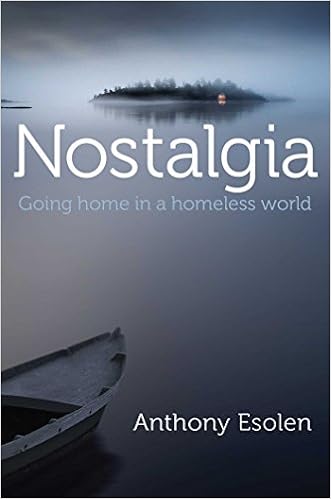
BOOK RECEIVED: “Nostalgia: Going Home in a Homeless World” by Anthony Esolen

This book has been terrific.  The publisher, Regnery (really good) sent it and, at the last moment before I headed out the door to begin this trip, I slid it into the outside pocket of my suitcase.  It isn’t released yet (30 October). Over the last few days, I have been reading and savoring subsections of chapters.   This is one of those books that you have to read a bit at a time.  Then you put the book down, think about it, and walk away for a while.

I am probably so struck at the moment because, as I write, I’m in the heart of Rome in an area where I lived for many years.  It occurred to me that I spent more years here, than I did in my native place before I moved away.  In a sense, I am there, to where I tend.  I am alive here in a way that I am not when I go back to my present locale.  Perhaps I hang my hat there, but its real hook is here.   That’s what Esolen is on to.

Do not hesitate.  Just order it.  It is available for PRE-ORDER at a 24% discount at the time of this writing.  There is a KINDLE version, too.

Nostalgia: Going Home in a Homeless World by Anthony Esolen
US HERE – UK HERE

This isn’t an overtly Catholic book, but it is deeply Catholic in its worldview.

While Esolen uses little in the way of overtly churchy material, he – consciously or unconsciously – provides an argument for what I’ve been talking about for many years now: the revitalization of our Catholic identity, especially through a restoration of our sacred liturgical worship.

How often is the charge of “nostalgia” flung as a cliché into the teeth of those who desire, with their legitimate aspirations, the liturgical forms of their forebears?

Nostalgia, however, is, as the Greek indicates, a pain (algea) we feel for our “return home” (nostron): “pain for the return, ache for the homecoming.”  It is an essential longing.

False nostalgia might be thought of as a desire for some “golden age” that is no more, and probably never was.  A desire for something better.   Augustine, drawing on the science of the day, describes the heart as restless because, according to ancient thought, gravity was a tendency within the thing itself which compelled it to go to where it belonged.  The object tries to get where it is supposed to be.  Thus, with the heart and God.   Augustine says, “amor meus, pondus meum… my love is my weight”.

This is at the heart of what Esolen explores in Nostalgia.

He opens the book with Odysseus, sitting by the sea on Calypso’s island.  He pines for Ithaca, for home, not because it is better than this enthralling captivity, but because, simply put, Ithaca is his home and this dreamy place isn’t.  Everything with Calypso might be “better”, but it isn’t where he is supposed to be.

The small and even poor house in a humble neighborhood might not compare to the far more splendid starter-castle which through sweat and ingenuity you’ve worked up to, but it won’t be the same thing as what that old home was.   And Esolen is not saying that nostalgia is nailed to a place and time.   After all, God told Abraham to leave the place of his fathers and go to a new land, which would become the new place for new fathers.  Of course, God can do that sort of thing, and even change your name, and make it right.

With every page, I cannot help but find a parallel with the devastation to our Catholic identity caused over the last decades, especially through devastation of our sacred liturgical worship.   We are our rites.  Change and tinker and make “progress with our rites” and you alter our identity as Catholics.  The damage has been nearly catastrophic.

Esolen ranges all over, from the Odyssey to Shakespeare to Thomas Wolfe to Hilaire Beloc. Thank you, Professor, also for providing an INDEX!   He draws on a short story by Flannery O’Connor about a “progressive” who, hating his own family, sells off parcels of their property for the sake of “progress”, like building a gas station that would blot their view of the woods.  “Progress here,” writes Esolen, “is not the destruction of beauty.  There is no great beauty.  It is the destruction of a place”.

How’s that “springtime” of the Church thing going?

How the tinkerers and snipper pasters of the Novus Ordo got it wrong.

Those technocrats, for the sake of progress, damaged not something that was technically perfect, every bit accounted for somehow and having a utilitarian purpose to justify its continuance in our rites. They damaged our place, our home, our patria, where we start from and toward which we tend.

No wonder we are so damn screwed up as a Church.

Today I have read about such a (seemingly) important moment as a Synod of Bishops being run by – and I note the full irony in what I am about to write – not our Anthony Blanches, but by our Hoopers.  By Hoopers with Anthony’s affliction but with none of his substance.

Many of you have been misunderstood and mistreated for your desire to go home, to be a Roman in the Roman thing, your rite, your patria which you ache for because it is yours.  I sure have my stripes to show for it and the long tracks of my tears.

Time after time I have spoken with people, especially with priests, who at some point woke up from Calypso’s arms, who opened their eyes within the sty far from home, and realized that they had both squandered the patrimony they had or had been cheated out of the patrimony they didn’t know that they ought to have been given.

In his introduction, Esolen ends one section with the reaction of the progressive to those who feel deeply their sense of belonging, their desire to be placed and rooted.

“[P]eople who object to nostalgia are afraid that their achievements, such as they are, will not stand scrutiny.  “No, you don’t want to go home!” they cry.  They must cry, they must make the noise they can, because if they cease for a moment, we hear the calls of sanity and sweetness again, and we may just shake our heads as if awaking from bad and feverish dream.  Coming to ourselves, we may resolve, like the prodigal, to “arise and go to my father’s house.”

I’ll probably write more on Esolen’s book along the way.

Posted in "How To..." - Practical Notes, Hard-Identity Catholicism, Liturgy Science Theatre 3000, REVIEWS | Tagged ,
4 Comments

Rome – Day 3: Supplicium and surprises

Since I am a pilgrim in this world, today I walked up Pilgrim Street, Via del Pellegrino, for to seek some good old fashioned Roman street fare.  At the end of the Via del Pellegrino you find an ancient stone and inscription in the side of a building housing a hardware store.  Across the way on the next corner was my destination, but I had to admire the inscription for the thousandth time.

Here you see the very stone and a supplì, which might surprise you.

First, the food.  I picked up a couple supplì – rice balls filled with something and deep fried to crunchiness.   The classic supplì “al telefono” has cheese inside, which makes each bite sort of stretchy, like telephone wires.  The little shop, nearby, where I bought these surprisingly good little balls of joy, is called Supplizio, which is from Latin supplicium, which means “death sentence”.  Perhaps they think their supplì are to die for?   That wouldn’t be a surprise, because they are really good.  Supplicium by the way, comes from supplex, which we see in our Latin prayers, as in “Supplices TE rogamus…” the beginning of the canon, and in many orations.   Supplex is complicated, since it involves an etymological tension between plico and plecto.  But, supplicanti parce, Lector. Oro supplex. I digress. The Italian word for the little, friendly rice ball, supplì, comes from French, surprise, because, like these posts, you never know what you are going to find inside. Hence, the Romans had the gumption to be way ahead of Forrest.  And speaking of Surprise, “Which its a fried rice ball!”, Killick would shout to the Captain after they exercised the great guns.

What’s going on here on this chiseled rock?

This is an ancient pomerium marker for Rome’s sacred city limits.  Tradition has it that Romulus defined the first sacred perimeter with oxen and a plough.  The furrow was sacred as all furrows tend to be when there is a sense of the sacred.  The pomerium was pushed outward by various Emperors.   By law, no one holding imperium, the command of troops, could pass that boundary without losing his command, which was a way to prevent generals with pietas from marching on Rome.  If they passed the boundary, everything they did would be illegal and sacrilegious.

Pompey the Great, for example, stayed outside when he returned to Rome and built the great stone theater (the first in stone in Rome) which had his residence and a meeting place for the Senate.  He made the Senators come to him.  Where I sit, writing, I can nearly peer out the window to see a place where some of the remains of Pompey’s buildings are found.  I ate at a place where you can see part of the foundation.  My seminary, on the other side of the buildings, including Sant’Andrea, is where the colonnade was where Julius Caesar was killed.   Not the sort of supplicium he would have wanted.

Here’s the stone. Doesn’t that look like… “I, CLAUDIUS”?

[t]I CLAVDIVS
[d]RVSI FILIVS CAISAR
[a]VG GERMANICVS
[po]NT MAX TRIB POT
[v]IIII IMP XVI COS IIII
CENSOR P P
[au]CTIS POPVLI ROMANI
[fi]NIBVS POMERIVM
[a]MPLIAℲIT TERMINAℲITQ

Which is:

Tiberius Claudius Caesar Augustus Germanicus, son of Drusus, Supreme Pontiff, having Tribunician power for the ninth time, having imperium for the sixteenth time and being Consul for the fourth time, Censor, Father of the Fatherland, once the border of the Roman people grew, enlarged and defined the pomerium.

There are a few of these stones still around.  One is at Santa Cecilia in Trastevere, my original stomping ground in Rome in whose streets I began to drink in all my bad words in my adopted language.

What is interesting here, on this stone, is an example of poor stuttering Claudius’ interest in linguistics.  First, speaking of Caesar, Claudius used an archaic spelling in “CAISAR” which proves to us how it was pronounced at the time.   Also, you see here one of the three letters he invented for the Roman alphabet. This is for your super nerdy Just Too Cool file.

Keeping in mind that at the time the “v” was not the voiced labiodental fricative “v” but more like its mysterious bilabial approximant “w”, so that vinum was “weenum”, “v” filled the function of both “v/w” and the vowel “u”, thus VINVM for vinum.  Claudius created a letter for the “v/w” consonant: which is in this inscription in the last line [a]MPLIAℲIT TERMINAℲITQ (i.e., ampliavit terminavitq[ue]). That is so cool. (This was one of my foci in grad school.)

It never really caught on.  BUT! … There it is!  Is that not COOL?!?

If you haven’t seen I, Claudius… ohhhh are you in for a treat. This is an old series, but one of the best things ever done, IMHO.  The book(s) by Robert Graves are good, but the TV series is amazing.  US HERE – UK HERE  Even now the theme runs in my mind.  And a hilariously terrifying moment with Caligula comes to mind… because the Synod is going on and I imagine this to be happening in the Sala Nervi… or perhaps somewhere in the Casa Santa Marta, given some of the characters around that place these days.   The video, if you don’t remember:  HERE  It’s … ludicrously ghastly. Performed, surely, by certain Jesuits. They’ve been summoned to Caligula and they think they are going to die … another analogy for the mercy of the moment.

#Synod2018 = “Let all the poisons that lurk in the mud hatch out.”

And, since it is October, here is another inscription, but from 1775.  This is not one of the famous “no littering” signs from His Excellency the Monsignor of the Streets.  This one says that Pius VI graciously gives (he is at the moment happily reigning) permission to carts that hauled eggs and chicken to vendors at the P.za Pollarola and P.za Paradiso not to pay taxes.

Posted in Just Too Cool, On the road, What Fr. Z is up to |
5 Comments