What Catholics do when the Church’s Body is being torn apart

We live in confusing times.  Confusion racks the Church, like horses pulling limb in four directions.  Confused faithful even wonder about the indefectibility of the Church or their continued membership. Confusion like this is a sign of the Devil’s work.

Do not be afraid.  Do not lose heart.  Do not give up.

For a while now, I have been telling people in person and on this blog that when something confusing comes their way, it is time to get out your trustworthy catechisms and even found study groups.  ¡Hagan lío!

Fathers!  Get up into that pulpit with your catechism and, with finger to page, explainto  people what the Church truly teaches.   The pulls of confusion upon the members of the Church are painful. They are also opportunities to get out there teach the truth.

To teach it you must know it.  Nemo dat quod non ‘got’.

Here is a great resource for life and limb in the Church. 

At a website called Whispers Of Restoration there is a page that link you to Traditional Catechisms.  It’s pretty amazing.  You can find them all, from the 1555 Catechism of St Peter Canisius to the 1874 Familiar Explanation of Christian Doctrine to the 1949 classic My Catholic Faith.

This is a terrific resource which you should take time to explore.  Say a prayer for the team that made it.  It is clearly a labor of love.

Meanwhile, here are a few links to good catechisms to purchase.

We have multiple catechisms at our disposal.   Chief among them are these.

The Catechism of the Catholic Church.
US HERE – UK HERE (There are many editions.  Look around.)

The Catechism of the Council of Trent for Parish Priests.
US HERE – UK HERE (There are many editions.  Look around.)

Also, the Baltimore Catechism, which has different volumes for different ages (US HERE – UK HERE).  It’s so useful, in its Q&A format.

And the Catechism of Pius X is also great.  (US HERE – UK HERE).  There are many good resources available.

Posted in ¡Hagan lío!, "How To..." - Practical Notes, Hard-Identity Catholicism, Our Catholic Identity, The Coming Storm, The future and our choices | Tagged
18 Comments

ASK FATHER: Using the traditional Breviarium Romanum: whole or just some?

From a seminarian:

I am a seminarian for ___ and have recently begun reciting the Divine Office using the traditional breviary. Some other seminarians and I are now wondering if a priest is still only bound to recite 5 of the hours even when saying the older form, or if use of the older form binds the priest to say all the hours. I was wondering what your thoughts are.

Thank you so much for all that you do. You are a true inspiration to us who are still in formation.

First, even though you are a seminarian for diocese with a sane bishop, keep your use of the older, traditional office to yourselves.

The answer to your question is found in the document from the Pontifical Commission “Ecclesia Dei” called Universae Ecclesiaewhich helps to interpret several points in Summorum Pontificum.

Breviarium Romanum

32. Art. 9 § 3 of the Motu Proprio Summorum Pontificum gives clerics the faculty to use the Breviarium Romanum in effect in 1962, which is to be prayed entirely and in the Latin language.

However, if you are not ordained at least as deacons, this does not apply to you, as you are not clerics.  You can do as you please… just keep it to yourselves!

Posted in "How To..." - Practical Notes, ASK FATHER Question Box, Liturgy Science Theatre 3000, Seminarians and Seminaries, SUMMORUM PONTIFICUM, Universae Ecclesiae | Tagged ,
16 Comments

Croatian pro-life coin and Archbishop of Avignon lets gender-benders have it

Here are a couple of noteworthy and encouraging bits of news.

First… I have to go to Croatia.  It keeps popping up on my radar.  I had a note from a recently ordained Croatian priest looking for a little help for a building project.  And there was the World Cup.  And now there is this…

I read at Messa in Latino that in Croatia a new 25 Kune coin has been issued with the image of an unborn child.

Also, I read at lefty La Croix that the Archbishop of Avignon has caused a stir.  During a major arts festival

French archbishop causes controversy during Avignon arts festival

[…]

The Archbishop of Avignon’s [Jean-Pierre Cattenoz] homily broadcast during the Avignon Festival that champions performing arts has evoked strong criticism especially since the archdiocese also canceled a fundraising campaign in objection to some of the images and messages displayed during the festival.

On Sunday July 15, in the middle of the Avignon Festival, Archbishop Jean-Pierre Cattenoz’s Mass in the Avignon Cathedral was broadcast on Radio France Culture.

“The Festival is a marvelous occasion for us to answer Jesus’ call to evangelism,” said the archbishop.

The month-long Avignon Festival, founded in 1947, is one of the most important contemporary performing arts events in the world.

It is traditional to broadcast one of the Sunday Masses in Avignon Cathedral during the Festival. What was new this year, however, was that the archbishop decided to give the homily himself.

His focus was on “gender, the theme of this year’s festival” and he also called for “conversion and the discovery of the message of the Gospel.

On the Wednesday after the Mass, an article criticizing the archbishop’s homily was published in the weekly paper, Marianne.

Titled “The public channel France Culture broadcasts a fundamentalist Catholic sermon on LGBT and against Simon Veil,” the article caused a storm of debate on social media.

I have never met anyone who is L, G, B, T or, now, Q. I only see and know people with the richness of their femininity and masculinity inscribed in their flesh and deep within their most profound being,” the archbishop said.  [Good for him!]

He “marveled,” he said, “at the complementarity between man and woman, at the love that springs between them and gives rise to the gift of life.”

Abortion, assisted suicide, IVF, surrogacy, eugenics – all became possible in the name of a primary principle since 1968: ‘It is forbidden to forbid… my pleasure is my right.’

He denounced what then came about: “decriminalizing everything and making it a right.” [Do I hear an “Amen!”?]

Archbishop Cattenoz quoted John Paul II: “Abortion is the most abominable crime that there is … the victim is not even able to cry out in its suffering,” and Mother Teresa, who said, “Abortion is abominable because it is a mother killing her own child.”

The archbishop then targeted, without mentioning her name, Simone Veil.

“I am telling you, I wept a few weeks ago when I saw the body of the woman who led the battle to legalize abortion being laid to rest in the Panthéon of the Republic,” he said.

As he concluded, the archbishop of Avignon emphasized the wishes of Jean Vilar, the Festival’s founder, for religion to be given a place in the program. [What do want to be that it won’t be next year?]

He also referred to Pope Francis’ advocacy for the family in mid-June, during an audience with a delegation of the Forum of Family Associations.

In his advocacy, the pope recalled the Nazi obsession with “racial purity” and, in reference to the abortion of babies who have something wrong, said, “We do the same as the Nazis … but with white gloves.

Relations between the Archdiocese and the Festival are complicated. On the same weekend as the broadcast of the Sunday Mass, the archdiocesan resource center decided to end a fundraising campaign launched on July 10, objecting to some of the images and messages displayed at the Festival. [I am not sure what this part is all about.]

[…]

There’s more to the article and the poster problem, which I found rather difficult to piece together.  But the sermon of the Archbishop… yahoo!

Fr. Z kudos to Archbishop Cattenoz.

Posted in ¡Hagan lío!, Just Too Cool | Tagged , ,
10 Comments

Your Sunday Sermon Notes

Was there a good point or two made in the sermon you heard at the Holy Mass to fulfill your Sunday obligation?

Let us know what it was.

Posted in SESSIUNCULA |
12 Comments

Fr. Z’s Kitchen and Remembrance of Things Past

Each year when the Feast of St Mary Magdalene comes around, I remember certain people, and not just those named Magdalene.

I remember, for example, a certain priest and his mother.

On a hot Roman summer evening in 1989, on the feast of Mary Magdalene, I sat in the courtyard of a medieval palazzo in Trastevere where I was living before seminary started up in October.  The director of a community of young Italian men, don Antonio, and I were chatting among the great pots of lemon trees in a mix of Latin, mostly, and Italian which I was learning by immersion.  With his cuffs unfettered and cassock sleeves rolled up – something I had never seen and which struck me – he remarked that it was the anniversary of his mother’s death.  Her name, too, was Maddalena.  I’ve ever after prayed for her on this day.  And I pray for him now, too, who has joined her.  He was kind to me.  I remember kindness.

One should pray for the mothers of priests, you know, even if you never meet them.  Please pray for my mother.

Anyway, that was near the beginning of my long Roman time, after the horrors and scars inflicted in my US seminary.  It was a period of healing.  I started working in the Curia, served Mass inside the Benedictine cloister of S. Cecilia, found a seminary and bishop, got lost countless times learning the sampetrini of the City, and picked up a lot of less than acceptable Romanaccio.  I don’t get lost there anymore, I can tell you, and I know even more Romanaccio now.

I also, on this day, remember a certain kind of French cookie called madeleines, made famous by their ubiquity, goodness and Proust.

In Patricia Bunning Stevens’ work Rare Bits: Unusual Origins of Popular Recipes , [Ohio University Press:Athens] 1998 (p. 178) we read:

“In culinary lore, Madeleines are always associated with Marcel Proust, whose autobiographical novel, Remembrance of Things Past, begins as his mother serves him tea and “those short, plump little cakes called petits Madeleines, which look as though they had been molded in the fluted scallop of a pilgrim’s shell.” The narrator dips a corner of a little cake into the tea and then is overwhelmed by memories; he realizes that the Madeleines bore “in the tiny and almost impalpable drop of their essence, the vast structure of recollection.” …But Madeleines had existed long before Proust’s boyhood. Numerous stories, none very convincing, attribute their invention to a host of different pastry cooks, each of whom supposedly named them for some particular young woman. Only three things are known for sure. One is that Madeleine is a French form of Magdalen (Mary Magdalen, a disciple of Jesus, is mentioned in all four gospels). Another is that Madeleines are always associated with the little French town of Commercy, whose bakers were said to have once, long ago, paid a “very large sum” for the recipe and sold the little cakes packed in oval boxes as a specialty in the area. Finally, it is known that nuns in eighteenth-century France frequently supported themselves and their schools by making and selling a particular sweet…Commercy once had a convent dedicated to St. Mary Magdalen, and the nuns, probably when all the convents and monasteries of France were abolished during the French Revolution, sold their recipe to the bakers for an amount that grew larger with each telling.”

Last year one of you dear readers, MA, sent a madeleine pan from my main wish list.   It inexplicably arrived as bent as a Jesuit’s logic.  I called amazon and they sent out another right away.  Meanwhile, with care, the other pan got straightened out- much like Magdalene herself.  Now I have two.

I determined to make madeleines!

Caveat: I am not what one – anyone – would call a good baker.

I found a recipe and began. I had everything I need to hand.

The recipe stressed buttering the pans and then chilling them.

One of the peculiar flavors I’ve always picked up in these cookies is lemon.  I don’t have any from that Roman courtyard, but I have their essence in my memory.

Do NOT confuse baking powder and baking soda.  This is baking powder.

Combining milk, lemon juice, zest, sugar, powder.

I may have filled the like shells too full.

With the characteristic reverse dimple I’ve seen before.

The oven was, I think just a little too hot.  I need to experiment with it more.    And I don’t have a cooling rack: I use spatter guards.

They are, frankly, pretty good!

I am pushing myself these days to cook outside of my comfort zone.  Hence, new things courageously.


Posted in "How To..." - Practical Notes, Fr. Z's Kitchen | Tagged
25 Comments

22 July: Mary Magdalene and the Creed at Mass – POLL!

At NLM there is a really good post by Greg DiPippo about the roller coaster history of the liturgical observance of the Feast of St. Mary Magdalene.

You might recall that in 2016 Pope Francis made her day – in the Novus Ordo – a Feast with its own Preface (with a glaring error in Latin). I have some photos from older missals. HERE

At NLM we read about an interesting liturgical innovation concerning recitation of the Creed in the Tridentine usage.  Perpend:

In the Missal of St Pius V, the Creed is said on every Sunday, and several categories of feasts: all those of the Lord, the Virgin Mary, Angels, Apostles, Doctors, etc. To this list is added one other woman, St Mary Magdalene, in commemoration of the fact that it was she who announced the Resurrection of Christ, the foundation of the Faith, to the Apostles; for this reason she has often been called “the Apostles of the Apostles.” [NB] This custom was widely observed in the Middle Ages, but originally not accepted at Rome itself; the Ordinal of the papal liturgy in the reign of Pope Innocent III (1198-1216) specifies that the Creed is not to be said on the feast, indicating that it was known to be done elsewhere. It was still omitted according to the rubrics of printed editions of the Roman Missal in the first half of the 16th century; [NB] its addition in the rubrics of 1570 is one of the rare cases where a new custom was added to the Roman Rite from elsewhere in the highly conservative Tridentine reform. (It was removed from her feast in 1955, and from the Doctors in 1961.)

So, she had the Creed and she lost the Creed and, in the Novus Ordo the Creed was absent.  Should it be brought back, at least in the older form, as it once was a Double with Creed?

So… here’s a question for you:

  • given that Pope Benedict, when he promulgated Summorum Pontificum, intended that the older, traditional form of Holy Mass act as both a stabilizer and a catalyst for the organic liturgical life of the Church, and
  • given that he thought that “mutual enrichment” might result, and
  • given that Mary Magdalene had a Creed in her Mass formulary after the Tridentine Reform for 385 years until the concerted attack on the Roman Missal began in 1955,

QUAERITUR:

Omitting those situations in which a patronal feast is celebrated, etc. etc., should those who celebrate Holy Mass with the 1962 Missale Romanum simply add a Creed for St. Mary Magdalene even though it is not provided for in the Ordo?

Let’s have a poll.  Anyone can vote but only registered and approved readers can post comments and explanations.

In the TLM add the Creed for St. Mary Magadalene even though it isn't indicated in the rubrics?

View Results

Posted in "How To..." - Practical Notes, Liturgy Science Theatre 3000, POLLS | Tagged , ,
20 Comments

Can you imagine bishops doing something like this today?

Can you imagine more than a handful of bishops today doing something like this?

In the days of the King’s Great Matter, only one bishop in England stood fast.

Today at The Catholic Thing, Nicholas Senz has a good piece of self-reflection about the coming hostility we are bound to see from the increasingly stupid, shrill, emotion and slogan-driven secular society by which we are surrounded: our vineyard.

Here is some of Senz’s piece, as we enter in medias res

The animosity of formerly Christian countries toward the Church is ramping up. After voters eliminated Ireland’s constitutional protection for the unborn, the Irish government has said that Catholic hospitals that wish to keep their government funding will be required to perform abortions. This from a nation that still televises the Angelus every day. And some Australian states have recently passed a law requiring priests who hear of child sexual abuse and other serious crimes in the confessional to break the sacramental seal and report it to the police.

Many Australian priests and at least one bishop have publicly stated they will not comply with the law, which – depending on the state – would mean a hefty fine or even jail time.

If push comes to shove, will they follow through? Will bishops help to pay the fines of their priests, or visit them if they are jailed? Will the Irish bishops be willing to forgo government funding rather than submit to the new abortion regime?

One can hope that the bishops will have the courage, should the time come, to stand by their convictions. Even in a time of increasing secularization and hostility toward the Church in Western countries, bishops still have largely remained respected figures. They are invited to important civil functions and given places of honor. They receive politicians and are pleased to release statements on this or that bill proposed in the legislature.

But things could become quite different quite quickly. In fact, seem likely to. The late Cardinal Francis George may have had it exactly right when he said, “I expect to die in bed, my successor will die in prison [I doubt it.] and his successor will die a martyr in the public square.”

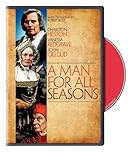
Speaking of The King’s Great Matter, you’ve all seen the 1966 film of Robert Bolt’s A Man For All Seasons with Paul Scofield (US HERE – UK HERE).  Before it was a film, it was a play.  I just saw on DVD – thanks to a reader who sent it from my wishlist (Kindle HERE) – the 1988 version with Charlton Heston and Vanessa Redgrave (US HERE – UK HERE).  This version is far closer to the play as written, rather than the 1966 screenplay, and it includes material you don’t see in the 1966 movie.

And then there’s the 1964 film of Becket (US HERE – UK HERE), which was also originally a play in French by Jean Anouilh called Becket ou l’honneur de Dieu (Becket or The Honour of God).

Those were of the days of good and thoughtful play writing. Shall we ever see those days again?

Posted in Religious Liberty, Si vis pacem para bellum!, The Coming Storm, The future and our choices, The Last Acceptable Prejudice, The Olympian Middle | Tagged ,
8 Comments

ASK FATHER: Blessing for a Wheelchair, Stretcher, or Ambulance

From a reader…

QUAERITUR:

 What formula would be appropriate for blessing a power wheelchair?

Wow!  That’s an easy one.

First, you can always use the Blessing “ad omnia“.    But we can do better than that.

With a slight twist I reach for my handy copy of the great Rituale Romanum.  I flip to the section on Blessings and find the subsection on Blessings for things for Ordinary (not Sacred) Use.  Hereunder I find the blessing for a stretcher, an ambulance or a WHEELCHAIR!

Pius X approved this blessing in 1908 at the behest of Card. Lorenzelli of Lucca.

The prayer mentions a lectica, which is a litter or sedan chair, in other words some vehicle or conveyance for the infirm.  This prayer would be just fine.  But, if we want to tweak it a little we could substitute something like “sella rotalis automataria” to indicate “powered wheel chair”.

Sometimes you have to adapt these prayers.  For example, I once blessed an artificial knee with the blessing for mountain climbing equipment.   A reading of the forward of the Rituale reveals that it was the intention of the promulgator that it should serve as a model.  It isn’t the last word on blessings, thus slamming the door on new forms.  Of course one should seek approval from proper authority.  For another example, I have a prayer for the putting on (“vesting”) of a portable microphone.  I hate the damn things, but they are being used.

Back to the motorized wheel chair blessing.

BENEDICTIO VEHICULI AEGROTIS IN LOCUM CURATIONIS TRADUCENDI.  (In more recent iterations of the Rituale we find the “Benedictio lecticae pro infirmis”)
V. Adiutorium nostrum in nomine Domini.
R. Qui fecit coelum et terram.
V. Dominus vobiscum.
R. Et cum spiritu tuo.
Oremus.
Domine Iesu Christe, Fili Dei vivi, qui, dum peregrinabaris in terris, pertransibas benefaciendo et sanando omnem languorem et omnem infirmitatem in populis, quique hominem paralyticum, iacentem in lecto, ad salutem mentis et corporis restituisti; respice, quaesumus, ad fidem et ad sensus commiserationis servorum tuorum, qui, animati spiritu verae caritatis, qua tu eis exemplo praeivisti, et quam in praeceptum traduxisti, vehiculum hoc ad instar lectuli [sellae rotalis automatariae] artificiose exstrui voluerunt, eo fine, ut ad locum curationis vel aptissime deferri possint quicumque aut vulneribus sint affecti aut quavis infirmitate detineantur. Aegrotis igitur, qui hoc componuntur vehículo, quod nunc in tui nominis virtute bene + dicimus, esto, mitissime Iesu, in itinere solatium, in periculis tutamen, in doloribus refrigerium. Praesta, ut iidem, tuis Angelis comitantibus, ad curationis sedem tranquillo cursu perveniant, ibique pristinam sanitatem récuperent, eaque, te miserante, per intercessionem sanctissimae tuae Matris Mariae, percepta, abeuntes in domos suas, honorificent et magnificent te Deum verum : Qui cum Patre et Spiritu Sancto vivis et regnas in saecula saeculorum.
R. Amen.

BLESSING OF A STRETCHER, AMBULANCE, WHEELCHAIR
P: Our help is in the name of the Lord.
All: Who made heaven and earth.
P: The Lord be with you.
All: May He also be with you.

Let us pray.

Lord Jesus Christ, Son of the living God, who during your earthly sojourn went about doing good, alleviating the people’s suffering and infirmities, and restoring bodily and spiritual vigor to the paralytic lying on his pallet; look with favor, we pray, on the faith and compassion of your servants who, animated with true charity by your example as well as by your command, have constructed this stretcher (or ambulance or wheelchair) to bear the wounded and the sick to the place of healing. By the blessing + we impart to it in the power of your name, O gentle Jesus, let it become for the sick who will be carried on it a comfort on the way, a safeguard in perils, a relief from suffering. Grant that in the company of your angels they may be borne in comfort to the place of healing, and there recover their former good health. Thus made aware of how they have been favored by your mercy and by the prayers of Mary, your blessed Mother, may they return to their homes praising and glorifying you, the true God, who live and reign with the Father and the Holy Spirit forever and ever.

All: Amen.

They are sprinkled with holy water.


Posted in "How To..." - Practical Notes, ASK FATHER Question Box | Tagged , ,
4 Comments

FEAST DAY! 21 July 1773 – Clement XIV suppressed the Jesuits!

It is a great FEAST today.

I am enjoying an icy cold limonata!

Today, 21 July, in the year of grace 1773, Pope Clement XIV of happy memory, issued his Bull by which he suppressed the Jesuits.

I have all sorts of Papa Ganganelli gear which you can order and proudly display.

>>HERE<<

There are mugs and shirts.

17_07_21_shop_screenshot

Clement_XVI_Mug_01 Clement_XVI_Mug_02

I put the salient text from the Bull, Dominus ac Redemptor, on the back

Oh yes… and then there’s this…

Gloria.TV posted a photo of the Superior General of the Jesuits, Fr. Arturo Sosa Abascal, SJ, venerating Buddha.  We’ve read about him before.  HERE

17_07_20_Jesuit_Buddha

And then there’s the Jesuit homosexualist activist, James Martin.  Sapienti pauca.

Posted in ¡Hagan lío! | Tagged , ,
15 Comments

R.I.P. Msgr. Camille Perl, once Secretary of the Pontifical Commission “Ecclesia Dei”

I beg the readership today for prayers for the repose of the soul of my dear old friend Msgr. Camille Perl, who died recently.   He had been from the beginning the Secretary of the Pontifical Commission “Ecclesia Dei“.  He was very good to me and many others.

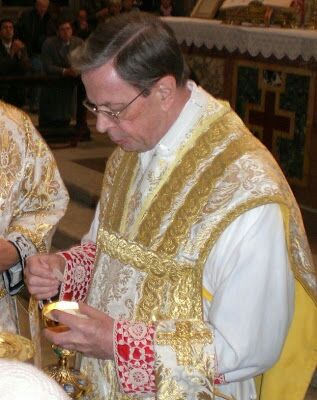
Msgr. Perl, from Luxembourg, had been a Benedictine monk. He left the Benedictines for secular priesthood.  While he was working in the Congregation for Divine Worship, his chief, Card. Mayer brought him over to the PCED when it was formed in 1988, where I joined the group in 1989.  As he stepped away from the Curia, he was made a Canon of St. Peter.

Eternal rest grant unto him, O Lord, and let perpetual light shine upon him. May he rest in peace. Amen.

May his soul and all the souls of the faithful departed, through the mercy of God, rest in peace. Amen.

Posted in PRAYER REQUEST | Tagged
3 Comments