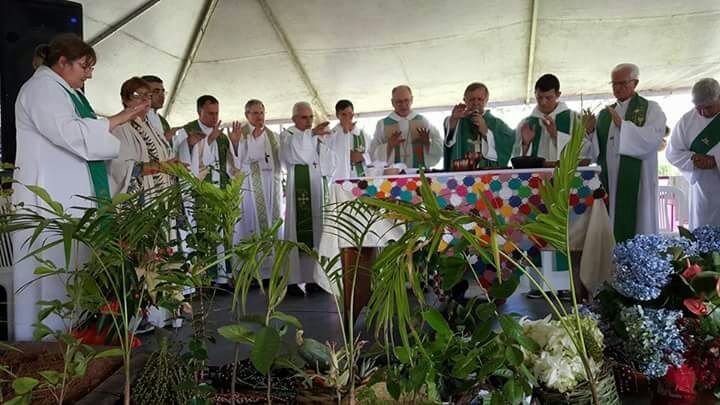
Was there a good point made during the sermon you heard for this 2nd Sunday of Lent?
Let us know.
Right now I have a mission at the legendary Fr. Finelli’s parish.

Was there a good point made during the sermon you heard for this 2nd Sunday of Lent?
Let us know.
Right now I have a mission at the legendary Fr. Finelli’s parish.
From a reader…
QUAERITUR:
As you are probably aware, the USCCB has declared this Monday, February 26 to be a call-in day for DACA, and is urging Catholics to call their congressmen in support of the DREAMERs. On some other Catholic sites people have started a rallying cry, declaring that those who do not call in are being disobedient and will be guilty of mortal sin. I am not sure that this is even possible. Although immigration certainly has a moral component, it strikes me as more of a political issue and not nearly on the same level as abortion, gay marriage or euthanasia. My question is does this statement by the US bishops carry any moral obligation, or are we free to disregard it?
Here we have to walk a fine line and make a few distinctions.
First, contrary to what libs want everyone to accept, some issues concerning human well-being are more important than others. For example, the right to be born and the right to a dignified natural death are more foundational to human well-being that other issues. That is why abortion and euthanasia are intrinsically evil. We really can’t have differences of opinion on those points. “Gay” marriage violates the image of God in us and the explicit and manifest will of God identifiable in the fact that we are made male and female (and God tells us in Scripture what that’s all about), at the same time as Scripture also has condemnations of homosexual acts. So, we really can’t have differences of opinion on that.
Then there myriad questions of human-well being that are grayer areas. What to do about poverty? What to do about immigration? These things have to do with contingent moral judgments that admit manifold solutions. We can have different ideas, legitimate ideas, about how to help the poor and how to help immigrants.
When the bishops of a place decide to make statements about the economy, or immigration or nuclear arms, or whatever else that falls into these areas that involve contingent moral judgments which admit wide variation of solutions, we Catholics must pay attention to what they say. We pay attention because a) we ought to be interested in social issues and b) they are our bishops. We owe respect to our bishops, and so we give them an honest hearing even when they are not talking only about spiritual issues or those other issues that don’t really allow for a difference of opinion.
Hence, are are not free to “disregard” what bishops says, individually or collectively.
That said, bishops don’t have dominant claim on our minds or obedience when it comes to matters that are in those murky and difficult areas involving contingent moral choices. We can listen to them, weigh their arguments and then determine that, yeah I agree, or nah I don’t agree.
If you don’t agree – and remember, we are not talking about matters like abortion, artificial contraception, euthanasia, homosexual acts, etc, – you are not obliged to call anyone. You can regard their message, disagree, and disregard their invitation to call your elected representatives.
If you do agree – even about those things which admit of many and varying solutions, such as what’s the best way to lift people out of poverty, which school of economics do we think has the best shot, what to do about immigrants, etc. – then you are still not obliged to call anyone. You can accept their invitation to call someone or your can disregard their invitation to call someone.
If the bishops issue an invitation to call elected officials about things that really don’t admit many solutions, when they have to do with, for example, abortion or homosexual acts, then their invitation has a stronger force to it. The more the issue has to do with defense of society from intrinsic evils, the stronger the invitation. However, even then it remains an invitation to call a representative, not an obligation.
I firmly believe that society would be better off were more Catholics, with a strong identity and fidelity to the Church’s teachings, active in the public square. In a sense, we are obliged to participate in public life, in society, according to our vocations and means, etc. On the other hand, that obligation isn’t so strong that we don’t have a legitimate choice in the matter.
Bottom line, if you choose not to call anyone about DACA, either for it or against it, you do not commit a sin. However, were you to call your elected officials in support of something intrinsically evil, then yes, you would commit a mortal sin.
It seems to me that the people who want you to think that it is a “sin” not to call in about DACA – and let’s be clear – they want you to call in support their view – they don’t want you to call if you differ with them, use “sin” (which ironically they don’t believe in for a lot of other clearly sinful acts) to manipulate your emotions. There are libs who blur issues into one murky cloud of moral choices. If someone mentions the evil of abortion, they rush in with talk about immigration, as if the two issues were on the same moral footing. In doing so, they blur the clear primacy of the right to be born through associating it with myriad other issues that involve contingent moral choices (“How to we lift people out of poverty?… How do we educate children?… How do we welcome immigrants?… etc.).
Be wary and make distinctions.
 From a reader…
QUAERITUR:
Can the priest celebrant of Mass tell a deacon tell a deacon to not wear a dalmatic at Mass? Some people think it best that a deacon wear a dalmatic for a higher degree of solemnity but not on common ferial days unless preaching. I imagine this might not be worth bickering over for transitional deacons, but what can a permanent deacon do?
“Higher degree of solemnity”. That sounds like that old chestnut of “progressive solemnity”.
B as in B, S as in S. That’s just liturgical stinginess.
The proper vestment of the priest is the chasuble.
The proper garment of the deacon is dalmatic.
The priest cannot be prevented from wearing his chasuble and the deacon his dalmatic.
As far as wearing it only when preaching is concerned, it is ironic that there is an old tradition of priests and deacons removing their chasuble or dalmatic to preach!
Of course when a priest has decided to make Mass about himself (“See? I get to wear a chasuble and HE only gets a stole!”) there is not much you can do. This is an exercise of power, which suppresses commonsense.
I suppose that you have already tried to win him over. With charm, keep working on it.
You might consider, when you have the chance to preach, explaining the significance of vestments and how the different offices require them in her sacred liturgical worship.
From Gateway Pundit:
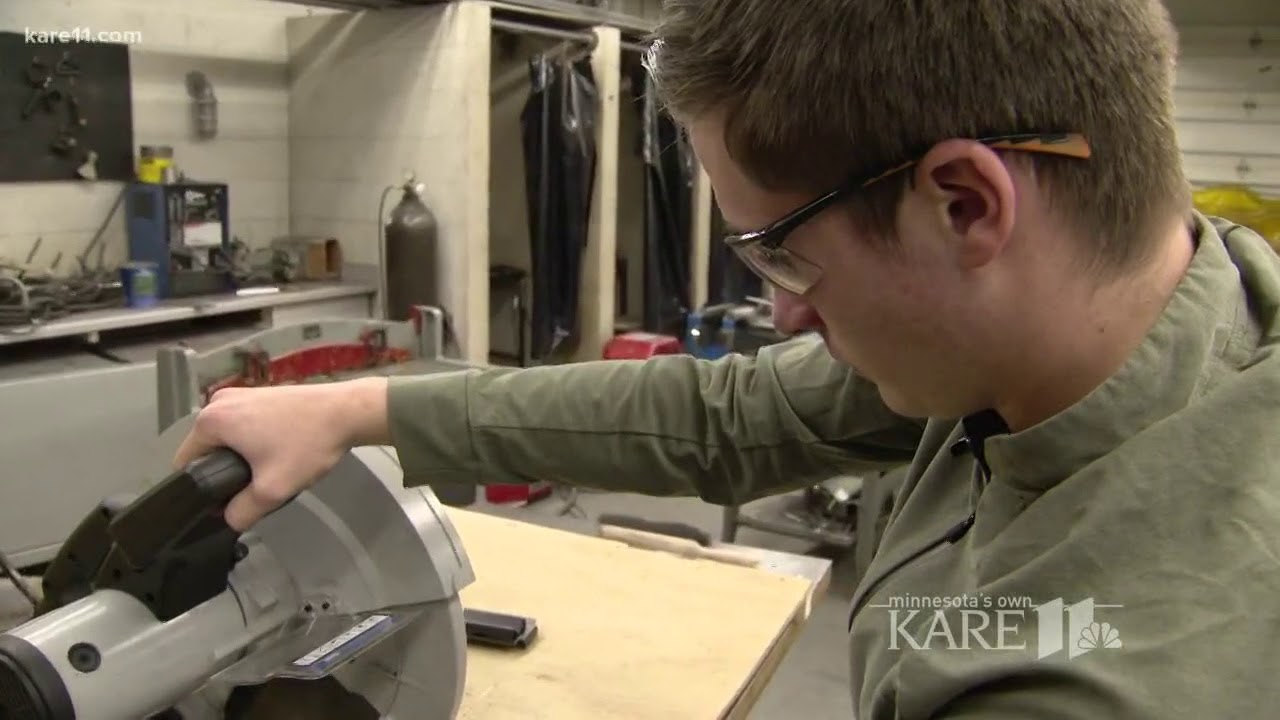
A Wisconsin high school senior and Army recruit Justin Rivard invented a door stop that prevents killers from entering classrooms.
Justin created the “JustinKase” two years ago when he was just 15. The device does not allow a door to open even a crack which means students and staff will be saved during emergencies.His own school already ordered 50 of the “JustinKase,” one for each room in the building, according to KARE.
Justin is entering the Army this year after his graduation.

 A combination of factors has lead to erosion of understanding of the Eucharist and reverence for the Eucharist. Included in these factors is a near universal insistence that everyone go to Communion at every Mass and, of course, lay ministers of the Communion because numbers of people going are up, and, above all, Communion in the hand.
This has had a devastating effect on our Catholic identity and, hence, every sphere of life from family to conduct in the public square.
The other day I wrote about the problem of distribution of Holy Communion to huge numbers of people at mega-Masses. There is clearly a danger of profanation of the Eucharist, and yet they try.
Now I see that the great Robert Card. Sarah – Terror of Libs – has written about the topic in the preface to a new book in Italian by a priest, Federico Bortoli entitled La distribuzione della comunione sulla mano. Profili storici, giuridici e pastorali.
Excerpts were published by La Nuova Bussola and translations by LifeSite. Thus, Card. Sarah:
Providence, which disposes all thing wisely and sweetly, has offered us book The Distribution of Communion on the hand, by Federico Bortoli, just after having celebrated the centenary of the Fatima apparitions. Before the apparition of the Virgin Mary, in the Spring of 1916, the Angel of Peace appeared to Lucia, Jacinta and Francisco, and said to them: “Do not be afraid, I am the Angel of Peace. Pray with me.” (…) In the Spring of 1916, at the third apparition of the Angel, the children realized that the Angel, who was always the same one, held in his left hand a chalice over which a host was suspended. (…) He gave the holy Host to Lucia, and the Blood of the chalice to Jacinta and Francisco, who remained on their knees, saying: “Take and drink the Body and Blood of Jesus Christ, horribly outraged by ungrateful men. Make reparation for their crimes and console your God.” The Angel prostrated himself again on the ground, repeating the same prayer three times with Lucia, Jacinta and Francisco.
[NOTA BENE] The Angel of Peace therefore shows us how we should receive the Body and the Blood of Jesus Christ. The prayer of reparation dictated by the Angel, unfortunately, is anything but obsolete. But what are the outrages that Jesus receives in the holy Host, for which we need to make reparation? In the first place, there are the outrages against the Sacrament itself: the horrible profanations, of which some ex-Satanist converts have reported and offer gruesome descriptions. Sacrilegious Communions, not received in the state of God’s grace, or not professing the Catholic faith (I refer to certain forms of the so-called “intercommunion”), are also outrages. Secondly, all that could prevent the fruitfulness of the Sacrament, especially the errors sown in the minds of the faithful so that they no longer believe in the Eucharist, is an outrage to Our Lord. The terrible profanations that take place in the so-called ‘black masses’ do not directly wound the One who in the Host is wronged, ending only in the accidents of bread and wine.
Of course, Jesus suffers for the souls of those who profane Him, and for whom He shed the Blood which they so miserably and cruelly despise. But Jesus suffers more when the extraordinary gift of his divine-human Eucharistic Presence cannot bring its potential effects into the souls of believers. And so we can understand that the most insidious diabolical attack consists in trying to extinguish faith in the Eucharist, by sowing errors and fostering an unsuitable way of receiving it. Truly the war between Michael and his Angels on one side, and Lucifer on the other, continues in the hearts of the faithful: Satan’s target is the Sacrifice of the Mass and the Real Presence of Jesus in the consecrated Host. This robbery attempt follows two tracks: the first is the reduction of the concept of ‘real presence.’ Many theologians persist in mocking or snubbing the term ‘transubstantiation’ despite the constant references of the Magisterium (…) [It was precisely this demonic attack on the concept of transubstantiation that got me thrown out of the seminary. HERE]
Let us now look at how faith in the real presence can influence the way we receive Communion, and vice versa. Receiving Communion on the hand undoubtedly involves a great scattering of fragments. On the contrary, attention to the smallest crumbs, care in purifying the sacred vessels, not touching the Host with sweaty hands, all become professions of faith in the real presence of Jesus, even in the smallest parts of the consecrated species: if Jesus is the substance of the Eucharistic Bread, and if the dimensions of the fragments are accidents only of the bread, it is of little importance how big or small a piece of the Host is! The substance is the same! It is Him! On the contrary, inattention to the fragments makes us lose sight of the dogma. Little by little the thought may gradually prevail: “If even the parish priest does not pay attention to the fragments, if he administers Communion in such a way that the fragments can be scattered, then it means that Jesus is not in them, or that He is ‘up to a certain point’.”
The second track on which the attack against the Eucharist runs is the attempt to remove the sense of the sacred from the hearts of the faithful. (…) While the term ‘transubstantiation’ points us to the reality of presence, the sense of the sacred enables us to glimpse its absolute uniqueness and holiness. What a misfortune it would be to lose the sense of the sacred precisely in what is most sacred! And how is it possible? By receiving special food in the same way as ordinary food. (…) [Like… Communion in the hand!]
The liturgy is made up of many small rituals and gestures — each of them is capable of expressing these attitudes filled with love, filial respect and adoration toward God. That is precisely why it is appropriate to promote the beauty, fittingness and pastoral value of a practice which developed during the long life and tradition of the Church, that is, the act of receiving Holy Communion on the tongue and kneeling. The greatness and nobility of man, as well as the highest expression of his love for his Creator, consists in kneeling before God. Jesus himself prayed on his knees in the presence of the Father. (…)
In this regard I would like to propose the example of two great saints of our time: St. John Paul II and St. Teresa of Calcutta. Karol Wojty?a’s entire life was marked by a profound respect for the Holy Eucharist. (…) Despite being exhausted and without strength (…) he always knelt before the Blessed Sacrament. He was unable to kneel and stand up alone. He needed others to bend his knees and to get up. Until his last days, he wanted to offer us a great witness of reverence for the Blessed Sacrament. Why are we so proud and insensitive to the signs that God himself offers us for our spiritual growth and our intimate relationship with Him? Why do not we kneel down to receive Holy Communion after the example of the saints? Is it really so humiliating to bow down and remain kneeling before the Lord Jesus Christ? And yet, “He, though being in the form of God, […] humbled himself and became obedient unto death, even death on a cross” (Phil 2: 6-8). [Sometimes I wonder why Our Holy Father often kneels when praying before images of Our Lady, but not so much before the Eucharist during Mass. At least, that’s my impression. Am I wrong?]
St. Mother Teresa of Calcutta, an exceptional religious who no one would dare regard as a traditionalist, fundamentalist or extremist, whose faith, holiness and total gift of self to God and the poor are known to all, had a respect and absolute worship of the divine Body of Jesus Christ. Certainly, she daily touched the “flesh” of Christ in the deteriorated and suffering bodies of the poorest of the poor. And yet, filled with wonder and respectful veneration, Mother Teresa refrained from touching the transubstantiated Body of Christ. Instead, she adored him and contemplated him silently, she remained at length on her knees and prostrated herself before Jesus in the Eucharist. Moreover, she received Holy Communion in her mouth, like a little child who has humbly allowed herself to be fed by her God.
The saint was saddened and pained when she saw Christians receiving Holy Communion in their hands. In addition, she said that as far as she knew, all of her sisters received Communion only on the tongue. Is this not the exhortation that God himself addresses to us: “I am the Lord your God, who brought you up out of the land of Egypt. Open your mouth wide, and I will fill it”? (Ps 81:10).
[QUAERITUR:] Why do we insist on communicating standing and on the hand? Why this attitude of lack of submission to the signs of God? May no priest dare to impose his authority in this matter by refusing or mistreating those who wish to receive Communion kneeling and on the tongue. Let us come as children and humbly receive the Body of Christ on our knees and on our tongue. The saints give us the example. They are the models to be imitated that God offers us!
But how could the practice of receiving the Eucharist on the hand become so common? The answer is given to us — and is supported by never-before-published documentation that is extraordinary in its quality and volume — by Don Bortoli. It was a process that was anything but clear, a transition from what the instruction Memoriale Domini granted, to what is such a widespread practice today (…) Unfortunately, as with the Latin language, [!] so also with a liturgical reform that should have been homogeneous with the previous rites, a special concession has become the picklock to force and empty the safe of the Church’s liturgical treasures. [Do I hear an “Amen!”?] The Lord leads the just along ‘straight paths’ (cf. Wis. 10:10), not by subterfuge. Therefore, in addition to the theological motivations shown above, also the way in which the practice of Communion on the hand has spread appears to have been imposed not according to the ways of God.
May this book encourage those priests and faithful who, moved also by the example of Benedict XVI — who in the last years of his pontificate wanted to distribute the Eucharist in the mouth and kneeling — wish to administer or receive the Eucharist in this latter manner, which is far more suited to the Sacrament itself. I hope there can be a rediscovery and promotion of the beauty and pastoral value of this method. In my opinion and judgment, this is an important question on which the Church today must reflect. [I’m ready to help!] This is a further act of adoration and love that each of us can offer to Jesus Christ. I am very pleased to see so many young people who choose to receive our Lord so reverently on their knees and on their tongues. May Fr. Bortoli’s work foster a general rethinking on the way Holy Communion is distributed. As I said at the beginning of this preface, we have just celebrated the centenary of Fatima and we are encouraged in waiting for the sure triumph of the Immaculate Heart of Mary that, in the end, the truth about the liturgy will also triumph.
We need, NOW, ad orientem worship in the Novus Ordo, a return to kneeling and elimination of Communion in the hand.
NOW we need these. NOW.
Precisely because of Summorum Pontificum we have this dialogue going between the forms. A gravitational pull is being exerted by the older form upon the newer.
If you haven’t had the pleasure of reading Card. Sarah’s books.
The Power of Silence: Against the Dictatorship of Noise.


I received a wonderful leggio or book stand from St. Joseph’s Apprentice who is becoming justly famous for his beautiful portable altars… the ultimate gift for a priest.
In Rome we often used book stands that could swivel. Thus, if you were at an altar with a narrow mensa, you didn’t have to worry about fitting the missal stand diagonally. Nor it is necessary to shift the whole stand just to get a different view of the book.
Here are some shots.


And now the real fun begins!


Here’s the underside.

The two parts of the stand, base and swively part, could be slightly farther apart and perhaps the element with the bearings just a touch tighter, but those are minor matters. This is a delightful piece of equipment which will soon grace the altar of Sacrifice.
For all your sacred carpentry needs, St. Joseph’s Apprentice! Go to his site and look around at what he makes.
Speaking of the altar of Sacrifice, this also arrived.

Many screws later…

Completely unwrapped, here she is.
Our Lady of the Clergy.

A while back some Carmelite Nuns in California wrote to me asking my help in finding a new chaplain for their Carmel. I wrote about that HERE.
They were grateful. Since I had mentioned our shared devotion to Our Lady of the Clergy, they said they would send me a statue.

I expected something quite a lot smaller, of course.
Then I got an email from Mother saying:
Sister Teresa built a small crate for it, to protect the statue, so you’ll have to “un-crate” it, but I think you’ll be pleased with the end result.
I did indeed have to uncrate it. Many screws later, I was pleased with the end result.
Here she is, so you can get an idea of the size.

Our Lady of the Clergy is now perched above my head on the top of the cabinet over my desk. I shall invoke her aid often in the days to come. Especially in the hard days that are coming.
Thanks to the wonderful Carmelites!
 At Crisis, Fr. George Rutler has posted a potent counterpoint to Jesuit jibber-jabber (I know… that could be taken for a tautology). He goes after Antonio Spadaro, SJ, who has issued all manner of nonsense with Olympian authority.
Spadaro is one of the chief cadres of the New catholic Red Guard, who target for persecution anyone who insists that 2 plus 2 still equals 4.
You simply have to read the whole of Rutler’s take down, perhaps with a refreshing drink near to hand. I warn you, however, to sip judiciously, lest you spray your screen. Rutler’s piece is a deadly hoot.
Here’s a sample, in medias res, with my usual:
[…]
Father Antonio Spadaro, a close associate of Pope Francis, raised eyebrows in July 2017 when he described religious life in the United States, with such confidence that can come only from a profound knowledge of a subject or a total lack of it. Father Spadaro advises the Holy Father, who had never visited the United States before becoming pope. In an essay in Civilta Cattolica called “Evangelical Fundamentalism and Catholic Integralism,” Father Spadaro spoke with disdain of a cabal formed by Evangelicals and Catholics motivated by a “triumphalist, arrogant, and vindictive ethnicism” which is creating an “apocalyptic geopolitics.” Religious fundamentalists behind this plot have included Nixon, Reagan, Bush, and Trump who is a Manichaean. The co-author of this imaginative literary exercise was a Protestant minister, Marcelo Figuero who is editor-in-chief of the new Argentinian edition of L’Osservatore Romano to which office he brings the rich systematic theology of Argentinian Presbyterianism. The two authors were rhetorically florid in denouncing Yankee racism, obscurantism, and fascism, so unlike the temperate history of Spadaro’s own peninsula and Figuero’s Argentinian utopia. If they want to condescend to the USA, they need a loftier platform.
[…]
OUCH. But the drubbing goes on.
[…]
Later, in a well publicized comment on “Twitter” which operates according to stable and constant principles of applied engineering, Father Spadaro typed: “In theology 2 + 2 can equal 5. Because it has to do with God and the real life of people…” To put a charitable gloss on that, he may have simply meant theology applied to pastoral situations where routine answers of manualists may be inadequate. But he has made his arithmetic a guide to dogma, as when he said in his Boston speech that couples living in “irregular” family situations “can be living in God’s grace, can love and also grow in a life of grace.” Yet, despite his concern for freedom of thought and expression, Father Spadaro has recently expressed sympathy for calls to censor Catholic television commentators who insist that 2+2 = 4. [He seems to agree with a call that EWTN be “interdicted” unless Raymond Arroyo is fired.]
There are two things to consider here. First, some clergy of Father Spadaro’s vintage grew up in a theological atmosphere of “Transcendental Thomism.” Aquinas begins the Summa Theologica asserting in the very first Question, four times, that theology has a greater certitude than any other science. While it gives rise to rhymes and song, it is solid science, indeed the Queen of Sciences. Transcendental Thomism was Karl Rahner’s attempt to wed Thomistic realism with Kantian idealism. Father Stanley Jaki, theologian and physicist, called this stillborn hybrid “Aquikantianism.” But if stillborn, its ghosts roam corridors of ecclesiastical influence. This really is not theology but theosophy, as romantic as Teilhard de Chardin, as esoteric as a Rosicrucian, and as soporific as the séances of Madame Blavatsky. The second point is that not all cultures have an instinct for pellucid expression. The Italian language is so beguiling that it can create an illusion that its rotundity is profundity, and that its neologisms are significant. [ROFL!] When it is used to calling you a “Cattolico Integralista” or a “Restauratore” the cadences almost sound like a compliment. Even our Holy Father, who often finds relief from his unenviable burdens by using startling expressions, said on June 19, 2016: “We have a very creative vocabulary for insulting others.”
[…]
There’s a lot more.
Your enjoyment of this piece would be greatly enhanced by Mystic Monk coffee – or something else – in your very own CLEMENT XIVth mug!

A reader alerted me to this from fratresinunum.com about bishops in Brazil who allow two women to concelebrate Mass with them. It is in Portuguese. Not my translation:
Two women “concelebrated” the Mass with bishops of the CNBB. Is this already possible or is it still a very serious crime?
By FratresInUnum.com, February 21, 2018: It was on February 13, 2018 that 41th Earth Pilgrimage took place in the city of Mampituba, Diocese of Osório, in Rio Grande do Sul.As if the preaching of Mrs. Maria do Rosário (PT-RS) and Monge Marcelo Barros, both known for their unorthodox positions, the bishops present admitted at the altar two Protestant ministers as “concelebrants” in the Holy Mass.
In the video, from the minute 50’20 ”, the Consecration of the Mass is clearly heard and one sees the two women, wearing robes and stole, extending their hands and taking part in the “concelebrative” act.
That doesn’t look very good.
Take a really good look at this, at a Jesuit site on Facebook.

This is yoga in the sanctuary of St. Francis Xavier Church in Manhattan, which also has a well-known High School. In view is a door that leads to a gymnasium and hall.
This is what Jesuit homosexualist activist James Martin has been promoting through tweets, etc. “Ignatian Yoga”.

More…

From what I understand, yoga opens you up to demonic attacks.
They are doing this in the sanctuary of the church, where there is a school.
I’ll bet the people involved in this have been howling about school safety and gun control, while they bring this spiritual weapon of the Enemy directly into the sanctuary of the school’s church. Ironic.
This looks like sacrilege to me.
This is what Jesuits are into these days.
Does any of this seem right or good to you?
UPDATE:
Since I posted this a short while ago, I saw at First Things a commentary by Gerhard Ludwig Card. Müller (third in a series) precisely touching on the issues raised by Card. Cupich in England. This is obviously Müller’s response. Here is a taste… then read the post below, then read all of Müller and all of Murray. It’s like a seminar! With homework! Time well spent. FATHERS! You MUST know this stuff.
Thus, Müller:
Can there be “paradigm shifts” in the interpretation of the deposit of faith?
In commenting on Pope Francis’s apostolic exhortation Amoris Laetitia, some interpreters advance positions contrary to the constant teaching of the Catholic Church, by effectively denying that adultery is always a grave objective sin or by making the Church’s entire sacramental economy exclusively dependent on people’s subjective dispositions. They seek to justify their claims by insisting that through the ages there has been a development of doctrine under the guidance of the Holy Spirit, a fact that the Church has always admitted. To substantiate their claims, they usually appeal to the writings of John Henry Cardinal Newman, and in particular to his famous Essay on the Development of Christian Doctrine (1845). Newman’s arguments are indeed worth considering. They will help us understand the sort of development that is possible in the matters touched upon by Amoris Laetitia.
[…]
The criteria that Newman unfolds are useful, then, to disclose how we should read Pope Francis’s apostolic exhortation Amoris Laetitia. The first two criteria are “preservation of type” and “continuity of principles.” They are meant precisely to ensure the stability of the faith’s foundational structure. These principles and types prevent us from speaking of a “paradigm shift” regarding the form of the Church’s being and of her presence in the world. Now chapter VIII of Amoris Laetitia has been the object of contradictory interpretations. When in this context some speak of a paradigm shift, this seems to be a relapse into a modernist and subjectivist way of interpreting the Catholic faith.
[…]
See what’s going on?
___ Originally Published on: Feb 21, 2018 @ 09:28
My friend Fr Gerald Murray, frequently on EWTN with Prof. Robert Royal on Raymond Arroyo’s show – which some with globalist and Jesuit ties want silenced – has a good piece at The Catholic Thing about some statements made recently by His Eminence the Archbishop of Chicago, Card. Cupich.
Cardinal Cupich’s Revolutionary Conscience
[…]
Ever since the publication of Amoris Laetitia, doubts have been cast upon the necessity of adhering to this understanding of marriage. Chicago’s Cardinal Blasé Cupich recently spoke on Amoris Laetitia at St. Edmund’s College in Cambridge, England. His line of argument undermines the Church’s teaching on marriage, and everything else, [NB] by treating one’s lived experience as some sort of divine revelation. This means that what one does becomes the standard of what one should believe. [This “lived experience” is a staple of the Kasperite approach, which replaces philosophy with politics. Utter “lived experience” and everyone nods, knowingly.]
Cardinal Cupich speaks about a synodal church in which:
there is no hierarchical distinction between those with knowledge and those without. As such, the most important consequence of this call to accompaniment ought to be greater attention to the voices of the laity, especially on matters of marriage and family life, for they live this reality day to day.
Laymen are often better instructed in Catholic doctrine than their pastors. The shepherds should rejoice when they find their flock to be knowledgeable and faithful believers. But what if they reject Church teaching? Is that rejection to be embraced as a sign of God’s action in their lives? [The answer is, of course, YES! “Lived experience”! Remember that the Church might offer “ideals” for life, but no one can really be held to those ideals, after all. “Lived experience” suggests that commandments, like policies, can be bent and even changed.]
[…]
Cardinal Cupich claims: “accompaniment also is an act of forming Church teaching. There is a continuum of accompaniment which undergirds this entire range of actions by the Church. And thus . . . the core goal of formal teaching on marriage is accompaniment, not the pursuit of an abstract, isolated set of truths. [“ideals” apart from “lived experience”] This represents a major shift in our ministerial approach that is nothing short of revolutionary.” [Emphasis added.]
What does this revolution involve? Cardinal Cupich says:
When taken seriously, this definition demands a profound respect for the discernment of married couples and families. [And if the married couple reject the Church’s teachings on anything? But watch this next part…] Their decisions of conscience represent God’s personal guidance for the particularities of their lives. In other words, the voice of conscience – the voice of God – or if I may be permitted to quote an Oxford man here at Cambridge, what Newman called “the aboriginal vicar of Christ” – [We’ve seen elsewhere how this use of Newman is tenuous at best.] could very well affirm the necessity of living at some distance from the Church’s understanding of the ideal, while nevertheless calling a person “to new stages of growth and to new decisions which can enable the ideal to be more fully realized” (AL 303). [In my conscience, based on my lived experience, I affirm my own decisions – even when they clearly contrast with the Church’s perennial teaching – as being the VOICE OF GOD. And YOU not only can’t disagree, you must affirm me and accompany me. Moreover, because of my “lived experience”, which automatically trumps anything you “official” teachers say, my decisions and your obligation to accompany, is an act of “forming Church teaching”.]
Thus a decision of conscience, for instance, to leave one’s wife and civilly “remarry,” is labeled “God’s personal guidance” that would grant divine approval to one’s blameless embrace of the “necessity” of what is euphemistically called “living at some distance from the Church’s understanding of the ideal.” Cardinal Cupich is telling us that God will inspire someone to serenely decide in his conscience that it is necessary for him to commit adulterous acts, and that this is therefore God’s will for him.
Is there any possible way that this opinion is reconcilable with Catholic teaching on the nature and proper formation of conscience, the necessity to avoid mortal sin at all times, and the impossibility of God approving of what He condemns, i.e., adultery?
[…]
I am sincerely looking for a way to reconcile the ramifications of this with the Church’s teaching and I’m coming up with nothing.

Coat of Arms by D Burkart









A Daily Prayer for Priests


They find you a pro-life agent in your area who commits to giving a portion of the fee to a pro-life group!

PLEASE subscribe via PayPal if it is useful. Zelle and Wise are better, but PayPal is convenient.
A monthly subscription donation means I have steady income I can plan on. I put you my list of benefactors for whom I pray and for whom I often say Holy Mass.
In view of the rapidly changing challenges I now face, I would like to add more $10/month subscribers. Will you please help?
For a one time donation...



Help Monks in Wyoming (coffee – UPDATED LINK) and Norcia (beer) and the wonderful "Soap Sisters" of Summit, NJ!


Please follow me on Twitter!










Visits tracked by Statcounter
since Sat., 25 Nov. 2006: