Nuncio in Switzerland, “The Old Latin Mass is the future of the Church”

From Gloria.TV:

“The Old Latin Mass is the future of the Church”, Archbishop Thomas Gullickson (67), the nuncio to Switzerland and former nuncio to the Ukraine, said in September during a meeting with old rite priests in Sankt Pelagiberg, Switzerland.

The quotation is reported by Father Michael Wildfeuer, a mathematician and former member of the Priestly Society of Saint Pius X, in an interview published on Gloria.tv (December 23).

Wildfeuer describes Gullickson as a very educated and easygoing American.

I met him once, years ago, in Camden.  A fine gentleman.

I concur.

Posted in SUMMORUM PONTIFICUM, The future and our choices | Tagged
2 Comments

Father’s “shred clinic”

With a tip of the biretta to Rev. Mr. Kandra (open invitation to him to be the deacon in a Solemn Mass sometime).

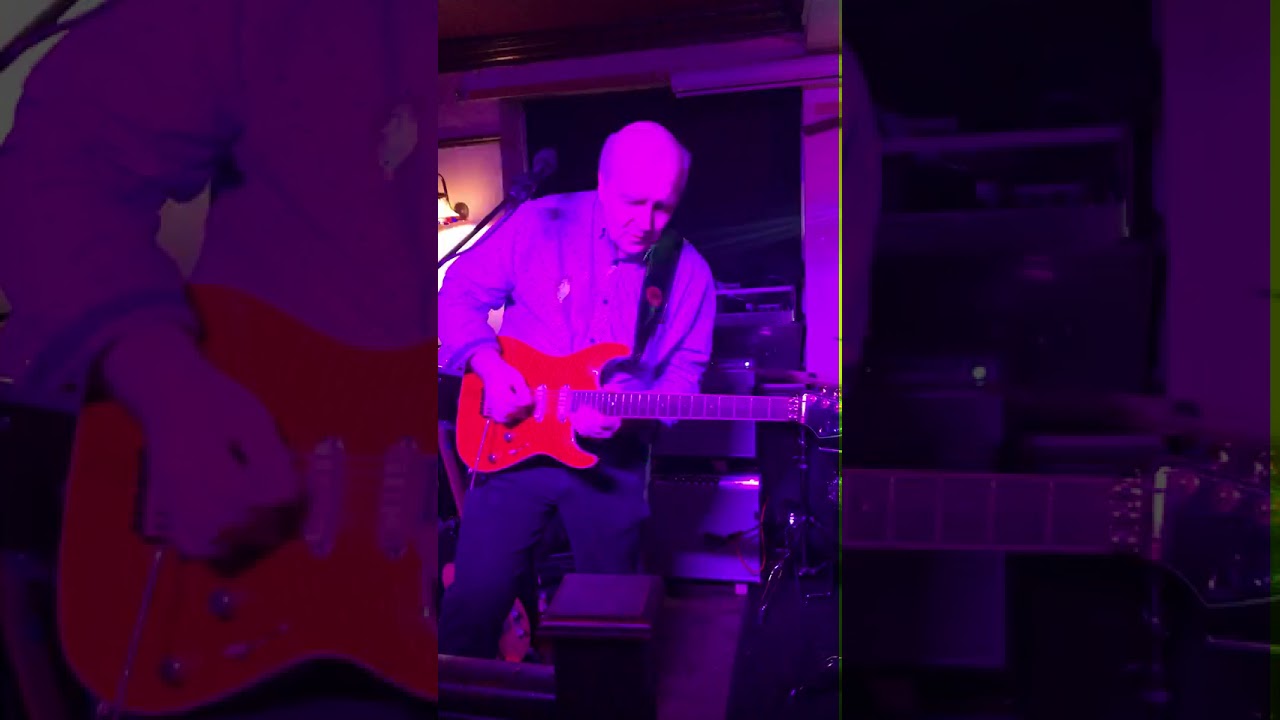
In answer to his question: No, I can’t do that.  And he makes it look easy. Fr. Kenneth Petrie and “Runnin’ Down a Dream”.

YouTube thumbnailYouTube icon

Not in church but… whew!

Posted in Lighter fare | Tagged
1 Comment

The official Parodohymnodist strikes again! “Baby it’s Springtime now!”

Newly received from the official Parodohymnodist, Fr. Tim Ferguson:

Listening to one of my least favorite Christmastime songs, this popped in my head. I call it: “A dialogue between a traditionalist and a modernist”

Baby it’s Springtime now!

I really can’t pray – Baby it’s Springtime now!
The color’s gone grey – Baby it’s Springtime now!
This Mass is so bland – laity’s participatin’
So very bland – wait ‘til you hear the guitar band!

I’m missing the sound of chanting – Pelagian, stop your ranting.
The rev’rence ain’t here no more – The kneelers are off the floor
The Latin was so enchanting – you’re rabid and now you’re panting.
I just want to go out the door – The renewal is what you’ll adore!

We used to have schools – Baby, it’ Springtime now!
We all knew the rules – Look at the Springtime, wow!
I miss all the grace – you just miss the dusty lace
So sad it’s gone – You all must hail the coming dawn.

The doctrine was clear and warming – Doctrine can be so boring
At least I could’ve said that I tried – We now have parades for our pride!
I really can’t pray – Baby don’t hold out
I guess that it’s Springtime now.

I lived through Montini – Baby the Spring is here
Endured Pete Marini – It’s Spring, it’s clear
How splendid was truth! – sip more gin and vermouth
Why can’t you see – How magic all this can be?
How tragic all this can be?

I know that there’s hope in sorrow – Think of our bright tomorrow!
I know there’s life after we’ve died – Wait until this new stuff is tried!
I really can’t pray – Get over that hold out
I guess that it’s Springtime now!

But boy is it cold outside….

[Fr. Z continues…]

I checked with Zuhlio about recording this, but the whole duet thing…. well…

And I concur, this is not one of my seasonal favorites.  Perhaps this is the best use of it we will ever have.

Thanks and kudos to the Parodohymnodist.

If you don’t know the song… here’s Deano from 1959.

YouTube thumbnailYouTube icon

Posted in HONORED GUESTS, Lighter fare, Parody Songs, SESSIUNCULA | Tagged ,
Comments Off on The official Parodohymnodist strikes again! “Baby it’s Springtime now!”

ASK FATHER: Why do servers lift the chasuble during the elevation of the Host?

From a reader…

QUAERITUR:

Why do servers elevate the chasuble during the elevation of the host? I was looking for a good answer after my mom asked me. Thanks!

The practical answer is the best answer.

It is a custom to lift hems of chasubles and albs and copes which arose from practical need.  This is not prescribed in the rubrics.  [Actually, it is!  See below.]

Vestments of yore – and today – were fuller, draping lots of material over the arms, which could sometimes be heavy.  The weight of vestments were increased by ornamentation.  At the consecration, the edge of the the chasuble would be raised to assist the priest or bishop in raising his arms high enough so that the congregation could see the Host and chalice (as per the rubrics).

The same applies while the celebrant incenses the altar and other things.  Copes are held up and away from the arms so that the priest can move.  Yesterday, I used a heavy cloth of gold “Gothic” vestments instead of a Roman.  Hence, I had to instruct the server – not used to the Gothic – to hold it out of my way while incensing the altar.  It makes a difference.

Similarly, the lower hem of albs are held up as priests ascended the stairs, lest he trip or, worse, put his foot through precious handmade lace.

Don’t laugh.  Women would spend years making beautiful lace for albs out of their love for the Lord, because Holy Mass was the center of their lives.  Then some priest puts his foot through it.  I have seen that happen.  I’ve done it once by accident!

The worst case I’ve experienced was watching a know-it-all priest, whose half-baked partial knowledge of what to do inspired him in false know-it-all-ist “humility” to refuse to allow the deacon to lift the alb away from his foot.  Fr. Smarticus Pantsicus promptly put his foot through the beautiful lace.  Thus, he ruined a someone else’s alb.

So… Frs. Smartici Pantsici out there… when it is time for the servers to help you, shut the hell up and let yourself be helped!  Get over yourselves.

That’s the practical.  However, the practical, over time, can also take on symbolic meaning.

Sometimes you might hear that this physical contact with the eminently priestly vestment associates the server more closely with the priest.  Sure.  That’s works for me too.   Think of the woman who wanted to touch the hem of Christ’s garment to be healed.

I’ll conclude with this.

Servers, lift the edge of that chasuble…. BUT… just a little, okay?  Don’t lift it too high. Just a little, okay?  You don’t have to lift it half way up Father’s back.  Less is more.  This especially applies with the more modern Roman vestments which don’t impede the arms and aren’t very heavy.

UPDATE:

In the comments someone corrected my error. It is in the rubrics!  I looked it up.

However, I stand by not “not too high” because too much is too much.

Posted in "How To..." - Practical Notes, ASK FATHER Question Box, Liturgy Science Theatre 3000 | Tagged ,
11 Comments

Your Sunday and Christmas sermon notes

Were there any good points in the sermons that you heard for your Sunday and for your Christmas Masses of obligation?

Let us know.

Yesterday, at Midnight Mass I spoke about what “good will” means in the angels proclamation of good news to the shepherds. Whose “good will”? And what “good will” involves. It involves, among other things, such an orientation to God and His will that we hasten to see wonders, as they did, as Mary did to Elizabeth, and how we can hasten to see wonders in others and perform good works when they are need, for the circumstance that require good works are manifestations of God with us as well. This is the basis of salvation and joy.

This morning I spoke about how the three Masses of Christmas reveals the Sons birth in eternity (in still darkness), in time (at dawn), and in our hearts (in the full light of day). When the perfect image of the invisible God was born, He immediately set about saving us from our sins and teaching us who we are, at first in vulnerability. I suggested contemplating in home nativity scenes or in church the soft little hands of the Infant, which were, even as they reached out, already strong enough to bear the sins of the whole world. One of the things that makes this feast so moving is precisely His vulnerability. His tiny hands are already mighty enough to smash through barriers pride and touch hearts that are scarred from circumstances or from sin.

And, we had the 2nd Mass this morning, Lux fulgebit, which not many people get to hear.


Posted in SESSIUNCULA |
13 Comments

Christmas greetings, dear readers!

There is time for the complicated, and there is time for the simple.

Today we celebrate the moment in history when our God, entirely transcendent, lowered Himself to take our human nature into a bond with his divine nature that could never be broken for eternity.

He was born into this world to save our human race because our whole human race had sinned and we could not be reconciled by our own actions alone, no matter what we did.

We needed a Savior like us in all ways but sin.

Today we celebrate the birth of our Savior.

There it is.

Dear readers, you are a real gift to me.

A happy and holy Christmas to everyone!

Posted in SESSIUNCULA |
7 Comments

The “Kalenda”, the solemn Christmas Proclamation – AUDIO

One of the many gifts we receive for Christmas is the singing of the Martyrology which has the special Proclamation of the Birth of Christ, the “Kalenda“.
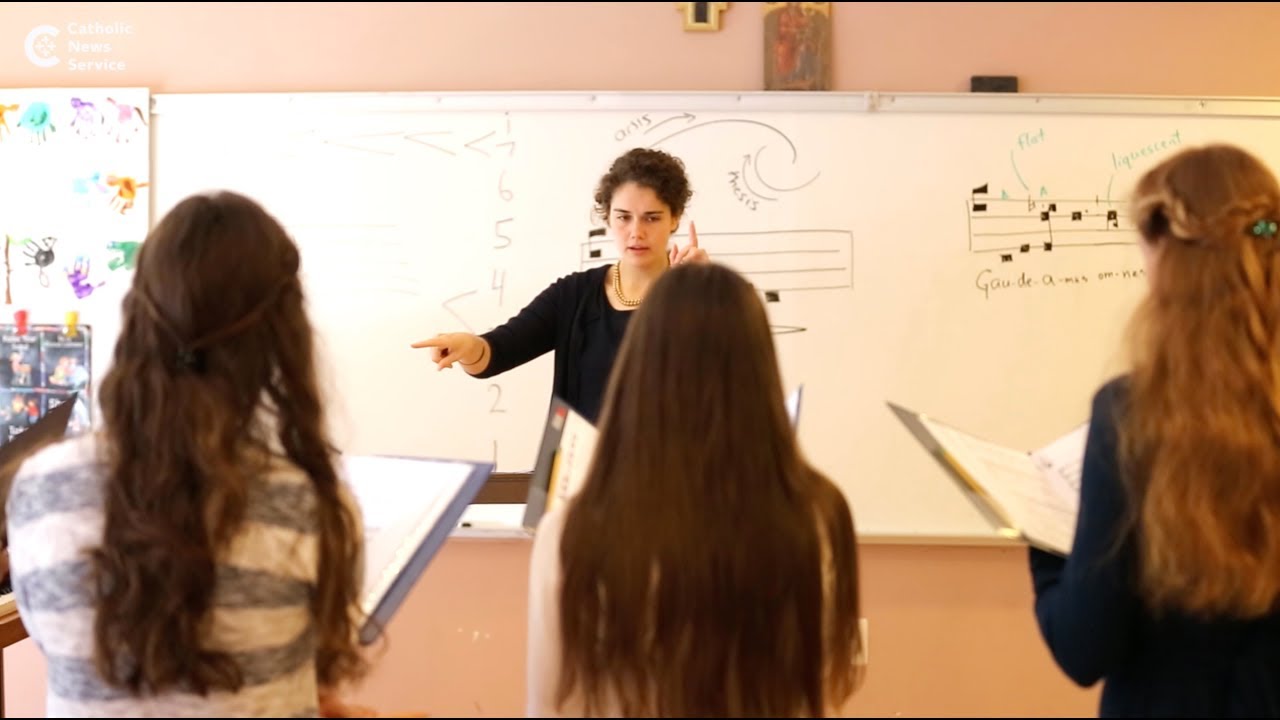
I am getting ready to sing it tonight.  It has been a while.

As a Proclamation, it has a formal character. The birth of Christ follows a list of important events, set points in history, which therefore puts the birth of Christ into the context of the history of salvation, beginning with the Creation of the world and culminating in the Nativity.

The “Kalenda” was sung at the Office of Prime before its suppression.  It can be sung or read before the 1st Mass Christmas. In the 1980’s Pope St. John Paul II restored it before his Midnight Masses and the custom has been reviving every since. (Read: Mutual enrichment – yet another reason for Summorum Pontificum.)

The Latin text of the traditional form (sung in Latin):

The twenty-fifth day of December [Octave (before) the January Kalends.]. The seventh Moon [in 2017].  In the five thousand one hundred and ninety-ninth year of the creation of the world from the time when God in the beginning created the heavens and the earth; the two thousand nine hundred and fifty-seventh year after the flood; the two thousand and fifteenth year from the birth of Abraham; the one thousand five hundred and tenth year from Moses and the going forth of the people of Israel from Egypt; the one thousand and thirty-second year from David’s being anointed king; in the sixty-fifth week according to the prophecy of Daniel; in the one hundred and ninety-fourth Olympiad; the seven hundred and fifty-second year from the foundation of the city of Rome; the forty second year of the reign of Octavian Augustus; the whole world being at peace, in the sixth age of the world, Jesus Christ the eternal God and Son of the eternal Father, desiring to sanctify the world by his most merciful coming, being conceived by the Holy Spirit, and nine months having passed since his conception, was born in Bethlehem of Judea of the Virgin Mary, being made flesh. The Nativity of our Lord Jesus Christ according to the flesh.

Remember that in the ancient world there was no standard calendar.  So, one way to pinpoint events was to say what else  was going on at the time according to other reckonings of time.  The overlap of the dates would then give you the desired result, like a chronological Venn Diagram.  The overlapping of the dates of the events cited in the Proclamation results in an accurate dating of the Nativity, that is 3/2 BC.  There is good scholarship that reinforces 3/2 BC and cleans up a dating error for the year of Herod’s death.  That’s another story.

Note the reference to the Kalends and the moon.

The Kalends, whence English “calendar”, in the Roman reckoning, is the first day of a month, thus beginning a new lunar phase, that is the sighting of the first sliver after a new moon.   Whereas we now think of days as following the first of the month, the Romans thought about them as preceding the kalends, the nones or the ides of the month.  And so for the date of Christmas, you count the number of days remaining before the kalends, 6, and you add 2 (because Romans liked to count the starting and ending days) and you get 8.  Hence, Christmas is the eighth day out from the Kalends of January.

As I was working on this today, I figured maybe some other priest out there might be also, and might be struggling with it.  So here is a working recording I made to play once in a while to help me get it into my head.

It is not a particularly easy chant, since it is so unlike everything else we do.  As a matter of fact, I’ve had to take a run at a few of the passages quite a few times.

I pitched this a little lower than I usually would, but I am getting over “the crud”, involving antibiotics, etc.  Hard to sing without coughing, so I take it easy.


Posted in "How To..." - Practical Notes, Just Too Cool, Liturgy Science Theatre 3000, PRAYERCAzT: What Does The (Latin) Prayer Really Sound L | Tagged , , ,
2 Comments

A parish’s immersion in Gregorian chant – YES, it can be done.

It can be done. All we have to do is try.

YouTube thumbnailYouTube icon

1600 views when posted

Sacrosanctum Concilium says:

116. Ecclesia cantum gregorianum agnoscit ut liturgiae romanae proprium: qui ideo in actionibus liturgicis, ceteris paribus, principem locum obtineat.

The Church recognizes Gregorian chant as a characteristic mark of the Roman liturgy:  which, therefore, in liturgical celebrations, other things being equal, must occupy the first place.

There isn’t a way around it.

It’s an identity thing.

Posted in Hard-Identity Catholicism, Liturgy Science Theatre 3000 | Tagged
10 Comments

Too ashamed to go to confession?

I saw an article at CNA which had a great point in it.

[Fr. Fortea] also noted the importance of ensuring truly anonymous confessions. In each city, he said, “there ought to be at least one confessional where instead of a grill, there is a metal sheet with small holes, making it totally impossible to see the person making their confession.”  [That’s why even when there is a grill, it is good to have a thin cloth as a “curtain” over the grate.  Which also keeps Father from being coughed on, by the way.]

The person confessing should not be visible to the priest as they approach or leave, he continued. If there is a window on the priest’s door, it should not be transparent.

“With these measures, the vast majority of the faithful can resolve the problem of shame,” Fr. Fortea said.

The issue of anonymity is HUGE.  Fathers, think about this and take measures.  Bishops, remind your priests about good confessional practices.  This is important.  For example, Fathers, when coming to and going from the confessional, keep your eyes down.  Don’t look at people who are waiting or coming in.  Don’t talk to them.  Don’t greet them.  Don’t even look at them.  EVER.

Everyone….

GO TO CONFESSION!

Sure, it can be hard sometimes.  That’s okay… accept that it’ll be hard and just do it anyway.

Review my

There is no sin that we little mortals can commit that our all-powerful and loving God will not forgive, provided we ask for forgiveness.

The Sacrament of Penance was established by Jesus Christ.  He intended that the sacrament by the ordinary means through which we return to the state of grace.   No matter what you have done, Christ – in the person of the priests in the confessional – washes that sin from your soul with His own Blood.

Once you have received absolution, those sins will not be held against you.  They are gone.   You will remember them, but their guilt is no longer with you.  You have to do penance for them, but the sins are removed, they are eradicated from your soul, they are no more.

GO TO CONFESSION!

“I absolve you from your sins…”

When was the last time you heard those words from the priest after confessing all your sins in kind and number?   Hmmm?

While we live we have the chance to get things right with ourselves, our neighbors and our God.

Get things right.

GO TO CONFESSION!

Fathers, if you don’t now offer decent times for confessions in the parish entrusted to you and if you don’t preach about this important sacrament and about sin, you are probably going to go to Hell.

Merry Christmas.

You had better go to confession, too.


Posted in "How To..." - Practical Notes, GO TO CONFESSION, Our Catholic Identity | Tagged ,
29 Comments

YOUR URGENT PRAYER REQUESTS

Please use the sharing buttons! Thanks!

Registered or not, will you in your charity please take a moment look at the requests and to pray for the people about whom you read?

Continued from THESE.

I get many requests by email asking for prayers. Many requests are heart-achingly grave and urgent.

As long as my blog reaches so many readers in so many places, let’s give each other a hand. We should support each other in works of mercy.

If you have some prayer requests, feel free to post them below.

You have to be registered here to be able to post.

I still have three pressings personal petitions.  As I write today, one of them is… very heavy indeed.

The moderation queue is ON… for ALL posts, right now.

Posted in SESSIUNCULA |
16 Comments