“Whoa!” Brick by brick in the Diocese of Madison.

Here is a success story.

In the little town of Fennimore, WI, Fr. Miguel Galvez of the Society of Jesus the Priest, implemented a restoration of the St. Mary Church.

Before:

After:

There is an article about this church and the consecration of the altar in the diocesan newspaper, The Catholic Herald.  This is how it begins…

 “Whoa!”

That was the simple word of exclamation uttered by a young girl as she entered St. Mary Church in Fennimore on a recent Sunday morning.

While the words used by others in the church may have been more sophisticated that day, the feelings were more than likely similar to those of the young girl’s.

Upon entering the church that Sunday morning, parishioners and visitors got a chance to see the completed work of a restoration project to bring the church back to its original design from more than a century ago.

[…]

The reaction of the girl speaks volumes.

She reacted to the church’s interior as one will when you don’t have baggage from the halcyon days of post-Conciliar chaos and iconoclasm.  This is the reaction of a soul that is open to what a church ought to communicate: a sense of the transcendent, through beauty, rational design, theological and liturgical coherence.

It can be done, brick by brick.

Posted in Brick by Brick, Just Too Cool, Liturgy Science Theatre 3000, New Evangelization, Our Catholic Identity | Tagged , ,
67 Comments

How you would have observed Lent in 1873

For those of you who may think that Lent is a pretty tough time to be a Catholic, giving up chocolate and all year in and year out, this came to me email today.  This is what our forebears did for Lent in these USA (my emphases and comments):

DIOCESE OF NEWARK.

(1873) REGULATIONS FOR LENT.

Ash Wednesday, the first day of Lent, will fall on the twenty-sixth day of February.

1. Every day during Lent except Sunday, is a day of fast on one meal, which should no be taken before mid-day, with the allowance of a moderate collation in the evening.

2. The precept of fasting implies also that of abstinence from the use of flesh meat, but by dispensation, the use of flesh meat is allowed in this Diocese at every meal on Sunday, and at the principal meal on Mondays, Tuesdays and Thursdays, of Lent except Holy Thursday. [But not Wednesday and Friday and Saturday]

3. There is no prohibition to use eggs, butter or cheese, provided the rules of quantity prescribed by the fast be complied with. Fish is not to be used at the same meals at which flesh meat is allowed. [No surf and turf, friends.]

Butter, or if necessary lard, may be used in dressing of fish or vegetables.

4. All persons over seven years of age are bound to abstain from the use of flesh meat, and all over twenty-one to fast according to the above regulations unless there be a legitimate cause of exemption. The Church excuses from the obligations of fasting, but not from that of abstinence from flesh meat, except in special cases of sickness or the like, the following classes of persons: 1st, the infirm; 2nd, those whose duties are of an exhausting or laborious character; 3rd, women in pregnancy, or nursing infants; 4th, those who are enfeebled by old age. In case of doubt in regard to any of the above exemptions, recourse must be had to one’s spiritual director, or physician.

All alike, should enter into the spirit of this holy season, which is, in a special manner, a time of prayer, and sorrow for sin, of almsgiving, and mortification.

The faithful are reminded that by a special privilege granted d by the Holy see to the faithful of this Diocese, a Plenary Indulgence may be gained on the usual conditions, on St. Patrick’s Day or any day, within the Octave. [This does NOT dispense Catholics from the Lenten discipline on St. Paatrick’s Day, a dopey practice now which I abhor, promethean neopelagian that I am.]

By order of the Very Reverend Administrator,

GEORGRE H. DOANE. Secretary.

Bishop’s House, Newark, Feb. 6., A.D. 1873.

NB: Catholics are not obliged to follow the regulations of 1873.  You are obliged to follow them as they are hic et nunc, here and now. Be sure you know the regulations in your country. If you decide to do more than what the regulations require here and now, fine. But don’t trumpet the fact and don’t look down on those who choose not to add things on beyond the regulations.

Posted in Hard-Identity Catholicism, Our Catholic Identity, The Drill | Tagged , , ,
27 Comments

The Francis Effect™: Results Vary

Along the way when writing about The Francis Effect™ (mostly a rather shallow, “I don’t agree with the Church about a bunch o’ stuff, but I like this new Pope!”, though sometimes a genuine revitalization of Gospel values), I have opined something along the lines of: We shall see.  We shall see if this makes any difference in how people live, whether they change their lives in any way.

It is one thing to say “He’s the most wonderfullest, fluffiest Pope ehvur!  He’s the first Pope who has ever smiled or kissed a baby!” and quite another to say, “Because of his inspiring model I’ll give up using contraception, get my marriage straightened out, and go to confession.”

Pew Research has results of polling about The Francis Effect™ now.

No clear ‘Pope Francis effect’ among U.S. Catholics

There are all sorts of numbers that show that Francis is popular, that he has a high favorable rating.

[…]

But has the pope’s popularity produced a Catholic resurgence in the U.S., where 10% of adults are former Catholics? Not so far, at least in terms of the share of Americans who identify as such, or the share of those who report attending Mass weekly. [It hasn’t been even a year since his election.]

A new analysis of pooled Pew Research surveys conducted between Francis’ election in March and the end of October this year finds that the percentage of Americans who identify as Catholics has remained the same – 22% — as it was during the corresponding seven-month period in 2012. In fact, our polls going back to 2007 show Catholic identification in the U.S. has held stable, fluctuating only between 22% and 23%.

Though Americans may report attending church more frequently than they actually do, our surveys find that self-reported levels of Mass attendance have remained virtually unchanged since the new pope was elected. Since April of this year, 39% of U.S. Catholics report attending Mass at least weekly, similar to the 40% attendance figure last year.

[…]

Another Effect might be, however, the use by catholic politicians of off-the-cuff phrases uttered by Pope Francis to justify immoral acts (cf. Illinois and Kentucky).  But people who do that sort of thing are either wicked or dumb or both.  If they didn’t use Francis as a body-shield, they’d find some other way to justify their scandalous actions.

I read here, always in the same study, that there is little or no change in the numbers of people going to confession because of TFE™.

The new survey also finds no evidence that large numbers of Catholics are volunteering more or going to confession more often than in the past. Roughly one-in-eight U.S. Catholics (13%) say they have been volunteering more in their church or community over the past year, but 23% say they have been doing this less often, and 59% say their level of volunteering has not changed. Just one-in-twenty Catholics (5%) say they have been going to confession (also known as the sacrament of penance and reconciliation) more often over the last 12 months, while 22% say they have been going to confession less often, and 65% say their frequency of confession has not changed very much. [That 87% who are not doing so well with this.]

Time will tell.

Posted in Our Catholic Identity, The Drill | Tagged ,
44 Comments

Francis and the Weeping Priests

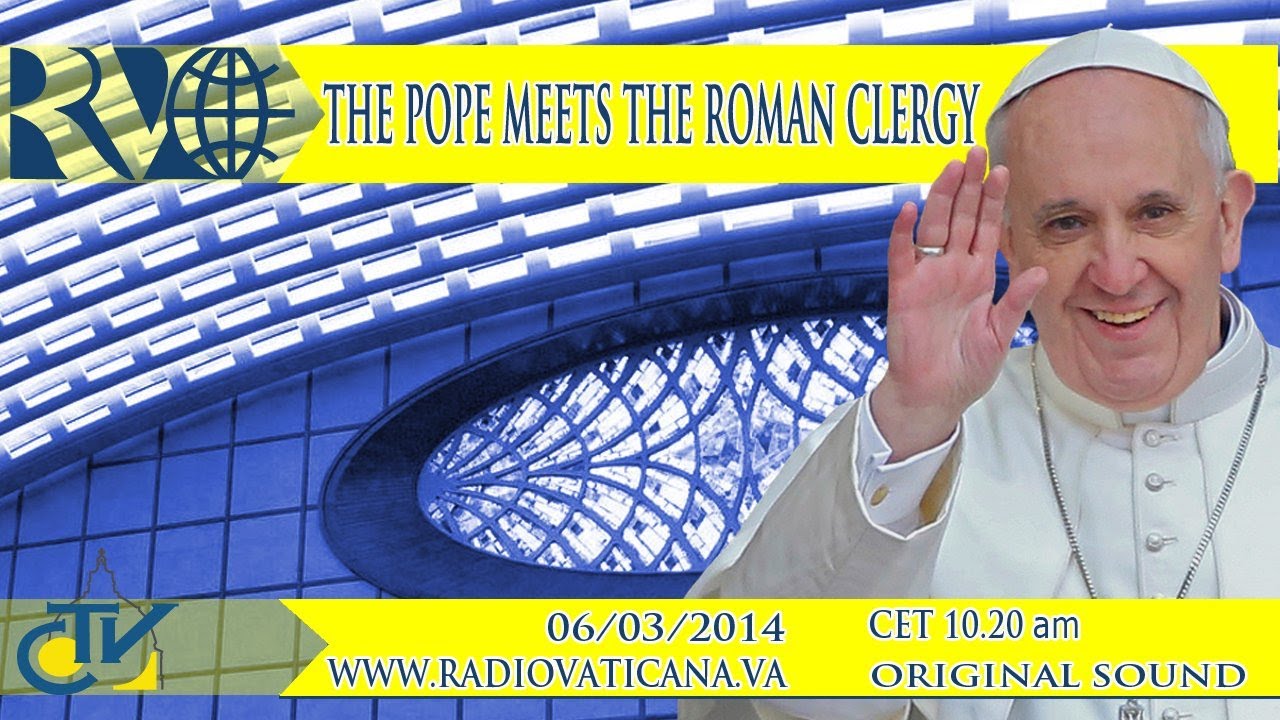
Today the Holy Father met with the clergy of Rome.  I read the highlights in the Italian VIS and I am working my way through the video of the whole event. BELOW.

His Holiness said “preti ‘asettici’ non aiutano la Chiesa… Antiseptic/cold/indifferent” priests don’t help the Church.  We could say “sterile”, but not in the sense that he warned old liberal women religious about being, whom Francis calls “zitelle”, because they are bound up in female machismo and don’t bear fruit.   But I digress. No, Francis is talking about priests who are aloof, distant, cold.  Don’t fall into the trap of reading “asettici” as “ascettici… ascetic”.  That would have been a lot more fun.

The priest is called “to have a heart that is moved.  “Sterile” priests or those ‘of the laboratory’, all clean and well-groomed, don’t help the Church!”  I don’t think he is advocating that we dress like slobs. What pops into my mind is a concelebration with all those hideous flour sack albs… brrrr…. talk about sterile.  But I digress.

The Holy Father goes on to use the “field hospital” image again.  Field hospitals are a mess.  He makes a good point.  Priests cannot be emotionally detached, they must know what is going on in their parishes, they must care and they must pray for people.  He asked his priests whether they are moved by the sufferings of the people they encounter.  Do they weep for their sufferings?  I doubt Francis is suggesting that priests go about weeping and wringing their hands.   Well… maybe he is.  I’ll bet Jonah was a sight as he roamed about Ninevah.  But, wait… he was asking them to repent of and change their sinful ways or be slain by the Father of Mercy Himself.

Back to the Pope and his priests.

The Pope spoke about the importance of the Sacrament of Penance.

“… It is up to us, as ministers of the Church, to keep this message alive, above all in preaching and in our gestures, in signs and in pastoral choices, such as the decision to restore priority to the Sacrament of Reconciliation, and at the same time to works of mercy.”

He followed up saying that priest confessors should not be either too rigid or too lax in the confessional.  Who will disagree?  At the same time, he doesn’t offer anything concrete about striking that balance.  I will point out that the confessional is a tribunal in which the penitent – not the confessor – is the prosecuting attorney.

Finally, I did like the fact that he quoted the older, traditional form of the Missale Romanum when he spoke about priests shedding tears for their people before the Blessed Sacrament.  He said, and this was a truly a poor choice of words which suggests that the Holy Father is out of touch with an important dimension of the lives of many of his flock.  This is in the Italian account, not the English… and you have to ask why:

To explain, I’ll put to you some questions that help me when a priest comes to me…. [He must be talking about the days when he was a provincial or diocesan bishop]  Tell me: Do you cry? Or have we lost tears? I remember that in the old Missals, those of another time [No… of our time, too, Your Holiness], that there is a very beautiful prayer to ask the gift of tears. The prayer started like this: “Lord, who commanded Moses to strike the stone in order that water would come, strike the stone so that tears…”: it was like that, more or less, that prayer. It was very beautiful. But, how many of us weep in the face of the suffering of a child, before the destruction of a family, before so many people who can’t find the path? The weeping of the priest… do you cry? Or in this presbyterate have we lost tears? Do you weep for your people? Tell me, do you pray a prayer of intercession before the Tabernacle? Do you struggle with the Lord for your people? Do you struggle with the Lord like Abraham struggled? And if there should be fewer? If there should be 25? And if there should be 20? That courageous prayer of intercession… But, let’s talk about parresia, of apostolic courage, and let’s think about pastoral plans… but that’s going alright: but the same parresia is also necessary in prayer. Struggle with the Lord, or discuss with the Lord how Moses did it, when the Lord was fed up, tired of his people and told him: “But you remain calm… I will destroy them all, and I will make you the head of another people”. No. No. If you destroy the people, destroy me too. But, these guys had chutzpah [to not write another thing – Ma, questi avevano i pantaloni!] Do we have the chutzpah [i pantaloni] to to struggle with God for our people?

A couple things.

First, one of the most powerful verses in the New Testaments is John 11:35:

ἐδάκρυσεν ὁ Ἰησοῦς … Jesus wept.

Next, perhaps the Holy Father – who emphatically tells his priests to know their flocks and be with them in their sufferings – could also spare a little time for those who have in the past and still today suffered enormously at the hands of indifferent or domineering priests and bishops who dislike the traditional expression of our Catholic faith.  Perhaps a little time could be spared also for them?  Perhaps the Holy Father might encourage a shepherd who is supposed to know his flock also to open his heart to them and learn also the older form of Mass and sacraments and not to refer to them with opening statements like “Once upon a time…”.  But I digress.

Note the context of “struggling” or “dickering” with God: the imminent destruction of the people by God Himself.  This is not a fairy tale the Pope is addressing.  The example concern the obliteration of the whole people and a restart.  That adds a grim dimension to the Pope’s folksy points.

I recall the words of St. Augustine to his flock in Hippo.  In a sermon, he gave his people a real talking to and then explained why he was laying it on so hard. Explained that if he didn’t preach his tough message he could not be saved. If they listened or didn’t listen he was going to preach anyway and thus save his own soul. “But” he concluded, “Nolo salvus esse sine vobis! … I don’t want to be saved without you!” (s. 17.2)

Back to that point about the prayer in the older Missal.  I think his description of the older, traditional Missal is unfortunate and blinkered, but let that pass for now (cf. Summorum Pontificum).  The prayer to which the Holy Father refers is in the 1962 edition of the Roman Missal, but it doesn’t explicitly mention Moses.

It is in the section called “Orationes diversae… diverse prayers”, “diverse” in the sense of “various” not “contrasting”.   These are orations that could be added by the priest after the obligatory prayers for the particular Mass formulary being used.  For example, were I to say Mass (as I do) using the Votive Mass “for the remission of sins”, or “in time of war”, I might also add the prayer “ad petendam compunctionis cordis… for the petitioning compunction of heart”.

Here is the Collect:

Omnipotens et mitissime Deus, qui sitienti populo fontem viventis aquae de petra produxisti: educ de cordis nostri duritia lacrimas compunctionis; ut peccata nostra plangere valeamus, remissionemque eorum, te miserante, mereamur accipere.

I love that juxtaposition of perduco and educo. Subtle.  Rich.  Our Latin copia verborum never fails to satisfy.

Plango brings in a fantastic image.  In the first place, it means “to strike, beat”.  Waves plangent the rocks, palms drums, birds against snares with their wings.  The verb is especially associated with beating one’s breast or head.  St. Augustine mentions in a sermon how, when he spoke of God’s mercy, the congregation would strike their breasts with such force that it would rumble in the church.  Of course plango is also beweep, bewail, wring one’s hands (see above).

Compunctio is “a puncture” and, in Christian Latin, “the sting of conscience, remorse”.

So …

Almighty and most merciful God, who brought forth a font of living water from the rock for the sake of your thirsting people: draw forth tears of stinging remorse from the hardness of our heart; in order that we may be able to bewail our sins, and, you being merciful, merit to accept their remission.

Have you ever noticed that, after not shedding tears for a long time, those first tears really burn and sting?

This word compunctio shows up in the Latin 2002 Missale Romanum on Ash Wednesday, in the Post Communion: it is what Holy Church wants us to take with us out the door.  It is a key theme, stressed in our liturgical prayers – always starting points for everything – for Lent.

The prayer about tears doesn’t mention Moses, as the Holy Father quips, but the image is clearly that of Numbers 20.  And it is important that he struck the rock twice and it is important that the water is living water.  But I digress.

The themes of compunction of heart and of the gift of tears have a deep and nearly unfathomable wealth in the spiritual writings of the saints and in liturgical texts.

Allow me to digress.  Just a quick scan of the prayers yesterday, for Ash Wednesday during the blessing of ashes, at least in the traditional form I used yesterday – I didn’t bother to check the new form – offer the image of weeping prominently:

Almighty, everlasting God, spare those who are repentant, be merciful to those who pray to You, and graciously send Your holy angel from heaven to bless ? and hallow these ashes, that they may be a wholesome remedy for all who humbly implore Your holy Name; who accuse themselves by acknowledging their sins, who weep for their evil deeds in the sight of Your divine mercy;… Between the porch and the altar the priests the Lord’s ministers shall weep, and shall say: Spare, O Lord, spare thy people: and shut not the mouths of them that sing to thee, O Lord?

And in Joel:

Thus says the Lord: Return to Me with your whole heart, with fasting, and weeping, and mourning; rend your hearts, not your garments, and return to the Lord, your God.

Enough.

We have lost so much of our patrimony in the last few decades.  It’s enough to make a grown man weep.

Here is the video of the Holy Father’s time with the clergy of Rome.

YouTube thumbnailYouTube icon

Posted in Liturgy Science Theatre 3000, WDTPRS | Tagged ,
35 Comments

KY’s AG cites Francis undying quote as excuse for not upholding the law

It is hard to know which box to check:

? tragically ignorant
? mendaciously obtuse

We have seen antinomianism rear its dangerous head in many scenarios now: those who are bound to uphold and enforce the law simply deciding sua sponte that they won’t uphold law X or Y because the law conflicts with a pet position.

But this is downright disgusting.  From TIME:

Kentucky’s Attorney General Explains Why He Won’t Defend Gay Marriage Ban

Kentucky Attorney General Jack Conway tells TIME [A willing accomplice in this Act of Dumb.] why he decided not to defend his state’s ban on same-sex marriages, saying he ‘knows where history is going on this’ despite the complications the decision could have for his potential gubernatorial bid  [And you don’t want to be “on the wrong side of history”, do you!  – [POUNDING HEAD ON DESK] – ]

Calling laws against same-sex marriage the last vestige of widespread discrimination in America, [Last vestigate? HA!  It is to laugh.  Will he crusade next against anti-Catholicism?  You would think that a man in this position would be smart enough to distinguish this special interest group’s agitprop from the legitimate claims of black people in the civil rights movement.] Kentucky Attorney General Jack Conway told TIME Tuesday he refused to continue defending his state’s ban on gay marriage because he feared he’d regret it for the rest of his life. “I know where history is going on this,” he said. “I know what was in my heart.” [Ahhh! It’s “in his heart“.  Well, then, I guess it’s okay then.]


“Where we are as a country now, this really seems to be the only minority group that a significant portion of our society thinks it’s still okay to discriminate against.”  [So long as you exclude the Little Sisters of the Poor and, I dunno, tens of thousands of others who object to the HHS mandate.]

[…]

A Catholic and a Democrat [What a surprise.] considering running for governor in 2015, Conway said he knew the decision could put him at odds with voters and with church leaders in his hometown. [Get this….] His thinking was shaped partly by statements from Pope Francis that encouraged openness toward gays. “Our new pope recently said on an airplane ‘Who am I to judge.’ The new pope has said a lot of things that Catholics like me really like. I have, as someone who grew up as a Catholic listened to some of the words of the new pope and found them inspirational.”  [This quote again.  Gosh, thanks, Holy Father, for that one.  That said, its use here is a LIE.  HERE]

[…]

We have lurched more deeply into the Age of Stoopid, I”m afraid.

The Left’s education system in these USA, which infected Catholic schools as well, has left at least one whole generation without the tools to think, or the basic catechism points that allow Catholics to figure out nearly instantly that some MSM reportage doesn’t pass the smell test.

How proud Gramsci would be of KY’s AG Conway.

Posted in Blatteroons, One Man & One Woman, Pò sì jiù, Puir Slow-Witted Gowk, Sin That Cries To Heaven, The Coming Storm, The Drill, The future and our choices, The Last Acceptable Prejudice | Tagged , , ,
65 Comments

¡Vaya lío! Archbp. Sample weighs in on same-sex unions in Oregon. Fr. Z kudos.

From the Oregonian:

Portland Archdiocese joins anti-gay marriage effort; lay group plans Ash Wednesday action

Since Pope Francis began his reign as the head of the Catholic Church a year ago, he’s sounded a more welcoming tone toward gays. [Their effort to pit Francis against Archbp. Sample.  And it’s “homosexuals”, not “gays”.] But it hasn’t led to a change in church doctrine opposing same-sex marriage [It’s not “marriage”, either.] — and that’s reflected in the potential ballot fight over the issue in Oregon.

Portland Archbishop Alexander K. Sample told his pastoral staff last month that the Archdiocese of Portland and the Baker Diocese would join the coalition opposing the same-sex marriage initiative.  [OORAH!  They are going to suffer, but OORAH!]

In a Feb. 12 memo, Sample directed his staff to “do whatever they can to help support this effort” and said that “it is my intention to commit the energies of the Church to help defeat this initiative and to uphold the uniqueness and sanctity of marriage between one man and one woman.”  [Do I hear an “Amen!”?]

The memo was first publicly mentioned by the Los Angeles Times in a report on the fight over gay marriage in Oregon. [Someone leaked it.]

The archbishop’s missive didn’t come as a surprise to Jackie Yerby, a Portland parishioner and lead organizer for a new group called Catholic Oregonians for Marriage Equality. [Here it comes….]

“As much as I am hopeful about Pope Francis and the tone he is setting for the Catholic Church,” she said, “it is going to take a while for that to really take root.” [Pit Francis against Sample. What class.]

Yerby, who served on the board of Catholic Charities of Portland for six years, said members of her group plan to show up for the Ash Wednesday Mass at St. Mary’s Cathedral and other churches with large buttons proclaiming their membership in the marriage equality group. [They must be denied Holy Communion if they do that.]

Yerby said her group doesn’t see it as a protest so much as a “public witness” of their views. “We want to say, ‘We exist, we’re one of you and we do this out of how we understand our faith,'” she explained. [Not a protest?  Suuuure, it isn’t.  They can call their action “bar tending”, “reef snorkeling” or “naked hot yoga” if they want to, but it is still a protest against the Church’s teachings.]

Fr. Z stands with Archbp. Sample and Bp. Cary.

They are going to suffer.  I commend them, and all working to defend marriage, to your prayers this Lent.  Start making a list.

Posted in ¡Hagan lío!, "How To..." - Practical Notes, Be The Maquis, Fr. Z KUDOS, Hard-Identity Catholicism, New Evangelization, One Man & One Woman, Our Catholic Identity, Sin That Cries To Heaven, The Coming Storm, The Drill, The future and our choices | Tagged , , , , ,
46 Comments

Amusing Ash Wednesday note

On Twitter today, I saw someone refer to the mark from ashes as an

#ashtag

Heh.

Posted in Lighter fare | Tagged , ,
7 Comments

Who knew? Reviving ancient viruses by disturbing permafrost.

Because we didn’t have enough to worry about.

LOS ANGELES, CA (Catholic Online) – The discovery has sparked concern that increased mining and oil drilling in rapidly warming northern latitudes could widely deploy the virus into the earth’s atmosphere.

The ancient virus appears to belong to a new family of mega-viruses that infect only amoeba. [At first.] Its revival in a laboratory stands as “a proof of principle that we could eventually resurrect active infectious viruses from different periods,” the study’s lead author, microbiologist Jean-Michel Claverie of Aix-Marseille University in France, says.

“We know that those non-dangerous viruses are alive there, which probably is telling us that the dangerous kind that may infect humans and animals — that we think were eradicated from the surface of Earth — are actually still present and eventually viable, in the ground,” Claverie said.

As climate change makes northern reaches more accessible, the chance of disturbing dormant human pathogens increases. Surface temperatures in the area that previously contained the virus have increased substantially in more temperate latitudes, researchers noted.

“People will go there; they will settle there, and they will start mining and drilling,” Claverie said. “Human activities are going to perturb layers that have been dormant for 3 million years and may contain viruses.

We cannot definitely say that there are some human pathogens in there,” Claverie’s co-author, Chantal Abergel says. She cautioned that their finding is limited to one innocuous virus infecting an amoeba. They will reexamine the drill core samples, Abergel said, to “find out if there is anything there that is dangerous to humans and animals.”

Scientists thawed the virus, dubbed Pithovirus sibericum, and watched it replicate in a culture in a Petri dish. The virus infected an amoeba, a simple single-cell organism.

Viruses can survive being locked up in the permafrost for extremely long periods, according to a statement released by France’s National Center for Scientific Research.

“It has important implications for public-health risks in connection with exploiting mineral or energy resources in Arctic Circle regions that are becoming more and more accessible through global warming,” it said.  [Global warming… right.]

“The revival of viruses that are considered to have been eradicated, such as the smallpox virus, whose replication process is similar to that of Pithovirus, is no longer limited to science fiction,” the statement continued. “The risk that this scenario could happen in real life has to be viewed realistically.”

“The virus infected an amoeba, a simple single-cell organism.”

Yah… that’s how it starts.   Then it infects another kind of petri dish: really bad movies.

YouTube thumbnailYouTube icon

Movie trivia: The new Doctor of Doctor Who, Peter Capaldi, had a role in the really bad World War Z as, I am not making this up, “W.H.O. Doctor”.  Who knew?

In the meantime, I sense a new twist in the novel.

Posted in Global Killer Asteroid Questions, TEOTWAWKI | Tagged , , , , , ,
21 Comments

Pope Francis’ new interview: his answer about Benedict XVI and Popes Emeriti

His Holiness Pope Francis gave a substantial interview which is published simultaneously in the Italian daily Corriere della Sera and an Argentinian source.  I read it in Italian.

The interview makes it clear that there were more than one recording devices used.  Thus, unlike in the Scalfari debacle, we know what the Pope said.  That said, as I read the Italian version, I has the sense that the answers were polished up before they went to press.  That’s reasonable.

We could tease out his responses about Humane vitae and about same-sex unions, about which I have plenty to say, but I want to focus here on this question and answer, in my translation:

Relationship with your predecessor. Have you ever asked advice of Benedict XVI?

Yes. The Pope Emeritus isn’t a statue in a museum. He/it is an institution. (È una istituzione.) We weren’t used to it. Sixt or seventy years ago, the bishop emeritus didn’t exist. It came after the Council. Today he/it is an institution. The same has to happen for the Pope Emeritus. Benedict is the first and maybe there will be others. We don’t know. He is discreet, humble and doesn’t want to be a bother. We have spoken about it and we have decided that would be better that he should see people, go out and participate in the life of the Church. Once time he came here for the blessing of a statue of St. Michael the Archangel, then to lunch at Santa Marta and, after Christmas, I sent him an invitation to participate at the Consistory and he accepted. His wisdom is a gift from God. Some would have wished that he retire to a Benedictine monastery far from the Vatican. I thought of grandparents with their wisdom, their counsels give strength to families and they don’t deserve to end up in a nursing home.”

Do you recall that I opined some time ago that Pope Francis would resign at 80 years old?  I still believe that.  Sure, he might wait till 81 or 82, etc., but I predict that he will resign his office before he dies in office.

It’s a busy day for me, so the comment moderation queue is switched on.

UPDATE:

An English translation is HERE.

Posted in Francis, The Drill | Tagged , ,
35 Comments

Francis at Santa Sabina

I am watching the Holy Father process to and enter the first Roman Station Church, Santa Sabina on the Aventine Hill.

Posted in Francis, Liturgy Science Theatre 3000 | Tagged , , ,
5 Comments