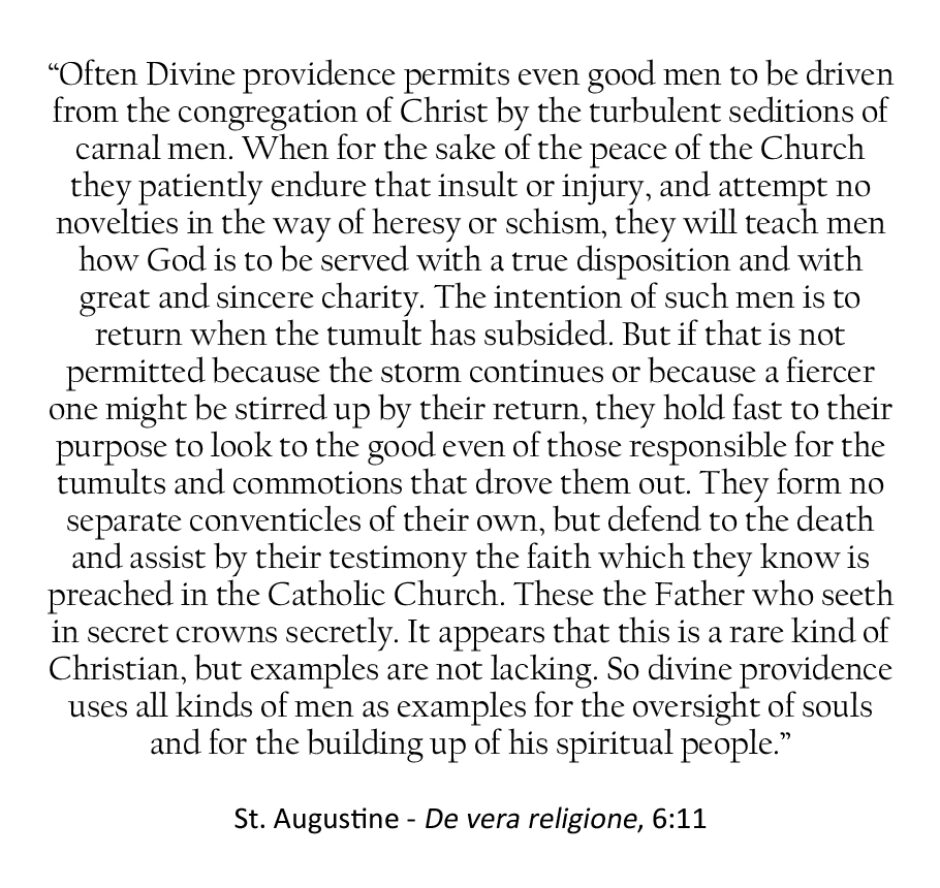
On the site Petrus there is an interview by Bruno Volpe with His Eminence Virgilio Card. Noè, [pronounced "No-eh"] "former papal MC, the predecessor of Archbp. Piero Marini.
These are very interesting comments. He speaks of the phrase of Paul VI that the "smoke of Satan" had entered the Church and what Paul VI meant by that phrase.
My translation and emphases.
Exclusive: the revelation of Card. Noè:" When Paul VI denounced the smoke of Satan in the Church, he was referring to liturgical abuses following Vatican II."
by Bruno Volpe
CITTA’ DEL VATICANO – He speaks with a thread of a voice and at times laboring for breath he it is so difficult he has to stop. But his mind is lucid and his heart is sound.. The interview with Virgilio Card. Noè, 86, Master of Liturgical Ceremonies during the Pontificates of Paul VI, John Paul I, and John Paul II, once the Archpriest of the Basilica of St. Peter and Vicar of the Pope for Vatican City, showed himself to be at the same time both touching and engaging. The Cardinal, who has very much abandoned public life because of the infirmities of old age, helps us, taking us my the hand, better to know a Pontiff – wrongly forgotten in history’s haste: Giovan Battista Montini. He reveals for the first time what Paul VI was referring to precisely when in 1972 he denounced the presence of the smoke of Satan in the Church.
Your Eminence, who was Pope Paul VI?
A real gentleman, a saint. I remember still how he lived the Eucharistic Mystery, with passion and participation. When I think of him I tear up, but not in the way of a hypocrite. I am truly moved. I owe him a great deal, he taught me a lot, he lived and paid a great price for the Church.
You had the privilege to be Master of Liturgical Ceremonies precisely because of the assignment from Papa Montini in the time of the post-Conciliar reform. How do you remember those times?
Splendidly. Once the Holy Father said to me, personally, and in a very tender way, how the MC ought to carry out his role in that particular historical period. He came into the sacristy. I drew near and he said: "The MC must foresee everything and taken everything on himself, he has the task of making the Pope’s road smoother."
Did he add anything else?
He affirmed that the spirit of the MC must not be shaken up by anything, large or small, that may be his own personal problems. An MC, he stressed, must remain also the master of himself and be the Pope’s shield, so that Holy Mass can be celebrated in a dignified way, for the glory of God and His people.
How did the Holy Father take the liturgical reform desired by Vatican II?
With pleasure.
It is told that Paul VI was quite a sad man, true or legend?
A lie. He was a good and gentle father, a gentleman and a saint. At the same time, he was saddened by the fact of having been left alone by the Roman Curia. But I would prefer not to talk about that.
As a whole, against the historians, You, as one of his closest and trust collaborators, describe Papa Montini as a serene person.
He was. Do you know why? Because he also affirmed that whoever serves the Lord cannot ever be sad. He he served Him especially in the Sacrifice of the Mass.
Paul VI’s denunciation of the presence of the smoke of Satan in the Church is unforgettable. Still today, that discourse seems to be incredibly relevant.
You from Petrus, have gotten a real scoop here, because I am in a position to reveal, for the first time, what Paul VI desired to denounce with that statement. Here it is. Papa Montini, for Satan, meant to include all those priests or bishops and cardinals who didn’t render worship to the Lord by celebrating badly (mal celebrando) Holy Mass because of an errant interpretation of the implementation of the Second Vatican Council. He spoke of the smoke of Satan because he maintained that those priests who turned Holy Mass into dry straw in the name of creativity, in reality were possessed of the vainglory and the pride of the Evil One. so, the smoke of Satan was nothing other than the mentality which wanted to distort the traditional and liturgical canons of the Eucharistic ceremony."
It is thought that Paul VI was the real culprit as the cause of all the ills of post-Conciliar liturgy. But based on what you have revealed, Eminence, Montini compared the liturgical chaos, even if in a veiled way, actually to something hellish.
He condemned craving to be in the limelight and the delirium of almighty power that they were following the Council at the liturgical level. Mass is a sacred ceremony, he often repeated, everything must be prepared and studied adequately, respecting the canons, no one is "dominus" [lord] of the Mass. Sadly, in many after Vatican II not many understood him and Paul VI suffered this, considering the phenomenon to be an attack of the Devil.
Your Eminence, in conclusion, what is true liturgy?
It renders glory to God. Liturgy must be carried out always and no matter what with decorum: even a sign of the Cross poorly made is synonymous with scorn and sloppiness. Alas, I repeat, after Vatican II it was believed that everything, or nearly, was permitted. Now it is necessary to recover, and in a hurry, the sense of the sacred in the ars celebrandi, before the smoke of Satan completely pervades the whole Church. Thanks be to God, we have Pope Benedict XVI: his Mass and his liturgical style are an example of correctness and dignity.
 CITTA’ DEL VATICANO – He speaks with a thread of a voice and at times laboring for breath he it is so difficult he has to stop. But his mind is lucid and his heart is sound.. The interview with Virgilio Card. Noè, 86, Master of Liturgical Ceremonies during the Pontificates of Paul VI, John Paul I, and John Paul II, once the Archpriest of the Basilica of St. Peter and Vicar of the Pope for Vatican City, showed himself to be at the same time both touching and engaging. The Cardinal, who has very much abandoned public life because of the infirmities of old age, helps us, taking us my the hand, better to know a Pontiff – wrongly forgotten in history’s haste: Giovan Battista Montini. He reveals for the first time what Paul VI was referring to precisely when in 1972 he denounced the presence of the smoke of Satan in the Church.
A few observations.
First of all, I have good and bad memories of Card. Noè.
He was the one who tore out the altar of the Chair in the apse of St. Peter’s. He was one of the main causes of the emasculation of the style of papal ceremonies and the minimalism we experience still in many places.
At the same time, I remember what a gentleman he was. I would from time to time encounter him in the Basilica in the mornings. I said Mass there everyday. In the corridor between the sacristy and the basilica he would step reverently aside for any priest going to or coming from Mass. He would say quietly to those going, "Memento" and to those returning, "Prosit". Old school.
Also, he made sure the Basilica was clean, which was a real change in those day that persists to today.
Still, while I take what His Eminence says about Paul VI cvm grano salis, I was very interested to read his high praise of Pope Benedict, whom he respects for his liturgical style.
Card. Noè wasn’t a real fan of the Polish Pope’s style, for sure, and there was some tension there. As a matter of fact Noè was just a little impatient and bossy with him, who wasn’t all that interested in the finer points of liturgy. I remember a story from a papal MC who was present one day toward the end of Msgr. Noè’s service as MC to John Paul II. The Pope would descend using an elevator to the floor of the basilica and then, after being greeted according to protocol by the MC and others, would go to vest. One today, as I said close to the end of Noè’s time, when the MC greeted the Pope, John Paul II responded "Oggi, Monsignore, faccio io papa!…. Today, Monsignor, I think I’ll be the Pope." Msgr. Noè moved along to a new post in the Congregation not long after that.
In any event, the comment Card. Noè made about decorum and the need to celebrate Mass well are spot on and he gets WDTPRS kudos.
As a matter of fact, there is something in his remarks that echos very strongly two of the main points I am trying to drive home on this blog.
First,

Celebrate Mass well, participate properly – affect the whole world. Celebrate poorly – affect the whole world.
What is most fundamental to celebrating Mass well?

Simply putting yourself aside and obeying the rules in the book, saying the texts well and properly, is already a huge step in the right direction.
They are the sine quibus non of a sound ars celebrandi, which Noè mentioned. This is the phrase that was used during the Synod on the Eucharist in 2005 and then which Benedict explained in Sacramentum caritatis.
































It’s surprising that he says “the smoke of Satan” comment was about the liturgy, since as I remember the context, it was pretty clearly in reference to the squabbling and fighting between factions after the Council. Granted, that may have been inspired by liturgical squabbles, but given the rest of the address in which His Holiness said it, the Cardinal’s “scoop” doesn’t seem to make sense.
What does it mean that Paul VI “was saddened by the fact of having been left alone by the Roman Curia.” Can anyone shed some light on this for me?
Can anyone tell me in what address “the smoke of Satan” comment was made?
Wasn’t Card. Noè the one responsible for replacing St. Peter’s old Altar of the Chair with the current ironing board?
I am in the minority here no doubt, but I am a great lover and admirer of Paul VI.
Servant of God, Paul VI, pray for us!
“He would say quietly to those going, “Memento” and to those returning, “Prosit”. Old school.”
Wow, yeah.
This really is amazing. First, Cardinal Noe seems to rely on some private knowledge of Paul VI’s mind. The context of the “smoke of Satan” remarks refers to general confusion within the Church, mainly concerned with matters of faith. Clearly, the liturgy is related to the crisis of faith, but it is surprising to hear that the Pope was thinking primarily of that at the time. I wonder what reason he has to believe this.
Second, there seems to be little in Cardinal Noe’s career to indicate that he believed in any such diabolical problem across the Church. As a senior curial official, he had chance to exert considerable influence on the celebration of the liturgy throughout the world. Did he say or do anything publicly, as his current successor at the CDW has, to try to correct this problem? To the contrary, it would appear that Cardinal Noe was a full member of the Consilium establishment, whose party line was that the liturgical reform was a great success.
Are we then to interpret these remarks as a change of heart? Or are they an assertion that the problems of “creativity” were the sins of others, and that everything he did personally was strictly in accordance with the mind of the Church? And, perhaps most puzzling of all, if Paul VI and (apparently) his liturgical advisors believed that there was a great liturgical crisis of diabolical original, how are we to make sense of what they did to address it?
Maybe he has been awakened. That really is all that matters now regardless of past positions. If so, I thank God for it.
Can you please tell us what ‘Prosit’ means please father Z? I presume ‘Memento’ means ‘remember me at Mass’ but I cannot work out ‘Prosit.’ Thank you.
Funny, during the almost 40 years that we wandered the Novus desert, I did not recall Cardinal Noe mention the “smoke of Satan” line even once. Now that Pope Benedict XVI issues SP, freeing up the beautiful TLM, we get this dog and pony show from Virgilio.
Prosit means “cheers to you”.
FrZ,
Did you have to get permission to say Mass at a side altar in the Basilica? Was there a lot of red tape involved in that? It seems like a neat privilege of the ordained.
Thank you RichR for translation.
I remember at Mount Saint Mary’s, MD, after the celebration of the Holy Mass, all of us in the sanctuary would recess back into the sacristy, line up before the crucifix, wait for the celebrant who would bow to the Crucified and say PROSIT = “May it benefit”. Our response would be: OMNIBUS ET SINGULIS = “For all and for the one”.
Fr. Z: is my translation correct? Or is it too dynamic equivalent? :)
“Can anyone tell me in what address “the smoke of Satan” comment was made?
Comment by TJB”
It was given On 29 June, 1972 by His Holiness Pope Paul VI On the feast of SS. Peter and Paul for the IX anniversary of his Coronation.
“Can anyone tell me in what address “the smoke of Satan” comment was made?
Comment by TJB”
It was given On 29 June, 1972 by His Holiness Pope Paul VI On the feast of SS. Peter and Paul for the IX anniversary of his Coronation.”
And an account of it, in Italian with extensive quotes, was available on the Vatican website, but does not seem to be there any longer.
Correction– I found it.
http://www.vatican.va/holy_father/paul_vi/homilies/1972/documents/hf_p-vi_hom_19720629_it.html
Asd you see, it isn’t a transcript, more of a description of the address, but there are passages quoted. I leave to our Italianists to give more details.
Thanks be to God, we have Pope Benedict XVI
I’ll second that! :-)
Deo gratias! Vivat Benedictus XVI!
Prosit indeed means “may it be of benefit [to you]” and the response is some form of saying “to you also”, and this can be in the form we heard about above, such as omnibus et singulis, or tibi quoque, vobis quoque etc.
Jimmy Akin has the full translation of the homily – or description with quotes, as someone else has pointed out that it actually is, and the context of the remark is nothing remotely close to what Cardinal Noe suggests:
“Referring to the situation of the Church today, the Holy Father affirms that he has a sense that “from some fissure the smoke of Satan has entered the temple of God.” There is doubt, incertitude, problematic, disquiet, dissatisfaction, confrontation. There is no longer trust of the Church; they trust the first profane prophet who speaks in some journal or some social movement, and they run after him and ask him if he has the formula of true life. And we are not alert to the fact that we are already the owners and masters of the formula of true life. Doubt has entered our consciences, and it entered by windows that should have been open to the light. Science exists to give us truths that do not separate from God, but make us seek him all the more and celebrate him with greater intensity; instead, science gives us criticism and doubt. Scientists are those who more thoughtfully and more painfully exert their minds. But they end up teaching us: “I don’t know, we don’t know, we cannot know.” The school becomes the gymnasium of confusion and sometimes of absurd contradictions. Progress is celebrated, only so that it can then be demolished with revolutions that are more radical and more strange, so as to negate everything that has been achieved, and to come away as primitives after having so exalted the advances of the modern world.”
http://jimmyakin.typepad.com/defensor_fidei/2006/11/the_smoke_of_sa.html
I interpret it as an awakening, a change of heart. And I’m happy for His Eminence, that he now sees things as he does, that he understands how important is the work of our Holy Father Pope Benedict in the field of Liturgy, and how essential is the recovery, “in a hurry”, of the sense of the sacred regarding the sacred mysteries.
And the fact that he recognizes that the sweeping movement of creativity in the liturgy – that was so harmful to catechesis, that seemed to erode the sense of the sacred, the sense of an actual belief in the Real Presence and the Sacrificial nature of the Mass, and that lead many among the faithful to believe that everything in the Church was subject to change, including Faith itself – was actually diabolical, is a very important thing.
He played an part important part in all the bad that happened, since papal liturgy is a model for every liturgical celebration. He was the first MC of bad quality vestments, of “inauguration Mass” for Popes instead of Coronations, of the obliteration of every special aspect that distinguishes a papal Mass, etc. Although that process was started by Bugnini as MC from 1968-1970, it was really accelerated by Noè as MC from 1970-1982. In spite of all the bad that he did in his important and influential role as Papal MC, it is good to see that he shows signs of a change of heart regarding the promotion of “rupture”. He is still alive, and is still capable of contrition and of receiving God’s forgiveness for any sin, no matter how great.
And I don’t think that a Cardinal, or any person, who is at that stage in life, already with difficulty breathing, would say what he said just for “diplomatic” purposes vis a vis Benedict XVI. As an elderly Cardinal holding no office, he doesn’t need anything at the present stage, and wouldn’t suffer any consequence on the part of the Pope even if he was opposed to Pope Benedict’s “plan”. So, I interpret his statement as a sincere statement of an elderly man who is looking back at, his times and his deeds, and by the grace of the Spirit of Truth, has come to realize the harm that was done to the Church by those who allowed the smoke of Satan to creep into the sanctuary.
May God forgive the Cardinal’s sins, as well as mine, and those of us all, that we may all one day contemplate Him face to face, in the joy of His kingdom.
And may our Blessed Mother ever Virgin, together with her Spouse St. Joseph, patron of the Universal Church, with the holy apostles Peter and Paul, and with St. Michael the Archangel, pray for the Church to God and protect and defend us against the evil one and his smoke, so that it be completelly expelled from the sanctuary, for the benefit of all mankind, and for the greater recognition of God’s glorious name. Sub tuum praesidium confugimus, Sancta Dei Genetrix. Intercede pro Papa nostro Benedicto. Intercede pro Ecclesia.
The Smoke of Satan entered the Church in the holes made in the floor when the altars were removed and replaced by picnic tables.
The reference to being “left alone by the Roman Curia” is interesting. Was it not said that Montini was made archbishop of Milan in part because he was disliked in the Curia? Then too there is the comment made by Archbishop Lefebvre that Annibale Bugninni had unusually good access to Pope Paul such that even Cardinal Villot, the Sect. of State, was amazed. Bugninni himself speaks of long conversations with the Pope in the late afternoon appointments In his book on the processs of the Reform.
Then we have the fact that the Implementation of the Liturgical Reform was taken out of the hands of the Curia and given to Bugninni and the Consilium. Could this be connected to a feeling of being isoated by the Curia?? Was Bugninni perhaps able to take advantage of the loneliness of the Pope? There is, of course the oft repeated tale that on the Monday after Pentecost Pope Paul entered the sacristy expecting to see red for the Octave. But instead all was green and when he asked about the Octave he was told, “You abolished it Holiness,” at which point he is said to have wept.
This is not to imply that Pope Paul had no input. He appears to have intervened and saved the first four days of Lent including Ash Wednesday and I believe that he insisted on the reference to Our Lady in all of the Eucharistic Prayers and yet one wonders what kind of influence Bugninni might have had on an isolated Pope.
Now I hssten to remind readers that the picture I have pieced together here is very much a matter of speculation but it could possibly shed some light on a very big mystery which is why did Paul VI approve the reform.
Father,
I think in Germany it is (or was) more common to say “proficiat” instead of “prosit”. Have you heard that, too?
Sad to be taught 36 years after, the exact meaning of a papal quote.
I would have prefered Paul VI to say clearly in 1972:
“The current liturgical abuses are truly inspired by the Devil”
That sounds better don’t you think so?
And that would have possibly avoided a lot of further abuses.
Where I occasionally serve Mass, the priest concludes his prayers in the sacristy after the completed celebration by saying: Prosit nobis sacrificium. To which the servers respond: Deo gratias. I have also heard the form Proficiat nobis sacrificium being used by a visiting priest.
Regarding the the dichotomy “smoke of Satan” meaning:
a) “liturgical abuse”
b) “loss of faith”.
Might they not have been uttered by Pope Paul more than once,
in different contexts?
Now I hssten to remind readers that the picture I have pieced together here is very much a matter of speculation but it could possibly shed some light on a very big mystery which is why did Paul VI approve the reform.
Comment by David O’Rourke
I’m not so sure much light can be shed on it. Paul VI was an enigma–a man who loved the Church but who knowingly signed off on things that he knew who do it harm.
Gregor: I think in Germany it is (or was) more common to say “proficiat” instead of “prosit”. Have you heard that, too?
Now that you mention it, I have a vague recollection of proficiat. Means pretty much the same this as prosit. Perhaps in German speaking lands proficiat is used because of common use of prosit when drinking beer, et al?
Having lived through and closely observed these events, I see no dichotomy between the “liturgical abuse” and “loss of faith” interpretations of the smoke of Satan. It has been apparent all along that the former implied the latter.
Indeed, it is clear from the autobiography of Ab. Annabale Bugnini and the more recent book of Ab. Piero Marini that the alteration of faith was a principal prior motive for alteration of the liturgy. They understood from the beginning that the sure way to change people’s beliefs was to change the liturgy. Because, for pre-Vatican II Catholics the liturgy was the fixed lodestar. If it was subject to change, then so were all the fundamentals of faith.
So perhaps it is no surprise that, by 1972 only 3 years after his promulgation of the Novus Ordo, Pope Paul VI might already have come to realize that “Lose the liturgy, Lose the faith”. According to some (not well documented) accounts, this realization was responsible for the depression into which he allegedly fell during the remaining years of his life.
However, some here may be unaware that the principal seeds for a 40-year disintegration of the liturgy had already been sown prior to the 1969 promulgation. For instance, vernacular and versus populo celebration, together with the elimination of some opening penitential prayers and the final Gospel — paving the way, some would argue, for the deletion of the offertory oblation — were approved by the “1965 missals” that were issued by various national bishops conferences (including the U.S.) and were presented as the definitive fruit of the Council. A simplification and loosening of the formerly inflexible rubrics was issued in 1967. The three alternative Eucharistic prayers were approved in 1968. So much of what many assume to be later Novus Ordo innovations were, in fact, already in place, both officially and generally in practice.
Of course you can read this cvm grano salis but I was once told by Fr. John Hardon a story concerning Paul VI and the New Mass. Fr. Hardon related to me and another lady that Paul VI had become distressed by the abuses of the liturgy after Vatican II and was determined to have the Novus Ordo said in Latin. Apparently he planned to issue some sort of direction to this effect. Cardinal Suenens got wind of what the Pope wanted to do and orchestrated a world wide response of bishops. Cardinal Suenens chose a day and on that day a majority of the world’s bishops telegrammed the Vatican protesting the Pope’s hoped for Latin requirement with threats to disobey.
The story was told to me and my friend in response to our query concerning just how powerful Cardinal Suenens was in the 1970s. I was wondering if anyone else had heard of this?
Similarly, Paul VI’s publication of the Jubilate Deo would seem to indicate that he had the use of Latin and Gregorian Chant in mind.
Cardinal Suenens,according to Iota Unum,was very influential with Pope PaulVI and knew it.However his constant travelling all over the world led the Bishops of Belgium and the leaders of his own dioces to ask him tosstay home and run his diocese.Emile Cardinal Leger,a late Archbishop of Montreal who resigned his post to become a missionary in Africa,issued a plea to Suenens to keep his mouth shut for several years so that the church could advance.It seems the further from Vatican II the lesss influence with other bishops he had.Towards the end of his life he was totally absorbed with the Charismatic Renewal and became more orthodox.Remember he had dissented from Humanae Vitae,
Should be:
Paul VI was an enigma—a man who loved the Church but who knowingly signed off on things that he knew would do it harm.
Comment by RBrown
No matter where one might stand on the issue of the appropriateness of a papal coronation today, we should only look at the letter of Sacrosanctum Concilium to see that the Council Fathers themselves called for at least some moderate simplification of the rites. Cardinal Noe wasn’t responsible for bad quality vestments, you might not like them because they are alot simpler, but that doesn’t mean they’re of bad quality. For ugliness in vestments I think we have Archbishop Marini to thank. Most of the gothic chasubles used at the Vatican (since the mid-60’s according to many photographs, at which point Cardinal Dante I believe was still on board) are of high quality satin or silken material, some of fine damask. Even the concelebrant’s vestments were of very decent quality before the later years of Marini I’s tenure (all of which Marini II seems to have immediately stopped using) Perhaps Noe was responsible for alot of the sobriety and simplification we see, but I would prefer him a thousand times over to Archbishop Marini – Cardinal Noe never brought in liturgical dancers or shirtless men banging drums – or even an indigenous “limpia” of the Pope by an Aztec WITCH. Please remember that it was Noe who kept the sedia gestatoria in use, all the way through John Paul I – and it was Noe who did not think to remove the public “obéissance” of the College of Cardinals in the Papal Mass of Inauguration. Oh and musically, Cardinal Noe’s liturgies were still graced by the genius of Monsignor Bartolucci, disgracefully removed by Noe’s aforementioned successor. Thank God for this apparent and very public “change d’avis” from the Cardinal. I too believe in his sincerity. It’s important, I think, to retain some perspective before judging him too harshly, maybe he too, like the Pope he served so well, was a bit of an enigma….Mr. O’Rourke, I had heard stories attributed to Paul VI similar to yours – particularly one that alleges that the Pope overruled Bugnini’s desire to alter the words of the Roman Canon, though he succeeded in eliminating several of its gestures.
“Simply putting yourself aside and obeying the rules in the book” is a multifaceted gem by itself, intentionally or not
This was a very interesting interview . God Bless Cardinal Noe!
So when I return to the sacristy I always say ‘Benedicite Pater Reverende’??
Fr.Z or anyone who knows was it Msgr. Noe the one who created ‘clasped hands’ vs
‘prayer position’ for the Master of Ceremonies??
God Bless!
…particularly one that alleges that the Pope overruled Bugnini’s desire to alter the words of the Roman Canon
My recollection is that Bugnini and the Consilium actually hoped to ditch the Roman Canon entirely, but were scotched by Paul VI, in one of his finest actions as pope, this being the thread by which hung the historic canon dating (at least in part) back to apostolic times, in which not a single Latin word had been changed since the 6th century when Gregory the Great added the final clause (“save us from damnation”) of the Hanc igitur, until 1962 when John XXIII inserted St. Joseph in the Communicantes.
Jeff said: “I am in the minority here no doubt, but I am a great lover and admirer of Paul VI.”
I honestly don’t know very much about him other than bits and pieces here and there. I read he wore a hair shirt daily for mortification. Is there a good biography of him anywhere?
MC: was it Msgr. Noe the one who created ‘clasped hands’ vs ‘prayer position’ for the Master of Ceremonies?
That may indeed be the case.
The thing I find hard to grasp is if Paul VI was deeply disturbed by the abuses why did he not do whatever it took
to stop them or at least speak out against them forcefully and unequivocally. Why has it taken 40+ years to define what he meant by smoke? The shepherd lays down his life for the sheep not watch the wolf enter and wring his hands. I am no fan
of Paul VI but I feel his ticket to heaven was Humanae Vitae. For that, God bless him a thousand times.
“My recollection is that Bugnini and the Consilium actually hoped to ditch the Roman Canon entirely, but were scotched by Paul VI. . . ”
Not true, according Louis Bouyer’s “Eucharist.”
This entire discussion is superb. Thank you FrZ.
I was only 20 when Paul VI died, but I believe he carried his cross bravely and with dignity through the treacherous theological conflagrations and Church politics of his time. Thank God for his tremendous spirit and intellect. He was a gift from Heaven.
Pope Paul VI refused to meet with the religious superiors who led the Consortium Perfectae Caritstis,the organization of traditional women religious orders because he considered them to be opponents of the Council.He was told this falsehood by those around him especially Cardinal Villot.The priest from my diocese who accompanied them to Rome was a close confidante of Cardinal Raimondi,who told him that Pope Paul did not know what was really going on in the church.When Pope Paul started to find out what was really happening he asked the Sulpician theologian and friend (although extrememly conservative)bishop Eduard Gagnon to investigate the curia and find out if there were “enemies”there.Gagnon told me that the Pope meant Masosns.He also ordered him to investigate the Gregoran University.When Paul died Gagnon fled Rome because he had made many enemies there because of the investigation.He went to the seminary at Cali Columbia in South America and vowed never to return to Rome.Then came JPII who ordered him back to Rome and named him president of the Pontical Council for the family and then created him a Cardinal. Pope Paul made some bad moves when he retired early Cardinals Oddi and Pallazini.Theyy were considered too rigid andpre-conciliar and outspoken.JPII called them back to head dicasteries in the Curia.Poor Pope Paul.He was not theman to implement the council if anyone at that time could do so without mistakes.He had doubts about the Novus Ordo but came to defend it.I remember when growing up reading how he was a protoge of Pius XII who said upon appointing him to Milan,”This is my gift to the people of Milan”.
My own copy of Bouyer’s “Eucharist” is not ready to hand for me to check the date but if memory serves me correctly it was published before the Liturgical Reform. In his post reform book, “The Decomposition of Catholicism,” Bouyer was, as I remember, bitterly critical of the New Liturgy.
In the entire story of the Reform, one thing that has always interested me is the contents of the first schema on the Liturgy which was rejected by the bishops at the first session of the Council. This was during the reign of Bl. John XXIII. My understanding was that a lot more than the Pope was new by the time of the second session. Surely the first schema must be around somewhere.
I was only 7 years old when Paul VI died. He was “my first Pope”.
“Science exists to give us truths that do not separate from God, but make us seek him all the more and celebrate him with greater intensity; instead, science gives us criticism and doubt. Scientists are those who more thoughtfully and more painfully exert their minds. But they end up teaching us: “I don’t know, we don’t know, we cannot know.” The school becomes the gymnasium of confusion and sometimes of absurd contradictions.”
Sounds like the “Dictatorship of Relativism” of Pope Benedict XVI.
I live in Belgium and Cardinal Suenens was my first Cardinal. I was only 9 years old when he retired.
It is true that Belgium was too small for him. Belgium, and especially Flanders (the Dutch speaking part of Belgium), was one of the most Catholic countries in the world (99%). We were famous for our missionaries.
When you look at the Catholic church in Belgium today, it is a complete disaster. It is even worse than in Holland.
We have legal abortion, gay marriage, legal euthanasia, a divorse avalanche, the sacraments being neglected, fewer and fewer Catholics have their children baptised (many young unmarried “catholic” couples are hostile to it), Catholic Youth Movements (see Card. Cardijn) openly supporting and applauding “gay-pride-parades”. Last year, 4 dioceses closed the doors of their seminaries. They have opened a new one. They only have 10 or so candidates to become priest in that new seminary (4 dioceses!).
Yesterday, I had a discussion with a 22-year old “catholic” teacher. He could not understand why according to Belgian law, minors are not allowed to use “illegal” soft-dugs. Within certain limits adults can use “illegal” soft-drugs (compare to Holland).
They are creating a nihilistic society “Beyond Good and Evil” in the “Heart of Europe”. Today, more than 50% of the inhabitants of Belgian capital Brussels, the so-called “Capital of Europe”, are muslim.
They are destroying Europe and Western Culture and Civilisation. It is an act of sheer self-destruction.
Belgium is probably the country in which the most bitter fruits of Vatican II are gathered. But I am not sure, whether we have seen the worst. It is probably not a coincidence that Card. Suenens was our Archbishop.
Although it is difficult to be optimistic, I still believe that Liturgy is “the tip of the spear”. Only Liturgy can save the World.
Because Jesus Christ is our Lord and because God is Love.
We in Belgium need your prayers.
For the last 40 years and more, our
heirarchy, from the Popes on down, have cared for absolutely everything
and everyone, (especially being accepted by the “woderful new
world order) EXCEPT the spiritual welfare of their OWN sheep,(WE CATHOLICS!)
God help them, and God help us!
This is very interesting and, to me at least, puts the lie to the rad-trad claim that “the smoke of satan” ought be understood to mean the Magisterium had been corrupted and turned from the truth due to the influence of satan.
Oh, I forgot to add that ever since I first heard that quote I understood it to mean disobedience – generalised and specific.
From the Bishops to the laity, we Catholics have been co-opted by the secularised liberalism our lives are suffused with.
It is not odd that so many in the Body of Christ would have had our Faith and obedience weakened by such a powerful pathogen but to turn around and blame the Church as the source of that pathogen was to add scandal to illness.
The fault is in ourselves not Holy Mother Church. Pray this news will cause a metanoia in the rad-trads and schismatics.
Spartacus wrote:
“From the Bishops to the laity, we Catholics have been co-opted by the secularised liberalism our lives are suffused with.
It is not odd that so many in the Body of Christ would have had our Faith and obedience weakened by such a powerful pathogen but to turn around and blame the Church as the source of that pathogen was to add scandal to illness.
The fault is in ourselves not Holy Mother Church. Pray this news will cause a metanoia in the rad-trads and schismatics.”
)(
This is a false argument. The hierarchy of the Church is responsible for the horrible changes occurring over the past forty years, and ultimately Paul VI, not the laity. How dumb! If you think the laity had that much ability to be at fault, do you not realize we would not even be going through this? We would have restored things long ago.
When GK Chesterton responded to the London Times call for commentary on what is wrong with the world he wrote..
“I am.”
That was the shortest and best response.
David,
“Eucharist: Theology and Spirituality of the Eucharistic Prayer” was first written in 1966, with a 1968 English edition, which is the copy I have. At the end of the book, he discusses the Consilium and provides his own translation of the three new eucharistic prayers that, a year later, would be authorized by Paul VI. He is, in fact, quite complementary and positive in his evaluation of these new prayers. In any event, this is what he had to say about the Consilium and the Roman Canon:
“Along the way, the Consilium naturally came across those pseudo-critical interpretations of the Roman Canon which tended either to cast it aside altogether or to refashion it fancifully. We have demonstrated the vanity of such ideas, and the Consilium rightly refused to involve itself in such a disastrous deadlock.” p. 446.
Elsewhere in the book, he denounces “ecumencial masses” and do-it-yourself liturgies and warns of the malign influence of liberal pressure groups on liturgical reform.
I have not read his book denouncing liturgical reform, so it would be interesting to know where he thought that it started to go amiss and whether he changed his mind on some things he said just a few years earlier.
In “The Destruction of the Traditional Roman Rite”, a review of the book The Liturgical Movement—Guéranger to Beauduin to Bugnini by Fr. D. Bonneterre, Michael Davis writes:
“What the experts had been planning was made clear on 24 October 1967 in the Sistine Chapel, when what was described as the Missa Normativa was celebrated before the Synod of Bishops by Father Annibale Bugnini himself, its chief architect. ….. The Missa Normativa was imposed on Catholics of the Roman Rite in 1969 as the Novus Ordo Missae, with a few changes, the most important of which was the restoration of the Roman Canon on the explicit instructions of Pope Paul VI.”
And in regard to the views of Bouyer:
“It would have been useful had [Bonneterre] quoted the reaction of a priest such as Father Louis Bouyer, whom he cites quite often, to the actual reform that has been foisted upon us. He stated in 1969 that ‘We must speak plainly: there is practically no liturgy worthy of the name today in the Catholic Church'[12]; and ‘Perhaps in no other area is there a greater distance (and even formal opposition) between what the Council worked out and what we actually have'[13]; and that, in practice, ‘those who took it upon themselves to apply [?] the Council’s directives on this point have turned their backs deliberately on what Beauduin, Casel, and Pius Parsch had set out to do, and to which I had tried vainly to add some small contribution of my own.'[14]”
“In 1975, Father Bouyer stated: ‘The Catholic liturgy has been overthrown under the pretext of rendering it more acceptable to the secularized masses, but in reality to conform it with the buffooneries that the religious orders were induced to impose, whether they liked it or not, upon the other clergy. We do not have to wait for the results: a sudden decline in religious practice, varying between twenty and forty per cent among those who were practicing Catholics…. Those who were not have not displayed a trace of interest in this pseudo-missionary liturgy, particularly the young whom they had deluded themselves into thinking that they would win over with their clowning.'[15]”
The references in the first paragraph above are to Bouyer’s 1970 book The Decomposition of Catholicism; the 1975 book is his Religieux et clercs contre Dieu.
In Dutch we say “Proficiat”. My parish priest also says it to me at the end of Confession. For some reason I always thought it meant “congratulations” (“gefeliciteerd”) but I guess it’s not too off the mark :)
Regarding the Monday-after-Pentecost story, it’s a shame that Paul VI didn’t have the same confidence in his royal authority that Franz Josef did in “Amadeus”. “Well, let’s hear it with the music anyway.” “But, Sire…” “Oblige me!”
Whichever way it is studied, the arrival of the new liturgy in the 1960s which was intentionally stripped of its specifically Roman Catholic atmosphere and content, was mainly responsible for the confusion together with the resultant tragic un-Catholic liturgical norms and values we witness today. There was no excuse for the wholesale overthrow of The Holy Mass in Latin. The “vernacular only” edition is contrary to the essential liturgical Roman Catholic tradition. This has already been demonstrated.
Mgr Luigi Villa called it “The Ecumenical Mass” and it certainly is that. It has permitted all forms & permutations allowing liturgical interface with protestant and non-christian groups. This has to be recognised as it represents one of its significant outcomes. Furthermore, disillusionment with the post-conciliar church, with the NO liturgy and its consequences on parish life have led to the growth of numerous small near-independent “ecclesial” communities and movements like the Neo-Catechumenal Way, charismatics, Focolare and so on who have sought to reconstruct a novel approach to the doctrinal and liturgical orientation of the modern church. Without the NO liturgy this would not have been possible. Anyone who has attended, for example, Neo-catechumenal catechesis could hardly escape the negative view the catechists have of the official church liturgy & the church’s pastoral approaches.
The consequent policy of inculturation is the “enfant terrible” of the new liturgy. It is from within the NO liturgical movement that are contained the seeds of disunity and discord which bedevil the contemporary church since there are now dozens of groups acting out their own liturgical forms every Sunday & on weekdays in many vernacular languages. This situation can no longer be construed, strictly speaking, as catholic neither can be seen in many cases as holy. Indeed, it is an objective testimony to the “smoke of Satan” in the sanctuary which itself has disappeared from many venues of such liturgies along with the red lamp indicating Real Presence. Did not the late Cardinal Pacelli, later Pope Pius XII (RIP) state this would happen one day? The suicide of altering the faith in the liturgy calls to mind Pope St Pius V’s invocation in “Quo Primum” to the wrath of Almighty God for such alterations.
Nearly every aspect of the imposition of the NO liturgy and the supposed “abrogation” of The Latin Mass that never actually was, has often been shrouded in obfuscation and dishonesty. While one part of the hierarchy has been looking the other way not noticing another part has been involved in actively propagating the abuses that abound today. The SP of Pope Benedict XVI has done much generally speaking, to open the doors to the fresh air of honesty about this entire affair. Finally, we can discuss issues without being threatened with accusations of “schism” and “excommunication”. Finally, we can set about liturgical restoration if the anti-traditional liberal wing of the hierarchy will permit. It really is time to be honest. Please, have we not suffered enough?
When will we get the altar rails back? So we can kneel down to receive our Lord on the tongue. Without having to say Amen before.
What are they thinking in the Vatican? Where is the reform of the reform? Do the Cardinals care? What are they waiting for? Dont they see what happened with all the liturgical abuses? Is this still considered important to them?
The “Smoke of Satan” Paul VI was refering to was the New Order of Mass aka the novus ordo – facing man, changing words, the guitar mass, the clown mass, the dancing mass, the feather mass, the mess of mass etc.
As a 58 year old man, I was there before and after the smoke of satan had entered the Church. Let’s see, how can I catalogue the results of tis infiltration:
In high school after Vatican II, our teachers- lay and brothers- began to tell us that the Bible was a myth. One teacher told us in Freshman year that there was no Flood, no Adam and Eve. Another took the rosary at the end of a ruler and w/ disdain on his face tossed it in the trash can saying: “We don’t need this junk anymore.”
In sophomore year, teachers taught us that ‘primacy of conscience’ was now paramount. translated, this meant that if we ‘really loved the girl’ then pre-marital sex could be sanctioned. This to 15 year old boys!
Convents emptied out along w/ rectories. Now we are short of priests and nuns. 2000 of transmitting the Deposit if Faith were destroyed. In 1973, Cardinal Suenens of Belgium began distributing Communion in the hand, an abomination until the ‘spirit of Vatican II’, whatever that is, took charge. Before communion, the priest washes his hands. If you take communion on the hand, where were your hands before touching Or Lord? On a filthy steering wheel, a soiled handkerchief, shaking hands w/ a neighbor.
In college, I attended a “Mass” that was to celebrate the ‘Rite of Spring”???? It began w/ a young man dressed in a loincloth, barefoot, sparkles in his hair, twirling a fan and dancing down the aisle. This in a Catholic college. It was about as pagan as you could get.
In his brilliant book, ‘Windswept House’, Malachi Martin, in novel form, describes the enthronement of Satan at the Vatican, precisely as warned by Our Lady of LaSalette. Pope Paul VI was a sad man who oversaw the self-demolition of the Church that opened the dors to the rectories of Communists, Masons, pedophiles, active homosexuals, heretics and Modernists. We were warned by prior Popes especially Saint Pope Pius X not to mention Our Lady of Fatima, whose request to consecrate Russia awaits obedience while Rome seeks to exercise Pride instead and impose a human solution on a spiritual malady.
I am afraid that God has more housecleaning to perform. The grip of Modernists is very strong and they will not give up easily and will drag many more souls to Hell along with themselves unfortunately. However, they are aging and dying. Without a miracle, it will be up t another Pope to consecrate Russia and then all of the smoke will dissipate and God will be worshipped again.
Our Lady of Fatima pray for us.
As the father of a seminarian who was homeschooled through high school, I can tell you assuredly that the future of our Holy Catholic Church is solidly in the hands of Almighty God. There is very much reason for hope! So many of these young seminarians are on fire for the Catholic faith and will bring about the renewal for which we all pray. After so many, many years of zero vocations to the priesthood, our parish now has 4 young men studying for the priesthood in addition to one who was ordained last year. All of these men are from solid, Catholic, homeschooling families. All of these men have a parish behind then who adore our Lord in perpetual adoration. This is our future, and it is bright indeed.
A Hebrew family had seven sons. Every single one of them became a High Priest to the Temple. The elders were interested in how this family ended up with every son becoming a High Priest, and holy ones at that. The elders asked the father. He didn’t know- he raised his family as every other Hebrew did. So they asked the mother “Do you know why your sons all became High Priests?” She said, “Yes. The rafters of my house never saw my hair.”
We have so little that we can give to God. We give Him our sins, our love, our prayer and our worship. The little bit extra we can give for reverence at the Liturgy, for the benefit of the priesthood, is what little glory we have. Scripture tells us that man’s glory is the woman; the woman’s glory is her hair. To return that little tiny bit of glory to God, during mass, by putting on a mantilla, on behalf of the priesthood, is a ridiculously easy sacrifice to make but in my experience God blesses this little bit very much.
Perhaps in areas where things have gotten so desperate, God will accept that offering from consecrated virgins or widows, or even just laywomen like myself; to help return the priesthood to its best, liturgy to its most beautiful and reverent.
Joseph got Mary up in the middle of the night when the angel warned him that the Divine Child was in great danger. She picked up and left with him without argument. In today’s world, no woman would accept being woken in the night to pick up and flee without some proof that she could accept, especially if she was facing danger, homelessness, and inconvenience. Women in general are NOT submissive in the slightest anymore. If that were to happen today, the Child would have been killed.
Women having their heads covered was one of the BIG CHANGES at liturgy from Vatican II, an earth-shattering change no matter what else happened. It precipitated a huge crisis of vocations across the board and a rebellion from women- the heart of the family and the haven of the unborn; after that change abortion became widespread globally and chastisement inevitable. I suggest that it is possible that a return of devoted women to wearing a mantilla at mass will restore much that was lost.
There was a Hebrew family with seven sons, all of which became very holy High Priests. The elders were interested in how this great thing happened, so they met with the father and asked him. He did not know, as he had raised his family as had other Hebrew families. So the elders asked the mother if she knew. “Yes,” she answered. “The rafters of my house never saw my hair.”
An angel woke Joseph in the middle of the night, telling him to flee with Mary and the Divine Child as Herod was seeking Him to kill Him. Mary picked up and left without argument.
Far and away the biggest change in the world after Vat II was women. Not only was there an end in convents and in general society to covering the head at mass, there was a huge increase in divorce, promiscuity and in abortion. Vocations were devastated, perversions entered even into the priesthood. In today’s world no woman would pick up and run away at the word of her husband, without irrefutable proof, especially if facing homelessness, danger and inconvenience. If that event happened now, it is likely the child would have been killed. Women are, and are meant to be, the haven of the unborn, the heart of the home, the caretaker of the weak and sick, the one who cherishes the gifts God has given.
We have so little that we can give our good God. We give him our sins, our love, our prayer. It is said in scripture that the glory of man is woman, the glory of woman is her hair. By wearing something on the hair at mass, we give back our little bit of glory to God, for the benefit of the priesthood and the unborn.
It isn’t much, I know, but in my experience God blesses this effort at reverence at the Mass. Perhaps in the most desperate places, good women could return to prayer and mass with their little lace mantillas and pray for the priesthood, the Church, the unborn, families. I think it would make a huge difference.
It seems to me that the obvious possibility of what Pope Paul VI meant has not been considered…could it be that many, many priests, bishops, cardinals and yes even popes took up smoking tobacco products and in some cases pot? Smoking these things ‘alters’ ones very being…especially the mind/spirit part. That would lead to ‘poor’ choices in functioning as a spiritual leader. That could explain allot of ‘bad’ behavior that has taken place for a very long time! I feel certain there must be ‘former’ smokers who know what I am talking about!
Anyone agree?
It has been nearly 2,000 years since Jesus Christ created the Catholic Church in 33 AD and made Peter His first Pope when He said, “And I say unto you, that thou art Peter and upon this rock I will build my church and the gates of hell shall NOT prevail against it.” (Matthew 16:18)
It should be no surprise that as long as “the church” is made up of “flawed” human beings (as we ALL are), there will be good people and bad people, with their own ambitions and personal “agendas.”
This “battle between good and evil” will continue until Christ returns one day . . . but NEVER forget that, in the end, God has promised us that good will TRIUMPH over evil!!!
It has been nearly 2,000 years since Jesus Christ created the Catholic Church in 33 AD and made Peter His first Pope when He said, “And I say unto you, that thou art Peter and upon this rock I will build my church and the gates of hell shall NOT prevail against it.” (Matthew 16:18)
It should be no surprise that as long as “the church” is made up of “flawed” human beings (as we ALL are), there will be good people and bad people, with their own ambitions and personal “agendas.”
This “battle between good and evil” will continue until Christ returns one day . . . but NEVER forget that, in the end, God has promised us that good will TRIUMPH over evil!!!
So, the “smoke of Satan” may enter the Church . . . but will NEVER be allowed to destroy the Catholic Church that Jesus created in 33 AD.
To Trey,
I believed when the good Cardinal said,”Paul VI “was saddened by the fact of having been left alone by the Roman Curia.” he was refering to the negative reactions of his closest friends to his encyclical letter,” Humanae Vitae” released in 1968 about the artificial birth control. After that the pope was saddened and didn’t make another letter to my knowledge.
Eventhough its hard and difficult, the church will never stop proclaiming and teaching the TRUTH of God, even if she loses an entire country (like what happened to England in 1500’s). Come to think of, prior to the 30’s, ALL christian churches agreed that contraception was UNNATURAL and intrinsically wrong and thus contrary to the will of God, but who stands alone today?
Pope Paul VI was a hero, AN unsung hero of the Catholic Church!
The letter was very prophetic and we can only see now the devastation and the moral degradation after the legalization of artificial birth control, from “free love-hippie movements in the 60’s to free sex in the 70’s and to all kinds of pornographic materials abound and gave birth to the abortion explosion.
That’s why it makes sense when the Lord promise to the Seat of Peter, “the gates of hell will not prevail against you.” (no heretical teachings).
May God bless our church!
We Catholics need to return to our traditions before Vatican II:
-the Latin Mass
-the priest facing the altar (not the people)
-receiving Holy Communion on the tongue (not in the hand)
-kneeling at the altar railing to receive Holy Communion
-women dressing modestly and wearing some type of head covering (a scarf)
-returning to the Sacrament of Confession at least once a month.
-and finally . . . abandoning New Age “Spirituality” (which is not only of the Occult, but also the Anti-Christ “theology” and definitely from Satan himself) which is causing Catholics to abandon their faith in record numbers!!!
We Catholics also need to go back to praying the Rosary every single day. Our Blessed Mother has said that praying the Rosary will help protect us against Satan. He hates the Rosary, because he knows that it has been promised that Mary, the Mother of God will one day “crush the head of Satan.”
If you have forgotten how, you can tune in to the Catholic Cable channel: EWTN (Eternal Word Television Network). They say the Rosary 4 times a day (6:30 AM, 10:30 AM, 2:30 PM & 8:30 PM Central Standard Time).
It is also a tremendous “stress reliever” to pray the Rosary with others. Your anxiety level will drop . . . and just melt away!!!
Gene Tullio
Thank you – that could almost be a page out my own experiences too. Many of the priests who taught me at secondary school left the priesthood – one ,the headmaster, had an affair with the French teacher’s wife while another, a personal friend of the family, ran off with a divorced woman & her child before his priestly status was revoked. Among others!! All that we had embraced in The Faith became a target for derision and mockery. I shall never forget the disgracefulness of it. It remains embedded in my soul. Thank you Pope Paul VI (RIP). Subsequently, it baffles me how his successor of longstanding could have been his most enthusiastic supporter for his eventual canonisation.
The new mass changed the meaning of the words of consecration which the
church has always taught invalidates the sacrament & its church teaching that
to receive a probable or doubtful sacrament would be a mortal sin..Also Paul VI
changed the rite of ordination..his new form suffers the same defects as the
Anglican rite which Pope Leo infallably declared invalid. Thus new mass and new
ordination rite are invalid.
[To which Fr. Z replies: This fellow is wrong.]
The new mass changed the meaning of the words of consecration which the
church has always taught invalidates the sacrament & its church teaching that
to receive a probable or doubtful sacrament would be a mortal sin..Also Paul VI
changed the rite of ordination..his new form suffers the same defects as the
Anglican rite which Pope Leo infallably declared invalid. Thus new mass and new
ordination rite are invalid.
I would like to ask why Father, you have such a chip on your shoulder over :
a. Pope John Paul II [A chip on my shoulder about Pope John Paul II? That’s one of the strangest things I have read in a while.]
and
b. Archbishop Piero Marini
The fact that you virtually accuse the late Pope of not caring about the liturgy is nothing sort of a disgrace. Your constant abuse of what Archbishop Marini did is nothing sort of shameful.
It is a shame that you have the “courage” to write rubbish about the former Papal MC, whileyour (US) Bishops didn’t have the same courage in dealing with the sex abuse crisis. [Caught once again in the iron jaws of logic.]
Callaghan:
It always comes back to the sex abuse issue, doesn’t it. Such clarity of thought.
All I will say is Bernard Francis Law
Need I say more?
If that is the standard, God help you
RE: My previous comment.
Dear Father,
I would like to take back my previous comments and to sincerely apologise for any offence.
Many thanks
Father,
You say of His Eminence Virgilio Card. Noè, “He was the one who tore out the altar of the Chair in the apse of St. Peter’s. He was one of the main causes of the emasculation of the style of papal ceremonies and the minimalism we experience still in many places.”
To be honest, I’ve become very very skeptical of the formation priests, especially US priests, receive. I am a Catholic, went to a Jesuit university, took many theology courses and quite a few philosophy courses. Reading theology books comprises a significant portion of my non-working time.
Are there any official church references, statements, or writings directly attributable to Card. Noe you can point us to that would support these claims?
Growing up under the Novo Ordo Mass and having recently found the Tridentine Mass I can honestly say that I feel a horrible thing happened in the implementation of Vatican II. I am not of the opinion that Vatican II was the work of Satan or other similar opinions. I however feel deeply that the priesthood and laity have suffered greatly under some grave errors that came about during the excitement of “progress” and “ecumenicism”, and the run from Tradition.
Thank you.
Father,
You said, “[To which Fr. Z replies: This fellow is wrong.]” To the “The new mass changed the meaning of the words of consecration… …suffers the same defects as the Anglican rite which Pope Leo infallably declared invalid. Thus new mass and new ordination rite are invalid.”
Can you please give the Faithful more than just “he’s wrong”.
Maybe you’ve written to these assertions in the past, or of others who have. If so can you at least provide a link? The Faithful NEED more than just “because I said so” from their priests.
The technological advances today can in many ways free priests to fulfill St. Francis’, “Preach the Gospel at all times and when necessary use words”. The efficiency of wheat and chaff hyperlinks vs. the din of Google I think is one of the future’s key battle grounds of truth.
Im somewhat sorry to ask for this, as I know the reduction in numbers in the priesthood has created great demands upon all priest. However the scandals of homosexual abuses within the U.S. Catholic community and the significant support laity have heard from the pulpit for now President Obama have gravely damaged the credibility of the priesthood of the United States. The latter of these recent events was, thank God, not at the Bishop; though the USCCB seemed to speak with a muddled legal tone than the authority of Bishops.
Father, with my own ears Ive heard priests during a homily say “dont bring that venial crap to confession, I only want to hear the real stuff”. These kind of things are being said during Mass. The Faithful are in desperate need of help.
Father, you seem like a good priest. I like very much your defense of the Mass and your ministry to Catholics regarding the important this greatest prayer of the Church. That is why I have taken the time to write these two posts.
I hope you can help us.
Thank you
Joe
When the smoke of satan permeates the whole world, why should the Church, and especially the Church, be exempt? And it seems to me that the fire has been lit under our feet. But we must remain steadfast.
Yeah…sorry. I don’t buy it. Card. Noe and Paul VI are both HUGE culprits in the horrible state of the liturgy we have inherrited today. Card Noe is simply jumping on the bandwaggon as he sees which way the wind is blowing in the Vatican (i.e. back towards the direction of tradition). Just as Mengele showed his “notes” to his colleagues shortly before the end of the war to feign some sense of legitimacy in his “work”, so too is Noe trying (poorly) to illustrate his “efforts” in maintaining “decorum” in the liturgy as he puts it.
And yes, I have NEVER heard that “smoke of Satan” quote attributed to the post Vatican II liturgy, specifically because his follow up quote was akin to “why aren’t you all just happy for what I’ve done for you?” Garbage.
Old News. Why is spiritdaily linking to this post?
Paul VI may have been a spiritual person, but he was hesitant, inept and naive in some his practical leadership, and so brought on the Church the very anti-supernatural spirit that he complained about by his failure to listen to good advice (from Patriarch Athenagoras, successor to the Apostles) and listened to Msgr Burgnini who advised listening to the Protestants on Liturgy! Very imprudent!
He spoke of the smoke of Satan because he maintained that those priests who turned Holy Mass into dry straw in the name of creativity, in reality were possessed of the vainglory and the pride of the Evil One. so, the smoke of Satan was nothing other than the mentality which wanted to distort the traditional and liturgical canons of the Eucharistic ceremony.”
Cardinal Noe was President of the Fabric of St Peter when the altar underneath the Chair of Peter was removed. If he was the one who made the decision, it would seem that, unlike Clinton, he inhaled.
Very surprising to hear the “Smoke of Satan” described by Paul VI as poor celebration of the Mass…After all, who was it that did away with the Traditional Tridentine codified Rite of the ages?? Was it PAUL VI or the Man in the Moon?? This is total retrospective nonsense from a cardinal who is either a fool or a liar….The Novus Ordo was designed to do nothing but devolve into the marginal sacrifice that it was and is, if it still is a real Mass at all. The smoke of satan is just this: The fact that too many members of the Hierarchy are non believers, who do nothing to combat the evils of our age. We at last have a Holy Father who knows the score, and despite his modernist tendencies, realizes that the only way to start a recovery is to bring back the real Mass, the greatest source of Sanctifying Grace, which is sorely lacking today…..
This is pure retrospective nonsense from a Cardinal who is either a fool or a liar. Paul VI lamenting that the “Smoke of satan” is about the poor celebration of the liturgy? The smoke is really about the loss of faith of the Hierarchy. After all, who changed the liturgy and surpressed the Tridentine Mass of the Ages, Paul VI or the Man in the Moon? And why has the country and the world come to its present deplorable state? It’s certainly not because the Catholic Church is in a robust and healthy condition! Thank God we now have a pope who knows the score; whose freeing of the real MASS, the main source of Sanctifying Grace with its true Eucharistic Sacrifice, will hopefully initiate the beginnign of a recovery….Or is it too late to avert total catastrophe?
Like most of you who have written being now 45 years of age I came back to the church in 1990 after a 14 year absence and I have never received Holy Communion in the hand, sad to say that I may have done so pre 1976 as I was baptised Catholic and went to a Catholic primary school were such heresies were unfortunately spewed out, others were getting rid of the term / phrase “sacred music” and replacing it with “liturgical music” and even the music itself was changed from that on focusing on God to focusing on ourselves ie Gather us in and Here I am lord, come to mind as secularised hymns. Then of course you have the taking away of the kneelers which were used to receive our Lord out of respect, the changing of the Alter so that the Priest faces the people turning his back on God and Jesus in the Tabernacle and then theirs special ministers another schism, I say schism because what happens, what blessing takes place when the Eucharist falls to the floor and the special minister is there what would he/she do, pre Vatican II the priest would say a prayer and what ever else needed to be done out of reverence respect sad to say. Now people may say to me “but your only 45 years of age what do you know what it was like pre Vatican II I do know that it was obviously different more respectful and more reverence to God than what takes place today having read articles on pre Vatican II and having attended the Latin Mass
The smoke of satan not only entered the Church, but it affected the whole christian world. The church like world Governments pay no heed to the people’s wishes. I often wonder when the church was falling apart for many many years why oh why? Then came the removal of the blessed Sacrement to what end? Me thinks to put the priest above God. It’s no wonder the churches became like barns. People lost respect and then lost the faith.
ALL: For some reason or other someone revived this entry, posted in May 2008. Discussion can continue, but keep it on target or I will close the combox.
All the problems that the Catholic Church is facing is due to the fact that it always wants to reconcile with the world when Jesus said to to his apostles / disciples unless you eatmy body & drink my blood you will have nothing in common with me did he later want to reconcile with them and say I was wrong or lets talk it over well thats what the Catholic Church has been doing for the past 50 years (1) Trying to reconcile with hereticle christian faiths so as not to be \”the bad guy.(2)Trying to reconcile with the world so as not to appear out of date all at the expense of loosing souls
In the end the Catholic churchs problem lie in 3 areas written below
which have branched out in to so many other areas that its like trying to unscramble an egg where do you start. Well to get back to Catholic clarity it needs to deal with these 3 issues then things will change
Religious Liberty (Dignitatis Humane – Declaration on Religious Liberty)
Ecumenism (Unitatis Redintegratio – The Decree on Ecumenism)
Modernism (Sacrosanctum Concilium – Constitution on the Sacred Liturgy)
Peter Xuereb
I thought this post looked familiar!
I will just say that I pray for reform of the reform.
Semper Fi!
I find it interesting that many often blame Vatican II as the source of the problem – “the smoke of Satan”. I disagree – I think Vatican II was like a light bulb being turned on in a darkened room – the roaches (dissidents) were ALREADY there – crawling around the walls of the Church in the dark and poisoning the Church with their beliefs passively.
But, as soon as the slightest excuse that something could be interpreted differently arose (i.e. “spirit of Vatican II”), then these pre-Vatican II leaders embraced it in excessive numbers. Nuns dropped their habits, monasteries and convents emptied, theologians began to challenge doctrines, vocations dropped, and the Church fell into chaos – much too quickly to be an intellectual decay as a result of Vatican II. No, it was already corrupted – it was waiting to happen – and as soon as they saw a chance, they grabbed it.
So, instead of blaming the light bulb (Vatican II), we ought be thankful that at least now we can SEE these people in the open, for who, and what, they really are.
An enemy that you can see is better to deal with than one that sulks in the shadows, poisoning minds all the while everything looks fine on the surface.
“The Smoke of Satan entered the Church in the holes made in the floor when the altars were removed and replaced by picnic tables.”
thank you R.Brown.
My parish is now 100% beyond it all,waiting only for liturgical dancers.
The Holy Sacrifice of the Mass was given to us as a means of worship not entertainment centered around mankinds’ whims.
The Liturgy is very beautiful in the eastern CAtholic Church. Perhaps some of you should try the East with it’s tremendous beauty in worship and churches.
I understand Pope Paul VI’s statement “The Smoke of Satan has entered the Church” meant that Freemasonry had entered the Church, and that it was/is the problem; he was correct.