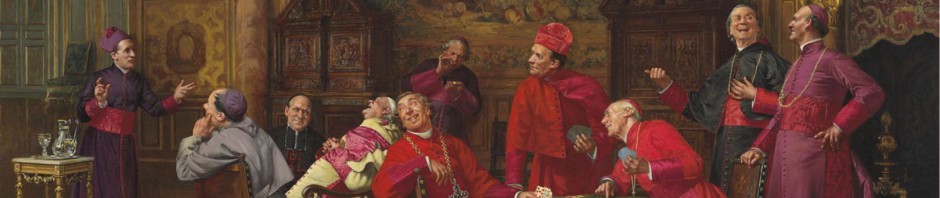
Oh my! The Atlanta Journal Constitution has an engaging piece on reactions to the Motu Proprio.
My emphases and comments.
The Latin Mass not cause for contention
By Lorraine V. Murray
Published on: 07/21/07In the sixties, hippies shunned their elders’ traditions, [I am instantly disposed to like this writer. This grabbed me immediately.] including their approach to paying bills, which involved jobs. With time, however, many hippies traded love beads for suits and realized that working beat living on the streets.
Hippies are long gone, but the anti-tradition crowd lives on and reared its head [YES!!! It’s "aging hippie syndrome"!] recently when Pope Benedict XVI announced that the Latin Mass would be more widely offered to Catholics.
Some folks protested that the Church was moving backward instead of forward, but what’s wrong with that? [Can you believe this?]
First, a little background: The liturgy of the Tridentine Mass, usually celebrated in Latin, dates back to the sixth century. [Thank for pushing back rather than leaving it in the 16th.]
And it was the only option [Unless you lived in, say, Milan, or had no Eastern Catholic Church around.] for Catholics until the Second Vatican Council rolled out an updated Mass in the vernacular in the 1960s.
Although the Latin Mass was still celebrated after that, it became rarer than the proverbial hen’s tooth and today might exist in one parish among hundreds of others.
That one parish for Atlanta’s Catholics is in Mableton, where the pews at St. Francis de Sales are filled with parishioners from all over the city, as well as adjacent states.
Clearly, there are people who love this reverent and ancient liturgy and will travel far to find it.
Which may baffle advocates of the newer Mass.
After all, isn’t a Latin liturgy confusing and unintelligible? And doesn’t the priest show disrespect to the congregation by turning his back toward them during these Masses? [Exploding the cliches! YAY!]
No on both scores: Catholics who cherish tradition find beauty in Latin, which is an unchanging language. And even children follow along at Latin Masses without confusion, since the missals post the vernacular side by side with Latin. [Oh…. thank you thank you thank you! Many years ago, when I was in seminary, I was attached to a "teaching" parish. The pastor asked me to work with a good vocalist there for the Passion on Good Friday. I said I had the 3 books in Latin. He said okay. We worked it up with another fellow. When we started singing on Good Friday, you could feel the air crackling with attention. After the service was over, an aging hippie, or rather harpy of a wymyn religious who worked as DRE set upon me with fangs and nails in the narthex, foaming and screeching about how we had abused everyone, and no one could understand what had happened, blah blah. I turned to some people, staring in amazment at the scene, and asked if they had a hard time. No one seemed to have been overly taxed. In fact, they all liked it! One person said that she had never followed it so closely, but she had to work a little at it. I asked a boy about 12 if he was able to follow. It was hard at first, but after that there was no problem. "I just followed in the book!"]
Another wonderful thing about the Latin liturgy is that Catholics can attend Mass anywhere in the world and worship God just like at home, since Latin remains fixed in Nigeria, Paris or Idaho. [this is called unity, I believe.]
As for those critics who claim the priest is disrespecting the people in the pews: He and the entire congregation traditionally faced East, which symbolizes the risen Christ. [I wonder if the author heard my last PODCAzT?]
I grew up with the Latin liturgy, and when I stepped into the sanctuary, I entered another dimension entirely. [Hmmm…. I am not sure what Lorraine was doing in the sanctuary, but, this article is so good, who cares??]
One that was serene and dignified, fragrant with incense and echoing with Gregorian chant.
Before long, I knew all the prayers in Latin by heart, so when the priest said, "Dominus vobiscum," I knew he meant, "The Lord be with you."
Unfortunately, the post-Vatican II Mass has led to some egregious problems.
Traditional Gregorian chant gave way in some parishes to awful, folksy, feel-good music. Organs gathered dust, while guitars and drum machines took center stage.
Obviously, I favor the traditional Mass, but I see no reason to turn Benedict’s proclamation into a war between conservatives and liberals. Instead of girding for battle, let’s look at the larger picture. [Nicely put. And she has this exactly right. There is a much larger view of what Pope Benedict is doing.]
For one, the pope is not doing anything radical. He is merely giving Roman Catholics greater access to something that is their birthright, [YES!] since the Latin liturgy was standard for many centuries.
After Vatican II, it took a bishop’s permission for such a Mass to be offered, but, thanks to Benedict, all that’s needed now is a willing pastor in one’s local parish.
People who favor Mass in their local language are not being asked to give it up. But those who have sat longingly in the pews, missing the powerful liturgy their ancestors enjoyed, now can have their day. In a church that prides itself on being universal, this is definitely a step in the right direction.
Lorraine V. Murray is the author of "Grace Notes. Embracing the Joy of Christ in a Broken World" and "Why Me? Why Now? Finding Hope When You Have Breast Cancer." She works in the Pitts Theology Library at Emory University. Web site: www.lorrainevmurray.com/
Kudos, and again kudos.































Adveniat Regnum Tuum!
Wow. What a piece to see in a newspaper. And it’s seems it’s not from someone who’s known as an activist for the traditionalist cause, but just a Catholic laywoman (working at a non-Catholic university), who still loves the traditions she received as a child. This is really one of the best pieces I have seen, as it is very simple and straightforward, and shows how what the Pope is doing is just good common sense. It might be a good thing to share with fellow parishioners who may not understand all that’s going on.
BTW, I imagine her reference to “stepping into the sanctuary” is using the term in a broad sense, to refer to the Church building as a whole.
Michael: Yes… I know.
This is truly outstanding! Thank you for posting it.
Need to remove the %20 (space character) from the link to Lorraine V. Murray’s homepage.
I am really pleased, as an Atlanta archdiocese Catholic, to see Ms. Murray write such a favorable piece. She is a frequent contributor to the archdiocesan newspaper, the Georgia Bulletin. What baffles me is that there still, to my knowledge, has not been the least recognition of Benedict’s Motu Proprio from the archbishop’s office (he(WDG)is, however, on vacation). And I wonder why this outstanding column by Ms. Murray did not appear as her contribution to this week’s edition of the Georgia Bulletin. Of course, I’m just a simple “traditionalist” who enjoys the liturgy of the ages (and even sometimes the Life Teen Mass).
PS
and Ms. Murray is certainly welcome at St. Francis de Sales in Mableton ANYTIME!!
Yes – it is nice to read such positive comments from a journalist. And I do appreciate your own comments added in all these posts – it makes for great clarity in understanding. as I am the other side of the Atlantic it has been interesting to see the various comments from the american bishops on the Motu Proprio. I have yet to find a site on which to read comments from the bishops of england and wales on the Motu proprio. does one exist and if so where might I find it please?
elizabeth, try the Rorate Caeli blog. There is a link to it on the left side of this page. There is a post over there that lists in the comments section the responses of bishops around the world.
Ms. Murray is a fine woman. My home (Novus Ordo) parish is about an hour outside of Atlanta, but I attend Mass at St. Francis de Sales and St. John’s Melkite Church often. I see her almost every time I go to St. John’s, so she must be a de facto member of that parish, although canonically I would doubt she’s switched sui iuris Churches.
A quote from The Big Lebowski is in order, for all the hippy liturgists out there…”Your revolution is over, condolences, the bums lost!”
Per the comment higher on this page, and this comment: I think novelty is going to be a huge driver in getting people in the door of their first extraordinary mass. A certain number who try it out of curiosity will simply fall in love and stay. I, for one, believe that the mass of the ages is going to pick up steam in the coming years–slowly at first, and then ?
It’s nice to read an article in favor of the traditional mass, thanks for sharing it. Regarding the comments on the use of a Latin and English missal by the laity, however, it seems that even traditionally minded Catholics are somewhat tainted by this idea that one must understand what the priest is saying. While following along in a missal is an option, is is not the only way to assist at mass. Uniting one’s intentions to the intentions of the priest, one can offer any suitable prayers and devotions to God while the priest offers the sacrifice, and he may be sanctified as much as, or sometimes maybe more than, the person who chooses to follow along in a missal.
I was born in 1971. I’ve never been to a “Latin Mass.” I am a priest who is every day becoming more aware of how weak my seminary training was. I make every effort to celebrate the Mass with reverence, so that the people have an encounter with God and not me.
When I ask my older parishoners about the Latin Mass they usually tell me stories of how Fr. John Doe could “beat the rosary.” He would say mass faster than the people could finish the Rosary. The men tell me that they did not know what they were saying while serving. I get the idea that the Mass before 1962 could be abused just as the Novus Ordo can be abused.