
 ROMAE, die XXX Octobris, A.D. MMXXVI.
Sol hodie in Urbe Aeterna oritur hora sexta et minutis triginta octo, occidit hora septima decima et minutis novem. Campana “Ave Maria”, secundum horarium Curiae Romanae, pulsabitur hora septima decima et minutis triginta. In ecclesia Sanctissimae Trinitatis Peregrinorum et Convalescentium autem, secundum solis occasum, dimidia hora post occasum solis, id est hora septima decima et minutis triginta novem.
Hodie memoriam recolimus S. Germani, Episcopi Capuani, qui pro unitate Ecclesiae strenue laboravit. S. Gregorius Magnus narrat Sanctum Benedictum animam Germani, ab angelis in globo igneo susceptam, in caelum ascendentem vidisse!
Dum dies autumnales breviores fiunt et tenebrae citius descendunt, meminerimus lucem aeternitatis numquam occidere.
Pace Gulielme!
In me vides languescentem frigore autumnum,
Cum paucae frondes pendent nudis in ramis,
Et choros ventis contremiscentes ramorum,
Ubi quondam aves cantabant dulcibus ludis.
….
A lovely campanile catching the last rays of the sun…
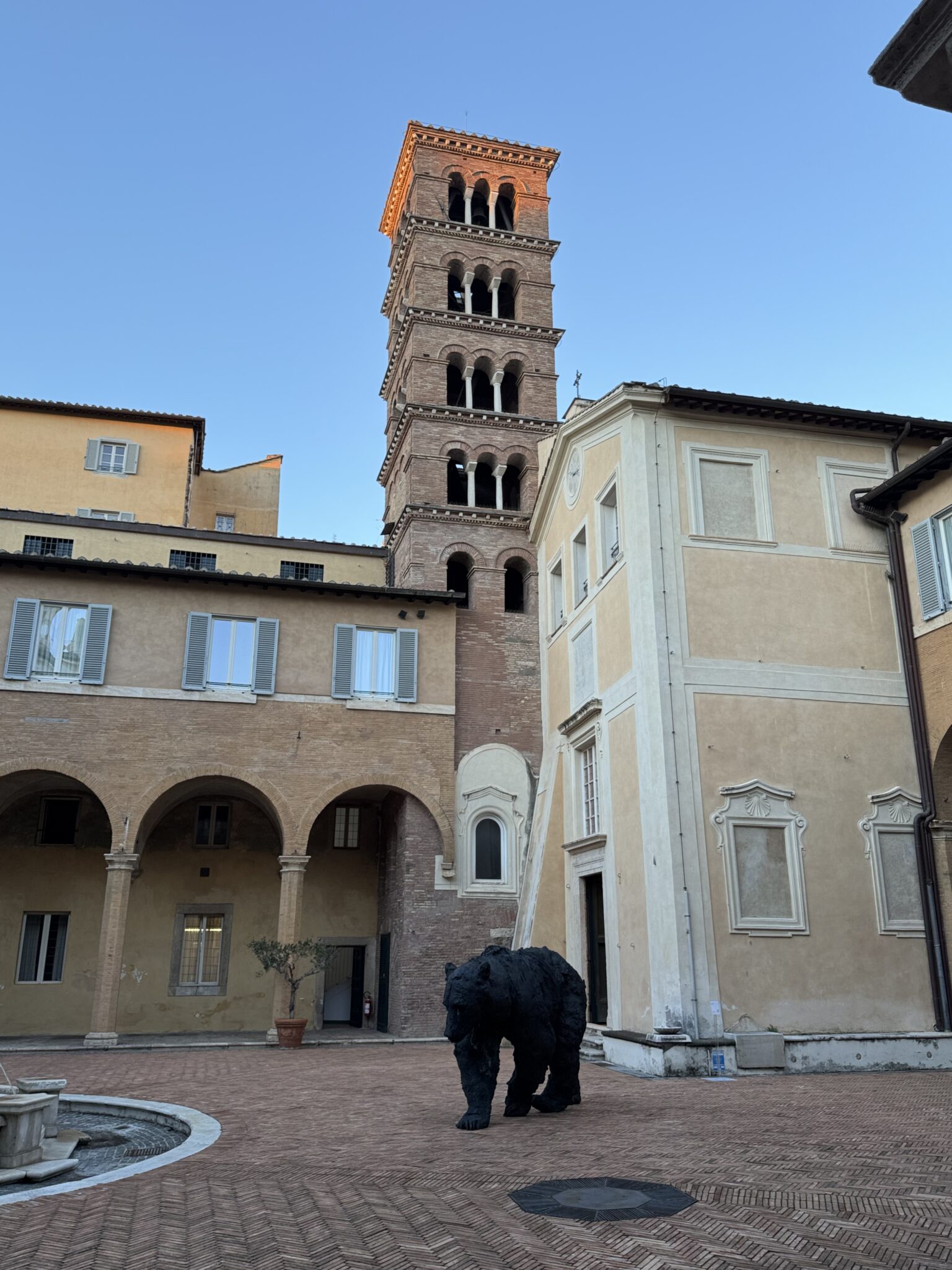
Yes… that is a bear. The tiny church once held the remains of St. Gregory Naziazen.
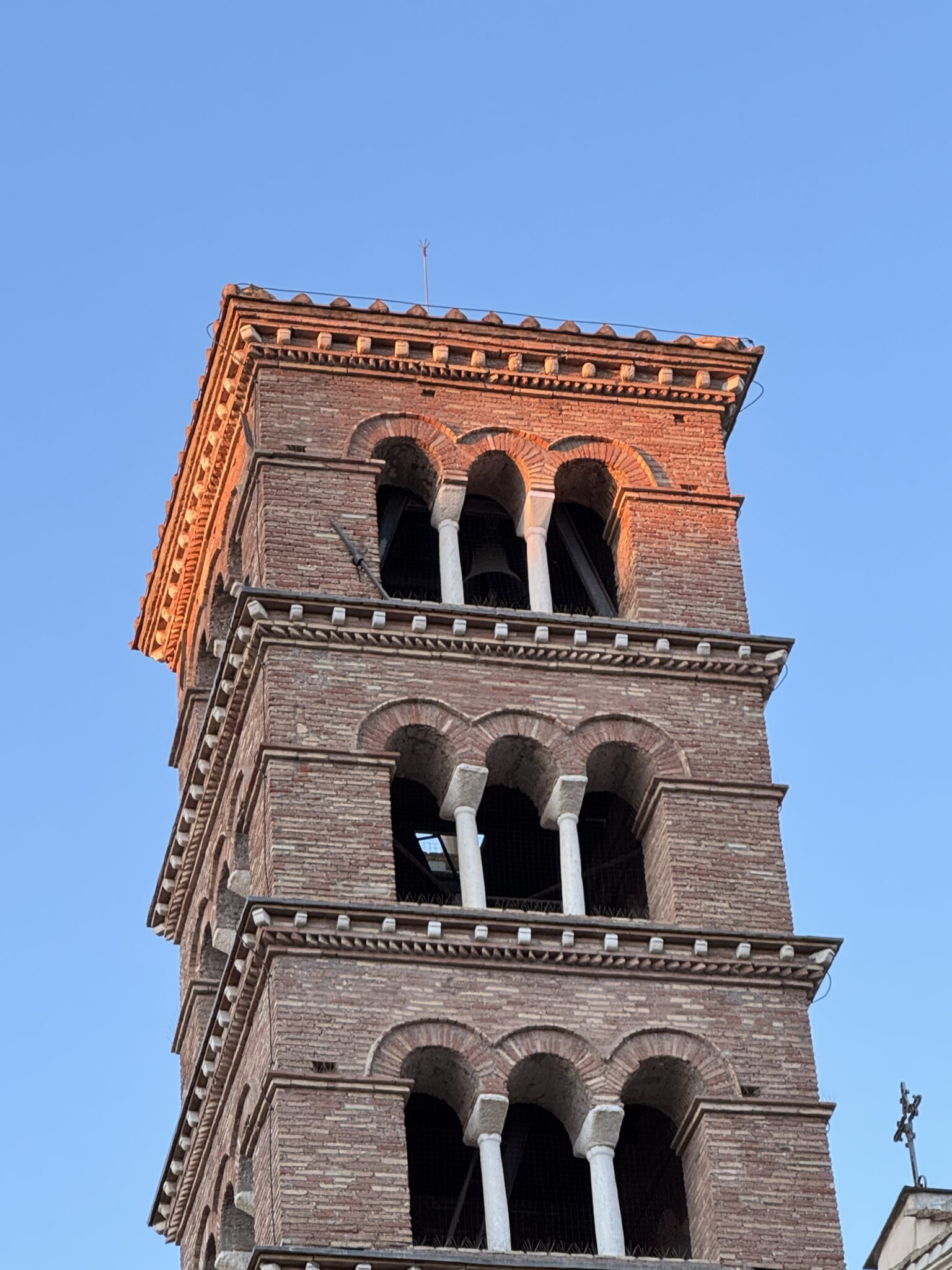
ACTION SHOT!

A shot in the long corridor outside the “Chamber of Representatives” They call it “transatlantic” because it hearkens to the ocean going passenger ships of yore.

Who can tell us what the battle is in this painting? Anyone? Right click for larger and open in a new tab.

Meanwhile…
Happy Friday 🙂 https://t.co/CCMEFK648c
— MedievalistMatt (@medievalistmatt) October 30, 2026
Interim, motus ad lusorem cum militibus nigris pertinent. Scaccus mattus, scilicet mors regis, quattuor in motis veniat.

NB: Detineam explicationes in crastinum, ne vestrae interrumpantur commentationes.































1. … Nf3+ (g6 freezing g2 so…)
2. Kf1 Qd3+ (if 2. Kh1 Qb1+ 3. Qe1 Qxe1#)
3. Qe2 Qb1+
4. Qe1 Qxe1#
In platea stat
Ursus, dum curiosus
Clerum ignorat
Pace Iaponia.
Tacens stat ursus.
Turrim spectat clericus.
Quis sapit magis?
As for the battle in the painting, my first guess would have been the lifting of the siege of Vienna if it were not for the ships on the river in the background.
Because of that detail, I am guessing it portrays the 1716 battle of Peterwardein where Prince Eugene of Savoy, greatly outnumbered, won a great victory over the Ottoman Turks through the intercession of Our Lady of the Snows. In that battle, 6 Christian ships on the Danube dealt considerable destruction on the retreating Ottoman Turks.
….
” In 1716, the Battle at Peterwardein witnessed an Ottoman army consisting of 40,000 Janissaries, 20,000 Sipahis and 10,000 Tartars under the command of Grand Vizier Damad Ali. Battles started on August 3, and on August 5 the Austrian counter-attack under Prince Eugene began. The Austrians attacked by encircling the Sipahis and the Tartars, who gave way to the superior, disciplined army. Following this victory, Eugene attacked the Ottoman camp and was supported by the firing cannon of six frigates from the Danube River. In the Ottoman camps many were slain, including Damad Ali, their Commander. An event which was considered unusual for the time and season of the year, was a heavy snowfall on the morning of August 5, which covered Peterwardein. Prince Eugene sought the intercession of Our Lady of the Snows and following this victory granted by Our Lady’s intercession; he commemorated this event by ordering the construction of a church on Tekije Hill. The church overlooks the battlefield and is today known as ‘Our Lady of Tekije’ and ‘Our Lady of the Snows.’ The church is used both by the Roman Catholic and Orthodox denominations. On the morrow of the Feast of the Assumption of 1717, on August 16, the Ottoman forces were ousted from Belgrade. At the Treaty of Passarowitz on July 21, 1718, the Ottoman Empire ceded the Banat, Serbia, a portion of Bosnia and Vallachia to Austria.
Excerpted from The Catholic Southern Front Dispatch Chapter 9/32 – Hungary invaded”
Macte! Bene scriptum. Iterum, iam de urso turreque scribo:
Sic documenta
Cava ambo sed pulchra
Quod non synodi
Ursus nil loquens.
Plus quam synodus docet.
Sacerdos probat.
i am quite fond of Medievalist Matt. yet at the same time i am frustrated because i would like to know which chants he is calling out. today’s could be “beatus vir qui timet Dominum”, but what if it’s something else?
Gregg: but what if it’s something else?
ME HERCULE! I never thought of THAT!