 There is a trend you need to be aware of. Indeed, this is a virus you need to help inoculate others against.
Here are a couple examples of the virus that is spreading.
First, turn your attention a piece on the site of a news agency in Asia, UCANEWS. A Maryknoller (almost never a good starting point these days) and UCANews publisher Fr William Grimm MM, makes a proposal for decentralization of the Curia. What he is actually proposing is the reduction of the role of the Pope to something like the Archbishop of Canterbury. Let’s look at just a couple things he proposes.
Inspired by Pope Francis appointment of a group of 8 Cardinals with whom he can consult, Grimm writes:
A half-millennium of attempts to reform the central administration of the Catholic Church has not succeeded. Hopes that the Operations Octet will perform better against entrenched special interests than others have in the past are probably excessively optimistic. The most radical, and therefore probably the most effective and necessary reform of the Curia would be its abolition.
500 years? Grimm doesn’t know his history. I can think of a successful reform of the Curia which was undertaken by Pope Pius X in 1909 (cf Sapienti consilio) when the Pope was no longer monarch of the Papal States.
Think about what would happen with the abolition of the Curia.
The Curia is the extension of the Roman Pontiff. The offices of the Curia do, in various spheres of the Church’s life, what the Pope can’t do by himself. Were the Curia to be decentralized, the Pope would be reduced to a Roman tourist attraction who kisses babies and blesses things once in a while. Furthermore, nothing will be accomplished. Get a load of Grimm’s next idea. Because Grimm doesn’t like Italian language (sheesh, this is petty and anti-intellectual), he says:
The solution is not to start teaching three-year-olds to speak Latin so that we can restore the past. The solution is to make one or more of the world’s international languages that function as Latin once did the administrative language of the Church. Then the Church could once again draw upon a world of talent, knowledge, information and experience without being limited to clerical natives of one country or careerists.
The writer doesn’t have a clue. Italian serves that purpose in the Curia now. But… more languages? Think of how well the EU functions with their 23 official languages, which have equal status. Again, nothing would get done.
But the whopper is his idea of having different offices in different parts of the world.
A Church that claims to be global must globalize. That means that, like the United Nations, it must have major parts of its operations outside the headquarters, in places where communications, international transportation and a global ethos make for efficiency and a broader vision. New York, Brussels, Nairobi, Hong Kong, Jakarta, Rio de Janeiro, Moscow, London and many more places come to mind as places where Church offices could function and have better contact than they can have in Rome with the realities that Catholics and others throughout the world face.
Because the UN gets so much done. Right.
I can picture it: the UN-ization of the Roman Curia. The Congregation for the Doctrine of the Faith – were it to be necessary anymore – could be in, say, Jakarta. The Council for Interpretation of Legislative Texts could be in Nairobi, Divine Worship in Moscow, Oriental Churches in Rio, and Clergy in Hong Kong. That would make things so much better.
And there is:
Most, if not all, of what it claims as its scope of authority could and should be handled by regional, national and local bishops’ conferences and synods of leaders and laity.
The bottom line is that Grimm wants to be an Anglican. This is an ecclesiology that Rowan Williams would recognize.
There is a lot more, but let’s move on.
On the site of Vatican Insider we find that the retired Archbishop of San Francisco, Most Rev. John Quinn, has issued his magnum opus, a 57-page book which he says he started working on in 2005.
Quinn makes proposals along the lines that Grimm desires. Quinn…
concludes by proposing that, in line with the Second Vatican Council’s teaching on collegiality, new patriarchal structures be created in other parts of the world, and that the synod of bishops be given decision-making power. He believes these proposals, if implemented, would remedy the excessive centralization and strengthen communion in the Catholic Church today.
Let’s drill in.
QUESTION: Your new book takes the whole discussion a step further by proposing the creation of new patriarchal structures in parts of the world where they do not yet exist, and by advocating that deliberative or decision-making power be granted to the synod of bishops to enable it to function more effectively. Could you explain this?
QUINN: To begin with, patriarchal structures are not a novelty in the Church. They began almost 1500 years before the modem democracies arose. The Council of Nicaea in 325 called the patriarchal structure ancient. In the Western Latin Church, the Roman synods held in the later part of the first millennium and during the first half of the second millennium were deliberative, decision-making synods. Consequently, these structures are not new, nor are they mechanisms to weaken papal authority since the Popes themselves used them, and the patriarchal structures, ….
When one of these old liberal warriors says that “this is not about weakening the Pope”, then weakening the Pope is exactly what it is all about.
More:
Patriarchal structures would involve some administrative decentralization. […] So my book does propose the creation of new patriarchal structures in the Latin Church and these would mean some decentralization. […] Two major responsibilities which would fall within the competence of new patriarchal structures would be the appointment of bishops and the creation of dioceses. There would be other things as well such as the determination of liturgical texts. […] A deliberative or decision-making synod would have several advantages. […] Clearly such far reaching responsibilities could not be assumed by regional structures without some preparation. I would think it very useful if this were to be done, that the planning might begin with taking a look at how the Religious Orders went about renewal after the Council. It would be wise to adopt some such process if these new structures were to be used in the Latin Church.
Here is the problem.
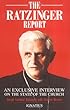
It was the LOCAL CHURCHES and LOCAL RELIGIOUS SUPERIORS who messed up the clerical sexual abuse crisis. That is the latest, and possibly the greatest proof that what Grimm and Quinn propose has a dark underbelly to it. When regional and national bishops are left to conspire among themselves, they sometimes engage in collective cover-ups. In the Ratzinger Report, the then Cardinal Ratzinger reminded us that in Germany during the Hitlerzeit, the most courageous anti-Nazi statements were made by individual bishops, whereas the collective statements of bishops were wan and weak.
What Grimm and Quinn are putting forward is the reduction of the Catholic Church to something like Anglicanism, with is various national synods and countless groups of laity pitted against clergy pitted against… pitted against… pitted against…. What will prevent bishops in one part of the world from taking doctrinal or moral stances that are flatly contradicted by bishops in other regions of the Church? This is what constantly happens in Anglicanism.
These are two examples, but there are more. And there will be even more to come.
The virus is spreading quickly enough that there was an interview in L’Osservatore Romano with Archbishop Angelo Becciu, the “Sostituto” of the Secretariat of State which explains the group of 8 cardinals and makes distinctions about what its role really is.
Liberals are sensing an opportunity and they are tumbling over each other to offer their “solutions”.
The irony is that in making these suggestions, they demonstrate their contempt for the documents of the Second Vatican Council.
Review Lumen gentium 18-25.

 In both the traditional Roman calendar and the post-Conciliar calendar today is the feast of St. Athanasius, Doctor of the Church.


 Over at






























