WDTPRS 21 Dec. – O Oriens – The Winter Solstice and thoughts on time

This year’s Winter Solstice is marked in special ways.

This is the day when, at last, the days in the Northern Hemisphere began to lengthen.  I don’t know about you, but these short days are hard on my mood.

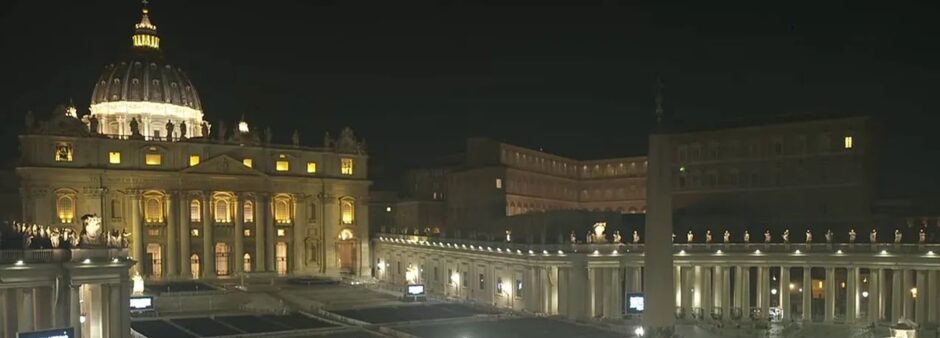
Also, the main door of St. Peter’s Basilica in Rome and the main altar within are exactly aligned with the rising of the sun on the Vernal Equinox, the sun shines up the nave.   Also, on the Winter Solstice, the Egyptian obelisk relocated to the center of St. Peter’s Square lines up with the rising Sun on the Winter Solstice. It lines up with the obelisk at Piazza del Popolo on the Summer Solstice.  Popes such as Sixtus V placed these obelisks precisely according to a urban renovation plan.  The obelisk at St. Peter’s serves as the gnomon of an enormous sundial.

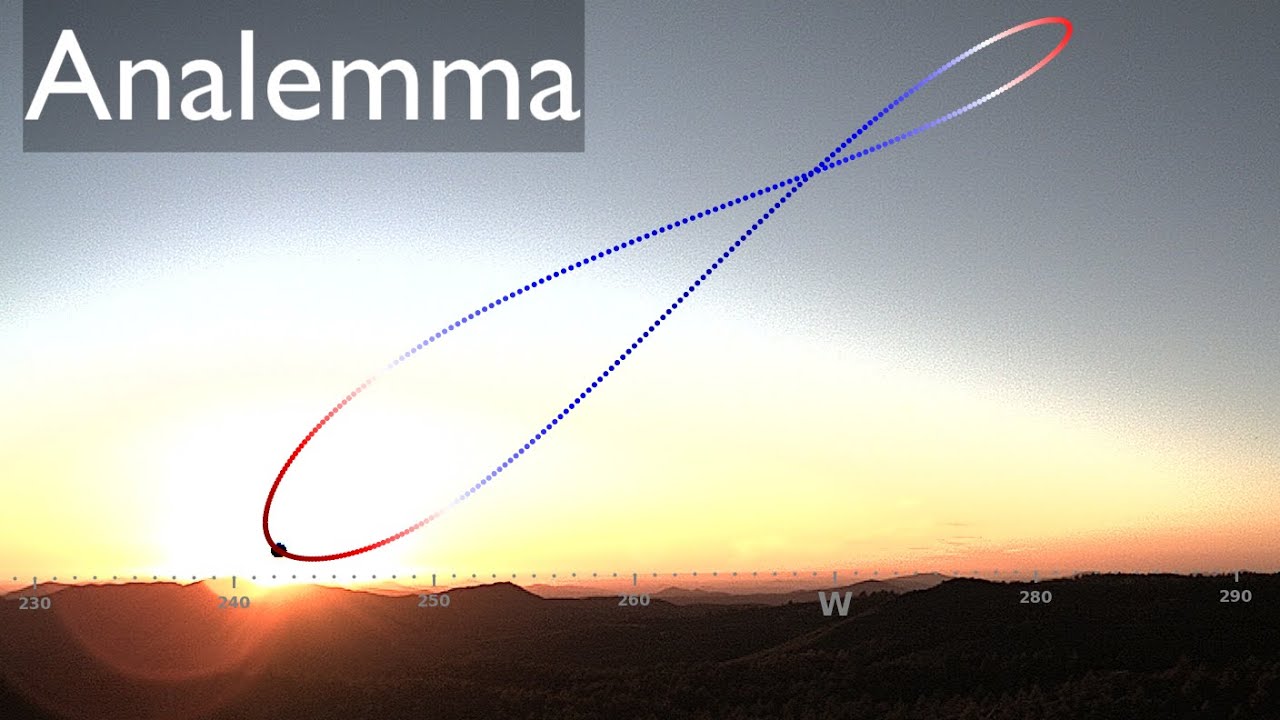
The great churches of Christendom served also as accurate clocks and sometimes you see on the interior pavement an analemma where a shaft of sunlight darts to the floor.  There is a great example of this in Rome at Santa Maria degli Angeli.

God in His Wisdom, provided within the framework of the cosmos object lessons by which we might come to grasp something of His good plan for our salvation.

Since the very earliest times, Christians observed the turning of the seasons and the changing direction of the sun’s apparent risings and settings.

For example, through history we Christians have made much of St. Lucy’s Day in December (Latin for light is lux), and we have in the traditional calendar the Ember Days – and this is the Advent Ember week – which tie us in the Northern Hemisphere closer to the seasons, we celebrate St. John the Baptist in the summer at the solstice.

Remember how John said: He must increase, I must decrease.  That’s what happens to days at his feast day: the Light who is Christ increases.

Moreover, we have in the heavier days of Advent, Advent II, as it were.  We are singing the O Antiphons at Vespers, which have their delightful Latin acrostic.  Today… appropriately…

LATIN: O Oriens, splendor lucis aeternae, et sol iustitiae: veni, et illumina sedentes in tenebris et umbra mortis.

ENGLISH: O dawn of the east, brightness of light eternal, and sun of justice: come, and enlighten those who sit in darkness and in the shadow of death.

Scripture Reference:

Luke 1:78, 79
Malachi 4:2

Relevant verse of  Veni, Veni Emmanuel:

O come, Thou Dayspring, come and cheer,
Our spirits by Thine advent here;
Disperse the gloomy clouds of night,
And death’s dark shadows put to flight.

We are all desperately in need of a Savior, a Redeemer who is capable of ransoming from the darkness of our sins and from the blinding and numbing wound of ignorance from which we all suffer.  In their terrible Fall, our First Parents inflicted grave wounds in the souls of every person who would live after them, except of course – by an act of singular grace – the Mother of God.  Our wills are damaged.  Our intellect is clouded.  In Christ we have the Truth, the sure foundation of what is lasting.  All else, apart from Him fails and fades into dark obscurity.  He brings clarity and light back to our souls when we are baptized or when we return to Him through the sacrament of penance.

At Holy Mass of the ancient Church, Christians would face “East”, at least symbolically, so that they could greet the Coming of the Savior, both in the consecration of the bread and wine and in the expectation of the glorious return of the King of Glory.  They turned to the rising sun who is Justice Itself, whose light will lay bare the truth of our every word, thought and deed in the Final Day.

Let us turn to the LIGHT, repent our evil ways and habits, and grasp onto Christ in His Holy Church, for as we read in Scripture:

“For God so loved the world that he gave his only Son, that whoever believes in him should not perish but have eternal life.  For God sent the Son into the world, not to condemn the world, but that the world might be saved through him.  He who believes in him is not condemned; he who does not believe is condemned already, because he has not believed in the name of the only Son of God. And this is the judgment, that the light has come into the world, and men loved darkness rather than light, because their deeds were evil.  For every one who does evil hates the light, and does not come to the light, lest his deeds should be exposed.  But he who does what is true comes to the light, that it may be clearly seen that his deeds have been wrought in God.”


There comes to mind exitus – conversio – reditus.
YouTube thumbnailYouTube icon

Posted in Look! Up in the sky! | Tagged
1 Comment

St. Thomas and the beating, living, healing, Heart of Love.

Here is something that I wrote a while back. Since today in the Vetus Ordo calendar is the Feast of St. Thomas the Apostle, I figured that it might be good to share for those who haven’t seen it.


[…]

Christ showed [the Apostles in the locked room] His hands and feet and side, to demonstrate that He had a real body and that it was also is His Body. He didn’t pick up some unwounded, perfect Body that He was now inhabiting. We are our bodies, as we are our rites. The fact that the wounds remained in His Body’s hands, feet and side provided continuity with His Body before and during His Passion. He isn’t a mere shade of the Lord. Nor has he exchanged Himself for an unwounded version. In this way Christ began to show them the traits of the risen Body, traits which we, too, will share in the Resurrection: clarity (reflecting God’s glory), impassibility (incapable of suffering), agility (ease and speed of movement), subtlety (unhindered by barriers).

[…]

We don’t know why Thomas wasn’t with the other ten Apostles in the room for that first appearance of the Lord. I like to imagine that it was his turn to get the “take out” for the rest of them.

Thomas, who had doubted, put his trust in the Lord at this point. In fact, he literally handed his trust to Him where the point of the lance had left its mark on the Lord’s glorious Risen Body, a wound from a Roman lance large enough to insert his hand. The Lord told Thomas to “thrust” (Greek bále) his hand “eis ten pleurán… into (His) side”. If we want to be picky, we might note that the Greek word “cheír”, insofar as our anatomy is concerned, can mean “hand”, but it can also mean “finger” or “hand and arm”, the later so much so that in some contexts additional words are added to denote “hand” as distinct from the arm (cf. Liddell-Scott-Jones, A Greek-English Lexicon aka LSJ – “???? , ?”).

This is significant for depictions in art, as in the famous painting by Caravaggio, wherein Thomas puts his finger into Christ’s side and peers into it, which smacks of the spirituality of St. Bonaventure who wrote about how Thomas the Apostle looked through the Lord’s visible wounds and saw His invisible wound of love. It also affects depictions of the crucifixion of the Lord and of His risen Body, with the holes of the nails in the hands. Some maintain that Christ would have been crucified with nails through the wrists so that the ulna and radius bones would sustain His Body’s weight rather than tearing through the flesh of His hands.

Christ tells Thomas to explore with his finger (dáktylos) the spike holes of His “hands/wrists”, which would be more or less the size of a large finger. However, he tells Thomas to use his hand for the wound in His side. The Greek suggests to me that the Lord instructed Thomas to push, thrust His hand into the wound channel left by the Roman lance, which had gone so far as to lacerate the Lord’s Sacred Heart.

We don’t have in the Gospel account of this stunning moment, to which John was eyewitness, a precise statement by John that Thomas physically did it. All it says is that Thomas responded, “My Lord and my God!” Christ responded with a “beatitude” (v. 29): “Jesus said to him, “Have you believed because you have seen me? Blessed are those who have not seen and yet believe.”

Was Thomas so overwhelmed that He could not touch the Lord in that way? All He could utter was that amazing witness to belief in the divinity of Christ? The clearest and most exultant of any in the Gospels?

Christ refers to Thomas seeing Him, but He did not say, “because you have touched me”. Nevertheless, it seems to me that if the Risen Christ tells you to do something, you do it. Furthermore, John immediately concludes this chapter with something so definitive that it feels like the end of the whole work (vv. 30-31):

Now Jesus did many other signs in the presence of the disciples, which are not written in this book; but these are written that you may believe that Jesus is the Christ, the Son of God, and that believing you may have life in his name.

There follows chapter 21 and the account of the reconciliation of Peter at the Sea of Galilee. We moderns count that as chapter 21. Remember, the Gospels were not written with chapters and verses and not even word breaks. Those were imposed centuries later. Yet, one has the sense that what happened between Christ and Thomas was so amazing that John penned something like a conclusion to his Gospel after Thomas’s cry of faith, arguably the climax of John’s account.

Given the various meanings of “hand” in Greek, and that word “thrust”, and the fact that the wound from the lance remained, therefore remained all the way to His Heart, perhaps Our Lord required Thomas not merely to touch His side but even to feel the breath, the ruach, in His torn lung. Did Thomas, while feeling the ruach on his wrist, touch with his hand the physical, risen, subtle, impassible, agile, blazing bright Heart of Jesus?

By the way, in art, statues and painting, the Apostles are usually depicted with the instruments of their martyrdom. St. Thomas is often depicted with a lance.

On this Sunday we emphasize the mercy of God and the institution of the Sacrament of Penance, perhaps the greatest encounter we have with incarnate Mercy, Holy Communion notwithstanding.

Christ told Thomas to do what He did before witnesses so that they too would understand about the traits of His risen Body and that it was truly His own. Knowing full well that we would one day read this, He inspired the disciple He most loved to write his Gospel account, an account that connects Thomas to the inspiration of the Spirit and the mercy of Christ’s Heart in a way that other Apostles didn’t experience on that first Easter evening appearance.

When we go to confession, we enter into Mercy in order to be breathed upon by the Spirit and to feel the beating, living, healing, Heart of Love.

Posted in Classic Posts, Linking Back, Saints: Stories & Symbols |
Comments Off on St. Thomas and the beating, living, healing, Heart of Love.

Daily Rome Shot 1205 – completed

A lovely morning view. Restoration work completed.

Please remember me when Christmas shopping online and use my affiliate links.  US HEREWHY?  This helps to pay for health insurance (massively hiked for this new year of surprises), utilities, groceries, etc..  At no extra cost, you provide help for which I am grateful.

This is the endeavor of the traditional Benedictine monks of Le Barroux, whom you hear singing in today’s podcast for Advent. Buying wine through them helps the monastery and, by helping them, we help the world. Right now – today – 30% off.

Welcome registrant:

Elephantine

Thanks to BME in the UK for switching from PayPal to Wise.  Wise is great for international transactions.

In churchy news…

Remember that I once facetiously suggested that Pres. Trump might nominate Bp. Strickland as Ambassador to the Holy See?  He’d surely do a good job, but that wasn’t going to happen.  Here’s the nominee

Not churchy but very cool… (the audio is annoying)…

Animi caussa

The heaping of scorn continues!

In chessy news… HERE

While to move and mate in…. in… two!  How long did it take you?

Posted in SESSIUNCULA |
6 Comments

Daily Rome Shot 1204 – What … is THAT?

Just a couple more from the presepio at The Parish™.   The Magi obvious brought quite the entourage.

Welcome registrant:

Elephantine

THANKS to GG for tomatoes, etc., from my wishlist.  I used my last can a few days ago.  Danger.

I had a note from up north that your Christmas cards are coming down in a shipment.  I can hardly wait.

I did get some kid art in advance.

In churchy news…

Beans is once again making an ass of himself.  Strongly points to how for the left religion is about politics.  HERE   Caution: ugly T.D.S episode.

Someone’s popularity ain’t what it used to be.  HERE

What the hell is this?

But the Traditional Latin Mass must be suppressed!

Because it is very cool… the new Superman trailer has been released. HERE

The world is divided into two sections in various spheres. DC or Marvel. The Real Thing or Designated Hitter. Etc.

In chessy news… I’m sad. HERE

White to move and mate in two.

Posted in SESSIUNCULA |
12 Comments

Daily Rome Shot 1203 – RANJITH!

From the wonderful nativity scene at Santissima Trinità dei Pellegrini in Rome.

Please remember me when Christmas shopping online and use my affiliate links.  US HEREWHY?  This helps to pay for health insurance (massively hiked for this new year of surprises), utilities, groceries, etc..  At no extra cost, you provide help for which I am grateful.

In churchy news…

This!

Not churchy, but very cool…

Speaking of churchy…

Interesting tidbit, my mother knew the original Charlie Brown, who inspired the character. I met him when I was very young. She also knew Lucy and Linus. Yes, they were real people.

Say a prayer for my mother, please.

Hey Fathers!  How about a clerical Guayabera shirt?

In chessy news… HERE

White to move and WIN

UPDATE:

This is also very cool…

Posted in SESSIUNCULA |
10 Comments

WDTPRS: O Antiphons – 18 December – O Adonai

The O Antiphons: 18 December – O Adonai
LATIN: O Adonai, et Dux domus Israel, qui Moysi in igne flammae rubi apparuisti, et ei in Sina legem dedisti: veni ad redimendum nos in brachio extento.

ENGLISH: O Lord and Ruler the house of Israel, who appeared to Moses in the flame of the burning bush and gave him the law on Sinai: come, and redeem us with outstretched arms.

Scripture References:
Exodus 3
Micah 5:2
Matthew 2:6

Relevant verse of Veni, Veni Emmanuel:

O come, O come, thou Lord of might,
Who to Thy tribes on Sinai’s height
In ancient times didst give the law
In cloud and majesty, and awe.

Adonai” is “LORD.” It was the Hebrew word that the Jews used when they found the four-lettered word for God’s name which they held to be too sacred to pronounce aloud. The four letter word for God’s Name, the Tetragrammaton, is still venerated by us to the point that Holy Church asks us not to use it in liturgical song.

Christ is Lord, Lord of Creation. We sang this yesterday in the antiphon “O Sapientia“. Christ is also Lord of the Covenant with the People He chose.

The Lord made covenants with Noah, Abraham, and Moses. He guided them and all the People. He gave them Law. He protected and feed them. The Lord delivered them from bondage to Pharaoh and unending slavery. He went before them with arm outstretched.

This was all a pre-figuring of the great work of redemption that Christ would work on the Cross. He redeemed us His People from Satan and the eternal damnation of hell.

He once appeared clothed in the burning bush that was not consumed by fire.

He is about to appear again clothed in flesh in our liturgical celebration of Christmas.

He will appear again one day in the future to judge the living and the dead.

He appears to us each day in the person of our neighbor.

What amazing contrasts we find in our Lord! He came in thunder and lightening to give the Law on Mt. Sinai. He comes now in swaddling clothes. He will come again in glory. He comes humbly in the appearance of Bread and Wine.

He still goes before us with outstretched arm and our foes are put to flight at the sight of His banner!

Shall we hear the Benedictines of Le Barroux sing the O Antiphon and Magnificat?

Posted in ADVENT, WDTPRS |
Comments Off on WDTPRS: O Antiphons – 18 December – O Adonai

Larry Chapp NAPALMs a Cardinal!

On fire.

I wrote about his piece in the Catholic World Report this morning. Now, he has an interview with Mark of Catholic Unscripted.

He hits so many points, many of which I’ve made over the decades.   He really flames in about the condescending hubris, the clericalism, that drives the libs.

Larry drops napalm.

YouTube thumbnailYouTube icon

I would very much like to have your thoughts.

You might pull some quotes and provide time stamps.  There’s a lot to consider.   Look in the description of the video with some of the high (low?) points and time markers.  There is a link to a transcript.


Posted in Liturgy Science Theatre 3000, Pò sì jiù, Save The Liturgy - Save The World | Tagged
6 Comments

17 Dec: St. Daniel and the Furnace Boys

Some don’t know, and understandably so, that the Church recognizes many great figures of the Old Testament as saints, and she gives them feast days.

They may not appear on the general calendar for liturgical observation, but they are listed in the Roman Martyrology.

As the first part of Advent closes and we move into the heavier Advent days of final preparation we have three ancient Prophets.

On 16 Dec St. Haggai.

On 18 Dec. St. Malachi.

Today, 17 Dec, we have St. Daniel.

Along with Daniel we celebrate Sts. Ananias, Azarias, and Misael, the three boys in the fiery furnace.

Speaking of Daniel, don’t forget the wonderful artwork of Daniel Mitsui, which would make a fine gift for Christmas or Epiphany.

Posted in SESSIUNCULA |
1 Comment

WDTPRS: O Antiphons – 17 December – O Sapientia – The Way of Prudence

On December 17th we enter into that final stretch of our Advent preparation. In the Church’s solemn prayer of the hours, at Vespers, the great “O Antiphons” are sung. Today we have the first.

Years ago, I made a little webpage for the O Antiphons.  It might be useful.

By way of introduction, here are a few points every Catholic should know.

First, the song Veni, veni Emmanuel is a musical presentation of the themes of the O Antiphons.

Second, the first letters of the “addressee” of the Antiphon, arranged backward spell out “Ero cras… I will be (there) tomorrow”.  So, there is a clever “count-down” in the antiphons.

Third, each of the “O Antiphons” carries Old Testament biblical figures. At the same time each one carries an element of the New Covenant. These two characteristics are juxtaposed and a third dimension emerges which serves as a point of meditation when considering the Incarnate Word, the Son of God made flesh.

Today’s O Antiphon is O Sapientia.

LATIN: O Sapientia, quae ex ore Altissimi prodidisti, attingens a fine usque ad finem, fortiter suaviter disponensque omnia: veni ad docendum nos viam prudentiae.

ENGLISH: O Wisdom, who came from the mouth of the Most High, reaching from end to end and ordering all things mightily and sweetly: come, and teach us the way of prudence.

Scripture References:
Proverbs 1:20; 8; 9
I Corinthians 1:30

Relevant verse of  Veni, Veni Emmanuel:
O come, O Wisdom from on high,
who orders all things mightily,
to us the path of knowledge show,
and teach us in her ways to go.

In today’s “O Antiphon” – “O Sapientia” – we are drawn into the Old Testament’s wisdom literature. Wisdom is a divine attribute. The divine Wisdom is personified. Wisdom is the beloved daughter who was before Creation, Wisdom is the breath of God’s power, Wisdom is the shining of God’s (transforming) glory. (See Sirach 24:3 and Wisdom 8:1.)

Wisdom is also something which we deeply desire. It is also a human attribute, not just a divine attribute, though authentic human wisdom is never separated from a relationship with God. Fear of the Lord is the beginning of wisdom, as we learn from the psalms as well as the school of personal hard-knocks. From this convergence of awesome respect for God with the experience of learning through life’s mysterious calendar, we understand (if we are wise) that wisdom is more than mere knowledge. It is something more than love.  It is something more than just a special astuteness regarding how to get along in life, a certain kind of savior faire. Rooted as it is in fear of the Lord, true human wisdom is both love and that knowledge of God that seeks to understand, the knowledge that is completed by faith.

The Prologue of John’s Gospel refers to the “Verbum caro factum...the Word made flesh”. He is the divine Logos… the eternal thought/word/reason. Through Him all things were made. Without Him nothing can be. So, the New Testament image in the Prologue of John brings to completion the imagery of Wisdom. He, the Word, is the archetype of the material universe. All things are ordered in and to Him.

Our lives, to be happy, need order. Our individual private lives and our collective lives in larger society must have structure and order. They must be disposed in such a way that the real and genuine good of all is fostered and promoted. Thus, in human governance we struggle to find the proper balance of exercise of power (without which governance and order is not possible) and gentle concern for the individual and community (without which there is mere imposition and tyranny and exploitation for some end material or ideological). Wisdom permits the balance of these.

This first “O Antiphon” shows us the Creator of all that is invisible and visible, the whole of  spiritual and material creation.  Creation is moving according to an eternally disposed plan of divine Providence toward an inexorable end: that God may be all in all. In this end the blessed elect will participate. We have had the way opened for us toward this end by the Word (divine) made flesh (human). Our humanity now sits in transformed glory at the right hand of the Father in an indestructible bond with the Son’s divinity. The risen Christ is the new Adam…the new Creation. With unspeakable sweetness He orders our salvation. With irresistible power all things exist and move according to His will. Our lives have meaning only in Him, according to His guidance, who handles us “suaviter et fortiter“.

Our Old Testament and New Testament figures and images merge into a new point of reflection for our lives which today’s “O Antiphon” underscores as “prudence” – “Come…Teach us the way of prudence!”

“Prudence” comes from the Latin “to see/look ahead”. It is one of the four “cardinal” virtues, the one upon which the other virtues depend. Prudence is a habit of the intellect that allows us to see in any circumstance what is virtuous and what is not. Prudence helps us to seek what is virtuous and avoid what is not. Prudence perfects the intellect (rather than the will) in practical decisions. It determines which course of action must be taken. It indicates what the golden mean is hic et nunc…here and now. This mean is at the core of every virtue. Without the virtue of prudence courage becomes foolhardiness… rushing in to the wrong danger in the wrong way at the wrong time. Without the governing of prudence mercy devolves into slackness and enervated weakness, spinelessness.

But this is still a kind of prudence which is merely human prudence, not looking beyond the issues of daily life.  We must also look beyond this vale of tears. In addition to the prudence which grows out of the school of hard-knocks and which becomes a sound and good habit through repeated acts, there is another prudence, an “infused” prudence. This kind of prudence is a grace given us by God out of His merciful love. This greater prudence, which governs other grace-filled virtues, cannot be separated from the life of grace. It is exercised in the state of grace.  Mortal sin is its enemy.  This higher kind of prudence helps us to determine the proper things that help us to salvation.  It helps us to avoid things that slam the door that Christ opened (mortal sin). Thus, prudence cannot be separated from charity, which is in the soul as a characteristic of sanctifying (habitual) grace.

Today in the opening “O Antiphon” we sing to Emmanuel who is coming.  We plead with Him, for He orders all things “sweetly and strongly.”  He teaches us how to avoid things that harm us, both in material concerns and in our pursuit of the happiness of heaven.  He teaches us true prudence.

Take stock: is there something going on in my life that needs to be examined in prudence? Am I doing something which is going to be an obstacle to the happiness of heaven? Christ is coming, both at Christmas as the infant King and the end of the world as the Judge and King of fearful majesty. This is a cause to rejoice.  But it is also cause to prepare prudently and well the way of the Lord and make straight His paths before He comes, as we heard about on “Gaudete” (“Rejoice!) Sunday of Advent.

Listen to the monks at Le Barroux sing this antiphon and the Magnificat with which it is inextricably bound:


Posted in Classic Posts, Liturgy Science Theatre 3000 |
Comments Off on WDTPRS: O Antiphons – 17 December – O Sapientia – The Way of Prudence

Daily Rome Shot 1202 – Lots of stuff!

From the presepio at The Parish™ in Rome.

Welcome registrant:

Roxydog

Thanks to EW for making the donation switch from Continue To Give to Zelle.

Please remember me when Christmas shopping online and use my affiliate links.  US HEREWHY?  This helps to pay for health insurance (massively hiked for this new year of surprises), utilities, groceries, etc..  At no extra cost, you provide help for which I am grateful.

On the churchy side of things, a couple articles of note.

First, Larry Chapp eviscerates Card. Cupich’s recent clericalist attempt to force people to receive Communion according to his 70’s preferences. He also looks at the “sham” of “walking together” and what went on at Vatican II. HERE

At Crisis they are – deservedly – piling on. There is another opinion piece about the dreadful Communion letter. HERE A taste:

taking a moment during the blessed Advent season to cast judgment on people’s piety would not aid in a deeper appreciation for Christ in the Eucharist.

Also, there is a review of Edward Feser’s book: Immortal Souls: A Treatise on Human Nature HERE I haven’t read this yet, but I’ve read other things by Feser which touch on the topic. He’s good. I think the book will be hard, but rewarding.

Michael Matt of The Remnant has a great piece about Joselito, St Jose Sanchez del Rio.

Lately my friend Fr. Carlos Martins has been in the press.  It is not a coincidence that the very day that his book on exorcism is released he is accused of something “inappropriate” with a child, and the reportage from a particular source irresponsibly make it sound as if it were something sexual (hence, doing the Enemy a great favor).  Fr. Martins has been, for now, silenced by his superiors.  He has engaged representation.   Meanwhile, some people who have listened and read have retained their heads in the correct direction.  A good example are the folks from Catholic Unscripted.  Two of their team made a video which pretty much sums up the state of the situation.

YouTube thumbnailYouTube icon

Fr. Martins has changed lives through his apostolate Treasures of the Church with relics.  Will he be cleared to the point that it can continue?   I pray so.  May the agents of the Enemy fail.

In chessy news… HERE

White to move and mate in 4.

By FSSP seminarians

Posted in SESSIUNCULA |
7 Comments
























