From the wonderful nativity scene at Santissima Trinità dei Pellegrini in Rome.
Please remember me when Christmas shopping online and use my affiliate links. US HERE – WHY? This helps to pay for health insurance (massively hiked for this new year of surprises), utilities, groceries, etc.. At no extra cost, you provide help for which I am grateful.
— Archbishop Salvatore J. Cordileone (@ArchCordileone) December 18, 2024
Interesting tidbit, my mother knew the original Charlie Brown, who inspired the character. I met him when I was very young. She also knew Lucy and Linus. Yes, they were real people.
Hey Fathers! How about a clerical Guayabera shirt?
In chessy news… HERE
White to move and WIN
UPDATE:
This is also very cool…
Flat Eartheres (flerfers?) are dying today because of fellow comrades who flew to Antarctica only to witness that the sun does indeed rotate all around the horizon as if Earth was (shocker) round! pic.twitter.com/Y9wTxqS2cq
LATIN:O Adonai, et Dux domus Israel, qui Moysi in igne flammae rubi apparuisti, et ei in Sina legem dedisti: veni ad redimendum nos in brachio extento.
ENGLISH:O Lord and Ruler the house of Israel, who appeared to Moses in the flame of the burning bush and gave him the law on Sinai: come, and redeem us with outstretched arms.
Scripture References: Exodus 3
Micah 5:2
Matthew 2:6
Relevant verse of Veni, Veni Emmanuel:
O come, O come, thou Lord of might,
Who to Thy tribes on Sinai’s height
In ancient times didst give the law
In cloud and majesty, and awe.
“Adonai” is “LORD.” It was the Hebrew word that the Jews used when they found the four-lettered word for God’s name which they held to be too sacred to pronounce aloud. The four letter word for God’s Name, the Tetragrammaton, is still venerated by us to the point that Holy Church asks us not to use it in liturgical song.
Christ is Lord, Lord of Creation. We sang this yesterday in the antiphon “O Sapientia“. Christ is also Lord of the Covenant with the People He chose.
The Lord made covenants with Noah, Abraham, and Moses. He guided them and all the People. He gave them Law. He protected and feed them. The Lord delivered them from bondage to Pharaoh and unending slavery. He went before them with arm outstretched.
This was all a pre-figuring of the great work of redemption that Christ would work on the Cross. He redeemed us His People from Satan and the eternal damnation of hell.
He once appeared clothed in the burning bush that was not consumed by fire.
He is about to appear again clothed in flesh in our liturgical celebration of Christmas.
He will appear again one day in the future to judge the living and the dead.
He appears to us each day in the person of our neighbor.
What amazing contrasts we find in our Lord! He came in thunder and lightening to give the Law on Mt. Sinai. He comes now in swaddling clothes. He will come again in glory. He comes humbly in the appearance of Bread and Wine.
He still goes before us with outstretched arm and our foes are put to flight at the sight of His banner!
Shall we hear the Benedictines of Le Barroux sing the O Antiphon and Magnificat?
Posted inADVENT, WDTPRS| Comments Off on WDTPRS: O Antiphons – 18 December – O Adonai
I wrote about his piece in the Catholic World Report this morning. Now, he has an interview with Mark of Catholic Unscripted.
He hits so many points, many of which I’ve made over the decades. He really flames in about the condescending hubris, the clericalism, that drives the libs.
Larry drops napalm.
I would very much like to have your thoughts.
You might pull some quotes and provide time stamps. There’s a lot to consider. Look in the description of the video with some of the high (low?) points and time markers. There is a link to a transcript.
On December 17th we enter into that final stretch of our Advent preparation. In the Church’s solemn prayer of the hours, at Vespers, the great “O Antiphons” are sung. Today we have the first.
Years ago, I made a little webpage for the O Antiphons. It might be useful.
By way of introduction, here are a few points every Catholic should know.
First, the song Veni, veni Emmanuel is a musical presentation of the themes of the O Antiphons.
Second, the first letters of the “addressee” of the Antiphon, arranged backward spell out “Ero cras… I will be (there) tomorrow”. So, there is a clever “count-down” in the antiphons.
Third, each of the “O Antiphons” carries Old Testament biblical figures. At the same time each one carries an element of the New Covenant. These two characteristics are juxtaposed and a third dimension emerges which serves as a point of meditation when considering the Incarnate Word, the Son of God made flesh.
Today’s O Antiphon is O Sapientia.
LATIN: O Sapientia, quae ex ore Altissimi prodidisti, attingens a fine usque ad finem, fortiter suaviter disponensque omnia: veni ad docendum nos viam prudentiae.
ENGLISH: O Wisdom, who came from the mouth of the Most High, reaching from end to end and ordering all things mightily and sweetly: come, and teach us the way of prudence.
Scripture References:
Proverbs 1:20; 8; 9
I Corinthians 1:30
Relevant verse of Veni, Veni Emmanuel: O come, O Wisdom from on high,
who orders all things mightily,
to us the path of knowledge show,
and teach us in her ways to go.
In today’s “O Antiphon” – “O Sapientia” – we are drawn into the Old Testament’s wisdom literature. Wisdom is a divine attribute. The divine Wisdom is personified. Wisdom is the beloved daughter who was before Creation, Wisdom is the breath of God’s power, Wisdom is the shining of God’s (transforming) glory. (See Sirach 24:3 and Wisdom 8:1.)
Wisdom is also something which we deeply desire. It is also a human attribute, not just a divine attribute, though authentic human wisdom is never separated from a relationship with God. Fear of the Lord is the beginning of wisdom, as we learn from the psalms as well as the school of personal hard-knocks. From this convergence of awesome respect for God with the experience of learning through life’s mysterious calendar, we understand (if we are wise) that wisdom is more than mere knowledge. It is something more than love. It is something more than just a special astuteness regarding how to get along in life, a certain kind of savior faire. Rooted as it is in fear of the Lord, true human wisdom is both love and that knowledge of God that seeks to understand, the knowledge that is completed by faith.
The Prologue of John’s Gospel refers to the “Verbum caro factum...the Word made flesh”. He is the divine Logos… the eternal thought/word/reason. Through Him all things were made. Without Him nothing can be. So, the New Testament image in the Prologue of John brings to completion the imagery of Wisdom. He, the Word, is the archetype of the material universe. All things are ordered in and to Him.
Our lives, to be happy, need order. Our individual private lives and our collective lives in larger society must have structure and order. They must be disposed in such a way that the real and genuine good of all is fostered and promoted. Thus, in human governance we struggle to find the proper balance of exercise of power (without which governance and order is not possible) and gentle concern for the individual and community (without which there is mere imposition and tyranny and exploitation for some end material or ideological). Wisdom permits the balance of these.
This first “O Antiphon” shows us the Creator of all that is invisible and visible, the whole of spiritual and material creation. Creation is moving according to an eternally disposed plan of divine Providence toward an inexorable end: that God may be all in all. In this end the blessed elect will participate. We have had the way opened for us toward this end by the Word (divine) made flesh (human). Our humanity now sits in transformed glory at the right hand of the Father in an indestructible bond with the Son’s divinity. The risen Christ is the new Adam…the new Creation. With unspeakable sweetness He orders our salvation. With irresistible power all things exist and move according to His will. Our lives have meaning only in Him, according to His guidance, who handles us “suaviter et fortiter“.
Our Old Testament and New Testament figures and images merge into a new point of reflection for our lives which today’s “O Antiphon” underscores as “prudence” – “Come…Teach us the way of prudence!”
“Prudence” comes from the Latin “to see/look ahead”. It is one of the four “cardinal” virtues, the one upon which the other virtues depend. Prudence is a habit of the intellect that allows us to see in any circumstance what is virtuous and what is not. Prudence helps us to seek what is virtuous and avoid what is not. Prudence perfects the intellect (rather than the will) in practical decisions. It determines which course of action must be taken. It indicates what the golden mean is hic et nunc…here and now. This mean is at the core of every virtue. Without the virtue of prudence courage becomes foolhardiness… rushing in to the wrong danger in the wrong way at the wrong time. Without the governing of prudence mercy devolves into slackness and enervated weakness, spinelessness.
But this is still a kind of prudence which is merely human prudence, not looking beyond the issues of daily life. We must also look beyond this vale of tears. In addition to the prudence which grows out of the school of hard-knocks and which becomes a sound and good habit through repeated acts, there is another prudence, an “infused” prudence. This kind of prudence is a grace given us by God out of His merciful love. This greater prudence, which governs other grace-filled virtues, cannot be separated from the life of grace. It is exercised in the state of grace. Mortal sin is its enemy. This higher kind of prudence helps us to determine the proper things that help us to salvation. It helps us to avoid things that slam the door that Christ opened (mortal sin). Thus, prudence cannot be separated from charity, which is in the soul as a characteristic of sanctifying (habitual) grace.
Today in the opening “O Antiphon” we sing to Emmanuel who is coming. We plead with Him, for He orders all things “sweetly and strongly.” He teaches us how to avoid things that harm us, both in material concerns and in our pursuit of the happiness of heaven. He teaches us true prudence.
Take stock: is there something going on in my life that needs to be examined in prudence? Am I doing something which is going to be an obstacle to the happiness of heaven? Christ is coming, both at Christmas as the infant King and the end of the world as the Judge and King of fearful majesty. This is a cause to rejoice. But it is also cause to prepare prudently and well the way of the Lord and make straight His paths before He comes, as we heard about on “Gaudete” (“Rejoice!) Sunday of Advent.
Listen to the monks at Le Barroux sing this antiphon and the Magnificat with which it is inextricably bound:
Thanks to EW for making the donation switch from Continue To Give to Zelle.
Please remember me when Christmas shopping online and use my affiliate links. US HERE – WHY? This helps to pay for health insurance (massively hiked for this new year of surprises), utilities, groceries, etc.. At no extra cost, you provide help for which I am grateful.
On the churchy side of things, a couple articles of note.
First, Larry Chapp eviscerates Card. Cupich’s recent clericalist attempt to force people to receive Communion according to his 70’s preferences. He also looks at the “sham” of “walking together” and what went on at Vatican II. HERE
At Crisis they are – deservedly – piling on. There is another opinion piece about the dreadful Communion letter. HERE A taste:
taking a moment during the blessed Advent season to cast judgment on people’s piety would not aid in a deeper appreciation for Christ in the Eucharist.
Also, there is a review of Edward Feser’s book: Immortal Souls: A Treatise on Human NatureHERE I haven’t read this yet, but I’ve read other things by Feser which touch on the topic. He’s good. I think the book will be hard, but rewarding.
Michael Matt of The Remnant has a great piece about Joselito, St Jose Sanchez del Rio.
Here’s a story to inspire your children. Joselito, the young Cristero martyr:
“We are going to kill you!” they taunted.
“Viva Cristo Rey y la Virgen de Guadalupe!” he cheered.
At the cemetery, Gomez the gravedigger waited with pick and shovel near the open grave. He had been… pic.twitter.com/rGS7KUhFpd
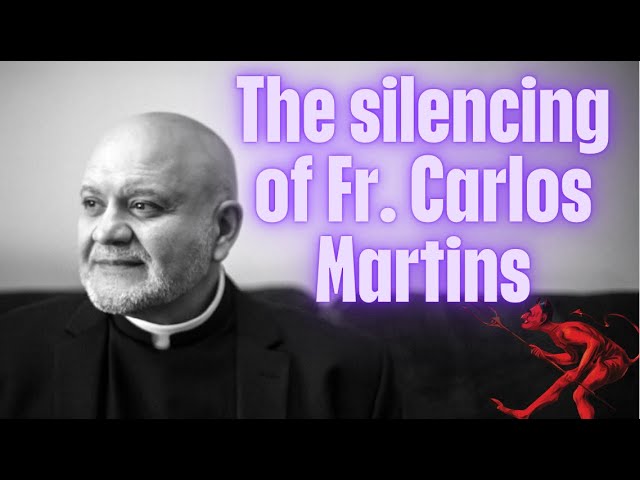
Lately my friend Fr. Carlos Martins has been in the press. It is not a coincidence that the very day that his book on exorcism is released he is accused of something “inappropriate” with a child, and the reportage from a particular source irresponsibly make it sound as if it were something sexual (hence, doing the Enemy a great favor). Fr. Martins has been, for now, silenced by his superiors. He has engaged representation. Meanwhile, some people who have listened and read have retained their heads in the correct direction. A good example are the folks from Catholic Unscripted. Two of their team made a video which pretty much sums up the state of the situation.
Fr. Martins has changed lives through his apostolate Treasures of the Church with relics. Will he be cleared to the point that it can continue? I pray so. May the agents of the Enemy fail.
Another view of the presepio at The Parish™ in Rome. So much going on!
Please remember me when Christmas shopping online and use my affiliate links. US HERE – WHY? This helps to pay for health insurance (massively hiked for this new year of surprises), utilities, groceries, etc.. At no extra cost, you provide help for which I am grateful.
More from the Archconfraternity’s day for feeding those in need.
Many thanks to BS who cancelled his Continue To Give donation so as to set up a new way to send a donation each month. I appreciate his prayers and kindness. More about this and what it means to me HERE
Thanks also to WW who switched away from Continue.
And over at San Damaso…
Please remember me when Christmas shopping online and use my affiliate links. US HERE – WHY? This helps to pay for health insurance (massively hiked for this new year of surprises), utilities, groceries, etc.. At no extra cost, you provide help for which I am grateful.
The other day the Arch of the Windy City made it clear in his archdiocesan paper that he didn’t want people to kneel to receive Communion, because – get this – it’s against tradition. Yes, that’s his argument. Here it is in a nut shell (and I do mean nut): Communion time involves a procession, processions are traditional, stopping to kneel is contrary to the procession, therefore kneeling is against tradition. You can’t make this stuff up.
In any event, this nonsense has been refuted by Edward Feser HERE
Cardinal Cupich’s concerns are about procedural efficiency and human community. The Eucharist is about communion with God, which infinitely outweighs such considerations – and the awareness that it does is precisely what the practice of kneeling helps inculcate.
Even at that, he’s wrong, dead wrong, about the sense of human community. At the Communion rail, you will have an experience you will otherwise never have, and it will be precisely one of community: kneeling beside a stranger, while the Lord approaches, and not having to worry about stepping on his shoes or getting out of his way. You can see people’s faces as they receive. He is dead wrong. I won’t speculate as to how he came to be so insensible to such moments.
Furthermore, the Holy See made it crystal clear that the faithful ALWAYS have the right to kneel to receive, and to receive on the tongue, in Redemptionis Sacramentum.
?Just in: Archaeologists have discovered new evidence of Christianity from the early third century near Frankfurt, Germany.
A scroll was found reading “Saint Titus”: “Holy, holy, holy! In the name of Jesus Christ, Son of God!” pic.twitter.com/bwXm85pl9q
Too many people today are without good, strong preaching, to the detriment of all. Share the good stuff.
Was there a GOOD point made in the sermon you heard at your Mass of obligation for this traditional 3rd Sunday of Advent?
Tell us about attendance especially for the Traditional Latin Mass.
Any local changes or (hopefully good) news?
[…]
When the Lord returns, He is going to come by the straight way, whether you have helped to straighten it or not. Right now, that straightening can be gentle and merciful, even if there are repentant tears and the burdens of repairing wrongs and doing penance. However, when the Lord returns as Just Judge, King of Fearful Majesty, it will not be with gentle mercy. This week’s Gospel and next week’s from Luke 3 coordinate in Isaiah 40 about the ultimate Advent.
Please remember me when shopping online. Your use of my Amazon affiliate link is a major part of my income. It helps to pay for insurance, groceries, everything. Thanks in advance.
“This blog is like a fusion of the Baroque ‘salon’ with its well-tuned harpsichord around which polite society gathered for entertainment and edification and, on the other hand, a Wild West “saloon” with its out-of-tune piano and swinging doors, where everyone has a gun and something to say. Nevertheless, we try to point our discussions back to what it is to be Catholic in this increasingly difficult age, to love God, and how to get to heaven.” – Fr. Z
The most evident mark of God’s anger and the most terrible castigation He can inflict upon the world are manifested when He permits His people to fall into the hands of clerics who are priests more in name than in deed, priests who practice the cruelty of ravening wolves rather than the charity and affection of devoted shepherds.
St. John Eudes
Recent Comments
grateful on ROME 26/3– Day 18: Flowers!: “I knew it, I knew it. As soon as I saw the flowers, I knew there would have to be…”
TheCavalierHatherly on ROME 26/3– Day 18: Flowers!: “In hoc barbarorum tempore, stylos nostros et ad litteras pristinas nosmetipsos revertamur, ut instrumenta simus ad errorum corrigendum illiteratorum. A…”
Federated Computer… your safe and private alternative to big biz corporations that hate us while taking our money and mining our data. Have an online presence large or small? Catholic DIOCESE? Cottage industry? See what Federated has to offer. Save money and gain peace of mind.
“Until the Lord be pleased to settle, through the instrumentality of the princes of the Church and the lawful ministers of His justice, the trouble aroused by the pride of a few and the ignorance of some others, let us with the help of God endeavor with calm and humble patience to render love for hatred, to avoid disputes with the silly, to keep to the truth and not fight with the weapons of falsehood, and to beg of God at all times that in all our thoughts and desires, in all our words and actions, He may hold the first place who calls Himself the origin of all things.”
Everyone, work to get this into your parish bulletins and diocesan papers.
Your support is important. Thanks in advance.
To donate monthly I prefer Zelle because it doesn't extract fees. Use
frz AT wdtprs DOT com
Donate using VENMO
GREAT BEER from Traditional Benedictine Monks in Italy
Good coffee and tea. Help monks.
CLICK and say your daily offerings!
A Daily Prayer for Priests
I use this when I travel both in these USA and abroad. Very useful. Fast enough for Zoom. I connect my DMR (ham radio) through it. If you use my link, they give me more data. A GREAT back up.
Help support Fr. Z’s Gospel of Life work at no cost to you. Do you need a Real Estate Agent? Calling these people is the FIRST thing you should do!
They find you a pro-life agent in your area who commits to giving a portion of the fee to a pro-life group!
Don’t rely on popes, bishops and priests.
“He [Satan] will set up a counter-Church which will be the ape of the Church because, he the devil, is the ape of God. It will have all the notes and characteristics of the Church, but in reverse and emptied of its divine content. It will be a mystical body of the anti-Christ that will in all externals resemble the mystical body of Christ. In desperate need for God, whom he nevertheless refuses to adore, modern man in his loneliness and frustration will hunger more and more for membership in a community that will give him enlargement of purpose, but at the cost of losing himself in some vague collectivity.”
“Who is going to save our Church? Not our bishops, not our priests and religious. It is up to you, the people. You have the minds, the eyes, and the ears to save the Church. Your mission is to see that your priests act like priests, your bishops act like bishops.”
“The modern habit of doing ceremonial things unceremoniously is no proof of humility; rather it proves the offender's inability to forget himself in the rite, and his readiness to spoil for every one else the proper pleasure of ritual.”
- C.S. Lewis
This blog has to earn its keep!
PLEASE subscribe via PayPal if it is useful. Zelle and Wise are better, but PayPal is convenient.
A monthly subscription donation means I have steady income I can plan on. I put you my list of benefactors for whom I pray and for whom I often say Holy Mass.
In view of the rapidly changing challenges I now face, I would like to add more $10/month subscribers. Will you please help?
For a one time donation...
To donate monthly I prefer Zelle because it doesn't extract fees. Use
frz AT wdtprs DOT com
As for Latin…
"But if, in any layman who is indeed imbued with literature, ignorance of the Latin language, which we can truly call the 'catholic' language, indicates a certain sluggishness in his love toward the Church, how much more fitting it is that each and every cleric should be adequately practiced and skilled in that language!" - Pius XI
"Let us realize that this remark of Cicero (Brutus 37, 140) can be in a certain way referred to [young lay people]: 'It is not so much a matter of distinction to know Latin as it is disgraceful not to know it.'" - St. John Paul II
Grant unto thy Church, we beseech Thee, O merciful God, that She, being gathered together by the Holy Ghost, may be in no wise troubled by attack from her foes. O God, who by sin art offended and by penance pacified, mercifully regard the prayers of Thy people making supplication unto Thee,and turn away the scourges of Thine anger which we deserve for our sins. Almighty and Everlasting God, in whose Hand are the power and the government of every realm: look down upon and help the Christian people that the heathen nations who trust in the fierceness of their own might may be crushed by the power of thine Arm. Through our Lord Jesus Christ, Thy Son, who liveth and reigneth with Thee in the unity of the Holy Ghost, God, world without end. R. Amen.


 In chessy news… I’m sad. HERE

 In chessy news… HERE
 The O Antiphons: 18 December – O Adonai


 On December 17th we enter into that final stretch of our Advent preparation. In the Church’s solemn prayer of the hours, at Vespers, the great “O Antiphons” are sung. Today we have the first.

 In chessy news…


 Chessy news…


 Chessy news…





























