Pope: To attract people more easily tone down teachings, relax severity… NOT.

xiii_leoRecently I read this quote from Pope Leo XIII’s 1899 Letter (sometimes called Encyclical, sometimes Apostolic) on the heresy of Americanism Testem benevolentiae:

The underlying principle of these new opinions [Americanism] is that, in order to more easily attract those who differ from her, the Church should shape her teachings more in accord with the spirit of the age and relax some of her ancient severity and make some concessions to new opinions. Many think that these concessions should be made not only in regard to ways of living, [discipline] but even in regard to doctrines which belong to the deposit of the faith. They contend that it would be opportune, in order to gain those who differ from us, to omit certain points of her teaching which are of lesser importance, and to tone down the meaning which the Church has always attached to them.

It does not need many words, beloved son, to prove the falsity of these ideas if the nature and origin of the doctrine which the Church proposes are recalled to mind. The Vatican Council [Vatican I] says concerning this point: “For the doctrine of faith which God has revealed has not been proposed, like a philosophical invention to be perfected by human ingenuity, but has been delivered as a divine deposit to the Spouse of Christ to be faithfully kept and infallibly declared. Hence that meaning of the sacred dogmas is perpetually to be retained which our Holy Mother, the Church, has once declared, nor is that meaning ever to be departed from under the pretense or pretext of a deeper comprehension of them.” – Constitutio de Fide Catholica, Chapter iv. [Which I couldn’t find on the Vatican website.]

Oddly, Testem benevolentiae is NOT listed on the Vatican website among the encyclicals or apostolic letters of this great, undervalued Pope.  HERE

One must wonder…. why?

But you can find it HERE and HERE.

Posted in Hard-Identity Catholicism, New Evangelization, Our Catholic Identity, Pò sì jiù, The Drill, The future and our choices | Tagged , , ,
20 Comments

ASK FATHER: Mass in Classical Latin

-veni-vidi-vici--2From a reader…

QUAERITUR:

Could the Mass and the Office be said in the classical pronunciation?

Yes.  It would be a little strange, but, yes.

The way we speak Latin in the Church right now is based on how Italian is pronounced, or, how Romans pronounce Latin.  That’s reasonable, given that we are talking about the language of the Roman Church.  Who better than they?

Latin is pronounced in different ways, according to one’s background and nation.  The English school system had a truly weird system.  Germans do odd things with vowels.  The French… well….

What we call now the Classical Pronunciation is more or less the fruit of research into how Latin might have been pronounced in the late Republic and early Empire, in the Gold and Silver Age of Latin literature.  We extrapolate how things were pronounced by examining misspellings in inscriptions and other writings, along with morphology, etc.

That said, pronunciation was not uniform.  North Africa was different from Italian peninsula. Just as is the case today, pronunciation surely varied within cities.

Also, consider that between the Gold and Silver Ages of literature and, say, the time of Augustine of Hippo, there is not only a gulf of distance but a gulf of centuries.  Early Modern English in, say, the plays of Shakespeare, sounds a bit foreign to our ears until we adjust. Of course, reconstructed pronunciation helps us to hear rhymes and puns in Shakespeare.  Reconstructed Classical Latin pronunciation also helps in the learning of Latin.  Think about the principle parts of ago and how they are pronounced in Ecclesiastical and Classical systems.

People who are interested in solid scholarship on reconstructed pronunciation of classical Latin, and Greek for that matter, can look into the standard work of W. Sydney Allen, Vox Latina.  Also see E.H. Sturtevant. They both also wrote on Greek.

I did a lot of this sort of thing in grad school, but it has been while.  I am sure there are now some new resources.

Posted in "How To..." - Practical Notes, ASK FATHER Question Box, Liturgy Science Theatre 3000 | Tagged ,
28 Comments

The ‘libido delendi’ that seized the Church, the desire to obliterate… everything

From something that you should read:

The elimination of altars and communion rails is the obliteration of sacred art. The obliteration of sacred art is the flattening of liturgical language. The flattening of liturgical language is the abandonment of ageless chants and hymns. The abandonment of those chants and hymns is the forgetting of immemorial devotions and prayers. The forgetting of those prayers is the secularization of time. The secularization of time is the laicization of clergy and religious. Their laicization is the rage to deny the mysteriousness of the faith. The denial of that mystery implies the building of churches as neutral spaces. The building of such churches is the destruction of churches like Saint Anne’s, and, as an ultimate but never to be realized aim, the destruction of Christ’s Church on earth.

Where’s that from? I’ll get to it in a moment.

I sometimes write that, today, we have lots of newish churches that look like municipal airports. No document, nothing, required that statues and altars and rails and windows be torn out of our churches, insulting the memories of our forebears who built them with the the sweat of their brows. There are no documents that says, “let paintings and decorations by removed or whitewashed”. But that’s what has been done time and time again. Not a single document said that our music should be ugly and our translations banal and our vestments impoverished.  Nope.  On the other hand, it is still possible to build beautiful, theologically rich churches. It just isn’t done too often. More often now that 10 years ago, perhaps. Just today I mentioned in a post the Shrine to Our Lady of Guadalupe built by Card Burke near LaCrosse, WI.  We can still have worthy sacred music, beautiful art, and decorum which point to the transcendent.

Here is a sample of a piece by Anthony Esolen at Crisis. Yes, that’s what I quoted, above.

What I’m trying to get at here is hard to put into words. When I entered Saint Anne’s in Woonsocket, a church that had narrowly escaped destruction by the diocese, it was as if I had entered the ruins of a lost way of life. Then I began to see that the libido delendi that seized my Church applied to everything in our worship and education. They were not separate but coincidental movements for destruction. They were and are parts of one movement, and not a new movement in the history of the Church, either.

Only academics can think themselves into pretending to like verse without music, music without harmony, painting without skies or flowers or animals or people. Intellectuals are the original smashers of images. It was not quarry workers who demanded that their communion rails be knocked out with sledge hammers. It was not little children who pleaded with their pastors to cover paintings with whitewash. It was not housewives who demanded that the high altars with all their draperies and candelabra be replaced with tables so bare and spare that they would not do for an ordinary kitchen.

Read the rest there.  He tells about a great church in Rhode Island that escaped destruction and what that church teaches us.

Libido delendi … the lust to obliterate… is back.

Over the last few months, self-absorbed promethean neopelagians [SAPNs] are crawling out of the woodwork and from under rocks.  They are getting up on their hind legs and braying against “triumphalism” and how liturgy requires “poverty” and none of that old “hoopla”.  And we are going to see a lot more of this for a while, I’m afraid.  We have some dark days ahead, I think, as this cycle plays out.  If you don’t think you aren’t in their crosshairs… think again.  It’s payback time for the 33 years of John Paul II and Benedict XVI.

The SAPNs are pushing their agenda.   Here’s what I think you ought to push.

Push for as many celebrations of the older form of the Roman Rite as possible in as many places as possible as soon as possible.

It will be hard to get going.  SO WHAT?  Make it work.  Work with sweat and money to make it happen.

Get involved with all the works of charity that your parishes or groups sponsor. Make a strong showing. Make your presence known. When work needs to be done, step up and ask, “What do you need?”

Pray and fast and give alms. Think you have been doing that? Do more.

Get organized.  Find like-minded people and get that request for the implementation of Summorum Pontificum together.  Raise the money. Buy the stuff the parish will need.  DO IT.  ¡HAGAN LÍO!”

This will require that people put aside their petty little personal interpretations and preferences of how Father ought to wiggle his pinky at the third word.  It is team-work time.  If we don’t sacrifice individually, we will be sacrificed individually.

Remember that the legislation is in place.  Young priests and seminarians are dying to get into this stuff.  Give them something to do.

As I have written before take off the training wheels and RIDE THE DAMN BIKE!

Posted in "How To..." - Practical Notes, Cri de Coeur, Fr. Z KUDOS, Hard-Identity Catholicism, Liturgy Science Theatre 3000, New Evangelization, Our Catholic Identity, Self-absorbed Promethean Neopelagians | Tagged , , , ,
29 Comments

Card. Burke’s kindness

Do you recall that, last year, Card. Burke consoled a little boy who was crying because he couldn’t yet receive Communion?  HERE

This is somewhat beyond the ken of most catholics, I believe.  They might console a Questioning-status minor not yet able to vote more than once in the same pro-same-sex “marriage” referendum.   But, I digress.  This shouldn’t be polemic and… there I went and did it.  Sorry!  I am under the weather.

So, last year Card. Burke consoled a boy who couldn’t receive Communion.  At that time His Eminence said that his time would come soon enough.

The day came!

Here is a piece from the site of the Shrine of Our Lady of Guadalupe in Wisconsin, which Card. Burke built in honor of Our Lady when he was Bishop of LaCrosse.   If you haven’t visited, it’s worth a trip.

Go read the whole story.  There’s a lot more to it than the simple fact of a First Holy Communion.  The boy, Louis Martin, has had a lot of things to overcome in his short life.

14_12_16_Burke_boy


There are lots of catholics out there who suffer from Burke Derangement Syndrome™.  Oddly, you don’t see stories like this about their models.

Posted in "How To..." - Practical Notes, Fr. Z KUDOS, Linking Back | Tagged , , ,
26 Comments

ASK FATHER: TLM for 25th Wedding Anniversary

Screen Shot 2014-12-15 at 10.55.52From a reader…

QUAERITUR:

My wife and I will be celebrating our 25th wedding anniversary this coming year.  We are regular attendees of an Extraordinary Form Mass at a local oratory dedicated to the same.  We are planning some sort of celebration for the occasion, but would like to start of with an appropriate Mass.  Are you familiar with any options for an Extraordinary Form Mass, preferably a High Mass, for the celebration of a wedding anniversary?

If the calendar permits, for your 25th and your 50th there can be a Votive Mass of the Trinity or the Blessed Virgin Mary with additional prayers “Pro gratiarum actione“.

It can be Low Mass, Sung Mass, or Solemn Mass.

After Mass there can be a blessing, found in the Rituale Romanum.

There are rubrics for this in the Roman Missal in the section on Votive Masses. Ask your local priest about this.

Posted in "How To..." - Practical Notes, ASK FATHER Question Box, One Man & One Woman, Our Catholic Identity |
3 Comments

“One of the great papist characters in modern fiction”

At the UK’s best Catholic weekly, the Catholic Herald, there is a fun piece about books I often mention here, the Aubrey/Maturin series by Patrick O’Brian, who would be 100 years old this year.

Which I would that he had lived to 100, so that we could have more tales of the nautical duo!

The Complete Aubrey/Maturin Novels (Vol. 5 volumes) (Aubrey/Maturin Novels)  UK link  HERE

Here is the piece, which is not available online. You can, however, subscribe to the digital version of the weekly.

The ‘reptilian’ Catholic who misses nothing

By Mark Benbow

The quick-witted Stephen Maturin is one of the great papist characters in modern fiction. His faith is so vivid you’d be forgiven for thinking that his creator was himself a Catholic

Dr Stephen Maturin is an unlikely Catholic hero. He is a ship’s doctor during the Napoleonic Wars. Half Catalan, half Irish, he is “reptilian” in appearance, casting a suspicious eye on everyone he meets. He is short, ugly and a spy – for the British government, fortunately, since nothing escapes him.
Maturin is the junior partner in one of
the great double acts in British fiction: the Aubrey-Maturin seafaring novels by Patrick O’Brian, who was born 100 years ago. Maturin’s surreptitious Catholicism is a theme in many of the 20 novels, beginning with Master and Commander, which was published in 1969 but acquired cult status only in the 1990s. O’Brian himself, though extremely reticent about his past, hinted that, despite his refined English voice and old-fashioned snobbery, he was an Irish Catholic from Dublin.
Perhaps not surprisingly, the Aubrey-Maturin series is much loved by many Catholics, who relish the dynamic between Captain Jack Aubrey, brave, impulsive and naïve, and the dry wit of his papist confidant. O’Brian plunges his readers into the life of the sea, with few concessions to their ignorance of nautical jargon (except when Aubrey is explaining things to the land-lubber Maturin). Some of the writing is beautiful, as in this excerpt from The Surgeon’s Mate, which takes Aubrey and Maturin from the fogs of Novia Scotia to a French jail:

“There,” cried Stephen when Jack appeared in the frail topgallant-shrouds, “are you not amazed?” He pointed cautiously with one finger and Jack looked out to the south-west. At this height they were above the low blanket of fog that covered the sea: clear sky above, no water below; no deck even, but a smooth layer of white mist, sharply cut off from the clean air; and ahead, on the starboard bow and on the starboard beam the surface of the soft, opaque whiteness was pierced by an infinity of masts, all striking up from this unearthly ground into a sky without a cloud, a sky that might have belonged to an entirely different world.
“Are you not amazed?” he said again.

If you do not know what “topgallant-shrouds” are, then buy a nautical handbook (as some devotees do). O’Brian takes pleasure in meticulous accuracy, and not just in his accounts of naval warfare. The early 19th century was a time of religious change in England. Catholics fell under suspicion as Britain went to war with France again – and, indeed, the Benedictine-educated Maturin was a supporter of the French Revolution until the Terror and the subsequent tyranny of Bonaparte. Yet we were also on the verge of Catholic Emancipation: papists moved in elevated social circles and O’Brian expertly captures the half-surreptitious, half-proud spirit of Maturin’s Catholicism.

In Fortune of War, set in 1812, Maturin is apprehended by the Americans in Boston and attends Mass during his captivity:

The priest was already at the altar by the time they reached the obscure chapel in a side-alley, and crept into the enormously evocative smell of old incense. There followed an interval on a completely different plane of being: with the familiar ancient words around him, always the same, in whatever country he had ever been (though now uttered in a broad Munster Latin), he lived free of time or geography, and he might have walked out, a boy, into the streets of Barcelona white in the sun, or
into those of Dublin under the soft rain.

The reference to the old Mass will have appealed to one of O’Brian’s biggest fans, the traditionalist priest-blogger Fr John Zuhlsdorf, who in one post seems to take mischievous delight in the unflattering portrayal of the Jesuits as “[making] a sad nuisance of themselves again, turning out atheists from the schools by the score”.

Catholic readers should be warned, however, that these bracing, colourful and cluttered novels were written by a very strange and dishonest man. Patrick O’Brian was not Irish, not Catholic and not called Patrick O’Brian. Shortly before his death in 2000, the BBC revealed that he was born Richard Russ, the son of a doctor from Chalfont St Peter, Buckinghamshire. He had changed his name after an unhappy first marriage and probably deceived people into thinking that he was a spy during the war (he was actually an ambulance driver). His faith was as fictional as Maturin’s. But don’t let that put you off. The books, if you like that sort of thing, are terrific.

Which terrific ain’t in it, as Preserved Killick would say.

Posted in O'Brian Tags, Preserved Killick | Tagged , , ,
17 Comments

ASK FATHER: Mistake about minister of Sacrament of Matrimony and validity

From a reader…

QUAERITUR:

When making vows at a Catholic Wedding in a Catholic Church if a Groom genuinly beleives that the officiating priest at a wedding is the minister of the Sacrement of Matromony, and not the bride and groom (as the Chuch teaches), is it possible that the groom would \ may lack the intention to do what the Catholic Church dose rendering the marriage null and void in all but Civil Law ?

One need not be fully aware of the profundity of one’s own actions for those actions to have effect.

If Bob consents to marry Betty, but Bob does not fully understand the Church’s theology of marriage, all things being equal, he does, in fact, marry Betty.

The Church’s understanding is that the average 14 year old female, and the average 16 year old male has the mental wherewithal to consent validly to marriage.  I will add that perhaps the Church is a bit optimistic in this matter, given my conversations with young people.

Bishops Conferences have the right to set a higher minimum age, taking into consideration the cultural situation of the country.  However, the US Bishops have not done so… yet.

Failure to understand, precisely, the sacramental efficacy of one’s consent does not render that consent invalid.  Failure to grasp that the priest is not the minister does not render consent invalid.

Posted in "How To..." - Practical Notes, ASK FATHER Question Box, Liturgy Science Theatre 3000, One Man & One Woman | Tagged , , , ,
27 Comments

Succisa virescit: Another parish church reborn after destruction

The other day I posted about the rebuilding of a little parish church which had burned a few years ago on Christmas Eve.  The rebuilding was quite the success.  E cineribus resurgit.

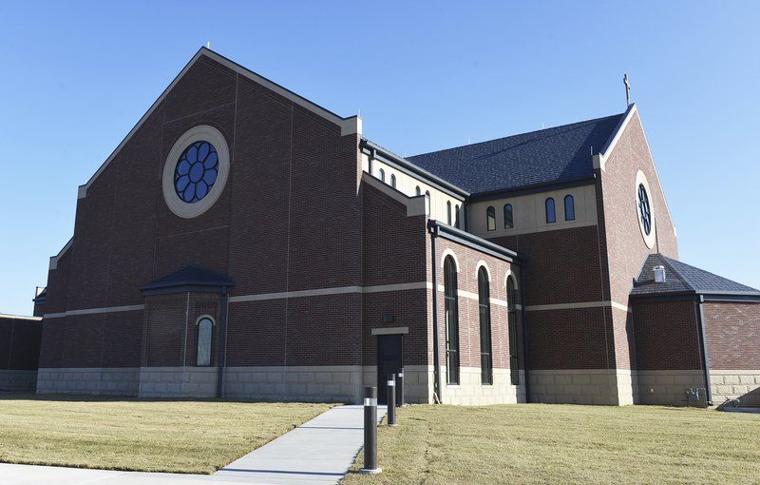
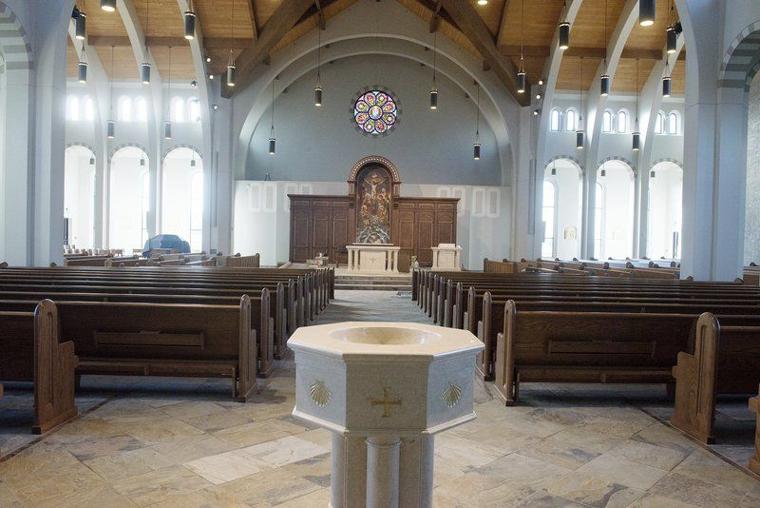
I see now that another parish church, destroyed – 47 years to the day that it had been dedicated – in the horrible tornados that struck Joplin, MO some time ago, has been rebuild as well.  Rebuilt and significantly amplified. I wrote about that parish HERE

And now… from the Joplin Globe:


Friends, it is possible to build better than we have been building for the last few decades.  It really is.

I congratulate the parish on their new church.

Succisa virescit.

Posted in "How To..." - Practical Notes, Fr. Z KUDOS, Just Too Cool | Tagged , ,
15 Comments

Nota bene: Apostolic Visitation of US sisters and CDF scrutiny of LCWR are NOT the same

There is some speculation about what may be said on 16 December in Rome about the Apostolic Visitation that was conducted of communities of women religious in these USA by the Congregation for Institutes of Consecrated Life and Societies of Apostolic Life (aka Congregation for Religious).   Some suggest (hopefully, even triumphantly) that a rosy picture, or at least not a black picture, will be painted of religious life in female institutes and orders.  Or, perhaps, there will be the usual positive comments about the many “fruits”, just like all the “fruits” we have obviously been granted since the Second Vatican Council.  Then, there could be a small bite of the lip, tilt of the head, and lift of the hand, while, with furrowed brow someone says, even with all the “fruits”, there are points to work on (like the fact that most communities are going to be extinct in 20 years).

Whatever the outcome, whatever the statements, be careful not to fall into a trap.  Don’t let media outlets lead you astray.  Don’t let, especially liberal catholic commentators blow smoke into your eyes.

Do not conflate – as so often happens – the Visitation of the communities of women religious and the Congregation for the Doctrine of the Faith’s scrutiny of the LCWR.   These are separate issues and actions.  The exoneration or praise of or even criticism that might come from the report on the Visitation, is NOT the same as what the CDF is doing in examining the formation and spirituality of the LCWR.

But watch.  Some will say, “Look! The Pope himself (even though it’s the Congregation) has said the nuns of the LCWR are groovy! So, everyone now has to listen to the Nuns on the Bus!”   No. It will be the Congregation and it won’t concern the CDF and the LCWR, and the Nuns on the Bus are yet another group (though the Venn Diagrams start to overlap heavily).

Posted in The Drill, Women Religious | Tagged , , , ,
6 Comments

My View For Awhile: last trip edition

Off again, hopefully for the last trip of the calendar year!

IMG_4256.JPG

And boarded…

IMG_4257.JPG

I’m reading Peter Kwasniewski’s new book. HERE

IMG_4258.JPG

UPDATE:

Upgraded.

IMG_4260.JPG

I’m reminded of the big band song from WWII. “You’re 1-A in the Army, but you’re A-1 in my heart!”

UPDATE:

The (Delta) screen is promising free text messaging for T-Mobile customers. Given that and the far better overseas data rates, I’m think I’ll explore switching.

Posted in On the road, What Fr. Z is up to |
6 Comments