IRAQ: Watching with horror, prayers, concern.

First, I am convinced that what is going on in Iraq is going to have dangerous consequences for us here in these USA and for Western Europe.  Prepare your minds and gird yourselves.

Pres. Obama flippantly called these heavily-armed and successfully murdering savages the “JV team”.  JV TEAM?

I have followed quite a few stories about the horrific actions of ISIS or whatever its called this week.  Islamic terrorists killing people.   Pewsitter has been a good source for links about the plight of Christians.  I also give props to Rorate for a few important items.

Tonight a priest friend sent this, which I hadn’t seen elsewhere:

Anglican Vicar of Baghdad: ‘Child I baptized cut in half by ISIS’

[Anglican Communion News Service] The five-year-old son of a founding member of Baghdad’s Anglican church was cut in half during an attack by the Islamic State on the Christian town of Qaraqosh.
In an interview Aug. 8, an emotional Canon Andrew White told ACNS that he christened the boy several years ago, and that the child’s parents had named the lad Andrew after him.
“I’m almost in tears because I’ve just had somebody in my room whose little child was cut in half,” he said. “I baptized his child in my church in Baghdad. This little boy, they named him after me – he was called Andrew.”
The fact that Andrew’s brother was named George after St George’s Anglican Church in Iraq’s capital demonstrates the strong ties the family had to the church there. The boy’s father had been a founder member of the church back in 1998 when the Canon had first come to Baghdad. White added, “This man, before he retired north to join his family was the caretaker of the Anglican church.”
Baghdad is part of the Diocese of Cyprus and the Gulf, which is included in the Episcopal Church in Jerusalem and the Middle East, a member church of the Anglican Communion.
Though the move north should have proved safer for the Iraqi Christian family, the Islamic State made sure that it became a place of terror. “This town of Qaraqosh is a Christian village so they knew everybody there was part of their target group,” said White. “They [the Islamic State] attacked the whole of the town. They bombed it, they shot at people.
The Islamic State group captured Qaraqosh overnight Aug. 6/7 after the withdrawal of Kurdish forces.

[…]

The world is getting crazy dangerous, folks.  I don’t know about you, but we are going to see terrible things here, in the aftermath of what is happening there.

Pray for these poor people.

Meanwhile… more from the Religion of Peace HERE:

ISIS Sets Up Sex Slave Market to Sell Hundreds of Christian Women

[…]

Witnesses reported that, of the 500 Christian women abducted from Mosul alone, the ones who were deemed attractive were taken to ISIS princes to be their personal sex slaves.

Shoebat.com translated a statement from Red Crescent spokesman Mohammad Khuzai:

“Elements of ISIS kidnapped women from the Yezidis and Christian as Sabaya (war booty slaves), and subjected them to be sold.”

Sts. Nunilo and Alodia, pray for us.

Posted in Mail from priests, Modern Martyrs, The Coming Storm, The future and our choices, The Religion of Peace, Urgent Prayer Requests | Tagged , , , , , ,
16 Comments

Stunning unexpected support for Fr. Z’s request for LCWR credentials!

As you know, I was recently crushed by the LCWR’s second rejection.

I had reached out in hope. I had applied, again, for media credentials for the upcoming LCWR assembly in Nashville.  They have rebuffed, again, my application.

“Where’s their prophetic spirit?”, I cried, more from hurt than from surprise.  “What are they afraid of?”  You read of my anguish HERE.

Today, I found that my pain is shared, and by an unexpected corner.

Tom Fox of the National Schismatic Reporter (aka Fishwrap) stands with me.

He wrote, HERE:

A group that once prided itself on fearless leadership and modeling transparency is now more media restrictive than most other Catholic organizations, including the U.S. bishops.

WHOA! More than the bishops.  That’s pretty bad!

Even Fishwrap’s Sr Joan Chitister, fairly quiet since her Triumph in Tahir, and her sister sister, Sr. Mary Lou Kownacki, have felt my pain.  They, too, decry the LCWR’s timidity, which has manifested in their acting out, their straight-arm against those who only seek to dialogue.

Sr. Joan and Sr. Mary Lou think that the LCWR sisters should cry out!

Dearest Sisters [of the LCWR], you have done nothing wrong. It is your obligation as religious to ask the questions that need to be voiced. It is the holy responsibility of religious to stand with those who are most bereft. Be proud of the questions you have asked, the speakers you invited to your assemblies, the statements you issued, the liturgies you celebrated. Go to the microphone and say: We believe in feminist theology and in women’s ordination; we believe in the rights of gay, lesbian and transgender population and we will continue to speak aloud on these issues.

They want the assembled sisters to be prophetic.

But HOW? HOW can they be prophetic when they shut off access to people who can bring their message to the world?

This is so hard.  It’s like… like… the stitches in the deep would I endured the other day have been ripped.  Again, I bleed and wonder about what might have been.

What might have been….

Posted in Liberals, Lighter fare, Linking Back, Magisterium of Nuns, Women Religious | Tagged , , , ,
13 Comments

YOUR URGENT PRAYER REQUESTS

Please use the sharing buttons! Thanks!

Registered or not, will you in your charity please take a moment look at the requests and to pray for the people about whom you read?

Continued from THESE.

I get many requests by email asking for prayers. Many requests are heart-achingly grave and urgent.

As long as my blog reaches so many readers in so many places, let’s give each other a hand. We should support each other in works of mercy.

If you have some prayer requests, feel free to post them below. You have to be registered here to be able to post.

I still have a pressing personal petition. Actually… two.

Especially… pray for the poor suffering Christians in Iraq!

Sts. Nunilo and Alodia, pray for us!

Posted in SESSIUNCULA | Tagged
56 Comments

ASK FATHER: Concert in a church… appropriate?

From a reader:

Dear Father, a pastor of one of our Catholic Churches is allowing a symphony concert to be held in church if it gets rained out. The symphony is going to play show tunes, patriotic songs, lively marches, Stars and Stripes, 1812 overture, with vendors outside the church selling food, drinks, etc. It is usually held on the grounds of a replica of a Fort which is right next to the church. Many people who will attend are not Catholic and I think it isn’t a good example for Non-Catholics or Catholics alike. I think it is very disrespectful, irreverent and inappropriate. Would like to hear your views. Thank you and God Bless.

Can. 1210 provides us with the parameters:

“In a sacred place only those things are to be permitted which serve to exercise or promote worship, piety and religion. Anything out of harmony with the holiness of the place is forbidden. The Ordinary may, however, for individual cases, permit other uses, provided they are not contrary to the sacred character of the place.”

The Congregation for Divine Worship and the Discipline of the Sacraments in 1987 issued additional clarifications about concerts in church, published HERE.

Keep in mind that the “Ordinary” would be the local diocesan bishop, the vicar general, an auxiliary bishop, an episcopal vicar, or, if this is a church owned by a religious order, a religious major superior). The Ordinary would have to give permission for something like this, not the pastor. The Ordinary may have determined that there are legitimate reasons for hosting this event in a church.

Praying for good weather, so that this possibility does not become a reality,  is highly to be recommended. Though we already nearly a month after St. Swithun’s Day, asking his intercession for good weather would not be too pushy.  Besides, he may be on a break right now, and just waiting for someone to ask him to intercede.

Posted in "How To..." - Practical Notes, ASK FATHER Question Box, Our Catholic Identity | Tagged , ,
5 Comments

ASK FATHER: Having a hard time at a TLM church.

From a reader:

I’ve been attending the TLM for about 5 years now. I came across it unintentionally as a revert and never intended on making it a regular thing, but I was awe-struck by the beauty and reverence it was celebrated with and couldn’t let it go. Furthermore, there was a very holy priest who was there, whose joy, happiness, humility, and strong conviction in preaching (both through words and actions) the need for us to become saints who really inspired the desire in me to become a saint in this life, which I’ve been striving for.

However, that priest was transferred and the priests who were sent to us don’t seem to have that same conviction that we need to become saints now and instead are very critical of priests in general who celebrate Mass in the Ordinary Form, as well as the Ordinary Form in general, etc. What’s worse, many parishioners have taken this as a licence to follow in like behaviour and are openly bashing Diocesan priests and making assumptions about the internal state of their soul.

This hurts me and I can’t stand it anymore. I used to just pray for our priests and parishioners, but after it not having any positive impact, the anger is now it is having a very negative impact on my soul, and am debating whether or not I should just leave and stop attending the TLM. I have raised my concerns with our pastor and I was dismissed as being too critical and that my time would be better spent in prayer.

[…]

I am not particularly sure of why TLM communities exist, but I am wondering if there is a place for non-Traditionalists such as myself within these communities, or if I am out of place for wanting to use the TLM in order to help me become a saint and not being sympathetic to Traditionalists and their issues?

I am not sure about “their issues”.   Sure, there are some traditionalists who seem to be a bit like Catholic Amish, but they are few.  But let that pass.

I assume that you are going to a church, chapel, parish which has exclusive use of the Extraordinary Form.

These communities exist to provide for people who have a desire to foster their spiritual through the older form of Holy Mass and the sacraments, and with preaching and catechesis that will be solid.  They want the whole nine yards, rather than just Mass on Sunday.

Keep in mind that, if a lot of traditional lay people have – for decades – been beaten up even by their priests and bishops, treated like second class citizens, so have priests.  Priests, I remind you, are human beings too.  They also can become embittered or impatient and uncharitable.  Is the bar higher for priests?  Do we have greater expectations for them and the way they interact with people.  Of course.  Do they fail?  Sure they do.  This shouldn’t be a surprise.

I get your frustration, but keep in mind that you could be a great spiritual help to these guys.  Pray for them. Fast for them.  Offer them encouragement.  It is okay to express your dismay when you hear them, for example, “openly bashing Diocesan priests and making assumptions about the internal state of their soul”… if that really is what they are doing.  If they are really doing that, openly, they are doing themselves a grave disservice as well.  They are hurting themselves and their mission because that sort of thing will get out and around among the priests and to the diocesan bishop where they are.  I’d recommend that, if they can’t adjust their attitudes, they keep their mouths shut.

But for you… try to be an example of cheerful and patient charity there.  Don’t participate in the talk you object to.  Instead, try to change the subject.  Or, you could add an anecdote about acts of kindness and good things you know that diocesan priests have performed.

And, to keep your eyes clear, examine your own conscience and go to confession regularly.

Posted in "How To..." - Practical Notes, ASK FATHER Question Box | Tagged
18 Comments

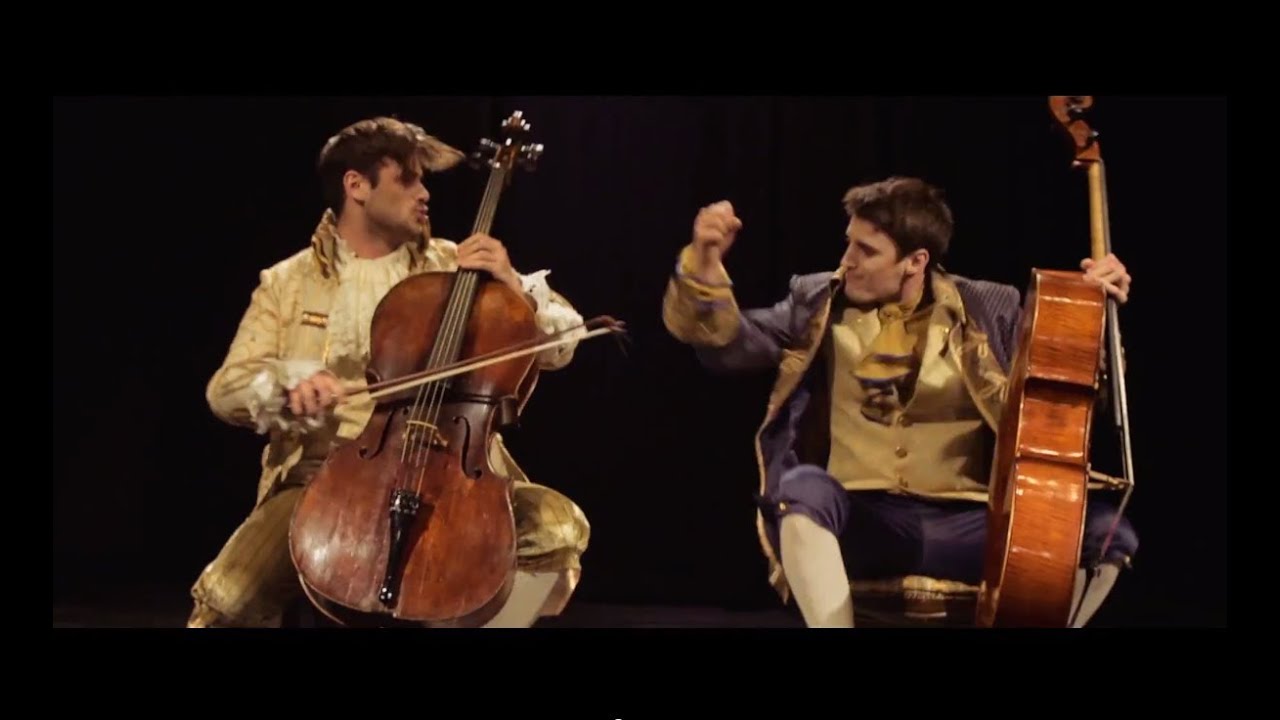
Cellos

I had to share this.  Turn the volume up (if you can).

This just goes to show that an instrument, a tool, is neutral. We choose to use them in certain ways.

YouTube thumbnailYouTube icon

Posted in Lighter fare | Tagged
29 Comments

FRANCE: Churches desecrated

From CWN:

Two churches in Thonon-les-Bains, a city of 30,000 in eastern France, were desecrated on August 5, according to Le Messager, a newspaper based in Chablais.

A man in his thirties entered St. Hippolytus Church and the Basilica of St. Francis de Sales and destroyed or damaged altars, stained glass, statues, candelabras, and a bronze cross. He also tore open a tabernacle and trampled on the Eucharist.

The man suspected in the desecration is a “young Muslim,” a local priest said.

What a surprise.

Sts. Nonilo and Alodia, pray for us.
St. Lawrence of Brindisi, pray for us.

Posted in The Coming Storm, The Drill, The future and our choices, The Last Acceptable Prejudice, The Religion of Peace | Tagged ,
8 Comments

America Magazine interview with Fr. Z

Today is a great day among Jesuits.

It is the 200th Anniversary of the Restoration of the Society of Jesus.

As you may know, the Society had been, for a while, suppressed.

To mark this day, the Jesuit-run America Magazine has published an interview.  With me.

Well… it could be just a coincidence, but I’d like to think that this is America‘s way of celebrating the 200th anniversary.  You decide.

BTW… they edited it a bit, so you don’t get one full question/answer.  I’ll let you wonder about the “what” and “why”.

I don’t usually advertise the media things I do.  “Hey! I’m going to be on TV!”… nah…. not so much.  This time is a little different. Suffice to say that, in all sincerity, I was pleased that they reached out to me with this, as I take it, olive branch.

[ 11 Aug: Since I first wrote that, I have modified my view.]

For the interview go HERE.

¡Hagan lío!


Posted in ¡Hagan lío!, Olive Branches, What Fr. Z is up to, You must be joking! | Tagged , , ,
49 Comments

NEW EDITION: Directory for the Ministry and the Life of Priests – An Item of Interest

After some years of waiting, the next, new edition of the Directory for the Ministry and the Life of Priests has been issued by the Congregation of Clergy, which is now under the direction of His Eminence Beniamino Card. Stella. He was appointed by Pope Francis.

The PDF in English HERE

This is going to take a while to absorb, but I want you priests and bishops to take note of a paragraph right away.

Go to PAGE 82 in the PDF.

The Importance and Obligatory Nature of Ecclesiastical Attire

61. In a secularised and basically materialistic society where the external signs of sacred and supernatural realities tend to disappear, deeply felt is the need for the priest – man of God, dispenser of his mysteries – to be recognisable in the eyes of the community by his attire as well, and this as an unequivocal sign of his dedication and identity as holder of a public ministry. The priest must be recognisable above all through his conduct, but also by his attire, which renders visible to all the faithful, and to each person, his identity and his belonging to God and to the Church.

Clerical attire is the external sign of an interior reality: “Indeed, the priest no longer belongs to himself but, because of the sacramental seal he has received (cf. Catechism of Catholic Church, nn. 1563, 1582), is the ‘property’ of God. The priest’s ‘belonging to Another’, must become recognisable to all, through a transparent witness. […] In the way of thinking, speaking, and judging events of the world, of serving and loving, of relating to people, also in his habits, the priest must draw prophetic power from his sacramental belonging”. For this reason the priest, like the transitory deacon, must:  [transitional deacon…]

a) wear either the cassock “or suitable ecclesiastical dress, in accordance with the norms established by the Episcopal Conference and legitimate local customs”; when other than the cassock, attire must be different from the way laypersons dress and consonant with the dignity and sanctity of the minister; the style and the colour are to be determined by the Conference of Bishops; [Once again, the default dress for the priest is identified as the cassock.]

b) because of their incoherence with the spirit of this discipline, contrary practices are bereft of the rationality necessary for them to become legitimate customs and must be absolutely eliminated by the competent authority.

Outside of specific exceptional cases, the non use of ecclesiastical attire may manifest a weak sense of one’s identity as a pastor dedicated entirely to the service of the Church.

Moreover, in its form, colour and dignity the cassock is most opportune, because it clearly distinguishes priests from laymen and makes people understand the scared [sic – just a typo] nature of their ministry, reminding the priest himself that forever and at each moment he is a priest ordained to serve, teach, guide, and sanctify souls mainly through the celebration of the sacraments and the preaching of the Word of God. Wearing ecclesiastical attire is also a safeguard for poverty and chastity.

As far as the local custom is concerned, as I have written here many times before about clerical dress, in these USA, the custom was – and I think still is – not to use the cassock as street dress all the time.  This goes back to the Councils of Baltimore which, while obviously no longer in force now, shaped custom in these USA. This is shifting among younger priests.  How quickly will this shift?  It is sure interesting to watch!

Posted in "How To..." - Practical Notes, Mail from priests, Our Catholic Identity, Priests and Priesthood | Tagged , , , , , ,
25 Comments

Transfiguration: “The spring goes down to suffer thirst; and you refuse to suffer?”

This is the Feast of the Transfiguration of Our Lord.  Did you know that this feast was made a universal feast for the Western Church by Pope Callixtus III to commemorate the Siege of Belgrade in 1456?

After the Muslims took Constantinople Sultan Mehmed II went next for Hungary, attacking first Belgrade.  The siege turned into a counterattack which overran the Muslim camp. The invaders retreated. In Hungary, Catholic and old Protestant churches still ring bells in honor of the defeat of the Muslims.  A fine day, indeed.

The word transfiguratio is interesting in itself. In classical, post-Augustan Latin Pliny used this for “a change of shape”. However, that is not what happened with Christ on the mountain, probably Mount Tabor in Galilee not far from Nazareth.

What happened?

If we see Christ’s Baptism at the Jordan as the beginning point of His public life, and the Ascension as the end, then the Transfiguration its zenith.

The accounts of the Transfiguration are found in Matthew 17:1-6, Mark 9:1-8, and Luke 9:28-36. Also, 2 Peter 1:16-18 and John 1:14 refer to it.

Scripture tells us that a week or so after Jesus and the disciples were at Caesarea Philippi (where Christ gave Peter the “keys”) Jesus took Peter, James and John to a high mountain. They were surrounded by a bright cloud, like that in which God spoke to Moses. Christ shone with light so dazzling it was hard to see. On either side of Him were Moses the Lawgiver and Elijah the Prophet. A voice was heard, as at the time of Jesus’ Baptism: “This is my beloved Son, with whom I am well pleased; listen to him”. The Gospels of Matthew and Mark use the Greek word metemorphothe for what happened. St. Jerome in his Vulgate chose transfiguratus est. The Synoptic Gospels (Matthew, Mark and Luke) expand the event saying “his face did shine as the sun: and his garments became white as snow,” or “as light,” according to the Greek text. This brightness has been taken to be a glimpse of Christ’s divinity shining through His flesh. Christ allowed the three key Apostles to see this so as to strengthen them before His Passion soon to follow.

Getting back to the word transfiguratio, it clearly points to a dramatic change, though in Christ’s case not one of form or shape. The word is from the preposition trans with figura. A figura is “a form, shape” but also in philosophical language a “quality, kind, nature, manner”. Most interesting to me is the mean of figura as a “form of a word” or “a figure of speech”. Think of the Prologue of the Gospel of John 1:14, recited by priests for centuries at the end of Holy Mass: “we have beheld his glory, glory as of the only Son from the Father”.

In the Prologue of John the Evangelist says that Jesus the Son is the divine logos, the Word: “In the beginning was the Word….” A word is an utterance which projects the concept of the speaker. The Jews has used Hebrew memra, God’s creative or directive word or speech which manifests His power in the mind or in matter, as a substitute for the divine Name of God.

Jerome’s choice of a word with the root figura or “figure of speech” is very apt in many ways, and its draws our imaginations into the realm of God’s eternal uttering, His eternal rhetoric.

COLLECT (Transfiguration):
Deus, qui fidei sacramenta
in Unigeniti tui gloriosa Transfiguratione
patrum testimonio roborasti,
et adoptionem filiorum perfectam mirabiliter praesignasti,
concede nobis famulis tuis,
ut, ipsius dilecti Filii tui vocem audientes,
eiusdem coheredes effici mereamur.

LITERAL WDTPRS VERSION:
O God, who in the glorious Transfiguration
of your Only-begotten Son
strengthened the sacrament of faith by the witness of the fathers (Moses and Elijah),
and in a marvelous way foreshadowed the perfect adoption of children,
grant to your servants that,
hearing the voice of Your beloved Son himself,
we may merit to be made the same Son’s coheirs.

NEW CORRECTED ICEL (2011):
O God, who in the glorious Transfiguration
of your Only Begotten Son
confirmed the mysteries of faith by the witness of the Fathers
and wonderfully prefigured our full adoption to sonship,
grant, we pray, to your servants,
that, listening to the voice of your beloved Son,
we may merit to become co-heirs with him
.

In the Transfiguration, God reveals more fully the Sonship of Jesus and, thus, reveals in Jesus, our own sonship.

When the Father reveals the Son as Son, He is telling us about His own life, how He generates the Son and how the Holy Spirit from all eternity is the love between them. Fortified with this knowledge, we can participate in the life of the Trinity in a fuller way. Because of our unity with Christ in our common human nature, the way to divine sonship is opened up. He is the Father’s Son by nature, but we by grace. God makes us His children through a perfect adoption… adoptio perfecta. From God’s point of view, it is perfect (“brought to completion”) because God puts His seal and mark upon us. From our point of view, it will be perfect only when we see God face to face in heaven.

Because of this adoption, the adoptio filiorum and adoptio perfecta, an eternal inheritance awaits us. We merit a patrimony.

St. Leo the Great (+461) said in a sermon (s. 51):

“In this mystery of the Transfiguration, God’s Providence has laid a solid foundation for the hope of the Church, so that the whole body of Christ may know what a transformation will be granted to it, and that the members may be assured that they will be sharers in the glory which shone forth in their Head.”

We are already sons and daughters by God’s adoption, but that sonship is not yet completed.

We lack the final essential component: perseverance in faith and obedience for the whole course of our lives. Even the Apostle Peter, his eyes dazzled by the Lord on Mount Tabor, failed to see what was happening. The great St. Augustine in a sermon on the Transfiguration (s. 78, 6), addresses Peter, and through Peter he really addresses us: “Descend the mount, O Peter. You wanted to rest on the mountain. Come down.”

We still have work to do in this life before we can rest.

Citing the same passage of Augustine the CCC 556 takes up this same theme:

Peter did not yet understand this when he wanted to remain with Christ on the mountain. It has been reserved for you, Peter, but for after death. For now, Jesus says: “Go down to toil on earth, to serve on earth, to be scorned and crucified on earth. Life goes down to be killed; Bread goes down to suffer hunger; the Way goes down to be exhausted on his journey; the Spring goes down to suffer thirst; and you refuse to suffer?”

Posted in Liturgy Science Theatre 3000, WDTPRS | Tagged , , , ,
4 Comments