I saw a post at a Lutheran blog calling for – wait for it – more Latin in their liturgy.
As a convert to Holy Mother Church from Lutheranism, I found this pretty interesting. I am aware that there exists a Lutheran liturgical service of some sort which is more like Mass and which involves Latin. If memory serves it was used at least once a year at the large Luther Northwestern Seminary in my native place in Minnesota. That said: when we think of Lutheran services, Latin doesn’t leap to mind.
Here are a couple excerpts from the post at the blog The Jagged Word. As a former Lutheran, I could add more of my usual red intertextual comments than I often do, but I shall restrain myself. Read the whole thing THERE.
It’s been roughly 500 years since Martin Luther introduced the language of the people to the Mass – the Divine Liturgy of the Church. 500 years since the historic language of the Western Church was purged from the worship of God’s people. As a student of history, I understand why Luther thought this was necessary. Indeed, there is goodness in hearing and understanding the Liturgy in one’s native tongue. But Luther’s experiment with language should end. It’s time to restore Latin to the Mass of the Western Church. [The true Mass of the Western Church is the Mass of the Catholic Church…. but let’s go on…] It’s time to reintroduce the language of the Church to her people. [Bruthuhs n Sistuhs do I hear an “Amen!”?]
For those bristling at such a suggestion, I offer the following observations:
1) The Lutheran Reformers did not seek to abolish the Mass. Our confessions, contained in the Book of Concord, make this abundantly clear. These are the same confessions that every ordained Lutheran pastor swear to uphold and affirm. In other words, the Lutheran Church is a Liturgical Church and our worship is properly called the Mass. [Mass is a Sacrifice… but let that pass.]
[…]
3) While the Lutheran Church affirms sola scriptura, it does not reject Tradition or the importance of ritual. Catholicity is not adiaphara (optional/indifferent), [Nice phrase, though I would write adiaphora.] especially with respect to worship. And nothing affirms our catholicity like the Mass. It is, I believe, THE defining characteristic of what Lutherans confess. [That’s not quite what I remember hearing… but let’s move on.]
But why ditch the vernacular in our worship and relearn – reintroduce – and re-embrace Latin in the Mass? What possible benefits can come from such a change? I’m glad you’re curious… [Amen!]
[As an exercise, swap in the word “Catholic” here and there.] 1) Despite that the fact that the Lutheran Confessions affirm the Mass, many Lutheran [Catholic] churches today reject it altogether and embrace a worship style that is more akin to what one would find in a non-denominational church. Lex orandi, lex credendi [!]

CLICK ME!
(the law of prayer is the law of belief) is absolutely true and those who reject the Mass or think they should arrogantly rewrite it based on what they think their congregation wants/needs, [Tell it!] I believe, reject the very substance of Lutheranism. [Catholicism.] Can you imagine a contemporary Latin Mass? Neither can I. They are mutually exclusive, which is why the use of Latin in our Mass will help restore our catholicity in matters of worship, and affirm what our Confessions already do.
2) Our clergy and our people are very educated on matters of faith these days, much more than those prior to the Reformation. The Holy Scriptures, the Book of Concord, the writings of the church fathers, etc., are almost all in our native tongue. But with the expulsion of Latin, there is no longer a common language of the Church catholic. I know, very few clergy and even less laymen know Latin. But what a powerful educational tool the Church could be if it took it upon herself to educate her people in this language. As we relearn this language, some of our hymns, the assigned readings, and the sermon, could remain in the vernacular, along with a translation of the Latin in the hymnal or worship folder. But once again Christians could have a language that unites every congregation around the world – regardless of time or location.
3) Finally, re-embracing Latin in our Mass will further solidify the Lutheran Church as a communion that embraces the catholicity of the Christian faith. This embrace, I believe, will allow us to refocus our efforts on ending our schism with Rome. [Do I hear an “Amen!”?] Sadly, most Lutherans have no desire for reconciliation with those in fellowship with the Bishop of Rome. However, this runs contrary to the intent of the Reformation and to the spirit of the Augsburg Confession. But how can our communions be reunited if our worship is so radically different? Let’s embrace the language from whence we came and in it, find a new platform for dialogue and reconciliation.
It’s time. For the sake of the church and our faith – restore Latin to the Mass.
And this from a Lutheran blog.
Fr. Z kudos.
I would also like to remind everyone that Benedict XVI, who promoted Latin liturgical worship in our Holy Catholic Church, is the Pope of Christian Unity.


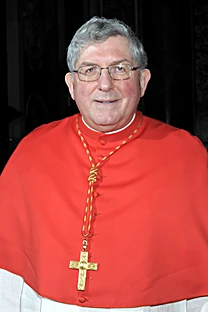 The Archbishop of Toronto, His Eminence Thomas Card. Collins has said something that I have been hammering at for years.