St. Peter Chrysologus, and oldie PODCAzT

Today, in the post-Conciliar calendar, is the feast of St. Peter Chrysologus, “of the golden speech”.  I made a PODCAzT about something Peter wrote some years ago for a 1 May Feast of Joseph observance and beginning of the month dedicated to Mary.

Here is his entry in the 2005 Roman Martyrology:

Sancti Petri, cognomento Chrysologi, episcopi Ravennatensis et Ecclesie doctoris, qui beati Apostoli nactus cognomen, eiusdem munus ita perfecit, ut caelestis doctrinae reti in fidem turbas concluderet et divini sermonis dulcedine satiaret.  Ipsius vero transitus Fori Cornelii in Flaminia crastina die advenit.

Who will work on this for us?  Let’s hear your own flawless English rendering, as my old mentor Fr. Foster would write on our Ludi Domestici in his small caps.

UPDATE: I listened to that old PODCAzT.  Pretty good, even though I say so myself!  The reading from Peter Chrysologus, all about God’s love and about sacrifice is remarkable.  In this PODCAzT I talk about the very first time I met Fr. Tim Finigan.

Posted in Patristiblogging, PODCAzT, The Drill | Tagged , ,
10 Comments

The Debt Crisis: Washington’s Kabuki Dance and “NO!” Play

The debt crisis is likened to a Washington Kabuki dance.

Oh yah?

Let’s just see if it is anything like.

In the first video below we have a kabuki presentation of the debt crisis.

President Obama appears, with aides, Daley and Carney (you have to have names with -ey for these roles in Kabuki, by the way). At 1:00 a woman shouts something… perhaps Michelle Bachmann?  Can’t tell.   At 1:30 Pres. Obama finally unveils his plan!  There is applause.  The aides are ready to to spin.  POTUS dances.

But wait!  There’s more.  Not all goes well!  At 2:28 POTUS shows he is is forced to shed some of the heavier parts of his plan.  Journalists of the MSM swoop in to remove the evidence from view… in kabuki, the guys in black are invisible.  Then Sen. Reid and Speaker Boehner, both in gold to symbolize our crushing debt they helped POTUS run up, rush in and symbolically cave in to the White House, with appropriate gestures. Thus, the American public are doomed, to use a more polite term.

The three, POTUS, The Senate and The House, negotiate on a perilously narrow runway.  There is some flipping and occasional posturing.  Then they jump around when they realize there are cameras.  Eventually they run away out of view.

[wp_youtube]MZ6_pxGKCks[/wp_youtube]

Just about it.  Kabuki theater.

In related news, this is sort of how I hear Fox News covering this conflict.  The following is a “NO!” play, also involving a lot of hot air.

Listen to the whole thing for the full effect… or at least to 1:20… you can do it.

Yes, I know it’s Noh and not No.

[wp_youtube]6kn-6scFbas[/wp_youtube]

Or… wait… is that a replay of the Casey Anthony trial coverage?  Anyway, that’s how I hear the coverage.  Some great howling and a guy spinning around going pretty much no where.

Hard to listen to but strangely fascinating, noh?  After a while it makes some sense.  And it gives the lie to those who think that the national debt is no big whoop.

And, I would rather have that music for Mass than what most suburban parishes have.  But noh liturgical dance, unless it’s like that.

The real flaw in my analogy of this Noh play and FNC coverage is that none of them had blonde hair.

The Japanese took a hit to their credit rating some years back.  They’ve been there.

at 1:30
Posted in Lighter fare, TEOTWAWKI | Tagged , , , , , , , , , ,
8 Comments

Something lighter: Purgatory for Catholic bloggers

I saw this at Acts of the Apostacy and it made me chuckle.

The writer muses about what penance in purgatory Catholic bloggers might have to endure.

* LarryD – transcribe every issue of the National Catholic Reporter onto strips of bark using a piece of charcoal.
* Fr Z – drink instant coffee while blogging on a 386…with a dial-up connection.
* Mark Shea – chained at the ankle with Michael Voris (that could work both ways, I suppose).
* The writers at The American Catholic – recite every Vox Nova post in Shakespearean prose.
* Creative Minority Report – Pat and Matt are brothers. They live in New York and Philly, respectively. They co-author a blog. That’s probably penance enough in this life for each.
* WordPress users – forced to use the Blogger format.
* Blogger format users – forced to use…the Blogger format.

A Dantesque contrapasso.

Make sure you go over there and check his other comments on the matter.

In the meantime, how ’bout stocking up on some Mystic Monk Coffee and Tea as you think up some of your own.

It’s swell!

UPDATE: The Curt Jester has some suggestions also!

Including:

* Jimmy Akin – Hosting a Catholic Radio show 24/7 where the only question from callers is about Jesus’ brothers and sisters or “Call no man father”.
* Fr. Roderick – Working at a genius bar in a Microsoft Store.
* Fr. Richsteig – An office where hymns from the Gather Hymnal are piped in like Musak.

AIYAH!

Posted in Lighter fare |
14 Comments

“Martha, Martha!”

In the National Gallery in London, you will find a painting by Velazquez entitled Christ in the House of Martha and Mary. I never fail to visit it when I visit that gallery and that painting when I cross the pond.

Last year I made some comments about that painting, to which I return this year.  Also, before I dig in, at the blog Idle Speculations there is an entry which picks up on my comments in the past, which I am revising here, but which adds a great deal more, including a story based on the painting!

Ad rem, and I may ramble a little.

Velasquez painting – a variation on the bodegón or kitchen/tavern scene, and a Flemish combination of domestic and sacred scenes – is a puzzle. It has layers. It is hard to tell if we are looking from the kitchen through a window into the room beyond, where the Lord is sitting with Mary and Martha, or if this is a painting within a painting, or if -and this may be the most likely – the scene in the square on the right is a reflection in a mirror showing what is going on in the other room.  Velasquez uses mirrors in other paintings.  If so, the young kitchen maid is watching the scene in the other room.  It is hard to tell whether this is a scene where the action in the kitchen is taking place simultaneously with that of the other room, or it this represents different chronological events.

Take a good hard look. The pouty look on girl’s face, almost that of a child, shows her displeasure.

In the other scene, Mary of Bethany is seated before Christ in the attitude of a disciple. Her hair, the “women’s glory”, is loose, which probably reflects her contemplative role.  Martha is remonstrating, her hand pointing.  Her hair is covered, probably to keep it out of the way as she works, so is doesn’t get burned, dirty and in her eyes.  Christ is seated on a chair, as befits a teacher.  If this is a mirror His right hand is elevated in a teaching gesture.  His cloak drapes an arm, just as the ancient philosopher’s robe would so as to demonstrate that the person’s primary concern was not manual labor.  Mary, seated below, is similarly garbed.  Mary’s hand from under her cloak is rotated toward herself, perhaps in a gesture of a question, such as “What must I do?”  Use the link at the top to zoom in on the details.

In the kitchen, the young woman is focusing her attention elsewhere, probably on the scene in the other room unless she is daydreaming.  She is put out.  Was she just terrorized a bit by Martha who is on edge?  The girl seems to be on the point of frustrated tears.  The household must be well-to-do and she must be pretty well treated, since she has a pretty earring. with a good sized dark stone of some kind.  Her is bound up for work, and also no doubt to show off the earring, but is still partially uncovered, the opposite of her opposite the old woman.  She seems to have made an effort to make herself pretty, but here she is, with the red hands and the garlic and fish and mortar.

The old woman is calm. Her face shows lines of age and toil.  Is the old women at the left telling the girl to pay attention to her work. She, like the small image of Martha, is pointing, creating a pair of bookends in the painting.  Is she pointing to the girl to warn you, the viewer?  She seems to be looking out of the painting, looking out at us.  Click here for a close up of a detail.  She is looking out, but her hand, which has a discreet bracelet, is point to her young underling.

What is the old woman saying to us?  Is this you?  This is you!”

In the other room, Christ’s hand is raised because He is teaching.  His hand will soon be bruised in falling and pierced with a spike. The hand is raised as if to say, “Wait! Be silent a moment! There is more to this than meets the eye.” The hands all convey a deeper point.  I think the old woman’s hand is also raised to remonstrate and to teach.

The girl upset because she is removed from the action.  Perhaps she wants to be near the Lord.  Perhaps she wanted to catch His eye with her earring.  In any event, she is not her own mistress and must do things she doesn’t want to do.

Her sleeve rolled up, exposing her forearm. Her hand is raw. There is a little bit of decoration on her rolled up sleeve which she won’t be able to show off, along with her earrings. When you are a servant girl, these little vanities are a big deal.

Mary can just sit there and be pretty, and calm, in the presence of the desired One. Martha must work, be less fetching, even grimy and sweaty as she works for the ease of others.  This is the state of the girl as well.

And the old woman has already been there and done that for a long long time.

Isn’t it true that sometimes we resent the joy or good fortune of others, even to the point that we want to strip them of their joy?  “If I am unhappy then, by God, no one will be happy!”  Have you ever resented that someone else was chosen for something?

On the work table are instruments of labor, the girl’s and Martha’s.

Fish and eggs are Christian symbols. The oil flask calls our mind to the Passion, or else the coming death and burial of Lazarus as well as that of the Lord. The cloves of garlic are a symbol of the resurrection, much like an orange is in art of the period: because of peeling and the sections they breaks into. The pepper with its seeds can burn.  However, in the iconography of some painters fish can also be a symbol of acedia, sloth.

Most significant is the large mortar, which breaks things down.  The girl seems to be using it to create a paste of garlic, oil and spicy peppers as a dressing for the fish and eggs.

But most importantly, this mortar is the daily grind.

The old woman on the left, seems to be our conscience which we are at our daily grind.

In this painting, as in life, there is always a tension between the active and the contemplative, the daily grind and a true Christian’s desire for silence, recollection and prayer. There is a tension and trap in the desire to be recognized or to have this or that position which is not to be had, to be ambitious… for what?  For God’s greater glory or our own?

These tensions force us constantly to examine our consciences and motives, as well as to prayer and reflection into our daily work.  We are challenged to find the space for prayer and reflection within our busy tasks. How do we make quiet stillness fruitful by means of action, perhaps through corporal works of mercy? How can we make action into some contemplative?  And how to let go of vanity and ambition?

In this life these things will always be a struggle, and very often we will fail.  Only in heaven are action and contemplation not in conflict, not divided as they are for us here. We are nevertheless called in our lives to inform each of these dimensions of Christian life with the other.

In Patristic terms, for Augustine, Martha is a figure of the active life and Mary of Bethany as a symbol of the contemplative life. Augustine has several pairings like this, for example, Rachel and Leah and also John and Peter.

Augustine was always constantly trying to find the right balance of action and contemplation in his own extremely busy life, otium in negotio. He sometimes laments that he wanted to remain a monk, in quiet prayer and contemplation of the deeper questions, but he instead must carry out his duties and problems as a bishop well.  He describes his role as bishop as a sarcina, the heavy backpack of the Roman legionary.  How to resolve these seemingly contradictory styles of life?  How to find otium in negotio… free space within busy-ness?

Augustine’s examination of Mary and Martha is found primarily in Sermons 179, 103 and 104. In s. 179 Augustine explains James 1,19;22 using an exegesis of Luke 10, the episode of Mary and Martha we see in the painting. He emphasizes the deep attention we ought to give Scripture: factores verbi… et auditores… contrasting the former who put what they hear into practice with the later who listen only and then do nothing about what they hear.

S. 179 shows Augustine’s deep regard for his flock. He would rather be a listener but he must also be a doer. He sacrificed his own desires for the sake of his flock. Augustine says that it is dangerous to be a preacher, and exercise ministry. He placed himself and his soul in danger for the sake of his flock.

For Augustine, contemplation must necessarily lead to action in this life. While the ideal would be to sit and listen (Mary) there nothing wrong with acting (Martha).  Indeed, it is necessary to act!  Martha the busy “ministrix” is therefore doing something great, and she has a great gift… magnum ergo ministerium, magnum donum.

What Mary does is still greater.  What Mary does takes nothing from Martha, and what Martha does enhances Mary.

Augustine explains that there is a unity between the two lives because they come to the same eternal reward. The Person of Jesus is the focus of both Mary and Martha. In heaven their focus and roles will overlap and combine perfectly.

One must arrive at the “better part” precisely by means of the active life. That is her lot. Heaven will be the perfect “fusion” of the active and contemplative dimensions of Christian life, though here in this vale of tears they are difficult at times to reconcile.

Finally, if you are chaffing under the grind, consider your lot as someone who has to get the work done in light of a question.

Where’s Lazarus?

When the Lord came back to the house, days after the death of Lazarus, it was Martha who went rushing out to meet the Lord on the road when He was still some way off.  It was Martha who spoke with the Lord first, not Mary.  It was Martha who made a great profession of faith, “I believe that you are the Messiah, the Son of God, the one coming into the world.”  Then it was Martha who brought Mary out of the house to the Lord, so that Mary could repeat, “Lord, if you had been here, my brother would not have died.”

So, some bullet points:

  • Have you been jealous of the good fortune of another? I offer this especially to clerics who are suffering from the dread fault of proud ambition.
  • Have you resented your state because you think you should have had a different lot in life?
  • Have you chaffed under what God’s will is for you in your vocation?
  • Have you neglected prayer in your daily grind?
  • Have you lacked generosity or been small of soul?
  • Have you thanked God for the graces that come with the challenges?
Posted in Classic Posts, Patristiblogging, The Drill, Wherein Fr. Z Rants | Tagged , , , , , , , ,
11 Comments

Intimidation is the Enemy’s Tool

I have been thinking about the priest who was assaulted in Italy and the way the Catholic left treats conservatives and traditionally minded Catholic priests and lay people.

Assaults are not only physical and launched by people who are disturbed or overmastered by passions.  They are also planned, cold, systematic.

Bullies have plans.

The tactic of the Enemy, and the Enemy’s human agents, is to bully victims into silence.

Aggressive intimidation the not so subtle way that fidelity is assailed, not only by the Enemy, but also by enemies who are used by the Enemy.

Anyone who is being bullied by the left, by the liberal opponents of the Holy Father and his vision, must not be – like victims of rape – forced into silence.

We must hear about and report attempts to repress the rights of faithful Catholics who just want to pray and live out their legitimate aspirations.

When enemies of, for example, the Extraordinary Form or the Church’s teaching on the ordination of men only or on the sinfulness of homosexual acts and on artificial contraception, threaten and bully and assault Holy Church’s faithful and priests and courageous bishops, we must not be silenced.

Silence is defeat.

We have to report bullying so that bishops and others cannot pretend that it isn’t happening.

We must not be bullied into silence about attacks.

And this applies to those who desire the older form of Holy Mass.

We don’t have to be aggressive, but we do need to be assertive.

Stand up.  Speak out.

Saint Michael the Archangel,
defend us in battle.
Be our protection against the wickedness and snares of the devil.
May God rebuke him, we humbly pray.
And do Thou, O Prince of the Heavenly Host,
by the Power of God,
cast into hell, Satan and all the evil spirits,
who prowl throughout the world seeking the ruin of souls.
Amen.

Posted in Brick by Brick, Our Catholic Identity, The future and our choices, Wherein Fr. Z Rants | Tagged , ,
19 Comments

Smartphone obsession

I use my smartphone, an iPhone, to keep up with email, which flows in at a rate I can’t handle, and to post to or moderate this beast of a blog.  I use it for some light SMS texting too.  It is a great tool when I am on the road, since I can also use it like an iPod.

From Sancte Pater and the great Vincenzo:

Some owners so obsessed with their smartphones, they name them

BY ELLEN GIBSON
Associated Press

“Watching people who get their first smartphone, there’s a very quick progression from having a basic phone you don’t talk about to people who love their iPhone, name their phone and buy their phones outfits,” said Lisa Merlo, director of psychotherapy training at the University of Florida…

Merlo, a clinical psychologist, said she has observed a number of behaviors among smartphone users that she labels problematic.

Among them, she said, are some patients who pretend to talk on the phone or fiddle with apps to avoid eye contact or other interactions at a bar or a party; others are so genuinely engrossed in their phones that they ignore the people around them completely.

“The more bells and whistles the phone has,” she said, “the more likely they are to get too attached.”

For some, the anxious feeling that they might miss something has caused them to slumber next to their smartphones…

For others, being away from their phone will almost certainly cause separation anxiety. According to researchers at the Ericsson Consumer Lab, some people have become so dependent on being able to use their smartphones to go online anytime, anywhere, that without that access, they “can no longer handle their daily routine.”

Read More

Good grief!

Though I admit that when I have left home without my phone I feel really weird.   Hmmm….

BTW… Vincenzo is the official photoshopper of WDTPRS.  He is also the maker of the wondrous Pope Pius Clock, which WDTPRS endorses.

Posted in Throwing a Nutty | Tagged
28 Comments

Card. Canizares: the “entire Church” should receive Communion kneeling. Fr. Z rants.

The overriding reason for why we belong to Holy Church and why we receive the sacraments and why we go to Holy Mass is the fact that one day we are going to die.

The sin of our first parents, at the prompting of the Enemy, was to think that we could be “as gods”.  That sin brought suffering and death into the world.  It required a Savior, both God and man, to repair the breach we opened between the human race and God.  We are redeemed by Christ’s Sacrifice and raised in hope at the victory over death in Christ’s Resurrection and Ascension.  We are given mighty gifts through Christ’s merits by means of the Church He found and by the sacraments He instituted and by the teaching He extends down through His Apostles and their successors to our own time and places.

As a consequence, when we meet with Him in the context of our sacred worship, while we stand at times as adopted children emboldened by Christ’s proximity to us in our human nature, we also abase ourselves before Him, before the MYSTERY we encounter, as we remember that we are so very small and so very dependent and so very much not gods.

From CNA with my emphases and comments.

Spanish cardinal recommends that Catholics receive Communion on the tongue

Lima, Peru, Jul 28, 2011 / 01:56 pm (CNA).- Spanish Cardinal Antonio Canizares Llovera recently recommended that Catholics receive Communion on the tongue, while kneeling.

“It is to simply know that we are before God himself and that He came to us and that we are undeserving,” the prefect of the Vatican’s Congregation for Divine Worship and the Discipline of the Sacraments said in an interview with CNA during his visit to Lima, Peru.

The cardinal’s remarks came in response to a question on whether Catholics should receive Communion in the hand or on the tongue[OOH-RAH!]

He recommended that Catholics “receive Communion on the tongue and while kneeling.[Do I hear an “Amen!”?]

Receiving Communion in this way, the cardinal continued, “is the sign of adoration that needs to be recovered. I think the entire Church needs to receive Communion while kneeling.” [Get that?  “entire Church”.  And he means the Latin Church, of course.]

“In fact,” he added, “if one receives while standing, a genuflection or profound bow should be made, and this is not happening.”  [Wounded human nature being what it is.]

“If we trivialize Communion, we trivialize everything, and we cannot lose a moment as important as that of receiving Communion, of recognizing the real presence of Christ there, of the God who is the love above all loves, as we sing in a hymn in Spanish.”

In response to a question about the liturgical abuses that often occur, Cardinal Canizares said they must be “corrected, especially through proper formation: formation for seminarians, for priests, for catechists, for all the Christian faithful.”

Such a formation should ensure that liturgical celebrations take place “in accord with the demands and dignity of the celebration, in accord with the norms of the Church, which is the only way we can authentically celebrate the Eucharist,” he added.

Bishops have a unique responsibility” in the task of liturgical formation and the correction of abuses, the cardinal said, “and we must not fail to fulfill it, because everything we do to ensure that the Eucharist is celebrated properly will ensure proper participation in the Eucharist.”

No renewal of the Church can take place without a revitalization of our Catholic identity.  No revitalization of our Catholic identity can take place without a renewal of our liturgical worship.

Without a renewal of our Church, our identity, our worship, we as Catholics cannot have an effective impact on the world around us.  We cannot fulfill Christ’s great command before His Ascension.

In the presence of God we must adopt the posture of creatures, and for just a few seconds… just a few seconds of our oh so busy lives… make ourselves lowly.

Aside from those because of physical reasons cannot kneel, for those of you think think you have to stand when receiving Communion, I invite you to rethink your “position”.

Do not be afraid to bend yourself and lower yourself before the coming of the Most High God, in the mystery which envelops you during Holy Mass.

Don’t think you mustn’t and can’t kneel to GOD.

I have been concerned and less than sanguine about many things I have seen going on these days, but this story and the words of Card. Canizares, are a sign of hope.   This sort of article, with this recommendation for the whole Church, would have been unthinkable even, say, ten years ago, from a Prefect of the CDW.

Posted in "How To..." - Practical Notes, Our Catholic Identity, The future and our choices | Tagged , , , ,
76 Comments

Thomas Jefferson v Alexander Hamilton

I have been avoiding the tar baby of the debt ceiling debate, but I can at least able to say this.  I am pretty much fed up and disgusted by most the players involved.  “A Pox!”, I cry, “on both your branches!”

Now that that is off my chest, I share an interesting article from Crisis Magazine by Dr. Mark W. Hendrickson, adjunct faculty member, economist, and fellow for economic and social policy with The Center for Vision & Values at Grove City College.

This article was especially of interest, because when I get to NYC I often have debates with a smart friend there about Thomas Jefferson and Alexander Hamilton, whose bones rest in the bone yard of Trinity Church off of Wall Street.  One of the most memorable times was when we were on our way to a fantastic concert at Trinity of sacred music under the influence of the Sarum Rite.  That’s the time I heard music so beautiful it hurt.

Some of the points of this article provide a useful lens for interpreting the relentless news coverage of the debt crisis debate.

Jefferson Versus Hamilton: A Continuing Contest
Mark W. Hendrickson

This past Fourth of July marked 235 years since the Declaration of Independence was published. In this immortal document, the Spirit of ’76 was given its fullest, most eloquent expression. The Declaration is a timeless document, espousing eternal principles that, while forever historically identified with America, are universal in their application.

The Fourth provided an occasion to reflect on what it means to be an American. Since day one, there have been widely divergent views on those questions.

During the Revolutionary War, the colonists fell into three groups: those who desired independence from Britain, Tories who did not, and many who didn’t care or couldn’t decide.

The Second Continental Congress was so divided over the issue of slavery that the Declaration was almost stillborn. (The perfect Fourth of July movie is the musical “1776”—an excellent dramatization of that profound disagreement.) Many of the Founding Fathers abhorred slavery with every bone in their body. Those founders are sometimes condemned today for having compromised with southern slaveholders, a retroactive judgment of 18th-century men by 21st-century values. Granted, the founders didn’t create the ideal society. They knew that. They expected subsequent generations to make improvements. But they did, mercifully, lay the foundation for a republic that would go on to bring more freedom to more people than any other political entity in history.

From the start, Americans have been divided between the visions and values of Founding Fathers Alexander Hamilton and Thomas Jefferson. That intellectual and political debate continues undiminished today. In fact, during a recent radio interview, the host asked me out of the blue, “Whose side are you on, Hamilton’s or Jefferson’s?”

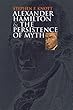
The question is difficult to answer for two primary reasons: First, these two giants of America’s founding addressed a wide range of issues, so one may partially agree and partially disagree. Second, as Stephen F. Knott’s 2002 book Alexander Hamilton & the Persistence of Myth demonstrates so ably, subsequent American thought leaders have invented their own versions of Jefferson and Hamilton. These versions have been based on their own political convictions and biases, including which books they themselves happened to read (each of those containing its author’s own slanted view) and the tenor of the era in which they lived.

There is no definitive, indisputable interpretation of Hamilton and Jefferson, but I’ll attempt a few generalities.

Foremost among these generalities, at the most elementary level, those who favor a stronger government in Washington are more likely to be Hamiltonians and those who favor a weaker government, Jeffersonians.

In reply to that radio host’s question, I said that I leaned toward Jefferson. In this era of Big Government that is suffocating liberty, devouring our economic substance, and is joined at the hip with big banks, Jefferson’s inspiring defenses of liberty and impassioned warnings about government are timely. Nevertheless, I have my differences with Jefferson, such as his endorsement of the French Revolution. My sense is that Jefferson’s strong suit was his idealism, whereas in practice he was, at times, inapt or inept.

While I have serious misgivings about Hamilton’s vision for government, I think he gets a bum rap when some accuse him of having been an antidemocratic monarchist. Yes, he distrusted certain elements of democracy, but so did most of the Founding Fathers, including James Madison. Hamilton believed in some degree of a government partnership with business, but, like other founders, he supported a Constitution that, unlike Old World governments, did not erect barriers designed to keep poor Americans poor. Hamilton was an elitist, but he was an elitist by accomplishment, and not (at all) by birth.

One of the ironies of the Jeffersonian/Hamiltonian divide today is that the two major political parties have flip-flopped on their historical positions. Up until the 1950s, Democrats tended to be Jeffersonian. They opposed tariffs and other government favors for moneyed interests. Republicans, who tended to be Hamiltonian in their use of government to shape economic development from the party’s founding through Herbert Hoover’s presidency, now have many leading figures with strong Jeffersonian sympathies. Today’s Republicans generally share to some degree Jefferson’s aversion to Big Government, the great threat to liberty and prosperity.

Finally, in the Hamilton/Jefferson debate, one of the few points that enjoys nearly universal acceptance is that both men were geniuses. They both played defining roles in the founding and formation of the United States of America. However much we may disagree with one or the other, they were great Americans and we are blessed to have had them both as Founding Fathers.

I suspect some of the smart readers here will want to chime in.  Whenever I have posted anything in the past about economic theory (e.g., Austrian school) some very smart people get involved in lively discussions and I wind up learning a lot.

The Jefferson/Hamilton diptych above may present another such learning opportunity.

At this point, may I add that I think we are all deep in serious trouble?

Posted in The Drill, The future and our choices |
29 Comments

WDTPRS – The Doxology, Great Amen, and YOU: The mighty voice of the one True Priest

Here is my latest hecatomb for The Wanderer to which you may subscribe digitally.

I worked my way through an examination of the new, corrected translation of the Order of Mass, including the Roman Canon.  Then I returned to look at, piece by piece, the 2nd and 3rd Eucharistic Prayers.

I may be transitioning the column into something else, since the raison d’etre of the column in the The Wanderer‘s inky and electronic pages, will be partly resolved – after 11 years – in November 2011.

That said, here is a foretaste of this week’s piece.  This column in particular might be useful for your own fuller, more active participation at Holy Mass in both the Ordinary and the Extraordinary Form of the Roman Rite.  If you read nothing else, skip down to where I set the RED markers.

What Does the Prayer Really Say?  The 3rd Eucharistic Prayer – Part 9

As of this writing, the Church in the United States will have a new translation for Holy Mass in 3 months and 27 days.  In England and Wales, the Order or Ordinary of Mass will be in use from September onwards.

We concluded our look at the text of the main body of the 3rd Eucharistic Prayer.  All that remains is the final “doxology”.  “Doxology” is from the Greek roots doxa “glory”, and logien, “to speak”.  All the Eucharistic Prayers in the post-Conciliar Missale Romanum end with this doxology, taken from the end of the Roman Canon.

Per ipsum
LATIN TEXT (2002MR):
Per ipsum, et cum ipso, et in ipso, est tibi Deo Patri omnipotenti, in unitate Spiritus Sancti, omnis honor et gloria per omnia saecula saeculorum. R. Amen.

A saeculum is “a race, breed, generation”.  It also means, “the ordinary lifetime of the human species, a lifetime, generation, age (of thirty-three years)”, which is the length of the earthly life of the Lord.  Also it is, “the human race living in a particular age, a generation, an age, the times”.   By extension it comes to indicate “the utmost lifetime of man, a period of a hundred years, a century” and also, like the Biblical Greek word aiôn, “the world, worldliness”.  A form of saeculum was sometimes used to express “forever, to all eternity, endlessly, without end”, as we see St. Jerome (+420) use it in in saeculum (Vulgate Exod 21:6 ; Dan 3:89) and in saeculum saeculi (Ps. 36:27; 2 Cor 9:9) and in saecula (Ps 77:69; Rom 1:25). Jerome also uses in saecula saeculorum (Tob 9:11; Rom 16:27; Apoc 1:6, et al.).  The early Latin writer Tertullian (+ c.220) used it, even before Jerome (ad Uxor 1, 1).  St. Ambrose (+397) also makes use of it (Hexaëm 3, 17, 72).

The per omnia saecula saeculorum has the impact of an endless time period, as if each day of an interminable age were itself like an age made up of days the length of unending ages.

LITERAL WDTPRS VERSION:
Through Him, and with Him, and in Him all glory and honor is to You, God the Almighty Father, in the unity of the Holy Spirit, through the unending ages of ages.  R. Amen.

I will add some emphases so you can see the changes more easily.

LAME-DUCK ICEL (1973):
Through him, with him, in him, in the unity of the Holy Spirit, all glory and honor is yours, almighty Father, for ever and ever. R. Amen.

NEW CORRECTED ICEL (2011):
Through him, and with him, and in him, O God, almighty Father, in the unity of the Holy Spirit, all glory and honor is yours, for ever and ever.

In the Extraordinary Form, before the doxology, the priest uncovers the chalice, genuflects, picks up the consecrated Host and, while saying the Per ipsum, makes signs of the cross with It over the open top of the chalice.  He covers the chalice again, genuflects, and then says aloud or sings the “Per omnia saecula saeculorum”. The choir and servers, sometimes  with the congregation, respond “Amen”.  In the Ordinary Form these gestures were excised, but the ancient practice of the congregation raising the Amen was revived.

HERE…

A great liturgical scholar of the last century, Jerome Gassner, OSB, has some comments about this doxology Per ipsum in his book The Canon of the Mass: Its History, Theology, and Art (London: Herder, 1949).  Thus, Gassner:

It is the sacred art of the psalms to conclude with a doxology.  This practice was continued by the apostles in epistles, instruction, and prayers.  Then there is the doctrine of St. Paul about the reconciliation of the universe in Christ contained in this solemn conclusion, and at the same time, with the words “forever and ever,” an allusion to the consummative sacrifice in heaven, to this never-ending canticle of the Lamb, to the eternal hymn of praise and thanksgiving.

About the scriptural background of the doxology he continues:

It is a text from the Epistle to the Romans that has primarily inspired the final doxology (Rom 11:36): “For of Him and by Him and in Him are all things: to Him be glory forever. Amen.” “Of Him”, i.e., all things depend upon Him as upon their cause and creator; “by Him,” i.e., they are sustained by Him; “in Him,” i.e., unto Him as to their last end.  The sacerdotal mediation of Christ is expressed in the words of the Epistle to the Hebrews (2:10): “For it became Him, for whom are all things, who had brought many children into glory, to perfect the author of their salvation, by His passion.  For both He that sanctifieth and they who are sanctified are all of one.”  Of some influence upon the doxological conclusion of the orations, has been the text of the Epistle of St. Jude (Jude 25): “To the only God our Savior through Jesus Christ our Lord, be glory and magnificence, empire and power, before all ages, and now, and for all ages of ages.  Amen.”

Gassner offers also an interpretation of the Per ipsum.  He is writing about the end of the Roman Canon, the 1st Eucharistic Prayer, but the text is the same.

For the interpretation of the text itself the double nature of Christ is the directive principle: through Christ as the mediator infinite glory is given to the Father and the Holy Ghost in two ways: (a) so far as He offers Himself; (b) so far as through Him all homage and adoration of all creatures ascend to God as a pleasing sacrifice.  With Him, the Father and the Holy Ghost jointly receive all honor and glory, since Christ is God, a Person of the Blessed Trinity, to whom the Eucharistic sacrifice is offered.  In Christ are honored the Father and the Holy Ghost; because of the unity of essence the divine persons are eternally in each other (“perichoresis”).

Through Christ, our head and mediator, we render to God all honor and glory inasmuch as we offer the Eucharistic sacrifice “through Him and with Him” as His priests, ministering unto His high priesthood.  Further, we give all glory and honor to the Father and the Holy Ghost inasmuch as “in Him” we are included in the victim which is the mystical body, and are jointly offered with Him.

The most important Amen of the Canon, which was originally only one, may be traced back to the Epistle of Paul to the Corinthians (I Cor. 14:16): “Else if thou shalt bless with the spirit, how shall he that holdeth the place of the unlearned say Amen to thy blessing?”

Gassner ends his book with a brief examination of this great Amen.  Keep a couple things in mind as you read this.  Gassner mentions St. Justin (+ 165), a Christian apologist and one of the earliest Christian writers.  Greek apología is a systematic defense of a position, whence the term “apologetics”, a reasoned presentation of and defense of the Faith.  St. Justin’s First Apology, addressed to the Emperor Antoninus Pius and the Roman Senate, contains some of one of the earliest commentaries we have on the Eucharistic celebration revealing essentially the same structure as our Holy Mass today.  The Didache, or “Teaching of the Twelve Apostles”, is dated to the late 1st or early 2nd century.  It concerns, among other things, early Christian ritual, including the Eucharist.  Some Fathers of the Church considered it inspired.   Let’s continue now with Gassner:

The Amen is found in the Didache (10): “If anyone is holy, let him come; if anyone is not so, let him repent.  Maranatha.  Amen.”  It is recorded by St. Justin (I Apol., 65): “When he has ended the prayers and thanksgiving, all the people present cry out, saying Amen.”  The Greek liturgy still preserves the people’s answer after each consecration.  The original Amen expresses the union of the faithful with the hierarchical priest, ratifying the sacred action.  It is the assent, a testimony, a confession of faith in the redemptive mysteries celebrated in the sacramental mode of the Eucharistic sacrifice.  It is also a testimony that the Holy Eucharist is the sacrifice of Christ in His Church.

Or HERE…

St. Augustine (+430), in the longest surviving sermon we have from him, the monumental s. 198.57 (Dolbeau 26, perhaps delivered in Carthage in 404) gave an explanation of the liturgical Amen.  Augustine is opposing pagan neo-Platonic theurgy and Donatist errors about the mediation of holiness to people depending on the person of the priest or bishop.  For Augustine, the whole Eucharistic assembly raises prayer and sacrifice to the Father as one, with the priest relating to the congregation as Christ the Head to Christ the Body.  So, the Amen of the congregation is charged with significance.  In the ancient Church and into the medieval period Amen was raised with loud voices.  Let’s hear something of s. 198.57:

We do have a mediator and high priest.  He has ascended into heaven, he has entered into the inner place behind the veil, into that true, not merely symbolic, holy of holies.  The sacrament of this reality is celebrated in the Church; you are praying with us inside, to the bishop’s words you replay, “Amen.”  That, you see, is the way the people, as it were, underwrites his words (subscribit), because all of us belong to the body of the priest.  So don’t let anybody, as the saying goes, sell you smoke (fumos vendat); we have one mediator, the Lord Jesus Christ; it is he who is the atonement, he the propitiation for our sins (1 John 2:2); let us all hold on to him without a qualm.

Augustine uses the image of the people setting their own signature to the priest’s actions and words also in s. Denis 6, 3: “Ad hoc dicitis Amen.  Amen dicere subscribere est.  To this you say Amen.  To say Amen is to write one’s own name/sign/approve”.

Christ, Eternal Word, makes voices of the faithful His own mighty voice.

Christ is the only true Priest.  His sacrifice reconciles us with God once and for all.  Therefore, there must not be, indeed cannot be, any competition for the role of mediator between Christ and any other being.

This is important to remember today as we watch our Holy Church, ever without stain in herself but sinful only in us her members, torn by scandals involving our bishops and priests.

Christ is the only true Priest and the only true Holy One.  In this world, in our liturgical action, Christ acts through us, His priests and his people, Head united with the Body.  When the baptized are gathered with the priest at the altar of sacrifice, we are with the True Priest, Christ Jesus, sacramentally, in the heavenly holy of holies.

Our Amens during Holy Mass are charged with the might of Christ’s own voice in anticipation of the recapitulation of all things in Him before the Father who is all in all.
Posted in New Evangelization, Non Nobis and Te Deum, Our Catholic Identity, Patristiblogging, The Drill, WDTPRS | Tagged , , , , , , , , , , , , ,
7 Comments

QUAERITUR: Giiving a gift to the priest after a baptism

From a reader:

Do you recommend giving a stipend to the priest and/or parish when an infant is baptized? If so, how much is a good amount?

This is the old question of “stole fees” which I have presented on this blog before, such as here, about weddings – more complicated and time consuming.

I cannot recommend any set amount since I don’t know your circumstances or the priest.  But I can say this.  You may give Father something if you want to.  I also doubt Father will be expecting it.

Priests have expenses in order to live and they appreciate an unforeseen gift.  I sure do.  It raises the spirits.  Deacons, who do many baptisms these days, often have families to raise, and things aren’t getting easier in that regard.

That said, it may be that the local diocese has a policy about “stole fees”. You might want to check into that.  Also, it may be that the priest would prefer a donation to the parish.  You should ask around where you live.

Perhaps some of the readers can chime in with what they have given their priests or deacons.   Or bishops!  They can baptize too!

Posted in ASK FATHER Question Box, Linking Back, Non Nobis and Te Deum | Tagged ,
22 Comments